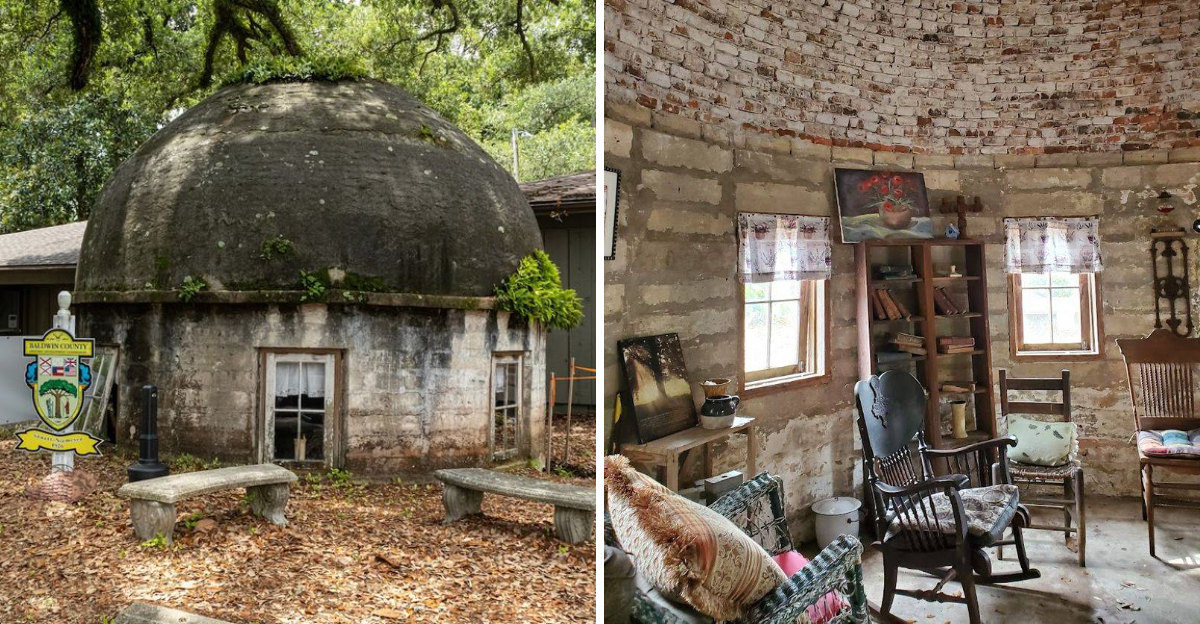
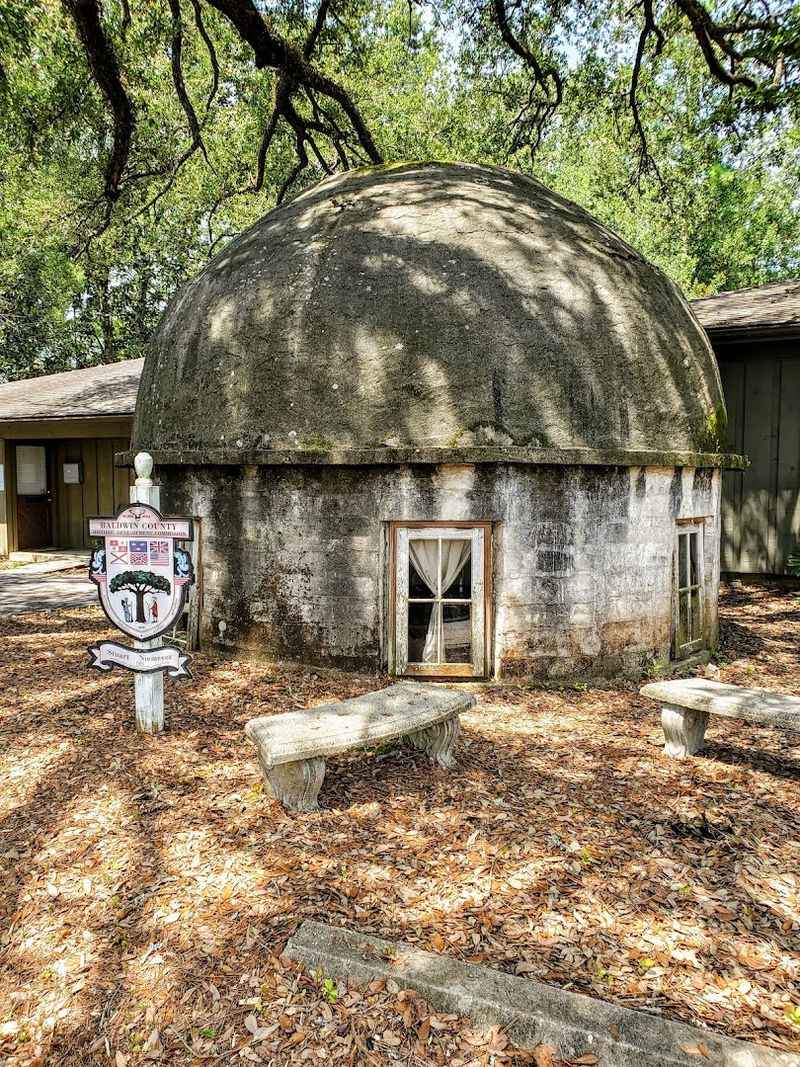
Hidden in plain sight along a busy Alabama highway, a small concrete dome sits quietly in a parking lot while thousands of drivers pass by without a second glance. To passing commuters, it looks like little more than an odd roadside structure, but it tells one of the most unusual personal stories in the state.
Built entirely by hand in the 1920s, the tiny circular home reflects the creativity, determination, and ingenuity of the man who designed it.
Its unconventional shape and construction continue to spark curiosity nearly a century later, making it one of those attractions that leaves visitors wondering how they never noticed it before.
If you have ever wanted to step inside, you are missing one of the state’s most memorable hidden roadside treasures.
Plan to Explore the Hammock Bed Hung High Above the Floor
One of the quirkiest details inside the Round House is the sleeping arrangement Henry Stuart designed for himself. Rather than placing a bed on the floor like most people would, he strung a rope hammock high above the room and used a ladder to climb up to it each night.
It sounds unusual, but it made practical sense in a small circular space where floor room was valuable.
The hammock position also kept Stuart elevated away from ground-level moisture and cold, which mattered a great deal given his lung condition. Everything about how he designed and used this home reflected careful, intentional thinking about comfort and survival.
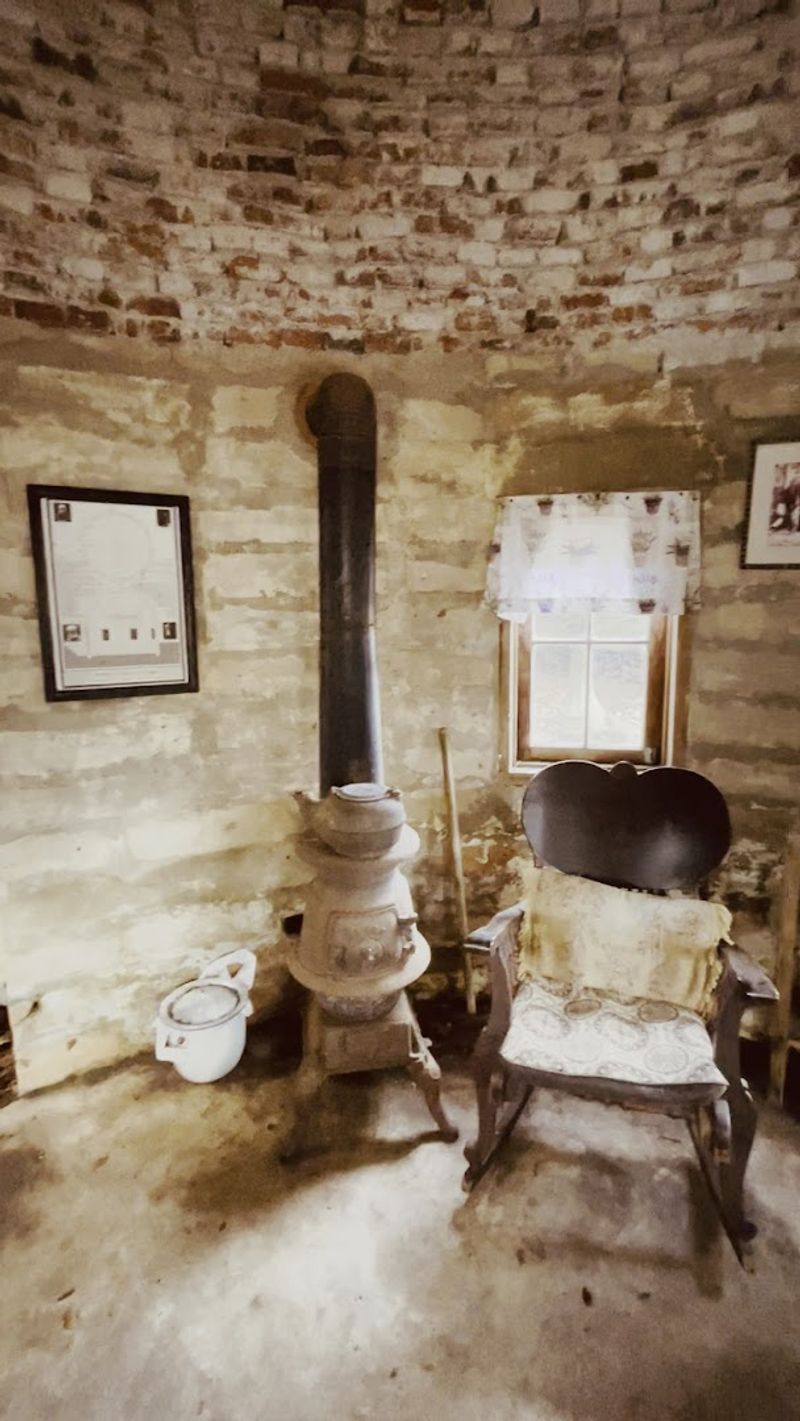
A wood stove sits inside the house as well, which provided heat during cooler months along the Gulf Coast.
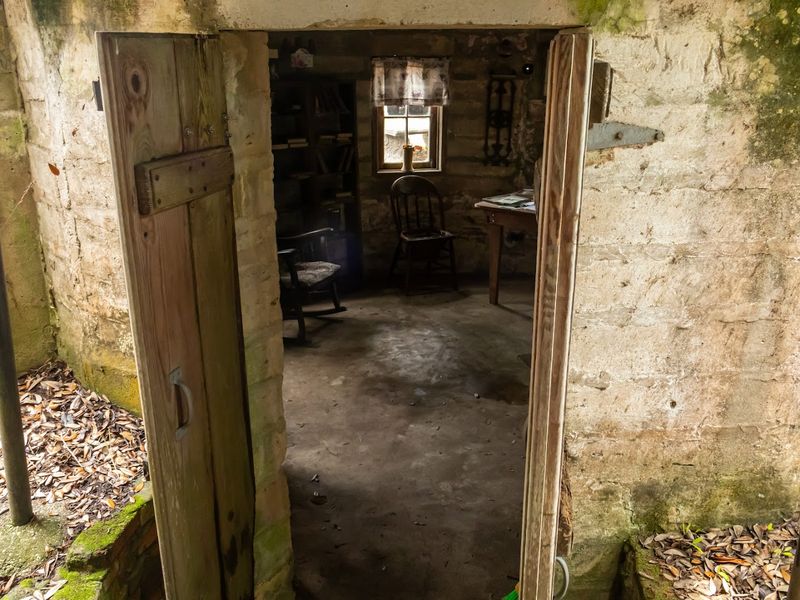
Visitors today can see the interior as it was arranged during Stuart’s years there. A rusted power junction box is still visible on the wall, showing that Stuart did eventually have access to electricity despite his simple lifestyle.
The combination of rustic charm and clever design makes the inside of this dome genuinely surprising. Most people expect to peek through a doorway at an empty shell, but what they find instead is a fully realized, thoughtfully arranged living space that tells a very human story.
That contrast between outside appearance and interior life is exactly what makes the visit so memorable.
Skip the Crowds and Visit a Free National Historic Landmark
Not every historic landmark in Alabama requires a ticket, a tour guide, or a reservation. Tolstoy Park is completely free to visit, and you can stop by at your own pace without any crowds rushing you along.
That kind of relaxed access to a genuine piece of history is rare and worth taking advantage of.
The Round House is listed on the National Register of Historic Places, which means it has been officially recognized for its cultural and architectural significance. Despite that distinction, most people in Alabama have never heard of it.
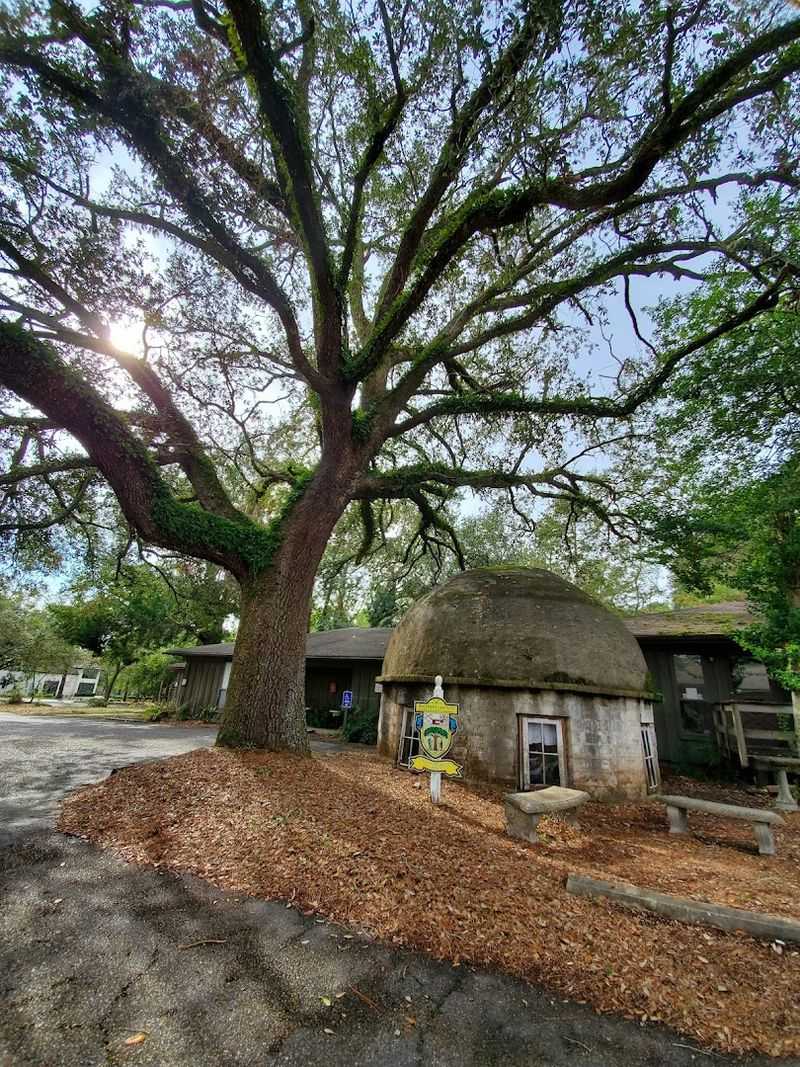
It sits just off Highway 98 in Fairhope, tucked behind a real estate office in a commercial parking lot. Your GPS might make you feel like you are heading to the wrong place, but once you pull in, the dome is impossible to miss.
The location in Baldwin County, Alabama, makes it an easy addition to a day trip along the Eastern Shore. You do not need to plan far in advance or worry about hours of operation in the traditional sense.
Just pull in, look around, and read about the man who built it. A visit here typically takes between 15 and 30 minutes, which means even travelers with a packed itinerary can fit it in.
Free admission, genuine history, and zero pressure make this one of the most accessible hidden gems in the entire state.
Come See Where a Tuberculosis Survivor Outlived His Diagnosis
Henry Stuart arrived in Fairhope, Alabama, in 1923 after doctors told him he had tuberculosis and advised him to move somewhere warm. He was 65 years old, and most people in his situation might have simply waited to die.
Stuart had other plans entirely.
He purchased 10 acres of land, named the property Tolstoy Park after the Russian writer Leo Tolstoy, and got to work building his own home. Using sand, beach bricks, and other local materials, he constructed the domed concrete house almost entirely by himself.
A hurricane hit in September 1926 while the project was underway, but Stuart kept going and finished the build anyway.
The most astonishing part of the story is what happened next. Stuart lived at Tolstoy Park for 22 years, growing his own food and embracing a simple, self-sufficient lifestyle.
He left Alabama in 1944 and passed away in Oregon in 1946 at the age of 88. That means he outlived his terminal diagnosis by more than two decades.
His story is a powerful reminder that the human spirit can push far beyond what medicine predicts. Visiting this site gives you a chance to stand in the exact space where one man quietly refused to give up on life, and that feeling stays with you long after you leave.
You Can Walk Into a Hand-Built Concrete Dome
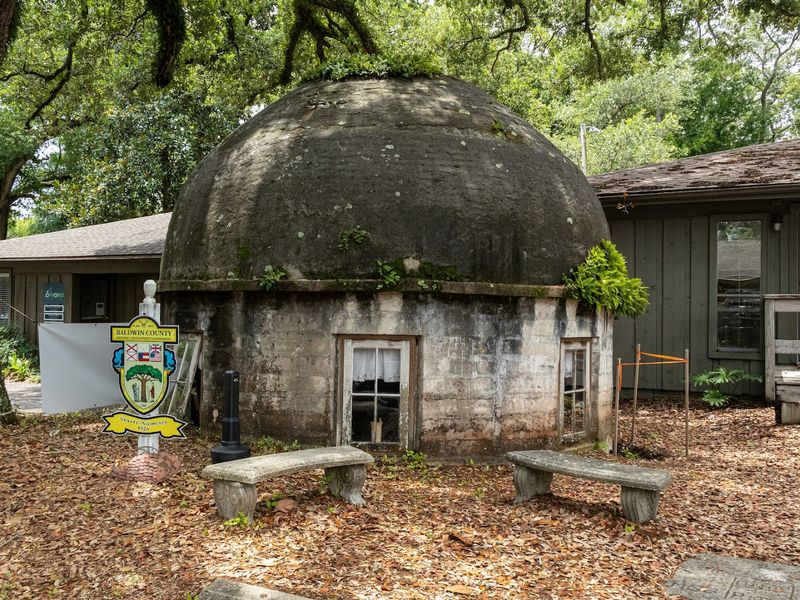
Standing about 14 feet tall and 14 feet wide, the Round House at Tolstoy Park is unlike anything most people have ever seen in person. Henry Stuart hand-poured every single concrete block used to build this structure.
He started construction in 1925 and finished in a year and sixteen days, which is remarkable for one man working mostly alone at the age of 65.
The dome shape was not just an artistic choice. Stuart designed the circular walls and sunken floor to maintain a steady interior temperature without modern heating or cooling systems.
The floor sits two feet below ground level, which acts as natural insulation. Six top-hinged windows allow airflow and light to filter in from different angles throughout the day.
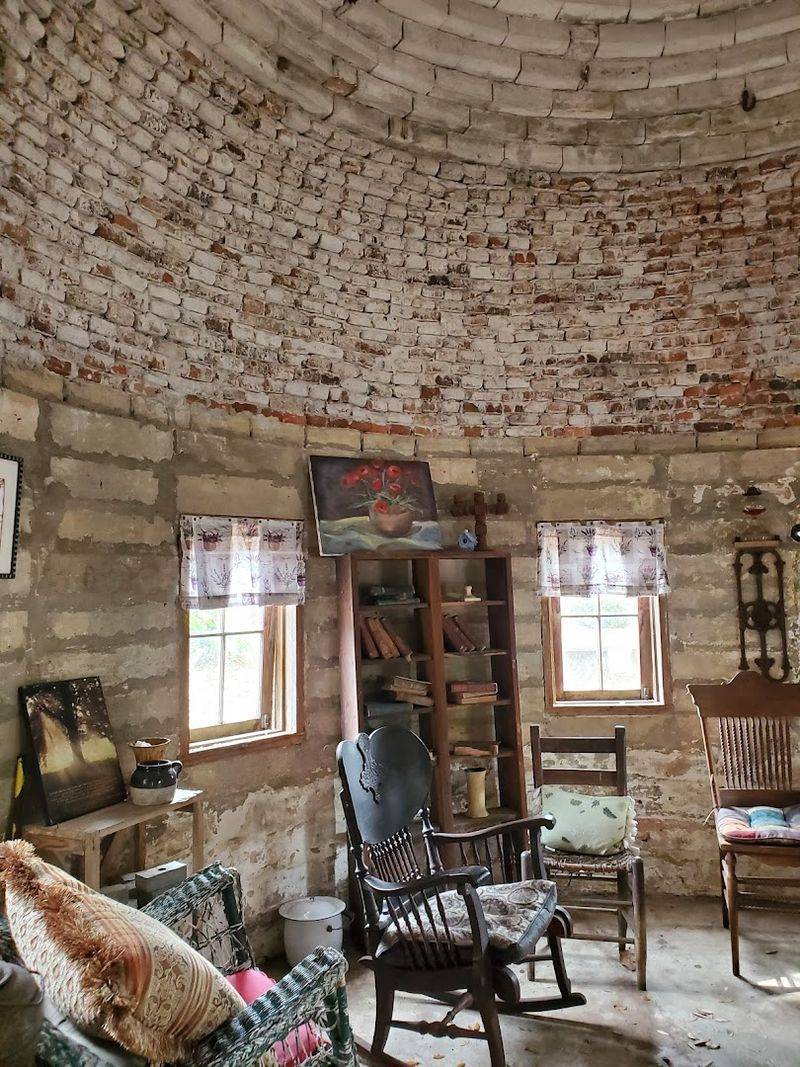
When you step inside, the curved walls create an almost acoustic effect that visitors often notice right away. The space feels calm and surprisingly roomy given its modest dimensions.
Period furniture, old photographs, and books are arranged inside to reflect how Stuart lived during his 22 years at the property. You can find the address at 22787 US-98, Fairhope, AL 36532.
Admission is completely free, and the visit takes around 20 minutes, making it an easy and worthwhile stop on any road trip through Baldwin County.
Do Not Miss the Novel Inspired by This Tiny Dome House
In 2004, Alabama author Sonny Brewer published a novel called The Poet of Tolstoy Park, which brought national attention to Henry Stuart and his remarkable concrete dome.
The book tells Stuart’s story in a way that blends historical fact with literary imagination, and it resonated deeply with readers across the country.
Many visitors who show up at the Round House today first heard about it through this novel.
The book helped transform the site from a forgotten curiosity into a destination worth seeking out. Local writers, musicians, and artists have also drawn inspiration from Stuart’s life and the physical presence of the Round House.
There is something about the combination of isolation, creativity, and survival that speaks to creative people in a powerful way.
Some visitors have even reported meeting Sonny Brewer at organized events held at the site, where he has shared the history of the house with small groups. Reading the novel before your visit adds a layer of depth to the experience that is hard to replicate any other way.
You walk through the door already knowing the man who built it, already feeling connected to his choices and his courage. If you enjoy history told through storytelling, picking up The Poet of Tolstoy Park before your trip to Fairhope is one of the best ways to prepare for what you are about to see.
Try Spotting the Dome Before It Moves to a New Home
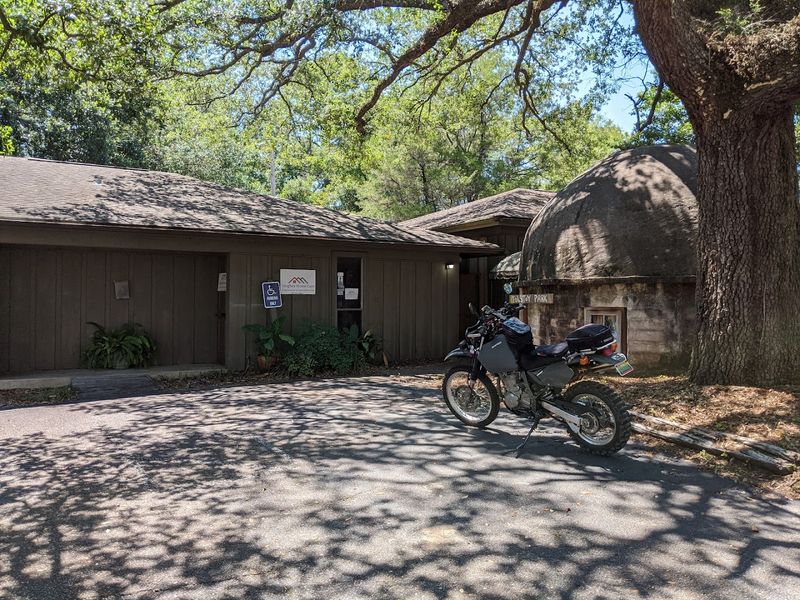
Right now, there is a real chance that the Round House will not stay in its current parking lot location forever. A grassroots fundraising effort is actively working to relocate the structure to the Flying Creek Nature Preserve in Fairhope, Alabama.
The goal is to return the dome to a wooded, natural setting that feels much closer to the original 10-acre property where Henry Stuart first built it.
The city of Fairhope has agreed to provide a site at the preserve along with utilities, signage, and security. However, the total relocation cost is close to $369,000, and around $150,000 still needs to be raised through private donations.
Until that funding is secured and the move actually happens, the Round House remains in Fairhope, accessible to anyone who wants to visit.
Seeing it in its current parking lot setting is actually part of the story. The contrast between the old concrete dome and the surrounding commercial buildings tells you something important about how quickly the world changes around the things we forget to protect.
Visiting now means you get to see the house as it has stood for nearly a century, before the next chapter of its history begins. If the relocation happens, the experience of standing in that parking lot and looking at the dome will be gone, and only those who came early enough will remember what it felt like.
Make Time for Clarence Darrow’s Favorite Alabama Getaway
Henry Stuart was not a recluse who shunned all human contact. He welcomed visitors to Tolstoy Park and kept a guestbook to record who had come to see him and his unusual home.
One of the most notable names in that guestbook is Clarence Darrow, the famous American lawyer known for defending clients in some of the most high-profile trials of the early 20th century.
Darrow visited the Round House not once but six times. That kind of repeated return visit says a great deal about what the place offered.
There was clearly something about Stuart’s simple way of living, and the quiet atmosphere of the dome, that drew people back again and again. The house had a reputation during Stuart’s lifetime as a place for thoughtful conversation and genuine rest from the noise of modern life.
Today, that guestbook tradition lives on in a different way. Visitors who come to the site often leave feeling a quiet connection to everyone who has passed through before them.
The photographs and artifacts inside the house help you imagine the conversations that once happened within those curved concrete walls. Knowing that one of America’s most famous legal minds sat inside this tiny dome in rural Alabama makes the whole experience feel even more layered and surprising.
It is the kind of detail that turns a quick stop into a story you end up telling people for years afterward.
