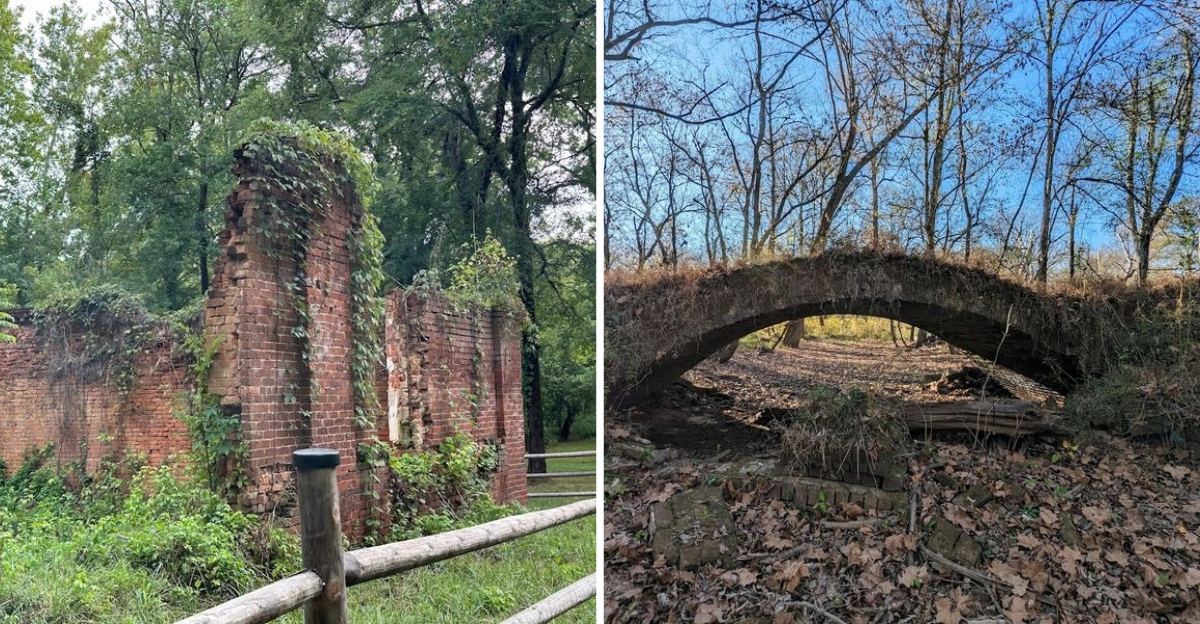
Georgia’s deep forest hides remnants of early industry where nature has slowly reclaimed what was once a busy settlement. Gravel roads fade into thick woodland before revealing broken brickwork, stone foundations, and overgrown structures softened by decades of vines and leaf litter. A nearby river continues its steady path through the landscape, indifferent to what once stood along its banks.
The atmosphere feels layered with history, shaped as much by time as by erosion and quiet decay. A setting where a forgotten riverside settlement in Georgia forest reveals how nature quietly reclaims everything over time.
A Ghost Town With Real Roots: The History of Scull Shoals
Most ghost towns in America feel like legends. Scull Shoals feels like a wound that never quite healed.
Founded around 1782 as a frontier settlement on the banks of the Oconee River, this place grew fast and burned out faster than anyone expected.
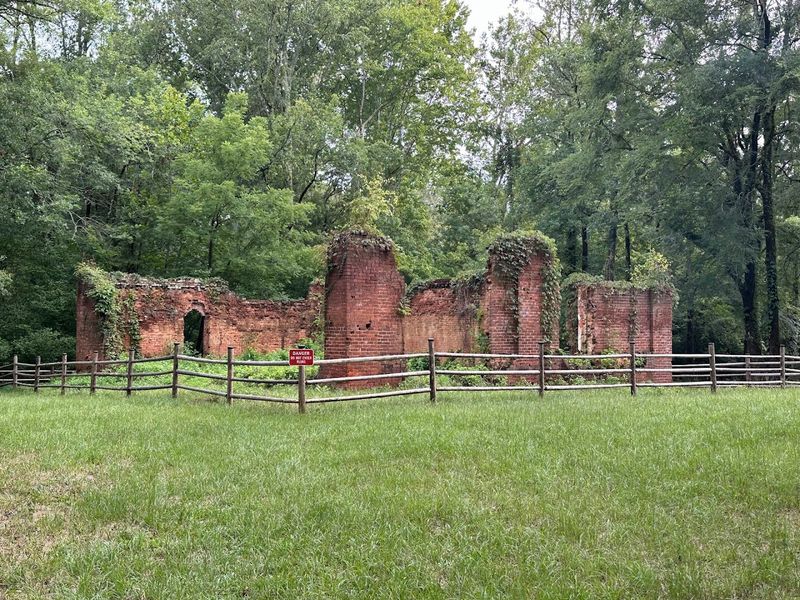
At its peak, Scull Shoals was a genuine industrial hub. It had grist mills, sawmills, a cotton gin, and most impressively, Georgia’s very first paper mill, established in 1811.
A four-story textile mill once employed hundreds of workers right here in these woods.
The town even had its own post office operating from 1825 to 1861, which tells you how seriously people took this place. Then cotton farming upstream began destroying the very thing that made Scull Shoals work.
Erosion from agricultural practices silted up the Oconee River, burying the shoals that powered the mills.
Major floods in the 1880s, including a devastating one in 1887, wiped out mills and infrastructure one by one. By the early 1900s, the last residents had packed up and left.
What remains today is managed by the U.S. Forest Service as a historic recreation area, and it is absolutely worth the drive.
Getting There Is Half the Adventure
The road to Scull Shoals is not exactly welcoming, and honestly, that is part of the charm. Nearly three miles of gravel and dirt road separate you from the site, and your GPS signal gets shakier the closer you get.
Cell service is spotty out here. That is not a complaint but a fair warning worth taking seriously before you head out.
Download a map, charge your phone, and let someone know where you are going.
The road itself is wide and generally well-maintained, with a small bridge crossing a creek along the way. Some visitors have reported deep ruts in certain sections, so a vehicle with decent clearance is a smart choice.
Rainy seasons can make low-lying areas near the site quite soggy.
There are no bathrooms on site, no food vendors, and no crowds on most days. Bringing a picnic lunch, a good pair of hiking boots, and maybe a printed trail map is genuinely useful advice.
The on-site map can be tricky to read because it is not drawn to scale and the ruins themselves are not individually labeled.
Plan for at least an hour, though many visitors end up staying much longer once the place gets under their skin.
The Ruins That Refuse to Disappear
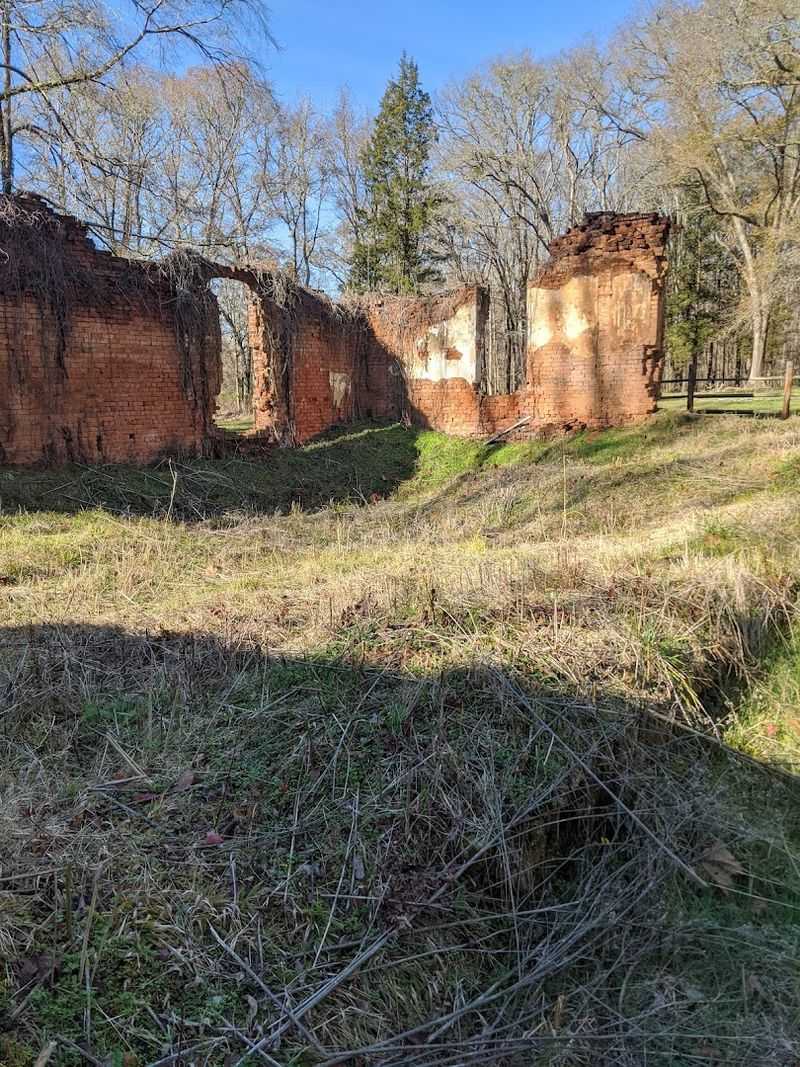
There is something quietly stubborn about the ruins at Scull Shoals. Floods came, time passed, and nature moved in aggressively, yet pieces of this village still stand in defiance of it all.
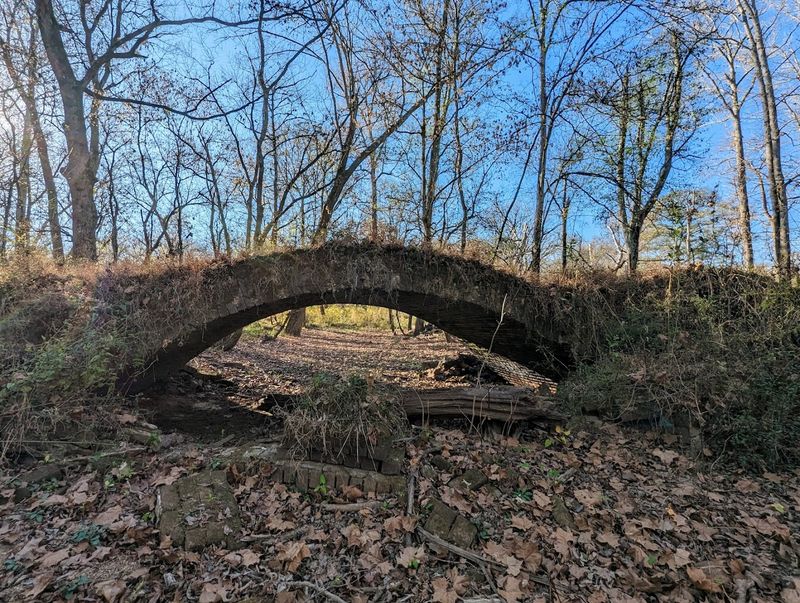
The most visible remains include brick walls from a warehouse and store built in 1846, stone foundations from the old mill’s power plant, scattered chimney bases, and parts of an arched brick bridge that once connected parts of the village. These are not reconstructed replicas.
They are the actual bones of a working industrial town.
Visitors who explore carefully, and do not mind pushing through overgrown vegetation, often discover home foundations hidden along the trails that are not even marked on the official map. That kind of unexpected discovery is what makes Scull Shoals feel more like an adventure than a field trip.
The manager’s house is notoriously difficult to locate, but those who find it say it is absolutely worth the effort. There is also an old well nearby that catches most people completely off guard.
Old roadways that once carried wagons and workers have, in some places, eroded into deep gullies several feet below the surrounding land, which is a strange and fascinating sight on its own.
The Haunted Reputation That Follows This Place
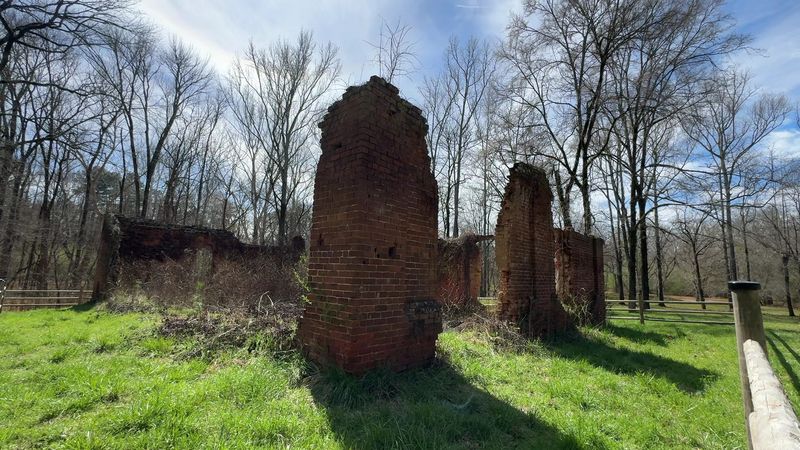
By the time the sun starts dropping near Scull Shoals, the forest changes its personality entirely. One visitor described leaving just as dusk hit, and the entire area filled with fog so quickly it felt surreal.
That kind of experience is not unusual here.
Scull Shoals carries a reputation for being genuinely haunted, and not in a manufactured, tourist-trap kind of way. The stories attached to this place come from its actual history of tragedy.
Floods, economic collapse, and the slow death of a community left behind a weight that some people say they can still feel walking through the ruins.
Local belief holds that spirits of former residents linger among the crumbling walls and silent river banks. Whether you believe in that sort of thing or not, the atmosphere is undeniably powerful on its own terms.
The quiet is thick. Sounds carry strangely.
Shadows seem to move before you expect them to.
The name itself adds another layer of unease. Some historians believe “Scull Shoals” may derive from skeletal remains unearthed from nearby prehistoric Native American mounds, built around A.D. 1250.
That origin story alone is enough to make the hair on your arms stand up on a cool Georgia afternoon.
Native American History Beneath the Surface
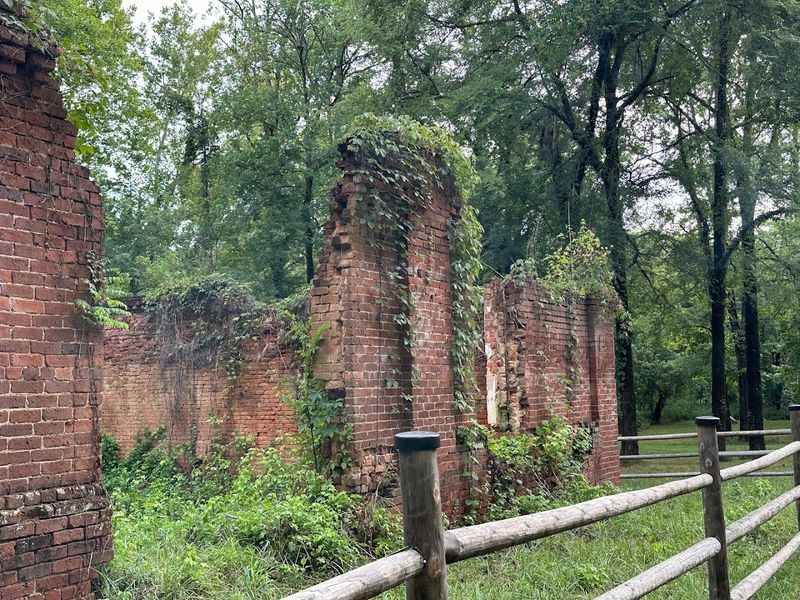
Long before European settlers arrived to build mills and establish post offices, this land along the Oconee River was home to Native American communities whose presence stretched back centuries. That layer of history sits quietly beneath everything else at Scull Shoals.
Prehistoric mounds built by Native Americans from approximately A.D. 1250 through the Lamar cultural period have been identified near the site. When early settlers began disturbing the earth around these mounds, they reportedly unearthed skeletal remains, which may be the origin of the name Scull Shoals itself.
That connection between the land’s deepest past and its name is one of the more sobering details you will come across when researching this place.
The U.S. Forest Service notes that visitors can explore Native American history, along with the history of the DeSoto expedition and the 1811 paper mill, all within this one compact riverfront site.
It is a genuinely layered place.
Spending time at Scull Shoals without thinking about those earlier inhabitants feels like missing the most important chapter. The river that powered the industrial mills was the same river that sustained communities here for hundreds of years before any mill ever existed.
That continuity is quietly remarkable.
The Forest That Swallowed a Village
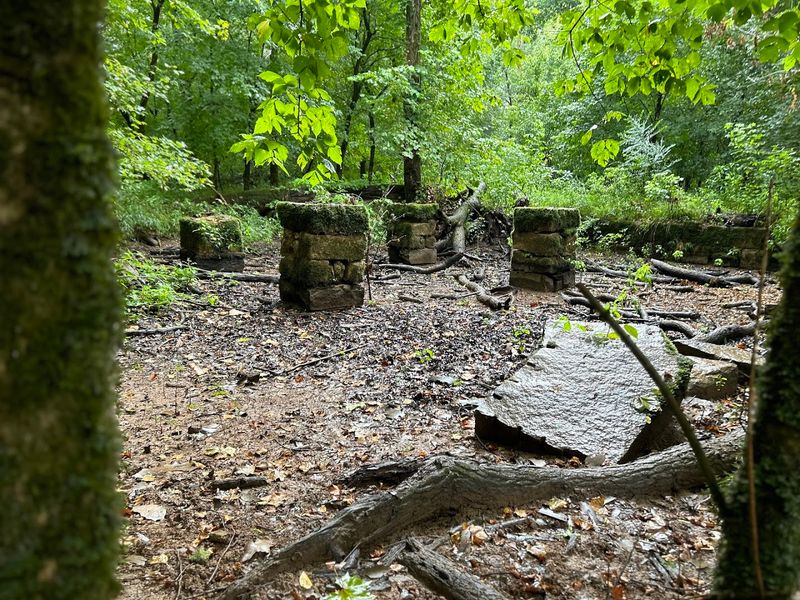
Nature does not wait around at Scull Shoals. It moved in the moment people moved out, and it has been making up for lost time ever since.
The forest here is thick, varied, and absolutely relentless in the way it covers everything.
Water oak, sycamore, and sweetgum trees dominate the canopy, and their roots have worked their way into brick and stone alike. Vines wrap around old walls.
Grass swallows foundations. What were once clear pathways between buildings have become ghost trails, faint impressions in the earth that you follow more by instinct than by sight.
That overgrown quality is not a flaw in the experience. For many visitors, it is the whole point.
There is something genuinely moving about seeing how thoroughly the natural world reclaims human construction when given enough time and no interference.
The Oconee River runs along the edge of the site, calm and unhurried, and it adds a peaceful rhythm to an otherwise eerie setting. Fishing is possible near the riverbank, and picnic tables are available for those who want to sit and absorb the surroundings without rushing anywhere.
Ticks are present, especially in warmer months, so long pants and bug spray are practical items to bring along on any visit.
Why Scull Shoals Is Worth Every Mile of That Dirt Road
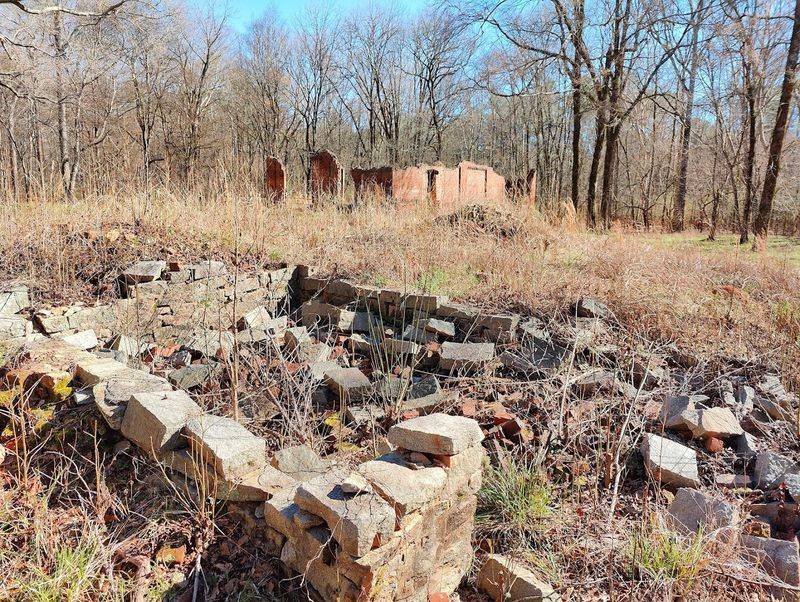
Not every historic site needs to be polished to be powerful. Scull Shoals makes that point better than almost any place I have visited in Georgia.
It is raw, quiet, and completely unfiltered in a way that manicured museums simply cannot replicate.
The site sits about 35 minutes from Athens, which means it is genuinely accessible without requiring a major road trip. That proximity makes it an easy day trip, but the experience itself feels far removed from everyday life in the best possible way.
Reviews from visitors consistently mention the sense of stepping into another world, of imagining the sounds and movement of a village that no longer exists. History nerds, nature lovers, and curious wanderers all seem to find something meaningful here, even if what they find is different for each person.
Going on a cooler, misty day adds an extra layer of atmosphere that sunny weekend visits cannot match. The emptiness of the place, the lack of crowds and noise, is genuinely part of what makes it special.
Bring water, wear sturdy shoes, and give yourself enough time to explore without rushing.
Scull Shoals rewards patience and curiosity in equal measure, and that is a rare quality in any destination.
Address: Skull Shoals Rd, Watkinsville, GA 30677
