You can read about history in books. You can watch documentaries.
But nothing compares to standing where it actually happened. These historic Virginia sites let you walk the same ground where soldiers marched, presidents spoke, and ordinary people lived extraordinary lives.
I have visited each one, and each time I have felt a connection that no amount of reading could replicate. Some are battlefields, where the ground is still scarred by war.
Others are homes, where you can run your hand along the same banister that a founding father touched. All of them offer something that museums cannot.
A chance to be in the place where history was made.
1. Colonial Williamsburg
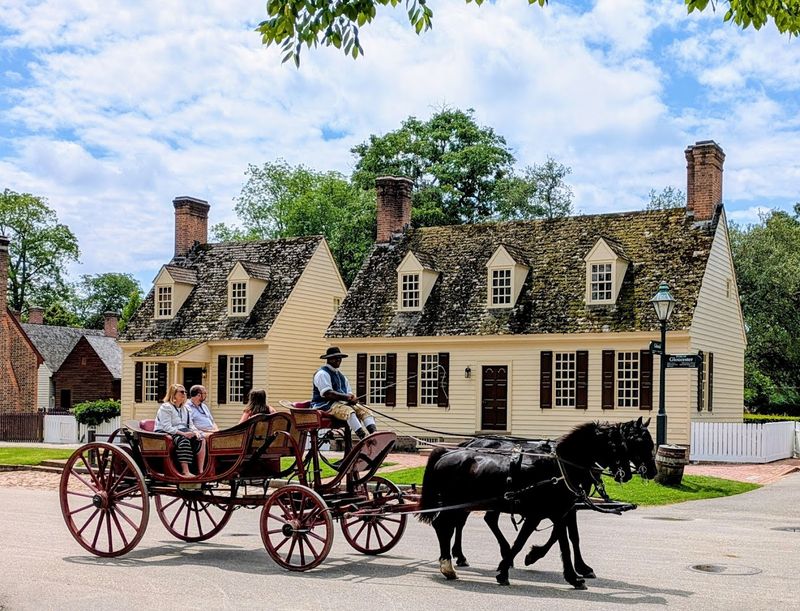
Picture stepping off a modern sidewalk and landing smack in the middle of the 1700s. Colonial Williamsburg pulls that trick off better than anywhere else on earth, and it does it across an entire functioning town.
The world’s largest living history museum stretches across hundreds of acres in the heart of Virginia, and the sheer scale of it is jaw-dropping from the moment you arrive.
Duke of Gloucester Street is the beating heart of the experience. Period-dressed interpreters go about their daily routines, blacksmiths hammer away at glowing metal, and the smell of woodsmoke drifts through the air like a time capsule cracked open.
You’re not watching history behind a velvet rope here. You’re walking through it, talking to it, and sometimes arguing with it.
The restored buildings are genuinely original or carefully reconstructed using 18th-century techniques, which makes every doorway and floorboard feel earned. Guided walking tours dig deep into colonial politics, daily life, and the complicated truths about who actually built this place.
Ghost tours after dark add a completely different layer to the experience.
Kids and adults both leave wide-eyed because there’s always something unexpected happening around the next corner. The historic area also connects to shops, taverns, and accommodations that keep you rooted in the atmosphere even between major attractions.
Plan for a full day at minimum, because rushing Williamsburg would be a genuine crime against good travel. Address: 101 Visitor Center Drive, Williamsburg, VA 23185.
2. Historic Jamestowne and Jamestown Settlement
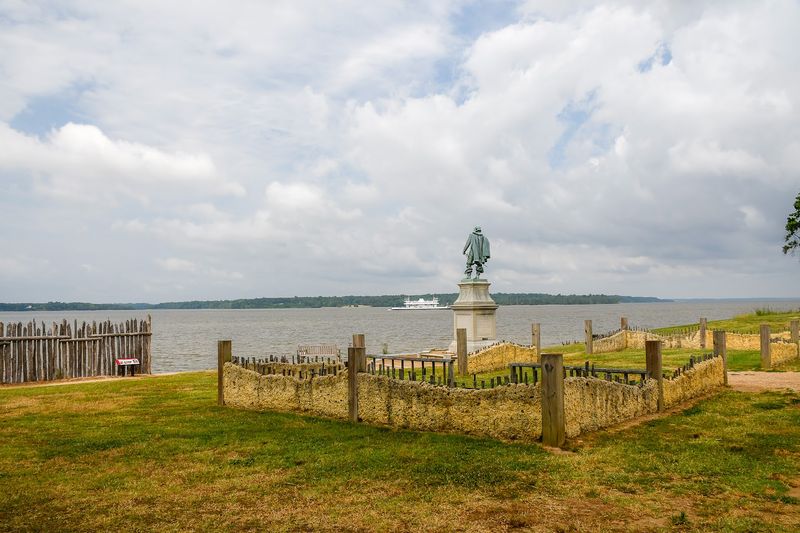
Everything started here. Not figuratively, not poetically, but literally right here on this narrow strip of land jutting into the James River.
Jamestowne is where English settlers planted a permanent foothold in North America back in 1607, and the ground beneath your feet still holds the evidence of that chaotic, ambitious, and often brutal beginning.
Active archaeological digs are one of the coolest parts of the visit. Scientists are still pulling artifacts out of the soil, and you can watch them work in real time through the Archaearium museum
It houses millions of recovered objects ranging from armor fragments to personal items that belonged to the original settlers.
It’s basically a treasure hunt that never ends.
The haunting outline of the original fort has been uncovered and marked out so you can walk its perimeter and understand just how small and vulnerable that first settlement really was. The Memorial Church, built in 1907 over original foundations, adds a quiet weight to the whole experience.
Standing inside it feels genuinely moving.
Just down the road, the Jamestown Settlement offers reconstructed ships, a Powhatan village, and a full fort replica where costumed interpreters bring the earliest colonial period to vivid life. Together, the two sites create a complete picture of Virginia’s most significant origin story.
Budget at least half a day, and bring comfortable shoes because the island rewards slow walkers. Address: 1368 Colonial Pkwy, Jamestown, VA 23081.
3. George Washington’s Mount Vernon
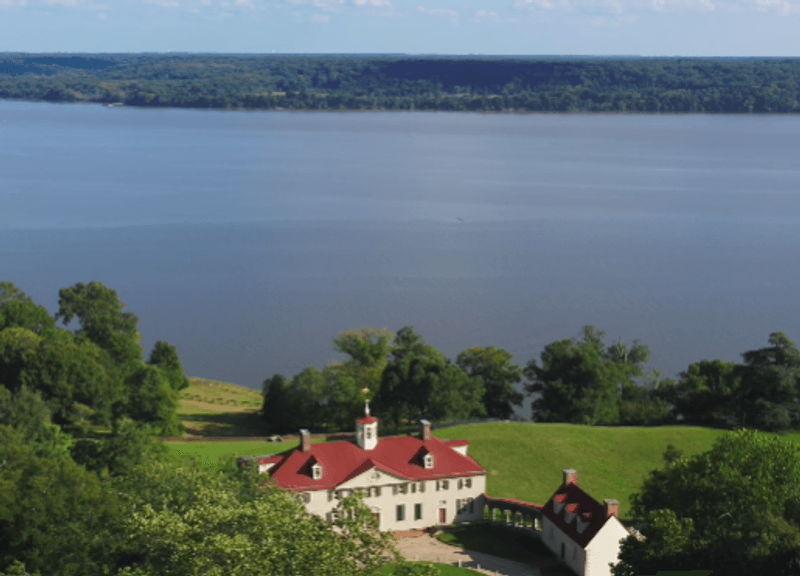
Standing on the piazza at Mount Vernon and gazing out over the Potomac River, it’s genuinely hard not to feel something shift inside you. This is exactly where George Washington stood, thinking the same thoughts about the same river, after carrying an entire revolution on his shoulders.
The estate has a magnetic calm that no history book ever quite captures.
The mansion itself is surprisingly human in scale. Washington designed many of its details himself, including the iconic two-story piazza that faces the water, and the rooms inside reflect his personal tastes in a way that feels intimate rather than museum-sterile.
The first floor is open for tours, and every object in it tells a layered story about power, family, and the complicated realities of plantation life.
Beyond the house, the 500-acre estate unfolds into gardens, a greenhouse, a working farm, a distillery reconstruction, and Washington’s tomb, where visitors pause with a quiet reverence that happens naturally, without prompting.
The slave memorial nearby is one of the most thoughtfully designed spaces on the property, honoring the people whose labor built everything you’re admiring.
The onsite museum and education center packs in artifacts and interactive exhibits that work brilliantly for all ages. Evening events and seasonal programs add fresh reasons to return even after a first visit.
Mount Vernon sits just outside Washington D.C., making it an easy and deeply rewarding day trip from the capital. Address: 3200 Mount Vernon Memorial Hwy, Mount Vernon, VA 22121.
4. Thomas Jefferson’s Monticello
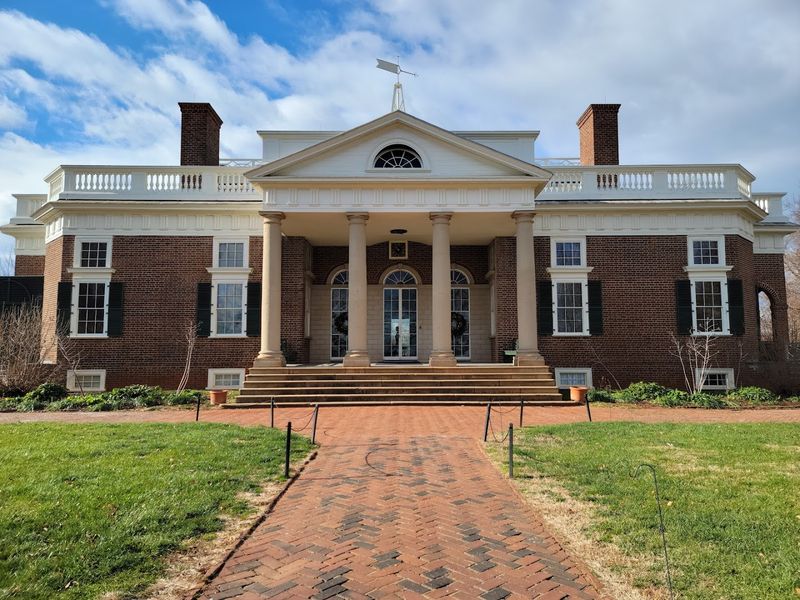
Monticello sits on its mountain like an idea made of brick and glass, which is fitting because Thomas Jefferson never stopped treating it as an experiment. He redesigned the house multiple times over his lifetime, constantly tweaking angles, sightlines, and architectural tricks that still dazzle architects today.
Walking up to that famous neoclassical facade for the first time genuinely stops you in your tracks.
Tours of Jefferson’s private suites reveal a man obsessed with books, science, gadgets, and beautiful objects from around the world. His bedroom alcove, his library, and his private study are arranged with a precision that feels almost modern.
The house is a UNESCO World Heritage Site, and once you’re inside, the designation makes complete sense.
The working farm and extensive gardens stretch down the mountain in terraced rows, and the story told there is as complicated as Jefferson himself. The Mulberry Row site documents the lives of the enslaved people who made Monticello function, and the interpretive approach is honest and unflinching.
It’s one of the most important parts of the entire experience.
Advance booking is strongly recommended because this place fills up fast, especially on weekends and through summer. The views from the mountaintop across the Virginia countryside are spectacular on clear days, adding a scenic reward to all that historical weight.
A full morning or afternoon is the sweet spot for a satisfying visit. Address: 931 Thomas Jefferson Pkwy, Charlottesville, VA 22902.
5. Yorktown Battlefield
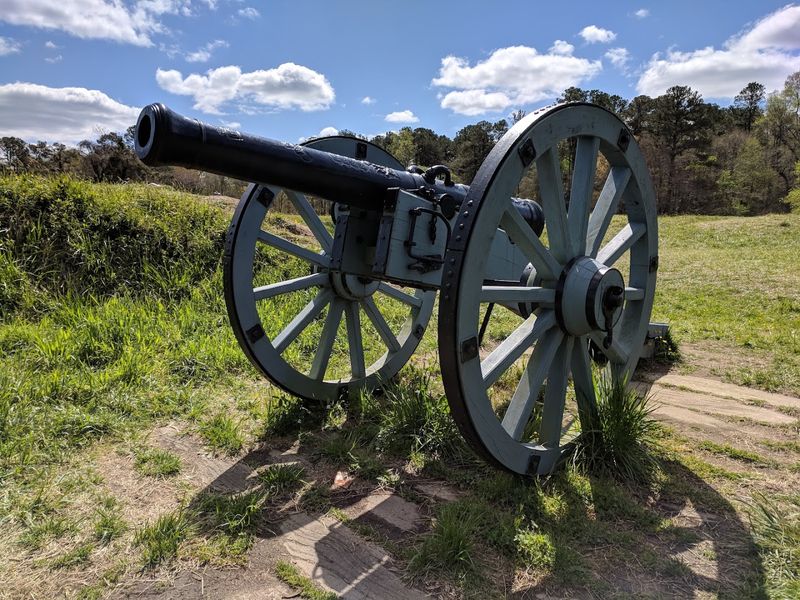
The grass looks ordinary enough until you realize you’re standing on the spot where American independence was actually won.
Yorktown Battlefield is where the final major battle of the Revolutionary War played out in 1781, and the earthworks and siege lines are still right there, visible and walkable, which makes the whole thing feel almost surreal.
This is not a recreation. This is the real ground.
The Visitor Center sets the scene brilliantly with an orientation film and museum exhibits that explain the tactical genius behind the siege. From there, a driving tour loops through the key positions, but the best parts happen when you get out of the car and walk the actual redoubts.
Standing inside the fortifications and looking across the field toward where the enemy once stood is the kind of moment that sticks with you.
Ranger-led programs bring the military strategy to life in ways that make even non-history-buffs lean forward and pay attention. The combination of open landscape, preserved structures, and the sheer weight of what happened here creates an atmosphere that’s hard to shake.
Yorktown sits along the scenic Colonial Parkway, which connects it to Jamestown and Williamsburg in a historic triangle that could easily fill an entire long weekend.
The town of Yorktown itself, right next to the battlefield, adds waterfront charm and a handful of good spots to grab a bite after your walk through history. Address: 1000 Colonial Pkwy, Yorktown, VA 23690.
6. Appomattox Court House National Historical Park
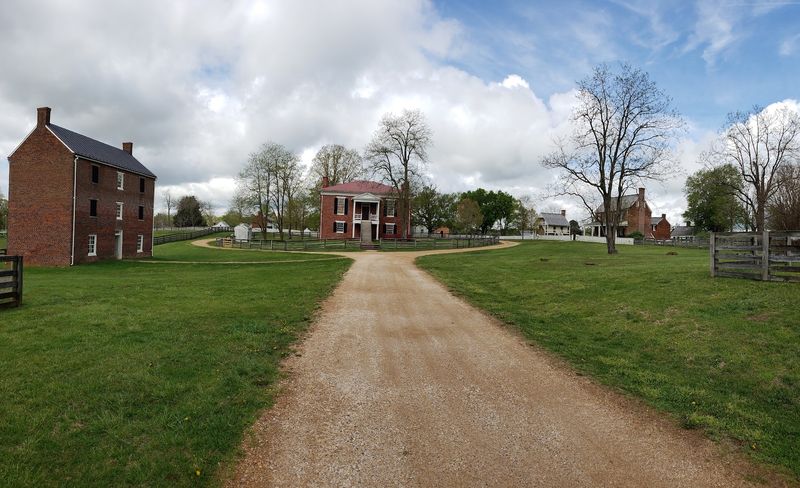
Few places in America carry as much emotional weight as this quiet little village in central Virginia. Appomattox Court House is where the Civil War ended, where General Robert E.
Lee surrendered to General Ulysses S. Grant inside the parlor of the McLean House, and where four years of devastating conflict finally, mercifully stopped.
Walking the village street today, the silence feels intentional.
The park preserves both original and reconstructed village properties, and the McLean House is the centerpiece. Rangers give talks inside the parlor where the surrender documents were signed, and the intimacy of that small room makes the enormity of the moment feel almost impossible to process.
Two generals, a handful of officers, and a decision that changed everything.
The surrounding village includes a courthouse, tavern, jail, and several homes that paint a picture of mid-19th-century rural Virginia life. Self-guided tours let you move at your own pace, while ranger programs during summer months add depth and context that solo exploration can’t always provide.
Living history demonstrations pop up regularly and are worth timing your visit around.
The drive through rural Appomattox County to get here is part of the experience. Rolling farmland, old fences, and quiet roads set the mood long before you arrive.
This is not a flashy destination, and that restraint is exactly what makes it so powerful. Address: 111 National Park Dr, Appomattox, VA 24522.
7. Manassas National Battlefield Park
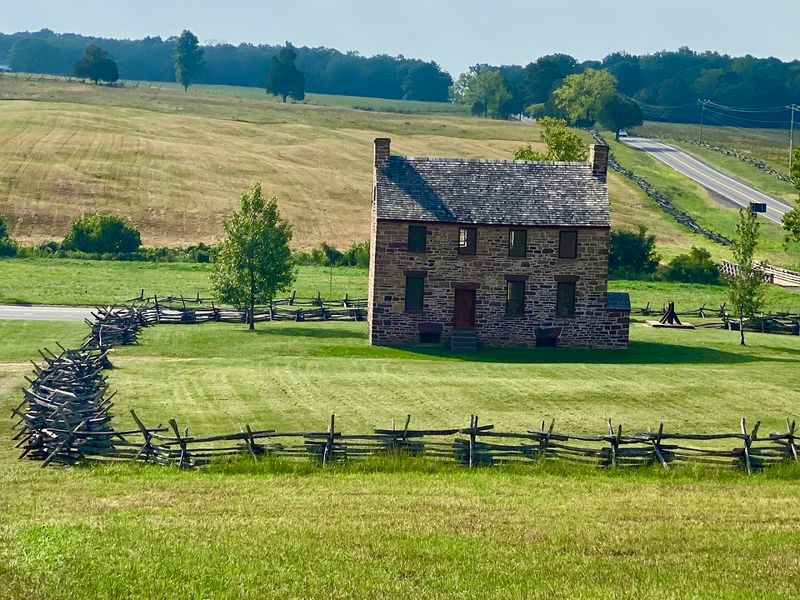
Not many places in the country saw two major battles fought on the exact same ground, but Manassas did, and both times the landscape absorbed the chaos and then went quietly back to looking like a pastoral Virginia countryside.
That contrast between the beauty of the rolling fields and the ferocity of what happened on them is what hits you hardest when you arrive.
The Henry Hill Visitor Center is the smart starting point, with exhibits that map out both First and Second Manassas in clear, engaging detail. From there, walking trails wind across the battlefield in loops that range from short and easy to longer hikes covering the full sweep of the action.
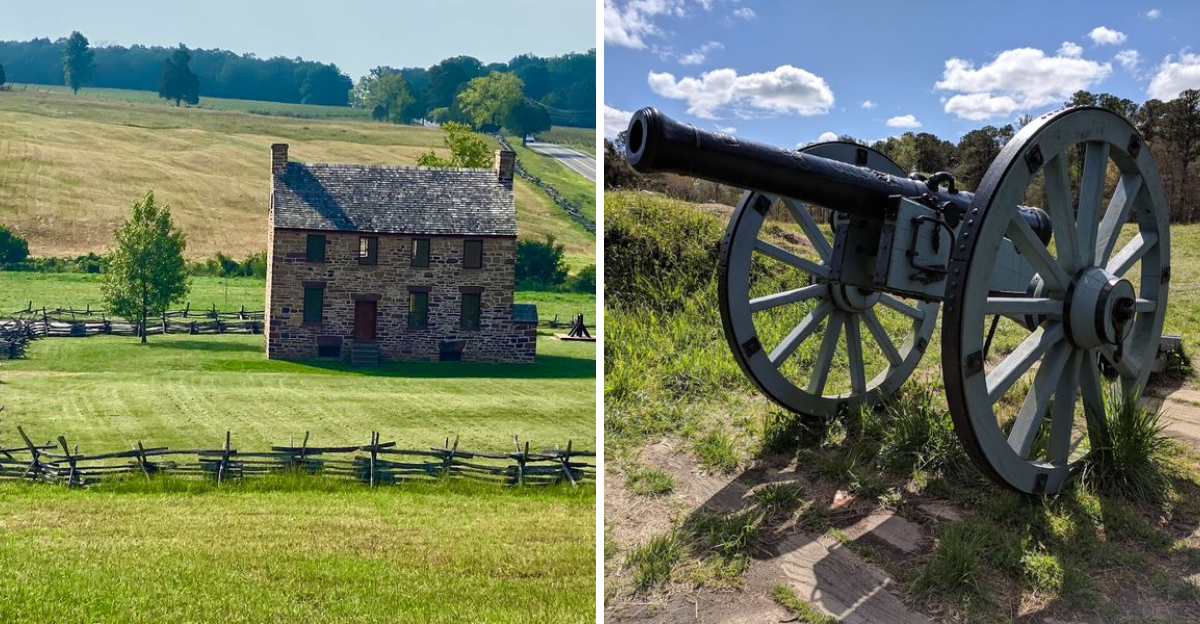
The Stone House, a field hospital during both battles, still stands on the edge of the main road and looks exactly as weathered and haunted as you’d expect.
Ranger programs and living history events turn abstract military strategy into something vivid and immediate.
Standing at the spot where Stonewall Jackson earned his famous nickname, on a warm summer afternoon with the wind moving through the tall grass, is one of those travel moments that genuinely reframes how you think about American history.
The park is also refreshingly uncrowded compared to some bigger national sites, which means you can often have long stretches of the trails entirely to yourself. That solitude adds something powerful to the experience.
Address: 6511 Sudley Rd, Manassas, VA 20109.
8. James Madison’s Montpelier
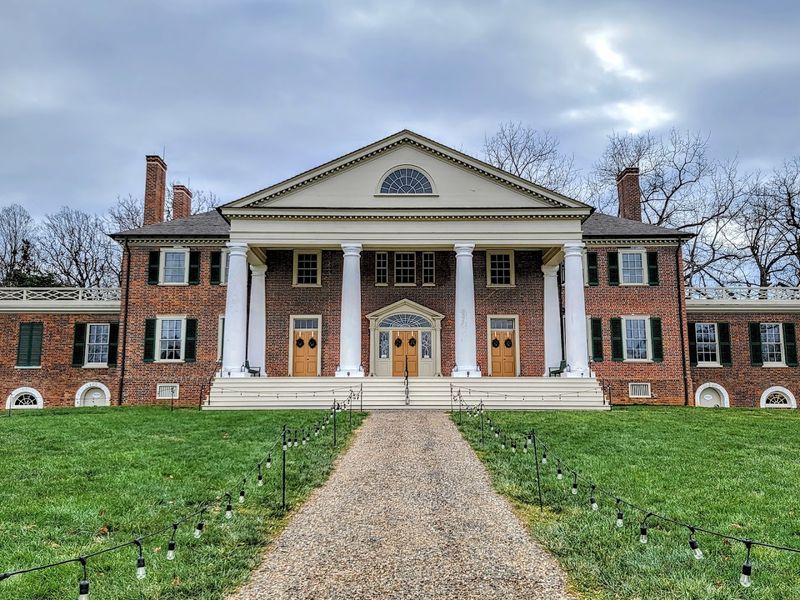
James Madison is often called the Father of the Constitution, but standing at Montpelier, you start to understand the full picture of the man behind that title. This is where he thought, wrote, farmed, and lived for most of his life, and the estate carries his intellectual fingerprints in every corner.
The beautifully restored mansion sits in Orange County, Virginia, surrounded by the kind of sweeping landscape that clearly fed Madison’s thinking.
Tours of the house are genuinely excellent, covering both the Madison family’s story and the lives of the enslaved community that sustained the plantation.
The exhibition called The Mere Distinction of Colour is one of the most thoughtful and honest explorations of slavery’s legacy at any American historic site, and it’s worth building extra time around.
It doesn’t shy away from the hard truths, and that honesty makes the whole visit richer.
Outside, formal gardens and archaeological dig sites compete for your attention, and more than eight miles of walking trails push through meadows and forests that look much as they did in Madison’s time.
The property feels like a working landscape rather than a frozen exhibit, which gives it a vitality that some historic homes lack.
Seasonal events and special programs bring additional layers of engagement throughout the year. Constitution Day celebrations in September are particularly popular and tie directly to Montpelier’s central historical identity.
Address: 11350 Constitution Hwy, Montpelier Station, VA 22957.
9. Richmond National Battlefield Park
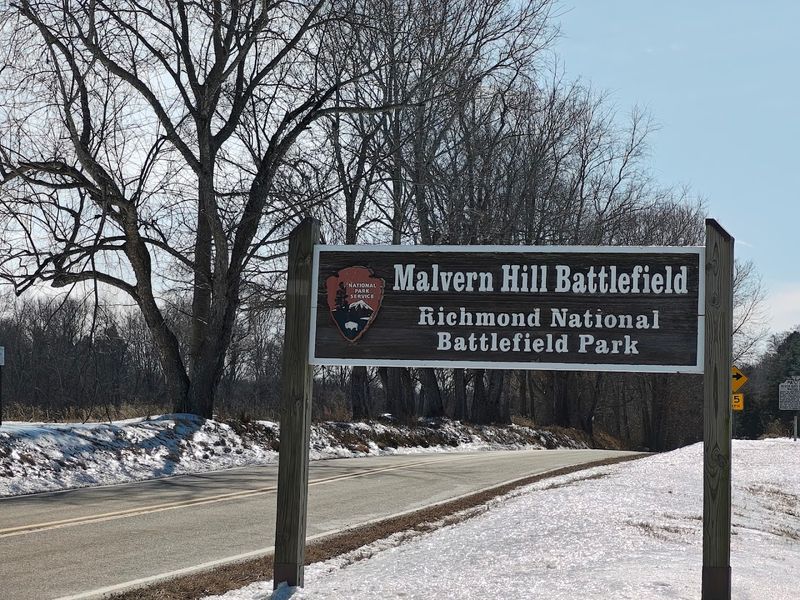
Richmond was the most heavily fortified city in North America during the Civil War, and the network of battlefields surrounding it stretches across multiple counties in a way that rewards dedicated exploration.
Richmond National Battlefield Park pulls all of that together into one connected historical experience, covering engagements from the Peninsula Campaign all the way through the final days of the conflict.
The sheer scope of it is staggering once you start mapping it out.
The park is actually spread across several units, with the Tredegar Iron Works visitor center in downtown Richmond serving as the ideal home base.
The exhibits there are sharp and well-organized, and the building itself, a preserved Civil War-era foundry that produced much of the Confederacy’s artillery, is a significant artifact in its own right.
Starting here gives you the strategic overview that makes the individual battlefield sites click into place.
Cold Harbor, Malvern Hill, and Fort Harrison are among the most atmospheric stops in the network. Walking the earthworks at Fort Harrison on a quiet morning, with birds calling through the old-growth trees, feels like stepping into a completely different century.
The landscape has changed remarkably little in some areas, and that continuity is what makes the park so compelling.
Ranger programs and self-guided driving tours make the sprawling park accessible even for first-time visitors. Plan for multiple visits if you want to do it full justice.
Address: 470 Tredegar St, Richmond, VA 23219.
10. Maggie L. Walker National Historic Site
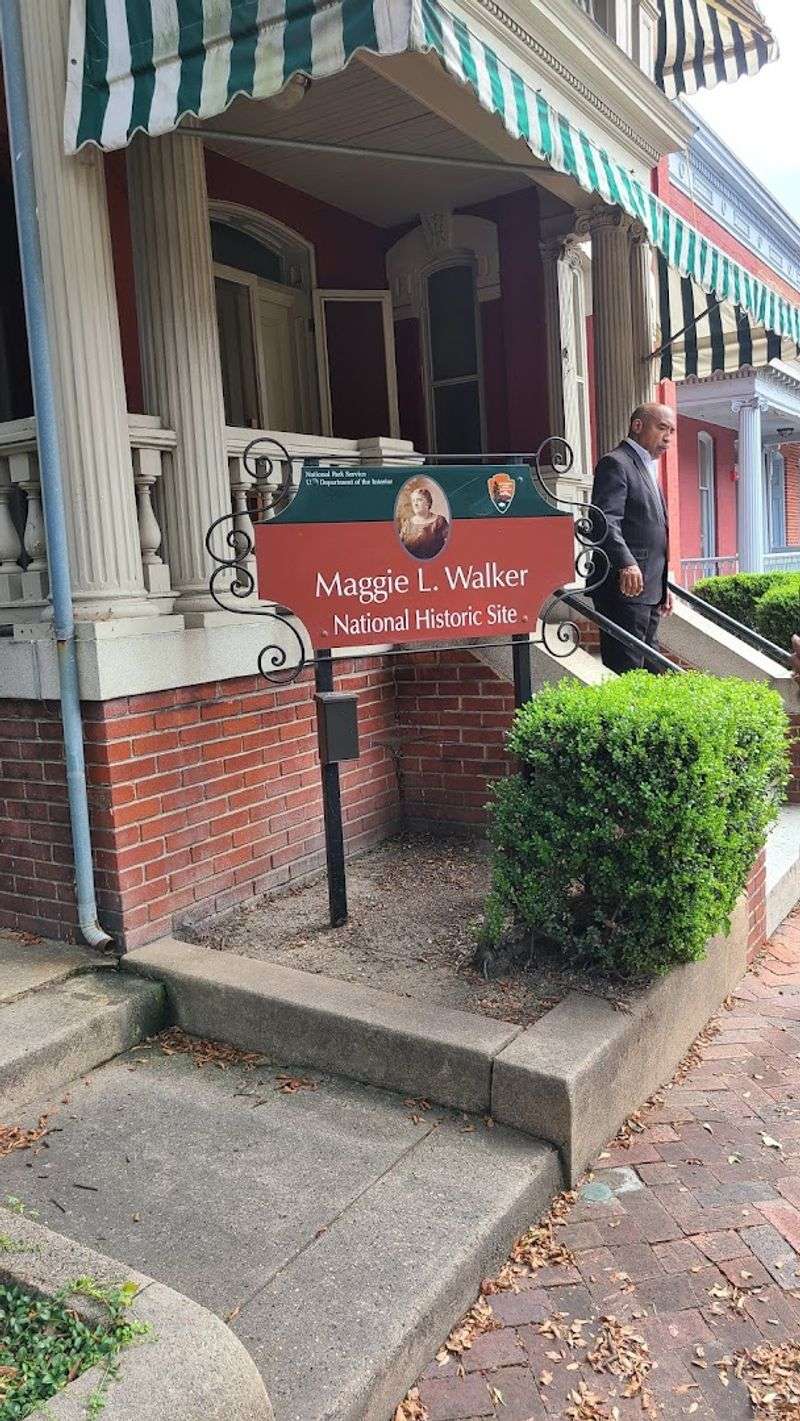
Maggie L. Walker did something no one had ever done before: she became the first African American woman to charter and serve as president of a bank in the United States.
Her home in Richmond’s Jackson Ward neighborhood, now a National Historic Site, tells that story with a warmth and precision that makes her achievement feel both extraordinary and deeply personal.
Walking through her house, you understand immediately that this was a woman who thought on a grand scale while keeping her roots firmly planted in community.
The house itself is beautifully preserved, filled with original furnishings, personal artifacts, and details that reflect Walker’s personality and ambitions. Rangers lead tours that connect her individual story to the broader history of Black entrepreneurship, civil rights, and community building in early 20th-century Virginia.
The neighborhood context matters enormously here: Jackson Ward was once known as the Harlem of the South, a thriving hub of Black-owned businesses and cultural life.
Exhibits at the site trace Walker’s work with the Independent Order of Saint Luke, the fraternal organization through which she built her financial empire and her community legacy.
The story arc from her childhood to her banking career to her advocacy work is genuinely inspiring and told without any of the flat, reverent tone that sometimes makes historic house museums feel lifeless.
This site is smaller and quieter than some of Virginia’s blockbuster historic destinations, but the impact it leaves is outsized and lasting. Address: 600 N 2nd St, Richmond, VA 23219.
