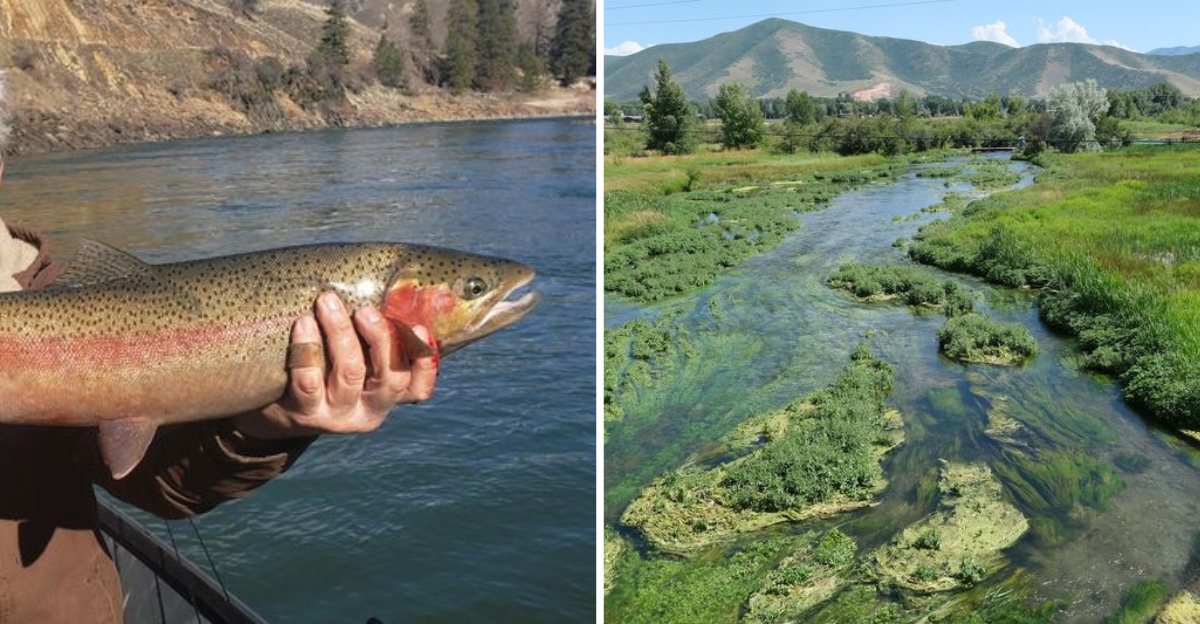
Steelhead are not salmon but they live like them. Born in fresh water, swim to the ocean, then fight their way back upstream to spawn.
The Snake River used to be full of them. Now the numbers are crashing. The four dams on the lower Snake River are the main problem.
They turn a rushing river into a series of warm, slow reservoirs. Young steelhead get lost.
Adults tire out before reaching their spawning grounds. Conservationists have been sounding the alarm for years. Idaho once had runs of half a million fish.
Now they are lucky to see a fraction of that. The dams were built for barges and electricity.
The steelhead are paying the price.
The Four Lower Snake River Dams and Why They Matter
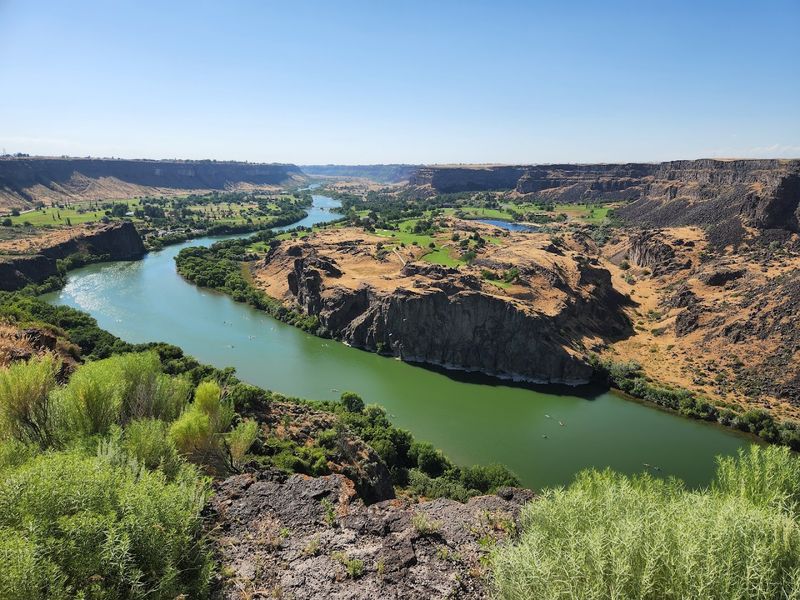
Most people picture Idaho’s Snake River and think of fishing trips, kayak runs, and jaw-dropping canyon views. What they might not picture is a series of concrete barriers quietly reshaping the fate of an entire species.
The four lower Snake River dams, Lower Granite, Little Goose, Lower Monumental, and Ice Harbor, sit in eastern Washington but cast a long shadow over Idaho’s wild steelhead populations.
These dams were built primarily to support barge transportation along the river. Over the decades, freight volumes have dropped significantly, and the energy they generate has proven far less valuable than originally projected.
Yet they remain standing, and their presence continues to block one of nature’s most remarkable journeys.
Wild steelhead born in Idaho’s upper river systems must travel hundreds of miles to reach the Pacific Ocean. On that journey, they face not one dam but eight total, four on the lower Columbia and four on the lower Snake.
Each dam adds stress, injury risk, and lost time. The fish that survive the trip downstream must then navigate the same gauntlet in reverse to spawn.
That round trip, already one of the most demanding migrations in the animal kingdom, has become nearly impossible for many fish. Scientists, tribal nations, and conservation groups have spent decades documenting the damage.
The data is not ambiguous. These four dams are the single biggest obstacle standing between Snake River steelhead and a fighting chance at recovery.
Migration Barriers That Push Fish Past Their Limits
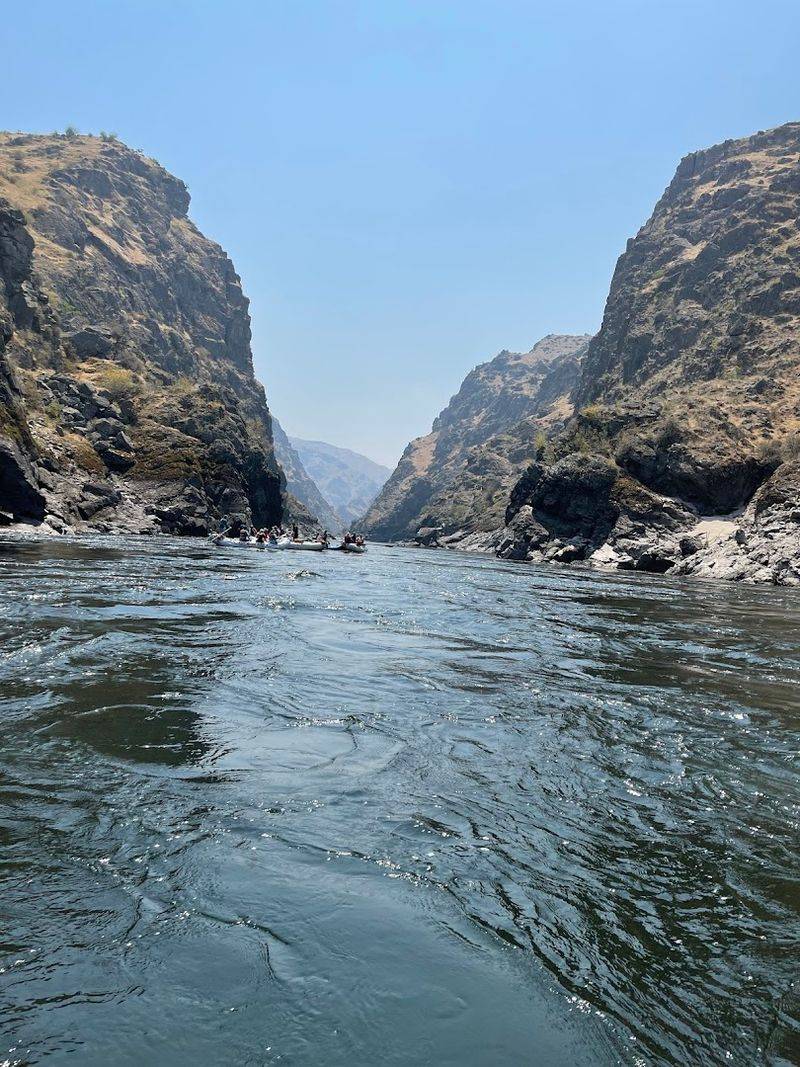
There is something almost unbelievable about the steelhead’s life cycle. These fish hatch in cold Idaho streams, spend years growing in the ocean, and then find their way back to the exact river stretch where they were born.
It is one of the most precise navigational feats in the natural world. But that ancient instinct runs headfirst into eight dams before it can be completed.
Each dam acts as a physical and physiological challenge. Fish passing through turbines risk injury or death.
Those routed through fish ladders or bypass systems still experience stress that depletes their energy reserves. Juvenile fish heading to the ocean face the longest odds, spending far more time in the river than they would naturally, which throws off critical biological timing.
Research shows that juvenile steelhead, called smolts, take roughly ten times longer to reach the ocean when navigating the dam system compared to a free-flowing river. That extra time means more exposure to predators, more physiological strain, and a body that arrives at the ocean out of sync with the conditions it needs to survive.
The fish are not just slowed down. They are worn down before the real journey even begins.
When adults attempt the return trip, they face the same barriers again, this time while carrying the energy reserves needed for spawning. For many fish, those reserves simply run out.
The migration that once defined the Snake River now asks more than most steelhead can give.
Lethal Water Temperatures Turning the River Against Its Own Fish
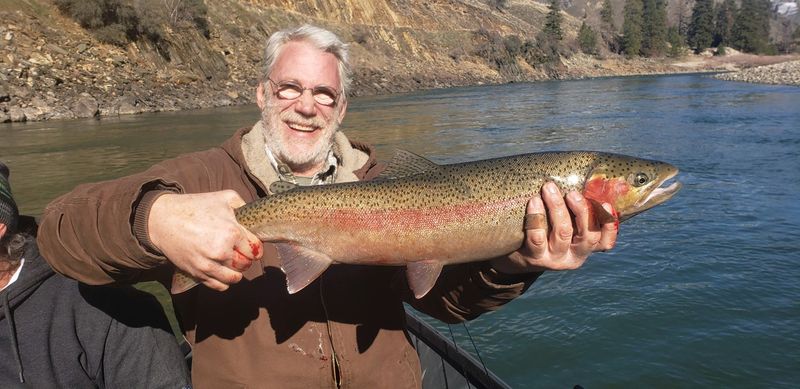
One of the quieter but deadliest consequences of the Snake River dams is what they do to water temperature. Free-flowing rivers stay cool because they move fast, mix with cold groundwater, and stay shaded by natural riparian vegetation.
Reservoirs do none of those things. They sit still, spread wide, and soak up the summer sun like a shallow pan on a stove.
Water temperatures in the reservoirs created by the lower Snake River dams have reached 70 to 72 degrees Fahrenheit during summer months. For steelhead, 68 degrees is already considered a harm threshold.
At 72 to 73 degrees, fish stop migrating entirely. Their bodies begin to fail.
Thermal stress leads to immune suppression, and for many fish, death follows.
I find it hard to wrap my head around the idea that a river known for its cold, rushing character could become lethally warm in a matter of miles. But that is exactly what the reservoirs do.
They transform a dynamic, cold-water system into something slow and stagnant. Summer after summer, returning adult steelhead enter these warm stretches already stressed from their ocean journey and the upstream climb.
Some wait near the dam bases for cooler water that may never come. Others push through and die before reaching their spawning grounds.
The temperature problem is not a freak weather event. It is a structural consequence of the dams themselves, and it gets worse as climate patterns shift toward hotter, drier summers across the Pacific Northwest.
Habitat Loss Beneath the Reservoirs
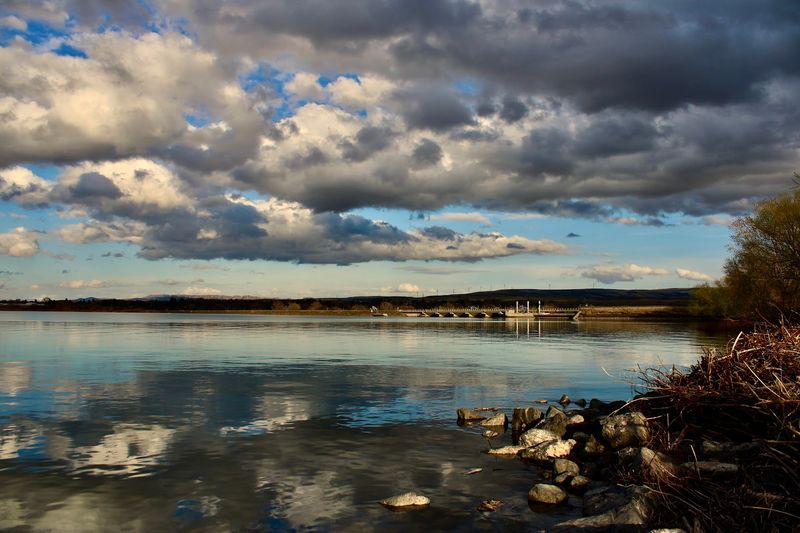
Before the dams went up, the Snake River ran fast and cold through 140 miles of some of the most productive salmon and steelhead habitat on the continent. Gravel beds where fish could spawn, cold side channels where juveniles could hide, and the kind of complex river structure that supports entire food webs all existed in abundance.
The reservoirs erased most of it.
When a dam floods a river canyon, it does not just change the water. It buries the riverbed under still water, eliminates the gravel bars and riffles that fish need for spawning, and wipes out the insects and invertebrates that juvenile fish eat.
The reservoirs that replaced those wild river miles offer little of what steelhead need. Food is scarce.
Cover from predators is almost nonexistent. And the cues that guide fish migration, current speed, temperature gradients, and natural river chemistry, are all disrupted.
Young steelhead that hatch in Idaho’s upper river systems face this degraded habitat almost immediately on their journey downstream. Instead of a river that feeds and shelters them, they enter a series of lake-like impoundments where predators like pikeminnow and bass thrive in the warm, calm water.
Those predators have no natural limits in the reservoir environment, and juvenile steelhead pay the price. Habitat loss is not just about the number of miles flooded.
It is about the complete unraveling of an ecosystem that took thousands of years to develop and that cannot simply be replaced by a hatchery program or a fish ladder retrofit.
Dismal Survival Rates and the Numbers Behind the Crisis
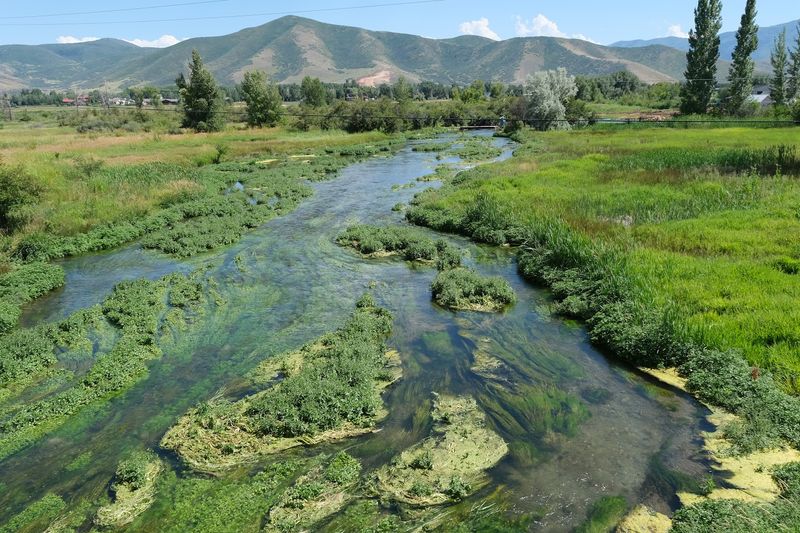
Numbers can be dry, but sometimes a single statistic cuts right through the noise. Since 1994, an average of just 1.4 percent of wild steelhead spawned in the Upper Snake River Basin have returned the following year.
NOAA considers a smolt-to-adult return rate of 2 to 6 percent the minimum needed for a sustainable population. The Snake River has not consistently hit even the bottom of that range in decades.
Wild-origin steelhead and salmon returns to the Snake Basin now sit at somewhere between 0.1 and 2 percent of their historical abundance. Some populations are so low that scientists use the term quasi-extinction threshold, meaning natural recovery without major intervention is essentially impossible.
Since the 1950s, Idaho’s combined salmon and steelhead runs have declined by more than 80 percent.
Over 16 billion dollars has been spent on recovery measures across the Columbia and Snake river systems. Fish ladders, hatchery programs, barge transportation for juvenile fish, and habitat restoration projects have all been tried.
None of them have recovered a single endangered Snake River population. Hatchery fish, often pointed to as a solution, do not count toward ESA recovery status and actually show higher mortality rates when passing through the dam system.
The math here is not subtle. Decades of expensive, well-intentioned efforts have not moved the needle because they work around the dams rather than addressing them.
The fish are telling us something with their numbers. Listening might be the most important thing we can do for the Snake River’s future.
What Science and Indigenous Knowledge Are Telling Us About Dam Removal
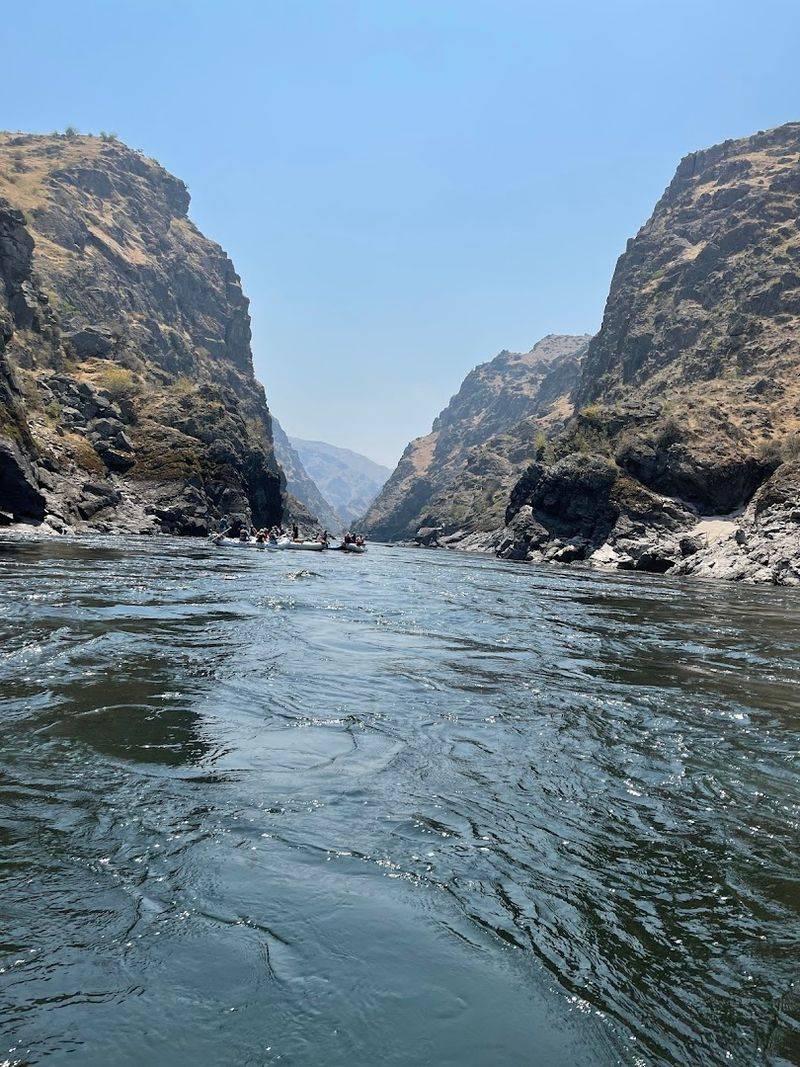
The scientific consensus on what needs to happen in the Snake River is about as clear as it gets in conservation biology. Decades of research from NOAA, the Fish Passage Center, and tribal nations including the Nez Perce Tribe point to the same conclusion: removing the four lower Snake River dams is the most effective path to recovering Idaho’s steelhead and salmon populations.
That is not a fringe opinion. It is the result of years of data collection, population modeling, and hard lessons learned from failed recovery attempts.
The Nez Perce Tribe has fished these waters for thousands of years. Their relationship with salmon and steelhead is not just cultural.
It is ecological, spiritual, and deeply practical. Tribal leaders and biologists have long argued that the river cannot heal while those four dams remain in place.
That perspective, grounded in generations of observation and knowledge, aligns closely with what modern fisheries science has concluded.
Dam removal is not a new idea, and it is not untested. Rivers where dams have been removed have shown remarkable recovery.
Fish return. Habitat rebuilds.
The ecosystem finds its footing again, sometimes faster than anyone expected. The Snake River has that same potential.
The cold, clean headwaters in Idaho still produce wild fish. The ocean habitat is still there.
What stands between a struggling population and a recovering one is a series of four dams whose original purpose has largely faded. The question is no longer whether removal would help.
The question is whether we are willing to act before it is too late.
