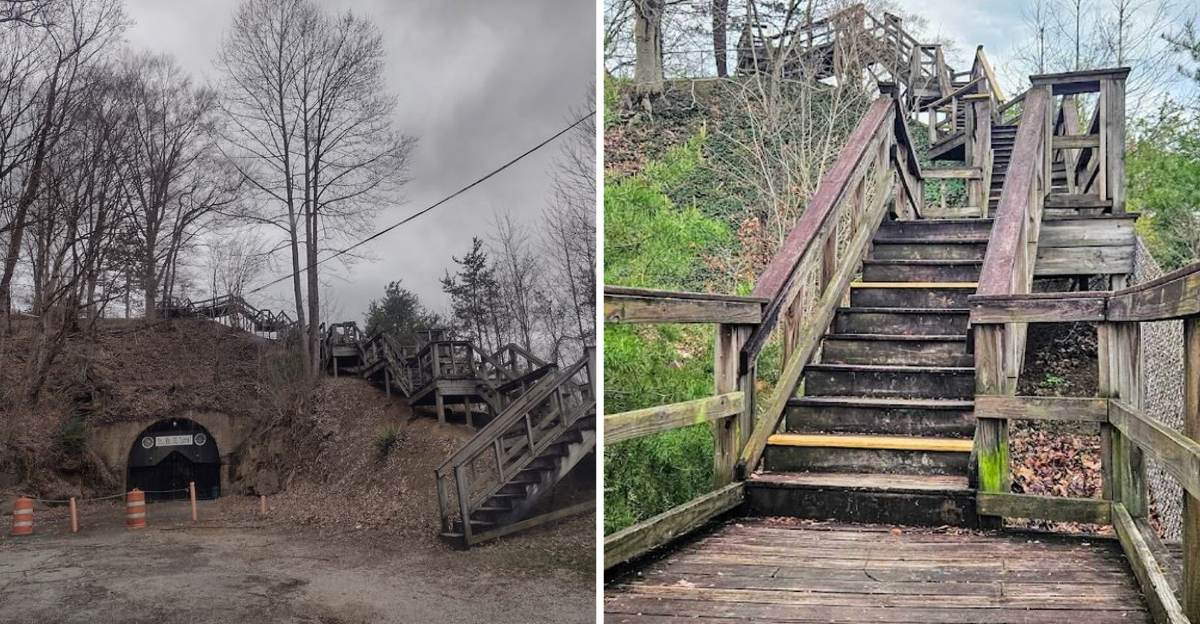
The tunnel goes straight through a hill, dark on both ends with no light in between. You cannot see the other side once you step inside.
The stone walls are damp and cold, even on a summer afternoon. And if you stand still long enough, people say you might see something. A faint glow, like a lantern swinging in the dark.
No source. No explanation.
Just light moving where no one walks. The Ironton Tunnel in southern Ohio has been here since the railroad days, and locals have passed down stories for generations about workers who died during construction. Their ghosts never left.
They still patrol the tracks with lanterns, or so the story goes. I walked halfway in and turned back.
The History Carved Into Every Stone
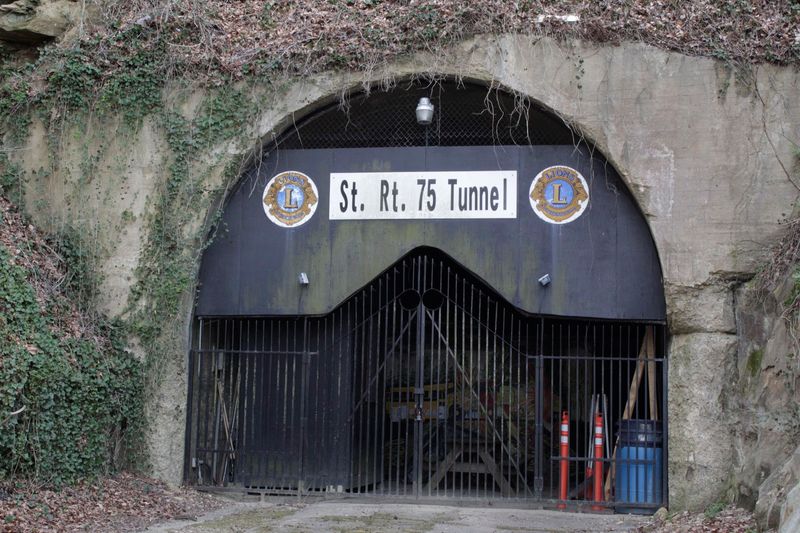
Few tunnels in America can claim they were built by a single doctor with a vision and a determination to move iron by horse and buggy. Dr. B.F.
Cory had the Ironton Tunnel bored through Cronacher’s Hill in 1866, cutting a path that would connect the iron furnaces of Lawrence County to the Ohio River. That kind of ambition, done with 19th-century tools, is something worth standing in front of for a moment.
The tunnel was originally narrow, barely wide enough for a single lane of horse-drawn traffic. By 1915, it had been widened to 30 feet to fit two automobile lanes, a sign that the town was growing and the tunnel was keeping up.
When Ohio Route 75 was designated in 1924, the tunnel officially became part of the state road system, giving this humble passage a new kind of importance.
By 1960, a four-lane bypass made the tunnel obsolete for daily traffic. It was closed and largely forgotten for nearly three decades before the Ironton Lions Club brought it back to life in 1989.
What they found when clearing it out sparked stories that still circulate today. Workers reportedly experienced cold brushes on the back of their necks, doors slamming without explanation, and lights flickering in a space with no electricity.
Whether you believe any of that or not, the tunnel’s history alone makes it one of the most layered and genuinely fascinating stops in all of southern Ohio.
A Legend That Refuses to Fade
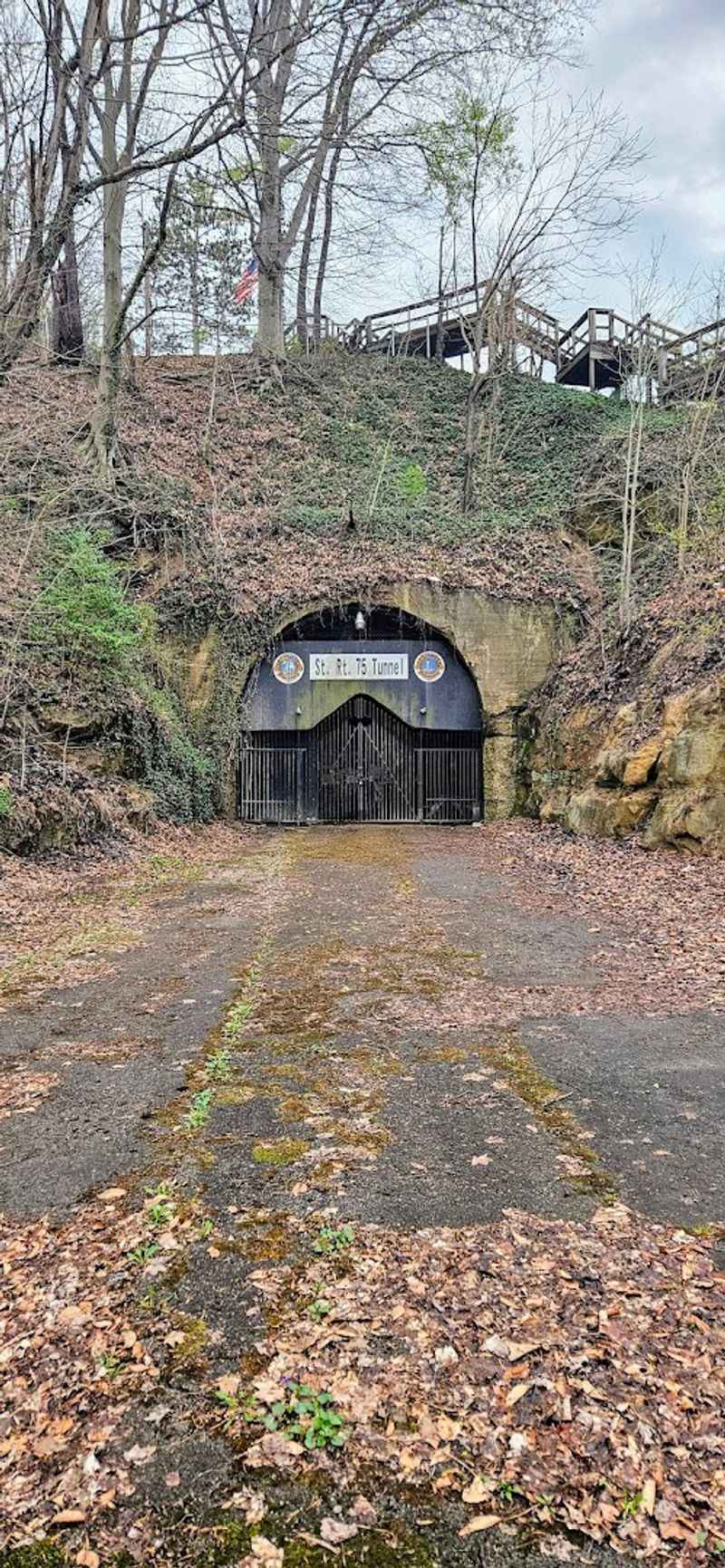
Local legends have a way of growing teeth over time, and the one attached to the Ironton Tunnel has some of the sharpest around. The story goes that on Halloween night in 1959, a tanker truck and a school bus collided inside the tunnel.
The bus was supposedly returning from a high school football game, and the driver failed to honk or flash the headlights upon entry, which was the custom in that narrow, single-file space.
According to the legend, the fire burned for days. Screams reportedly echoed out of the tunnel for miles around.
The story claims that when the tunnel was eventually sealed, not all of the victims had been recovered, leaving restless spirits trapped inside the limestone walls. It is a chilling tale, and one that spread quickly through Lawrence County.
Historians and researchers have noted that this particular bus fire story may have been crafted as part of the haunted attraction launched in 1998, rather than a documented historical event. Still, the eerie feelings reported by real workers in 1989, before any haunted house props existed, are harder to dismiss.
People who have visited at night describe an unshakeable sense of being watched. The tunnel earned a reputation for accidents long before any ghost story attached itself to it, and locals have always treated it with a certain careful respect.
That mix of verified history and layered legend is exactly what makes this place feel so genuinely unsettling.
The Haunted Tunnel Experience Each Fall
Every October, the Ironton Lions Club transforms this old stone passage into one of southern Ohio’s most talked-about haunted attractions. Since 1998, they have been running the Haunted Tunnel experience, and as of fall 2025, they had been doing it for 29 consecutive years.
That kind of consistency says something about how much the community values it, and how well it works.
The setup uses the tunnel’s natural atmosphere to its full advantage. You do not need much decoration when the walls are ancient limestone and the air smells like cold earth.
The Lions Club adds props, actors, and lighting that play off the existing eeriness in a way that feels earned rather than manufactured. Some visitors leave genuinely spooked.
Others come away more impressed by the setting than the scares, which is honestly fair.
All proceeds from the event go toward community programs, which is the kind of detail that makes attending feel worthwhile on two levels. You get a memorable night out, and local families benefit from the funds raised.
Visitors have described the experience as a great evening out, especially for those who enjoy the atmosphere of fall in a small Ohio river town. If you are planning a visit specifically for the haunted attraction, check seasonal dates in advance since it runs only around Halloween.
Bringing kids is common, and the experience tends to lean more atmospheric than outright terrifying, which makes it accessible for a wide range of ages and scare tolerances.
Climbing to the Lookout Above the Tunnel
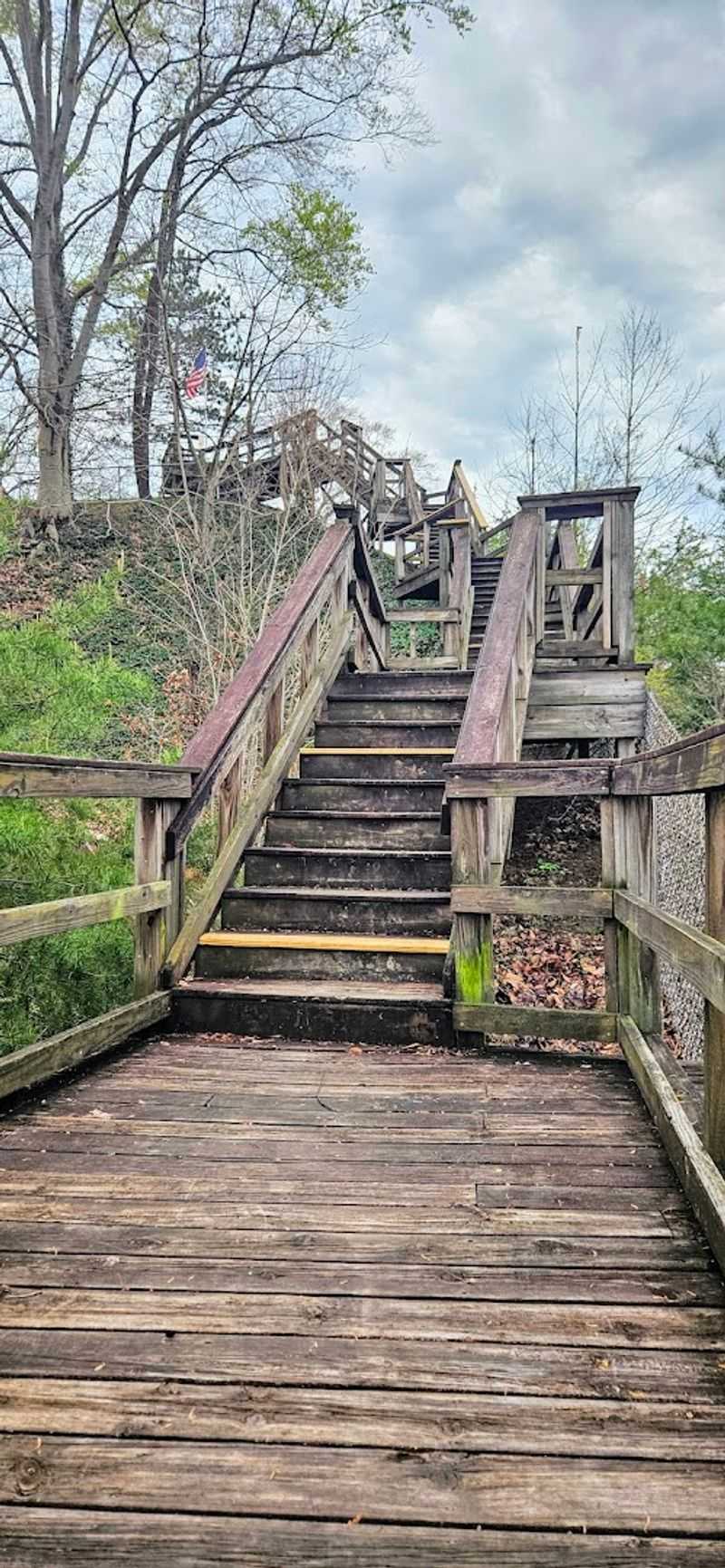
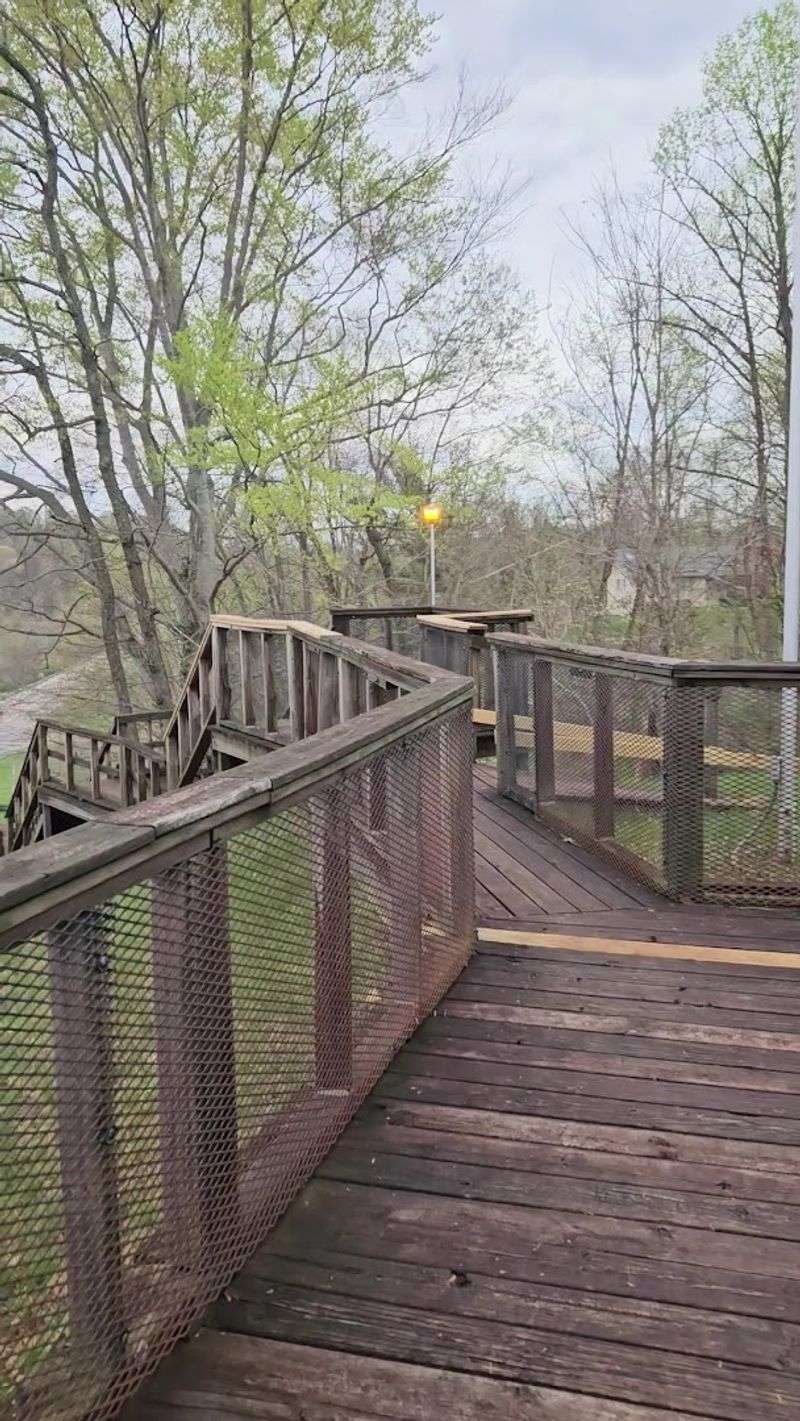
Most people do not realize there is a whole second experience waiting above the tunnel itself. A staircase on the hillside leads up to a lookout point at the top of Cronacher’s Hill, and the view from up there is genuinely worth the climb.
You can see out over the city of Ironton, catch a glimpse of the Ohio River, and get a sense of just how much geography this small town is packed into.
The stairs are steep and numerous, and a few sections have seen better days. Multiple visitors have mentioned that the climb gives your legs a real workout, which is accurate.
It is not a casual stroll, but the payoff at the top makes the effort feel reasonable. Going at dusk adds a particular kind of atmosphere, with the last light catching the river and the town settling into its evening rhythm below.
At the base of the hill near the tunnel entrance, there are picnic tables where you can rest before or after the climb. The surrounding area has fast food and grocery options nearby if you want to grab something and sit outside for a bit.
It is a surprisingly pleasant way to spend an afternoon in Ironton, combining a piece of genuine history with a short outdoor adventure. The lookout does not get nearly enough credit as a standalone destination.
Even if the tunnel itself is locked when you visit, the view from the top makes the trip feel complete and worthwhile on its own.
What It Feels Like to Visit Today
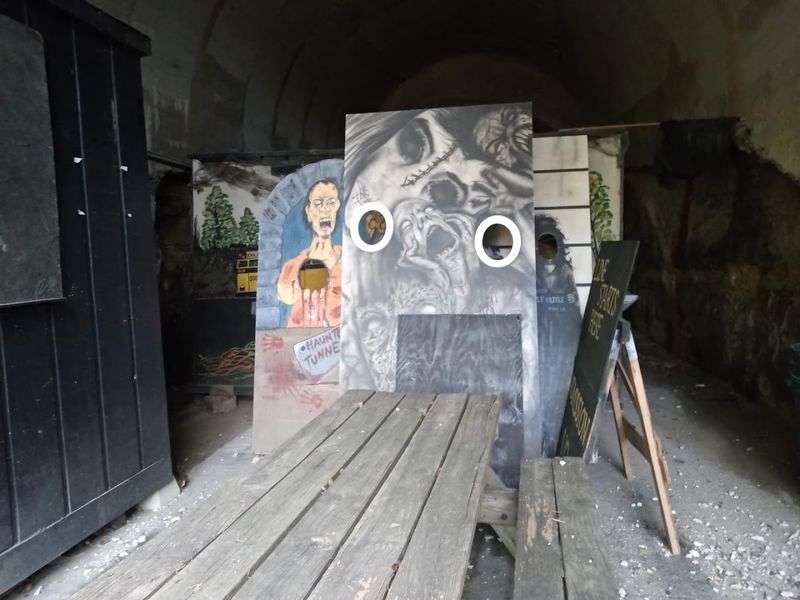
Showing up to the Ironton Tunnel on a regular afternoon has its own kind of quiet reward. The tunnel is listed as open 24 hours as a historical landmark, but the interior is gated and inaccessible outside of its seasonal haunted attraction events.
That means most daytime visitors experience it from the outside, peering through the gate into the dark passage beyond.
Even from outside, the tunnel has a presence. The stone arch framing the entrance, the cool air drifting out from inside, and the way sound changes near the opening all contribute to an atmosphere that does not require a ghost story to feel significant.
It is one of those places that communicates age and weight without needing a sign to explain it. You just feel it.
The tunnel holds a 4.2-star rating on Google Maps, which reflects a visitor base that genuinely appreciates it despite its limited accessibility. Reviews consistently mention the view from the hill, the interesting history, and the overall atmosphere.
A few note the lack of informational signage near the entrance, which is a fair point. Learning the background before you arrive makes the visit noticeably richer.
The area around the tunnel is easy to navigate, and the whole stop, including the hill climb and a few minutes at the gate, can comfortably fit into a couple of hours. For anyone road-tripping through Lawrence County or exploring the Ohio River towns, this is a stop that earns its place on the itinerary.
Why Ironton Keeps This Tunnel Alive
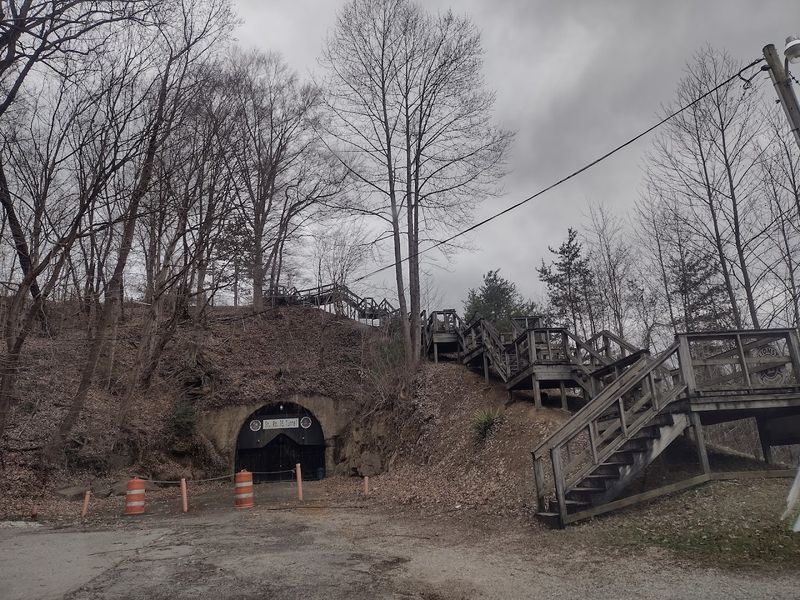
There is something telling about the fact that a community Lions Club has been maintaining and operating a 19th-century tunnel for over three decades. The Ironton Lions Club stepped in to reopen the tunnel in 1989 when it was largely abandoned, and they have been its stewards ever since.
That level of local investment in a piece of infrastructure that stopped being useful in 1960 says a lot about how Ironton sees its own identity.
The tunnel is a symbol of what this town was built on. Iron production shaped Lawrence County’s economy and character for generations, and the tunnel was a literal conduit for that industry.
Keeping it accessible, even as a seasonal attraction, keeps that story visible for younger generations who might otherwise have no physical connection to it. History without a place to stand in tends to disappear faster.
The haunted attraction has become its own tradition, something families return to year after year and something teenagers in Ironton grow up with as part of their local experience. That kind of cultural continuity is rare and genuinely valuable.
Beyond the scares and the legends, the tunnel functions as a community gathering point, a conversation starter, and a reason for people outside Lawrence County to make the drive down to southern Ohio. Places like this do not survive by accident.
They survive because people decide they are worth preserving, and in Ironton, that decision has been made clearly and consistently for a long time.
Address: OH-93, Ironton, OH 45638
