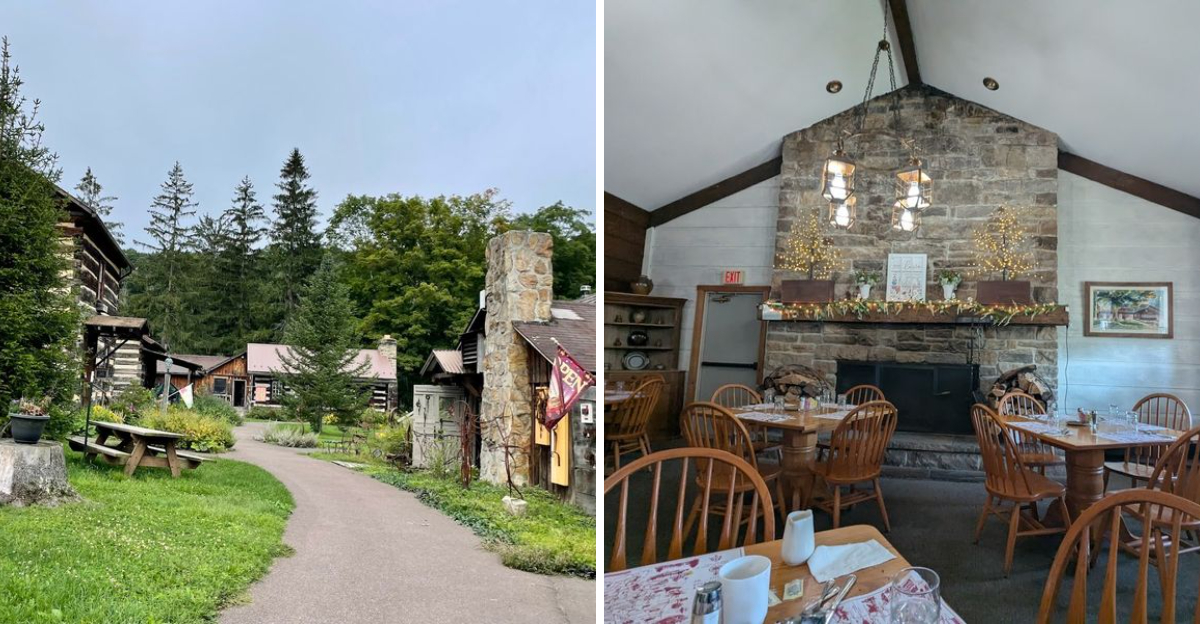
You pull into the parking lot and immediately notice something different. This is not just a restaurant.
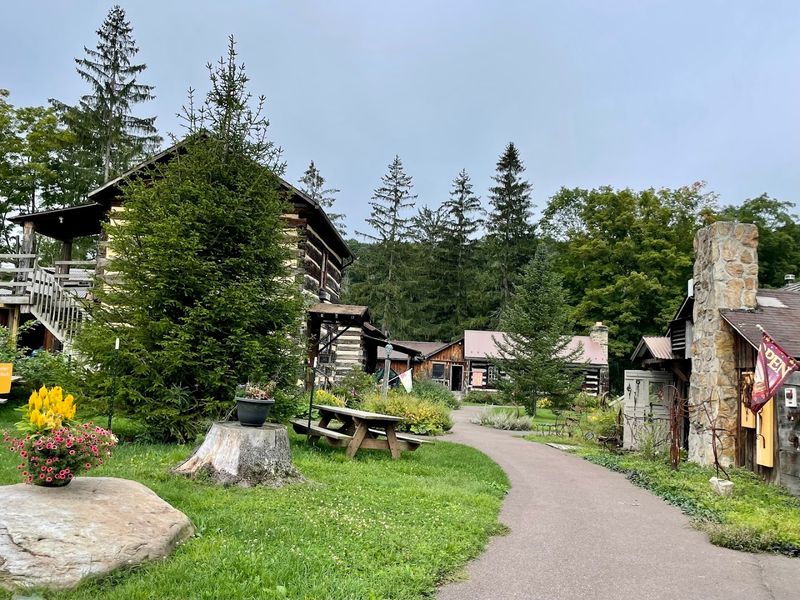
It is a whole little village tucked into the Maryland countryside. A main building for eating, little shops for browsing, and handmade crafts everywhere you look.
The food is hearty and rustic, think fried chicken, homemade pies, and vegetables that taste like someone grew them with care. After you eat, you wander.
Quilts, pottery, woodwork, all made by local hands. No rushing, no chain store energy, just a peaceful afternoon of eating and exploring.
Families love it. Couples take their time.
And everyone leaves with a full stomach and maybe a handmade souvenir. That is the magic of this Maryland spot.
A meal and a mini getaway all in one place.
A Historic Log Building That Has Been Welcoming Travelers Since 1818
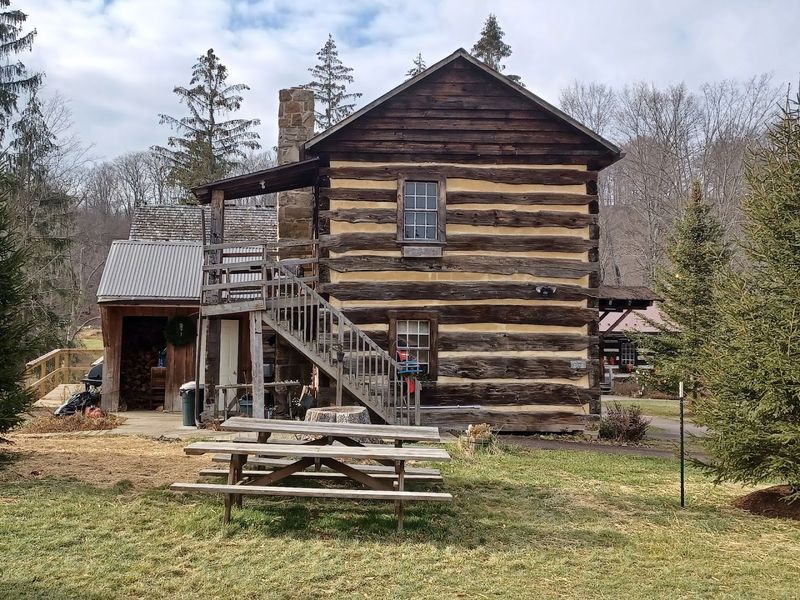
There is something quietly powerful about eating in a building that has been feeding travelers for over two centuries. The original structure at Penn Alps dates back to around 1818, when it served as Little Crossings Inn, a log stagecoach stop along the historic National Pike.
That same road, now known as Route 40, still runs right past the front door.
Three of the six dining rooms inside are part of that original log construction. The low ceilings, thick wooden beams, and slightly uneven floors are not design choices.
They are just the building being itself, unchanged and unapologetic about its age.
Penn Alps holds the distinction of being the last log hospitality house on the entire National Pike still actively serving travelers. That is not a marketing line.
It is a genuinely rare piece of living history. Most buildings this old became museums or crumbled entirely.
This one kept its original purpose and never stopped welcoming people through the door.
Sitting in one of those original dining rooms, surrounded by wood that has absorbed two hundred years of conversation and cooking smells, gives the meal a different kind of weight. The food tastes good on its own.
But knowing where you are sitting makes every bite feel like part of something much larger than lunch.
The nearby Casselman Bridge, built in 1813, was once the longest single-span stone arch bridge in America. The whole area around Penn Alps carries that same sense of historic consequence, quiet but undeniable.
The Founding Vision That Turned a Craft Shop Into a Cultural Landmark
Dr. Alta Schrock had a straightforward but powerful idea when she founded Penn Alps in the late 1950s. She wanted to create a cultural center that would help artisans and mountain residents support themselves through their own craft skills.
Her motto was simply “To help people help themselves,” and that philosophy shaped everything that followed.
The craft shop opened in 1958. The restaurant followed in 1959.
From the very beginning, the two were connected by a shared mission rather than just a shared address. The shop was designed as a marketing outlet for cottage industries, giving skilled craftspeople a reliable place to sell their work without needing to figure out distribution on their own.
What Dr. Schrock built was not just a business. It was an ecosystem.
Artisans from across the Allegheny Mountains had a dependable outlet, visitors had a reason to stop, and the restaurant gave everyone a reason to stay a little longer. The whole setup was quietly brilliant in its simplicity.
Decades later, that original vision is still the engine running the place. The craft shop now markets products from over 2,500 craftsmen, primarily from the tri-state area.
The scale has grown considerably, but the core idea has not shifted an inch.
Understanding that founding story changes how you move through Penn Alps. Every handmade item on the shelf represents someone’s livelihood, someone’s skill, and someone who benefited from a woman with a clear and generous purpose.
Spruce Forest Artisan Village, a Free Living Museum Behind the Restaurant
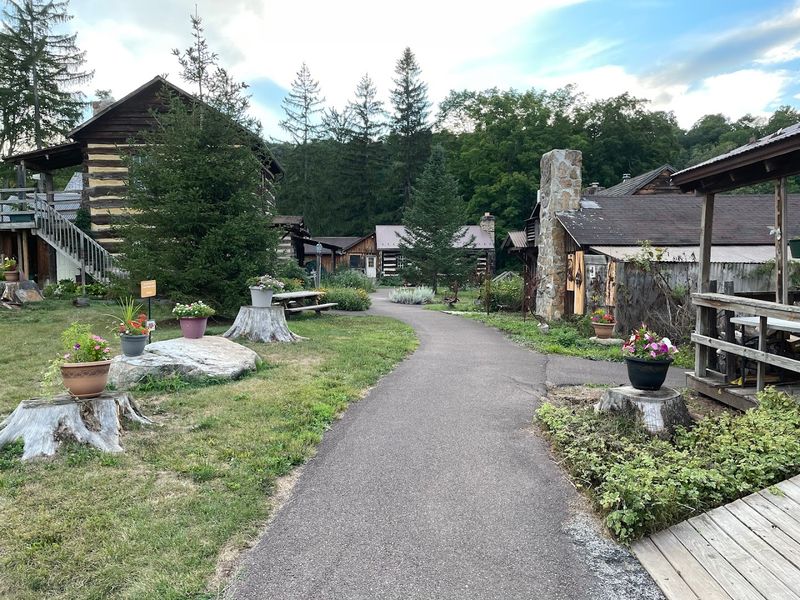
Behind the restaurant, hidden into the trees, sits one of the most unexpected free attractions in all of western Maryland. Spruce Forest Artisan Village is a collection of roughly twelve historic log and frame structures, two of which date back to the Revolutionary War period.
They are not replicas or reconstructions. They are original buildings, relocated and preserved on this site.
Each structure serves as a working studio where professional artisans demonstrate and produce their crafts for visitors. You can watch bird carving, basket making, hand-loom weaving, hand-thrown pottery, stained glass art, hand-forged iron work, and more.
The artisans are genuinely at work, not performing for show, which gives the whole village an honest, unhurried energy.
There is no admission fee. That fact alone makes Spruce Forest feel almost too good to be true, especially for families or anyone traveling on a budget.
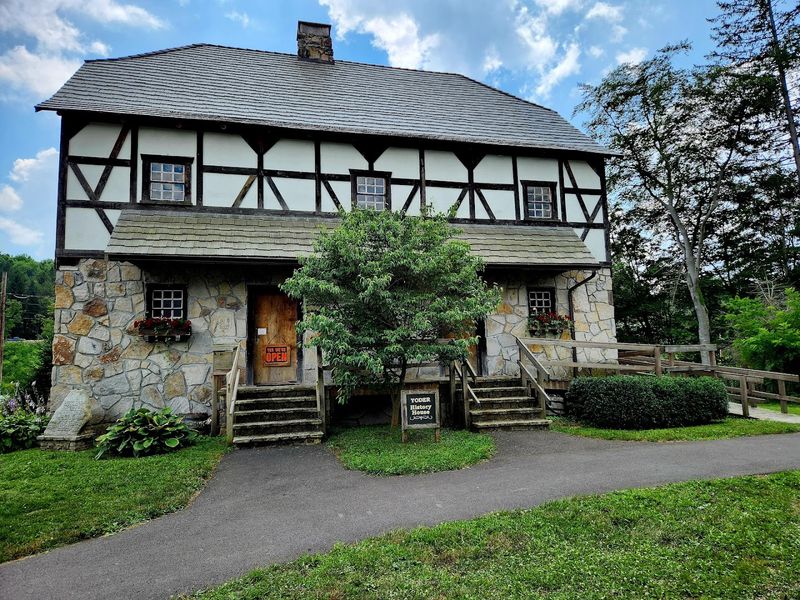
The Miller House and Compton School within the village have narrating hosts during summer months, adding a layer of storytelling to the experience.
Spending an hour wandering between studios is completely absorbing. Each building has its own character, its own smell, its own pace.
One moment you are watching someone shape clay on a wheel, and the next you are standing in a structure where someone might have sheltered during the Revolutionary War.
The village is the part of Penn Alps that most first-time visitors say they did not expect. It turns what could have been a quick lunch stop into a genuine half-day adventure worth planning around.
Homestyle Country Cooking Rooted in Amish and Mennonite Tradition
The food at Penn Alps does not try to be trendy. It is deeply rooted in the German-influenced cooking traditions of the Amish and Mennonite charter members who helped shape the restaurant from its earliest days.
That heritage shows up clearly on the plate, and it is all the better for it.
Fried chicken, homemade mashed potatoes, Dutch smoked sausage, and roast beef are staples that have earned their place on the menu through decades of consistent execution.
German vegetable soup is a regular feature, and it is the kind of soup that makes you slow down and actually taste what is in front of you.
Blackberry cobbler is the dessert that regulars tend to mention first. It is unpretentious and exactly what it promises to be, which is more than enough.
The daily soup and salad bar keeps things fresh and gives lighter eaters plenty of options without sacrificing the homestyle spirit of the place.
Weekend buffets draw crowds for good reason. The selection is generous, the quality holds up, and the whole setup feels like a big family meal rather than a commercial service line.
That distinction matters more than it sounds.
Penn Alps is not trying to compete with fine dining. It is doing something harder, which is cooking honest, familiar food at a consistent level over many decades.
The result is a menu that feels like a warm handshake rather than a performance, and that is exactly what a place like this should feel like.
The Craft Shop and Its 2,500 Artisans From Across the Tri-State Area
Most gift shops attached to restaurants are afterthoughts. A few postcards, some branded mugs, maybe a rack of local jams near the exit.
The craft shop at Penn Alps operates on an entirely different scale and with an entirely different purpose.
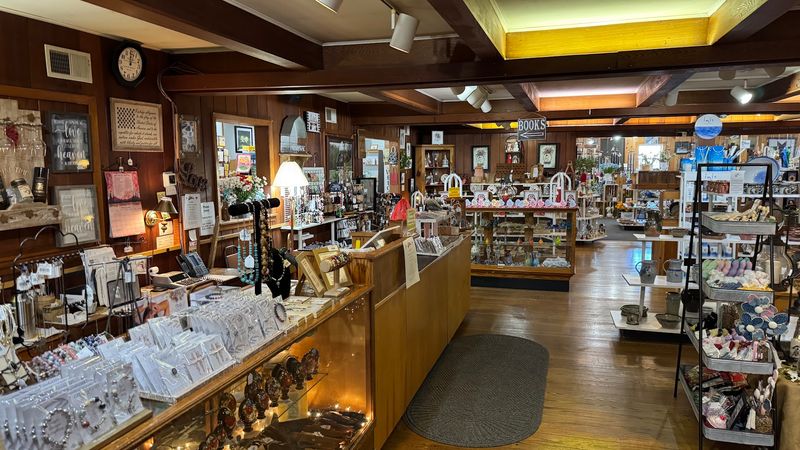
It markets handcrafted products from over 2,500 craftsmen, primarily from Maryland, West Virginia, and Pennsylvania. The range of items is genuinely impressive.
Quilts, soaps, wooden pieces, iron work, original art, baskets, and locally produced baked and canned goods all share space under one roof. The selection changes regularly because the artisans keep creating.
Shopping here carries a weight that browsing a generic souvenir shop does not. Every item was made by a real person with a specific skill, and buying it directly supports that person’s livelihood in the way Dr. Schrock originally intended.
That context does not make the shopping feel heavy or obligatory. It actually makes it more enjoyable.
The handmade soaps alone are worth a dedicated stop. They come in varieties that reflect the natural landscape of the region, and they make practical, thoughtful gifts that hold up better than most impulse purchases.
The quilts are exceptional and represent the kind of craftsmanship that takes years to develop.
Even if you come in with no intention of buying anything, the craft shop rewards a slow walk-through. The density of skill on display across those shelves is remarkable, and it gives you a real sense of how rich the artisan culture of the Allegheny Mountain region genuinely is.
The Casselman Bridge and the Historic National Road Right at Your Doorstep
The location of Penn Alps is not accidental. It sits along the Historic National Road, one of the most significant travel corridors in early American history, and the surrounding area packs in a surprising amount of historical weight for such a quiet stretch of western Maryland.
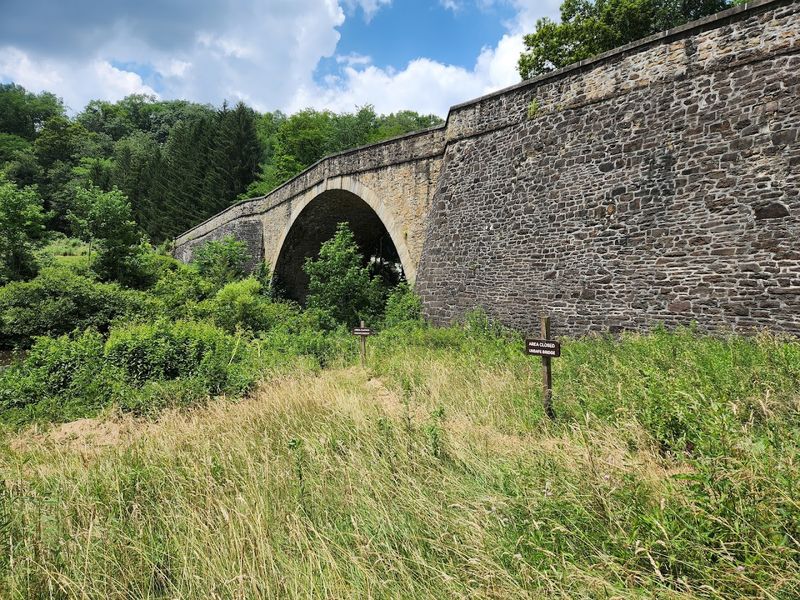
Just steps from the restaurant stands the Casselman Bridge, a stone arch structure built in 1813. When it was completed, it held the title of the longest single-span stone arch bridge in America.
That is a remarkable engineering achievement for its era, and the bridge still stands in excellent condition today, preserved as a state park.
A 1797 gristmill also sits nearby, adding another layer to the sense that this particular bend in the road has been important to people for a very long time. The whole corridor has a quiet, unhurried feeling that makes it easy to linger longer than planned.
Arriving at Penn Alps with some knowledge of this history turns the meal into something more than just a food stop. The restaurant building itself was part of this same travel corridor, serving stagecoach passengers on the National Pike more than two hundred years ago.
That continuity is genuinely moving when you let it sink in.
Taking a short walk to the bridge after lunch is an easy addition to any visit and takes only fifteen or twenty minutes. The view from the bridge over the Casselman River is peaceful and photogenic, and the whole detour costs nothing except a little time.
It is worth every minute.
Six Dining Rooms That Each Tell a Slightly Different Story
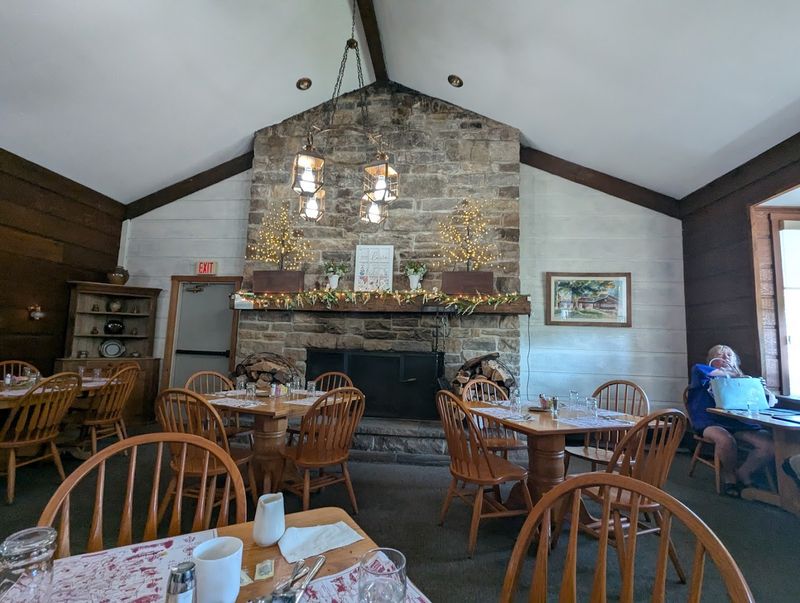
Penn Alps has six dining rooms, and they are not interchangeable. Three of them are original parts of the 1818 log stagecoach inn, complete with exposed beams and the kind of thick wooden walls that absorb sound in a way that makes conversation feel more intimate.
The other rooms have their own character without trying to mimic the originals.
Choosing where to sit actually matters here. The original log rooms carry a different atmosphere than the rest of the building, heavier with history and quieter in a way that is hard to explain until you experience it.
Asking to be seated in one of those rooms on a first visit is a good call.
The overall feel of the restaurant is warm without being fussy. There are no elaborate decorations competing for attention.
The building does the work on its own, and the staff seem to understand that. Service is friendly in the way that feels natural rather than trained, which makes a real difference when you are trying to relax.
Families, older couples, road-trippers, and locals all seem to find their rhythm here without any friction. The dining rooms accommodate different group sizes comfortably, and the pace of service matches the unhurried spirit of the place rather than rushing anyone out.
Penn Alps seats guests the way a good host does, with genuine attention and without unnecessary ceremony. That combination of historic space, honest food, and easygoing service is harder to find than it should be, which makes stumbling onto it feel like a small, satisfying victory.
What a Weekend Buffet at Penn Alps Actually Feels Like
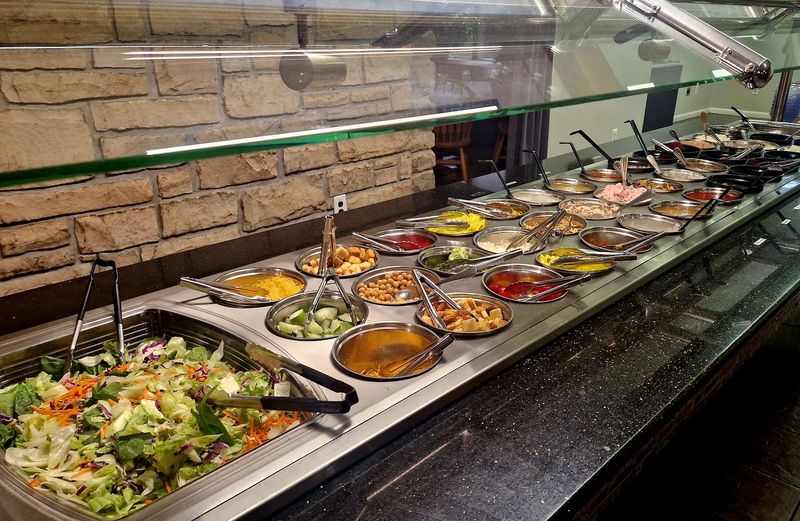
Weekend buffets at Penn Alps have a loyal following, and spending one there makes the reason obvious pretty quickly. The spread is generous without being chaotic, and everything on the line feels like it came from an actual kitchen rather than a warming tray that has been sitting since dawn.
The selection leans heavily into the German-influenced, homestyle tradition the restaurant built its reputation on. Fried chicken holds up well on a buffet because it was made properly to begin with.
Homemade mashed potatoes maintain their texture because they are refreshed regularly. Small details like that separate a good buffet from a forgettable one.
Soup and salad bar options run alongside the main buffet, giving people a way to pace themselves or build a lighter plate without skipping the experience entirely. The blackberry cobbler at the end of the line has a habit of convincing people they have more room than they thought they did.
The atmosphere during a weekend buffet is lively but not overwhelming. Families dominate the room, and there is a pleasant background hum of people genuinely enjoying themselves.
It feels less like a restaurant service and more like a community gathering that happens to have really good food in the middle of it.
Arriving slightly before peak hours on a weekend is a practical tip worth following. The line moves well and the food quality stays consistent, but getting there early means fresher selections and a slightly calmer room.
Either way, the experience is one of the better buffet meals available in western Maryland.
Why Penn Alps Works as a Destination and Not Just a Detour
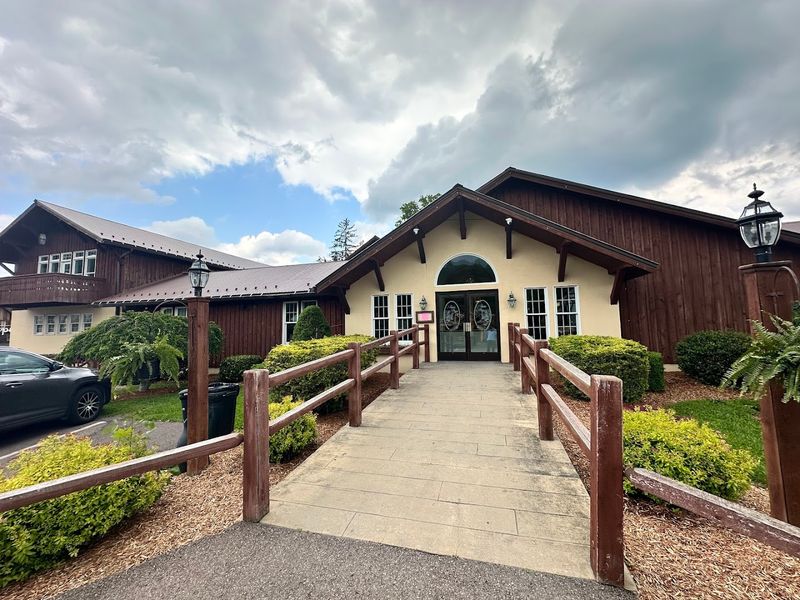
Most places earn the label of destination through marketing. Penn Alps earns it through accumulation.
A single visit layers history, food, craft, free outdoor exploration, and genuine cultural depth in a way that builds on itself the longer you stay.
The restaurant alone would be worth a stop on a cross-state drive. The craft shop alone would justify pulling off the highway.
Spruce Forest Artisan Village alone could anchor a full afternoon. The fact that all three exist on the same campus, within easy walking distance of each other and the Casselman Bridge, creates something that genuinely earns the word destination without having to stretch the definition.
Penn Alps works for almost every kind of traveler. Families with kids find the artisan village endlessly engaging.
History enthusiasts get the National Road context, the 1818 building, and the bridge. Craft lovers could spend hours in the shop without running out of things to examine.
Hungry road-trippers just want a good meal, and they get one.
There is also something to be said for the pace of the place. Penn Alps does not rush anyone.
The whole campus operates at a speed that feels appropriate to its age and its purpose, which is unhurried, attentive, and genuinely welcoming.
Planning a trip through western Maryland without including Penn Alps is the kind of oversight that tends to produce regret once someone tells you what you missed. Give it a full afternoon if the schedule allows.
It will use every minute of that time well.
Address: 125 Casselman Rd, Grantsville, MD
