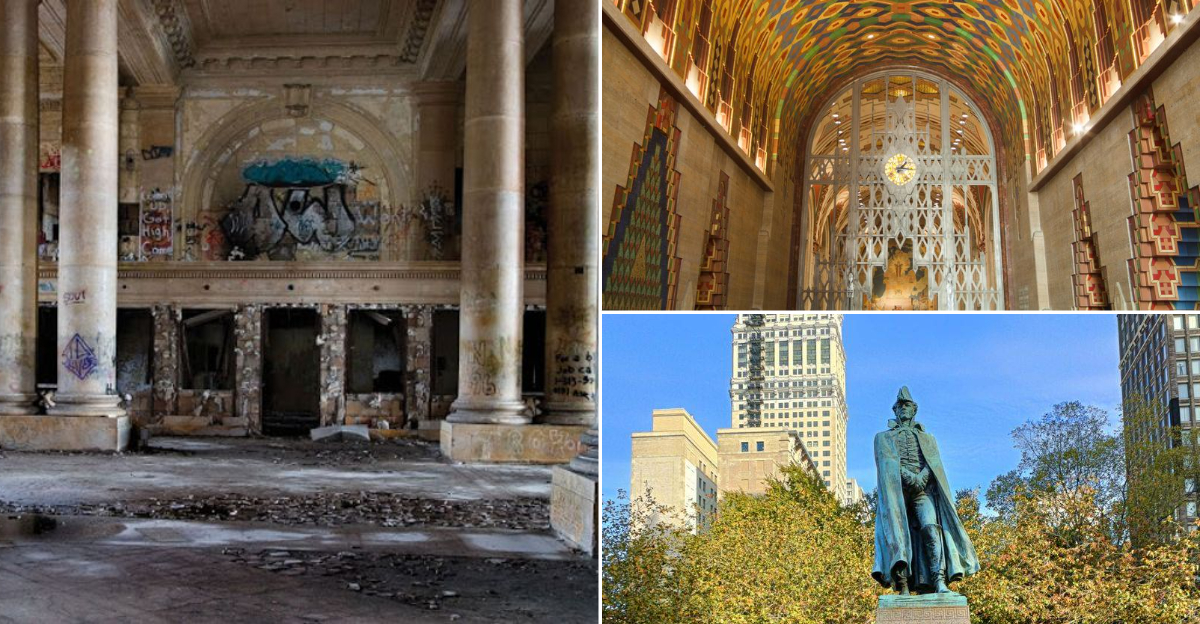
Detroit tells its story best in places that were never meant to be exhibits. Step inside these forgotten buildings and the city’s rhythm shows up fast.
Peeling paint, worn floors, and empty rooms still carry weight. History stops feeling like something you read and starts feeling present.
Some spaces speak quietly and ask for patience. Others land hard without warning.
When a building remembers more than a plaque ever could, the past feels personal instead of distant. These sites matter because they show Detroit as it actually lived and worked.
Details linger longer than expected, from worn stair rails to light slipping through broken windows. Silence becomes part of the experience instead of a gap.
The past has not disappeared here. It has settled into the walls and waits to be noticed.
How Buildings Tell Detroit’s Story Better Than Headlines
Headlines rush past, but walls hold onto things, and Detroit’s buildings are basically long conversations you can walk through.
If you stop and listen, the quiet explains more than any tidy summary ever could.
Start with the way limestone and brick keep their posture even when the windows give up. You’ll see it on Woodward Avenue, and you’ll feel a kind of stubborn calm.
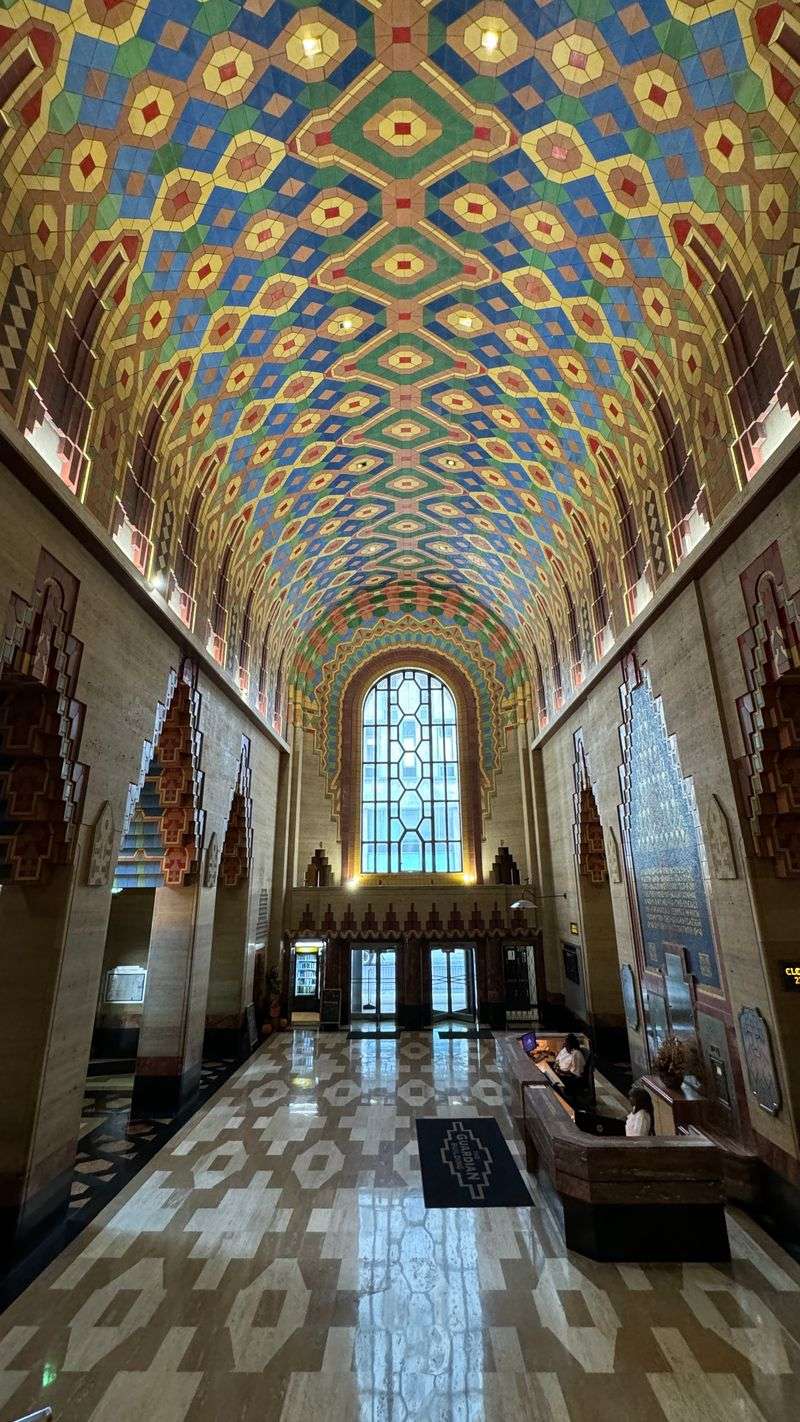
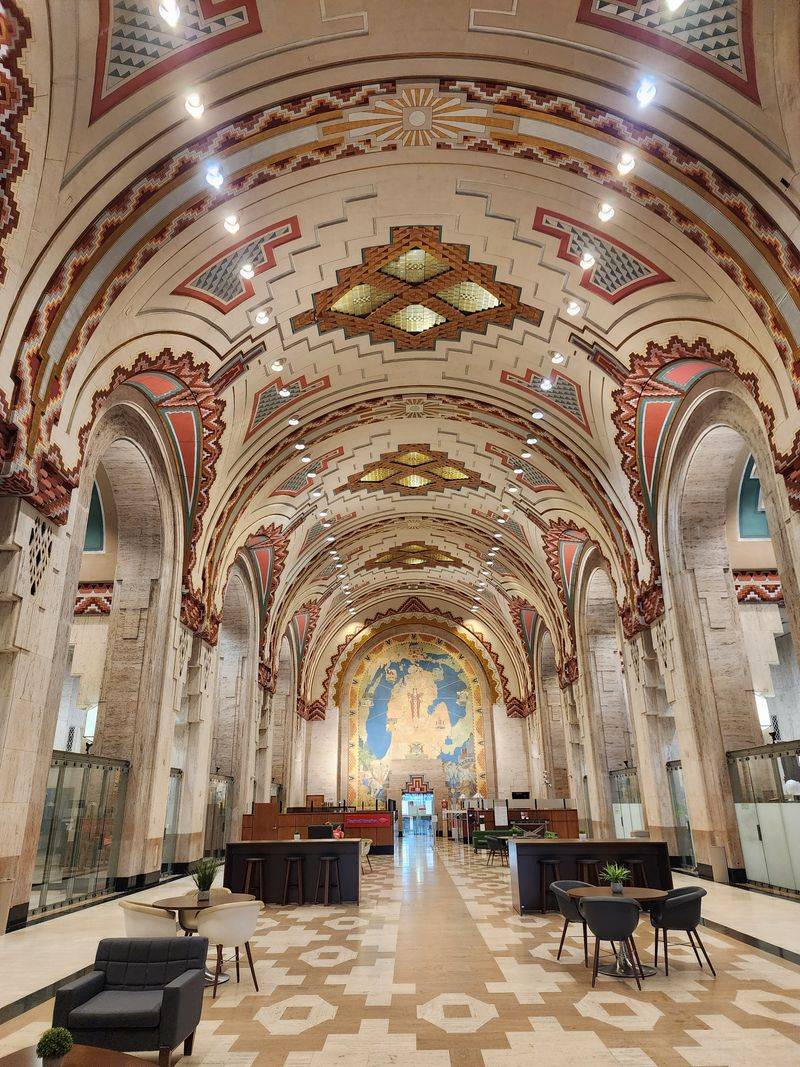
Look at the Guardian Building. That lobby hums like a choir even when the street outside is drizzly and slow.
Michigan Central Station stands like a paused movie.
You can sense an arrival that still hasn’t ended.
The Packard Automotive Plant stretches so wide it swallows your sense of scale, and yet details keep pulling you close. A letter painted on a column, a tiled threshold where workers once clocked in.
Headlines flatten things, but bricks and terrazzo keep texture. Stand still, and the drafts feel like notes passed under a door.
The real tips to read these places are basic.
Check the corners, the stairwells, and the places where your voice changes pitch.
These buildings survived because they were useful, beautiful, stubborn, or all three. That mix tells you how the city learned to bend without breaking.
So keep driving and stop wherever the street goes quiet. The story is still talking, and it wants company.
Michigan Central Station As A Symbol Of Loss And Return
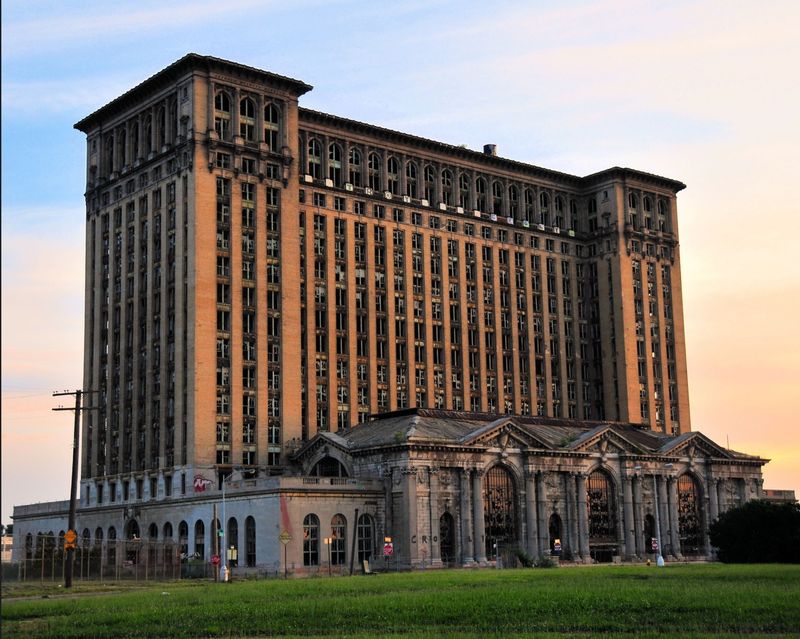
Pull up to Michigan Central Station and tell me your chest doesn’t tighten a little. Those columns feel like they’re watching you decide how much history you’re ready to carry.
Walk the concourse where daylight filters in sideways, and you can almost hear luggage wheels that are not there.
The ceiling has this whispering flake to it, like a winter that forgot to leave.
The scale is wild, but the quiet is the thing that gets you. It’s the kind of quiet that leaves room for the city to step back in.
Stand by a window and look toward the tracks, and the view loops you into old arrivals.
Detroit, Michigan knows how to set a scene without saying a word.
If you listen, the room hands you a map made of echoes and drafts. You don’t need directions, just patience.
You call it a ruin because the paint curled up and left. The bones never did.
There’s a weight to the stairwells and a lightness in the archways. Both are true at once, and that balance explains the whole place.
You can read triumphant essays, but this hall edits them into fewer words. It keeps the complicated parts intact.
When you leave, you’ll glance back. Something about those windows always asks one more question.
The Packard Plant And The Scale Of What Was Left Behind
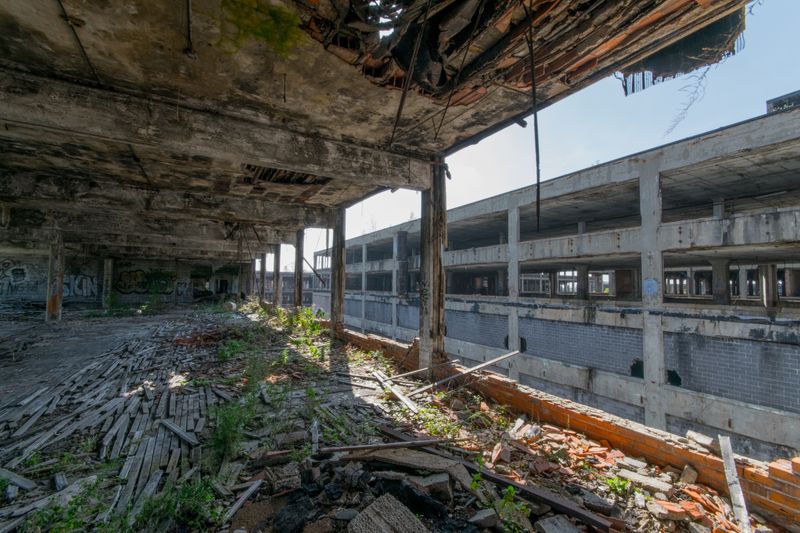
Drive east to the Packard Automotive Plant and you’ll feel your sense of distance get weird. This place keeps stretching like a sentence that never finds a period.
Inside, the light comes in chopped by window panes, and the floor keeps its old scuff marks like underlined phrases.
You can pick out where machines anchored the room by the ghosts of bolts.
It feels huge, but what hits hardest are the small leftovers. A tile edge, a painted arrow pointing nowhere.
Stand still and you’ll hear air moving through cracks like it learned the floor plan better than anyone. The building knows where you are before you do.
Detroit, Michigan is honest about what stayed and what drifted away. This complex is the honest part in bold letters.
You can trace how shifts once changed the light inside these bays.
Time clocked out but the layout stayed clocked in.
The concrete carries a low memory, like bass from a show next door. It’s there even when you stop listening.
If you’re trying to understand the scale of industry, this is the room that doesn’t let you round down. The facts are poured into the columns.
Step back outside and it will still feel like we’re indoors. That’s how wide this story runs.
Book Tower And The Long Pause In Downtown Detroit
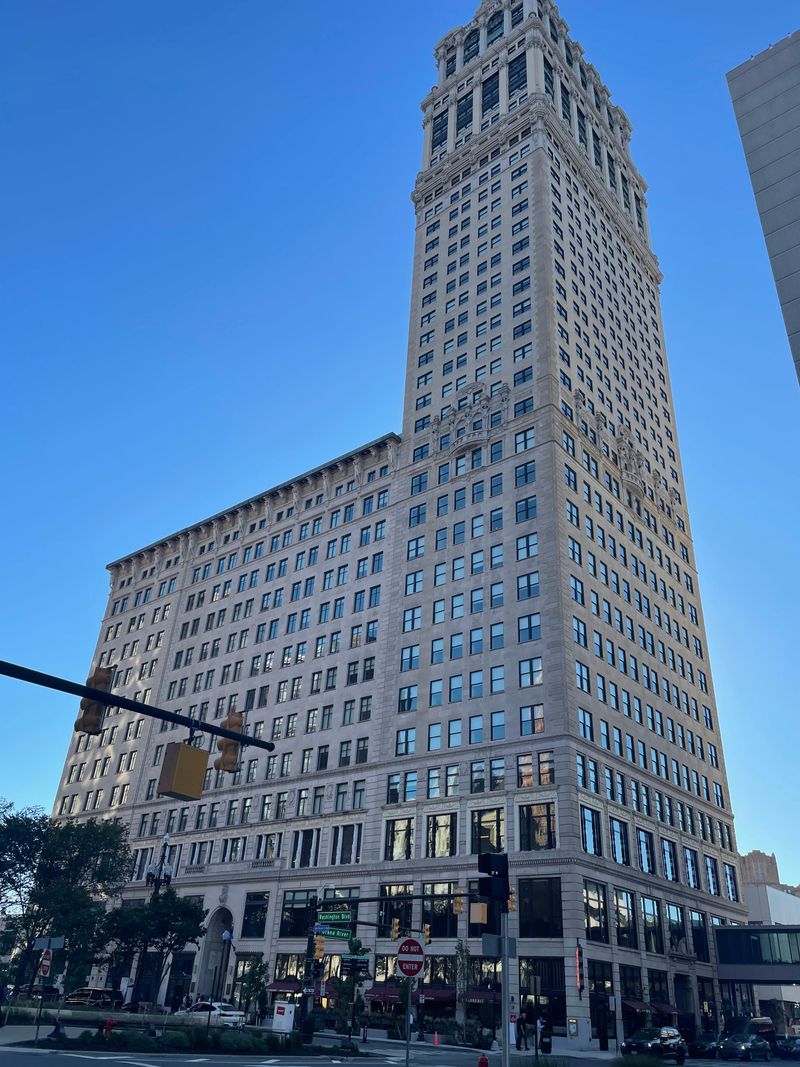
When you roll up to Book Tower, the facade looks like lace carved out of stone. Inside, the rooms feel like the city took a long breath and held it.
You’ll see restored shine meeting old scuffs like neighbors who share a hallway.
The contrast keeps the conversation grounded and bright in the same moment.
Stand under the ceiling where patterns stack in careful layers. It feels ceremonial without asking you to whisper.
Detroit, Michigan does this blend so well, where survival meets theater. The lobby seems to nod when you notice both at once.
There’s a hush that isn’t shy, more like a pause before a good line.
Your footsteps supply the rhythm section.
Windows frame a downtown that remembers leaning through tougher weather. The glass looks pleased to be a witness again.
You can trace the pause in the scratches on the stair rails. Every grip left a note about getting by.
Nothing here is pretending the blank years did not happen. They’re braided into the shine.
When you head back to the street, the whole block feels taller. That’s the building lifting the mood by a notch.
The Guardian Building As Proof Some Things Never Disappeared
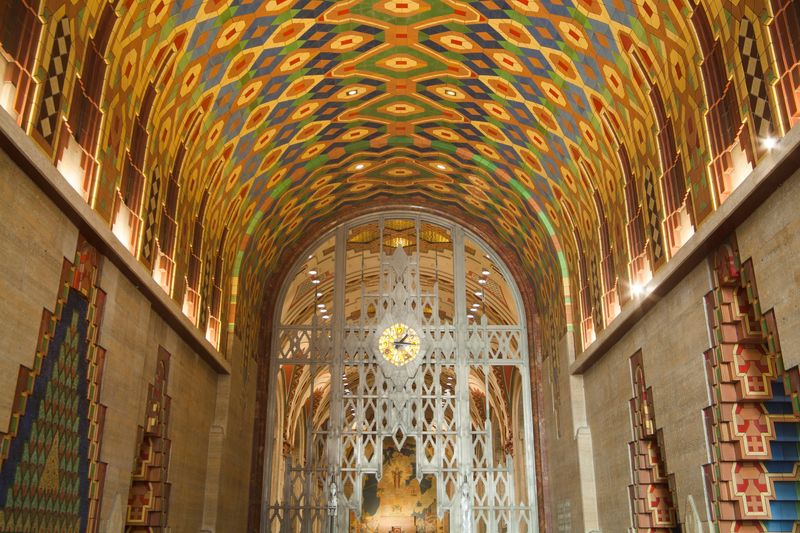
Walk into the Guardian Building, and you’ll catch yourself grinning before you know why.
The colors arrive first and then the architecture clears its throat.
It’s not subtle, but it is generous. Every tile seems to say thanks for looking up.
This place kept a light on when other blocks went quiet. The lobby is a steady drumbeat, not a shout.
Listen to your footsteps against that terrazzo, and the space replies with soft reverb.
It feels like the building is practicing good manners.
Detroit, Michigan never lost its taste for flair. This is the proof you can point to without arguing.
Look at the ceiling cut into patterns that feel both old and immediate. The design lands like a greeting and a reminder.
Edges are crisp, but there is warmth hiding in the brick and brass. That mix keeps the room from turning into a museum piece.
If you pause near the windows, the light stacks into warm stripes. You can watch it move like slow music.
You’ll step back out with color still ringing in your eyes.
Some buildings refuse to dim the volume.
Why Abandonment Became Part Of The City’s Identity
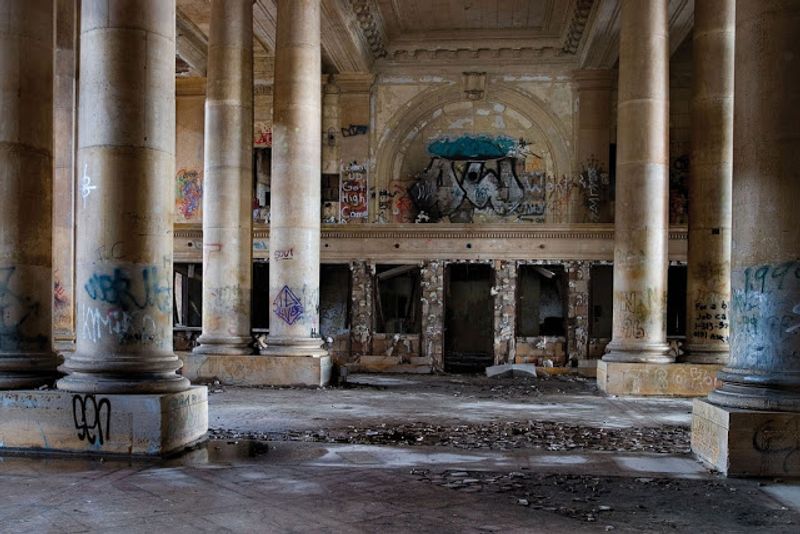
People talk about abandonment like a headline, but in Detroit it turned into a dialect. You learn to read it and you stop confusing quiet with nothingness.
Take the long bays at the Packard site and the waiting rooms at Michigan Central Station. Both carry leftover purpose that did not get the memo.
Walk through and the air feels organized by memory.
Corridors keep showing you where to go, even without signs.
The city did not ask for any of this, but it learned how to live beside it. That is a kind of fluency.
Downtown blocks like the Book Tower paused without giving up their lines. They held their roles while the scripts got rewritten.
Detroit, Michigan wears its leftovers like patches that mean something.
You can trace a whole education in those seams.
Some rooms are quiet like a library. Some rooms are quiet like a field after the game.
The important thing is how people kept walking through. Footsteps are a vote that does not need a speech.
So when they say abandonment, they’re also talking about patience. The city’s grammar makes room for both.
What Standing In These Spaces Feels Like In Person
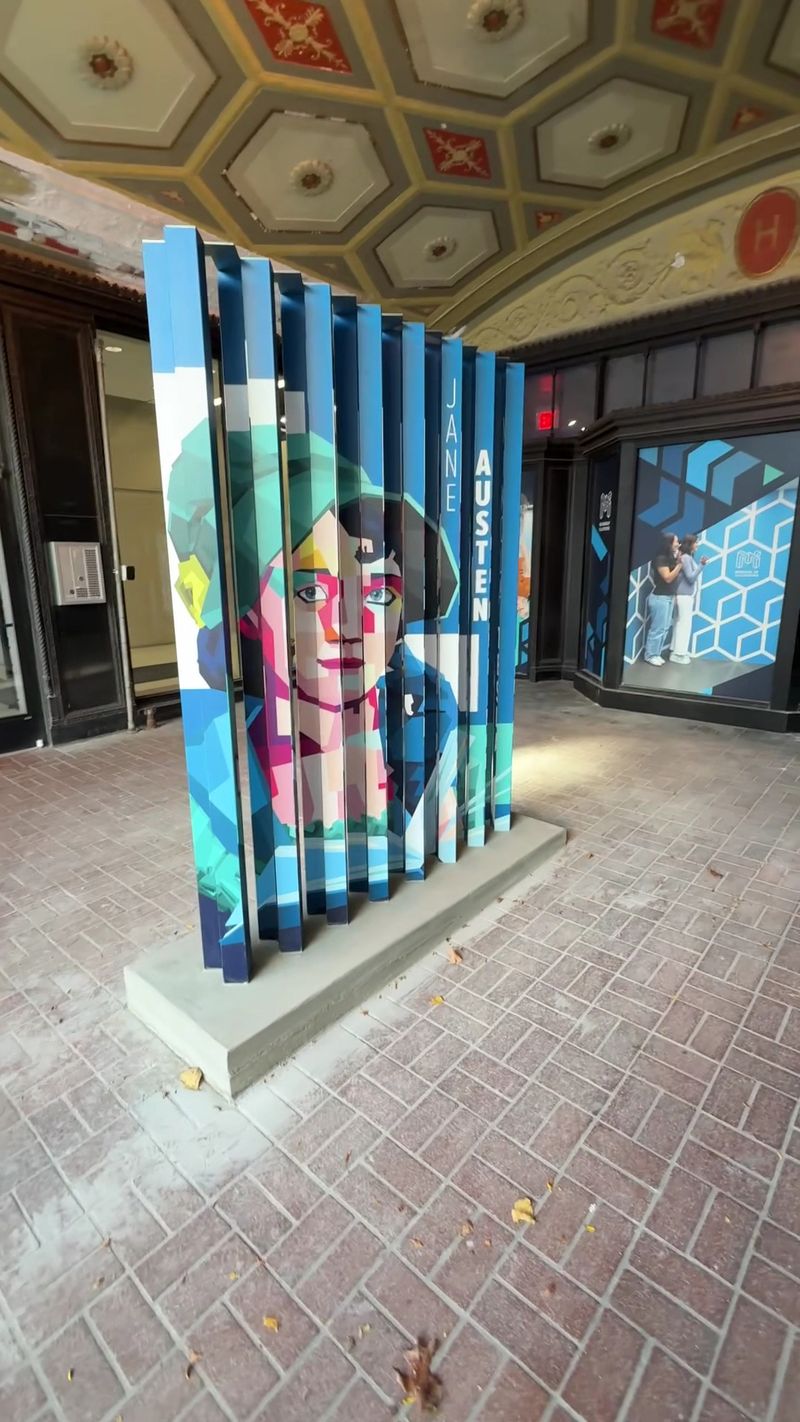
You know that prickly feeling on your arms when a room is bigger than you expected? These places hand you that, then something softer.
At Michigan Central Station your voice comes back slower than you sent it. That delay makes you pick your words with care.
In the Packard bays the wind turns corners like it has a map.
You end up walking the path it draws.
The Guardian Building keeps the temperature of optimism. Your shoulders drop without you telling them to.
Over at Book Tower, the light does its best storytelling around midafternoon. It touches the brass like an old friend.
This is the part where photos help but never finish the job. Your shoes do the last mile of understanding.
Detroit, Michigan rewards unhurried footsteps and small questions. Where did this stair go, and what did it hear?
If a city could make eye contact, these halls would be it.
The rooms listen back when you stand still.
Keep moving, but don’t not rush the corners. That’s where the details hide on purpose.
How Time Changed These Buildings Without Erasing Them
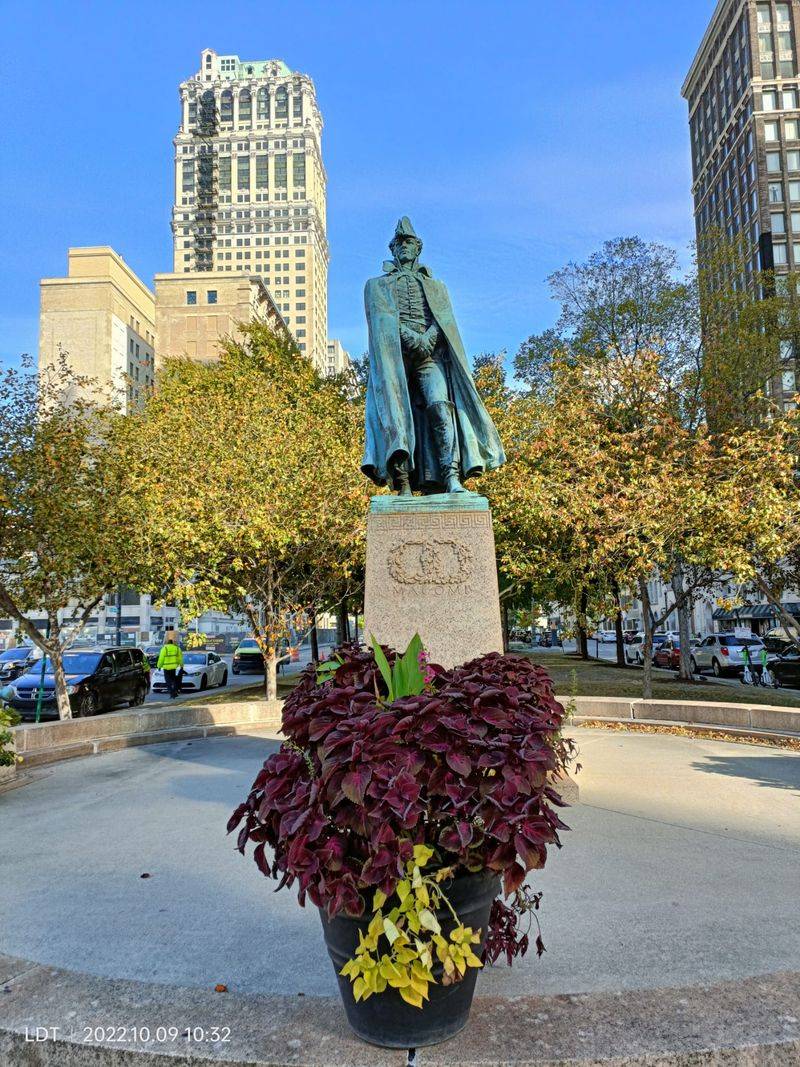
Time didn’t bulldoze these places so much as edit them. You can see the red pencil marks in every doorway.
Michigan Central Station shows where weather took the paint but left the posture.
The room still stands up straight.
The Packard Plant has whole paragraphs missing, but the structure keeps the grammar. Columns carry the sentence until you catch up.
Book Tower folds new shine into old muscle. The blend reads honest instead of flashy.
At the Guardian Building, upkeep feels like a steady conversation. Nothing gets too precious to use.
What you notice next is how your memory fills the blanks.
The city lets you help write the margins.
Detroit, Michigan did not forget itself. It just talks with a slower accent now.
The chipped edges and polished returns look like bandmates who never quit. They figured out a working tempo.
So you walk, and time walks with you. The chorus keeps the beat while the verses change.
Restoration And Ruin Existing Side By Side
Here’s the part that always gets me. You can stand with one foot in a polished lobby and the other in a room the wind still rents.
Book Tower knows that balance and so does the block around it.
You feel a handshake between now and earlier.
Michigan Central Station is learning that language again. The syllables are steel, glass, and patience.
Over at the Packard complex, the lesson runs the other direction. Ruin teaches scale while plants test the floor.
The Guardian Building keeps the metronome steady.
Restoration feels like an ongoing verb, not a finish line.
Detroit, Michigan shows you both truths without apology. That honesty is why the story lands.
Stand between spaces and listen for the draft. That’s the seam humming its little song.
Some days the light picks the restored side and makes it glow. Other days the shadows do better work across the old plaster.
Either way, the conversation stays open. You just have to answer back with care.
Why Detroit Makes Sense Through Its Architecture
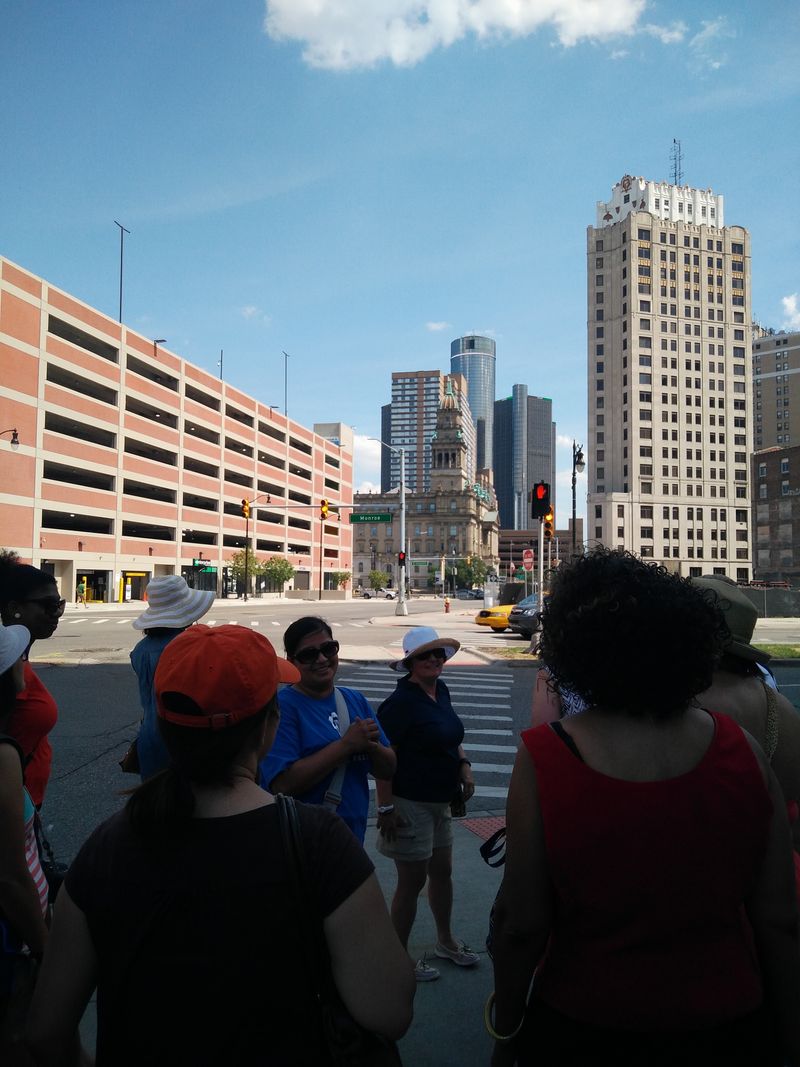
If the city feels confusing from the car window, architecture translates. Buildings turn the volume down and point at the verbs.
Michigan Central Station explains leaving and returning without a single plaque. The wind handles footnotes.
The Packard Plant tells you how big work once was.
Your breath slows down to match the span.
The Guardian Building explains confidence that never checked out. Color carries the thesis across the room.
Book Tower covers the pause and the pickup. It smiles without pretending there weren’t gaps.
Put those parts together and you get a clear paragraph.
Detroit, Michigan reads cleaner than the headlines suggest.
Walking turns into a kind of listening practice. The floors keep time while you sort thoughts.
By the end of the day, the map in your head redraws itself. Streets connect by stories instead of turns.
That’s why I keep coming back with friends. The city answers better when someone else is there to hear it.
