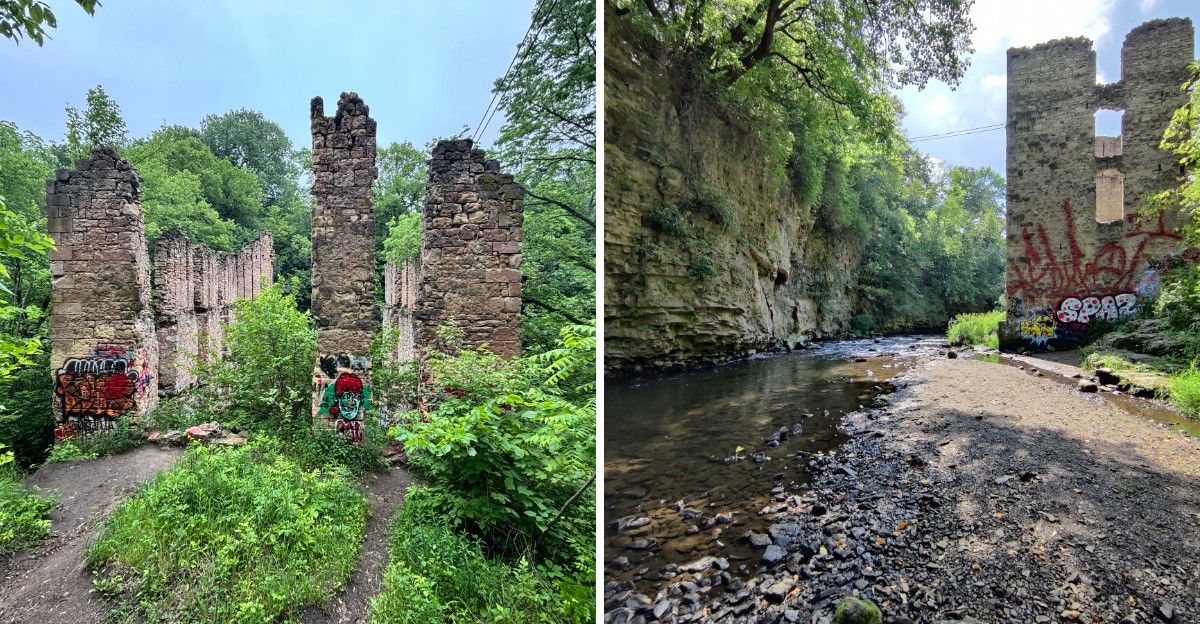
Fire took this mill down fast, and the cause was never fully settled, leaving locals to speculate for well over a century since.
Stone walls still stand among the ruins here, foundations hinting at how massive the operation once was before flames reduced most of it to rubble. Nothing got rebuilt afterward either, the site left exactly as the fire left it, aging slowly rather than getting erased entirely.
Investigating what actually happened took real effort at the time, though evidence never conclusively proved who or what started the blaze. That mystery still lingers today, adding weight to ruins that already carry plenty of history on their own.
Few landmarks combine industry and unsolved mystery quite this well. Wandering through what’s left here means walking through both history and a question Minnesota never fully answered.
A Governor, a River, and a Flour Business
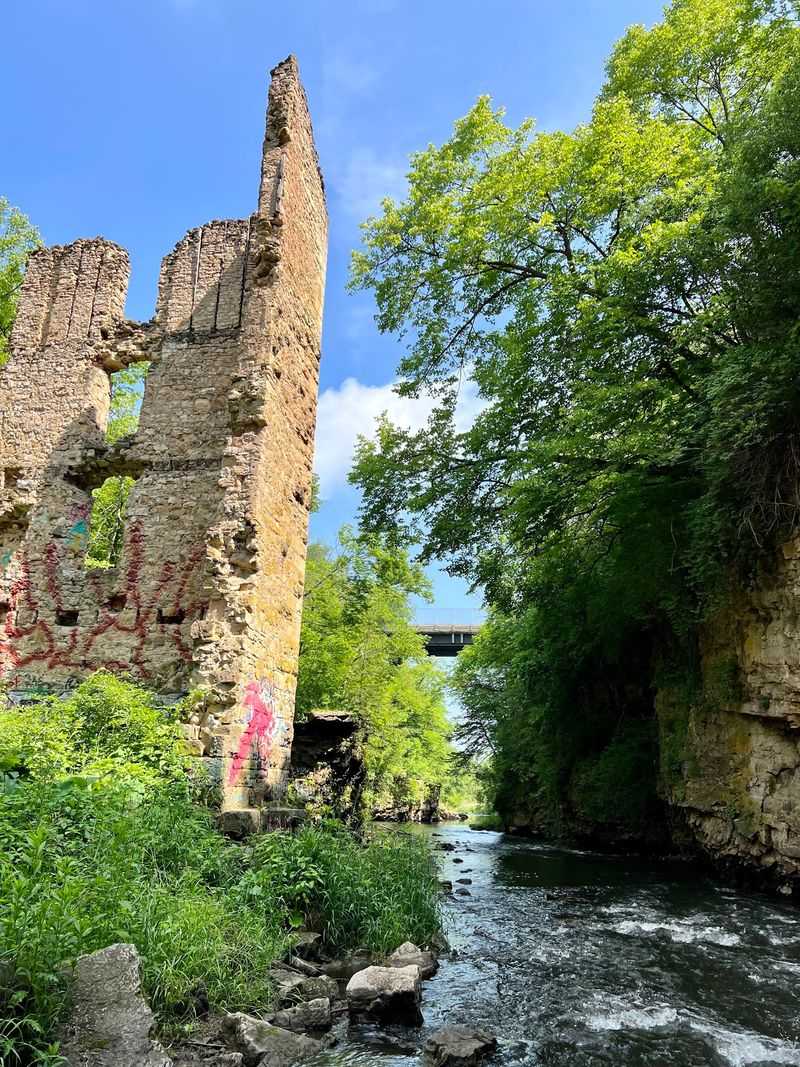
History buffs, get ready, because this mill has a famous name attached to it. Alexander Ramsey, who served as the first governor of Minnesota Territory, was connected to the mill that once stood here in the 1800s. Flour was big business back then.
Wheat farms were spreading across Minnesota, and mills needed moving water to turn their heavy stones. The Vermillion River, rushing through a narrow gorge, gave the builders exactly the power they wanted.
Farmers would haul grain here, and sacks of flour would head out to kitchens and bakeries around the region. I love picturing that scene while looking at the quiet ruins today. Wagons creaking. Water roaring.
Workers covered in white dust from head to toe. It makes the crumbling stones feel less like a pile of rocks and more like a story frozen in place.
Before visiting, spend a few minutes reading about early Minnesota milling. Knowing how important these mills were helps the ruins make much more sense once you are standing beside them. Even kids tend to get curious when they learn a governor was part of the tale.
The Fire That Left Only Stone Behind
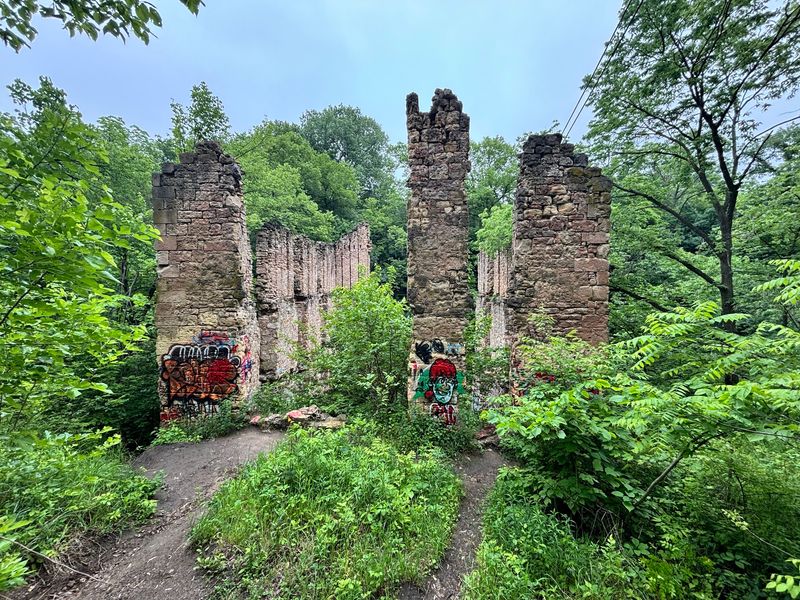
Nobody likes a mystery more than me, and the Ramsey Mill delivers one. In 1894, a fire tore through the building and ended its working days for good. Many people suspected the blaze was set on purpose, though nobody seems to know the full story for certain.
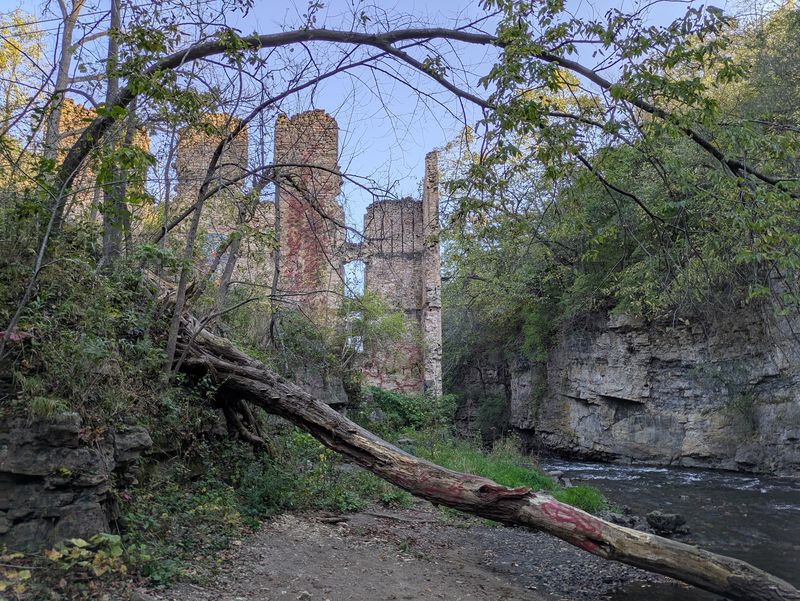
Wooden floors, beams, and machinery would have burned quickly. The thick stone walls, though, refused to give up. That is why visitors can still see tall sections of the outer shell more than a hundred years later, with empty openings where windows and doors once were.
Look closely at the stones as you explore. Some spots seem darker and rougher, and it is fun to wonder which marks come from that dramatic night and which come from years of weather. Nature has been slowly softening the edges ever since.
Here is a small tip. Share the arson angle with anyone in your group who thinks old buildings are boring. Suddenly, everyone becomes a detective, peeking around corners and making guesses.
It turns a simple walk into a lively conversation that lasts the whole way back.
A Paved Path That Makes the Trip Easy
Good news for anyone who is not a hardcore hiker. A smooth paved trail leads from the parking area down to the ruins, so getting there feels more like a pleasant stroll than a climb. Strollers and casual walkers can handle most of it.
Trees line the route, and on sunny days the light flickers through the leaves in shifting patches. Birds chatter overhead. In warmer months, bugs buzz around the grass, so a little bug spray is a smart idea.
Keep one thing in mind, though. What goes down must come back up, and the return trip is uphill. It is not huge, but it can leave you a bit winded if you rush. I found that slowing down and enjoying the scenery made it much easier.
Wear comfortable sneakers, bring a water bottle, and give yourself extra time. The ruins sit within the Vermillion Falls Park trail system, so the paved path also connects to other walking routes if you feel like exploring more after your visit to the old mill.
Up Close With the Old Walls
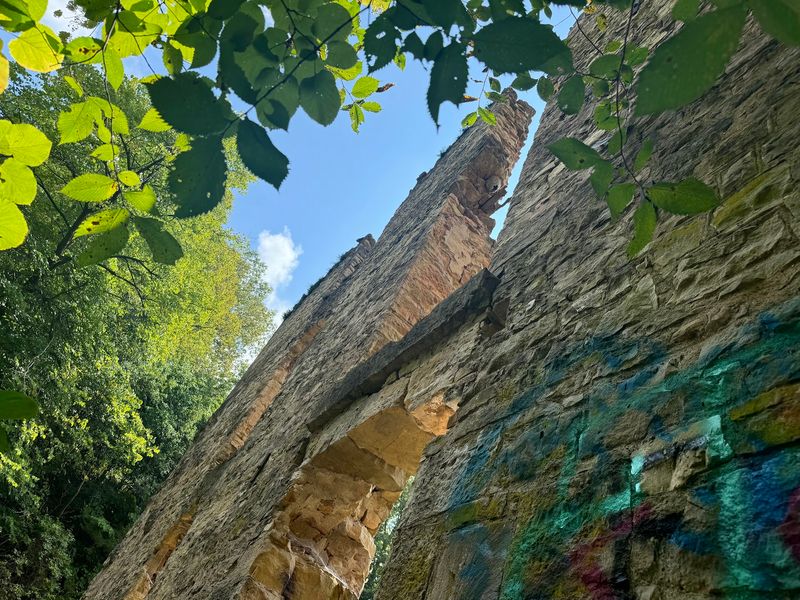
Most historic sites keep you behind a rope. Not here. Visitors can walk right up to the old walls and even peek inside the ruined shell, which makes the whole experience feel refreshingly hands-on.
Standing inside those roofless walls is a strange and wonderful feeling. The sky becomes the ceiling. Sounds from the river echo softly off the stone.
Moss and little plants poke out of cracks, proving that nature always finds a way back in.
Take a moment to notice the size of the stones and how they were stacked. Builders in the 1800s did not have modern machines, so every block took real muscle and skill. That thought gave me a whole new respect for the people who built it.
Freedom comes with responsibility, of course. Please do not climb on the walls or pull at loose stones. Old structures can be fragile, and damage cannot be undone.
Treat the ruins gently, snap your photos, and leave everything as you found it so future visitors get the same chance to explore.
Vermillion Falls Just a Short Stroll Away
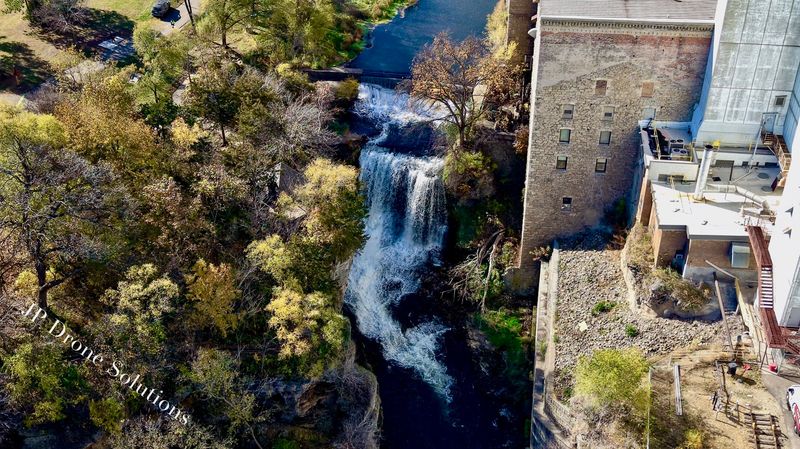
Water was the whole reason this mill existed, so it makes sense that a waterfall sits nearby. Vermillion Falls tumbles over rocky ledges just a short walk from the ruins, and it is easily one of the best parts of the trip.
After heavy rain or spring snowmelt, the falls roar loudly and throw a fine mist into the air. In drier months, the flow softens and you can see more of the layered rock underneath. Both versions are beautiful in their own way.
I suggest pairing the two spots in one outing. Start at the falls, soak in the sound of rushing water, then follow the trail toward the mill. Seeing the powerful river first helps you understand why someone chose this exact place to build.
Photographers will love the contrast between white water and dark stone. Try visiting in the early morning when the light is soft and fewer people are around. Just stay behind safe viewing areas, since the rocks near the water can be wet and very slick.
The Rocky Gorge Along the Vermillion River
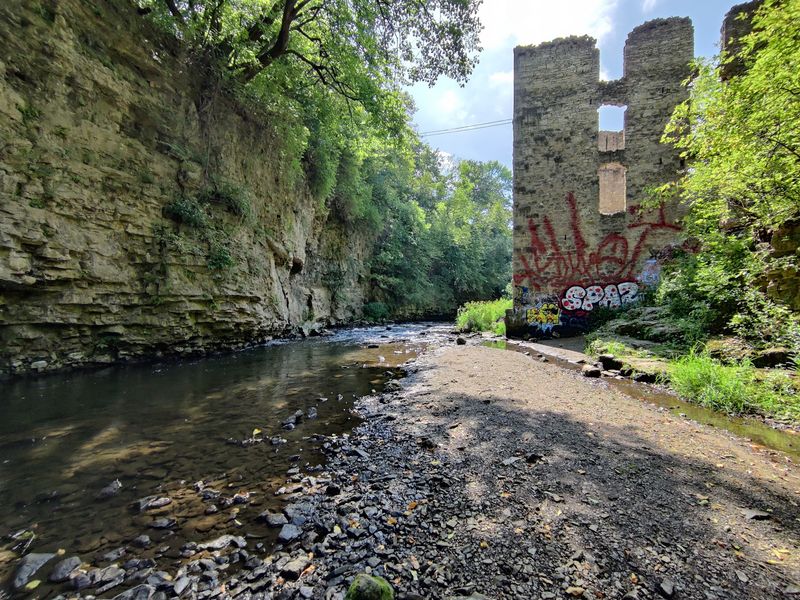
Few people expect a gorge in this part of Minnesota, and yet here it is. The Vermillion River squeezes through a narrow, rocky channel right along the edge of the mill foundations, creating a surprisingly wild little canyon.
Steep rock walls rise on both sides. The water swirls and splashes below, and the air feels cooler down near the river on a hot day. It is a peaceful spot to pause and just listen for a while.
Safety matters here more than anywhere else on the trip. The sides of the gorge and the ruins can be steep, rocky, and slippery, especially after rain. One careless step could turn a fun day into a painful one, so keep kids close and pets on a leash.
Shoes with good grip make a big difference. Skip the flip-flops. If a path looks too muddy or sharp, it is perfectly fine to turn around and enjoy the view from higher ground.
Honestly, some of the best angles of the gorge come from the safer overlooks anyway.
Love Locks on the Bridge Above
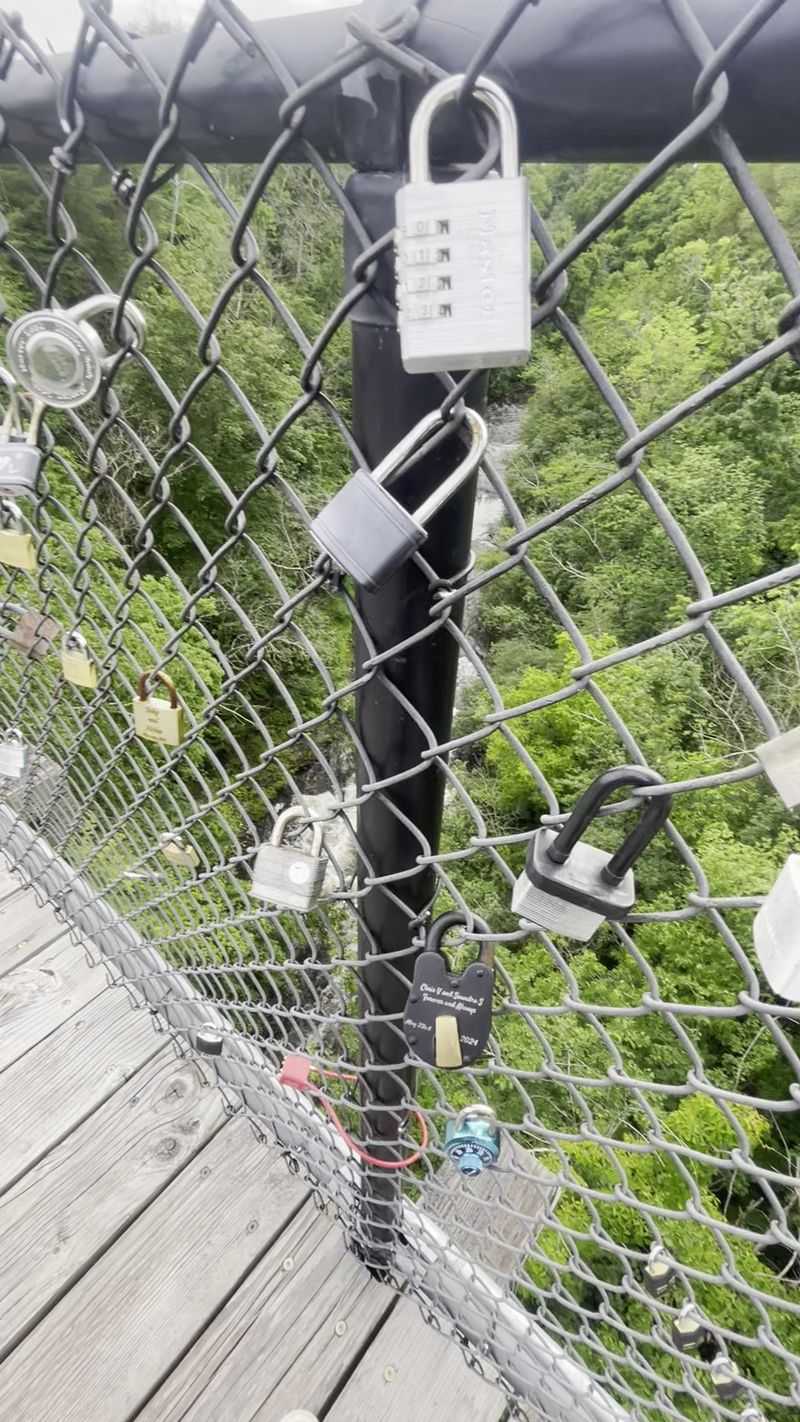
Here is a sweet surprise. A bridge crossing above the river is covered with padlocks left behind by visitors, each one a small promise or memory clipped onto the railing.
Some locks are shiny and new. Others are rusty and faded, hinting that they have hung there for years. Many have names, initials, or dates written on them, and reading a few feels a little like flipping through a public scrapbook.
I spent longer on that bridge than planned, just looking at all the colors. The view below adds to the charm, with the river rushing through the gorge and the treetops stretching out in every direction. It is a lovely spot for a quick photo together.
Visitors coming from the falls parking area often follow the river, cross this bridge, and then head back down toward the ruins. Signs are limited, so it helps to know that route before you go.
Pause on the bridge for a minute, enjoy the breeze, and maybe start thinking about what you would write on a lock of your own.
Graffiti, Photos, and a Touch of Grit
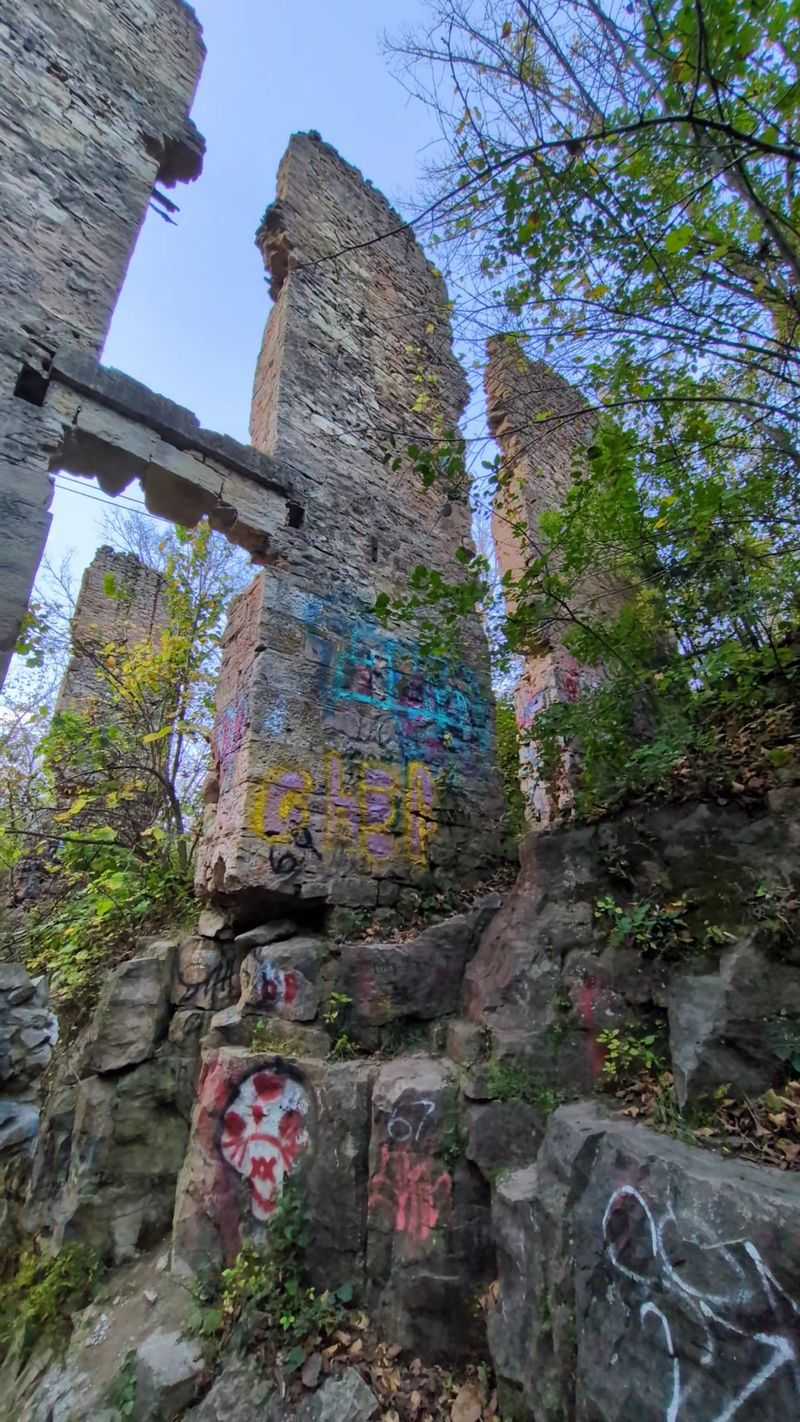
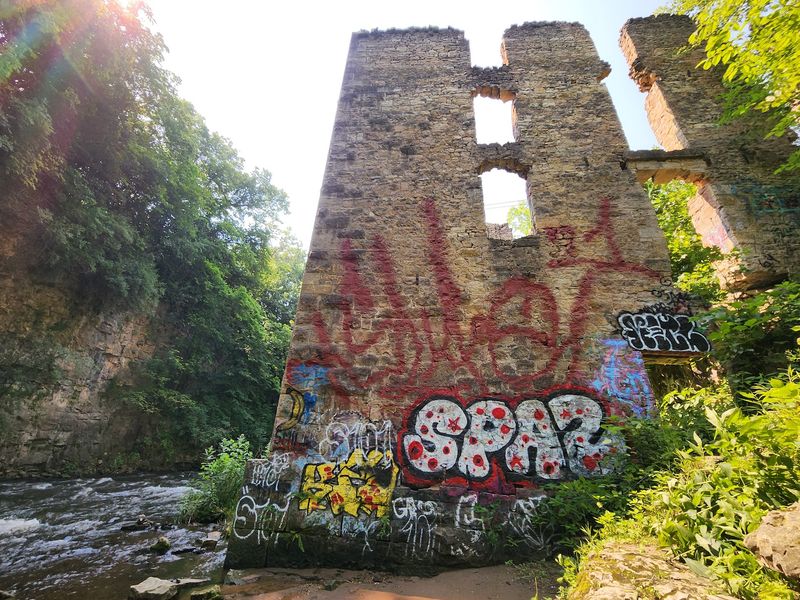
Colorful spray paint covers parts of the old stone, and people have mixed feelings about it. Some visitors wish the walls were clean and untouched, while others think the bright art gives the ruins an edgy, urban feel.
Either way, photographers tend to have a great time here. The mix of rough rock, green leaves, empty window frames, and splashes of color makes for eye-catching shots. Wide angles capture the scale, while close-ups show off textures and details.
I leaned toward framing shots that highlighted the original stonework. Try shooting through the window openings toward the trees, or crouch low to make the walls look even taller. Soft light in the morning or late afternoon works wonders.
Litter can sometimes appear around the site too, which is a shame. Bring a small bag and pick up a few pieces if you can. It is an easy way to help protect this piece of history.
And of course, please never add paint or carvings yourself. The ruins deserve a little kindness.
Planning Your Visit to Hastings
Timing can shape the whole experience. The area is open daily from 6 AM to 10 PM, and early mornings are often calm, green, and filled with birdsong. Even on weekends, crowds usually stay light.
Parking is free, though the lot near the ruins is small. There is more room at the Vermillion Falls lot, which also has a portable toilet. Beyond that, restroom options are limited, so plan ahead before heading down the trail.
Pack the basics. Water, snacks, bug spray, and sturdy shoes will keep everyone happy. A camera or phone with plenty of battery is a must, because you will want pictures of the falls, the bridge, and those towering walls.
The visit itself does not take long, so it works nicely as a stop on a road trip or a relaxed morning outing. Combine it with a walk to the falls for a fuller adventure. To find this piece of Minnesota history, head to Old Mill Ruins, Ramsey Mill, 18th St E, Hastings, MN 55033, and let the stones tell their story.
