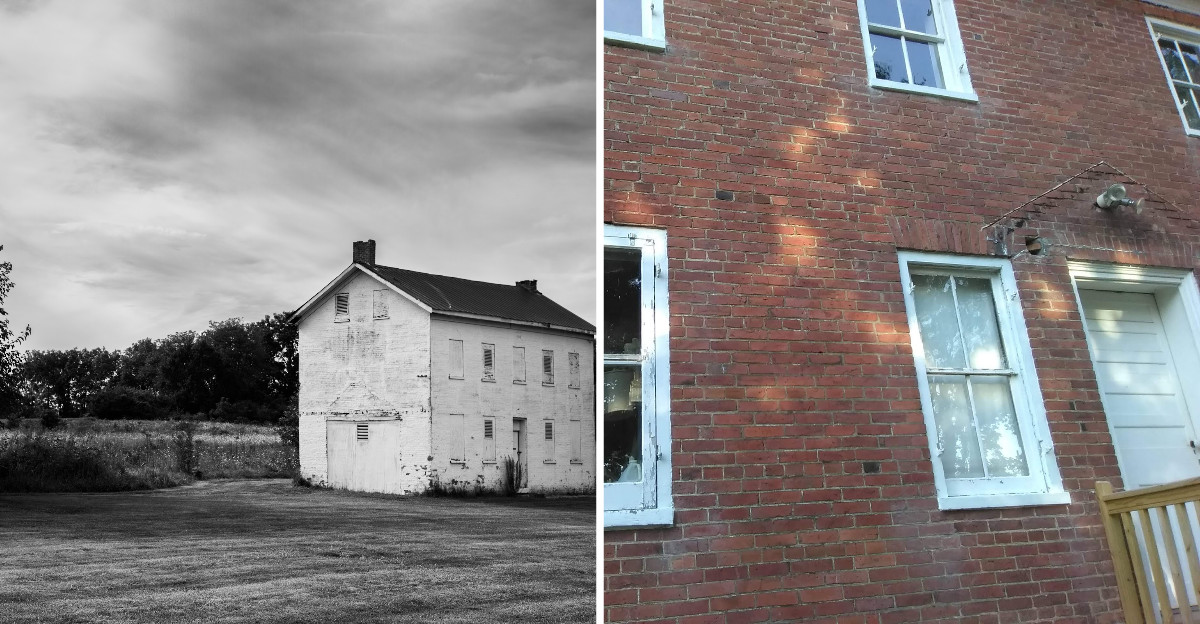
A quiet country road in Ohio can lead to a one-of-a-kind piece of American history. The only brick Shaker meeting house still standing in the United States sits here, its warm red walls shaped by hand using local clay in 1827.
Standing before those walls, it is easy to picture the dancing worship that once filled the wide open room inside. The village around it still holds its dwelling house, barns, and small outbuildings, all sitting right where they were first built.
Shaker craftsmen shaped every brick on the property, and the building has survived nearly two centuries of weather and change. Walking the grounds, the past feels close enough to touch.
The meeting house is the last of its kind, a rare survivor of a community that once thrived here. Visitors can wander the paths and step inside a space that still carries the echo of song and movement.
History like this does not need glass cases to make an impression.
A Meeting House Made From the Ground Beneath It
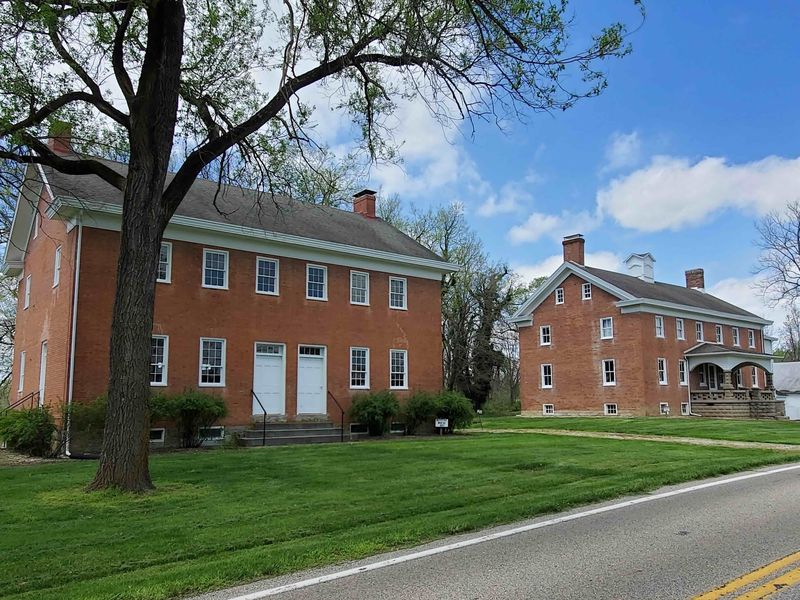
Brick was my first surprise here, since most Shaker meeting houses were built of wood. At White Water, good lumber was hard to get when building started, so the Shakers did something clever.
They dug local clay and made their own bricks right on the site.
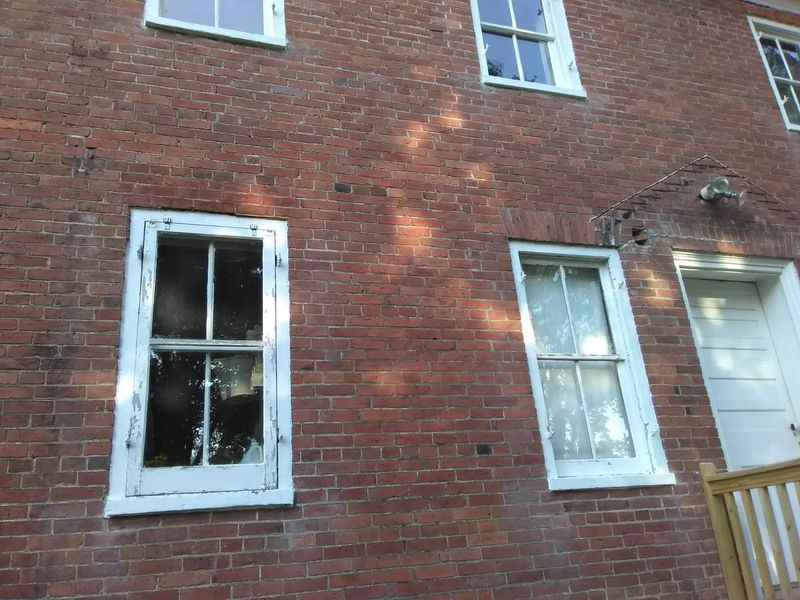
The building went up in 1827, and today it is the only brick Shaker meeting house left in the whole country. When I ran my eyes along the walls, I noticed how each brick carries tiny marks and slight color changes.
Those little flaws come from being shaped by hand almost two hundred years ago, and they give the walls a warm, earthy glow in afternoon sun.
The shape is plain and tidy, which fits the Shaker love of simple design. You won’t find fancy carvings or bright paint on the outside.
Instead, the beauty comes from balance, neat windows, and careful work.
A good tip is to walk all the way around the building before heading inside. Different sides catch the light in different ways, and you’ll get a better feel for how solid this structure really is.
Bring a camera, because the brick looks especially rich on clear days.
The Floating Floor Trick Above Your Head
Look up once you get inside, and you might feel a little puzzled at first. The big first-floor room has no posts or columns breaking up the space.
So how does the second floor stay up there?
The answer is an unusual suspended truss system. Builders hung the upper floor and attic from a strong frame of beams above, so the weight is carried overhead instead of resting on poles in the middle of the room.
I thought it was one of the smartest bits of old engineering I had seen in a small country building.
There was a very real reason for all that effort. Shaker worship included lively, ecstatic dancing, and people needed lots of open floor to move together in lines and circles.
A column in the way would have been a big problem for a room full of moving worshippers.
Picture the floorboards shaking with steps and songs, and the room suddenly makes sense. If a guide is around during your visit, ask about how the truss works.
Kids especially enjoy learning that the ceiling is basically hanging from the roof like a giant shelf.
Count the Doors and Spot the Difference
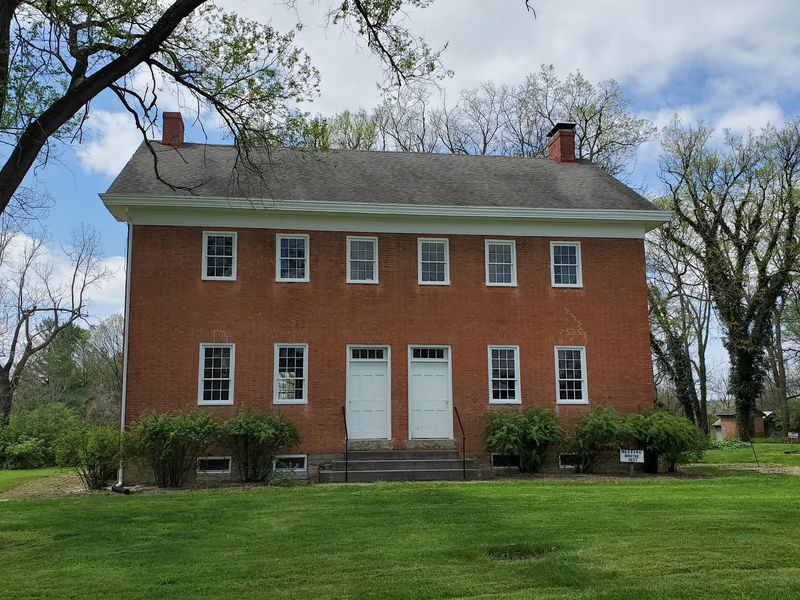
Here’s a fun little game for your visit: count the doors. Most Shaker meeting houses had just two doors in front.
One was for men and one was for women, because Shaker brothers and sisters kept separate in many parts of daily life.
White Water broke that pattern. The meeting house has two sets of doors at both the front and the back, which makes it different from the usual Shaker design.
I liked noticing that detail, because it shows that even a group famous for strict rules sometimes did things their own way.
Nobody needs to be a history expert to enjoy this. Just stand back, look at the matching doorways, and imagine people arriving for worship, each heading to their own entrance.
Order mattered deeply to them.
Families can turn this into a mini scavenger hunt. Ask kids to find every door, then guess why there are so many.
It’s an easy way to spark questions about how the Shakers lived, and it keeps younger visitors curious instead of restless.
Simple details like these are what make a small site feel personal and memorable.
Rich Soil, Tall Trees, and a Flowing Creek
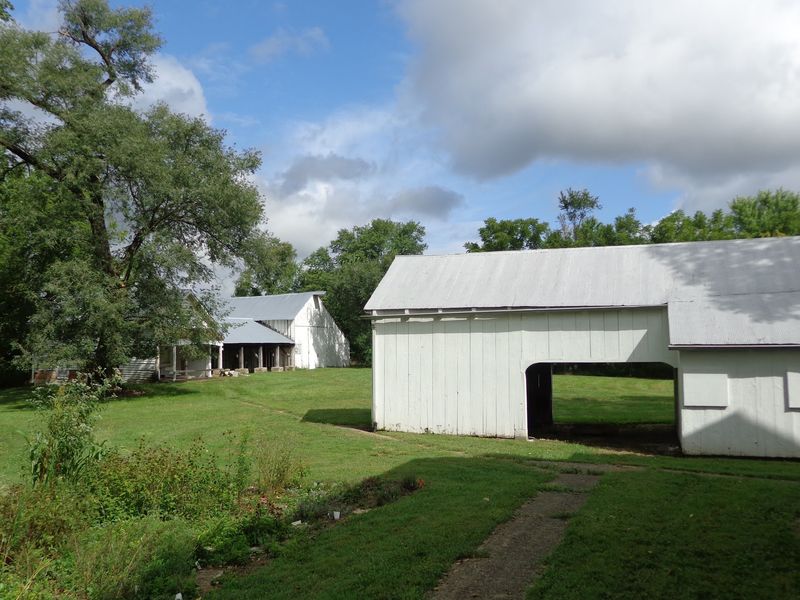
Long before any brick was laid, the Shakers picked this land for good reasons. Around 1823 or 1824, they settled here because the soil was rich, timber grew nearby, and the Dry Fork of the White Water River flowed close by.
For farming people, that combination was a gift.
Driving in, I could easily see why they stayed. The fields roll gently, the trees frame the view, and the whole area has a calm, open feeling.
Even now it sits in rural Hamilton County, far enough from busy streets that you can hear birds more than cars.
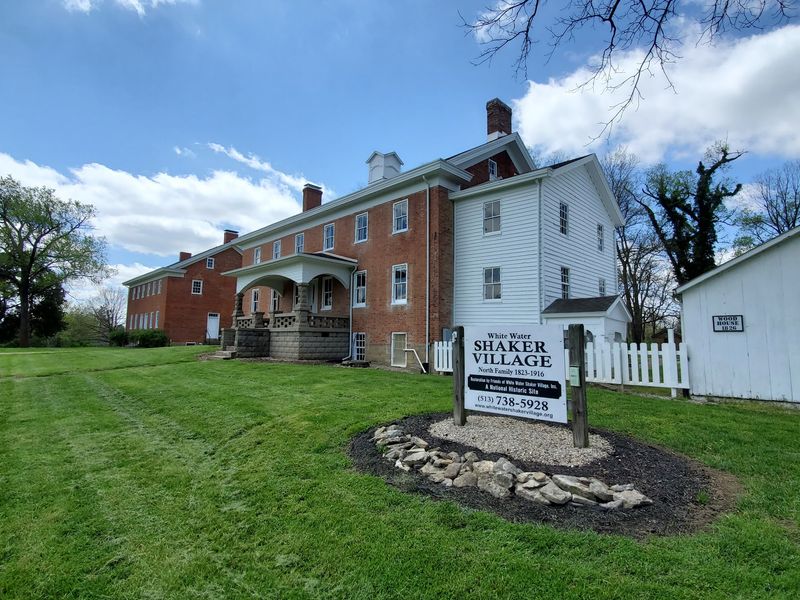
White Water was one of 24 Shaker communal villages started across the United States. Today it is the only Shaker village in Ohio that remains intact, with many original buildings still sitting in their first spots.
That last part matters more than it sounds. Plenty of old buildings get moved to museums, but here you see them exactly where the Shakers placed them.
Take a moment to notice how the buildings line up with the land, and you’ll start to understand how a working village once fit together like puzzle pieces.
Barns, Stables, and the Humble Milk House
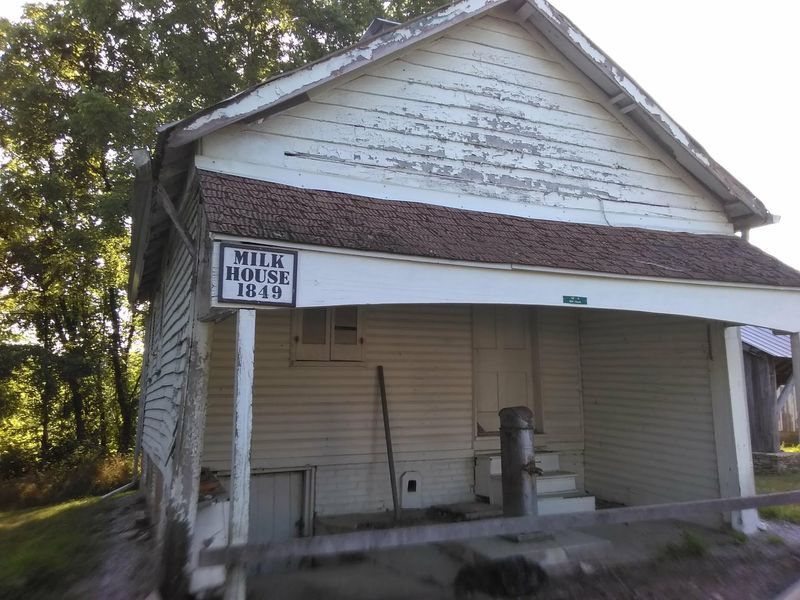
Honestly, the outbuildings stole a bit of my heart. The meeting house gets the spotlight, but the barns, stables, and little milk house tell the story of everyday work.
This is where chores happened from sunrise to sunset.
The Shakers were hardworking farmers and makers. They raised animals, grew crops, and became known for selling seeds and handmade goods.
The milk house, for example, was a place to keep dairy cool long before refrigerators existed, which is a neat fact to share with kids who have never thought about life without a fridge.
Wander slowly between these buildings. Notice the old wood, the simple shapes, and how close everything sits for easy work.
The dwelling building is another stop worth your time. Shaker members lived together there, and its size hints at how many people once called this village home.
I tried to imagine the sounds of a busy morning, with footsteps, tools, and animals all mixing together.
Wear comfortable shoes with good grip, since you’ll be walking on grass and uneven ground. After rain, things can get a little muddy, so boots are a smart choice for exploring the farm side of the village.
How a Busy Village Slowly Grew Quiet
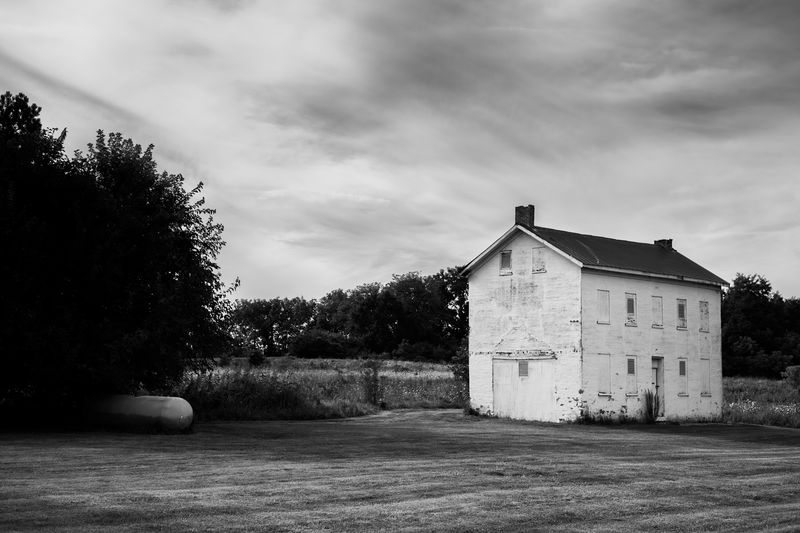
Every old place has a bittersweet chapter, and this one is no different. After the Civil War, fewer people chose to join the Shakers.
Their strict religious practices began to lose appeal for newer generations.
Changes in the wider world hurt too. Factories started making goods quickly and cheaply, so fewer buyers wanted handmade Shaker items.
The seed business, once a strong source of income, shrank over time. Little by little, the community grew smaller.
In 1916, the last two Shakers left White Water, and the village closed. I found that number hard to forget.
Just two people, the final members of a group that once filled these buildings with work, song, and worship.
Knowing this history changes how the village feels when you walk through it. The quiet becomes meaningful instead of empty.
You start to see the buildings as survivors, holding on through more than a century without the people who built them.
It also makes the restoration work today feel even more special. Without careful hands stepping in, these walls could have been lost forever.
Take a quiet minute on your visit to simply look around and appreciate that they are still here.
Open Houses, Crafts, and Planning Your Visit
Timing is everything with this hidden gem, so plan ahead. The village is open to the public only on certain days, mostly during scheduled events like open houses.
Checking the official website or Facebook page before you go will save you from a disappointing drive.
Today the land belongs to Great Parks of Hamilton County. The Friends of White Water Shaker Village, a dedicated group of volunteers, care for and restore the buildings.
Recent work on the meeting house has included painting, drywall, a new attic staircase, electrical upgrades, and an accessibility ramp, which makes visiting easier for more people.
Events are where the village really comes alive. Small group tours, open houses, and hands-on workshops in Shaker crafts like basket making, spinning, and weaving pop up throughout the year.
I love the idea of learning a skill in the same place the Shakers practiced it.
A gift shop opens during events, offering books about Shaker life and handcrafted pieces. Private tours can also be arranged, and donations help keep the restoration going strong.
Address: 11813 Oxford Rd, Harrison, Ohio 45030
