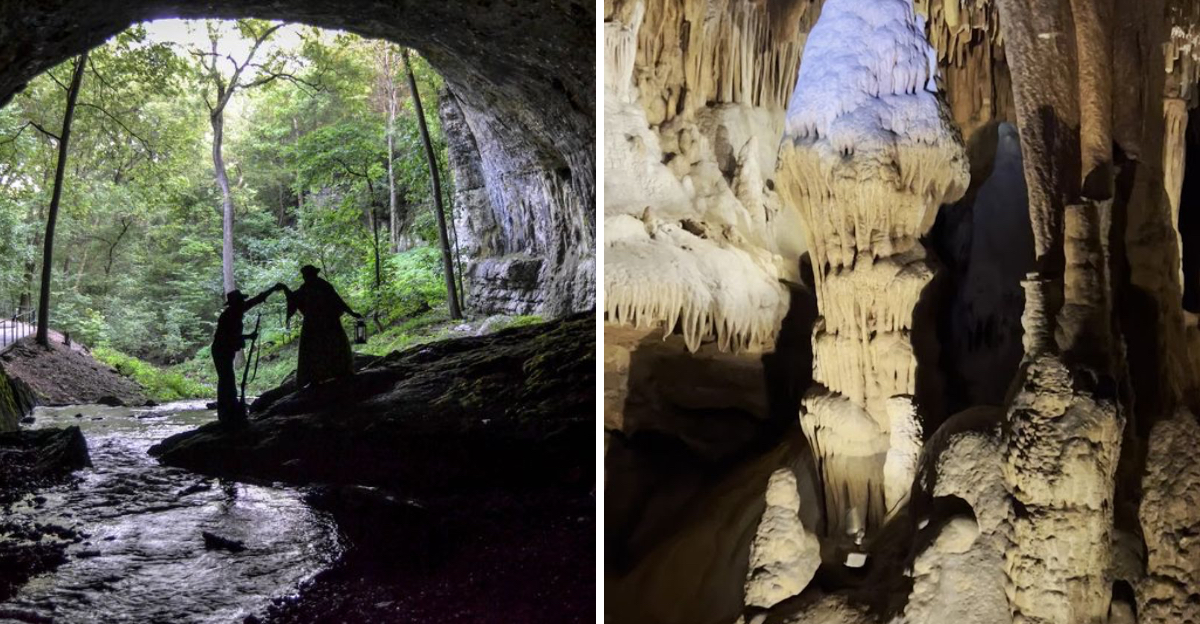
The surface of Missouri holds plenty of beauty, but the real magic lives underground. Beneath rolling hills and quiet farm fields, a whole different world waits for anyone brave enough to descend into the darkness.
The caves here are some of the best in the country, and ten of them deserve a spot on every adventure list.
Stalactites hang from ceilings like nature’s chandeliers, each one formed by a single drop of water over thousands of years. Stalagmites rise up to meet them, sometimes connecting into grand columns that look too perfect to be accidental.
The air stays cool year round, a welcome relief on a hot summer day or a crisp escape in any season.
Hidden chambers open up when you least expect them, some large enough to hold a house and others so narrow you have to turn sideways to squeeze through.
Guides share stories of outlaws who hid here, early settlers who took shelter here, and explorers who spent days mapping passages that had never seen human light.
Missouri’s underground is an adventure waiting to happen.
1. Meramec Caverns, Sullivan, Missouri
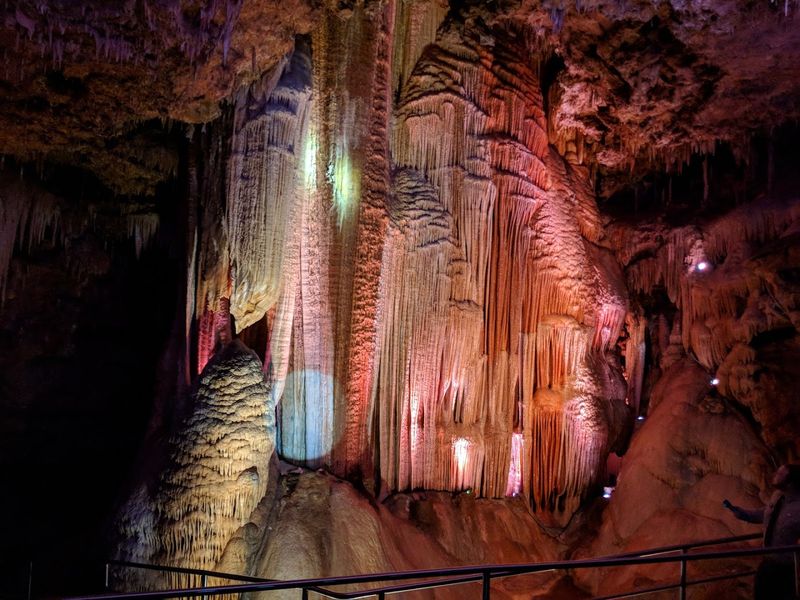
Missouri’s largest commercial cave system hides beneath the rolling hills near Sullivan, and stepping inside Meramec Caverns for the first time genuinely stops you in your tracks.
The sheer scale of this place is hard to wrap your head around. The cave stretches across a seven-story matrix of interconnected underground rooms, each one more dramatic than the last.
The crown jewel of the whole experience is the Stage Curtain, a towering flowstone formation that rises like a theater backdrop carved by nature over millions of years. It is one of the most photographed cave formations in the United States, and once you see it, you will understand why.
History fans will love the Jesse James connection. The outlaw reportedly used these caverns as a hideout, and the cave leans into that legacy with storytelling that brings the past to life underground.
The address is 1135 Hwy W, Sullivan, MO 63080. Sullivan sits about an hour southwest of St. Louis along the old Route 66 corridor, making Meramec Caverns a natural road trip stop.
Tours run regularly and cover a good stretch of the cave’s most impressive sections. The temperature inside stays around 60 degrees Fahrenheit year-round, so bring a light jacket no matter what season you visit.
I walked out of Meramec Caverns feeling like I had just seen something the surface world simply cannot replicate, and that feeling stuck with me for days afterward.
2. Fantastic Caverns, Springfield, Missouri
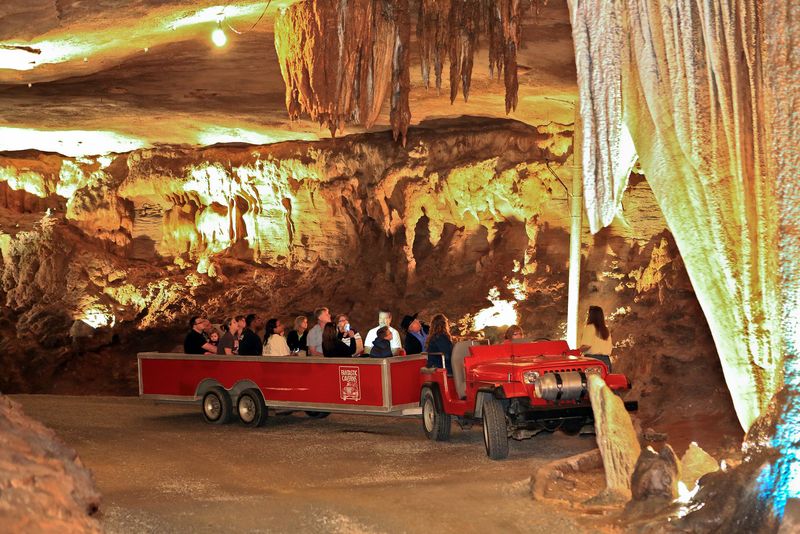
Somewhere beneath the city of Springfield, Missouri, lies the only cave in North America where you never have to take a single step underground.
Fantastic Caverns, located at 4872 N Farm Rd 125, Springfield, MO 65803, offers a completely ride-through cave experience. Visitors board a jeep-drawn tram and glide along an ancient subterranean riverbed while thousands of delicate stalactites hang overhead like a chandelier made by the earth itself.
The ride format makes this cave uniquely accessible. Families with young kids, folks who prefer not to walk long distances, and anyone who just wants a relaxed way to experience a cave will find this setup genuinely refreshing.
What I found most striking was the sheer density of formations. Stalactites cluster together in sections so thick they almost block the view of the ceiling above them.
The tram moves at a comfortable pace, giving you plenty of time to look around and absorb everything.
The cave formed when an underground river carved its way through the Ozark limestone over millions of years. That ancient riverbed is now your road through the dark, and it is a smooth and surprisingly scenic one.
Springfield is located in southwest Missouri, making Fantastic Caverns easy to combine with other Ozark adventures nearby. The cave stays at a cool 60 degrees Fahrenheit inside, which feels refreshing during Missouri’s warm summers.
Riding through a cave rather than walking it sounds simple, but the experience delivers something that feels genuinely one of a kind.
3. Onondaga Cave State Park, Leasburg, Missouri
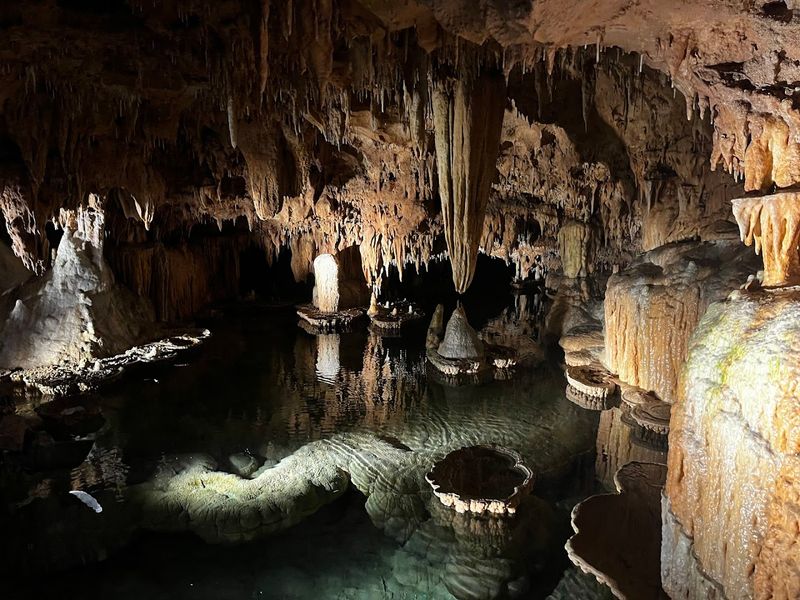
Crystal formations this complex and this dense in a single cave are genuinely rare, and Onondaga Cave in Leasburg, Missouri delivers them in abundance.
Recognized as a National Natural Landmark, Onondaga Cave earned that designation for good reason. The concentration of crystal deposits, towering columns, and distinctive lily pad-shaped flowstones inside this cave is unlike anything I have seen in any other cavern.
The cave sits within Onondaga Cave State Park at 7556 Hwy H, Leasburg, MO 65535, tucked along the Meramec River in central Missouri. The park itself is beautiful, but the cave is the clear headliner.
Guided tours take you through the cave’s most spectacular sections at a steady pace. The formations here feel almost impossibly detailed, like someone spent centuries carefully sculpting every surface.
In a way, nature did exactly that.
The lily pad formations are particularly memorable. They form when calcite-rich water drips into shallow pools, building up thin, circular shelves of mineral deposits that really do look like floating lily pads frozen in stone.
I spent time just staring at certain formations, trying to figure out how something so intricate could grow naturally in the dark. The answer, of course, is patience measured in geological time.
The cave temperature holds steady around 58 degrees Fahrenheit, so a jacket is a smart call. The surrounding state park also offers camping and river access for those who want to make a full weekend out of the trip.
Onondaga is the kind of cave that turns casual visitors into dedicated cave enthusiasts.
4. Bridal Cave and Thunder Mountain Park, Camdenton, Missouri
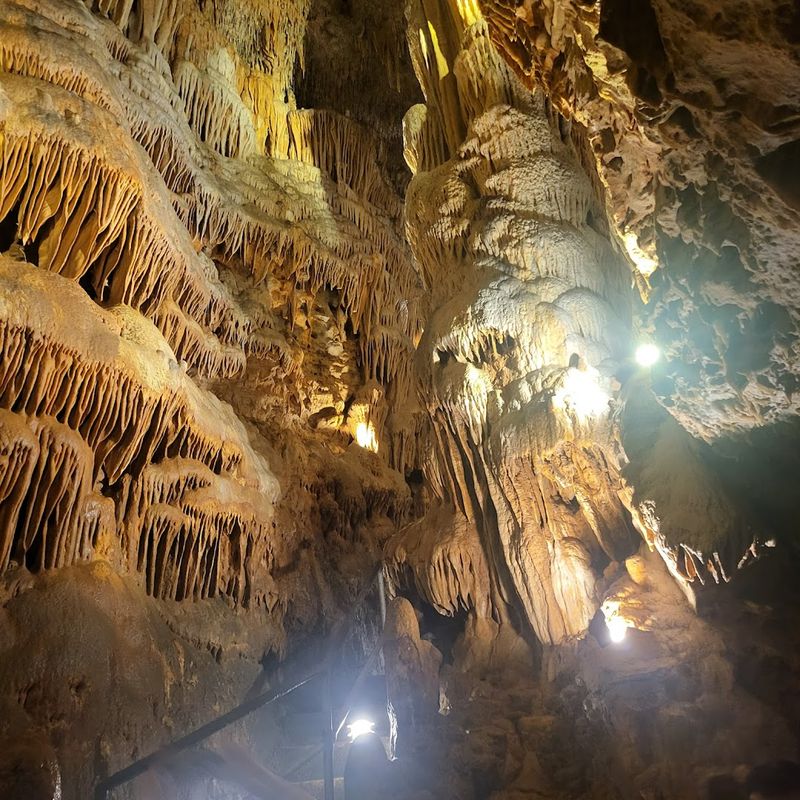
Tucked beneath the landscape near the Lake of the Ozarks, Bridal Cave in Camdenton, Missouri holds one of the largest collections of cave draperies and onyx formations in the entire country.
The address is 526 Bridal Cave Rd, Camdenton, MO 65020, and the cave sits just minutes from the lake itself. That combination of water above and geological wonder below makes this corner of Missouri feel especially layered.
Cave draperies are thin, translucent sheets of flowstone that hang from cave ceilings and walls like curtains made of mineral. When light passes through them, some glow with a warm amber color that is genuinely stunning to witness in person.
Bridal Cave has earned a romantic reputation over the years, and the dramatic formations inside certainly support that mood. The cave name comes from its history as a ceremonial site for the Osage people long before it became a public attraction.
The tour winds through chambers packed with stalactites, stalagmites, and those signature drapery formations that make this cave visually distinct from others in Missouri. Every corner seems to offer a new formation worth pausing to study.
Thunder Mountain Park surrounds the cave entrance and adds a scenic outdoor dimension to the visit. The rolling terrain above hints at the geological activity happening deep below the surface.
I found the onyx formations particularly striking. Their dark, layered appearance contrasts beautifully with the lighter flowstone nearby, creating a natural color palette that feels almost artistic.
Bridal Cave rewards slow walkers who take time to actually look at what surrounds them.
5. Stark Caverns, Eldon, Missouri
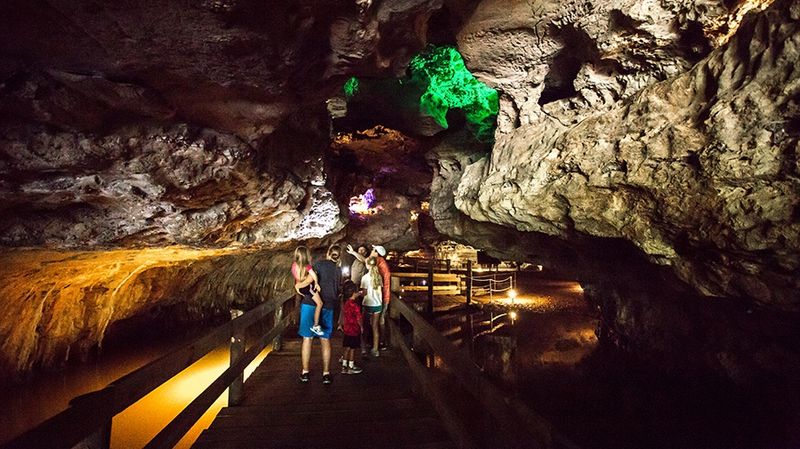
Not every cave tells just one story, and Stark Caverns in Eldon, Missouri packs several centuries worth of history into a single underground space.
Located at 125 Stark Caverns Rd, Eldon, MO 65026, this cave sits in central Missouri and offers a tour experience that layers geology, archaeology, and local folklore into something genuinely fascinating.
The geological story starts with the cave formations themselves, which are well-developed and visually impressive. But the human history here is what sets Stark Caverns apart from many other Missouri caves.
Native American artifacts discovered inside the cave point to use by indigenous people long before European settlement. Those early connections to the land add a quiet sense of history to every step of the tour.
Then there are the moonshiner dams. During Prohibition, the cave was used by local moonshiners who built small dams inside to control water flow for their operations.
Seeing those structures still standing underground is a genuinely surprising detail.
Perhaps the most unusual feature is the fossilized prehistoric bear beds, areas where ancient bears once slept and left impressions in the cave floor that hardened over time. Standing near those spots makes the deep past feel suddenly very close.
The cave temperature stays comfortably cool year-round, which made my visit in the middle of summer feel like a welcome escape from the Missouri heat outside.
Stark Caverns does not get the same level of tourist traffic as some of its neighbors, which means the experience feels a bit more personal and unhurried.
That quieter pace is part of what makes it special.
6. Mark Twain Cave, Hannibal, Missouri
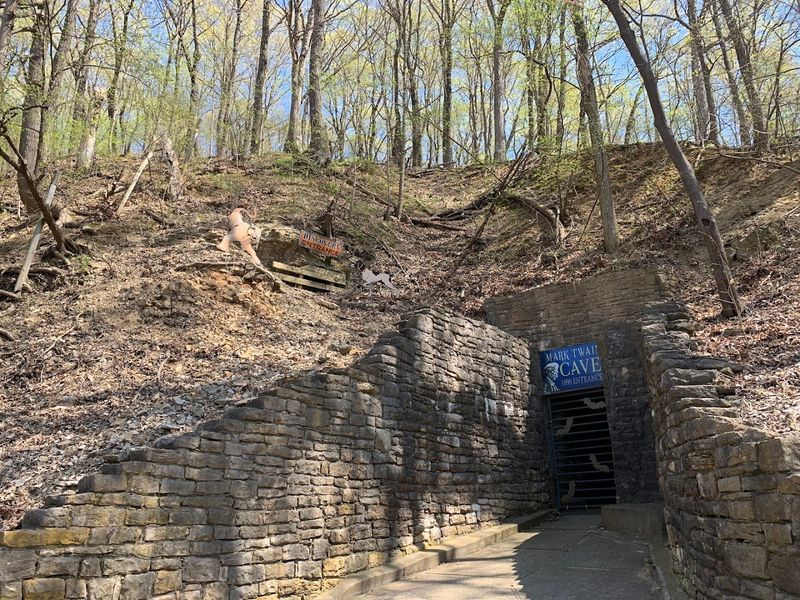
Long before it became a tourist destination, this cave was a real place where a real boy named Samuel Clemens wandered and got lost, and later turned those memories into American literary history.
Mark Twain Cave in Hannibal, Missouri is the oldest show cave in the state, and its connection to the author of The Adventures of Tom Sawyer gives it a cultural weight that no other Missouri cave can match.
The address is 300 Cave Hollow Rd, Hannibal, MO 63401, located in northeast Missouri along the Mississippi River.
What makes the cave experience here unique is the format. Tours offer an un-lit look into the cave’s labyrinth of smooth, narrow crevice pathways, putting you much closer to the raw, unadorned underground environment than most commercial caves allow.
The passages twist and turn in ways that genuinely feel disorienting. It is easy to understand how a curious kid could get turned around in here, and that thought makes the literary connection feel vivid and real rather than just historical trivia.
The walls of the cave are smooth limestone, worn by water and time into curving shapes that glow faintly in lamplight. There are no dramatic formations here in the traditional sense, but the atmosphere more than compensates.
Hannibal itself is a town worth exploring. The Mississippi riverfront, the historic downtown, and the Mark Twain Boyhood Home all surround the cave experience and make for a full day of exploration.
Mark Twain Cave reminded me that sometimes the most powerful thing a place can offer is a story, told well and told honestly.
7. Smallin Civil War Cave, Ozark, Missouri
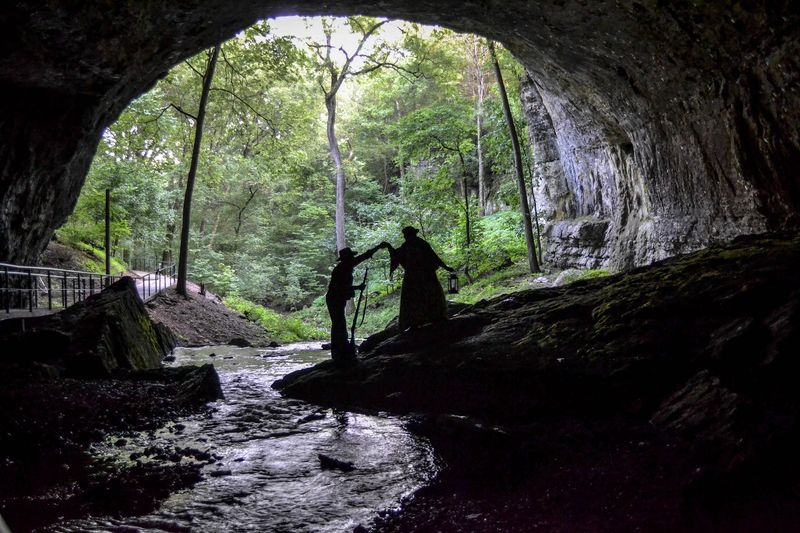
The entrance alone is enough to make you stop walking and just stare. Smallin Civil War Cave near Ozark, Missouri greets visitors with an 11-story open-mouthed entrance that frames a dramatic transition from sunlit forest to cool underground darkness.
Located at 3575 N Smallin Rd, Ozark, MO 65721, this cave sits in the Ozark region of southwest Missouri and carries a history that stretches from prehistoric times through the Civil War era and beyond.
Guided trail tours move through the cave at a comfortable pace while blending geological information with Ozark history and Civil War folklore. The storytelling here is particularly well done, weaving together layers of the past without feeling like a lecture.
During the Civil War, the cave served as a shelter and strategic point for forces moving through the region. Standing inside and imagining soldiers taking refuge in those same chambers adds a somber but meaningful dimension to the visit.
The cave is also home to rare subterranean blind fauna, creatures that have adapted over generations to life without light. Spotting these small, pale inhabitants of the underground world is one of those quietly remarkable moments that cave tours can deliver.
The Ozark landscape surrounding the cave adds to the overall atmosphere. Bluffs, trees, and a nearby stream create a setting that feels wild and unhurried in the best possible way.
I found the combination of massive entrance, layered history, and living cave ecosystem made Smallin feel more complete than many caves I have explored.
It is the kind of place that earns a second visit.
8. Talking Rocks Cavern, Branson West, Missouri
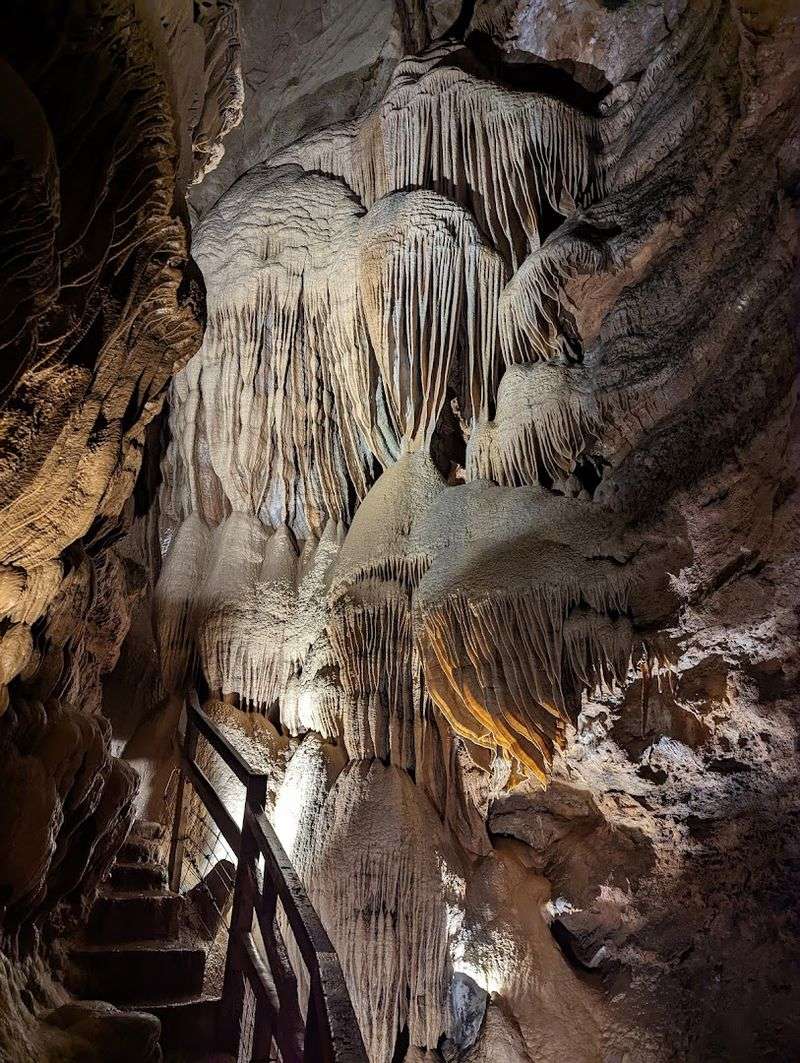
Going down is where the adventure starts at Talking Rocks Cavern, a vertical underground experience near Branson West, Missouri that feels more like descending into a geological sculpture garden than taking a typical cave tour.
Located at 423 Radical Rd, Branson West, MO 65737, this cavern sits in the heart of the Ozarks in southwest Missouri. The town of Branson West is just a short drive from the entertainment hub of Branson itself, making this cave an easy addition to any Ozark road trip.
The defining feature of Talking Rocks Cavern is its vertical structure. Visitors descend a series of steps into a deep, narrow canyon cavern that opens up in surprising ways as you move through it.
The walls close in and then expand, creating a rhythm of tension and release that keeps the tour feeling dynamic.
Pristine mineral drapes hang vertically along the cave walls in formations that look almost fabric-like in texture. The preservation level here is notably high, with formations that appear untouched and brilliantly detailed.
The cave earned its name from an audio component built into the tour that uses the natural acoustics of the cavern to tell geological stories. Sound behaves differently underground, and Talking Rocks uses that quality deliberately and effectively.
I appreciated how the tour managed to feel educational without losing its sense of wonder. The guides here clearly love what they do, and that enthusiasm is contagious.
Talking Rocks Cavern is the kind of underground experience that makes you look at the ground beneath your feet very differently on the drive home.
9. Bluff Dwellers Cave, Noel, Missouri
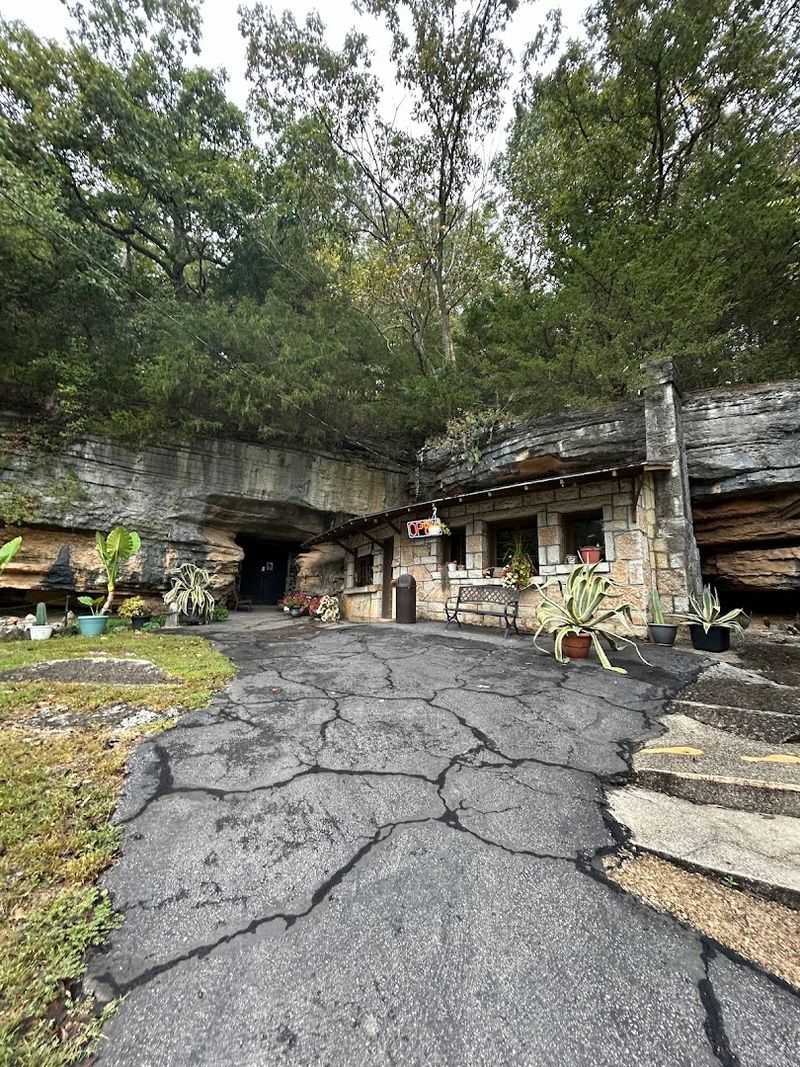
Discovered in 1925, Bluff Dwellers Cave near Noel, Missouri carries a century of exploration history that you can almost feel in the air as soon as you step inside.
The cave is located at 163 Cave Rd, Noel, MO 64854, in the far southwest corner of Missouri near the Arkansas border. Noel itself is a small town that leans into its scenic Elk River setting, and the cave fits naturally into that outdoor-focused character.
One of the first things that grabs your attention inside is a massive slab of balanced rock. It sits in a precarious-looking position that defies easy explanation, and it has been sitting exactly like that for longer than anyone has been around to document it.
Thick sheets of flowstone line sections of the cave walls, building up in smooth, layered curtains that reflect light in interesting ways. The formations here have a heavy, substantial quality that feels different from the delicate stalactites you find in other Missouri caves.
The cave is also well known for regular sightings of Eastern Pipistrelle bats. These small creatures navigate the cave with quiet efficiency, and watching them move through the darkness is one of those unexpected highlights that you remember long after the tour ends.
The surrounding Ozark landscape near Noel is gorgeous, with the Elk River offering float trips and fishing for those who want to extend their time in the area.
Bluff Dwellers Cave has a raw, unhurried quality that sets it apart from more heavily trafficked Missouri caverns.
Coming here feels like finding something the crowds have not quite caught up with yet.
10. Crystal Cave, Springfield, Missouri
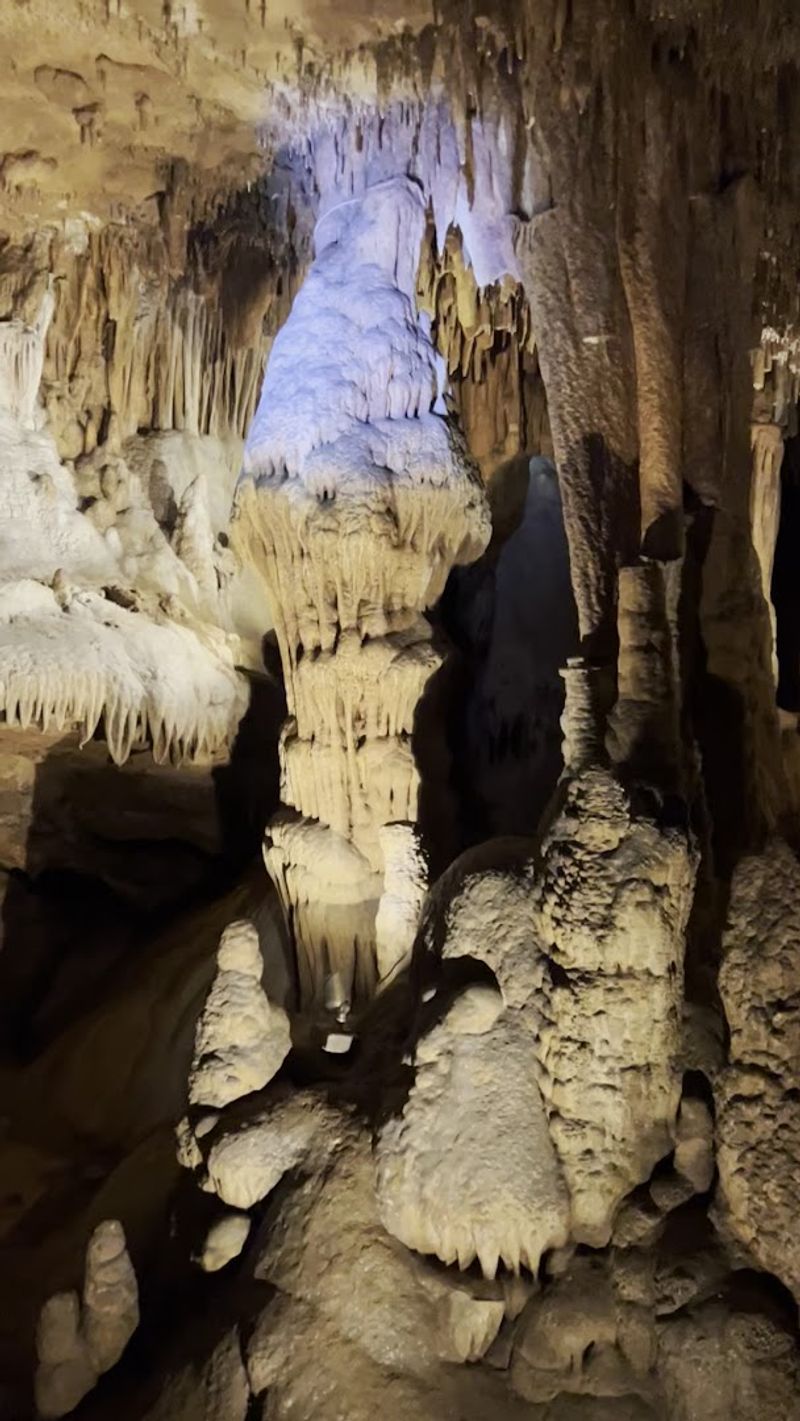
Opening its doors to the public in 1893 makes Crystal Cave one of the oldest continuously operating show caves in the United States, and that long history gives it a character that newer attractions simply cannot manufacture.
Located at 7126 N Crystal Cave Ln, Springfield, MO 65803, this cave sits in northern Springfield, making it easy to pair with a visit to Fantastic Caverns just a few miles away. Two very different cave experiences in a single day is a genuinely satisfying way to spend time in southwest Missouri.
The cave’s most talked-about feature is the Ghost Room, a chamber filled with stark white stalagmites that rise from the floor in pale, almost glowing clusters. The name fits perfectly, and the atmosphere in that room is unlike anything else on the tour.
Crystal Cave leans into its Victorian-era origins in a way that feels charming rather than dated. The tour has a throwback quality that reminds you of a time when cave exploration felt like a genuine frontier experience rather than a packaged attraction.
The formations throughout the cave are well-developed and varied, offering a solid cross-section of what Missouri’s underground geology can produce. Stalactites, stalagmites, flowstone, and columns all make appearances across the different chambers.
Springfield is a lively mid-sized city with plenty to do above ground as well, from the Ozark Natural Science Center to the historic downtown square. Crystal Cave fits naturally into a broader Springfield itinerary.
Walking out of Crystal Cave, I felt connected to every curious visitor who had made the same walk since 1893, and that thread of shared experience is something quietly powerful.
