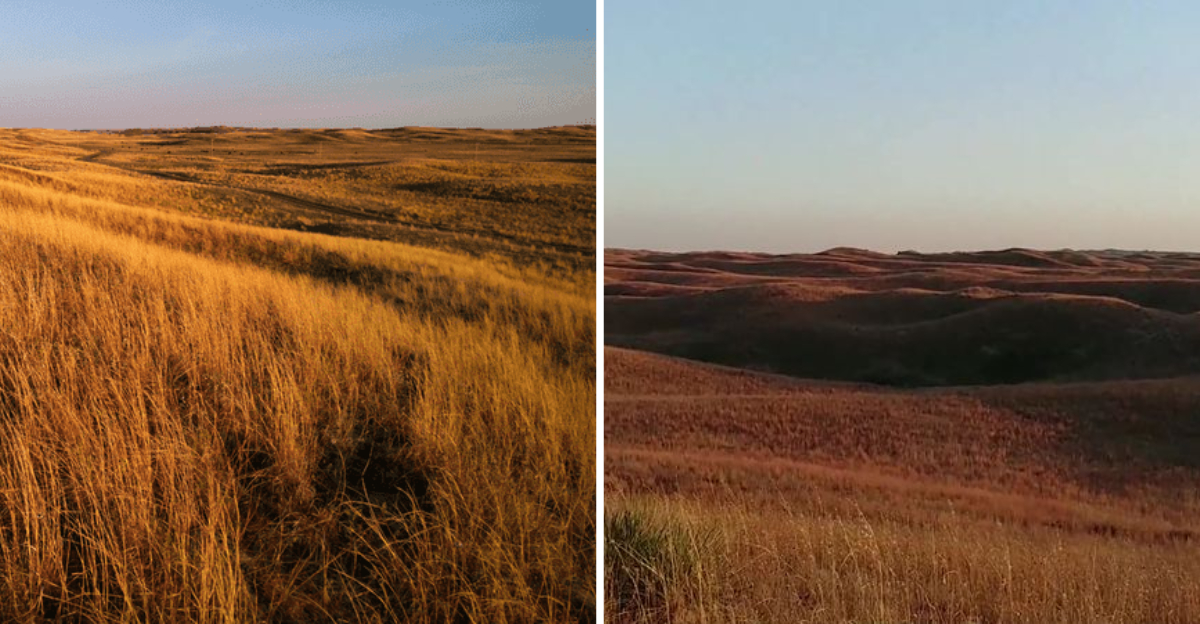
Most people drive across Nebraska and see nothing but empty fields. Flat roads.
Long distances. Maybe a cornfield or two.
But the Sand Hills are different. Rolling dunes covered in grass that stretch for thousands of square miles.
This is the most intact temperate grassland left on the entire planet. And here is the shocking part. It has zero federal protection.
No national park designation. No conservation status.
Nothing. The land sits mostly in private hands, which means its future depends entirely on the people who own it and the decisions they make.
I drove through this landscape and could not believe something so rare and beautiful had no safety net. Nebraska, we need to talk.
The Sheer Scale of the Sandhills Will Catch You Off Guard
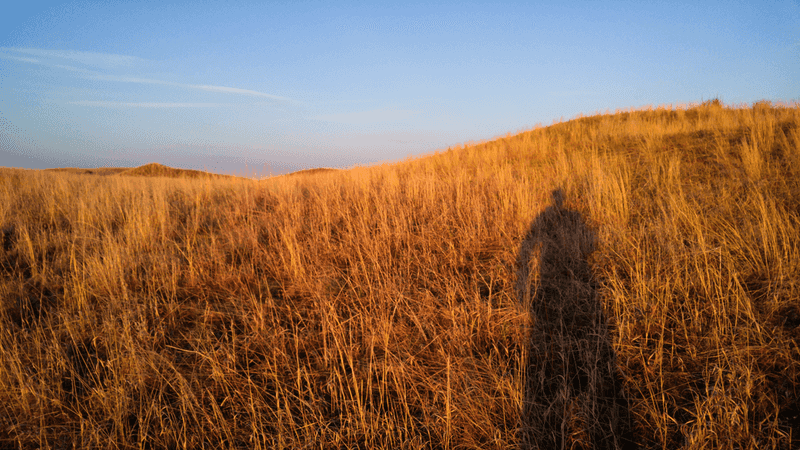
There is a moment, somewhere along Highway 2 heading west through the Sandhills, when your brain stops trying to make sense of the scale. The hills just keep going.
They roll and dip and rise again in every direction, covered in native grasses that ripple like a slow green ocean whenever the wind picks up.
The Sandhills span more than a quarter of Nebraska, covering over 12 million acres of stabilized sand dunes. That is not a typo.
It is one of the largest dune systems in the entire Western Hemisphere, and yet most Americans have never heard of it.
The sandy soil beneath all that grass is actually what saved this place from being plowed under. It is not great for crops.
Ranchers figured that out quickly, and as a result, roughly 80% of the natural habitat here has stayed intact. That is an almost unbelievable number for any grassland in the modern world.
The Sandhills do not announce themselves with dramatic cliffs or roaring waterfalls. Their power is quieter, more patient, and honestly, more lasting than most landscapes I have ever seen.
Only Seven Places Like This Exist on the Entire Planet
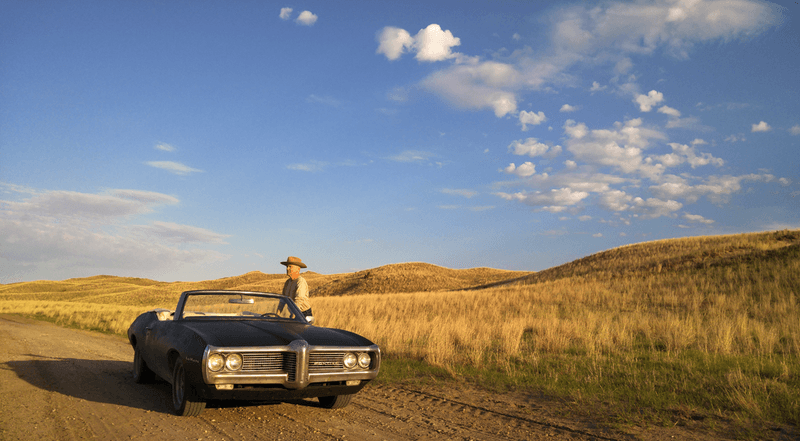
Most people do not realize how rare the Sandhills actually are until someone puts a number on it. A 2022 study published in Conservation Science and Practice found that only seven large-scale grasslands of any type remain mostly intact across the entire planet.
The Nebraska Sandhills made that list.
To put that in perspective, temperate grasslands are among the most threatened ecosystems on Earth. They have been converted to farmland, developed, and fragmented at staggering rates over the past two centuries.
The fact that the Sandhills survived largely whole is not just lucky, it is genuinely remarkable.
What makes this even more striking is the contrast sitting right next door. Central and eastern Nebraska contain what the same study identified as the world’s third-most converted grassland region.
The Sandhills and the corn fields to the east are basically ecological opposites sharing a state border. One tells the story of what was lost.
The other shows what can still be preserved. I found that contrast oddly moving the first time I understood it, like seeing a living museum right next to a parking lot.
The Ogallala Aquifer Runs Deep Beneath Every Hill
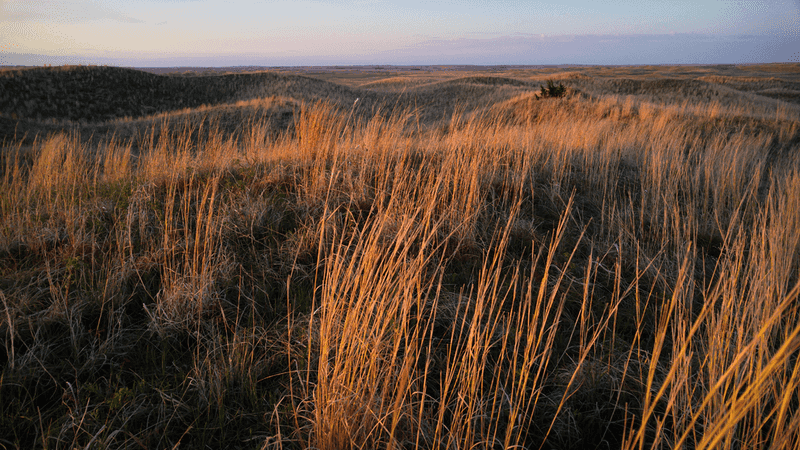
Underneath those rolling grassy hills lies one of the most important water sources in North America, and most people drive right over it without a second thought. The Sandhills sit directly atop the Ogallala Aquifer, a massive underground reservoir that supplies drinking water and irrigation to millions of people across eight states.
The dunes act like a giant natural sponge. When rain falls on the Sandhills, the sandy soil absorbs it quickly and efficiently, filtering it downward into the aquifer instead of letting it run off.
That recharge process is slow and steady, and it depends on the grassland staying intact.
All that water also feeds thousands of shallow lakes and wetlands scattered across the region. These are not decorative ponds.
They are critical stopover points for migratory birds traveling the Central Flyway, one of the busiest bird migration routes in North America. Whooping cranes, sandhill cranes, and hundreds of other species depend on these wetlands every year.
I spotted a great blue heron standing completely still in one of those small lakes at sunrise, and the whole scene felt almost too perfect to be accidental. It was not accidental.
It was geology doing its quiet work.
Ranching Is the Unlikely Hero of This Conservation Story
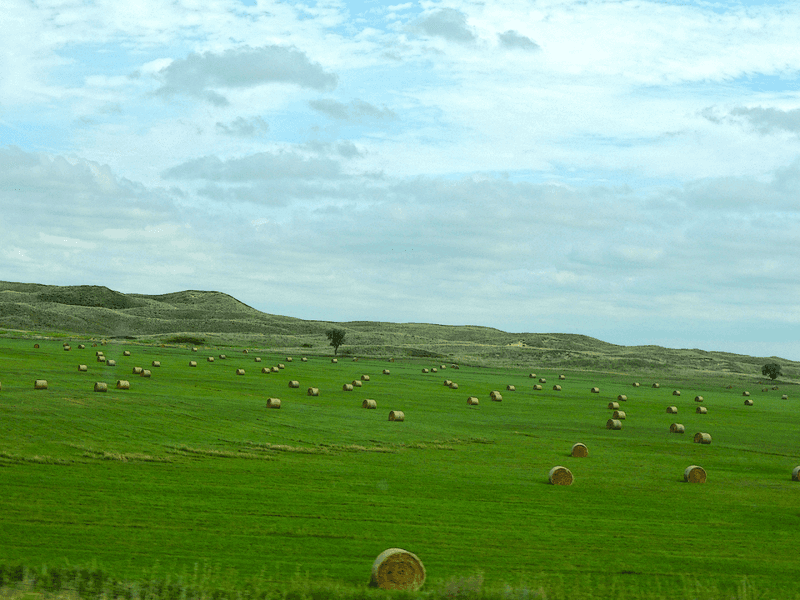
Here is something that surprised me when I first learned it: the reason the Sandhills survived is largely because of ranchers. Not environmental agencies, not national parks, not government programs.
Ranchers who figured out that the sandy soil was better suited for grazing than farming, and who have worked that land for generations without tearing it apart.
Cattle ranching in the Sandhills tends to be low-intensity by necessity. The grass grows in a way that supports grazing without degrading quickly, and the ranchers who know this land understand that overworking it would be their own undoing.
That practical relationship between people and land created an accidental conservation success story.
It is a genuinely unusual dynamic. In many parts of the world, agriculture and ecological preservation are in direct conflict.
Here, they have coexisted in a way that kept 80% of the natural habitat intact. Organizations like the Sandhills Task Force and Pheasants Forever have partnered with local ranchers to support practices like prescribed burning and invasive species removal.
The ranching community is not the villain in this story. They are, in a very real and practical sense, the reason this grassland still exists at full scale.
A National Natural Landmark With No Real Teeth
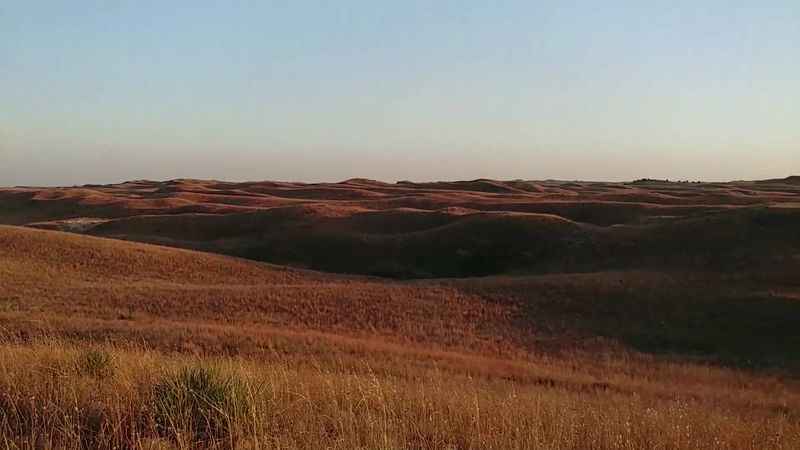
The Sandhills were designated a National Natural Landmark in 1984. That sounds impressive, and in terms of recognition, it is.
The designation acknowledges the ecological significance of the region at a federal level, which is not nothing. But here is the catch: it does not actually restrict what landowners can do with their property.
A National Natural Landmark designation is essentially honorary. It puts the place on a list of important sites, but it does not come with the kind of protective power that a national park or wilderness designation would carry.
Private landowners within the boundary are not required to change how they manage their land.
That gap between recognition and protection is exactly what the 2022 study highlighted. The Sandhills are the only major intact grassland on that global list without a formal, comprehensive conservation strategy in place.
Every other site on the list has some form of significant protection. The Sandhills have a plaque and good intentions.
That is not a criticism of everyone working hard to protect this place locally. It is just an honest look at where things stand, and why people who care about wild places should probably be paying closer attention to what happens here next.
The Threats Creeping In From Every Direction
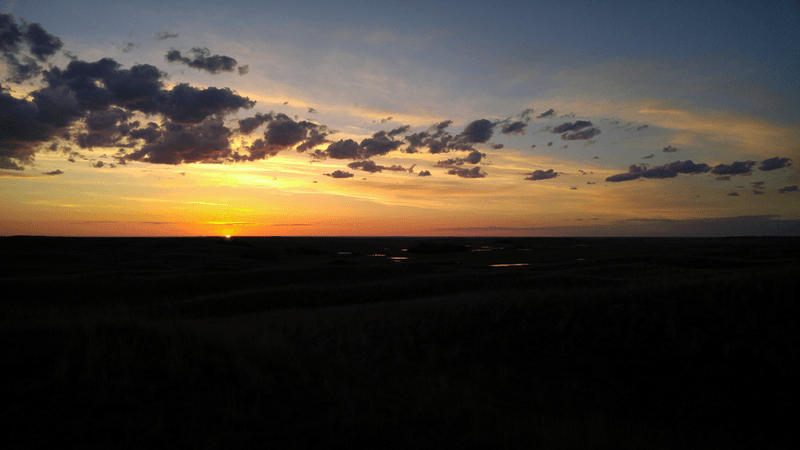
Spend enough time in the Sandhills and you start noticing the edges. Not the dramatic cliffs or fences, but the quieter signs of change.
Eastern red cedar trees pushing into open grassland where they do not belong. Patches of land that have been tilled where the soil probably should have been left alone.
The Sandhills look pristine from a distance, but up close, the pressures are visible if you know what to watch for.
Woody encroachment is one of the biggest threats. Cedar trees spread aggressively across the Great Plains when fire is suppressed, and they can convert open grassland into dense shrubland surprisingly fast.
Once that happens, the habitat value for grassland birds and native wildlife drops sharply. Prescribed burning helps slow the spread, but it requires coordination and resources.
Agricultural expansion in certain areas and the long-term effects of climate change add more pressure on top of that. Shifting precipitation patterns could affect how the dunes recharge the aquifer and how the native grasses grow.
None of these threats are hypothetical. They are already happening in measurable ways.
The Sandhills are resilient, but resilience has limits, especially without a strong conservation framework to back it up.
Why This Place Deserves Your Attention Right Now
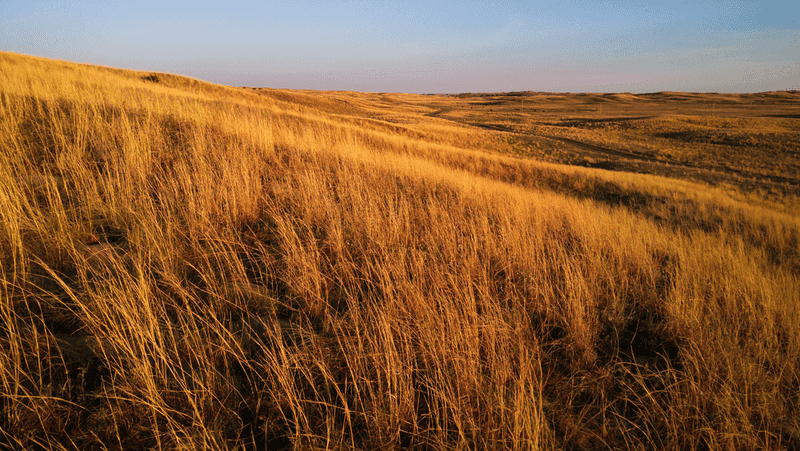
There is a particular kind of quiet in the Sandhills that you do not find in places that get a lot of visitors. No shuttle buses, no gift shops at every turn, no crowds pressing up against a railing to see something famous.
Just grass, wind, sky, and the occasional red-tailed hawk riding a thermal overhead.
That quiet is part of what makes this place so worth protecting. It is also, somewhat ironically, part of why it has not gotten the national attention it deserves.
Places that do not advertise themselves loudly tend to get overlooked in policy conversations. The Sandhills have coasted on their own obscurity for a long time, and that cannot last forever.
If you have never been, Highway 2 through the heart of the Sandhills is one of the most underrated road trips in the country. The Bessey Ranger District of the Nebraska National Forests and Grasslands sits near Halsey, Nebraska, and offers camping, hiking, and a chance to see the landscape up close.
Toadstool Geologic Park near Crawford adds an interesting geological contrast on the western edge. The Sandhills are not just a conservation issue.
They are a genuinely beautiful, living, breathing piece of the American landscape that happens to be running out of time to get the protection it needs.
