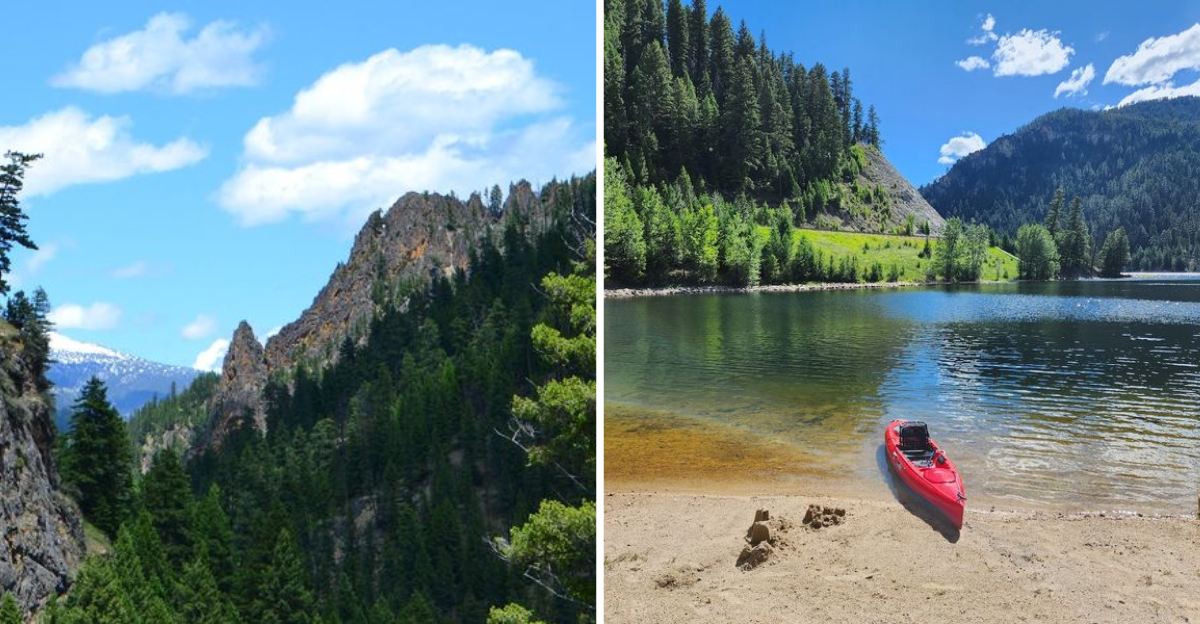
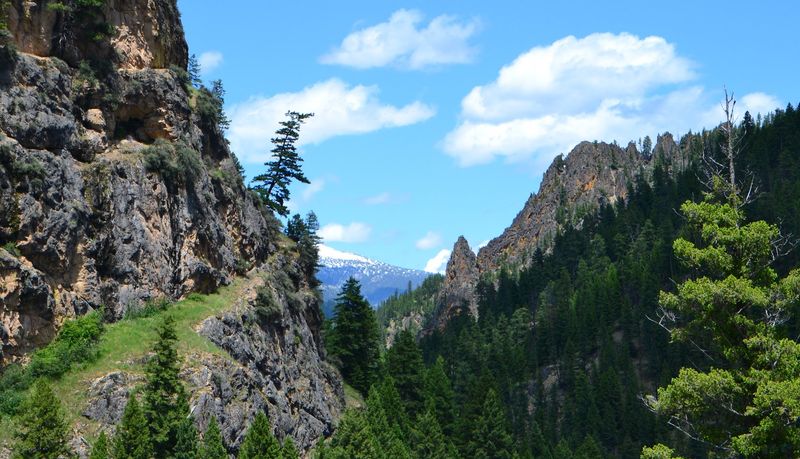
About twenty four miles south of a small Montana town, your phone loses its last bar and the world gets very, very quiet. That moment hits differently than you expect, like a deep breath you forgot you needed. A state park sits in a mountain valley where the cliffs look like someone took a paintbrush to them in shades of green, orange, and yellow. The rocks get those colors from lichen.
Up close they are breathtaking. No crowds, no signal, no noise except wind and water and maybe a hawk overhead. This place does not ask much of you, just your presence, and somehow that feels like enough.
The Lichen-Striped Cliffs That Give the Park Its Name
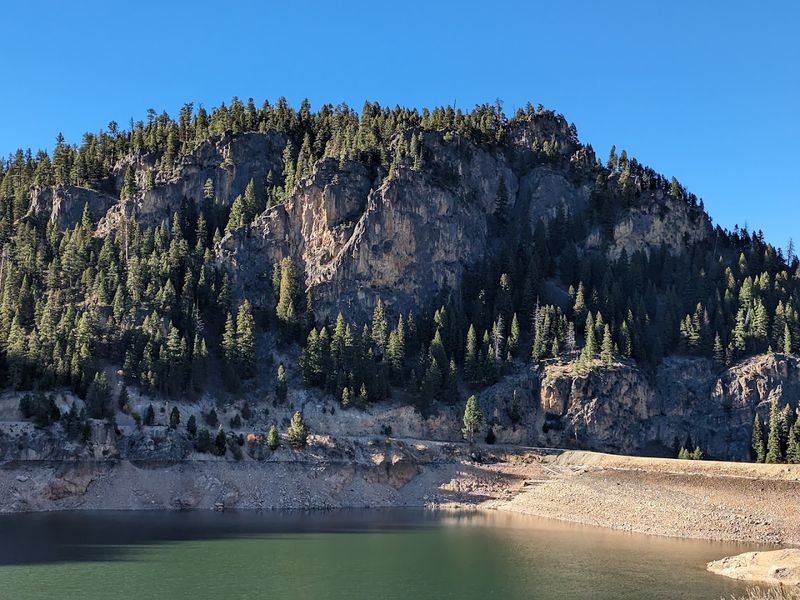
Ranger Sam Billings reportedly renamed this reservoir and its surroundings “Painted Rock Lake” back in the day because the cliffs looked like someone had deliberately decorated them. Looking at them now, it is easy to understand why.
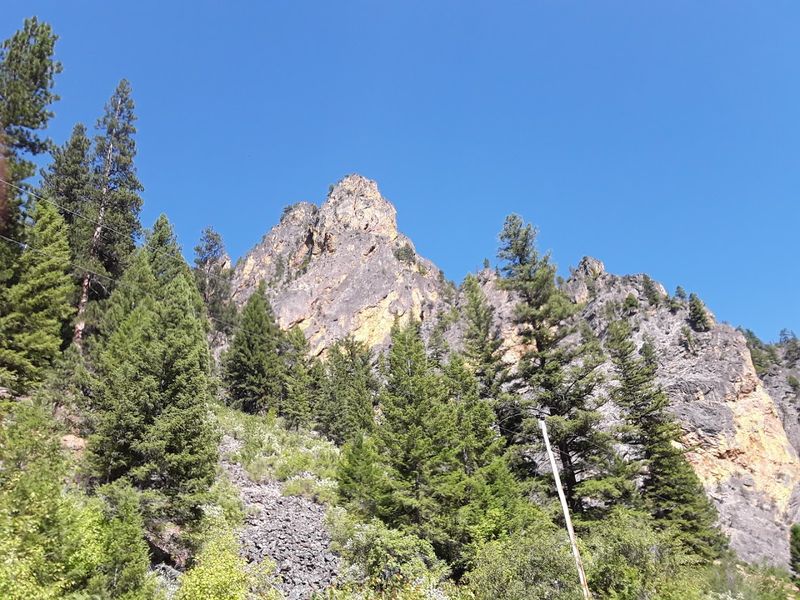
The granite and rhyolite faces are streaked with patches of lichen in colors so vivid they almost look artificial.
Green, orange, yellow, and rust tones layer across the rock surfaces in patterns that shift depending on the light. Morning sun makes them glow warm.
Overcast skies bring out the cooler greens. Every visit offers a slightly different version of the same stunning canvas.
Lichen grows incredibly slowly, so those colorful patches represent decades, sometimes centuries, of quiet biological work. There is something humbling about that.
These cliffs are not just pretty to look at; they carry a kind of geological patience that puts your daily stress into perspective. Photographers especially love this spot, and it is easy to see why.
The colors pop against the blue Montana sky in a way that makes even a basic phone camera produce something worth keeping. Getting close to the rock face and studying the textures is an experience all on its own.
What No Cell Service Actually Does to Your Brain
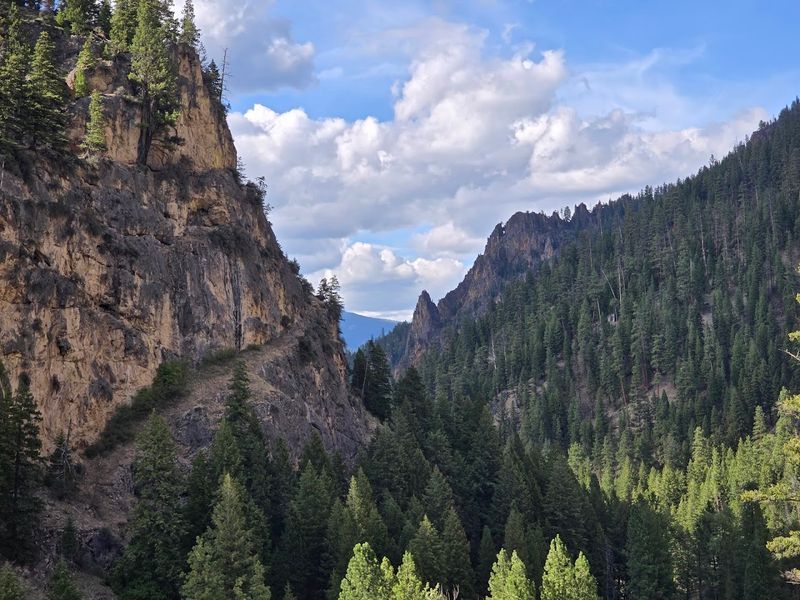
Most people do not realize how much background noise their phone creates until it goes completely silent. At Painted Rocks, the signal drops off and stays off, and the first hour or so feels genuinely strange.
Your hand reaches for your pocket out of habit. Then it stops doing that.
By the second hour, something loosens up. Conversations get longer.
You notice things like the way the wind moves across the reservoir surface, or how pine needles smell after the sun warms them. It sounds small, but it genuinely changes the pace of a visit here.
Visitors who have spent time at this park consistently mention the no-service situation as a highlight rather than a drawback. One reviewer said they love that there is no cellular service, and that enthusiasm makes sense once you experience it firsthand.
The park is open 24 hours and quiet hours are enforced from 10 p.m. to 7 a.m., which keeps nights genuinely peaceful. Bring a book, a fishing rod, or just your own thoughts.
The absence of a signal is not a limitation here; it is honestly the whole point of showing up.
The Reservoir, the Fishing, and the Cold Water Nobody Warns You About
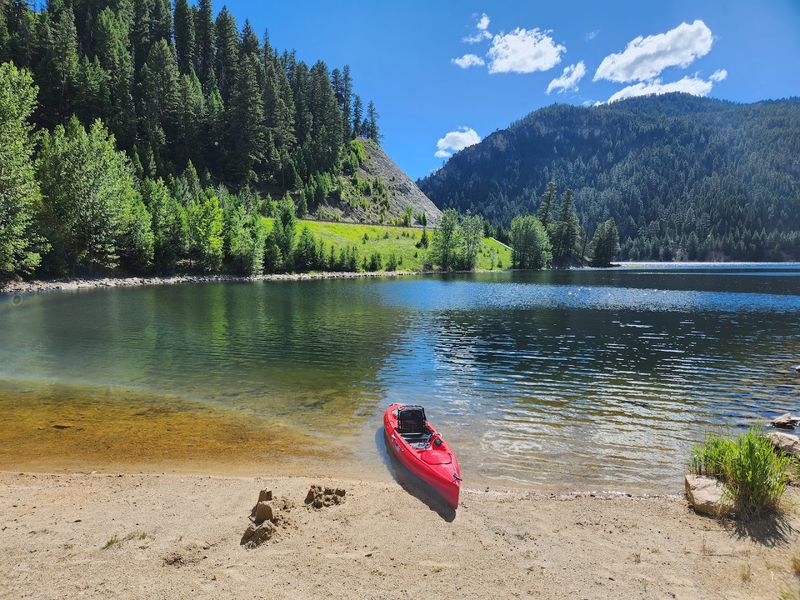
Painted Rocks Reservoir is the kind of lake that looks inviting right up until you touch the water. Cold does not quite cover it.
Even in late June, swimmers have described the temperature as freezing, which is both a fair warning and, honestly, part of the charm for the right kind of visitor.
The fishing, though, is genuinely good. Trout are present and catchable, and the experience of being the only boat on the water is something that is hard to put a price on.
One visitor caught and released around ten trout in a single outing, which is a solid day by any measure. The reservoir does fluctuate seasonally, running lower in late summer and fall, so water levels vary depending on when you visit.
Kayaking and paddleboarding are popular here too, and the calm surface on most mornings makes both activities genuinely enjoyable. Dogs are welcome, which turns a paddling trip into a full family outing without much extra planning.
The boat launch nearby makes getting watercraft in and out straightforward. Afternoons can bring wind, so earlier in the day tends to offer the smoothest conditions on the water.
Camping Here Feels Like the Real Thing
Some campgrounds feel like parking lots with trees. Painted Rocks is not that.
The sites sit within a genuine pine-forest setting, and the layout gives campers enough breathing room that even a moderately busy weekend does not feel chaotic. Weekdays here are especially peaceful, with very few other visitors around.
The campground has multiple bathroom locations and reviewers consistently note that the facilities are kept clean. That matters more than it sounds after a few days outdoors.
Camp hosts have historically been noted as friendly and knowledgeable about the surrounding area, which is genuinely useful when you want advice on nearby trails or activities.
Campsites fill faster on holiday weekends, so planning ahead for those dates is worth the effort. July and August weekends attract the most visitors, while weekdays and shoulder months offer a quieter experience.
Winter visits are also possible for those comfortable with cold-weather camping, and the park takes on a completely different, almost otherworldly character when snow covers the ground. The campfire areas are kept tidy, and the overall atmosphere leans more toward restful retreat than busy recreation hub.
It earns its reputation as one of Montana’s genuinely underrated overnight spots.
The Drive In Is Half the Experience
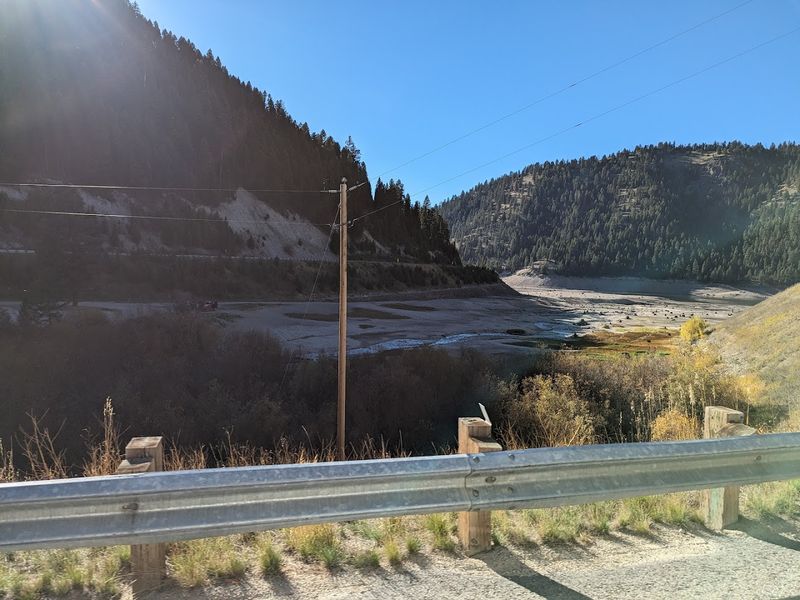
Getting to Painted Rocks is not a quick detour off a highway. The park sits 24 miles south of Darby along West Fork Road, and the drive itself is the kind of route that makes you slow down not because you have to, but because you want to.
The valley opens up gradually, trading town infrastructure for pine stands and mountain ridgelines.
Multiple visitors have specifically called out the drive as stunning, noting that the colors along the road seem to pop, especially in autumn when the hillsides shift into warmer tones. The road is manageable for regular vehicles, but the remoteness of the route reinforces the sense that you are heading somewhere genuinely removed from everyday life.
That feeling builds as the miles tick by and the scenery gets wilder. By the time the reservoir comes into view, there is a real sense of arrival, of having earned the quiet that waits at the end of the road.
The West Fork Valley of the Bitterroot Mountains is not a backdrop; it is part of the whole experience. Arriving here feels less like pulling into a parking spot and more like crossing into a different kind of day entirely.
Off-Season Visits Unlock a Completely Different Park
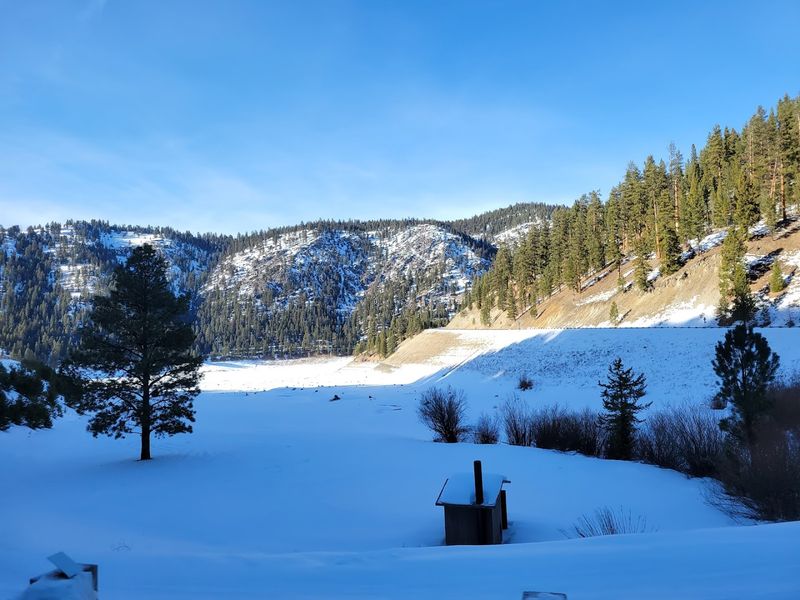
Late in the year, something interesting happens at Painted Rocks. The reservoir drops significantly, and visitors have noted that you can actually see the bottom of the lake and even walk on it in certain conditions.
That is a genuinely unusual experience, and it turns a summer camping spot into something more like a natural curiosity worth exploring.
Winter visits attract a very different kind of visitor, mostly locals who know the area well and appreciate having the space entirely to themselves. Running dogs through an empty campground with snow on the ground and no one else around is the kind of simple pleasure that is hard to find near more popular destinations.
The painted cliffs look striking against a white landscape too.
Spring brings the reservoir back up, and the park gradually wakes up again as temperatures climb. Each season genuinely offers something different here, which is not something every small state park can claim.
If your schedule allows flexibility, visiting outside of peak summer months rewards you with more solitude, more wildlife activity, and a version of this place that most casual visitors never get to see. The 23 acres feel even larger when you have them mostly to yourself.
What to Know Before You Make the Trip
A few practical things make a real difference at Painted Rocks. The park is open 24 hours every day of the week, which gives you flexibility on arrival time.
Quiet hours run from 10 p.m. to 7 a.m., so late-night noise is not something you will deal with here. That structure keeps the atmosphere genuinely restful.
There is no cell service, so downloading offline maps before leaving Darby is a smart move. Bringing cash and any supplies you need ahead of time is equally important since there are no stores nearby.
The Wild Game Inn is about one mile away and offers cabins along Trout Creek as well as a restaurant and homemade ice cream, which makes for a convenient nearby option if you need a meal or a different accommodation style.
Wind can pick up noticeably in the afternoons, especially on the water and at exposed campsites, so staking down tents and securing gear in the morning is worth the few extra minutes. Dogs are welcome, the campground stays clean, and the overall experience rewards visitors who come prepared and arrive with low expectations of convenience and high expectations of scenery.
The park contact number is +1 406-273-4253 for any questions ahead of your visit. Address: 8809 W Fork Rd, Darby, MT 59829.
