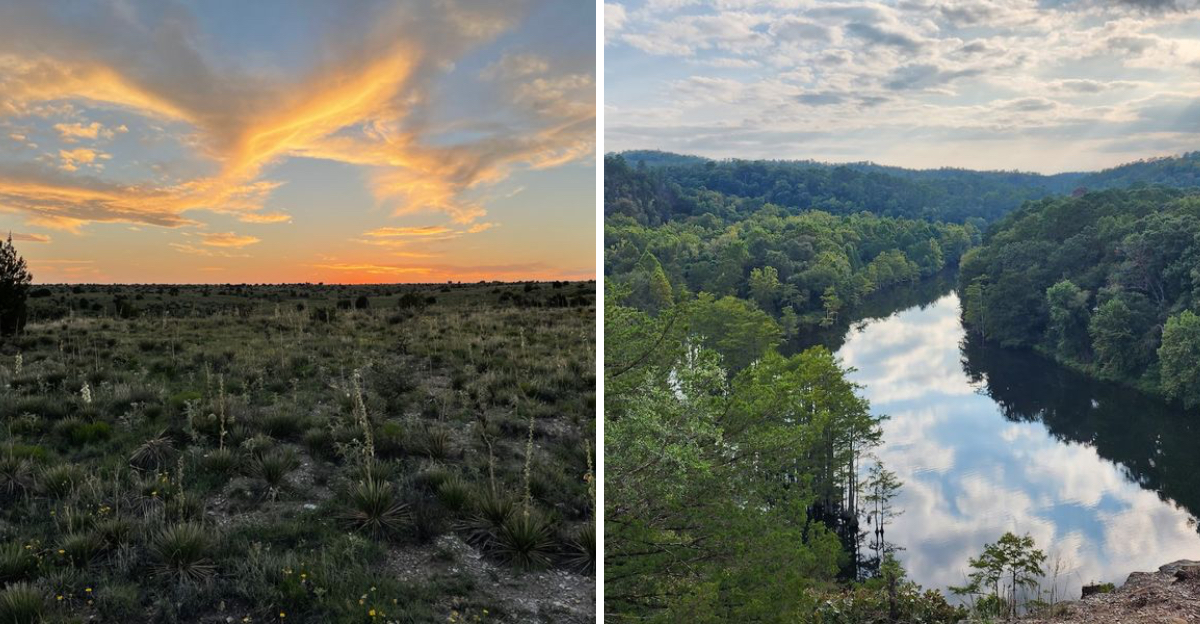
Oklahomans take their sunsets seriously. Not in a casual, “oh that’s pretty” kind of way. In a “pull over the car, stop talking, and just stare for a full five minutes” kind of way.
The Sooner State has a sky that refuses to be subtle, painting itself in shades of orange, pink, purple, and gold that look almost fake in photographs.
Ten scenic spots across Oklahoma deliver the very best of this daily show, and locals swear by each one with the fierce loyalty usually reserved for college football teams.
Some of these locations sit high on ancient mountains, where the horizon stretches so far that you can watch the sun sink for what feels like an hour. Others rest along quiet lakes, the water doubling every color into a mirror image that confuses the eyes in the best possible way.
A few hide in open prairie, where nothing blocks the view except a few distant wind turbines and the occasional curious cow.
1. Mount Scott, Wichita Mountains Wildlife Refuge
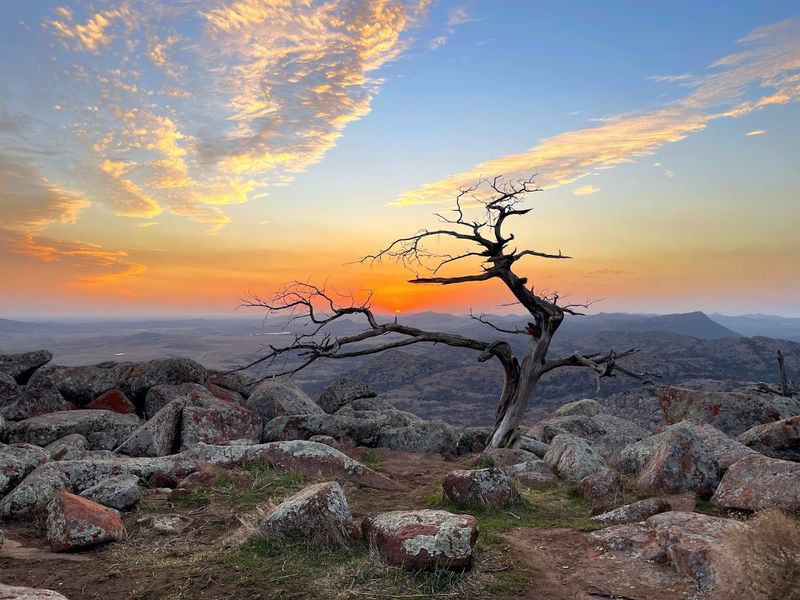
Ancient granite boulders have been sitting on top of Mount Scott for roughly 540 million years, and they have seen some spectacular sunsets in that time.
Located inside the Wichita Mountains Wildlife Refuge near Indiahoma, Oklahoma, this peak is the highest point in the refuge and one of the most rewarding sunset destinations in the entire state.
A paved road winds all the way to the summit, which means you do not need hiking boots or a trail map to reach one of Oklahoma’s most breathtaking views.
As the sun begins to drop, the granite takes on a warm rose and amber glow that feels almost unreal. The rounded boulders light up like lanterns scattered across the hilltop.
Far below, bison, elk, and longhorn cattle roam freely across thousands of acres of protected land. Watching those massive animals move slowly across a fiery prairie sky is a moment that stays with you for a long time.
I always arrive about 45 minutes before the actual sunset to find a good seat on the rocks. The granite holds the warmth of the afternoon sun, so sitting on it feels surprisingly comfortable even as the air cools.
Bring a light jacket because the wind at the summit picks up considerably as evening approaches. The gusts can be strong, but they also keep the air clean and the views crystal clear.
There is no admission fee to drive up Mount Scott, making it one of the most accessible and rewarding sunset experiences Oklahoma has to offer any traveler passing through the region.
2. Lake Jed Johnson Dam Overlook, Wichita Mountains Wildlife Refuge
Not everyone knows about this spot, and honestly, that is a big part of its appeal.
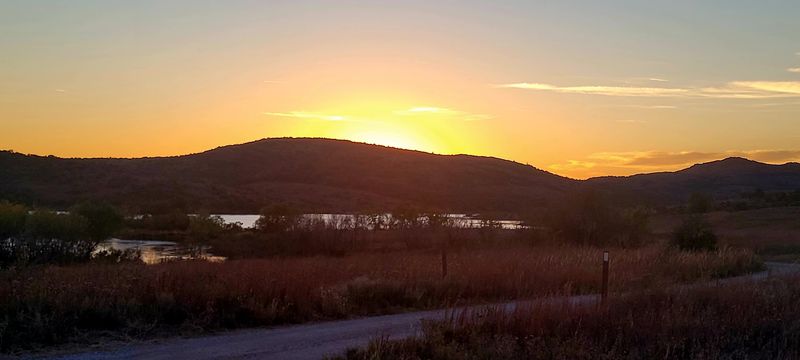
The Lake Jed Johnson Dam Overlook sits quietly inside the Wichita Mountains Wildlife Refuge, near Lawton, Oklahoma, and it combines water, mountain ridges, and near-total solitude into one stunning package.
The overlook faces west, which means the setting sun drops directly over the lake and lights up the Wichita Mountains behind it. Every photograph taken from this vantage point looks professionally edited, even when it is not.
The water acts like a mirror during golden hour, doubling the colors in the sky and creating a reflection so perfect it is hard to tell where the lake ends and the horizon begins.
Wildlife activity increases noticeably around dusk. Deer pick their way carefully along the water’s edge, and birds call back and forth from the tree line in a kind of natural soundtrack to the whole event.
I have visited this overlook on weekdays when I had the entire place completely to myself. That kind of quiet is genuinely rare, and it makes the experience feel deeply personal rather than touristy.
The overlook is accessible 24 hours a day, seven days a week, so early risers and late-evening wanderers both get a fair shot at the best light the refuge has to offer.
Park near the dam and walk to the edge for the widest view. The combination of still water, mountain silhouettes, and a wide Oklahoma sky makes this one of the most underrated sunset spots in the entire state.
3. Gloss Mountain State Park, Fairview
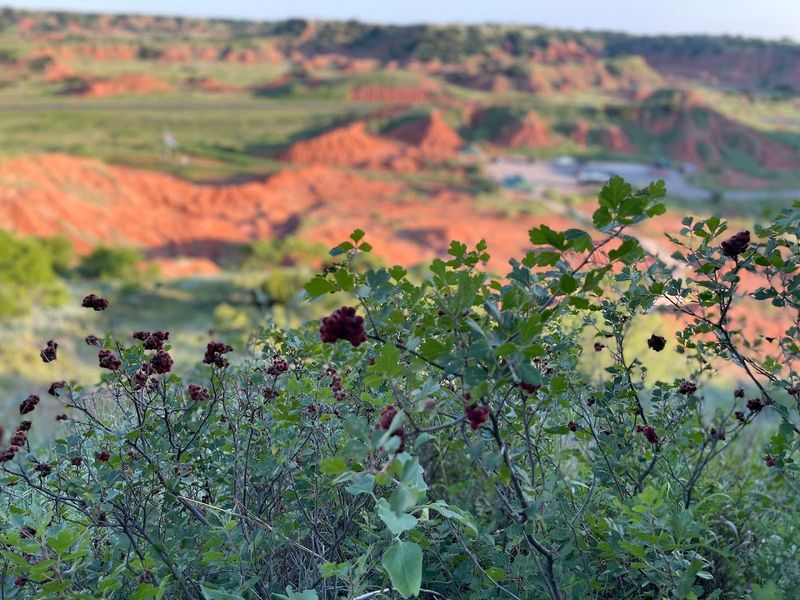
There is a moment near sunset at Gloss Mountain State Park when the light hits just right and the entire mesa appears to be covered in scattered diamonds.
Located near Fairview in northwestern Oklahoma, this park features dramatic red and white mesas built from gypsum, shale, and selenite crystals. Those crystals are what give the mountains their famous gloss, and at golden hour, they earn that name completely.
A 1.2-mile round-trip trail leads to the summit of Cathedral Mountain, where the views stretch across open rolling prairie in every direction. The hike is short but steep in places, so good shoes make a real difference.
Standing at the top as the sun drops behind the horizon feels like watching the land slowly power down for the night. The horizontal bands of color in the rock intensify as the light shifts from gold to orange to deep red.
I was surprised by how quiet it gets up there once the wind settles. The silence out on the mesa feels thick and full in a way that is hard to describe but easy to appreciate.
Gloss Mountain is also classified as a Bortle Class 2 dark sky location, which means the stargazing after sunset is extraordinary. The park technically closes at dusk, but the parking area remains accessible for those who want to linger under the stars.
Pack a headlamp for the walk back down and bring water for the climb. This spot rewards a little effort with one of the most visually unique sunset experiences anywhere in the Oklahoma panhandle region.
4. Talimena Scenic Drive, Talihina
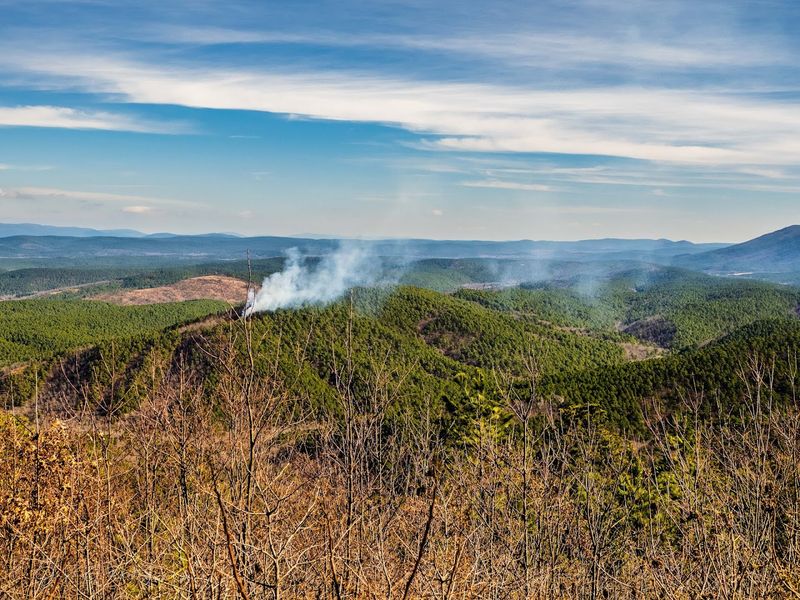
Fifty-four miles of winding road, dense forest, and layered mountain ridges make the Talimena Scenic Drive one of the most cinematic sunset routes in Oklahoma.
Running through the Ouachita Mountains, the drive connects Talihina, Oklahoma, to Mena, Arkansas, and the western stretch near Talihina is where the golden hour light works its most dramatic effects.
As the sun drops, the ridgelines turn from green to gold to a deep, moody purple that stacks beautifully against the fading sky. Pull off at any of the numbered overlooks and you will instantly understand why locals treat this drive as a personal treasure.
During fall, the foliage adds another layer of color to an already vivid scene. Orange and red leaves catch the last light of the day and seem to glow from the inside out.
Spring brings its own reward, with wildflowers lining the road’s shoulders in shades of yellow, purple, and white. The temperature drops noticeably as evening settles in, and the air carries the clean, cool scent of pine.
I like to bring a blanket and park at one of the western overlooks about an hour before sunset. There is no rush out here, and the light changes so gradually that you find yourself watching the sky the way you would watch a slow fire.
Light pollution along the drive is almost nonexistent, so stars begin appearing even before the last orange glow fades from the horizon. This is a sunset spot that rewards patience and punishes anyone who arrives in a hurry.
5. Tallgrass Prairie Preserve, Pawhuska
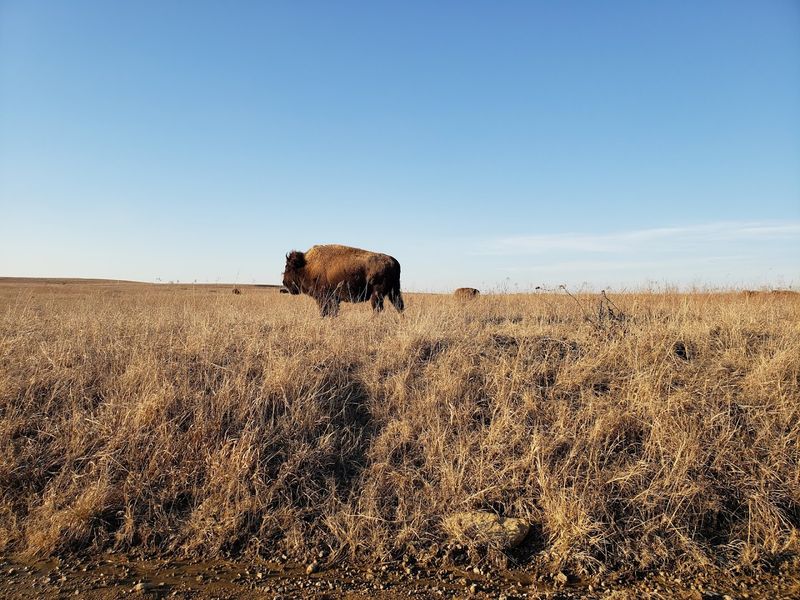
Driving through the Tallgrass Prairie Preserve at golden hour feels less like a road trip and more like traveling back several hundred years in time.
Located 14 miles north of Pawhuska, Oklahoma, along State Highway 11, this preserve protects one of the largest remaining tallgrass prairie landscapes on the planet. The gravel roads that wind through it become something magical as the sun begins to lower.
The grass catches the late afternoon light and shifts through every shade between pale gold and deep copper. Each gust of wind sends a ripple through the landscape that looks like something a painter would invent.
Bison graze in loose herds right beside the road, completely unbothered by a slow-moving vehicle. Watching a massive bison silhouetted against a burning orange sky is one of those Oklahoma moments that feels genuinely extraordinary.
I start my drive about 45 minutes before sunset and move slowly, stopping often. The light changes quickly out here, and every bend in the gravel road reveals a slightly different angle on the rolling hills.
Pronghorn, white-tailed deer, and dozens of bird species are all active around dusk, so binoculars are worth the extra weight. The preserve covers about 39,000 acres, and there is always something moving somewhere along the horizon.
There are no fences between you and the open sky out here, which makes the scale of the landscape feel genuinely humbling. This is the kind of place that reminds you just how wide and wild Oklahoma really is when you give it room to breathe.
6. Broken Bow Lake, Cedar Bluff Trail Lookout, Hochatown
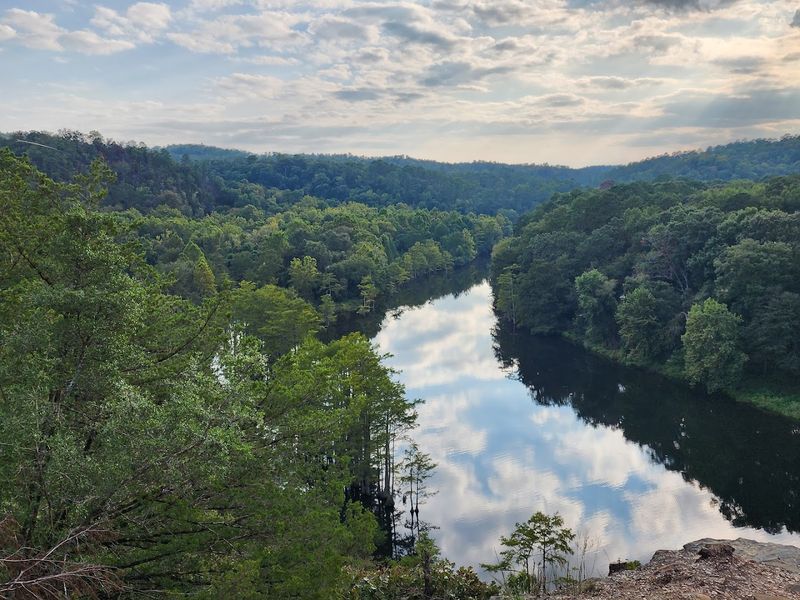
Southeastern Oklahoma has its own personality, and nowhere does that personality come through more clearly than at the Cedar Bluff Trail Lookout above Broken Bow Lake.
Located near Hochatown, Oklahoma, just outside Beavers Bend State Park, this lookout sits above the lake and offers an intimate, forest-framed view of the water and surrounding Ouachita highlands.
The pine trees press in close on the trail, and then suddenly the view opens up and the lake appears below, wide and still, catching every color the sky decides to throw at it. That moment of surprise never gets old no matter how many times I visit.
The water reflects the sunset so clearly that the surface and the sky become almost indistinguishable from each other. It creates a layered visual that photographs beautifully but feels even better in person.
The Stevens Gap Recreation Area nearby also offers wide-open lake views at a perfect westward angle for catching the last light. Both spots are worth exploring if you have the time before darkness falls.
Wildlife is active around the lake edges at dusk. Great blue herons wade along the shallows, and ospreys sometimes circle overhead in the fading light, making the scene feel alive in every direction.
I find that arriving at the trailhead about an hour before sunset gives enough time to hike to the overlook and settle in before the real show begins. The trail is moderate and well-marked, making it accessible for most fitness levels.
Broken Bow Lake consistently delivers some of the most peaceful and visually rich sunsets in the entire state of Oklahoma.
7. Little Sahara State Park, Waynoka
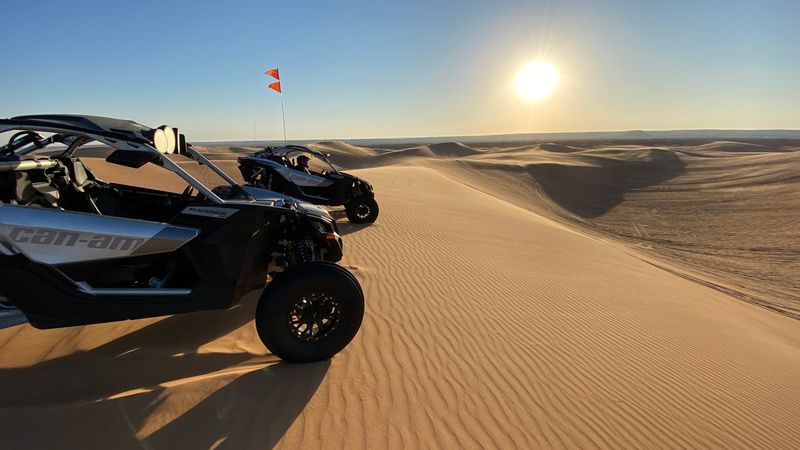
Standing on top of a sand dune in northwestern Oklahoma and watching the sun go down is one of those experiences that makes you question everything you thought you knew about this state.
Little Sahara State Park, located near Waynoka, Oklahoma, covers 1,600 acres of rolling sand dunes that feel completely out of place on the Great Plains, and absolutely spectacular at sunset.
As the light drops, the dunes shift from pale beige to a rich, warm gold. Shadows lengthen and deepen between each crest, creating a constantly changing pattern across the sand that makes the landscape look three-dimensional even from a distance.
By evening, most of the ATV activity has wound down and the park grows noticeably quieter. The dunes settle into a peaceful silence that is broken only by the wind moving across the sand in low, steady sweeps.
I climbed to the top of the tallest dune I could find and sat there watching the sky turn from blue to gold to deep red. There are no trees, no buildings, and no obstacles between you and the horizon out here.
The observation deck near Buttercup Dune gives a front-row seat to the sunset without any climbing required. It is a solid option for anyone who wants the view without the workout.
The park operates 24 hours a day, so there is no pressure to rush back before a closing time. Staying until the stars appear above the open dune field turns a good sunset into an unforgettable evening in the Oklahoma outback.
8. Osage Hills State Park, Pawhuska
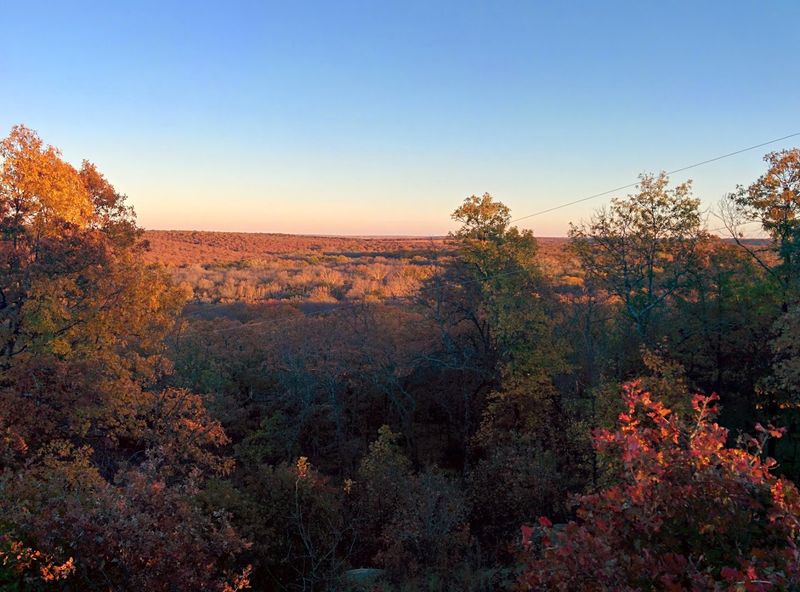
Not every great Oklahoma sunset happens over a wide-open horizon, and Osage Hills State Park makes a strong case for the beauty of watching the light change inside a forest.
Located near Pawhuska in Osage County, Oklahoma, this park was built in the 1930s by the Civilian Conservation Corps. Their stonework structures still stand throughout the grounds, adding a layer of history to every drive through the park.
The road winds past rock outcroppings, dense old-growth trees, and CCC-era cabins that look like they belong in a completely different era. Golden hour inside a forest is its own kind of experience, all filtered amber light and long, dramatic shadows.
The park’s small lake sits near the center of the property and reflects the surrounding trees and sky at dusk with remarkable clarity. Watching the forest colors double in that still water is quietly stunning.
I have driven the full loop through Osage Hills on weekday evenings and never encountered another vehicle. That level of solitude is increasingly rare at Oklahoma state parks, and it makes the experience feel genuinely private.
The filtered light through the tree canopy creates patterns on the road that shift constantly as the sun drops. Each minute brings a slightly different arrangement of light and shadow across the pavement.
This park is one of the least visited in Oklahoma’s state park system, which works entirely in the sunset chaser’s favor. Bring a camera with good low-light capability because the shots you can get here in the final minutes of daylight are worth every bit of patience required.
9. Great Salt Plains State Park, Jet
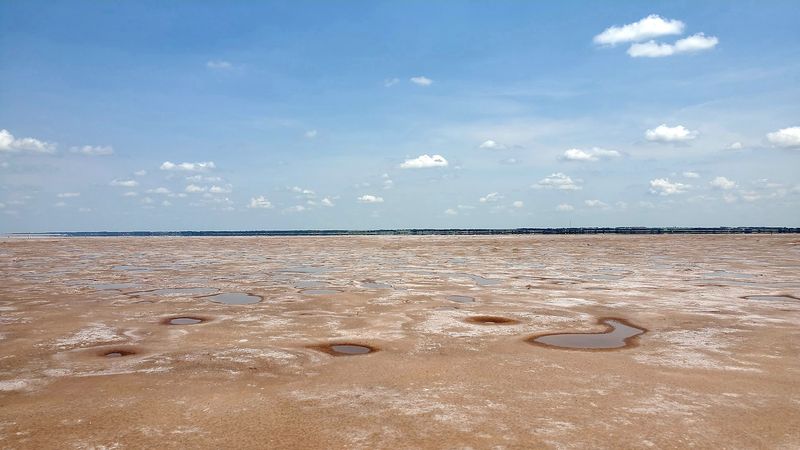
The first time I saw the Great Salt Plains at sunset, I genuinely thought the ground was covered in snow.
Located near Jet in northwestern Oklahoma, Great Salt Plains State Park protects a shimmering white salt flat that spans thousands of acres. The surface is encrusted with salt crystals that catch and reflect light in ways that feel almost surreal.
As the sun drops toward the horizon, the white flat begins to absorb the warm colors of the sky. Orange, pink, and lavender wash across the salt in long, sweeping reflections that make the ground look like a second sky beneath your feet.
Migratory birds move through this area in large numbers, especially during spring and fall. Watching flocks wheel overhead against a burning sunset sky adds movement and life to an already remarkable landscape.
The wind hums steadily across the open flats, and the horizon looks so wide and uninterrupted that it creates a slightly dizzying sense of space. I always bring sunglasses because the glare from the white surface is real even late in the afternoon.
After the sunset fades, the lake shoreline nearby offers a quieter spot for sitting and watching the last colors drain from the sky. The absence of light pollution makes the transition from dusk to full dark feel especially dramatic.
During the day, visitors can dig in designated areas for hourglass selenite crystals, which are unique to this location. Finding one before settling in to watch the sunset makes the whole visit feel like a complete and memorable Oklahoma experience.
10. Black Mesa State Park, Kenton
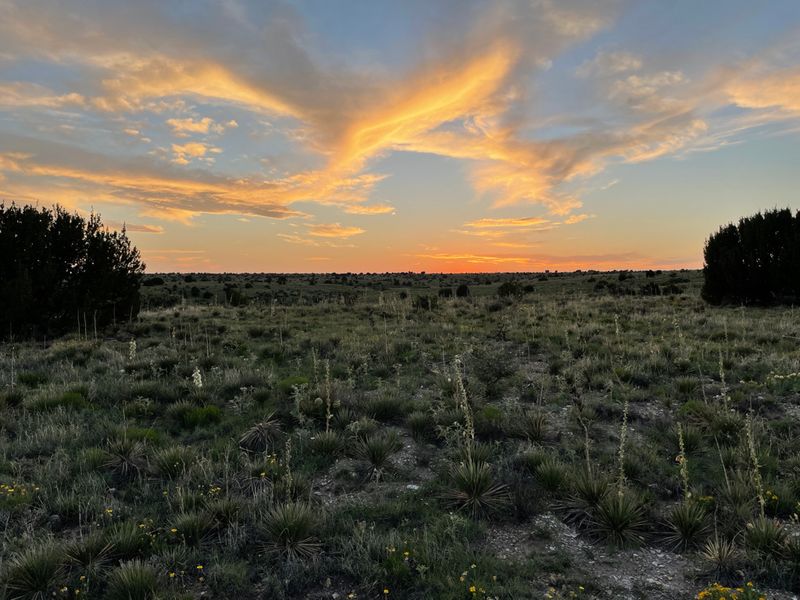
Drive far enough into the Oklahoma panhandle and the landscape starts making its own rules entirely.
Black Mesa State Park, located near Kenton in Cimarron County, Oklahoma, sits at the base of the state’s highest point. The mesa itself is capped in dark volcanic rock that contrasts sharply with the pale sedimentary layers below it, creating a visual drama that intensifies dramatically at sunset.
As the sun drops, the mesa casts long, angular shadows across the surrounding grasslands. The ground transforms into a patchwork of warm light and cool shadow that shifts constantly as the minutes pass.
The horizon out here is so wide and unobstructed that it genuinely feels like you can see the curvature of the earth. Hikers who make it to the summit before dusk are rewarded with a 360-degree view that takes in parts of Oklahoma, Colorado, and New Mexico simultaneously.
The air in the panhandle is dry and remarkably clear, which makes colors appear more vivid here than almost anywhere else in the state. Reds feel redder, oranges feel deeper, and the transition to purple happens with a richness that catches you off guard.
I always bring extra layers because the temperature drops fast once the sun disappears behind the mesa. The warmth of the day is gone within minutes, and the wind picks up across the open grasslands with real authority.
Black Mesa is remote by any measure, but that remoteness is exactly what makes it special. There are no crowds, no noise, and nothing between you and one of the most dramatic sunset skies Oklahoma has to offer.
