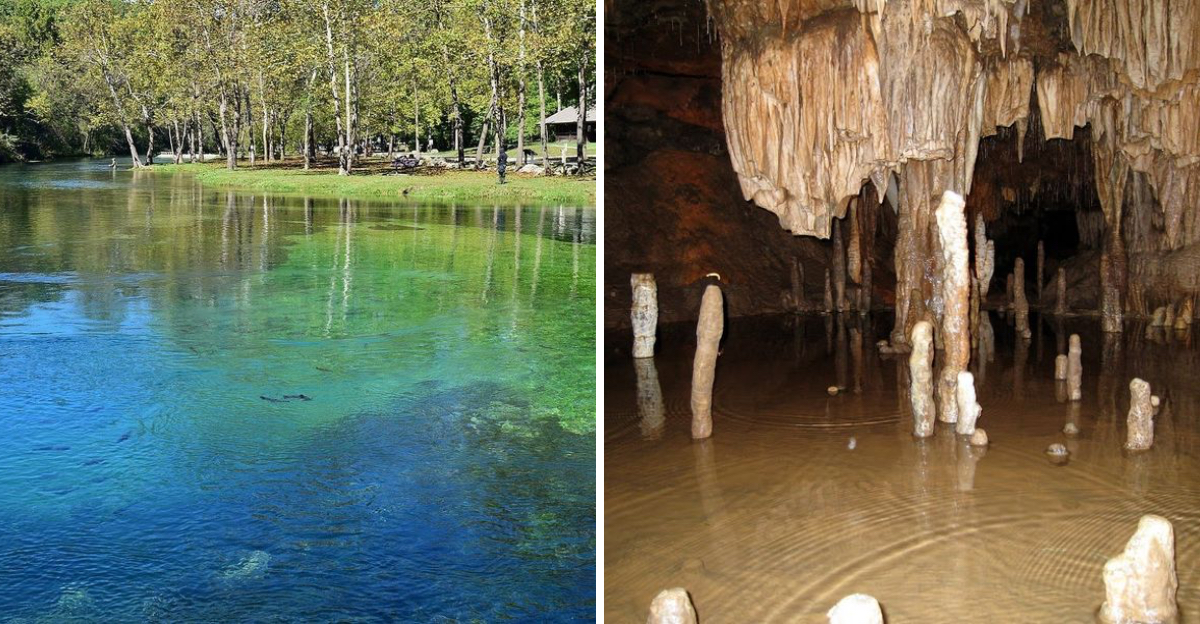
Missouri has a way of hiding its best work. Drive past cornfields and cows, turn onto a park road, and suddenly the whole world changes.
Eleven stunning state parks specialize in this kind of quiet magic.
Waterfalls tumble over rocky ledges into mirror clear pools. Forest trails wind through ancient trees on hillsides that have stood for centuries.
Hidden scenic views appear around corners, offering miles of rolling green and distant blue.
Some parks require effort to reach the best spots. Others welcome you with short walks that lead straight to wonder.
No crowds. No noise. Just trails, water, and views that stick with you long after you drive home.
Missouri built these parks for people who love discovering things on their own terms. Pack a backpack and go get lost in the best possible way.
1. Taum Sauk Mountain State Park
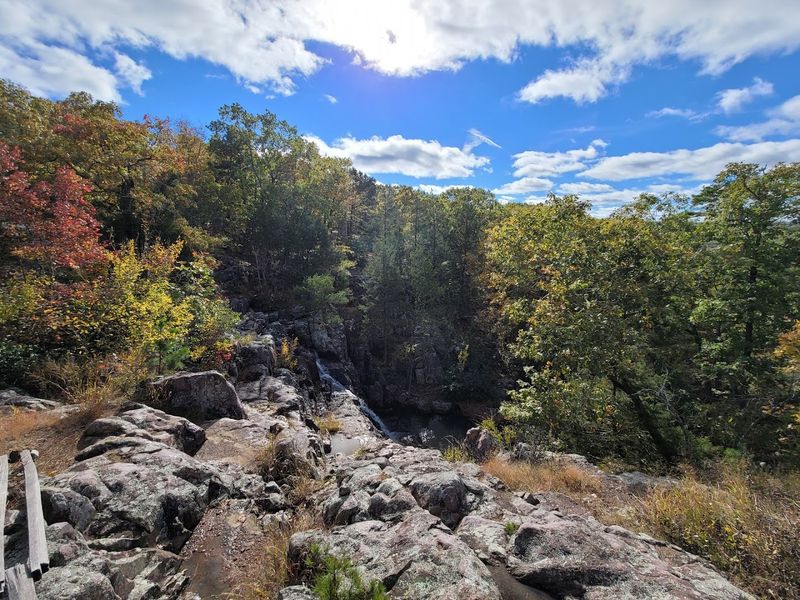
At 1,772 feet above sea level, Taum Sauk Mountain holds the title of Missouri’s highest point. That alone would be worth the drive to Middle Brook, but the real reason I keep coming back is Mina Sauk Falls.
Dropping 132 feet over volcanic rock that formed roughly 1.5 billion years ago, Mina Sauk Falls is both the tallest and oldest waterfall in the entire state. Standing at its base and feeling the mist hit your face is a moment that genuinely stops time.
The three-mile Mina Sauk Falls Trail loops from the highpoint marker down to the falls and back through thick hardwood forest. Rocky glades and open ridgelines appear along the way, offering wide panoramic views that feel completely out of place for the Midwest.
The exposed granite and volcanic formations along the trail belong to the ancient St. Francois Mountains. This landscape carries a raw, rugged energy that you simply do not expect from Missouri.
For hikers who want more, the park connects directly to the 230-mile Ozark Trail system. That opens up longer backpacking routes through some of the most remote and untouched terrain in the state.
There are no developed campgrounds inside the park itself, but backcountry camping is available along the Ozark Trail corridor. Spring is the best season to visit when snowmelt and rain push the falls to their most dramatic flow, and fall transforms the surrounding forest into a blazing canvas of orange and red.
Taum Sauk Mountain State Park is located near Middle Brook in Iron County, Missouri.
2. Ha Ha Tonka State Park
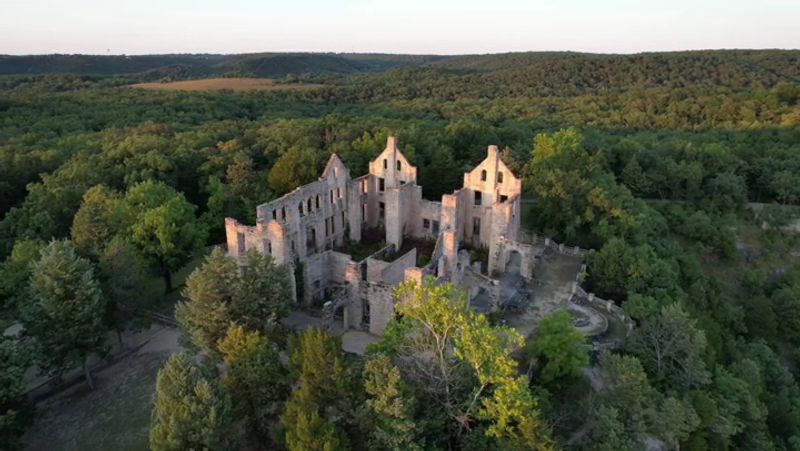
Picture crumbling stone walls rising from a wooded bluff, with the glittering expanse of Lake of the Ozarks stretching out far below. That image is not from a European travel magazine.
It is Ha Ha Tonka State Park near Camdenton, Missouri.
A Kansas City businessman named Robert Snyder purchased this land in 1904 with plans to build a grand European-style mansion. Tragedy struck before he could finish it, and his sons completed the 60-room stone home in 1922.
A fire reduced it to ruins by 1942, and today those haunting walls are one of Missouri’s most dramatic hiking destinations.
Over 15 miles of trails wind through the park, connecting caves, sinkholes, a natural bridge, a flowing spring, and the lake shoreline. The contrast between crumbling stone architecture and the vast blue lake below creates a scene that genuinely takes your breath away.
I spent an afternoon scrambling along the bluff trails here, and every turn revealed something new. One moment you are peering through a ruined window frame at the water below, and the next you are ducking into a cool, shadowy cave entrance.
If you have extra time, paddling the Lake of the Ozarks shoreline near the park adds a completely different perspective on the bluffs. Seeing those castle ruins from the water is an experience worth planning around.
Spring brings dogwood blooms that soften the rocky landscape, while fall turns the surrounding forest into warm shades of gold and amber that reflect beautifully off the lake surface.
Ha Ha Tonka State Park is located near Camdenton in Camden County, Missouri.
3. Johnson’s Shut-Ins State Park
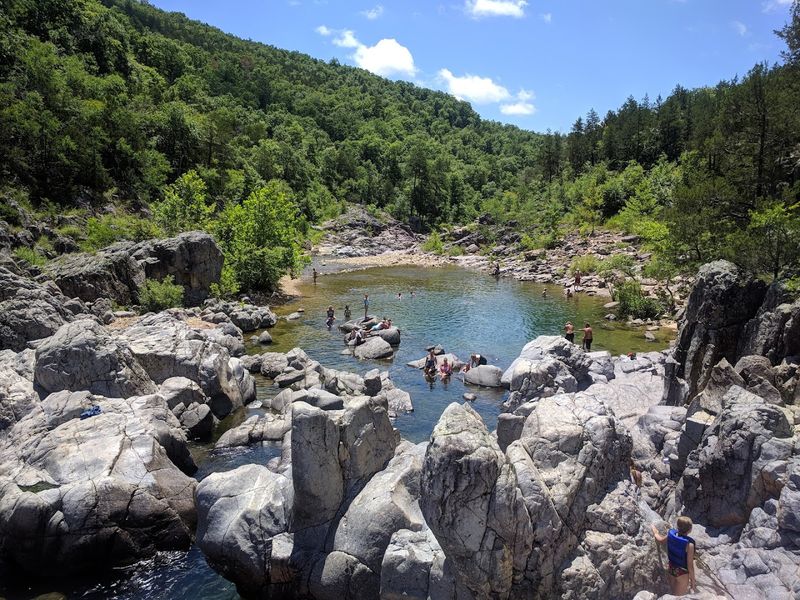
Some parks make you want to hike. Johnson’s Shut-Ins makes you want to kick off your shoes and slide directly into a natural rock chute carved by a billion-year-old river canyon.
Located near Middle Brook in Iron County, Missouri, this place operates on its own category entirely.
The term “shut-in” refers to a canyon where a river has carved its path through hard volcanic bedrock, creating chutes, slides, and pools that form a wild natural playground. The East Fork of the Black River has been doing exactly that here for an almost incomprehensible amount of time.
Smooth channels, deep green pools, and small cascading falls fill the shut-ins area, and the underground springs keep the water refreshingly cool even during peak summer heat. A boardwalk with overlook platforms gives you a bird’s-eye view of the entire formation before you scramble down to the water.
Beyond the famous shut-ins, the park spreads across 9,000 acres of protected land with 37 miles of trails cutting through the East Fork and Goggins Mountain wild areas. I hiked several of these trails on a quiet weekday and barely crossed paths with another person.
Camping options range from standard sites to cabins, making it easy to turn a day trip into a full weekend. Weekends in summer fill up fast, so arriving early is the move if you want a good spot at the water.
Fall hiking here is genuinely underrated, with the hardwood canopy turning golden above the dark volcanic rock formations. Johnson’s Shut-Ins State Park sits near Middle Brook in Iron County, Missouri.
4. Hawn State Park
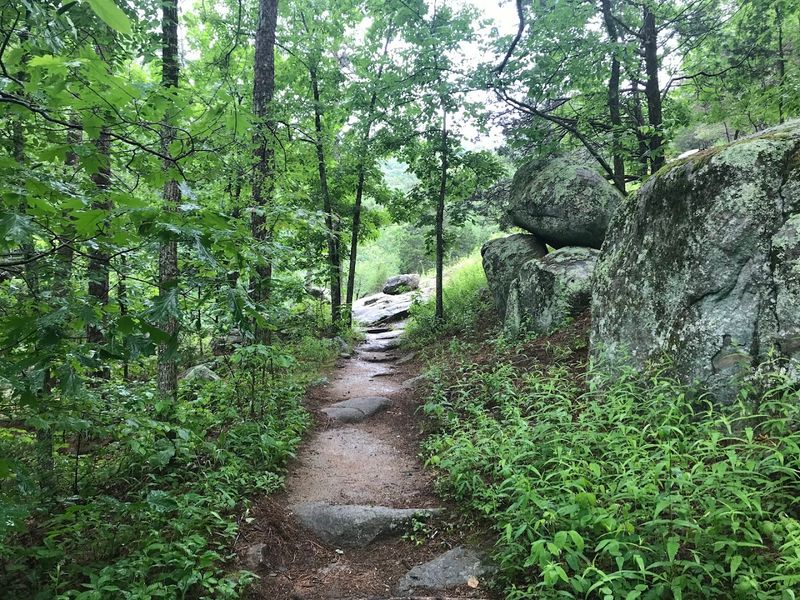
Tucked away near Sainte Genevieve in Ste. Genevieve County, Missouri, Hawn State Park carries a quiet confidence that most parks never develop.
Covering 5,000 acres, it protects a landscape that genuinely feels like it belongs somewhere much farther west.
Sandstone cliffs rise sharply above winding canyons, and clear creeks crisscross the forest floor in every direction. The combination of pine forests, hardwood canopy, and exposed rock creates an atmosphere that feels layered and complex in the best possible way.
The White Oaks Trail is the park’s crown jewel. Moderately challenging, it guides hikers past multiple creek crossings before climbing to sweeping views from the top of sandstone bluffs.
I stood up there on a calm October morning and felt absolutely no need to be anywhere else.
The Whispering Pines Trail connects north and south loops into a solid backpacking route that can be finished in one long day or split with an overnight at a backcountry campsite. Both trails reward patience with genuinely beautiful scenery at nearly every turn.
Spring brings pink wild azaleas blooming along the trail edges, adding splashes of soft color to the already striking terrain. It is one of those seasonal details that makes returning to a park feel completely fresh.
The campground here is small and low-key, positioned right alongside one of the park’s prettiest creeks. Kids who visit spend hours playing in the shallow water while adults quietly wonder why they do not come here every weekend.
Fall foliage and rushing spring creeks are the two best reasons to plan a trip to Hawn State Park in Sainte Genevieve County, Missouri.
5. Castlewood State Park
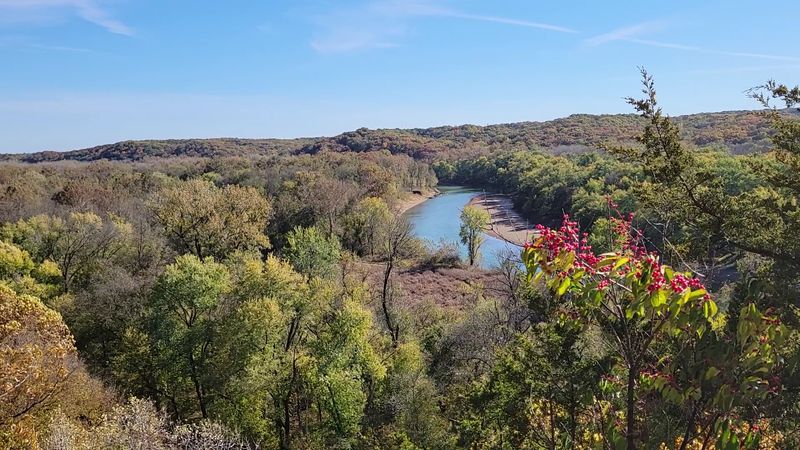
Twenty minutes from downtown St. Louis, Castlewood State Park pulls off something that most urban-adjacent parks only dream about. The Meramec River carves through white limestone bluffs that rise 100 feet above the water, and the view from the top genuinely erases every memory of city traffic.
The River Scene Trail climbs to the bluff edge and rewards the effort with a sweeping panorama of the river bending through thick bottomland forest below. Standing up there, you feel miles from civilization even though you are practically in the suburbs of a major city.
Here is where things get interesting. Scattered through the woods along the riverbank, you will find concrete foundations, crumbling staircases, and ghost outlines of buildings that once made up Lincoln Beach.
This was a thriving 1920s resort town complete with hotels, dance halls, a swimming pool, and a grand riverfront promenade.
Flooding and the Great Depression erased it all, and the forest has been quietly reclaiming the ruins ever since. Walking through this area feels genuinely atmospheric, like reading a chapter of history that most people never knew existed.
Mountain bikers also have strong reasons to visit, with technical singletrack on the Lone Wolf and Grotpeter trails drawing riders from across the St. Louis area. The park does not charge an entrance fee, which makes it an easy choice for a spontaneous afternoon outing.
Spring dogwood blooms soften the rugged limestone scenery beautifully, and fall foliage frames the bluffs in warm color. Castlewood State Park is located near Ballwin in St. Louis County, Missouri.
6. Elephant Rocks State Park
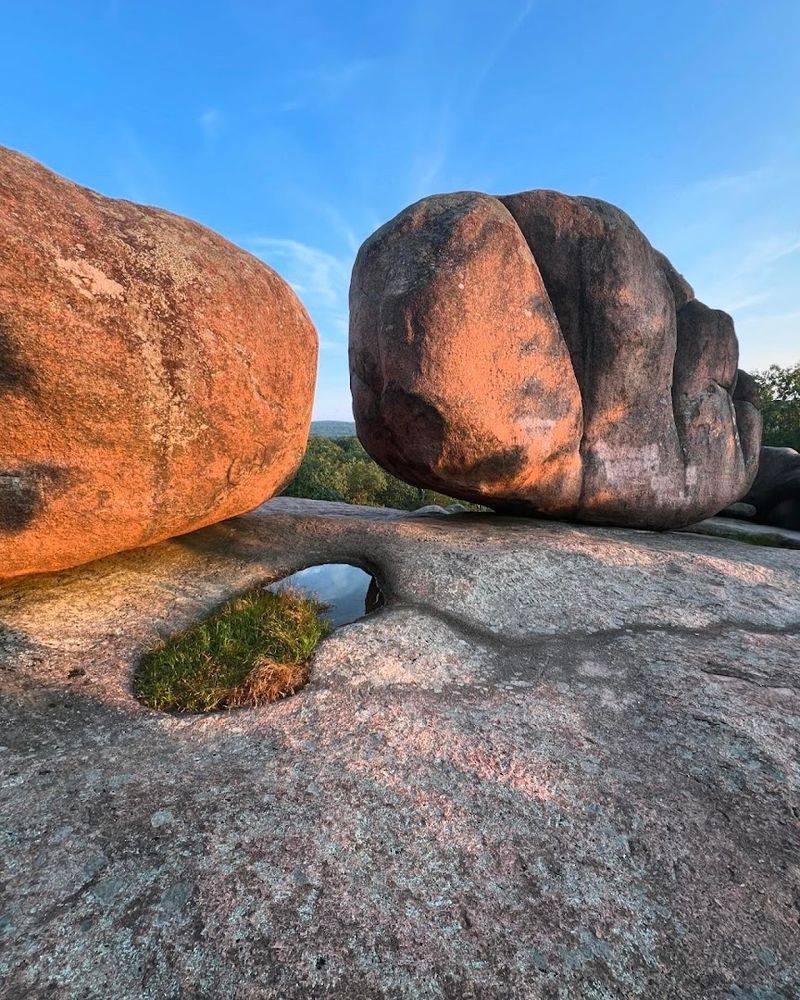
Billion-year-old granite boulders the size of houses, rounded smooth by time and lined up end to end like a slow-moving parade of stone elephants. That is Elephant Rocks State Park near Belleview in Iron County, Missouri, and the name is not even slightly an exaggeration.
The largest boulder in the park stands 27 feet tall and weighs an estimated 680 tons. Walking among these formations feels like stepping into a landscape from another planet, one where the rules of scale have been quietly rearranged.
A self-guided trail winds through the main boulder field, but the real fun starts when you leave the path and scramble up and between the rocks. Every gap and crevice reveals a new angle, a new shadow, or a new view across the surrounding Missouri woodland.
A short extension off the main trail leads to the ruins of an old railroad engine house, left over from the area’s quarrying history. It adds a surprisingly industrial footnote to what is otherwise a purely geological experience.
The rocks are so smooth and worn from generations of visitors that kids naturally treat the whole place as an enormous jungle gym. Parents tend to spend most of their time here with their phones out, trying to capture just how massive everything actually is.
Combining this park with Johnson’s Shut-Ins makes for a natural two-stop day trip since the two parks sit just a few miles apart. Both are in Iron County, which gives that corner of Missouri a strong claim to being the state’s most geologically dramatic region.
Elephant Rocks State Park is located near Belleview in Iron County, Missouri, and it is free to enter year-round.
7. Cuivre River State Park
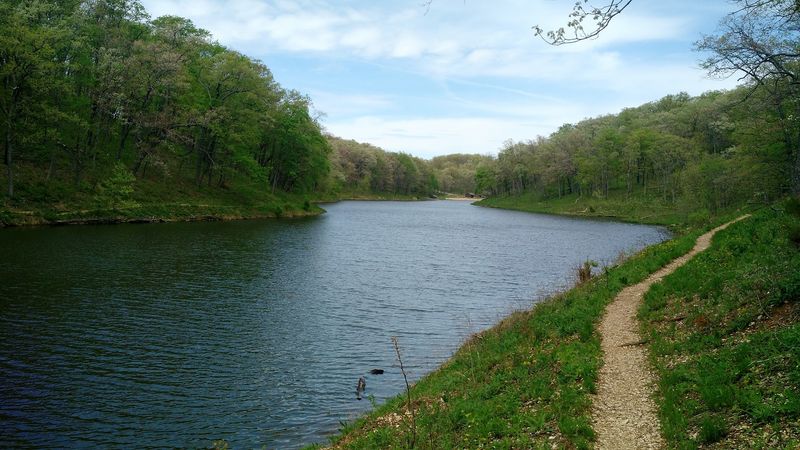
Cuivre River State Park near Troy in Lincoln County, Missouri, is the park that quietly breaks all the rules about northern Missouri. By all geographic logic, the rolling Ozark-style hills, limestone bluffs, and dense hardwood forests found here have no business being this far north.
The park splits itself into two distinct personalities. The developed Big Sugar Creek area offers amenities and easy access, while the wilder Northwoods Wild Area operates by its own untamed logic.
Choosing between them depends entirely on what kind of day you are looking for.
At the heart of the park sits Lake Lincoln, a 55-acre body of water that mirrors the surrounding forest so perfectly on calm mornings that you have to look twice to find the actual shoreline. I sat by the lake at sunrise on one visit and did not want to leave for hours.
Over 40 miles of trails thread through the park, including the 11.25-mile Cuivre River Trail. That route climbs steep ridges and delivers views that make the burn in your legs feel like a fair trade for what you get at the top.
More than 1,000 plant species have been identified within the park boundaries, which says a lot about the ecological richness packed into this often-overlooked corner of the state. Wildflower enthusiasts who visit in spring are routinely surprised by what they find here.
Fall is the undisputed highlight season at Cuivre River, when the hardwood forests paint the landscape in deep reds, burnt oranges, and bright yellows. Cuivre River State Park is located near Troy in Lincoln County, Missouri, about one hour northwest of St. Louis.
8. Pershing State Park
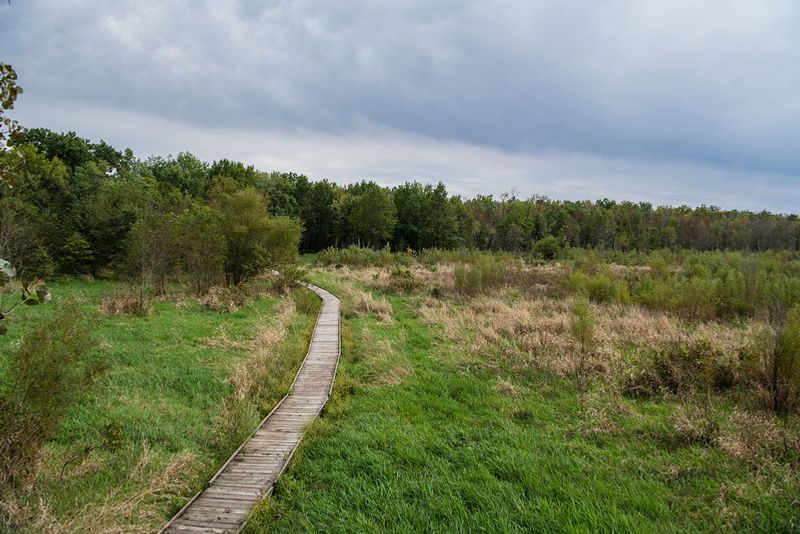
While the crowds head south toward the Ozarks every weekend, Pershing State Park near Laclede in Linn County, Missouri, sits in quiet, confident solitude. It is the kind of place that rewards the curious traveler who takes a different road on purpose.
The park’s centerpiece is a 1.5-mile Boardwalk Trail that cuts directly through remnant wetlands, moving from dense shrub swamps into shaded bottomland forest before opening onto a wide, open marsh. The transition between these three ecosystems within a single short walk is genuinely striking.
At the far end of the boardwalk stands a wooden observation tower overlooking the largest remaining wet prairie in northern Missouri. More than 1,000 acres of reeds and grasses stretch out in every direction, swaying together in the breeze like something from a nature documentary.
The National Audubon Society has designated Pershing an Important Bird Area, recognizing its value for waterfowl and migratory songbirds. Spring and fall migration seasons turn this otherwise quiet park into a birdwatcher’s paradise, with species appearing here that you would never expect in this part of the state.
The Locust Creek Covered Bridge, built in 1868 from massive white pine timbers, spans 151 feet and holds the distinction of being the longest of Missouri’s four remaining covered bridges. Standing inside it and looking up at the hand-hewn Howe trusses overhead is a moment of real historical weight.
Pack strong insect repellent for the boardwalk, especially in summer. Pershing State Park is located near Laclede in Linn County, Missouri, and it remains one of the state’s most underappreciated natural areas.
9. Bennett Spring State Park
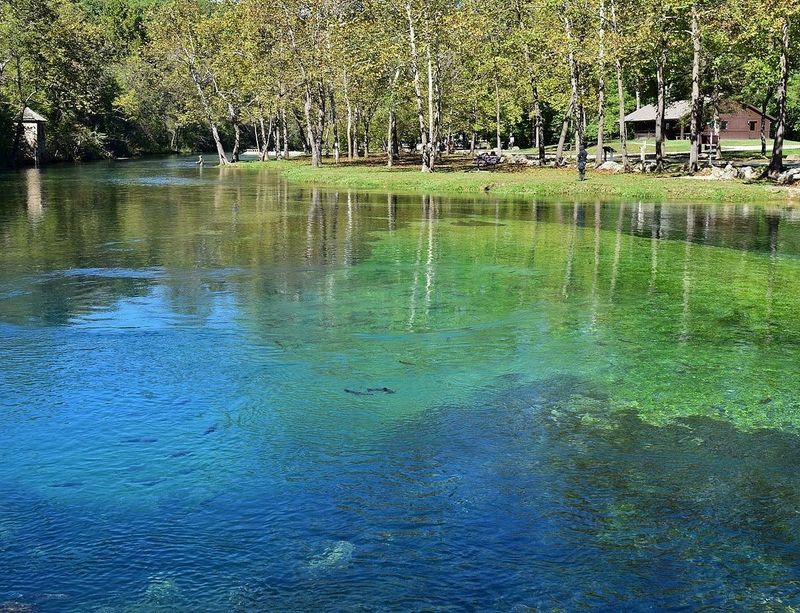
More than 100 million gallons of water surge from Bennett Spring every single day. That number sounds made up until you stand at the spring head and watch the water boiling up from underground with relentless, almost hypnotic force.
Located near Lebanon in Laclede County, Missouri, Bennett Spring State Park is Missouri’s third-largest spring and one of the state’s most beloved fishing destinations.
The spring branch is stocked daily with rainbow trout during fishing season, which runs from March through October, drawing anglers from across the region.
Fishing is the main event here, but the park offers a lot more than a stocked stream. Multiple hiking trails explore the surrounding hills and forest, including one that passes through a nearly 300-foot-long natural tunnel carved by water through the limestone bedrock.
Walking through that tunnel is one of those small moments that turns a good park visit into a great one.
The nature center features well-designed exhibits on Missouri’s spring ecosystems and hosts guided nature walks throughout the season. If you have never fished before, Bennett Spring even offers a Trout School program to get beginners started properly.
The rustic dining lodge on-site was built in the 1930s and is listed on the National Register of Historic Places. It serves breakfast, lunch, and dinner every day from March through October, and eating there after a morning on the water feels like the right way to end a visit.
Spring through fall is the sweet spot for a trip here. Bennett Spring State Park is located near Lebanon in Laclede County, Missouri, and it consistently ranks among the state’s most visited parks for very good reason.
10. Roaring River State Park
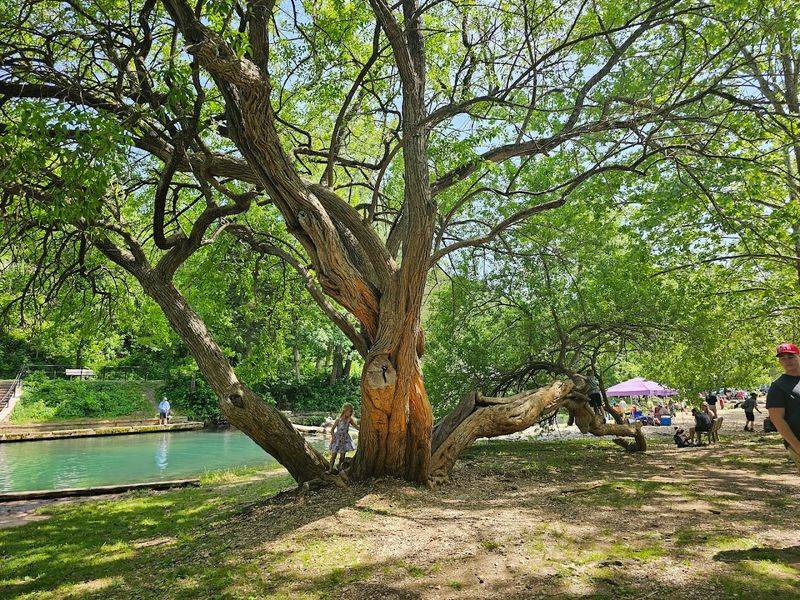
The name is not poetic license. When Roaring River forces its way through a narrow limestone gorge at peak spring flow, you can genuinely hear it before you ever see it.
That sound, a deep, churning rush of moving water, sets the tone for everything this park near Cassville in Barry County, Missouri, has to offer.
Over 20 million gallons of water pour daily from the massive spring at the base of a dramatic limestone bluff, feeding one of Missouri’s three premier trout fishing destinations.
The hatchery here produces hundreds of thousands of rainbow trout annually, and fishing tags on opening day in March sell out with a speed that tells you everything about how seriously people take this place.
Beyond the river, rugged trails climb the surrounding bluffs with real determination, gaining elevation quickly and delivering sweeping views of the valley below. I huffed my way up one of those trails on a warm September morning and decided immediately that the view from the top justified every step.
The CCC-era lodge and cabins scattered through the park carry a warm, worn-in historic charm that newer accommodations simply cannot manufacture. Staying overnight in one of those cabins and waking up to the sound of the river below is the kind of simple pleasure that sticks with you.
Fall is the ideal season for hiking here, with the bluff trails almost entirely free of crowds after fishing season winds down. The valley colors in October are rich and layered in a way that makes even a short hike feel cinematic.
Roaring River State Park is located near Cassville in Barry County, Missouri, in the southern Ozarks region.
11. Meramec State Park
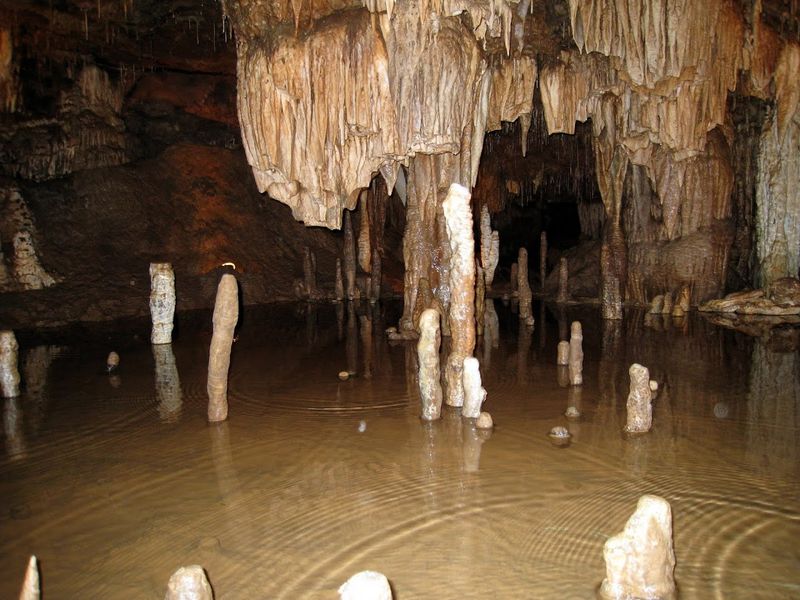
Just outside Sullivan in Franklin County, Missouri, Meramec State Park stretches across more than 4,000 acres of forested hills along one of the state’s most beloved rivers. The Meramec River moves through this landscape with the easy confidence of something that has been doing this for a very long time.
Fisher Cave is the park’s most famous feature, and it earns that reputation without any effort. Guided tours lead you through a massive limestone cavern filled with stunning formations, and the year-round temperature inside holds steady at a cool 56 degrees Fahrenheit.
Walking in from a hot summer afternoon feels like stepping into a different world entirely.
More than 13 miles of hiking trails fan out across the park, covering a range of difficulty levels and scenery types.
The 4.5-mile Hamilton Island Trail follows the river closely, while the 3.5-mile Cave Trail climbs away from the water and opens up to panoramic views of the Meramec Valley that reward the effort generously.
The river itself is one of Missouri’s best float streams, and nearby outfitters make it easy to rent a canoe or kayak for a day on the water. Paddling past limestone bluffs and forested banks at your own pace is a completely different way to experience the park’s scenery.
Campgrounds, cabins, and a swimming pool round out the amenities, making Meramec State Park a natural choice for a full weekend rather than just a day trip. The combination of cave tours, river access, and forested trail systems gives it a versatility that few parks in the state can match.
Summer is ideal for floating and swimming, while spring and fall are the strongest seasons for hiking and cave tours at Meramec State Park near Sullivan in Franklin County, Missouri.
