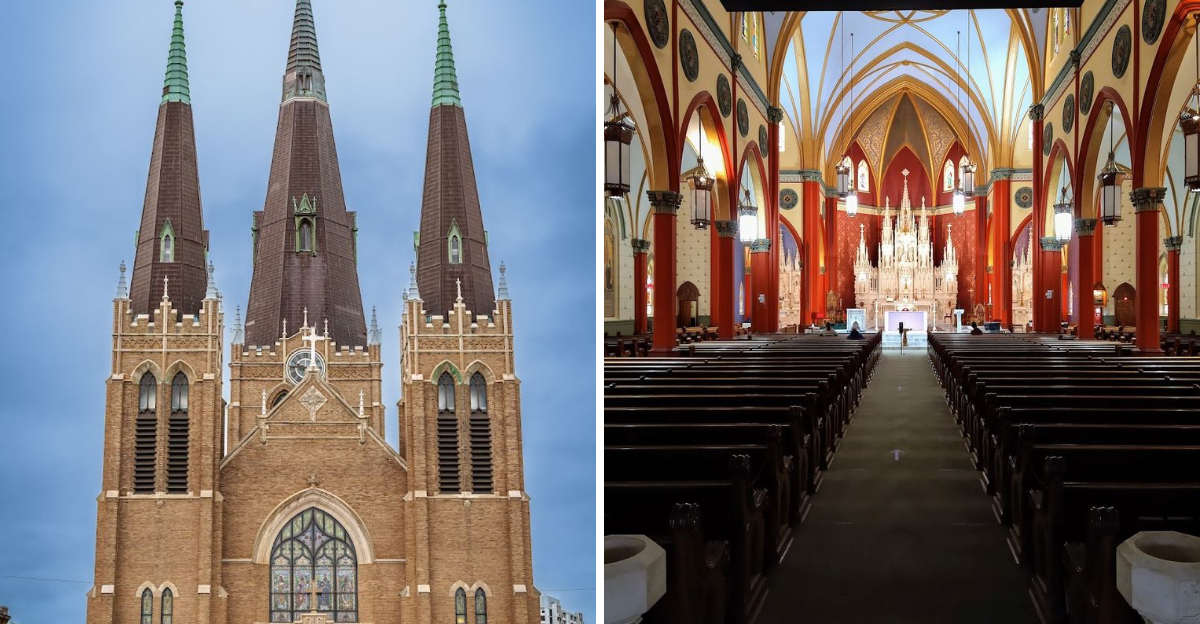
You do not have to go to Europe to feel like you stumbled into a medieval masterpiece.
Right here in Oklahoma, this Gothic Revival cathedral rises up with pointed arches, stained glass windows that catch the afternoon light like fire, and a quiet hush that makes you lower your voice even if you are not the praying type.
The stonework is stunning, the ceilings soar way above your head, and the whole building feels like it has been standing for centuries even though Oklahoma has only been a state for a little over a hundred years.
Locals come for services, but visitors come just to tip their heads back and say “wow” under their breath. So next time you are cruising through, step inside. You do not need a reason. The building will give you one.
The Gothic Architecture Commands Attention
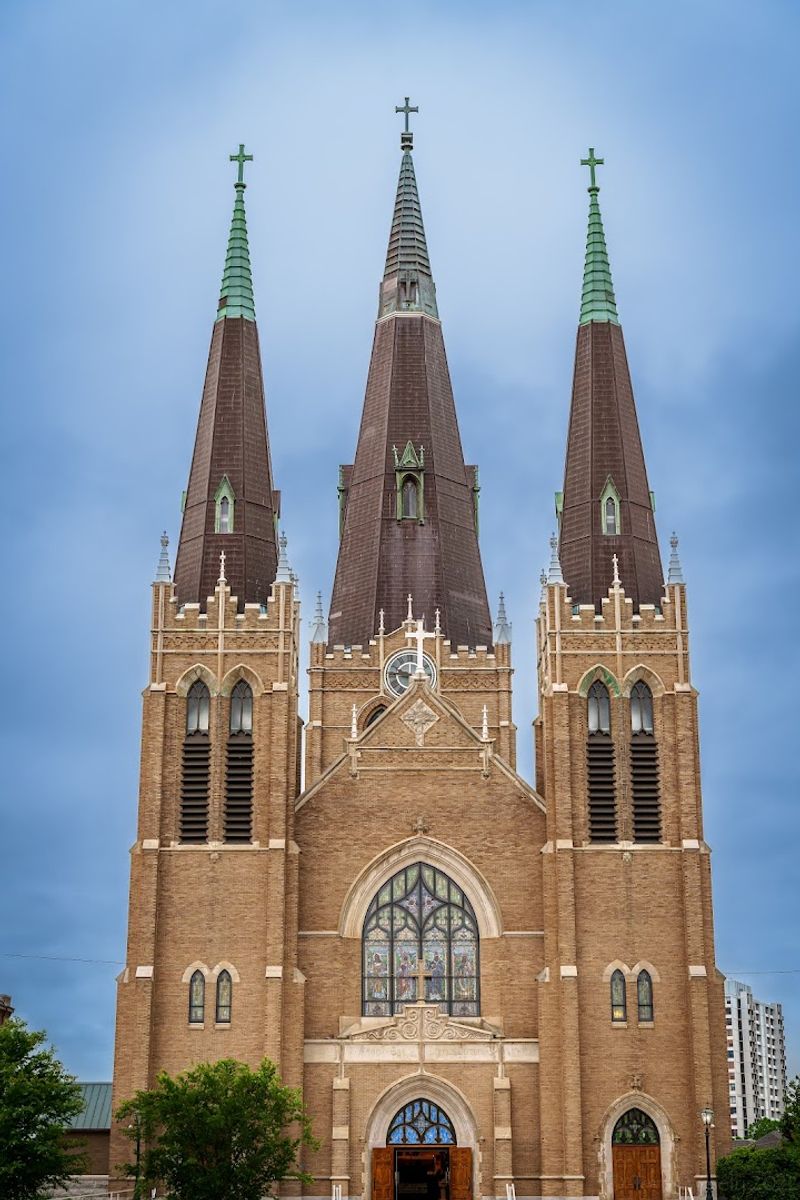
Standing on the sidewalk outside Holy Family Cathedral, the first thing that hits you is sheer scale. The Gothic Revival exterior rises dramatically above the downtown Tulsa streetscape, with pointed arches and carved stonework that feel more European than Oklahoman.
In 2026, the building looks better than ever following a $3.2 million restoration. The three iconic spires reach confidently into the Oklahoma sky, now featuring solid copper roofing that reflects the sun.
Every stone detail feels purposeful rather than decorative for its own sake.
What makes this building especially impressive is its setting. Most people do not expect to round a corner in Tulsa and find something that looks like it belongs in a centuries-old city abroad.
It is a genuine architectural statement in the middle of the Great Plains.
The Intricate High Altar Stops You Cold
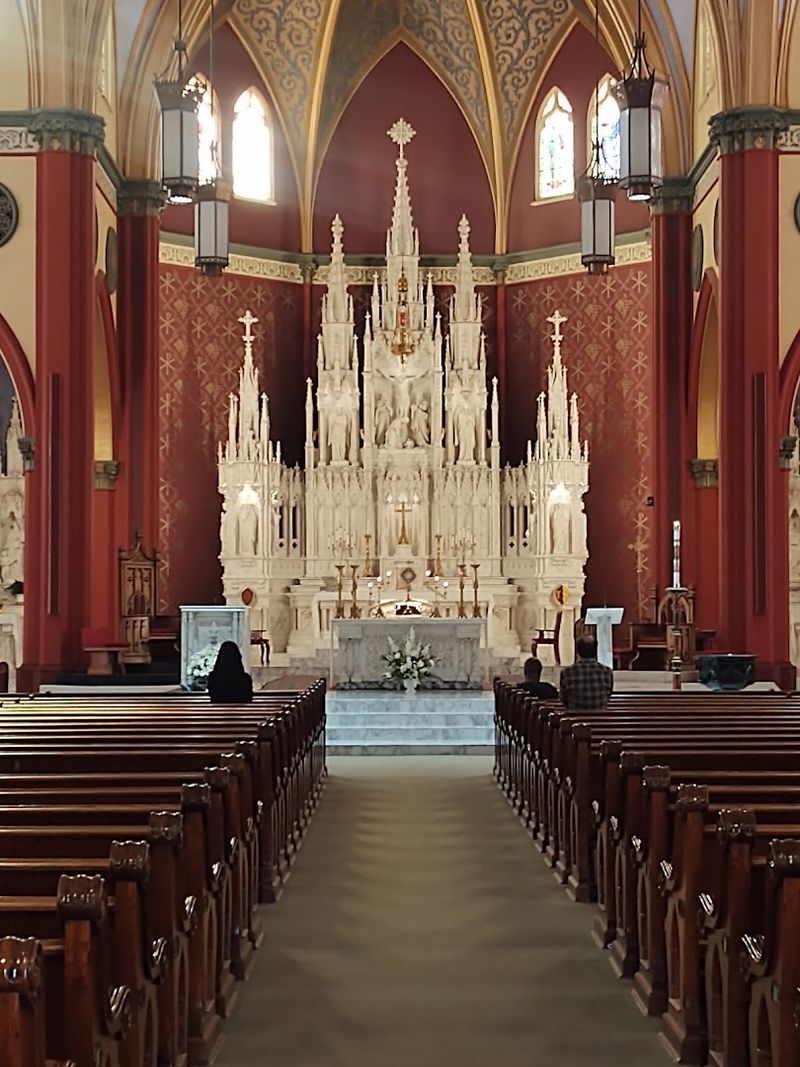
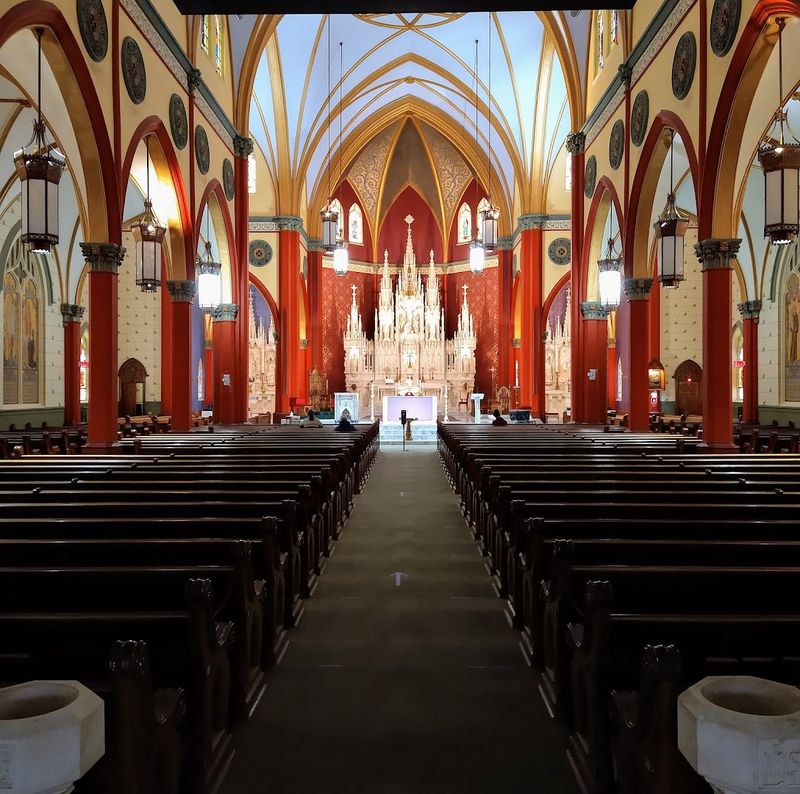
Nothing quite prepares you for the altar at Holy Family Cathedral. Crafted from Scagliola—a specialized marble-dust composite, it is one of the most detailed and visually commanding pieces you are likely to find anywhere in the American Midwest or Great Plains region.
Every surface is carved with precision. The material catches the light differently depending on the time of day, shifting from cool white to warm gold as the sun moves through the stained glass windows overhead.
It is a level of craftsmanship most people assume belongs only in Europe.
The altar draws your gaze immediately when you enter the sanctuary, pulling focus across the full length of the nave. Standing at the back of the cathedral, the perspective is almost theatrical.
The “marble” glows, the arches frame it perfectly, and the entire composition feels deeply considered.
A History Stretches Back Over a Century
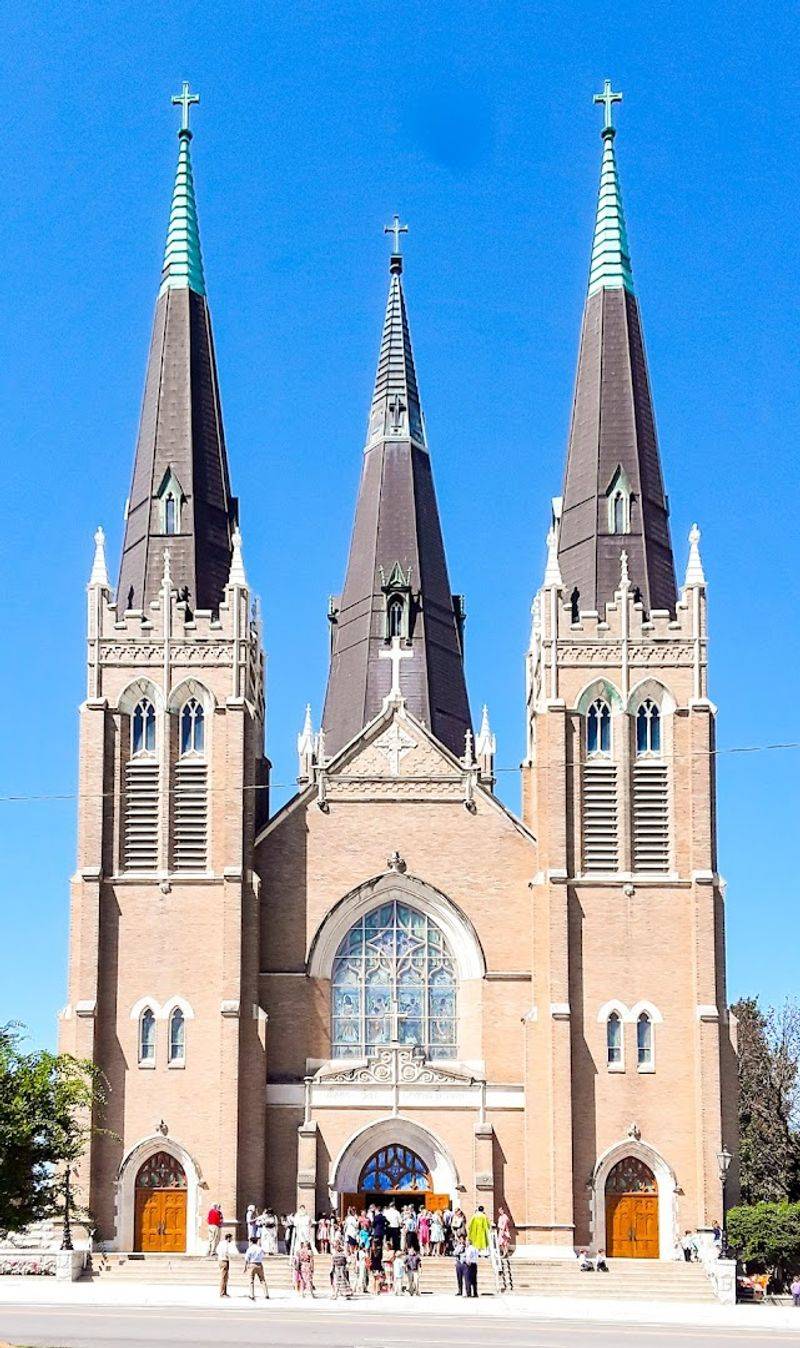
Holy Family Cathedral has roots that go deep into Tulsa’s own story. The parish was established in the early years of the twentieth century, making it one of the oldest Catholic communities in Oklahoma.
Back then, Tulsa was a rapidly growing oil boomtown, and the Catholic community needed a place of worship that matched their ambitions for permanence and beauty. The cathedral they built was a clear statement of faith and commitment to this land.
Over the decades, the parish grew alongside the city. Families passed membership down through generations, and the building absorbed the history of each era it lived through.
The cathedral has seen Oklahoma change dramatically, from its frontier days through oil booms and economic shifts, yet it has remained a constant presence in downtown Tulsa. That kind of staying power says something meaningful about a place.
Walking through the doors, you can feel the weight of that history without anyone needing to explain it. The building itself carries the story in its walls, and that quiet depth is part of what makes a visit here genuinely moving.
Bavarian Windows Worth a Long, Slow Look
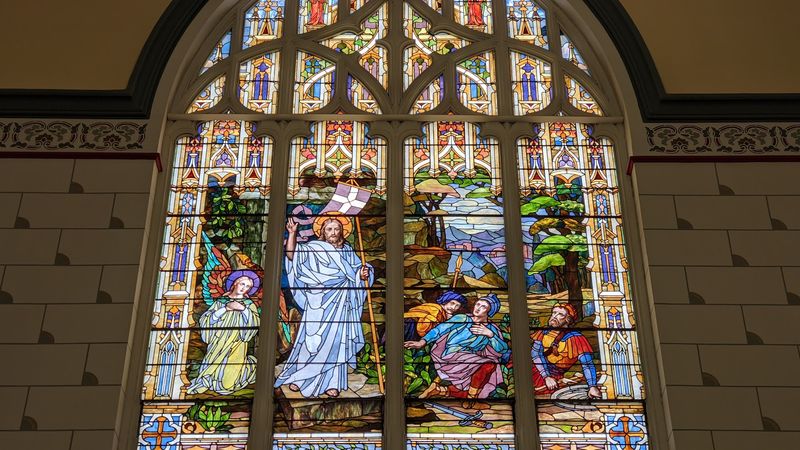
The stained glass windows inside Holy Family Cathedral are the kind that make you forget you had somewhere else to be. These Munich-style windows were created by the Royal Bavarian Institute of Art, filled with rich blues and deep reds that flood the interior with colored light.
Each window tells a story, and the German craftsmanship involved is obvious. The figures are expressive and the colors are bold without being garish.
On a sunny morning, the light transforms the stone floors and wooden pews into a warm, shifting glow that changes minute by minute.
Photography enthusiasts will find this interior a genuine challenge. Capturing the balance between the dark stone architecture and the brilliance of the glass requires patience and a good eye.
Even on a cloudy day, the Bavarian glass remains vivid, proving great art does not need perfect sunlight.
The Peaceful Sanctuary Interior and Its Atmosphere
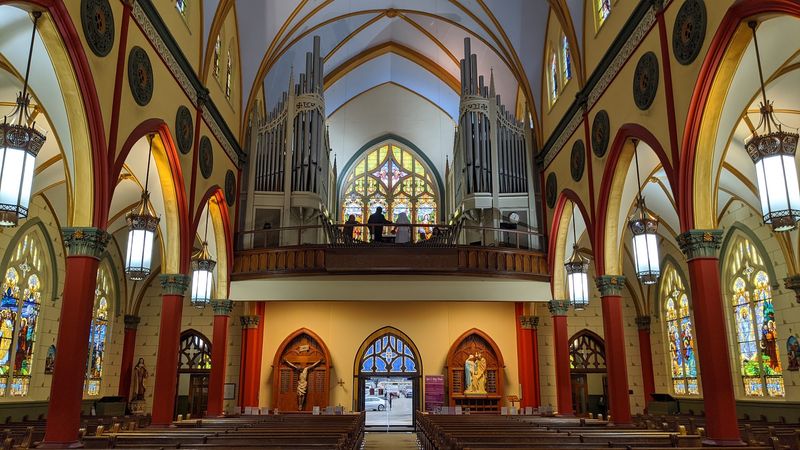
Step inside Holy Family Cathedral and the noise of downtown Tulsa disappears almost instantly. The thick stone walls do their job well, and the interior feels genuinely quiet in a way that few urban spaces manage.
The nave is long and tall, lined with wooden pews that have the kind of worn-in quality that only comes from decades of regular use. The vaulted ceiling draws your eyes upward, and the proportions of the space feel generous without being overwhelming.
Oklahoma can get loud and busy, especially in a city like Tulsa, so finding a space this calm right in the middle of downtown is something worth appreciating. The cathedral functions as a kind of pressure valve for the surrounding urban energy.
The lighting inside is soft and layered, combining natural light from the stained glass with warm artificial sources that keep the space inviting rather than shadowy. It strikes a balance that feels intentional and carefully maintained.
Whether you sit for a few minutes of quiet reflection or attend a scheduled Mass, the atmosphere inside this sanctuary has a way of slowing everything down. That unhurried quality is increasingly rare, and the cathedral offers it freely to anyone who walks through the door.
Mass Times and Visiting Hours to Plan Around
Planning a visit to Holy Family Cathedral requires a bit of scheduling awareness, since the building operates around its liturgical calendar rather than as a standard tourist attraction. That said, the hours are accessible enough for most visitors to work with.
Daily Mass takes place on weekdays in the early morning, typically around 7:00 AM, with a slightly later Monday opening at 11:30 AM. Saturday Mass runs in the morning as well, while Sundays offer the widest window, with services running from 7:30 AM through the early afternoon.
If you want to attend Mass and experience the cathedral at its most alive, Sunday morning is the clear recommendation. The organ plays, the choir sings, and the full community gathers in a way that brings the space to life completely.
For those visiting purely for the architecture and atmosphere, arriving just before or after a scheduled Mass gives you a chance to see the interior without disrupting an active service.
The cathedral is located in downtown Tulsa, Oklahoma, at 820 South Boulder Ave W, and parking is available nearby, making logistics straightforward. A quick call to the parish office at 918-582-6247 can confirm current hours before you make the trip.
The Cathedral’s Role in Downtown Tulsa
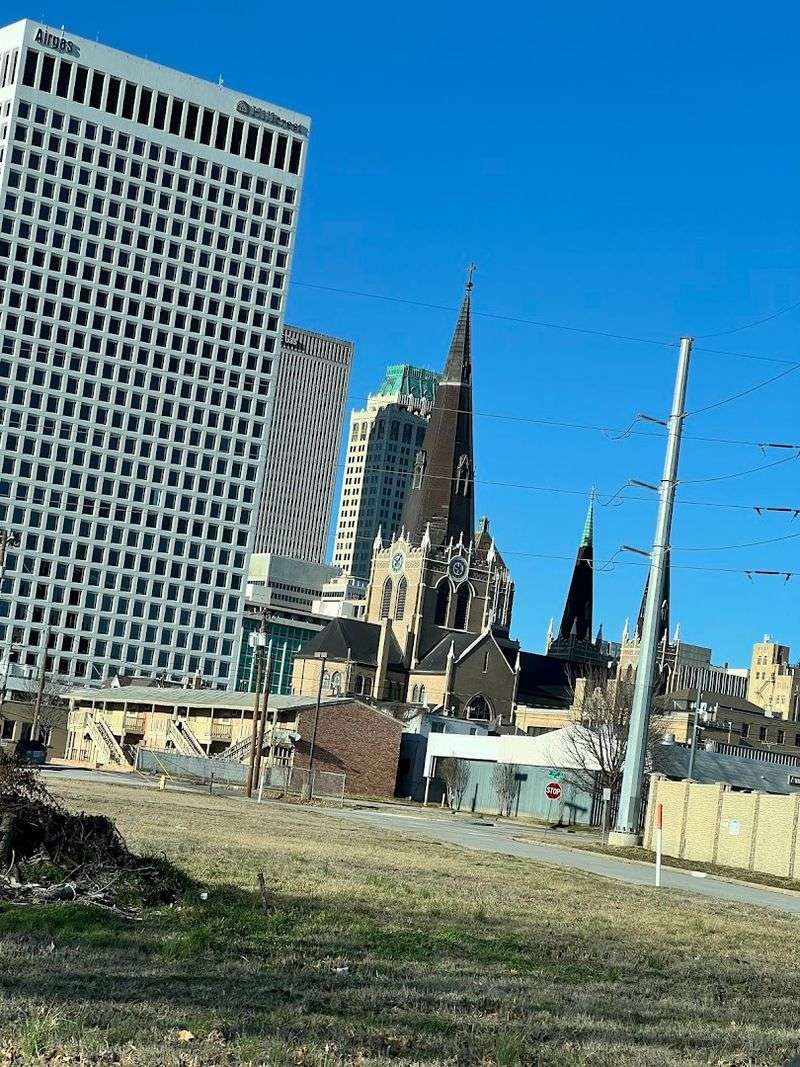
Holy Family Cathedral does not sit in isolation. It occupies a real and active place in the fabric of downtown Tulsa, functioning as both a spiritual anchor and a visual landmark that helps define the neighborhood around it.
The surrounding area is a mix of commercial buildings, cultural institutions, and the kind of urban energy that comes with a growing mid-sized American city.
Against that backdrop, the cathedral’s Gothic profile reads as a deliberate counterpoint, something permanent and intentional in a landscape that keeps changing.
Oklahoma has invested significantly in revitalizing its urban centers in recent years, and Tulsa’s downtown is a clear example of that momentum. The cathedral has been part of this neighborhood through every phase of the city’s evolution.
Walking from the cathedral toward other downtown Tulsa attractions takes only a few minutes on foot. The location makes it easy to include a cathedral visit as part of a broader downtown itinerary without requiring a car or significant detour.
The building also functions as a geographic reference point for locals, the kind of landmark that people use to orient themselves. That kind of embedded civic presence is something most buildings never achieve, and Holy Family Cathedral has held it for generations.
The Newly Restored Sanctuary and Its Future
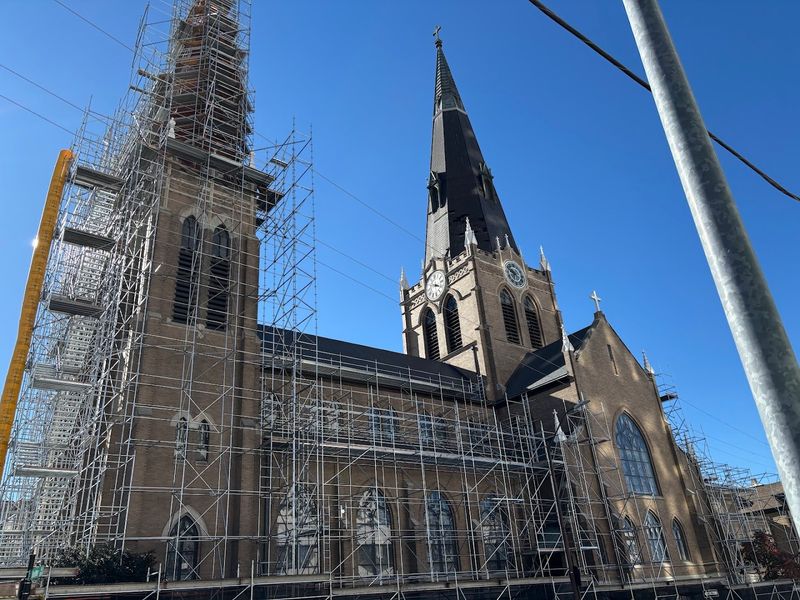
Following a massive multi-year preservation project, Holy Family Cathedral has emerged looking sharper than it has in decades. While recent visitors saw scaffolding and work crews, the focus has now shifted to the stunning result: a building meticulously preserved to honor its original 1914 character.
Restoration projects of this scale are significant undertakings for any historic structure. The specialized stone cleaning and the installation of the new copper roof required immense investment, and the completion of this work speaks to the parish’s deep commitment to the building’s future in downtown Tulsa.
The best part for visitors is that the interior sanctuary has been refreshed while maintaining its quiet, atmospheric soul. The marble-dust altar and Bavarian stained glass are now framed by a structure that is structurally reinforced and better prepared to handle the unpredictable Oklahoma elements.
In a climate that swings between extreme heat and severe storms, maintaining historic masonry is a constant challenge.
This recent restoration is a practical response to those environmental demands, ensuring the cathedral remains a “labor of love” that can withstand the next century of Great Plains weather.
Now that the major exterior work is complete, the facade looks more detailed than it has in years. Seeing the cathedral in this refreshed state gives visitors a genuine sense of its original 1914 grandeur, making it a must-see highlight of the Oklahoma architectural landscape.
Why This Cathedral Belongs on Your Oklahoma Itinerary
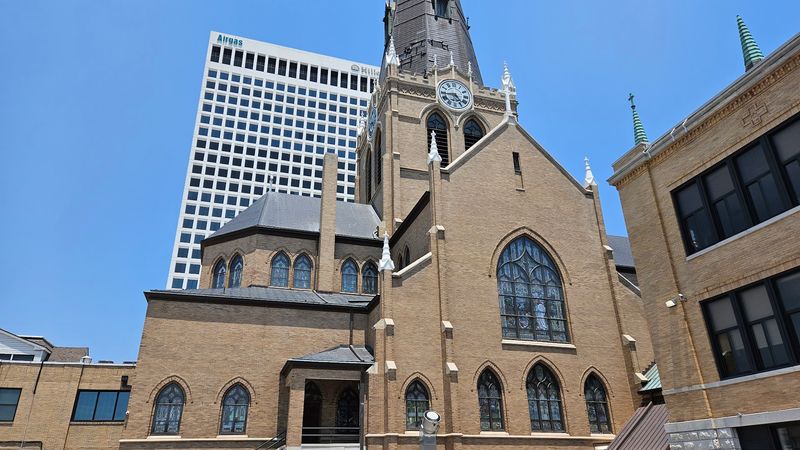
Oklahoma does not always get credit for its cultural and architectural depth, but Holy Family Cathedral is exactly the kind of place that challenges that assumption. It is a serious, world-class piece of architecture sitting in the middle of Tulsa, available to anyone who makes the short trip downtown.
For architecture enthusiasts, the combination of Gothic exterior detailing, marble altar craftsmanship, and stained glass artistry puts this cathedral in genuinely rare company for this part of the country. You would have to travel much farther to find a comparable experience in the region.
For those interested in history, the parish’s century-long presence in Oklahoma gives the building a layered story that goes well beyond its physical appearance. Every surface has context, and that context deepens the experience significantly.
Even for casual visitors with no particular interest in religious architecture, the cathedral offers something straightforward: a beautiful, calm, and impressive space that rewards curiosity and patience.
Tulsa has plenty of reasons to visit, and Holy Family Cathedral deserves a prominent spot on that list. It is the kind of place that stays with you long after you have left Oklahoma behind, quietly insisting that you come back for another look.
