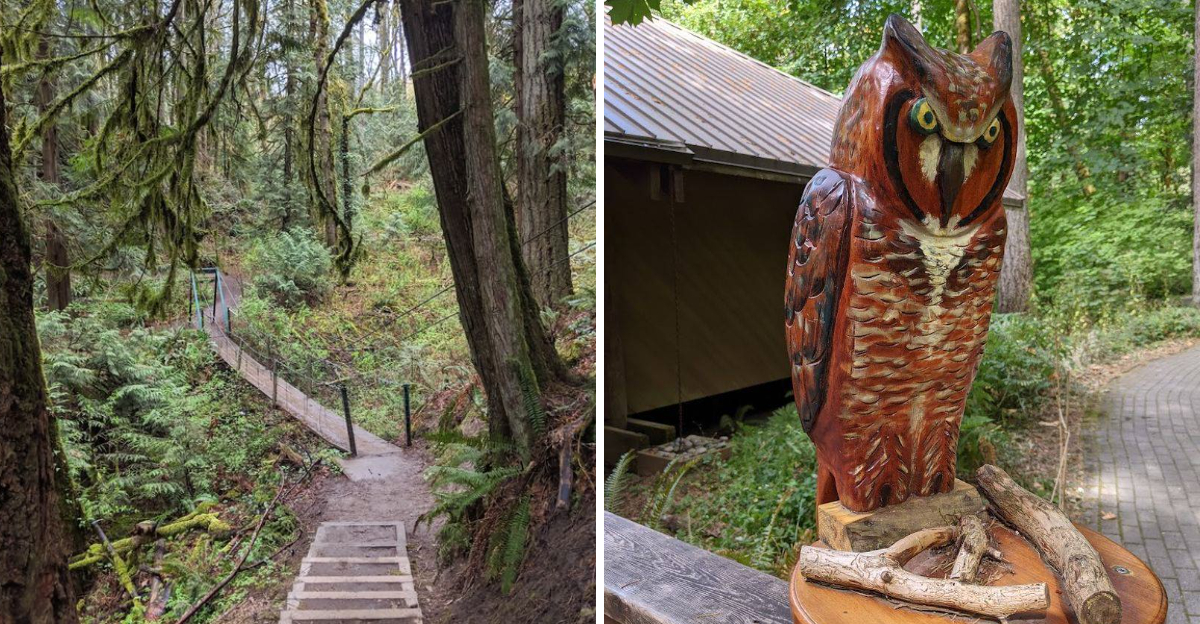
You do not need to go far to feel like you left the city behind. This park sits right in the middle of everything, yet it feels completely wild.
The trees are tall and the trails are soft under your feet. If you are quiet enough, you might hear a splash in the creek.
That is the beavers, busy doing their thing like they own the place. Look up and you will probably see an owl staring right back at you.
They are not shy here. The whole place feels alive in a way that city parks just cannot match.
Kids love the bridges and the muddy spots. Adults love the peace and quiet.
Everyone leaves a little calmer than they came.
A Forest Hidden Inside the City
Most people drive past the entrance without realizing what is on the other side. Tryon Creek sits between Portland and Lake Oswego like a forested island.
The moment you step past the trailhead, the traffic noise fades fast.
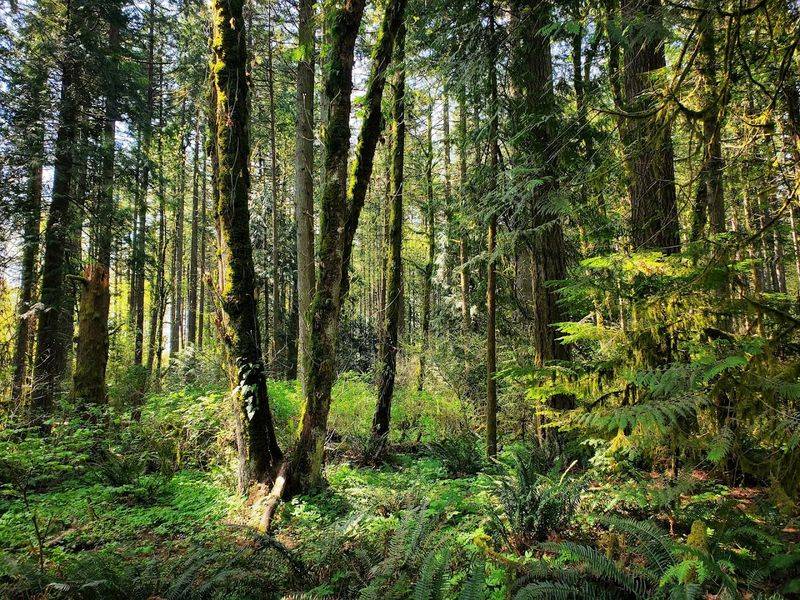
The park covers 658 acres of old-growth-adjacent forest. Massive Douglas firs tower overhead.
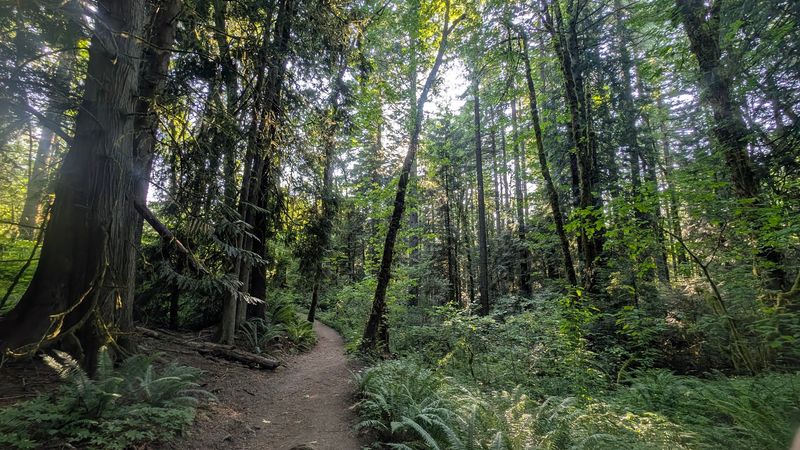
Mossy logs line the creek banks, and ferns carpet nearly every inch of ground between the trees.
It never feels crowded here, even on weekday afternoons. The trail network spreads wide enough that you can walk for an hour and barely cross another person.
That kind of quiet is rare for any city park, let alone one this close to a major metro area.
First-time visitors often stop just a few steps in, surprised by how immediately wild everything feels. The canopy blocks most of the sky.
Sunlight filters through in thin golden beams. It is the kind of place that makes you forget what time it is.
The Beavers Living Their Best Lives Here
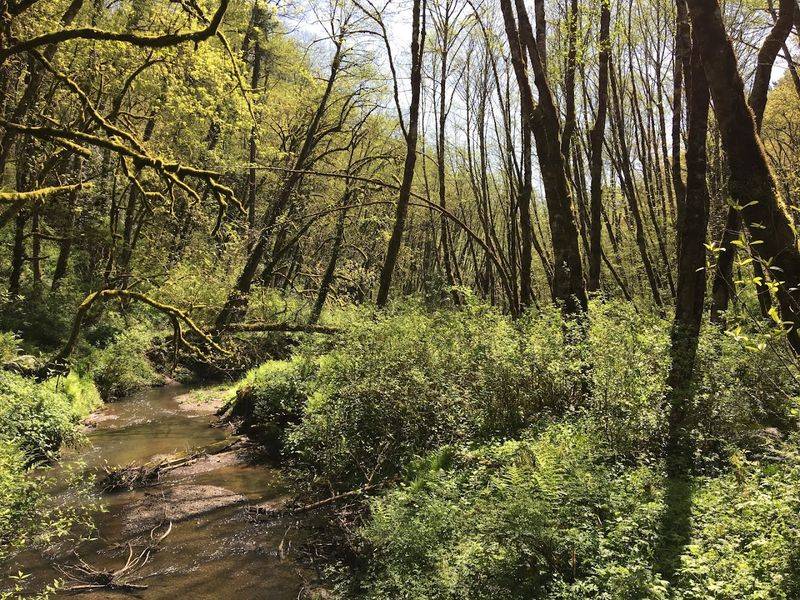
Beavers are not subtle neighbors. Chewed stumps and gnawed branches along the creek banks are their calling card.
At Tryon Creek, the signs of beaver activity are easy to spot once you know what to look for.
These industrious animals reshape the creek over time. They build dams, redirect water flow, and create small wetland pockets that other species depend on.
Their work benefits the entire ecosystem in ways that ripple outward for years.
Spotting an actual beaver takes patience. Early morning and late afternoon are the best windows.
Moving quietly near the water gives you the best shot at catching one before it slips below the surface.
The Nature Center inside the park has displays explaining how beavers live and what role they play in keeping the creek healthy. Kids especially love this part.
It turns a walk in the woods into something more like a wildlife lesson you actually remember. The beaver is quietly one of this park’s most fascinating residents.
Owls in the Canopy Above
There is something thrilling about hearing an owl call in broad daylight. It happened to me near the lower creek trail, a low resonant sound coming from somewhere high in the canopy.
I stood still for a long minute trying to find it.
Tryon Creek is known owl territory. Barred owls have established a strong presence throughout the park.
They are more vocal than people expect, and their calls carry surprisingly far through the trees.
Great horned owls also move through the area, especially during dusk hours. Experienced birders come here specifically to log owl sightings.
Even casual visitors report hearing them on regular afternoon walks.
The park occasionally hosts guided owl walks during specific seasons. These events fill up quickly.
If you can snag a spot, the experience of tracking owl calls through a dark forest with a knowledgeable guide is something genuinely memorable. Bring a small flashlight and comfortable shoes.
The forest at dusk has its own completely different personality.
Trails That Connect and Surprise You
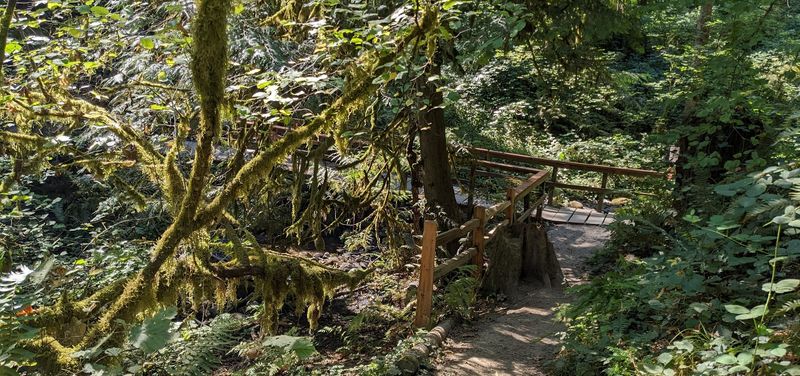
The trail map at Tryon Creek looks almost like a web. Paths cross, loop, and reconnect in ways that make every visit feel slightly different.
That is part of the charm here.
There are roughly 8 miles of maintained trails spread across the park. Some are flat and easy.
Others dip into the ravine and require a little more effort on the climb back up. Hiking boots are a smart choice, especially after rain.
Many trails connect to each other, so you can build your own route as you go. Short on time?
A 30-minute loop still delivers a full forest experience. Have the whole afternoon free?
You could easily walk for three hours and still find new corners.
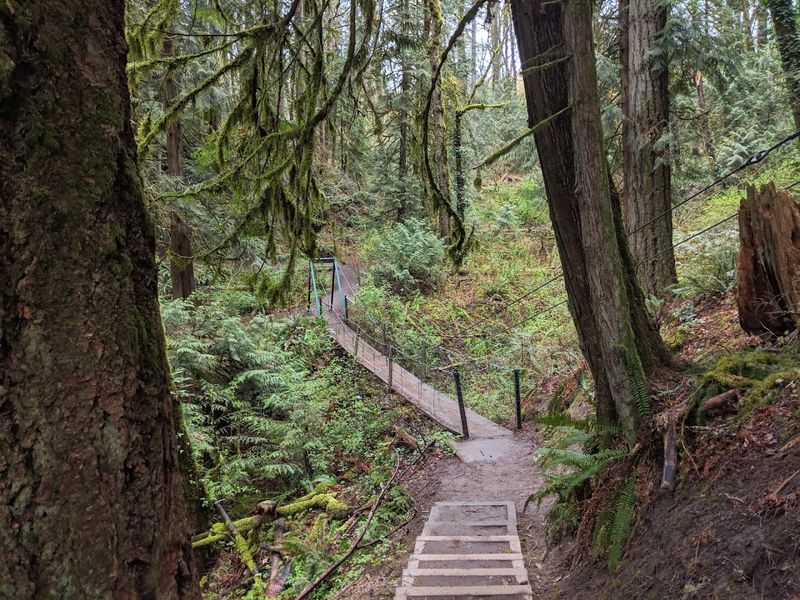
Wooden bridges cross the creek at several points. Standing on one of those bridges and watching the water move below is one of the simple pleasures this park offers freely.
Photograph the map at the trailhead before heading out. The park is bigger than it looks from the parking lot.
The Nature Center Worth Spending Time In
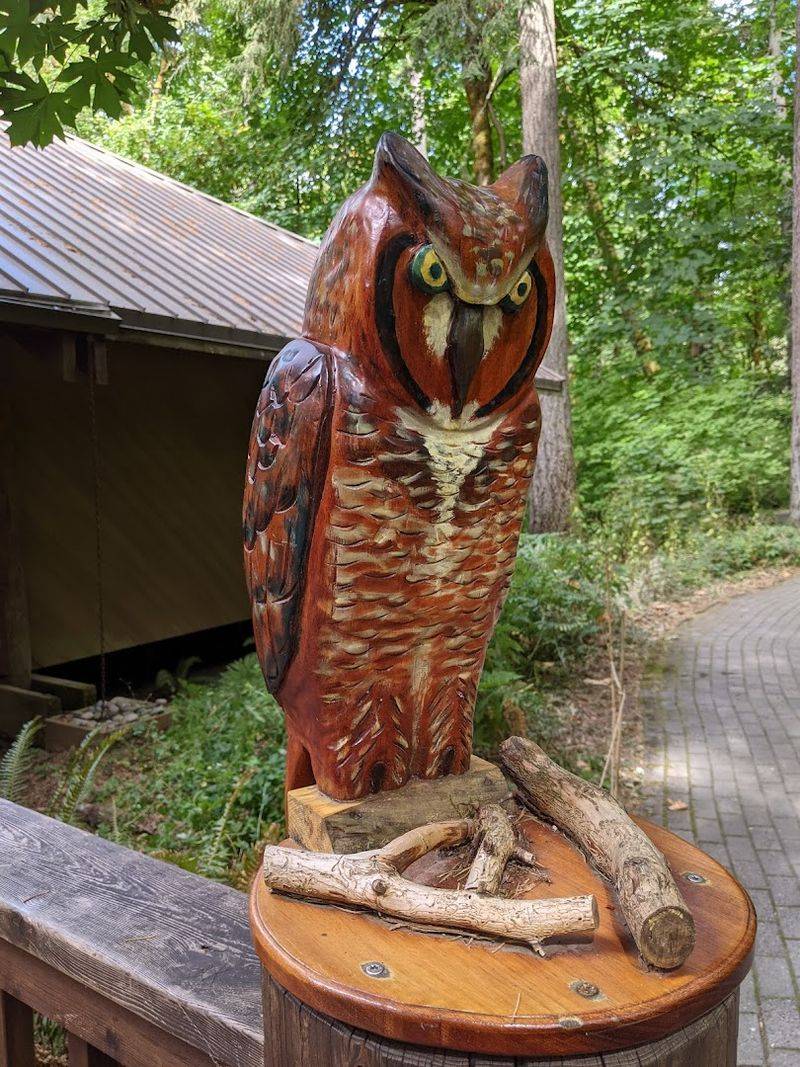
The Nature Center at the main trailhead is genuinely worth a stop before hitting the trails. It is not just a brochure rack.
The exhibits cover local wildlife, creek ecology, and the park’s natural history in a way that actually holds your attention.
Staff there are consistently described as helpful and welcoming. If you have questions about which trail to take or what wildlife might be active that day, they are a solid resource.
The building itself has a warm, woodsy feel that fits the setting perfectly.
Clean restrooms and drinking fountains are available here too. That matters more than people admit when planning a long hike.
There is also a small gift shop with park merchandise and nature-themed items.
Families with young kids tend to spend a good chunk of time inside before heading out. The displays on local animals, including beavers, owls, and woodpeckers, spark real curiosity.
It sets the tone for the walk ahead in the best possible way. Set your navigation to Friends of Tryon Creek to find it easily.
Horses, Dogs, and Humans All Welcome
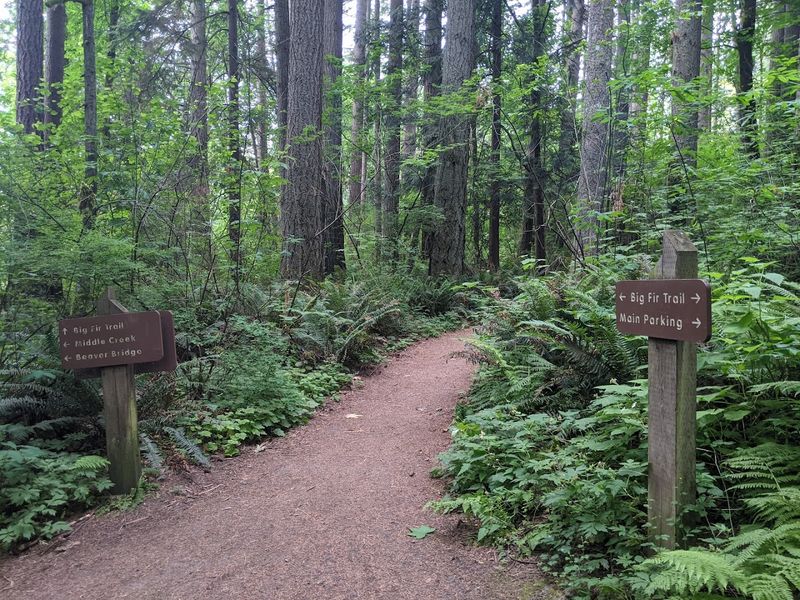
Not many urban parks can say they welcome horses on their trails. Tryon Creek is one of the rare ones.
Dedicated equestrian paths run through sections of the park, making it a destination for riders who want a real forest experience without leaving the metro area.
Dogs are welcome too, as long as they stay leashed. The trails are wide enough that passing other hikers with a dog is easy and comfortable.
Muddy paws are basically guaranteed after any wet-weather visit.
The mix of users here creates an interesting dynamic on the trails. You might pass a jogger, then a family with a stroller, then someone on horseback.
Everyone seems to share the space with a kind of mutual respect that feels natural in a place this peaceful.
Parking can get tight during peak hours, especially on sunny weekends. Arriving early or on a weekday gives you a smoother start.
There are also trailheads with street parking at different entry points around the park’s perimeter worth checking before your visit.
Blackberries, Mushrooms, and Wild Finds
Late July and early August bring one of Tryon Creek’s most underrated perks. Wild blackberries ripen along several trail edges, and they are free for the picking.
Bringing a small container is highly recommended if you visit during that window.
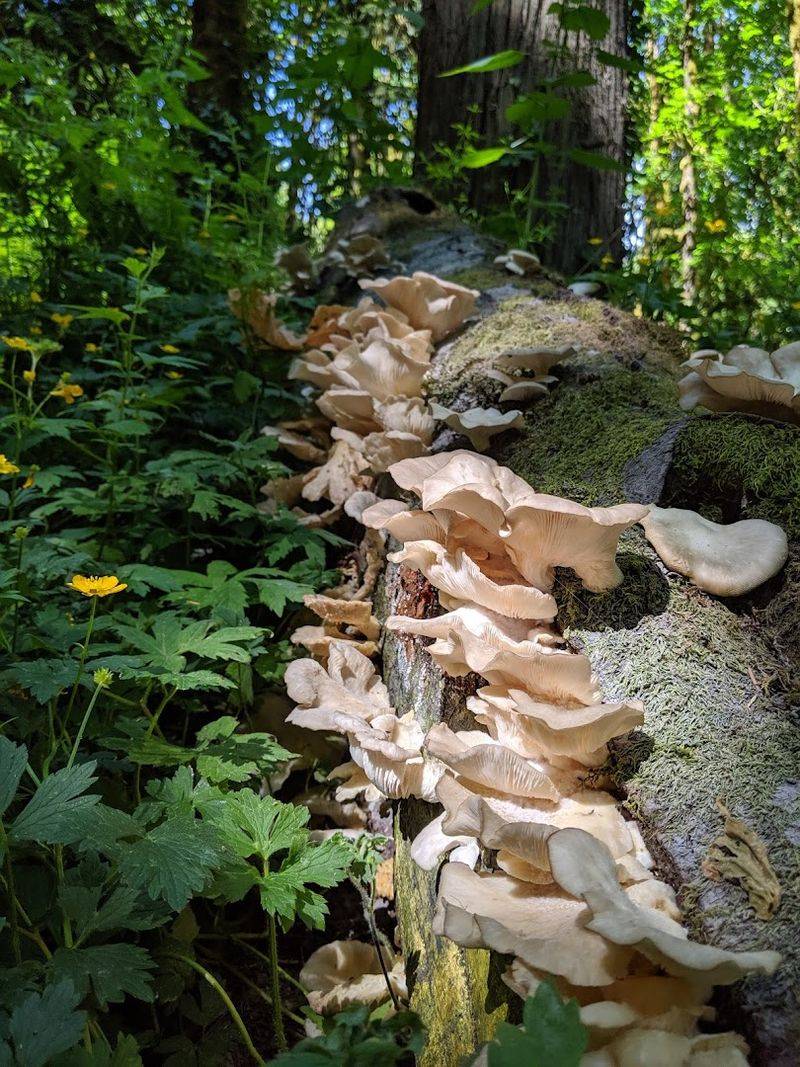
Mushrooms are another draw for curious foragers and photographers alike. The damp Pacific Northwest climate creates ideal conditions for an enormous variety of fungi.
They appear in clusters along fallen logs, beside the creek, and tucked into shaded trail edges.
Most mushrooms found here should be admired rather than eaten unless you have expert identification skills. The variety and color are genuinely stunning though, especially after a few days of rain.
Photography is a great reason to slow down and look closer.
The park also supports a rich understory of native plants. Trilliums bloom in spring.
Skunk cabbage fills the wetter sections with bold yellow. Each season drops a new layer onto the same trails, which is a big reason regulars keep coming back year after year without getting bored.
Woodpeckers and the Birds That Share the Trees
Woodpeckers at Tryon Creek are famously unbothered by people. Visitors regularly describe stopping just feet away from one while it hammers into a tree, completely unfazed.
That level of proximity to wild birds is something you do not forget.
The park hosts multiple woodpecker species. Pileated woodpeckers are the most dramatic, with their bold red crests and loud, prehistoric-sounding calls.
Downy and hairy woodpeckers are smaller but equally fun to watch.
Beyond woodpeckers, the forest supports a wide range of bird life. Chickadees flit through the understory.
Varied thrushes call from deep in the canopy. Kingfishers occasionally appear near the creek, darting low over the water in flashes of blue and orange.
Birding here does not require special gear or expertise. A slow walk with your ears open is enough.
The forest provides a constant soundtrack of calls and movement. Bring binoculars if you have them, but honestly, many of the best sightings happen when you simply stop moving and wait a moment.
Seasonal Magic and Year-Round Visits
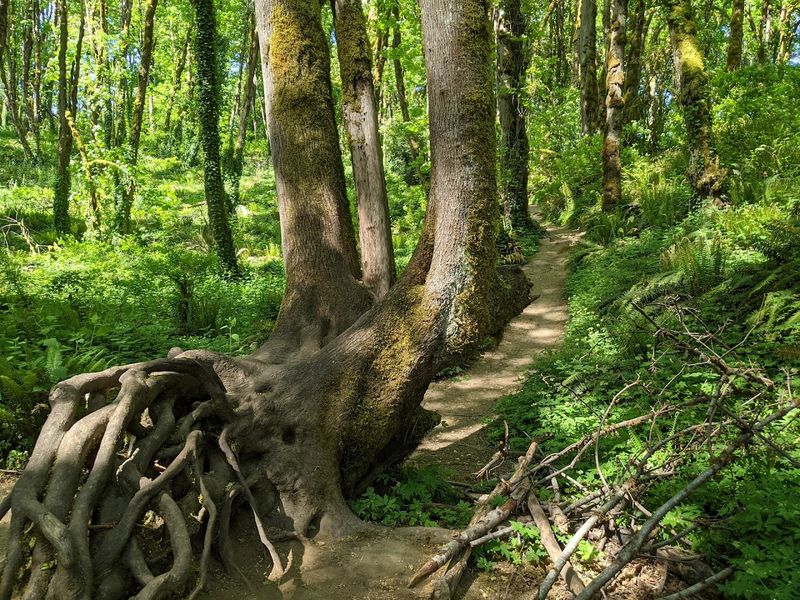
Tryon Creek looks completely different depending on when you visit. Spring brings trilliums and new ferns unrolling from the ground like tiny green spirals.
The creek runs higher and louder from winter rain, filling the ravine with a steady rushing sound.
Summer softens everything. The canopy fills in thick, and the trails stay cooler than the surrounding city by several degrees.
It becomes a reliable escape from urban heat without any real effort.
Autumn is visually stunning here. Bigleaf maples drop enormous golden leaves that pile along the trail edges and float down the creek.
Deciduous trees mix with conifers in a color combination that feels very specifically Pacific Northwest.
Winter strips things back to their bones, which has its own appeal. Bare branches reveal bird nests and views of the ravine that disappear in other seasons.
Rain makes the moss glow an almost unreal shade of green. The park rated beautifully across all seasons by visitors, and that reputation is well earned.
Planning Your Visit to Tryon Creek
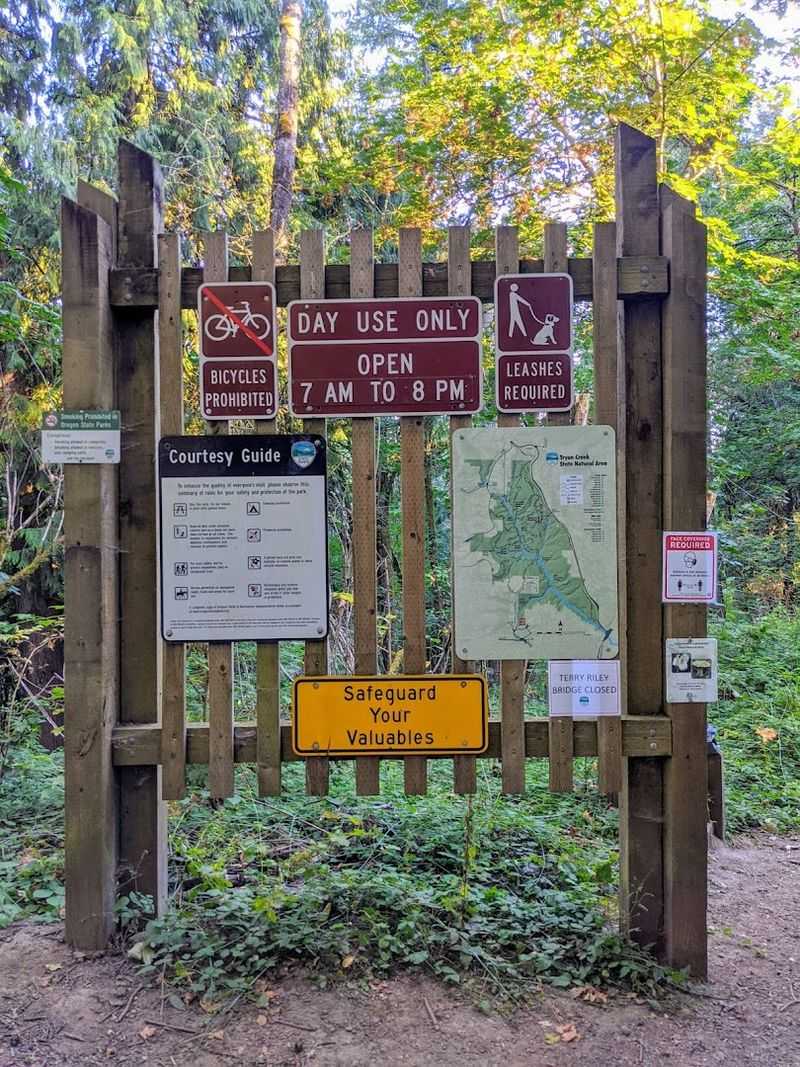
Getting to Tryon Creek is straightforward. The main entrance sits in southwest Portland near the Lake Oswego border.
Parking is available on site, though it fills up on sunny weekends and peak hours. Arriving before 10 a.m. gives you a much smoother start.
As of October 2025, parking at the main lot requires a fee or an annual Oregon State Parks pass. The annual pass covers all state parks and pays for itself quickly if you visit more than a couple of times a year.
The park is open year-round. Trails stay accessible even in wet winter months, though muddy sections are common.
Waterproof boots make a real difference from November through March. Leashed dogs are welcome on all trails.
Special events happen throughout the year, including full moon hikes and guided nature walks on Saturdays. The Nature Center staff can provide current schedules.
