Oklahoma has always been known for affordable living, wide open spaces, and a pace of life that does not require a second mortgage just to keep a roof overhead. But that reputation is starting to crack in certain corners of the state.
A handful of towns are watching their populations shrink as property taxes and housing costs climb higher than longtime residents ever expected.
These are not the booming suburbs or the trendy neighborhoods near downtown. These are quieter places, often with deep roots and families who have lived there for generations.
But when the tax bill arrives and the rent goes up for the third time in two years, even the most loyal residents start packing boxes. Some head to cheaper rural areas.
Others leave Oklahoma entirely, chasing affordability across state lines.
The irony is painful because these towns have plenty to offer. Good schools, friendly neighbors, and a slower rhythm of life that bigger cities cannot fake.
But none of that matters if people cannot afford to stay. Ten Oklahoma communities are learning this lesson the hard way, and their stories are worth understanding before more towns face the same fate.
1. Tulsa
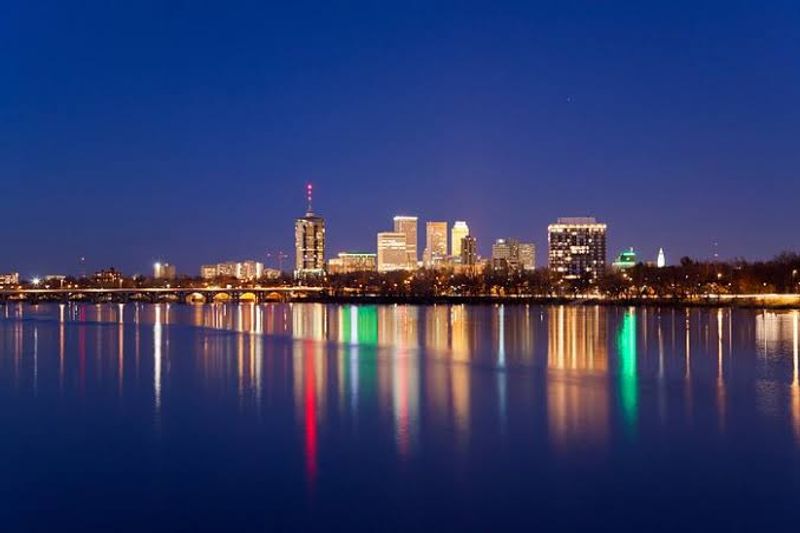
Tulsa has long been Oklahoma’s second-largest city, but something has shifted in recent years.
Property tax bills have grown faster than many household incomes can handle.
Long-time homeowners in neighborhoods like Midtown and South Tulsa are finding their annual tax statements hard to stomach.
The housing market tightened sharply after 2020, pushing home prices well above what local wages typically support.
Renters have not been spared either. Apartment costs in many Tulsa zip codes have risen by double-digit percentages over just a few years.
Younger residents, especially those early in their careers, are quietly relocating to smaller towns or neighboring states where their money stretches further.
Tulsa sits in northeastern Oklahoma along the Arkansas River, and it carries a rich cultural identity built on oil history, jazz heritage, and a lively arts scene.
That identity still draws visitors and new arrivals, but it does not always offset the financial pressure longtime locals face.
The city has made real efforts to revitalize areas like the Greenwood District and the Brady Arts District.
Still, rising costs in those very neighborhoods have pushed out some of the residents who built them.
Infrastructure improvements and new development projects bring optimism, but they also tend to raise surrounding property values.
That cycle creates a complicated situation for working families who want to stay but struggle to afford it.
Tulsa remains a compelling place to live, work, and explore.
The tension between growth and affordability, though, is one the city has not yet fully resolved.
2. Enid
Enid sits in Garfield County in north-central Oklahoma, and it wears its agricultural roots proudly.
For decades it served as a reliable, affordable place to raise a family without the chaos of big-city living.
That reputation has taken some hits lately as housing costs have crept upward and property assessments have climbed in ways that surprise long-time residents.
The local economy leans heavily on agriculture and the nearby Vance Air Force Base, which provides a measure of stability.
But stability does not always mean affordability, and many Enid households are feeling the gap between income and expenses grow wider.
Younger residents in their twenties and thirties are among the most likely to leave.
They often cite a combination of limited job variety and rising housing costs as the main reasons for heading elsewhere.
Enid’s population has hovered around 50,000 for years, and recent trends suggest that number may be softening.
The downtown area has seen some renovation efforts, and local leaders have worked hard to attract new businesses.
Even so, the underlying cost pressures have not eased enough to reverse the outward flow of residents.
Property taxes in Garfield County have increased alongside rising home valuations, leaving some fixed-income homeowners in a tough spot.
A retired teacher or a small-business owner on a modest income can find those bills genuinely difficult to manage.
Enid still offers wide open spaces, a close-knit community feel, and access to the natural beauty of the Oklahoma plains.
The challenge ahead is making sure the people who love it most can still afford to stay.
3. Guymon
Way out in the Oklahoma Panhandle, Guymon stands as the largest town in that narrow strip of land wedged between Kansas and Texas.
It is a place where the sky feels enormous and the pace of life has traditionally been slow and steady.
The meatpacking industry brought a wave of workers to Guymon over the past few decades, reshaping its demographics and fueling growth.
But that growth came with costs that are now catching up with residents.
Housing demand driven by the industry pushed prices higher than many locals expected in a rural panhandle community.
Property taxes followed suit, and some homeowners who have lived there for generations are now paying significantly more than they did just ten years ago.
The panhandle is not exactly flush with job alternatives, so when the financial pressure builds, leaving becomes the most practical option for many families.
Guymon is roughly 250 miles from Oklahoma City, making it genuinely remote.
That distance means fewer services, longer drives for medical care, and limited access to higher education without relocating.
For young people especially, the combination of rising costs and limited opportunity creates a powerful reason to go.
The town does have a lively community spirit, with local rodeos, a strong faith community, and a surprisingly diverse food scene shaped by its multicultural workforce.
Those qualities make it a genuinely interesting place to spend time.
But interesting does not always keep people planted when the monthly bills tell a different story.
Guymon’s leaders are aware of the challenge and are working to find solutions that keep families rooted in the panhandle.
4. Del City
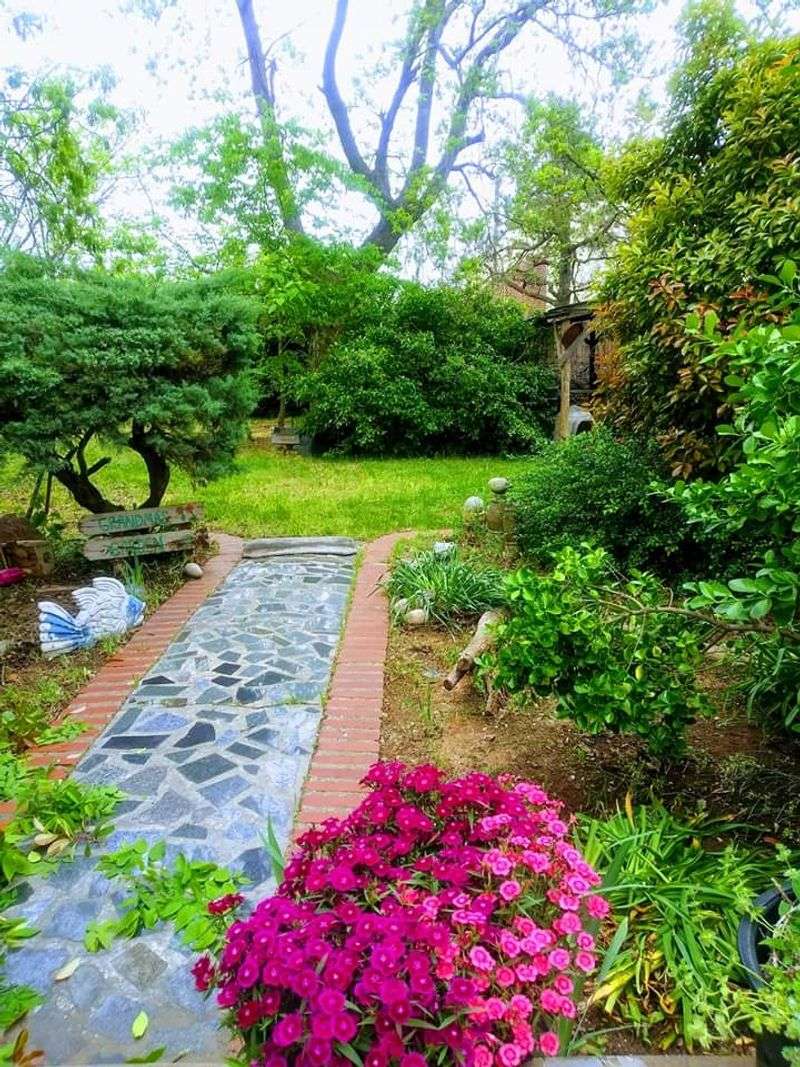
Del City is a small suburb tucked right up against the eastern edge of Oklahoma City in Oklahoma County.
It shares borders with the state capital and benefits from proximity to major employers, highways, and urban amenities.
For years that location made it an attractive, affordable alternative to living inside the city limits.
Families could get more house for their money while staying close to everything Oklahoma City offers.
That equation has shifted noticeably in recent years.
As Oklahoma City’s housing market heated up, the ripple effect pushed prices in Del City higher as well.
Property assessments rose, and with them came higher tax bills that many residents, particularly retirees and working-class families, were not financially prepared to absorb.
Del City has a population of roughly 22,000 people and a housing stock that skews toward older, smaller homes.
Many of those homes were built in the mid-20th century when the suburb grew rapidly alongside Tinker Air Force Base, which remains a major employer nearby.
The base provides economic stability, but it cannot shield residents from broader market forces.
Some longtime Del City homeowners have chosen to sell and relocate to more rural areas of Oklahoma where land and homes are cheaper.
Others have moved across state lines entirely, drawn by lower overall costs of living.
The community retains a tight-knit, working-class character that many residents genuinely cherish.
Block parties, local sports leagues, and a strong sense of neighborhood identity are real features of daily life here.
Keeping that community intact while managing rising costs is the central challenge Del City faces right now.
5. Bethany
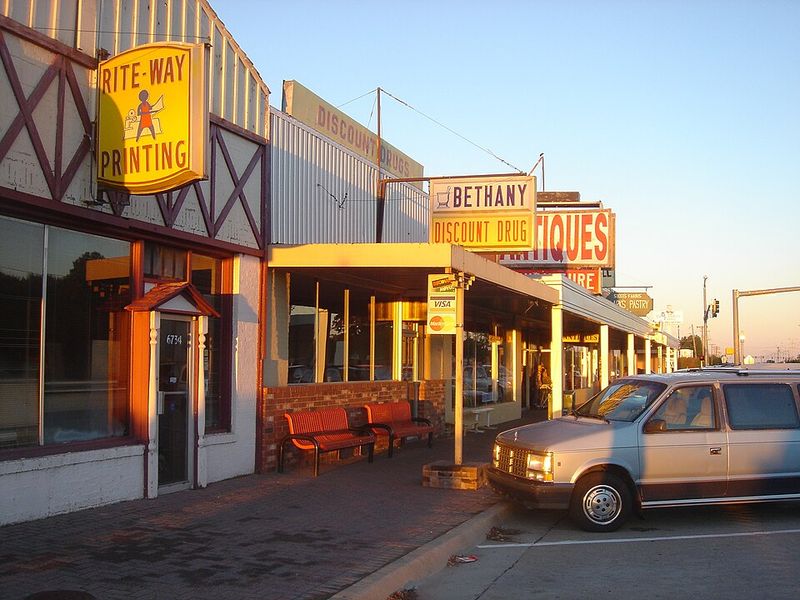
Bethany is a small, faith-rooted city in Oklahoma County, sitting just west of Oklahoma City and north of Yukon.
Founded by the Church of the Nazarene in the early 1900s, it grew around Southern Nazarene University and developed a reputation as one of the quieter, more wholesome suburbs in the metro area.
That identity attracted families who wanted a calmer environment without straying far from the city.
In recent years, though, the calm has come with an increasingly steep price tag.
Home values in Bethany have climbed steadily as the broader Oklahoma City metro became more desirable.
Property taxes have followed, and for residents on fixed incomes or modest salaries, the annual bills have become a source of real stress.
Bethany has a population of around 20,000, and the community is closely tied to the university, which shapes much of its social and cultural life.
Students, faculty, and longtime residents share a neighborhood fabric that feels genuinely distinctive.
But that fabric frays when people cannot afford to stay.
Some families who have lived in Bethany for two or three generations are now selling their homes and moving further out into Caddo County or Canadian County, where land costs significantly less.
The irony is that Bethany’s charm is precisely what drove up its value, and now that value is pricing out the very people who created the charm.
Local leaders have discussed strategies for maintaining affordability, including targeted tax relief programs for seniors and long-term residents.
Whether those efforts arrive in time to slow the outward migration remains an open question worth watching closely.
6. Woodward
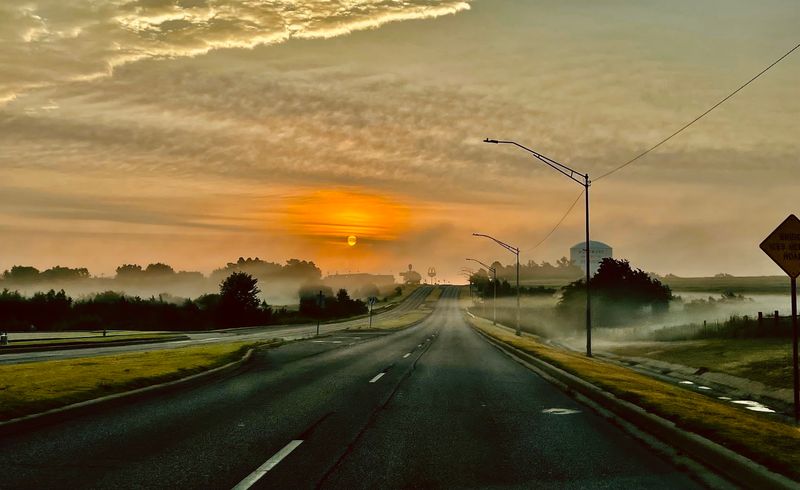
Woodward occupies a distinctive spot in northwestern Oklahoma, serving as a regional hub for a wide swath of rural communities across several counties.
It has always been a practical town, built around agriculture, energy production, and the services that support both.
For much of its history, affordability was simply assumed. Land was cheap, homes were modest, and the cost of living felt manageable for most working families.
That assumption has quietly eroded over the past decade.
Energy sector activity, particularly oil and gas exploration, brought an influx of workers and spending that pushed housing demand upward.
Home prices in Woodward rose in ways that surprised residents who had never imagined their town would feel expensive.
Property valuations followed the market, and with them came higher tax assessments that hit hardest among lower-income homeowners and retirees.
Woodward has a population of around 12,000, which makes every family that leaves a noticeable loss.
The town sits about 130 miles northwest of Oklahoma City, giving it a genuinely remote character that appeals to people who prefer wide open spaces and a slower pace.
Plains, prairies, and the North Canadian River define the surrounding landscape, offering real natural beauty to those who appreciate it.
The Little Sahara State Park nearby draws visitors from across the region and adds a layer of outdoor recreation appeal.
But scenic surroundings do not reduce a property tax bill.
Young professionals who might otherwise stay are increasingly choosing cities with more job options and, paradoxically, more housing support programs.
Woodward is working to adapt, but the timeline for meaningful change matters a great deal to the families deciding whether to stay.
7. Midwest City
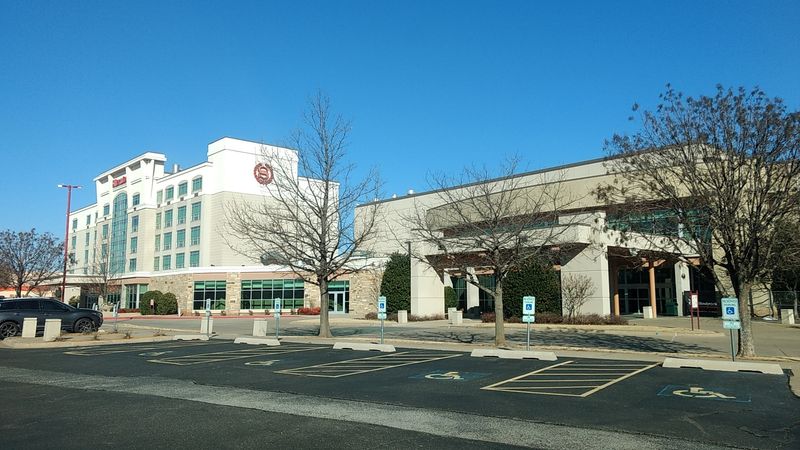
Midwest City grew up almost entirely because of Tinker Air Force Base, which was established just east of Oklahoma City during World War II.
The base needed a community nearby, and Midwest City answered that call with remarkable speed, becoming one of the fastest-growing cities in the country during the 1940s.
Decades later, that origin story still shapes the town’s identity and economy in very direct ways.
Military families, defense contractors, and federal employees make up a significant portion of the population.
That steady employment base has historically kept Midwest City economically stable, but stable does not mean immune to housing market pressures.
As Oklahoma City’s metro expanded and land values rose across Oklahoma County, Midwest City felt the effects clearly.
Home prices climbed, apartment rents increased, and property tax assessments moved upward alongside rising valuations.
Families who chose Midwest City specifically because it was affordable are now facing a different financial reality.
The city has a population of around 57,000, making it one of the larger suburbs in this list.
Its size means the impact of outmigration is spread across more people, but the trend is still visible in school enrollment numbers and housing turnover rates.
Midwest City has a handful of genuinely appealing features, including strong parks, a well-regarded community college, and easy highway access to everything Oklahoma City offers.
The Rose State College campus adds an educational anchor that benefits the whole community.
Still, when the monthly cost of staying exceeds what a household can comfortably manage, even a well-anchored community starts to see people quietly slip away toward more affordable ground.
8. Elk City
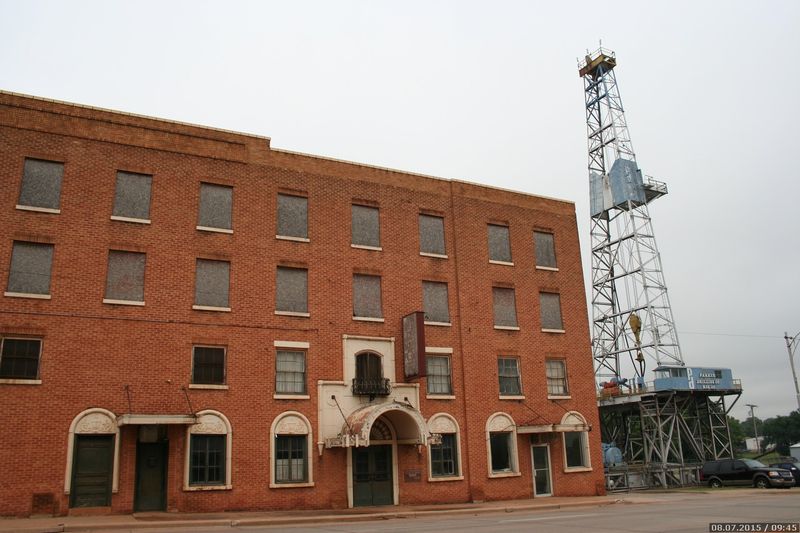
Sitting right along historic Route 66 in western Oklahoma, Elk City carries a nostalgic energy that draws road-trippers and history lovers from across the country.
The National Route 66 Museum is located here, and it gives the town a cultural anchor that sets it apart from many communities its size.
Elk City has a population of around 12,000 and serves as a commercial center for several surrounding rural counties.
The energy sector, particularly oil and natural gas, has long been the economic backbone of the area.
When energy prices rise, the local economy hums. When they fall, the effects ripple quickly through household budgets and local businesses.
That volatility has made financial planning difficult for many Elk City residents over the years.
More recently, housing costs have added another layer of pressure.
Demand for homes in western Oklahoma increased as remote work opened new options for people leaving larger cities.
That demand pushed prices up in communities like Elk City that were previously considered deeply affordable.
Property tax assessments followed market values upward, catching some homeowners off guard with bills higher than anything they had seen before.
For residents on fixed incomes, particularly retirees who have lived in Elk City for decades, those increases can feel genuinely destabilizing.
The town retains a strong sense of community pride and a welcoming small-town atmosphere that is hard to replicate anywhere else.
Local festivals, the rodeo circuit, and a tight network of longtime families give Elk City a warmth that statistics cannot fully capture.
But warmth alone cannot keep the lights on when the tax bill arrives in the mailbox.
9. Anadarko
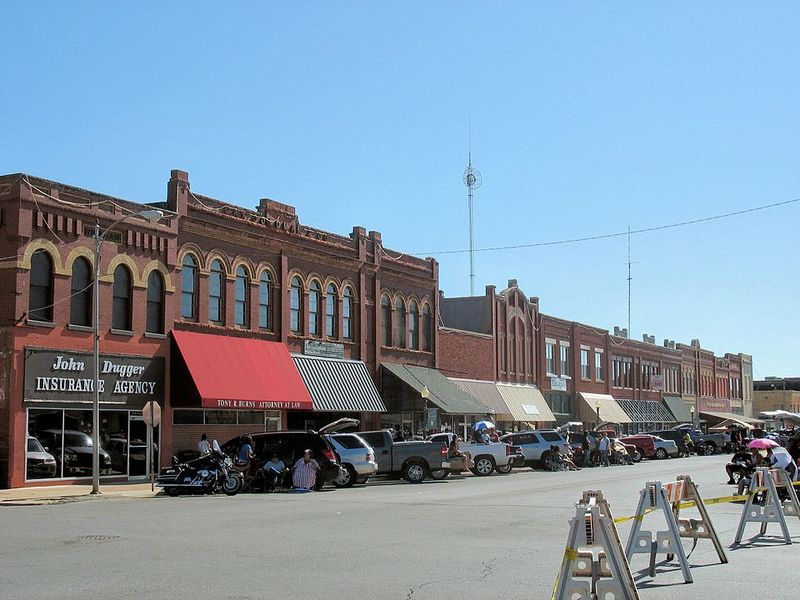
Anadarko holds a unique and deeply significant place in Oklahoma history as one of the most important centers of Native American culture in the entire country.
Located in Caddo County in southwestern Oklahoma, the city is home to multiple tribal headquarters and hosts the American Indian Exposition each summer, drawing visitors from across North America.
That cultural richness is genuine and profound, rooted in generations of Indigenous presence and tradition.
The economic picture, however, has long been complicated.
Anadarko has historically struggled with poverty rates well above state and national averages, and the housing market reflects that reality.
In recent years, a new challenge has emerged: even in a community with modest incomes, housing costs have risen enough to strain already tight budgets.
Property values have increased as outside interest in southwestern Oklahoma has grown, and tax assessments have moved accordingly.
For families already managing limited financial resources, those increases can tip a precarious situation into an unsustainable one.
Anadarko has a population of around 6,000, and every household that departs leaves a visible gap in the community fabric.
The city has a number of dedicated local organizations working to address economic development and housing stability.
Tribal governments play a significant role in that effort, providing services and support that supplement what the city itself can offer.
The surrounding landscape of rolling plains and open sky gives Anadarko a visual grandeur that feels almost cinematic on a clear day.
What the town needs most right now is not just appreciation for its beauty and history, but practical solutions that allow its people to remain rooted in the place they call home.
10. The Village

The Village is one of Oklahoma’s smallest incorporated cities, a compact residential community entirely surrounded by Oklahoma City in Oklahoma County.
It covers just a few square miles and has a population of around 9,000 people, giving it the feel of a true neighborhood rather than a sprawling suburb.
That intimacy has always been part of its appeal. Residents know their neighbors, streets feel walkable, and the community has a genuine small-town atmosphere despite sitting in the middle of a major metro area.
The housing stock in The Village skews heavily toward mid-century ranch-style homes that were built when the area first developed in the 1950s and 1960s.
Those homes have become increasingly desirable as buyers seek character and proximity to urban amenities without paying downtown prices.
That desirability has driven up property values faster than many long-term residents anticipated.
Property tax bills have climbed in step with rising assessments, and for older residents on fixed incomes, the increases have been genuinely difficult to absorb.
Some families who have lived in The Village for thirty or forty years are now seriously considering selling and moving to less expensive communities outside the metro.
The irony cuts deep: the qualities that made The Village worth staying in are the same ones that made it too expensive to stay in.
Local leaders have explored tax relief options for seniors and low-income homeowners, and some programs do exist to soften the blow.
But the broader market forces at play are bigger than any single municipality can easily counter.
The Village is a place that rewards loyalty, and right now, loyalty deserves a more affordable return.
