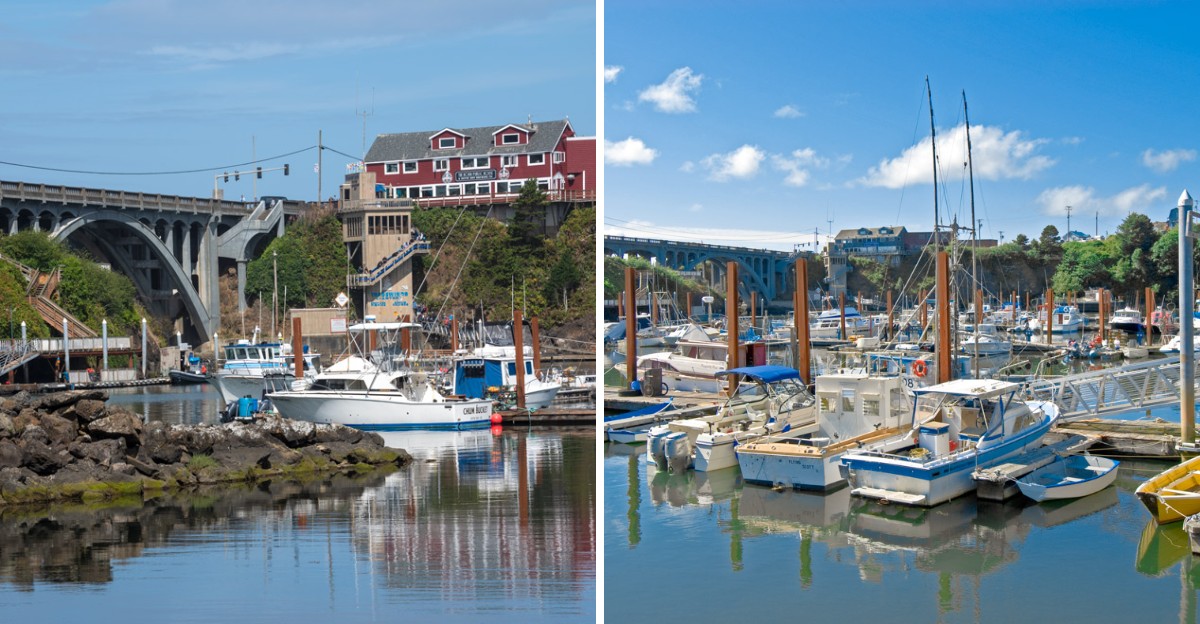
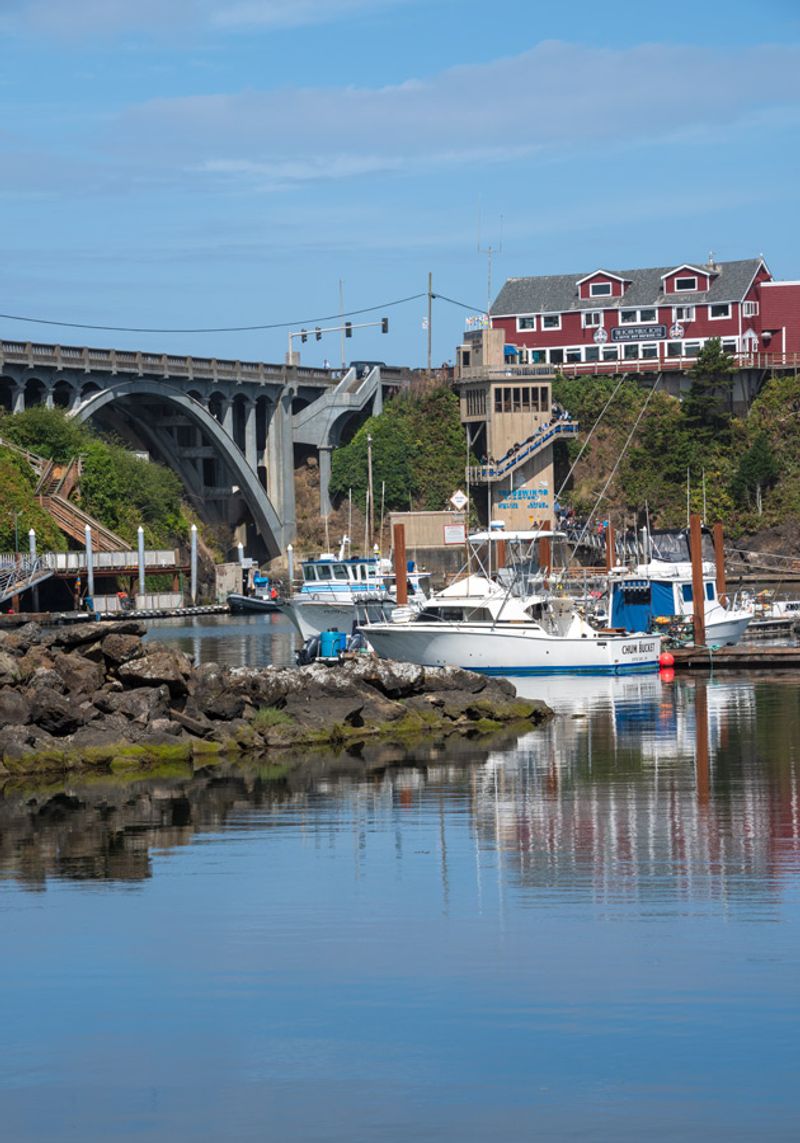
The whole harbor covers about six acres, and boats reach it through a rocky channel roughly 50 feet wide. That’s narrower than some backyard pools are long. Captains still thread fishing and whale-watching boats through it every day.
I love that this tiny spot on the Oregon coast is a real working harbor. It holds charter boats and a U.S. Coast Guard station. Boats longer than 50 feet usually need special permission and a high tide to squeeze inside.
I believe the size is only half the fun. A 1927 bridge arches right over the entrance. Waves blast through lava rock nearby and shoot spray high into the air.
So how does a harbor this small earn a world title and still draw crowds? The answer is better than the joke.
The Channel Is Skinnier Than Your Driveway Dreams
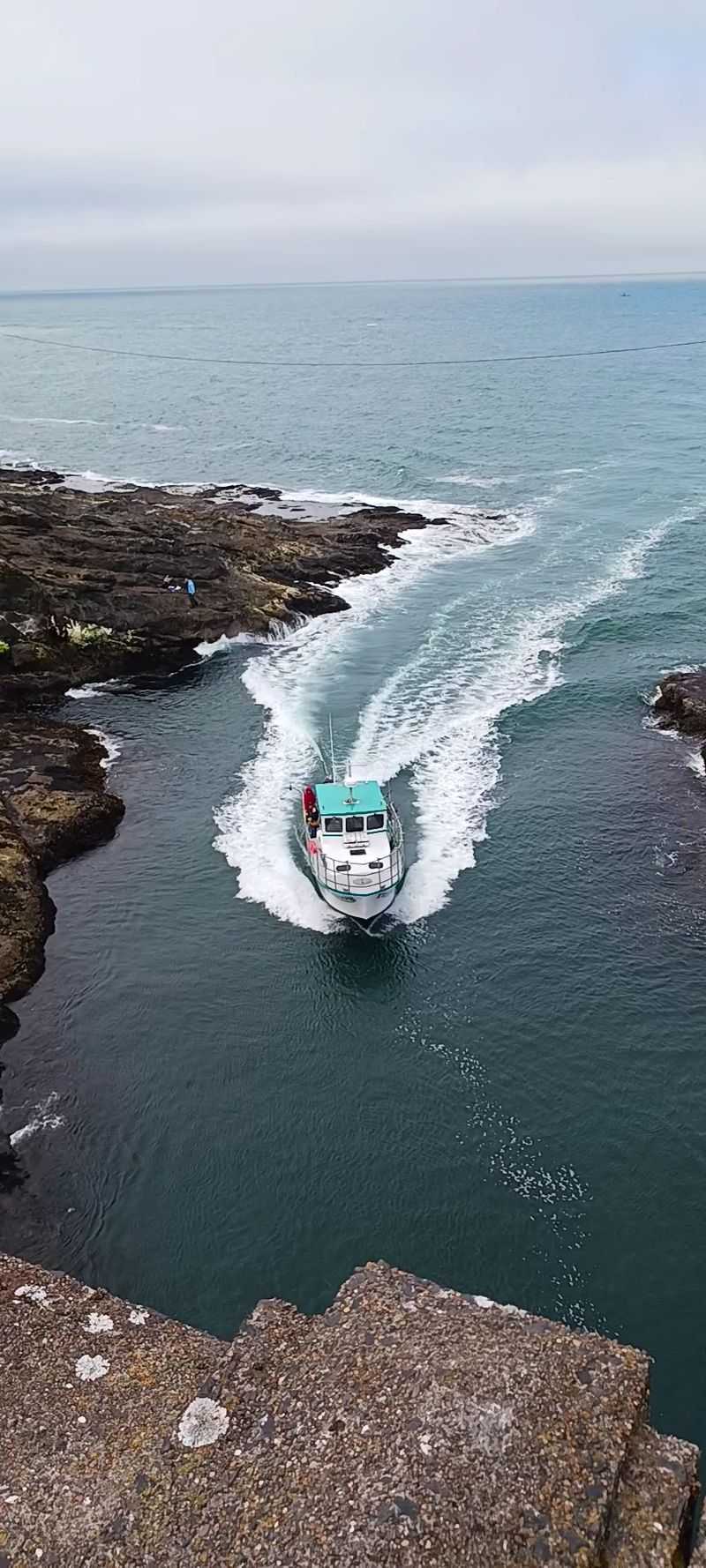
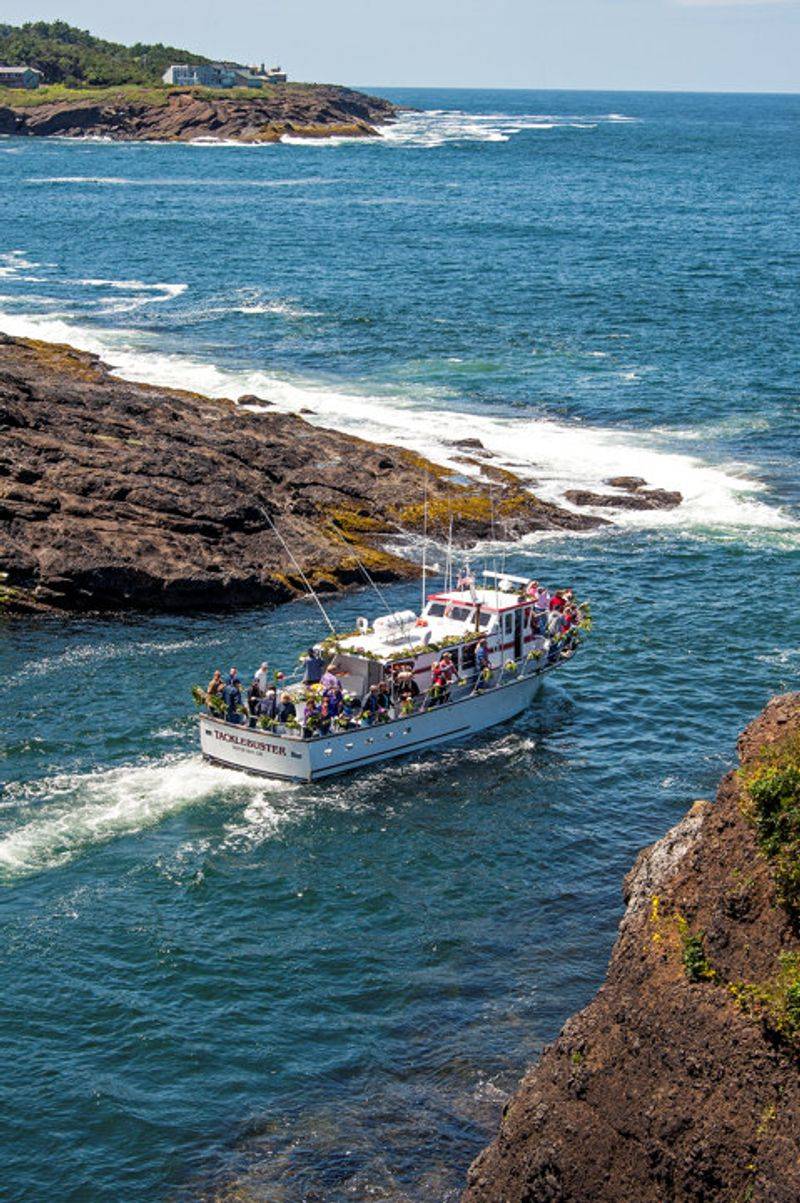
Boats don’t cruise into the World’s Smallest Harbor. They thread a needle made of rock. The channel runs about 100 feet long and roughly 50 feet wide, with a dog-leg bend in the middle.
That bend is the part that makes captains sit up straight. Ocean swells push in from the Pacific, and the rock walls leave little room for mistakes.
The opening used to be even tighter. Before later work widened it, the entrance measured just 30 feet across. Crews widened and deepened the channel in 1963 and again in 1966.
Size rules still apply today. Boats longer than 50 feet generally need a waiver from the harbormaster. They can only come in at high tide.
For visitors, this channel is the real show. Watching a boat turn that tight corner feels like a sporting event with no scoreboard. A clear spot near the bridge gives you a good look at the action.
My advice is simple. Give yourself time to wait for a boat. One passage through that rocky gap will explain the famous name better than any sign ever could.
Six Acres Somehow Holds A Whole Fleet
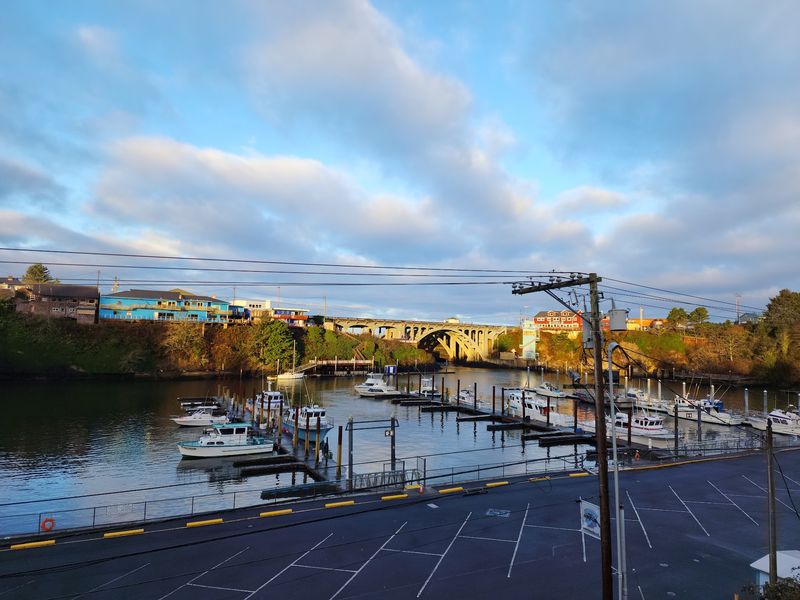
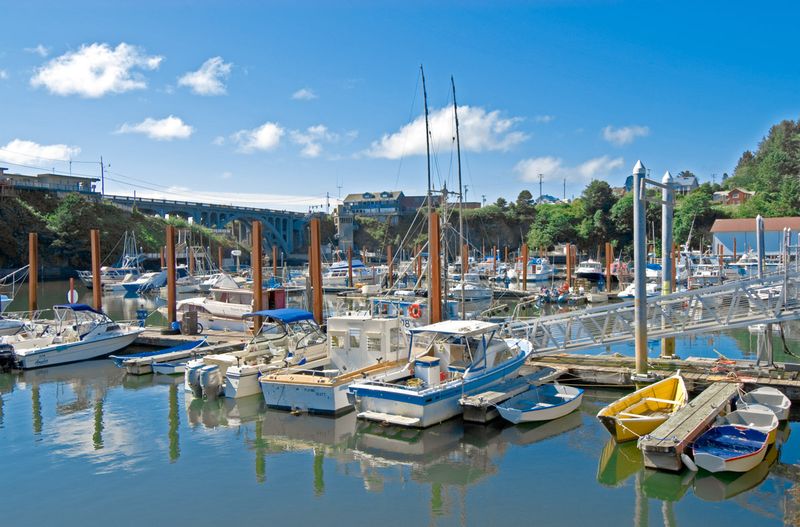
Six acres. That’s the full footprint of this harbor, and it still works for a living every single day. Charter fishing boats tie up here. Whale-watching tours launch from these docks. A U.S. Coast Guard station also calls the harbor home, which tells you this spot is serious business.
The harbor wasn’t always this roomy, if you can call it that. Congress authorized work on the inner bay in 1937. The first version, finished in 1939, measured 375 feet long, 125 feet wide, and five feet deep.
A bigger upgrade came between 1950 and 1952. It stretched the harbor to 750 feet long and 390 feet wide, with a depth of eight feet. New boat ramps and docks arrived in 1995.
Keeping it all usable takes effort. Silt builds up over time, and dredging by the U.S. Army Corps of Engineers helps keep boats moving.
When you stand at the edge, count the boats packed into that small basin. It feels a bit like a parking lot where every car floats. Somehow, it all fits together.
A 1927 Bridge Gives You The Best Seat In Town
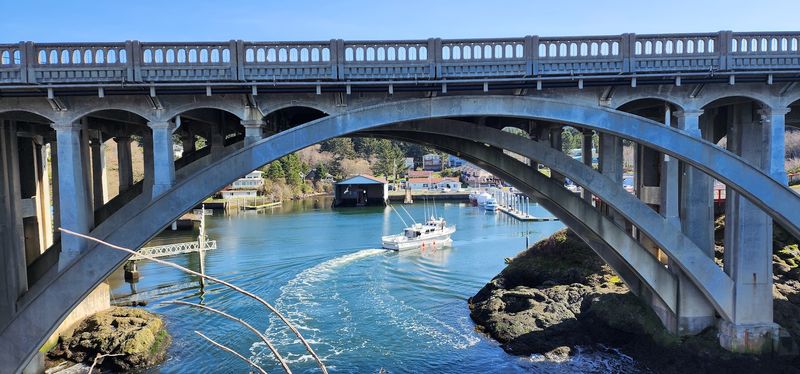
Concrete arches from 1927 still frame the harbor entrance like a doorway. The Depoe Bay Bridge sits on the National Register of Historic Places, and it earns that spot.
The bridge carries U.S. Highway 101 right over the channel. Its width is 48 feet, which is almost as wide as the channel below. That fun match says a lot about how snug this place is.
A pedestrian walkway lets you cross on foot. From there, you can look one way toward the open Pacific and the other way into the World’s Smallest Harbor. There’s also a viewing area beneath the bridge. Walking under the span puts you closer to the water and the boats.
One quick tip before you go. Bridges need care, and repair work can sometimes block views for a while. If the walkway is covered, head down below for your harbor look.
Either way, bring a camera with a little patience. A boat sliding under those old arches makes the kind of photo people stop scrolling for.
Waves Here Like To Shoot For The Sky
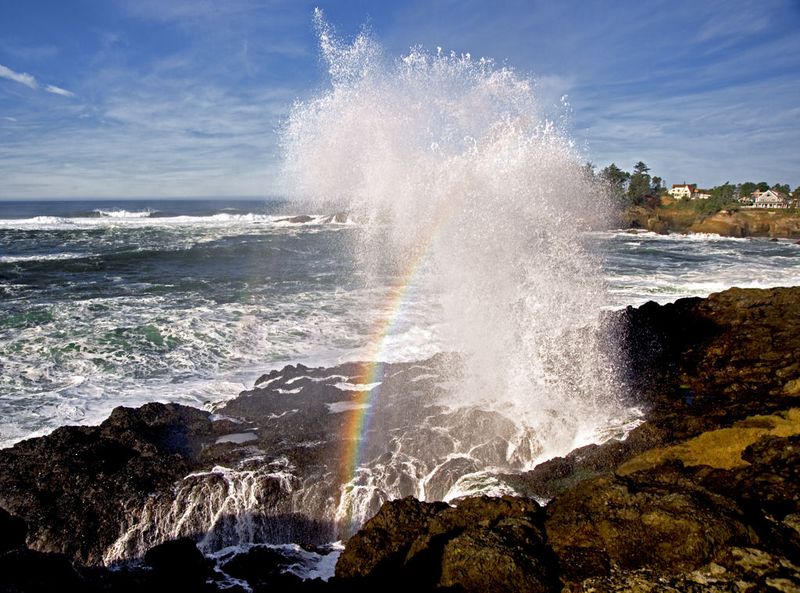
Sixty feet. That’s how high the spray from the spouting horns can climb when the tide and waves line up just right. Here’s how it works. Waves rush into cracks in old lava beds along the shore. The water gets squeezed and forced upward, bursting out like a natural geyser.
The spouting horns sit along the seawall near the harbor. So you get a tiny harbor and an ocean fountain in the same short walk. Not a bad deal.
Timing matters a lot here. Calm water may give you a small puff instead of a giant blast. Stormier days and higher tides tend to bring the bigger shows.
Stay smart near the edge. Ocean water is powerful, and slippery rocks are no place for a selfie contest. Watch from the sidewalk and let the waves do the climbing.
Kids usually go wild for this part, and honestly, adults do too. Every blast feels like the ocean showing off. You might find yourself waiting for just one more.
Your Car Might Get A Free Ocean Wash
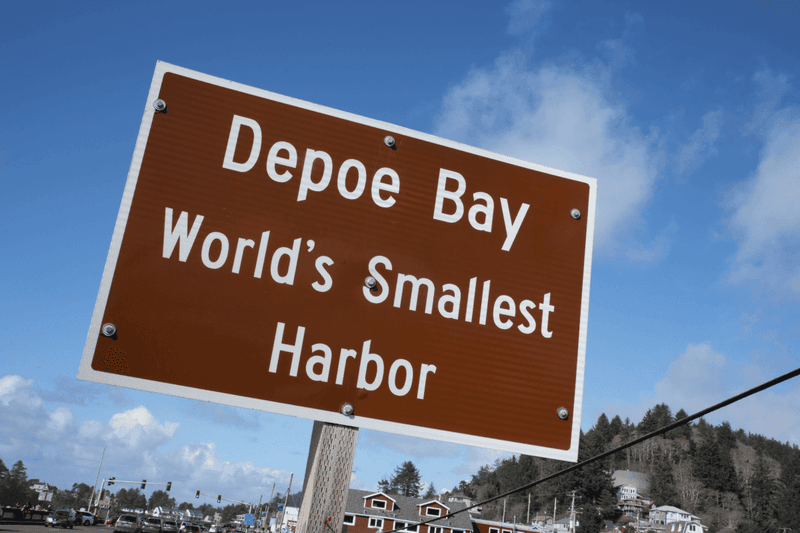
Most towns keep the ocean at a polite distance. Depoe Bay puts it right beside the main road.
A long seawall runs along downtown next to U.S. Route 101. Shops and restaurants line the street, and the open Pacific spreads out on the other side. You can browse and still keep an eye on the waves.
When high tides or storms roll in, things get exciting. Waves can slam into the wall and fling spray high enough to soak cars driving on the highway. Yes, really.
That makes the seawall a fun stop on wild-weather days. Just remember that crashing water can be strong. Keep a safe distance and hold on to your hat.
On calmer days, the seawall becomes a handy lookout. It’s a great place to scan the water for spouts and seabirds. It also offers an easy walk between the harbor and downtown.
I like how this one wall connects everything. The harbor, the town, and the ocean all sit within a few steps. Pretty efficient for a place that’s famous for being small.
Gray Whales Get Front Row Treatment
Depoe Bay calls itself the Whale Watching Capital of the Oregon Coast. For once, a big title in this town has nothing to do with being small.
A resident group of gray whales often shows up offshore from March through December. That’s a long season, so your odds are better than you might guess.
The Whale Watching Center sits close to the harbor and is staffed by Oregon State Parks. It offers binoculars and helpful information about whale migration. Hours can change with the seasons, so check before you go.
You can also try a boat tour. Several whale-watching trips leave from the World’s Smallest Harbor. That means your adventure starts by squeezing through that famous rocky channel.
Watching from land takes a bit of patience. Look for a puff of mist above the water, since that’s often the first clue. Then keep watching the same area for a back or tail.
It’s a thrill either way. Spotting a whale from shore feels like winning a quiet little prize. Seeing one from a boat feels even bigger.
Harbor Seals Treat The Place Like Their Living Room
Some of the harbor’s most popular residents never buy a ticket. Harbor seals often show up in the water here, popping their heads up like curious swimmers.
They give you another reason to slow down. Stand near the water’s edge for a few minutes and scan the surface. A round, whiskered face may appear when you least expect it.
The harbor also bustles with fishing. Charter trips head out after different kinds of fish. Crabbing is another popular activity, and it’s a fun way to try something new on the coast.
If you book a fishing or crabbing trip, ask about what to bring. Layers help, since the coast can feel cool even in summer. A rain jacket is rarely a bad idea in Oregon.
For non-anglers, simply watching the boats come and go is entertaining. Crews load gear, return with their catch, and squeeze back through the channel.
Please keep a respectful distance from any marine animals. Seals need their space to rest. Use your zoom lens instead of your feet, and everyone stays happy.
Hollywood Already Knows About This Little Spot
Jack Nicholson’s famous fishing trip scene in One Flew Over the Cuckoo’s Nest was filmed here. The 1975 movie used the harbor for that memorable boating sequence.
It came back on screen years later, too. The 2008 film The Burning Plain used the area for restaurant scenes. Not bad for a harbor you could almost miss from the highway.
The local story goes deeper than movies. The town takes its name from Charles Depoe, a Siletz man who received land here in 1894. People sometimes called him Depot Charley, and Depot slowly became Depoe.
The town was incorporated in 1927, the same year the bridge was built. In 1975, the Port of Newport handed ownership of the harbor to the City of Depoe Bay.
Honors have kept coming. In 2020, U.S. Harbors named Depoe Bay the Best Harbor in the U.S.
So when someone calls this place tiny, smile and nod. Then mention its movie career and national award. Small spots can carry a lot of history.
Plan Your Stop And Grab Some Chowder Nearby
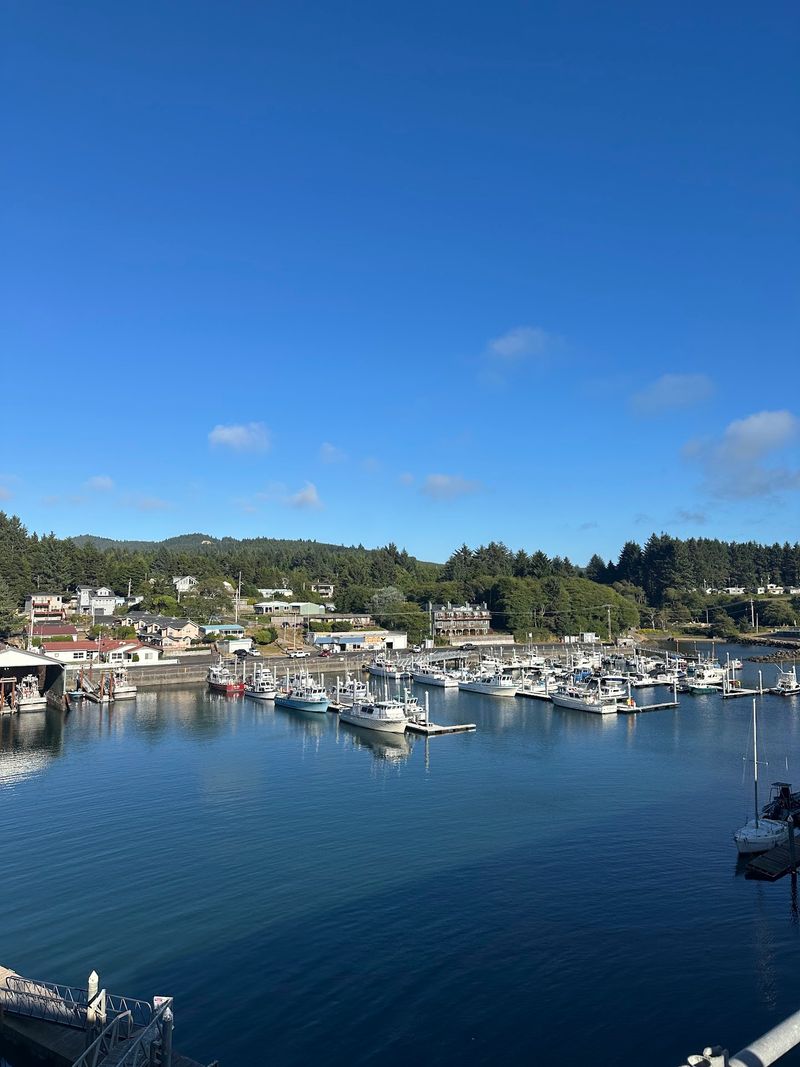
Finding it is easy once you know where to look. The World’s Smallest Harbor sits at 30 SE Bay St, Depoe Bay, OR 97341, right next to Highway 101. The harbor is open around the clock. Daylight is best for seeing boats, though, and evenings bring softer light over the water.
Hungry after all that boat watching? Downtown has plenty of seafood spots within a short walk. Gracie’s Sea Hag is known for its clam chowder, and Tidal Raves Seafood Grill sits along the coast.
Whale Bites Cafe serves breakfast and lunch. Sweet tooth calling? Ainslee’s Salt Water Taffy is a classic candy stop that kids will happily drag you toward.
Give yourself a couple of hours here. You can see the channel, cross the bridge, check the spouting horns, and still have time to eat.
Oregon’s coast loves to change its mind about weather, so pack a jacket. Then enjoy the joke of a name with a full stomach. The harbor may be small, but the memories don’t have to be.
