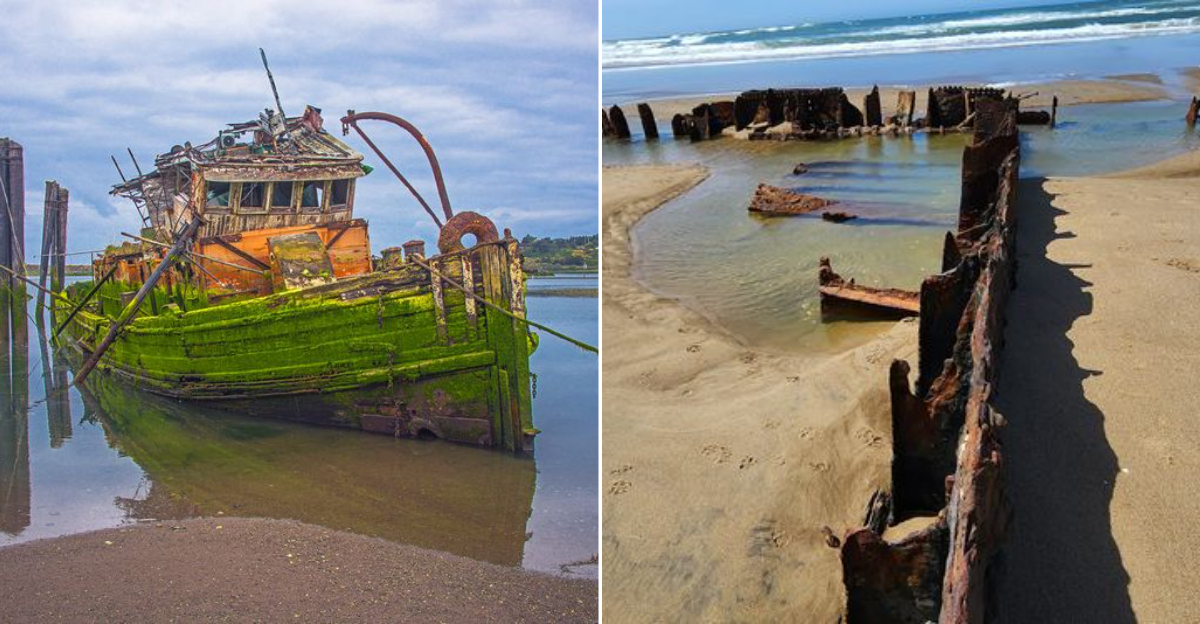
You won’t need a boat, a snorkel, or even a towel for this hunt. Scattered along the Oregon coastline, six historic ships lie half-buried in the sand, waiting to be discovered.
The trick is to check the tide chart. When the ocean pulls back, these rusting skeletons emerge, and you can walk right up to them on dry sand.
The Peter Iredale has been slowly dissolving into the beach since 1906. In Boiler Bay, the J.
Marhoffer’s massive engine block sits exposed near the rocks. The Emily Reed plays peek-a-boo, hiding beneath the sand for decades before reappearing.
The freighter New Carissa broke apart near Coos Bay, leaving a hulking piece that is still there. Even older wrecks, some from the 1800s, occasionally reveal themselves after winter storms.
No boat, no wetsuit, and definitely no swimming required. Just a pair of boots and a low tide.
Here are six Oregon shipwrecks you can walk to without getting your feet wet.
1. Peter Iredale
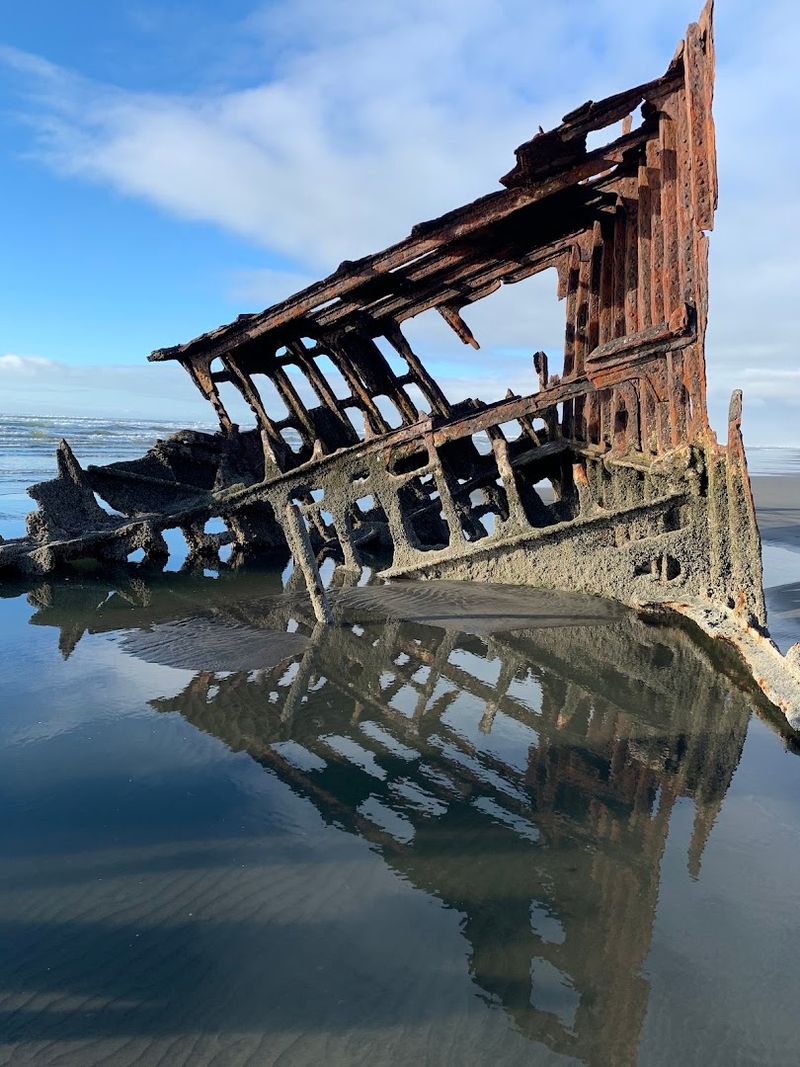
You know that feeling when a place is so iconic you expect it to feel overhyped, and then it completely wins you over anyway? That is exactly what happens with the Peter Iredale, because the rusted steel frame still looks huge, strange, and oddly graceful sitting out on the sand.
At low tide, you can walk straight across the beach to it without any scrambling, and that easy access is part of what makes it so memorable.
The spot is inside Fort Stevens State Park, and the simplest address to use is Peter Iredale Road, Hammond, Oregon, nine seven one two one. From the parking area, the wreck is right there on the beach, which means you spend less time figuring things out and more time just standing there staring at all that weathered metal.
Even with other people around, it still feels quiet in that thoughtful Oregon-coast way, with wind, gulls, and the surf doing most of the talking.
What stays with me here is the scale, because photos somehow flatten it and the real thing does not. You can circle around the exposed skeleton, notice how the light changes through the beams, and get that rare feeling of touching a piece of coastline history without much effort at all.
If you only visit one wreck on this list, this is the one I would tell you not to miss.
2. J. Marhoffer
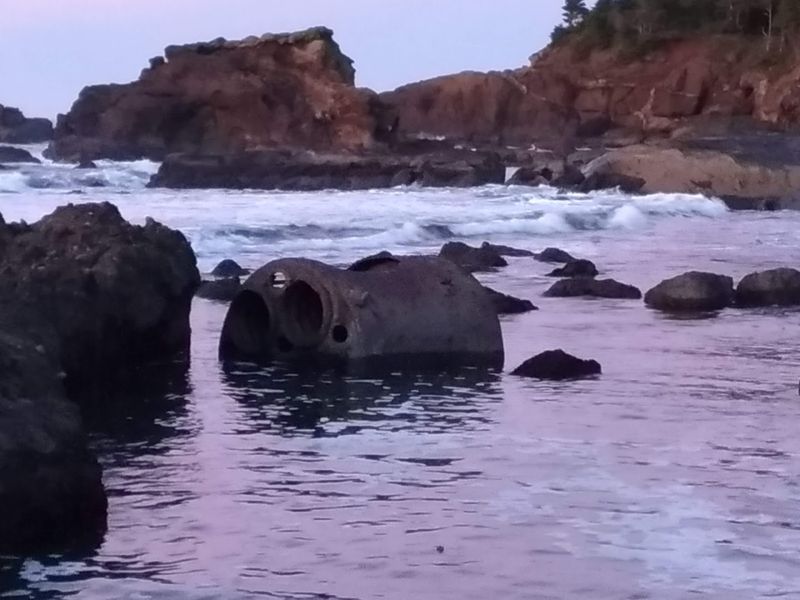
This one feels a little more like a whispered rumor than a grand shipwreck, which is honestly part of the appeal. The J.
Marhoffer is mostly remembered through its boiler, and seeing that dark metal shape sitting out among the rocks at very low tide feels eerie in the best possible way. You are not walking up to a giant skeleton here, but to a stubborn piece of one that still refuses to disappear.
The place to head for is Boiler Bay State Scenic Viewpoint at three six seven zero zero U.S. Highway one oh one, Depoe Bay, Oregon, nine seven three four one.
From the viewpoint, there is a rough path down toward the cove, and conditions matter a lot, so this is one to save for a calm day with a properly low tide. Even then, it feels more rugged than polished, which somehow makes the whole experience feel truer to the coast around it.
I like this stop because it asks you to pay attention rather than handing everything over at once. You look out, scan the shoreline, and then suddenly the boiler clicks into view and the whole bay starts making sense.
It is specific, a little spooky, and very Oregon, which is probably why people remember it long after they leave.
3. George L. Olson
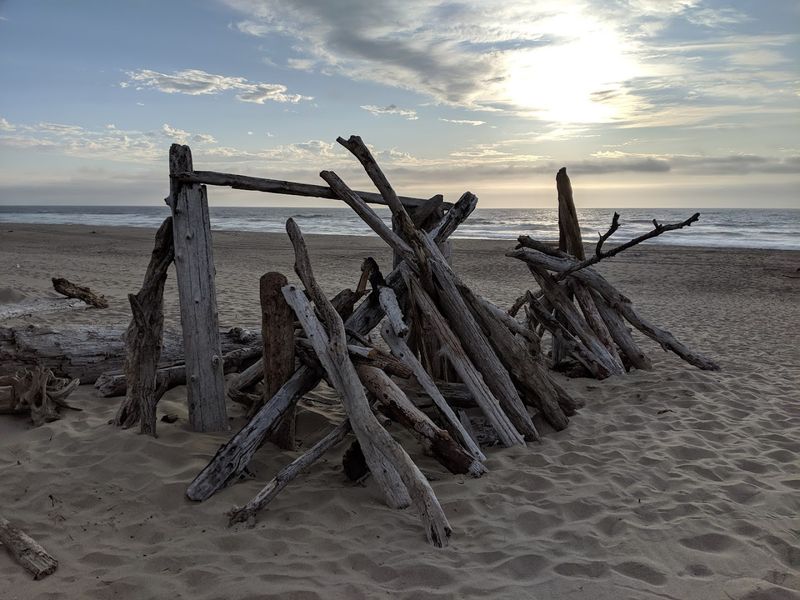
This is the kind of wreck that makes you check recent storm news before you even lace your shoes, because the George L. Olson comes and goes with the sand.
When it is uncovered, the exposed wooden remains feel raw and surprisingly delicate, especially knowing the beach can hide them again without much ceremony. That fleeting quality gives the whole walk a slightly unreal feeling, like you are arriving during a very short window.
The access most people use is around Horsfall Beach Road, North Bend, Oregon, nine seven four five nine, near the Coos Bay North Spit. Getting there can mean a long beach walk, so low tide matters, and recent erosion matters even more.
This is one of those Oregon stops where patience pays off, because the wreck is not always visible and the shoreline has a mind of its own.
When the timbers do show, they look almost rib-like in the sand, weathered down to something both sturdy and fragile. I think that is what makes this one stick in your head, because it does not feel staged or preserved for visitors.
It feels borrowed from the coast for a little while, and if you catch it at the right moment, the reward feels very personal.
4. Bella
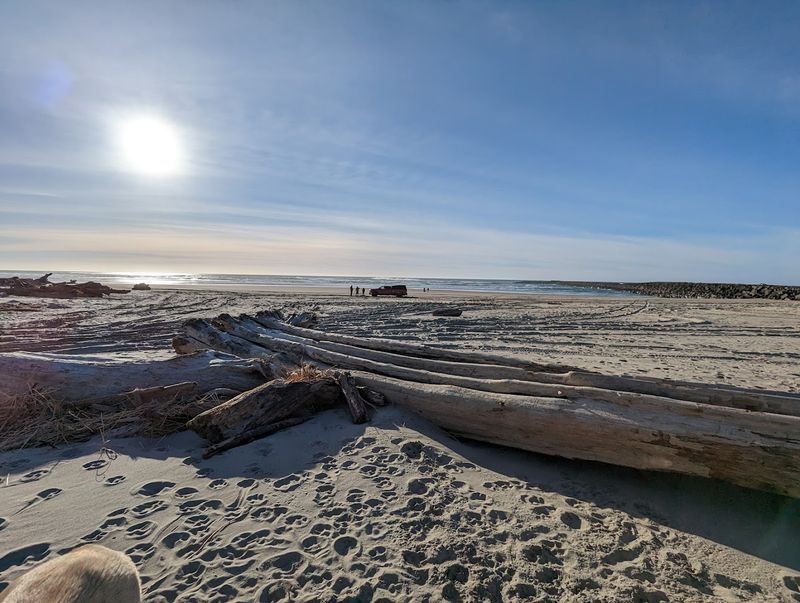
I have always liked the wrecks that almost seem embarrassed to be seen, and the Bella has that vanishing, half-remembered personality. Its hull can emerge from the sand during very low tides, but it never has the dramatic look of a giant steel wreck, so you have to meet it on its own quieter terms.
That softer reveal actually makes it more interesting, because the beach seems to decide how much of the story you get.
If you are heading out near Florence, the easiest reference point is South Jetty Road, Florence, Oregon, nine seven four three nine, with the wreck area lying south of the Siuslaw River jetties. This stretch can feel broad and empty in a really beautiful way, and the walk itself is part of the experience.
You are looking for subtle lines and shapes in the sand rather than something that announces itself from far away.
What makes the Bella memorable is how temporary it feels, even when you are standing right beside it. The exposed wood and hull shape seem to hover between object and landscape, like the beach is trying to turn the ship into drift and dune at the same time.
If you like places that reward close looking instead of big spectacle, this one really lands.
5. New Carissa
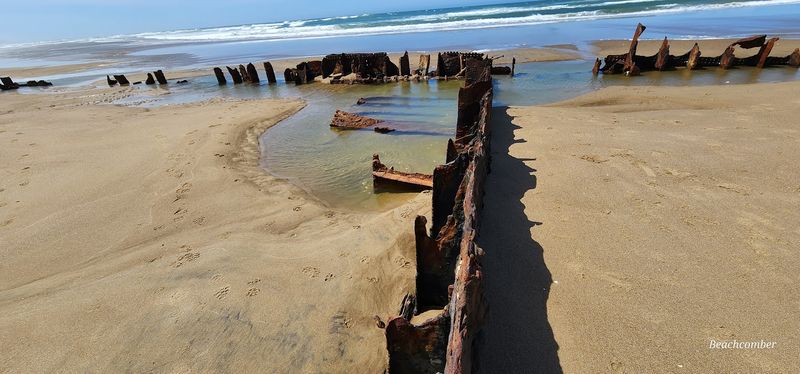
If you want a wreck that feels huge, immediate, and a little uncanny because it is so much more recent than the others, the New Carissa is the one. Its stern section remains partly buried near Horsfall Beach, and at low tide you can walk right up to the exposed structure and peer toward the engine room area.
There is something especially strange about seeing a modern freighter being slowly absorbed into a beach landscape.
The access point people usually use is along Horsfall Beach Road, North Bend, Oregon, nine seven four five nine, near Coos Bay. Compared with some of the more elusive wrecks on this list, this one is refreshingly straightforward once you are in the right area.
The sand is open, the remains are large, and the whole setting makes the scale easy to appreciate without much guesswork.
What stays with me here is the contrast between industry and shoreline, because the metal still looks heavy and mechanical while the dunes around it feel soft and patient. You can stand beside it and sense the beach gradually taking over, one season at a time.
If you are curious about a shipwreck that feels less romantic and more starkly real, this Oregon stop is hard to shake.
6. Mary D. Hume
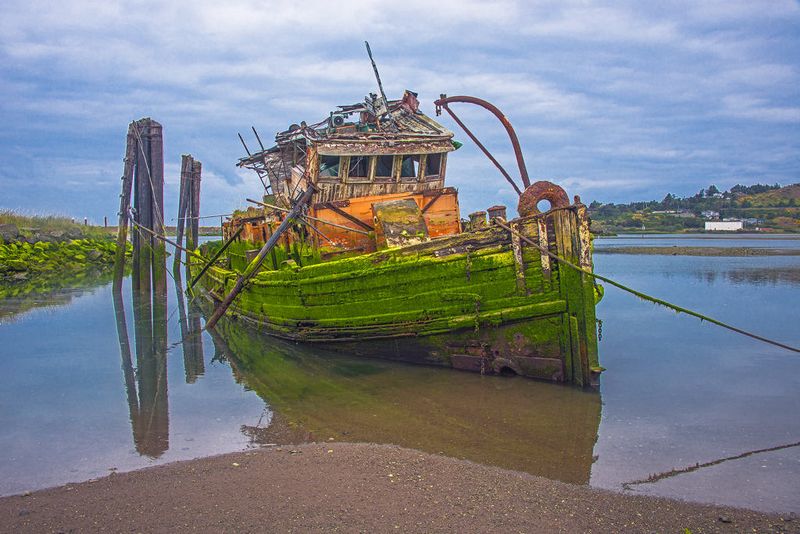
Not every shipwreck on this list sits out in pounding surf, and that change of mood is exactly why the Mary D. Hume feels so interesting.
Resting along the Rogue River in Gold Beach, it has this collapsed, mossy, quietly stubborn presence that looks almost woven into the waterfront now. At low tide, much more of the hull shows itself, and you can walk around it without getting your feet wet if the ground is firm.
The easiest address to use is around Harbor Way, Gold Beach, Oregon, nine seven four four four, near the harborfront on the south bank of the river. Instead of a wild beach approach, you get a more settled riverside setting, which gives the wreck a different emotional weight.
It feels less like a dramatic discovery and more like a weathered old neighbor that has seen every version of the town.
I really like ending with this one because it proves shipwrecks do not all have to be spectacular in the same way. The Mary D.
Hume is striking because of texture, shape, and that deep green aging that makes it look almost alive in the damp air. If you are driving the southern Oregon coast, it is an easy and genuinely memorable stop that lingers with you.
