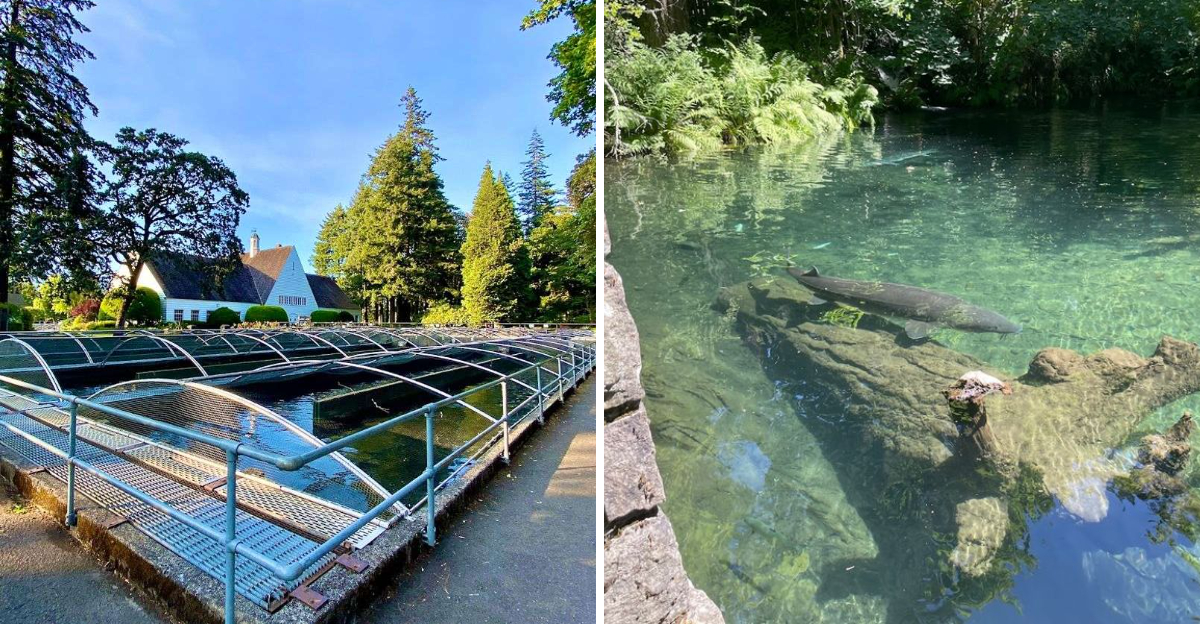
Over a million people visit a fish hatchery every single year. That sounds fake until you actually go there and understand the hype.
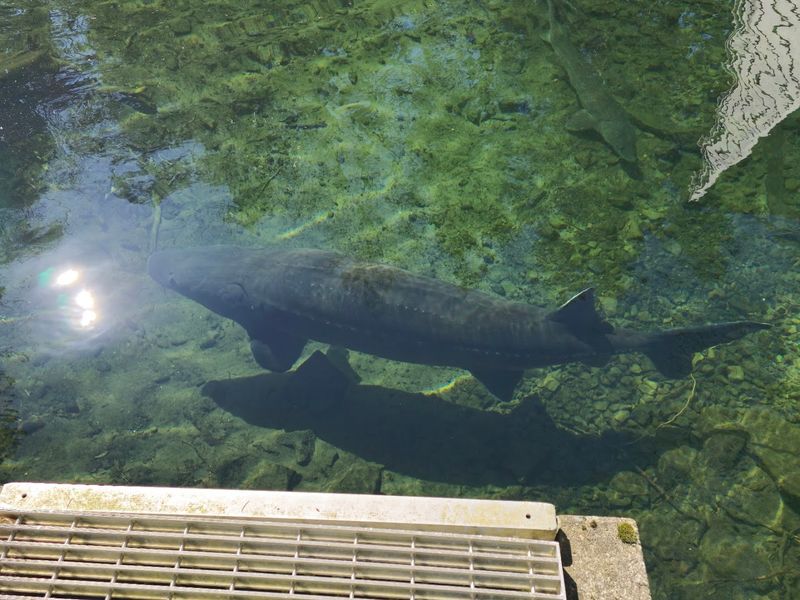
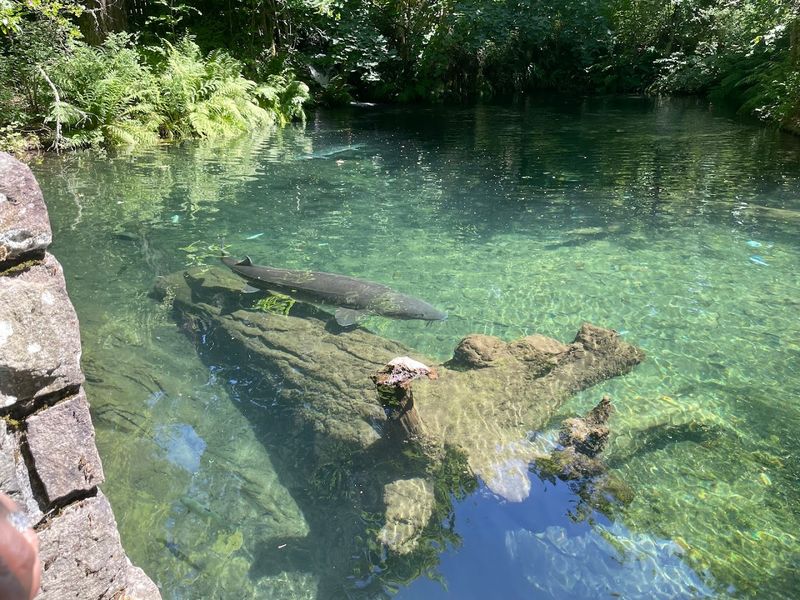
This Oregon fish hatchery is the largest and most famous in the state and it turns out watching fish leap up ladders is strangely mesmerizing. You walk along wooden pathways while massive sturgeon glide beneath your feet like gentle underwater dinosaurs.
The main attraction is Herman the Sturgeon, a giant old fish who has been here for decades and weighs more than most adults. Kids press their faces against the railing trying to spot him.
Adults do the same thing but pretend they are not as excited. Salmon race through the viewing windows during migration season and you can watch them rest before continuing upstream.
The setting itself is beautiful with forested hills and river views that make you forget you are at a working hatchery. Oregon built something educational that somehow became a beloved roadside attraction.
No fancy rides or gift shop gimmicks needed. Just fish doing fish things while humans stand around smiling.
Pack a picnic and make it a full morning.
Herman the Sturgeon, The Star of the Show
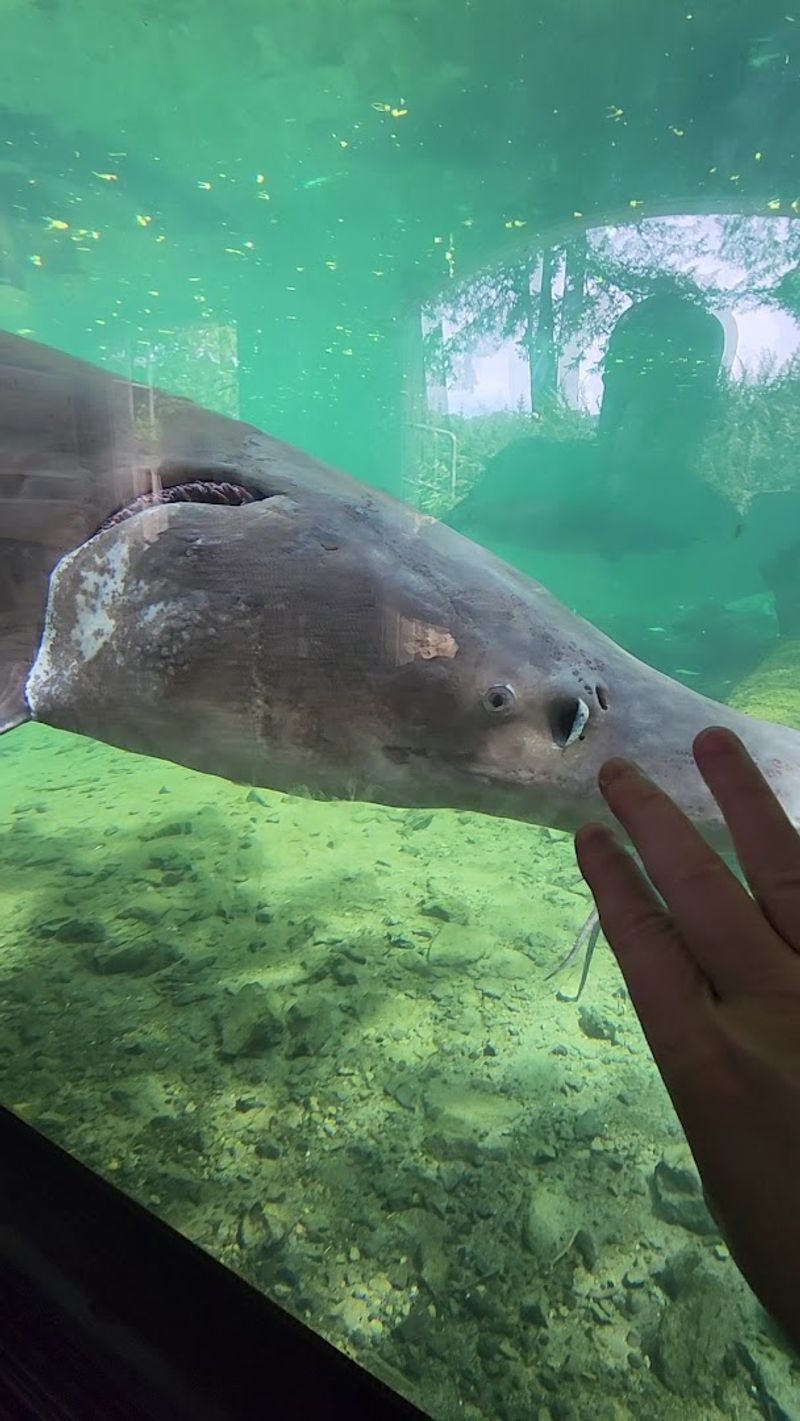
Nobody warns you about how enormous Herman actually is. Standing at the viewing tank, your brain takes a second to process what your eyes are seeing.
This white sturgeon is well over ten feet long and has been living at Bonneville Fish Hatchery for decades.
Herman has become the undisputed celebrity of the hatchery. Visitors plan entire road trips around saying hello to him.
The underwater viewing window is where things get truly wild. He glides right up to the glass, close enough that you can see every detail of his prehistoric-looking face.
White sturgeon are ancient fish, they have barely changed in millions of years. Bring the kids close to the window.
Their reactions alone are worth the stop. Herman moves slowly, almost lazily, but there is something magnetic about watching a creature that massive exist so calmly in the water.
The Self-Guided Walking Tour Along Fish Print Paths
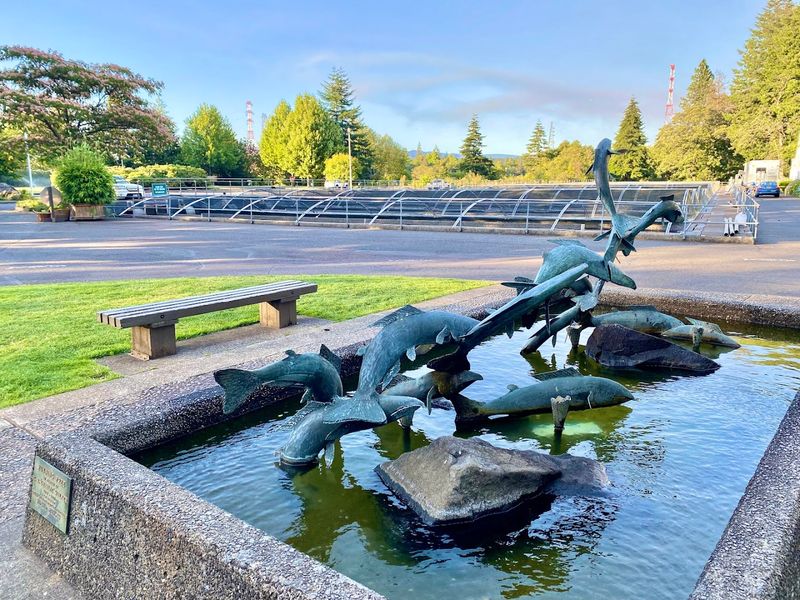
Small fish prints painted right on the pavement guide you through the entire hatchery. It is a surprisingly clever system.
You just follow the prints, and the whole property unfolds naturally in front of you.
The trail covers about a mile of well-maintained, paved paths. Everything is accessible for wheelchairs and strollers, which makes this a genuinely easy outing for all ages.
Along the way, signs explain what each pond contains and why that particular stage of fish development matters.
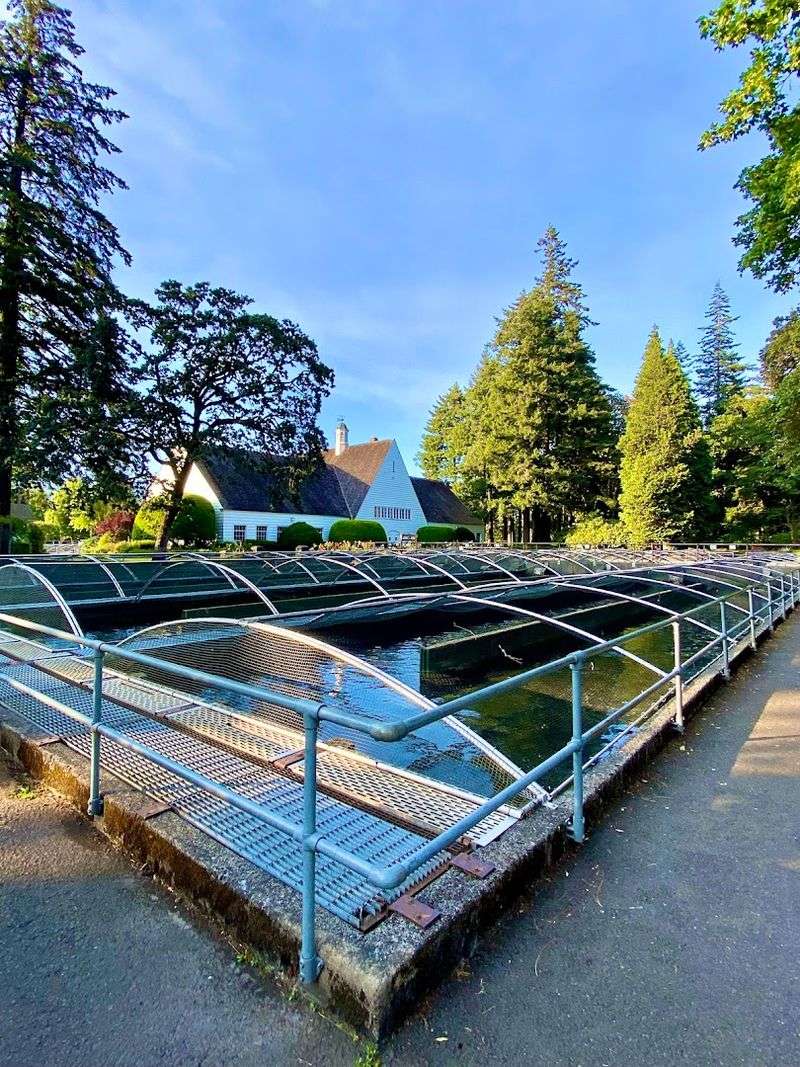
The route takes you past nursery tanks holding tiny fry, through gardens bursting with roses and ornamental plants, and eventually to the massive sturgeon viewing area. The landscaping here is seriously impressive.
Whoever manages the grounds has a real artistic eye. Tall cypress trees line certain sections, flowerbeds add pops of color, and little seating nooks invite you to slow down and just watch the water.
It never feels rushed. The pace is yours, and that makes the whole experience feel genuinely relaxing rather than obligatory.
Feeding the Rainbow Trout with Quarters
Pack quarters. Seriously, bring more than you think you need.
The coin-operated fish food machines at Bonneville are one of those small, joyful experiences that somehow never gets old no matter how many times you do it.
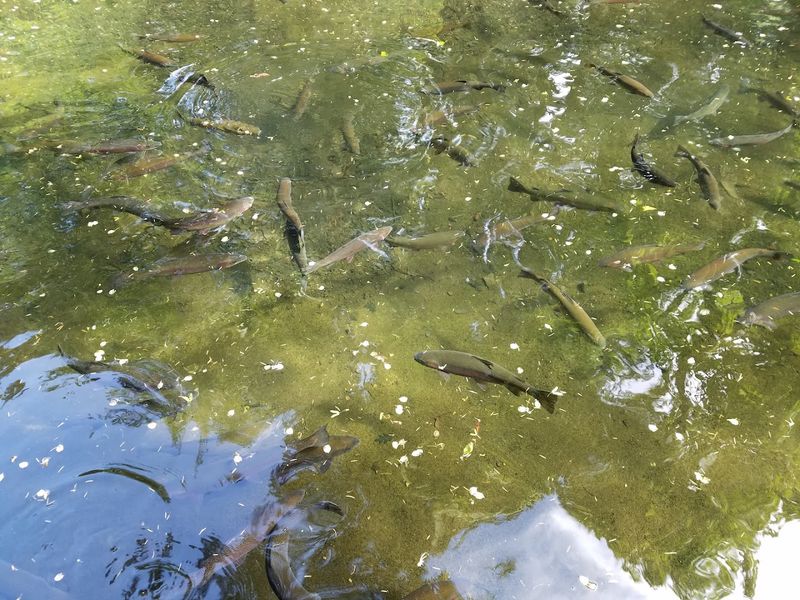
Drop a quarter in, grab a handful of pellets, and toss them toward the trout pond. What happens next is pure chaos in the best possible way.
Dozens of rainbow trout surge to the surface, dorsal fins cutting the water, mouths snapping up every pellet before it can sink. The splashing is immediate and dramatic.
A smart tip from seasoned visitors: bring a small cup to hold your pellets. It makes throwing more controlled and way less messy for little hands.
Ducks have also figured out the feeding situation and will absolutely position themselves nearby hoping for a share. The trout feeding pond is one of those spots where time disappears.
Adults get just as hooked as the kids, and that is honestly part of the charm.
Watching Salmon Return During Spawning Season
Timing a visit for September through November unlocks something truly spectacular. That is when the spawning salmon return, and the energy around the hatchery shifts completely.
The water seems alive in a way that is hard to describe until you see it firsthand.
Salmon push upstream with remarkable determination. Watching them leap and surge through the channels is one of those natural moments that stops conversation mid-sentence.
You just stand there, watching, not quite believing what you are seeing. The hatchery staff manage the spawn area carefully, and visitors can access viewing sections to observe the process up close.
The fish ladder access point near the hatchery also connects to the Bonneville Dam visitor center. Turning left at the entrance leads to the hatchery ponds, while turning right takes you toward the fish ladder where salmon and even lampreys pass through.
Seeing both in one visit gives you a much fuller picture of how Pacific salmon populations are monitored, supported, and sustained along the Columbia River each year.
The Nursery Tanks, Where Baby Fish Begin
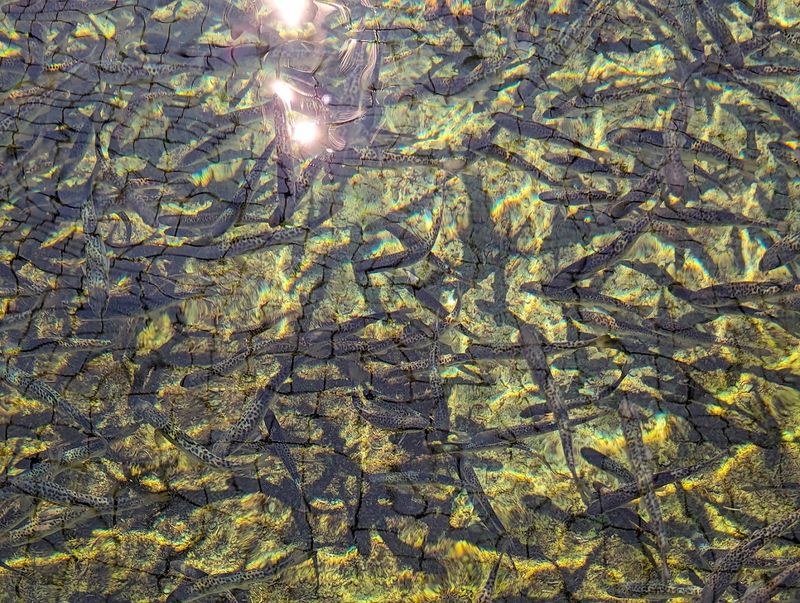
There is something oddly moving about watching a fish that is barely the size of your thumbnail. The nursery section of Bonneville holds thousands of fry at various early stages of development, and it puts the whole hatchery mission into perspective quickly.
These tiny fish will eventually be released into the Columbia River system. The hatchery raises Chinook salmon, coho salmon, and steelhead trout, all species that face serious pressure from habitat changes and historic overfishing.
Seeing the scale of this operation makes you appreciate how much effort goes into keeping these populations viable.
Staff members can often be found working near the nursery tanks during morning hours. Watching them feed the fry is oddly meditative.
The fish respond instantly and collectively, creating rippling patterns across the water surface. Signs throughout the nursery area explain each species and growth stage in clear, approachable language.
Even younger visitors can follow along easily. This section tends to be quieter than the sturgeon area, which gives it a calmer, more contemplative atmosphere worth lingering in.
The Beautifully Landscaped Grounds and Gardens
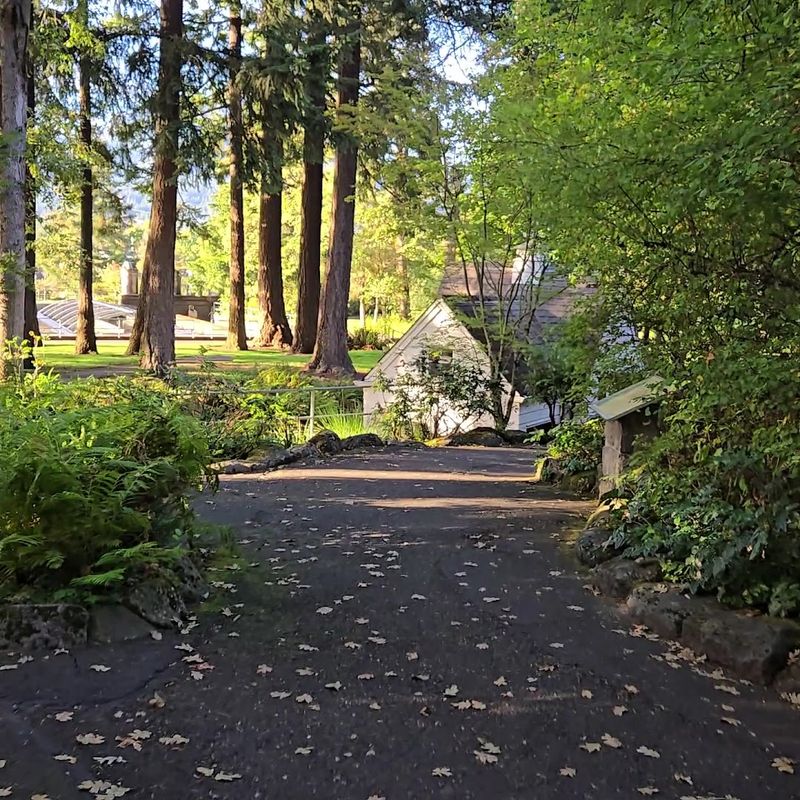
Honestly, the gardens here could justify a visit entirely on their own. The grounds at Bonneville look like they belong in a Pacific Northwest lifestyle magazine.
Roses climb trellises, ornamental grasses sway near the ponds, and towering Lawson Cypress trees create dramatic vertical accents throughout the property.
The landscaping feels intentional in every corner. Whoever maintains these grounds clearly brings both skill and genuine care to the work.
Seating nooks are tucked along the paths, offering places to sit, breathe, and take in the surroundings without feeling like you are blocking foot traffic.
Picnic tables are scattered across the property, making this an ideal spot for a packed lunch between fish viewings. The combination of cultivated gardens and working fish infrastructure creates a surprisingly pleasing visual contrast.
It softens what could otherwise feel industrial. Several visitors have noted it feels more like a garden with fish than a hatchery with plants, and after spending time wandering the grounds yourself, that description starts to feel exactly right.
The Gift Shop and Coffee Stop
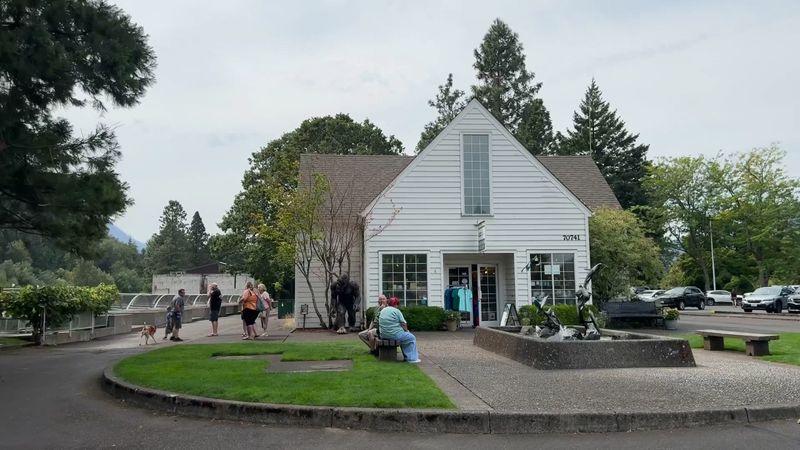
The gift shop at Bonneville is genuinely fun to browse. It is compact but well-stocked, with a range of items that lean into the hatchery’s identity.
Fish-themed gifts, hatchery merchandise, nature books, and novelty items fill the shelves, and there is even a coffee counter tucked inside for those who need a warm drink mid-visit.
Rocky Road fudge has been mentioned by more than one visitor as a highlight. Small treats like that make a gift shop memorable rather than just obligatory.
Revenue from purchases goes directly back into supporting the hatchery’s operations, which gives every transaction a satisfying sense of purpose.
A Sasquatch statue outside the shop has become a surprisingly popular photo opportunity. Visitors of all ages seem delighted by it, which says something about the overall playful spirit of the place.
The shop is not enormous, and the aisles run a bit narrow, but the selection is thoughtful. It is the kind of stop where you walk in planning to grab one thing and leave carrying a small bag of memories instead.
Connecting to the Bonneville Dam Fish Ladder
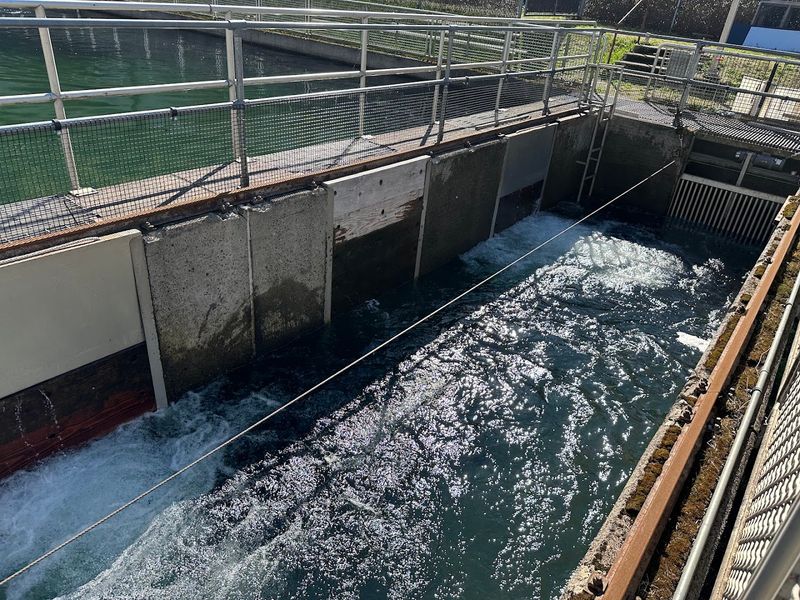
Most visitors do not realize the Bonneville Dam fish ladder is accessible right through the hatchery property. Turning right at the entrance sends you toward one of the most fascinating engineering achievements in Pacific Northwest history.
The fish ladder helps salmon bypass the dam entirely during their upstream migration.
The dam visitor center has its own underwater viewing windows where you can watch salmon and steelhead moving through the ladder in real time. During peak migration periods, the activity is nonstop.
Fish stack up in the passage, pushing forward with single-minded intensity. It is humbling and a little bit thrilling to watch.
Lampreys also use the fish ladder, which surprises most people. They are ancient, eel-like creatures that cling to rocks and walls as they travel upstream.
Seeing one in person is a memorable moment. Combining the hatchery visit with a walk to the dam fish ladder turns a casual afternoon outing into a genuinely educational experience about river ecology, dam management, and salmon conservation along the Columbia River corridor.
A Free Visit That Feels Like It Should Cost Something
Admission is completely free. No tickets, no timed entries, no parking fees.
You just pull in, park, and start exploring. For a destination this well-maintained and this engaging, free feels almost shocking at first.
The hatchery is operated by the Oregon Department of Fish and Wildlife, funded partly through fishing licenses and conservation programs. That context makes the whole place feel different.
It exists because people who care about Oregon’s rivers and fish populations made it a priority. Visiting feels like participating in something larger than a typical tourist attraction.
Hours run daily from 7:30 AM to 4:30 PM, which gives morning visitors a peaceful head start before crowds build up. The grounds stay genuinely clean and well-staffed.
Restroom facilities are available on-site, though a few visitors have noted they can get busy during peak weekend hours. Overall, the value here is extraordinary.
Spending a half day at a place this beautiful and educational, at zero cost, is the kind of discovery that makes you want to tell everyone you know about it immediately.
Why Over a Million People Visit Each Year
A million annual visitors is not an accident. It reflects something genuine about what Bonneville Fish Hatchery offers.
The combination of wildlife, education, natural beauty, accessibility, and zero cost creates a destination that works for nearly every kind of traveler.
Families with young kids find it endlessly entertaining. Outdoor enthusiasts use it as a launchpad for exploring the Columbia River Gorge.
History buffs connect it to the broader story of Bonneville Dam and the New Deal era infrastructure that shaped the Pacific Northwest. Dog owners bring their pets along the paved paths.
The hatchery also sits within easy driving distance of several Columbia River Gorge waterfalls, making it a natural addition to any waterfall hiking day. The staff clearly take pride in the place, and that pride shows in every manicured flower bed and clean viewing window.
Address: Bonneville Fish Hatchery, 70543 NE Herman Loop, Cascade Locks, OR 97014.
