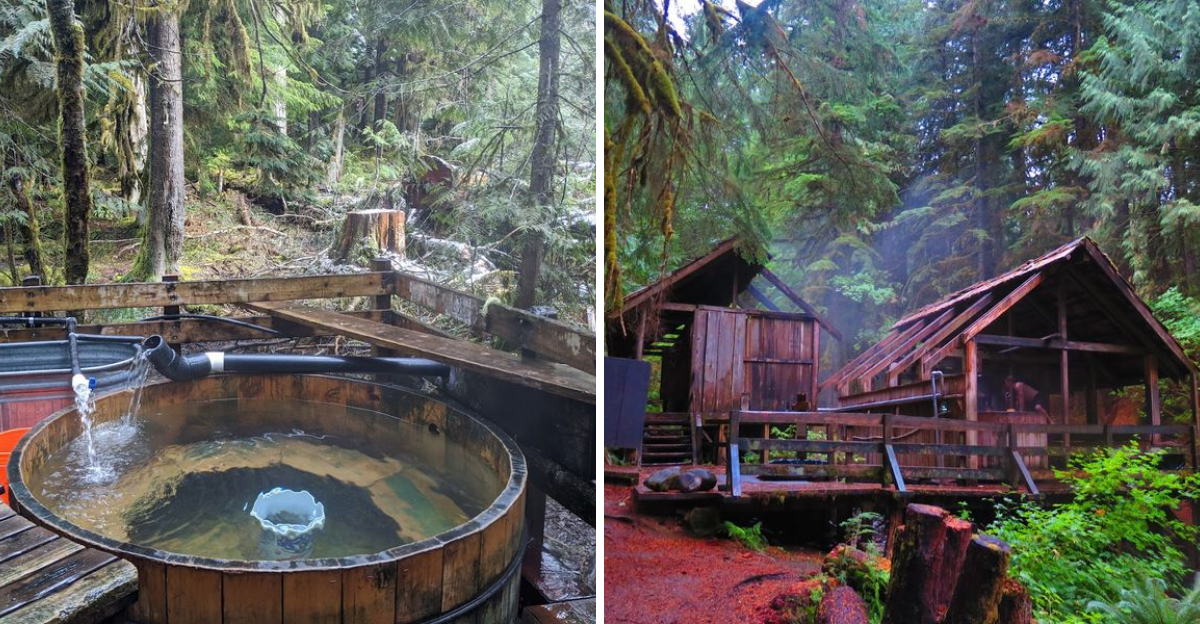
Ten thousand years of people soaking in these same hot waters. Let that number sink in for a moment honestly.
Native Americans found this place long before pyramids existed anywhere. I sat there imagining all the stories those rocks could tell me.
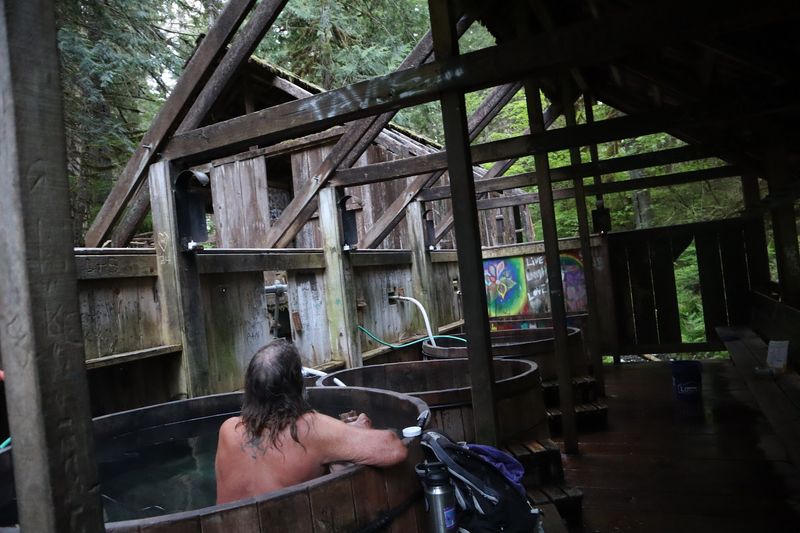
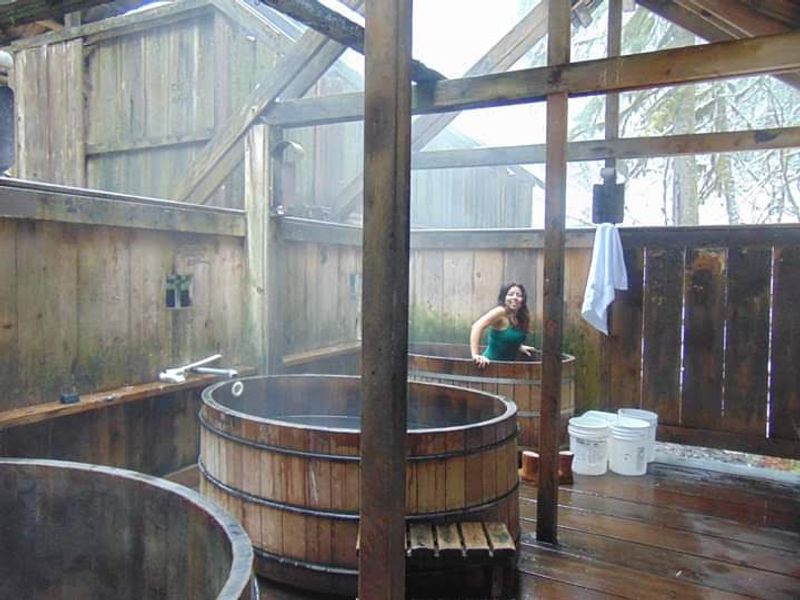
The water bubbles up from deep underground at perfect temperatures always. Wooden troughs funnel the hot springs into handmade soaking tubs today.
My skin felt brand new after just twenty minutes in there. Moss hangs from every surface like green curtains blowing gently.
No fancy spa music or cucumber water nonsense found here at all. Just ancient water doing what it has done forever basically.
A Living Piece of Native American History
Long before any trail was blazed through Mount Hood National Forest, Indigenous peoples were already here. Archaeological evidence suggests humans have visited Bagby Hot Springs for around 10,000 years.
That is not a small number to sit with.
Native American communities used these thermal waters for healing, ceremony, and rest. The springs were not just a comfort stop.
They held cultural and spiritual meaning that stretched across generations.
Standing near the source today, you can feel the weight of that history underfoot. The forest has not changed much.
The water still rises from the earth at the same scorching temperature it always has.
That continuity is rare. Most places this old have been paved over or fenced off.
Bagby survived because of its remoteness and the people who fought to protect it.
Visiting with that knowledge changes how the soak feels. You are not just relaxing.
You are participating in something ancient, something that connects you to thousands of years of human experience in this exact spot.
The Forest Trail That Earns the Reward
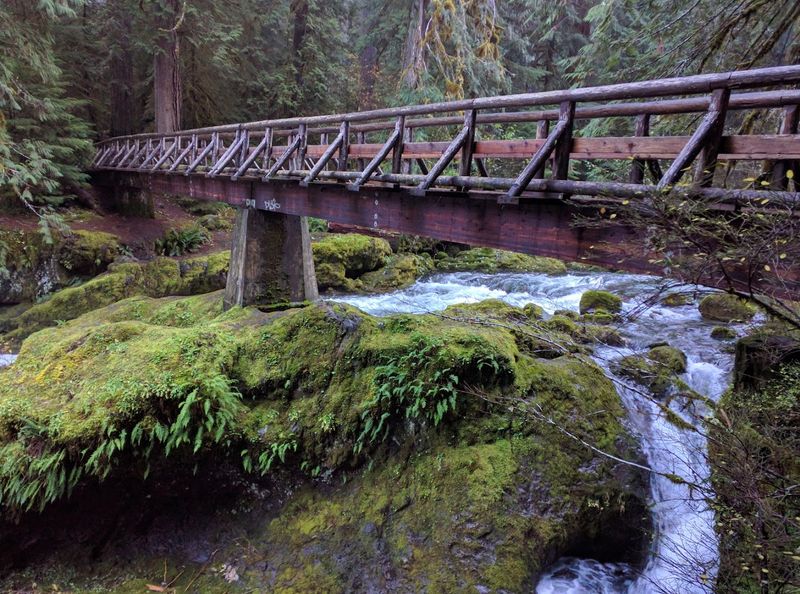
The trail to Bagby is about 1.5 miles one way, and every single step is worth it. Right from the trailhead, the path pulls you into a forest that feels ancient and untouched.
Massive Douglas firs and western red cedars line the route.
The trail follows the Hot Springs Fork of the Collawash River for much of the way. You cross bridges over deep, clear pools that shimmer even on overcast days.
The sound of moving water never really leaves you.
Elevation gain is gentle. Most people describe it as an easy to moderate walk, making it accessible for a wide range of hikers.
Still, wear sturdy shoes because roots and rocks are everywhere.
In winter, snow covers the path and turns the whole experience into something magical. The contrast of cold air and steaming water at the end makes the effort feel theatrical in the best way.
Pack snacks, bring more water than you think you need, and take your time.
Cedar Soaking Tubs Unlike Anything Else
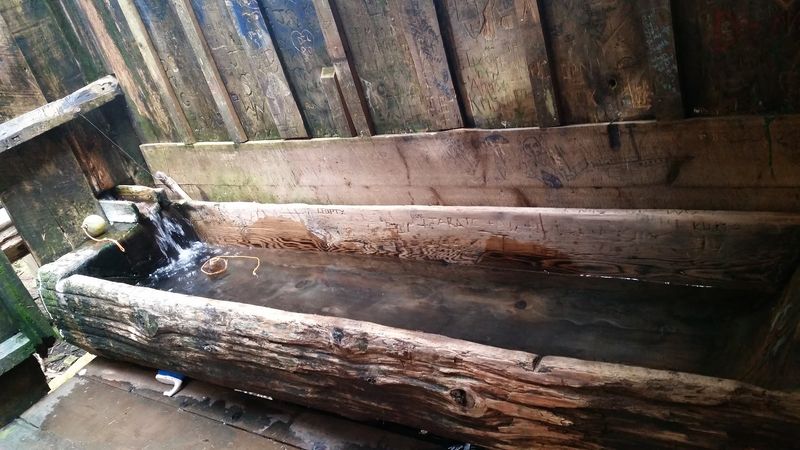
Bagby’s cedar tubs are the kind of thing you describe to people and they still do not fully believe you until they see them. Carved from massive old-growth logs, these tubs are enormous.
Some fit just two people, others can hold a small group comfortably.
The water arrives at around 136 degrees Fahrenheit straight from the source. That is far too hot to soak in directly, so you mix it with cold water from a hose to reach your preferred temperature.
It feels oddly satisfying to control that yourself.
Each tub can be drained and refilled between uses, which means you get fresh water every time. That detail matters more than it sounds.
Knowing the water is clean and new adds a layer of ease to the whole experience.
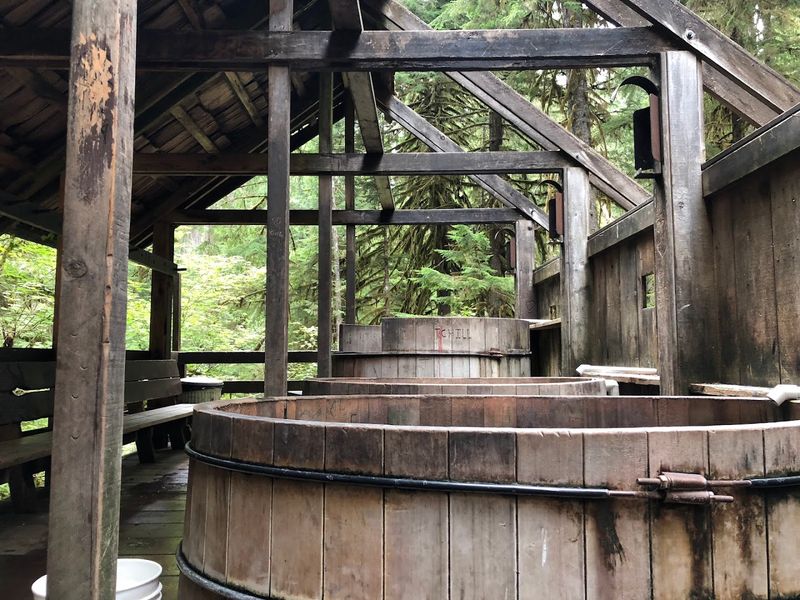
The tubs sit inside wooden bathhouses that have been rebuilt and restored over the years. They creak a little in the wind.
They smell like cedar and minerals and forest.
The Science Behind the Steam
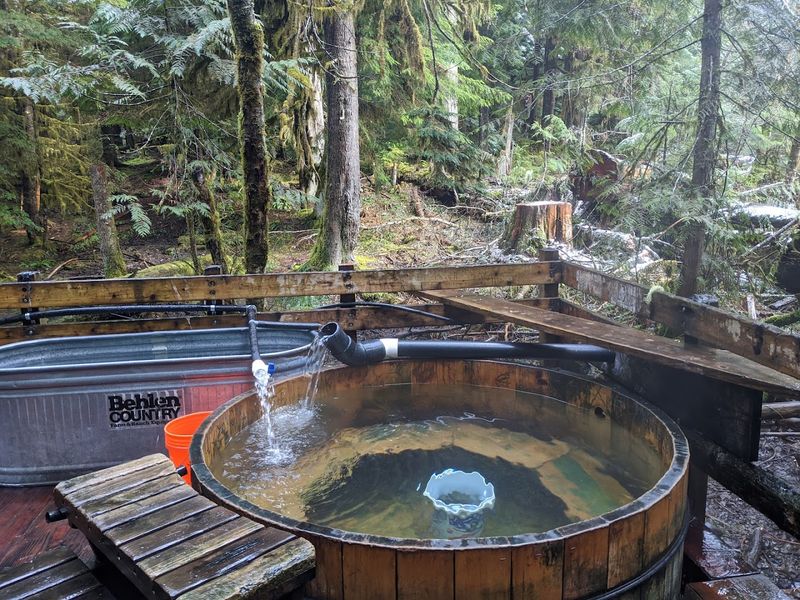
Bagby Hot Springs sits at roughly 2,280 feet elevation in the Cascade Mountains. The water temperature at the source hovers around 136 degrees Fahrenheit.
That heat comes from deep within the earth, driven by geothermal activity connected to the volcanic Cascade Range.
The Cascades are geologically active. Mount Hood, the dominant peak of this national forest, is a dormant stratovolcano.
The volcanic rock beneath the surface heats groundwater as it percolates downward and then back up through cracks and fissures.
What reaches the surface at Bagby is mineral-rich thermal water. People have long believed it carries healing properties.
Whether you trust that or not, the heat alone does wonders for sore muscles and tired joints.
The springs flow consistently year-round. Seasonal changes affect the hike more than the water itself.
In summer, the trail is dry and dusty. In winter, it is snowy and hushed.
The geology here is not just interesting background information. It is the reason Bagby exists at all.
How to Plan Your Visit the Smart Way
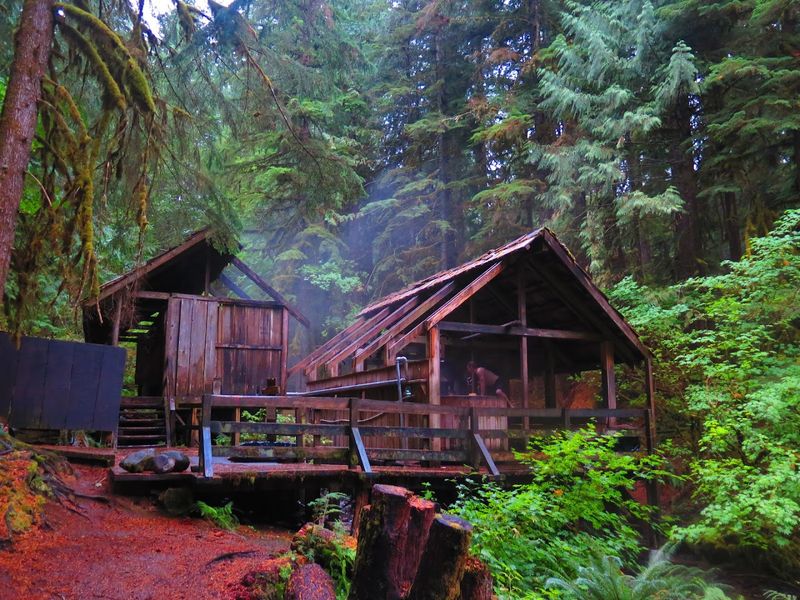
Arriving early is the single best piece of advice anyone can give you about Bagby. Weekends get crowded fast, especially during summer and fall.
Weekday visits in the early afternoon tend to hit a sweet spot between the morning rush and the evening crowd.
There is a small access fee per person, paid in cash at the site. Bring exact change if you can.
The money supports ongoing restoration and maintenance of the springs and tubs.
Cell service disappears quickly once you leave the main road. Download offline maps before you go.
If you are hiking after dark, bring multiple light sources because the trail has no artificial lighting and some steep drop-offs along the edges.
Parking fills up on busy days. Arriving before 10 a.m. on weekends gives you the best chance of finding a spot without stress.
Carpooling is a smart move and reduces the pressure on the small lot.
The springs are open 24 hours. Night visits in winter, with snow on the ground and steam rising from the tubs, are reportedly otherworldly.
The Restoration Story That Saved Bagby
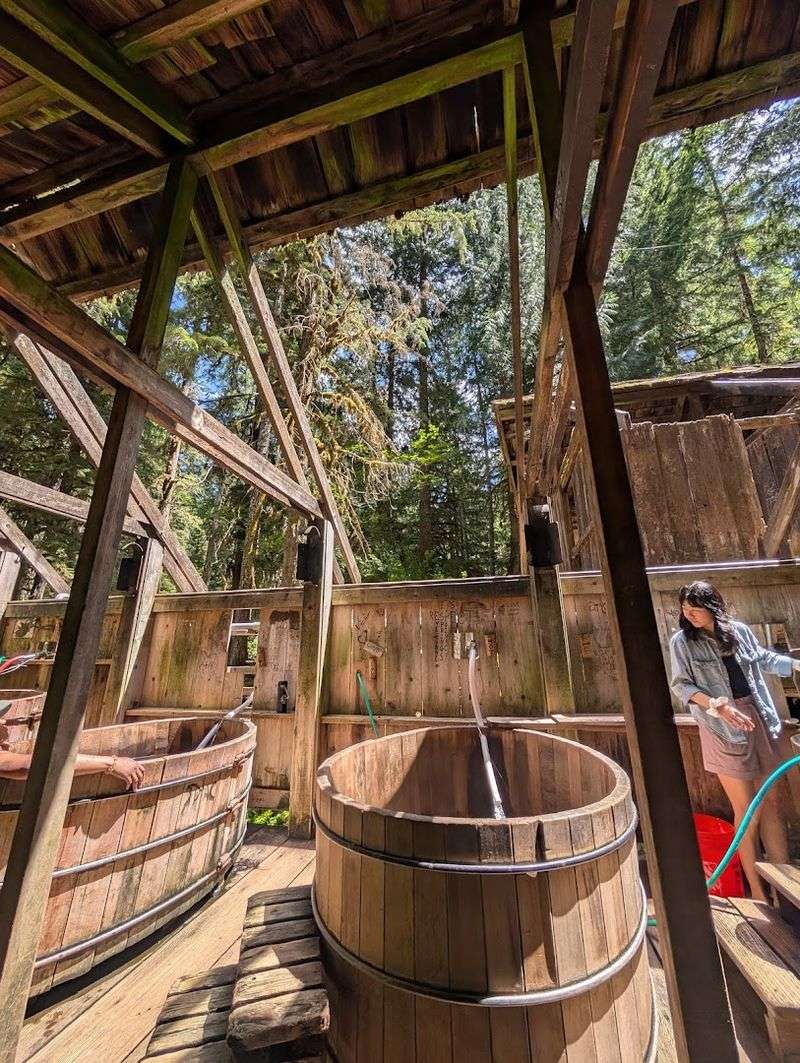
Bagby has not always been in great shape. Over the decades, the site suffered from neglect, vandalism, and heavy use without enough care.
At one point, the future of the springs looked genuinely uncertain.
A fire damaged structures at the site, reducing the number of available tubs significantly. For a time, only a handful of tubs remained operational.
That loss was felt by everyone who loved the place.
What happened next was community-driven. Volunteers, conservationists, and a dedicated management team stepped in.
They began refurbishing the tub houses, restoring the structures, and working to bring Bagby back to its former character.
The small access fee charged at the trailhead goes directly toward this restoration work. Paying it is not just a rule.
It is a contribution to something that genuinely needs ongoing support.
Visitors today are walking into an active recovery story. The forest around the springs is healthy and lush.
The tubs are being rebuilt with care.
What the Old-Growth Forest Tells You
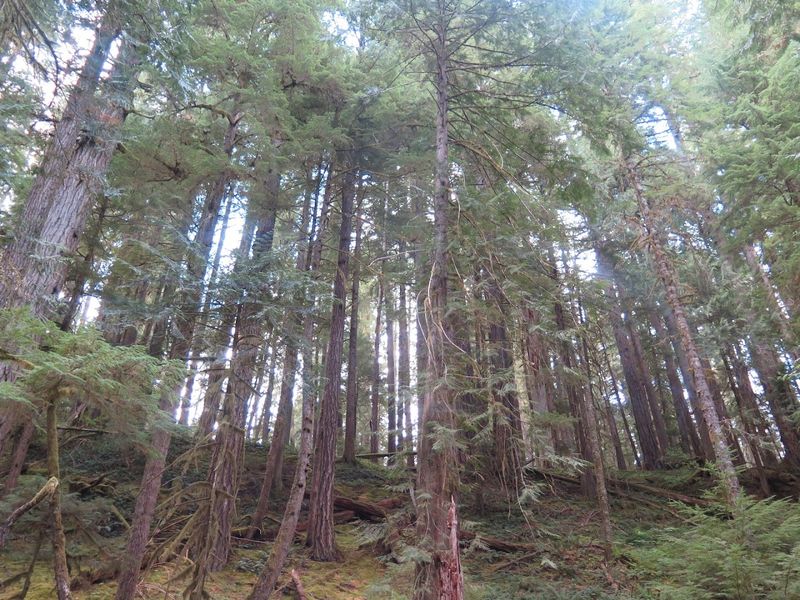
The trees along the Bagby trail are not just tall. They are ancient.
Some of the Douglas firs and western red cedars lining the path have been growing for hundreds of years. Their trunks are wider than most people are tall.
Walking among them shifts your sense of time. Problems that felt urgent at the trailhead start to feel smaller by the time you are a mile in.
That is not a coincidence. Old-growth forests have a measurable calming effect on the human nervous system.
Mossy nurse logs line sections of the trail. Ferns carpet the ground in deep green waves.
The light that filters through the canopy is soft and diffused, almost like being inside a very large, very quiet cathedral.
Wildlife is present but quiet. You might catch a flash of movement in the undergrowth or hear something rustling in the canopy above.
Deer are occasionally spotted near the river sections of the trail.
The forest is the experience, not just the frame around it. Many visitors say the hike itself is worth the trip even without the hot springs waiting at the end.
The River That Walks With You
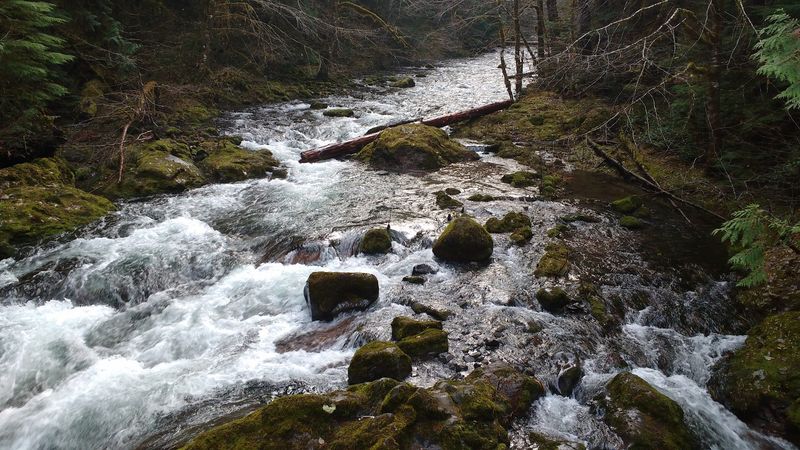
The Hot Springs Fork of the Collawash River runs alongside much of the trail to Bagby. It is not background noise.
It is a constant companion that changes character as you move deeper into the forest.
Near the trailhead, the river is wide and relatively calm. Further in, it narrows and picks up speed, tumbling over smooth boulders and carving deep pools that shimmer with remarkable clarity.
On warm days, some hikers stop to cool off in these pools before or after soaking.
The bridges along the trail cross the river at several points. Each crossing offers a slightly different view.
Some look upstream toward rocky cascades. Others face downstream into long, glassy stretches of water that seem to go on forever.
Just past the hot springs tubs, a small waterfall sits tucked into the hillside. It is easy to miss if you are not paying attention.
Worth the extra few minutes of walking to find it.
The river keeps the air cool and fresh even in summer heat.
Etiquette That Keeps Bagby Worth Visiting
Bagby works because people mostly treat it well. When they do not, the whole experience suffers for everyone.
A few basic habits make a real difference here.
Pack out everything you pack in. The site has no waste management infrastructure.
Trash left behind is trash that volunteers have to carry out later. That is not a small ask for people donating their time to keep this place open.
Respect the soak time. There is an informal limit of around 45 minutes per group during busy periods.
Holding a tub for hours when others are waiting is the fastest way to create tension in an otherwise peaceful environment.
Drain and rinse your tub when you leave. Fresh water for the next group is a courtesy that costs you nothing but a minute of effort.
It makes a noticeable difference in how clean the tubs feel.
The springs are clothing optional, which surprises some first-time visitors. Approaching that reality with a relaxed, non-judgmental attitude makes the visit smoother for everyone.
Why Bagby Stays With You Long After You Leave
Most places you visit fade into a general blur of travel memories. Bagby does not work that way.
There is something specific about it that keeps surfacing in your mind weeks later.
Part of it is the sensory contrast. Cold air, hot water, cedar smell, river sound.
Those combinations are hard to replicate anywhere else. Your body remembers them even when your mind moves on.
Part of it is the history. Knowing that people have been coming to this exact spot for 10,000 years adds a layer of meaning that most modern destinations simply cannot offer.
You are not just a tourist here. You are part of a very long line of humans who found this place and felt better for it.
Part of it is the effort. The hike earns the soak.
Things you work for tend to feel more valuable than things handed to you. Bagby understands that instinctively.
And part of it is the forest itself, which does not care about your schedule or your inbox. It just keeps growing, quietly and steadily, the way it has for centuries.
That indifference is strangely comforting.
Address: Bagby Hot Springs, Oregon
