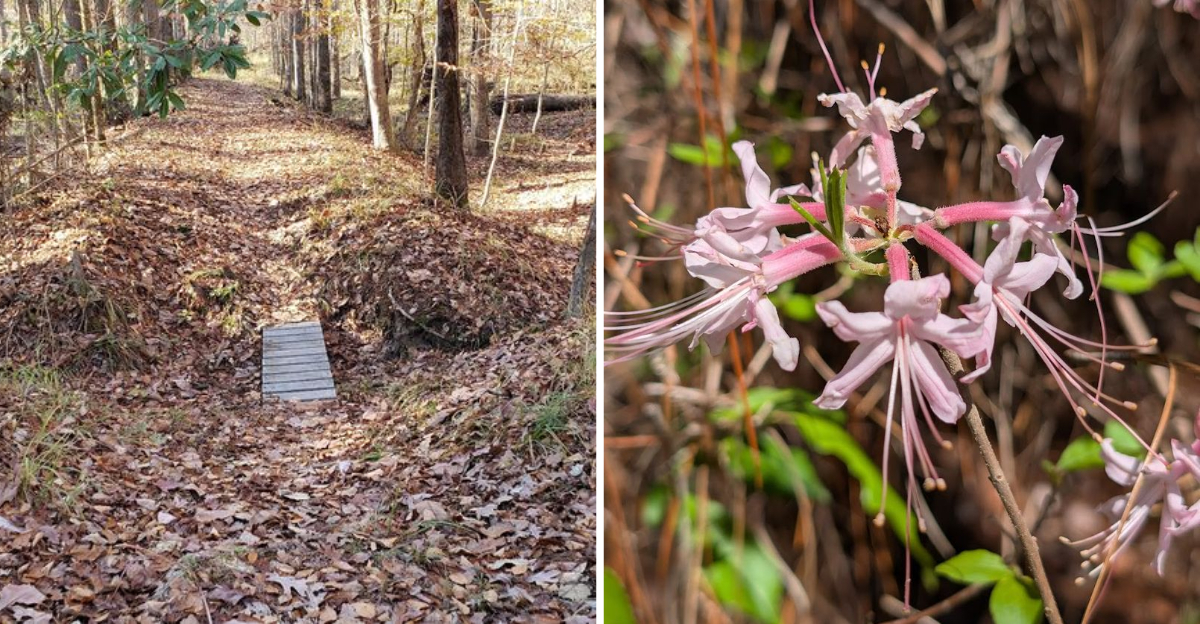
Spring hits the pine forests down here in Louisiana and something magical happens. The wild azaleas explode into bloom, covering creek banks in soft pink and white.
Butterflies go crazy for them, fluttering everywhere like confetti. The whole trail smells sweet, almost like honeysuckle but softer.
I walked a stretch of it last April and kept stopping just to breathe. You do not have to do the whole 20 miles. A short section gives you the same flowers, the same fragrance, the same peaceful feeling.
The trail is well marked, easy to follow, and gentle enough for a slow afternoon. Louisiana does not get enough credit for its spring beauty.
This trail proves why it should.
The Wild Azalea Blooms That Give This Trail Its Name
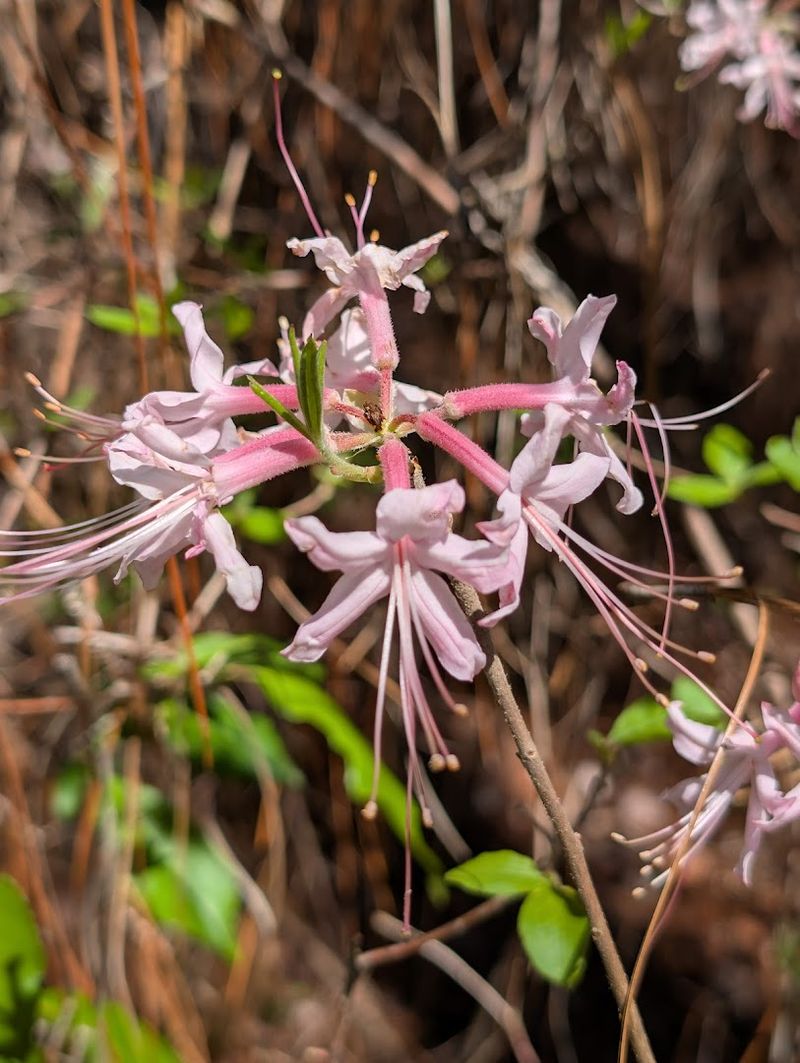
Nothing quite prepares you for the moment those pink clusters appear along the trail edge, almost glowing against the deep green of the Louisiana pines. The native wild azaleas here are not the tidy garden variety you see in front yards.
These are the real thing, loose and wild, blooming in soft shades of white and blush pink that feel almost accidental in the best possible way.
They are also called honeysuckle azaleas or deciduous azaleas, and they typically hit their peak somewhere between March and April. The timing matters because the blooms do not last forever.
Plan your visit right and the whole trail feels like it has been decorated just for you.
Dogwoods and other wildflowers join the show, adding layers of color throughout the forest floor and canopy. What makes these azaleas special beyond their looks is how they grow in natural clusters, sometimes crowding together along creek banks or popping up unexpectedly in a sunny gap between tall pines.
Catching them at peak bloom is genuinely one of those small life moments that sticks with you long after the hike is done.
Butterflies and Pollinators Along the Trail
The azalea flowers along this trail are not just pretty, they are practically a buffet for butterflies. Those funnel-shaped blooms, arranged in tight clusters, are perfectly designed to attract pollinators, and during spring you will notice the trail comes alive with wings.
Swallowtails, skippers, and other species drift between flowers with an unhurried ease that makes the whole scene feel almost meditative.
Watching a butterfly work its way through a cluster of pink blooms while the forest hums around you is one of those surprisingly moving moments you do not expect from a hike. It is quiet and small, but it stays with you.
The azaleas and the butterflies exist in a kind of easy partnership out here, each one making the other more beautiful.
Beyond butterflies, bees and other pollinators are also busy along the trail in spring, which means the air itself feels active and buzzing with life. If you bring a camera, this is the stretch where you will burn through your storage fast.
Slow down through the blooming sections and let the pollinators do their thing. You will be glad you paused.
The Unforgettable Honeysuckle Scent of the Trail
Scent is the sense that travel writing most often skips, and that is a shame, because the Wild Azalea Trail has one of the most memorable smells of any outdoor space I have ever been in. The native azaleas carry a honeysuckle-like fragrance that drifts through the air well before you spot the first bloom.
On a still morning in March, it can feel almost overwhelming in the most wonderful way.
The sweetness is not heavy or cloying. It is light and clean, layered with pine resin and damp earth underneath, and it changes slightly depending on where you are on the trail.
Near the creek bottoms it picks up a mossy undertone. In the open pine sections it thins out and becomes more delicate.
This is honestly one of the reasons experienced hikers recommend visiting in spring specifically, and not just for the visual payoff. The fragrance alone makes the trip worth it.
Pack light, move slowly, and let your nose lead for a while. There is something grounding about following a scent through a forest, like your body remembers something your brain has long forgotten.
The trail rewards that kind of slow attention generously.
The Terrain: From Pine Hills to Bogs and Beyond
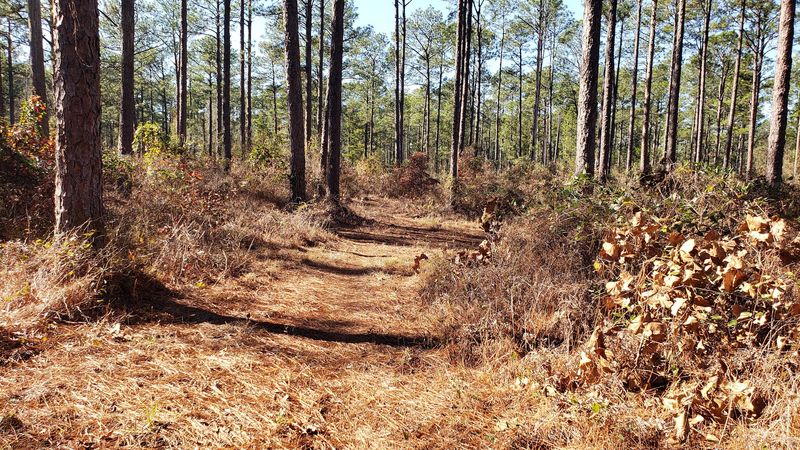
One of the things that keeps the Wild Azalea Trail interesting over its nearly 30 miles is how much the landscape actually changes beneath your feet. You are not walking through the same scenery for hours on end.
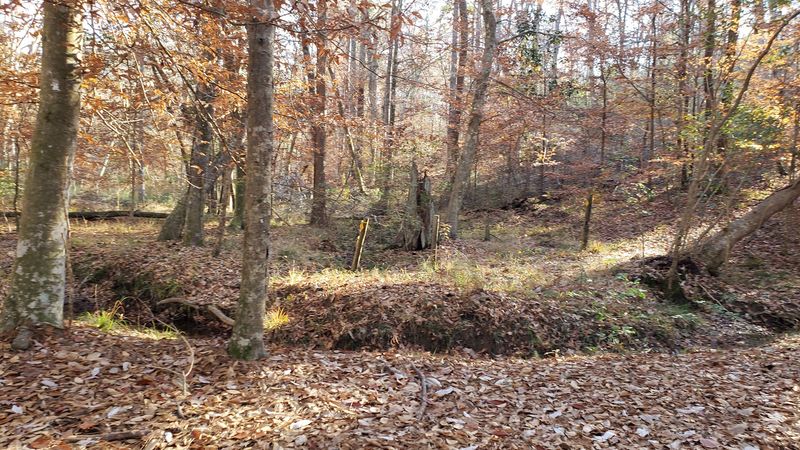
The trail shifts from open pine hills to shaded hardwood bottoms, crosses through managed forest sections, and dips into boggy lowlands that feel like a completely different world.
The Castor Creek Scenic Area is one of the highlights, where magnolia, beech, gum, ash, loblolly pine, and bald cypress all crowd together in a way that feels almost tropical. There is also the Wild Azalea Seep, a botanically remarkable spot that hosts several orchid species and the only known population of bog moss west of the Mississippi River.
That last detail still blows my mind a little.
The terrain overall runs from flat to gently rolling, which makes it accessible without being boring. Louisiana Highway 488 cuts through the middle of the trail, giving you built-in options for shorter out-and-back sections if you are not up for the full distance.
Bring waterproof boots because some sections can get muddy, especially after rain. Wet shoes are a real mood-killer on a long trail.
Wildlife You Might Actually See Out Here
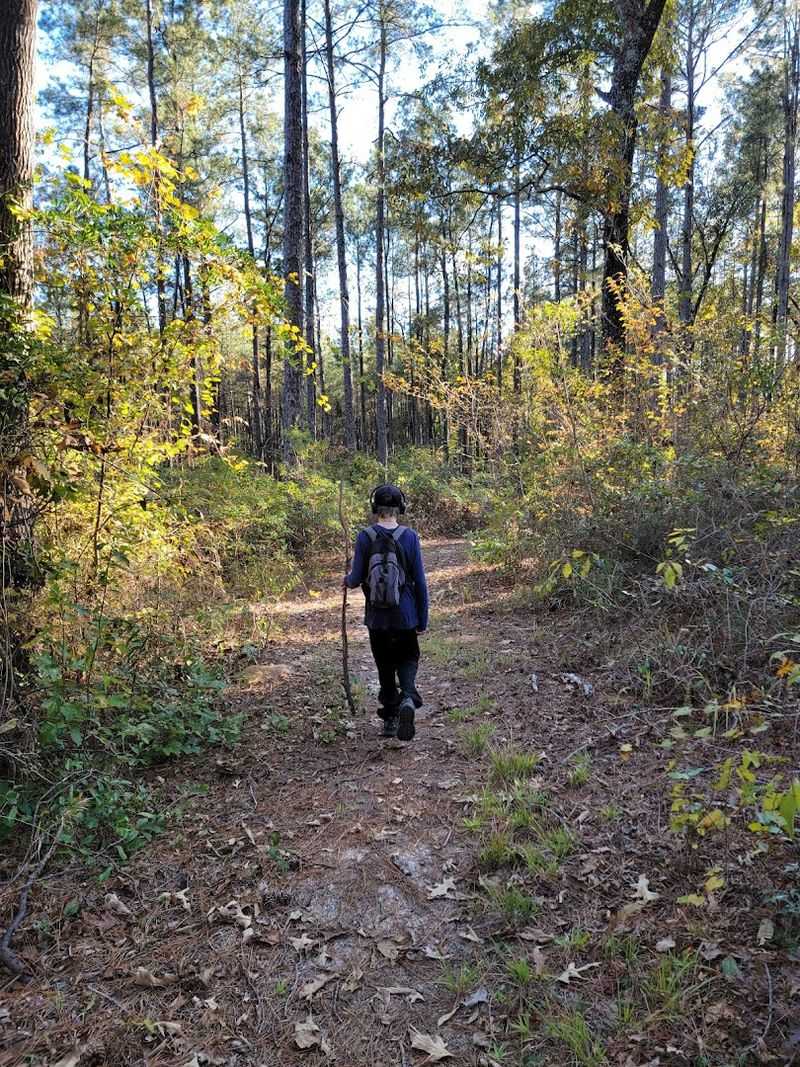
The wildlife situation on this trail is genuinely exciting, and not in a scary way. Deer are a common sight, especially in the early morning or late afternoon when they move through the hardwood sections quietly and without much concern for hikers.
Turkeys appear occasionally, strutting across the path with the kind of confidence that suggests they own the place.
Bald eagles have been spotted in the area, which always feels like a little gift when it happens. Red-cockaded woodpeckers and Bachman’s sparrows also live in the pine forest sections, and birders tend to get genuinely excited about those sightings since both species are considered uncommon.
Raccoons and rabbits are around too, usually more interested in foraging than in anything you are doing.
The most talked-about wildlife story on this trail involves wild horses, which have reportedly been seen by hikers over the years. There is also a running legend about a feral emu somewhere out in the forest, which is either completely true or the best trail myth in Louisiana, and honestly both options are equally entertaining.
Keep your eyes open and your phone ready. The forest has a way of surprising you when you least expect it.
Planning Your Hike: What to Know Before You Go
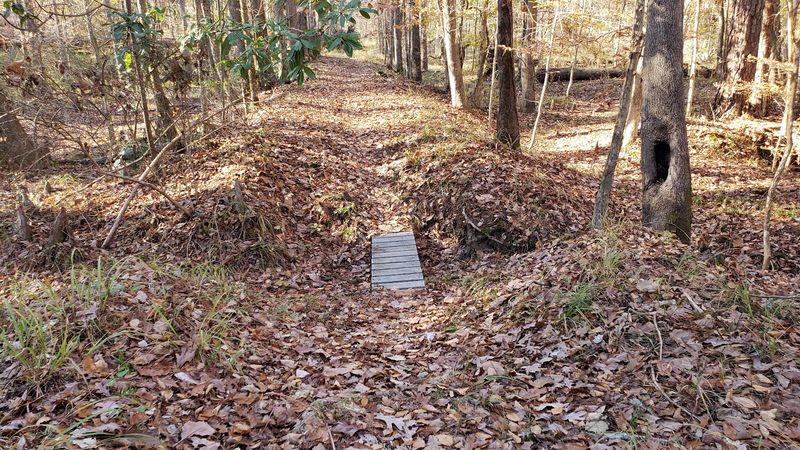
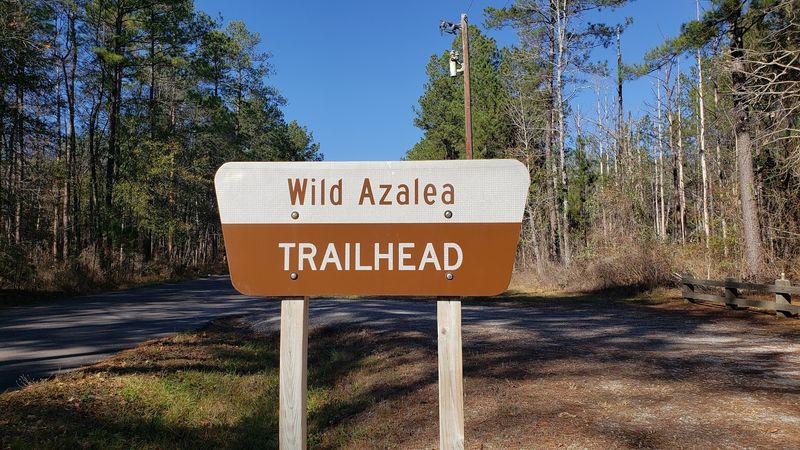
The trail runs point-to-point between the Valentine Lake Recreation Area and a trailhead near Woodworth’s Town Hall, which means you will want to sort out transportation logistics before you arrive. The most practical approach is leaving a car at each end or arranging for someone to pick you up.
It sounds like a small hassle but it is worth planning in advance so it does not derail your day.
Yellow diamond-shaped blazes and painted markers keep you on track throughout the trail, and most hikers find the route straightforward to follow. Dogs are welcome as long as they are on a leash, and several people bring their pets along for the full experience.
Dispersed camping and primitive campsites are available for those who want to turn this into an overnight adventure.
The trail is open year-round and is accessible to both hikers and mountain bikers. Cooler months between October and May offer the most comfortable temperatures for longer distances.
If you are coming specifically for the azalea blooms, March and April are your window. Wear layers in early spring, pack more water than you think you need, and skip the white shoes entirely.
Mud is part of the deal and it shows up without warning.
Why the Wild Azalea Trail Deserves a Spot on Your List
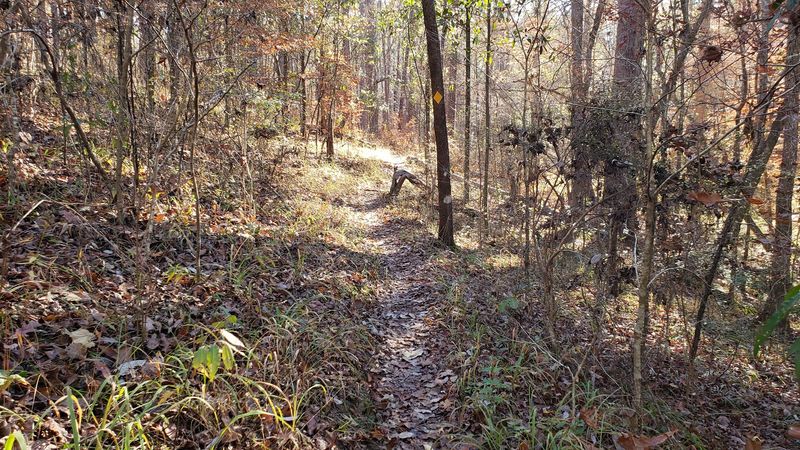
Louisiana is not always the first state people picture when they think about great hiking, and that is honestly what makes this trail such a find. The Wild Azalea Trail carries a National Recreation Trail designation, which is not handed out casually.
It earned that recognition for its outstanding scenic and ecological value, and spending even a few hours on it makes that distinction feel completely earned.
At nearly 30 miles, it is the longest hiking trail in the state, but you do not have to tackle all of it to get something meaningful from the experience. Even a five-mile stretch along the creek offers magnolia trees, ferns, moss-covered ground, and a quiet that is hard to find anywhere near a city.
The trail rewards both the casual day hiker and the dedicated backpacker equally well.
There is something about a place that engages every sense at once that makes it genuinely hard to forget. The pink blooms, the butterfly wings catching light between the branches, and that honeysuckle scent trailing through the pines all add up to something that feels rare.
Not many trails do all of that at once. This one does, and it does it without any fuss.
Address: 352-398 Castor Plunge Rd, Woodworth, LA 71485
