Celebrate America at 250 by road tripping through history at Brandywine Battlefield Park and Valley Forge National Historical Park. Explore these historic Pennsylvania sites for an intimate encounter with the Revolutionary War.
There are several reasons to explore the colonial attractions of rural Chester County this summer. First, you’ll avoid the crowds descending upon Philadelphia for America’s semiquincentennial party. Second, you can commemorate the republic’s 250th anniversary among the ghosts of Founding Fathers without the “big city” expense. And last but certainly not least, the bucolic landscape is the perfect classroom to learn the country’s backstory.
Planning a Pennsylvania history travels road trip
My family is really into the Revolution. After a fascinating weekend in the Moravian enclave at Bethlehem, our second trip to explore Revolutionary War sites brought us to the Philadelphia area. We spent Saturday at Brandywine Battlefield Park, 30 minutes east of the city in the rolling hills of Chadds Ford. The sprawling 50-acre park looks at the largest single-day battle of the American Revolution which took place on the memorable date of 9/11/1777.
Our base in Conshohocken, about 45 minutes away, was the joyfully hip Hotel West & Main, a hotel tower rising above a red brick firehouse from 1874. The contrast between their contemporary play on local history and the state park where reenactors of all ages brought the colonial era to life is striking. After a relaxing Sunday brunch, we were off to the hallowed grounds of Valley Forge.
Valley Forge National Historic Park is a majestic commemoration of endurance. While Brandywine offered tales of the defeated Continental Army, Valley Forge tells the story of what happened next: a six-month winter of incredible hardship.
What part of the Revolutionary War history interests your family the most — the tactical battles or the daily lives of the soldiers?
The struggle at Brandywine Battlefield Park
The Battle of Brandywine was fought in the fields surrounding the prosperous farm community of Chadds Ford. In 1777, the self-sustaining village was inhabited largely by pacifist Quakers who nonetheless sympathized with the Patriot cause. Washington chose this location because the community could supply the Continental Army’s needs while they waited for the British to strike Philadelphia.
In just one day, General Washington and 15,000 men faced off against a combined force of 5,000 British and 9,000 Hessians (paid German mercenaries) across the Brandywine River. He received conflicting messages about the enemy’s movements and positioned his men to cross at the shallow Chadds Ford. General Howe split the British troops in two and outmaneuvered Washington, surrounding the Continental Army near a Quaker Meeting House. Despite the intense heat and assault of rapid-loading rifles invented by the German military, most of the exhausted Patriots retreated to Chester.
Like many Revolutionary War engagements, Brandywine was a defeat. During the battle, the 19-year-old Frenchman, the Marquis de Lafayette, fought so heroically that he earned the admiration of his men and of Washington. When he was taken to Bethlehem to recover, his soldiers stayed on, prepared to fight another day.
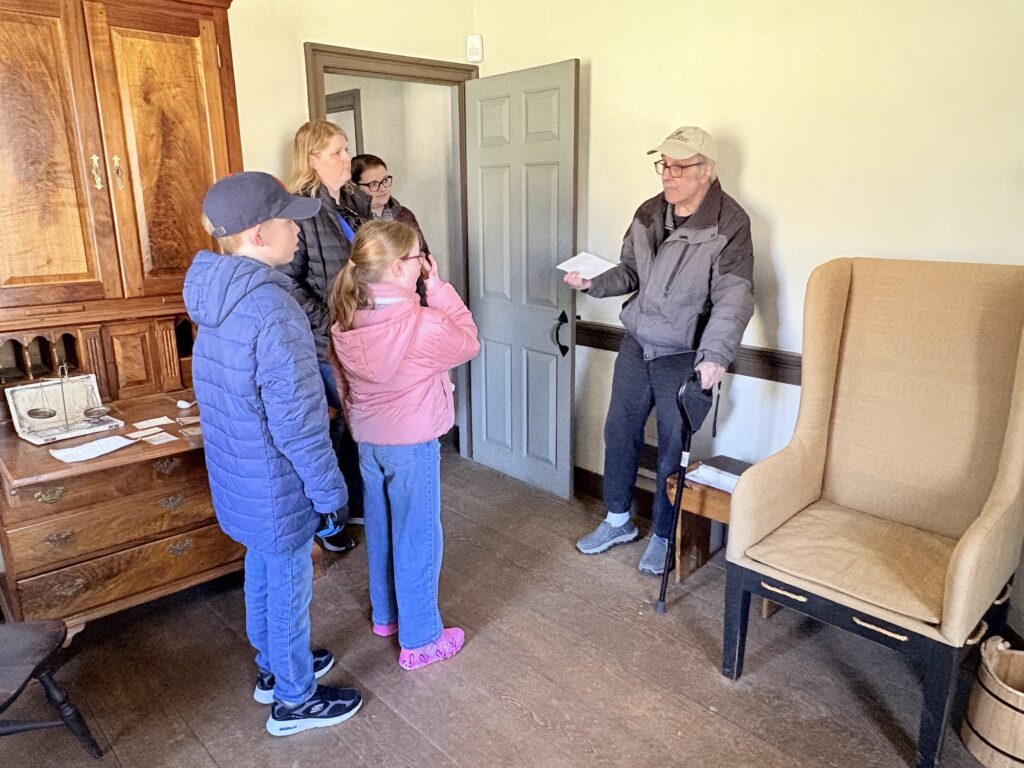
Join a guided tour of the Brandywine Battlefield sites
Here are some of the top things to see at Brandywine, open weekends only. Check the Brandywine Battlefield tour schedule online if you have school age or older children, and plan ahead to explore the colonial houses.
The Benjamin Ring House: This small, neat stucco home belonged to a Quaker man with eight children. It’s thought to have served as Washington’s headquarters though he probably worked in a tent outside.
Fun Fact: A replica invoice exists showing that Benjamin Ring served 39 meals to Washington and his staff over six different occasions.
The Gideon Gilpin House: This is the site where the Marquis de Lafayette stayed before the battle. It is currently undergoing renovations for ADA compliance and will reopen with period furniture in time for the America 250 celebrations.
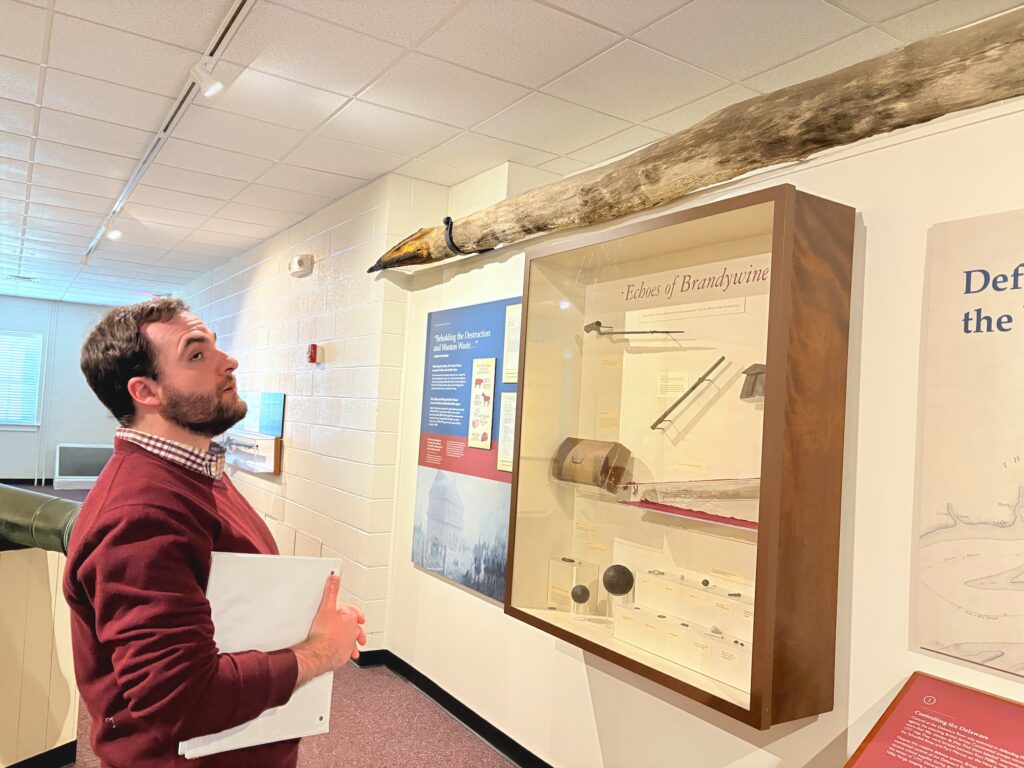
Museum Artifacts: The Visitors Center collection will appeal most to Revolutionary War buffs. It includes a very rare, original Chevaux de Prise. This was a large, long log with an iron point held upright in a weighted crate that, like an underwater mine, could puncture the hull of a British warship.
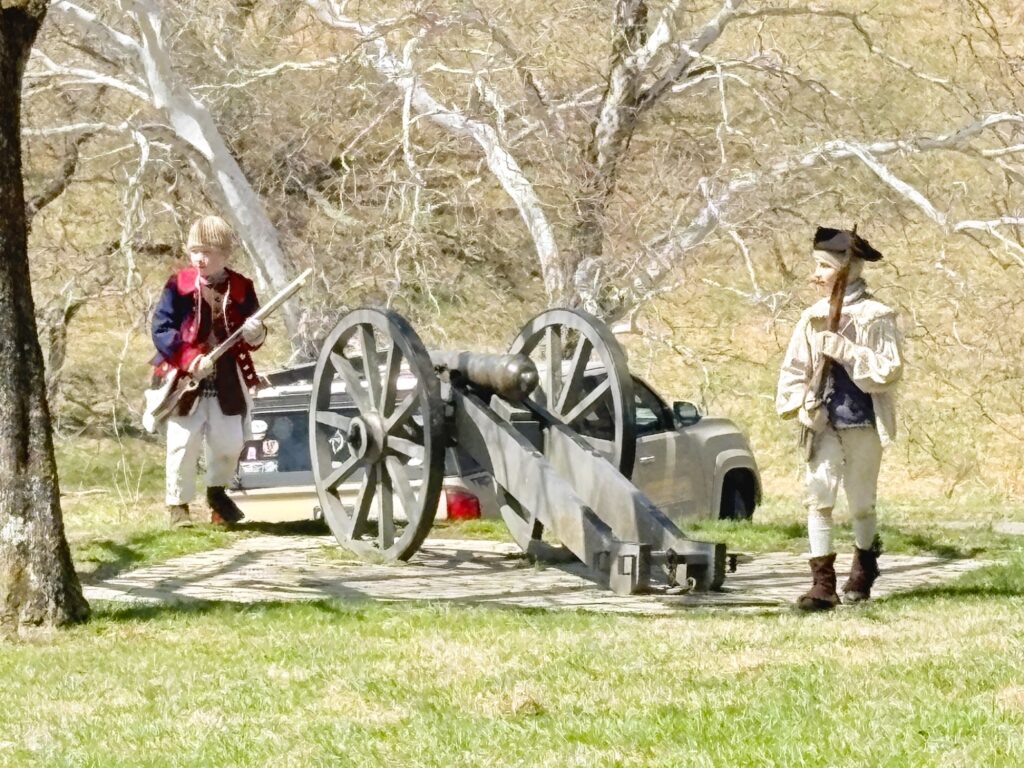
All ages relate to the Brandywine Battle story
Among Revolutionary War battlefields near Philadelphia, Brandywine feels remarkably approachable, especially for families with younger children. The site is small, less crowded, and the staff at the Visitors Center is famously welcoming.
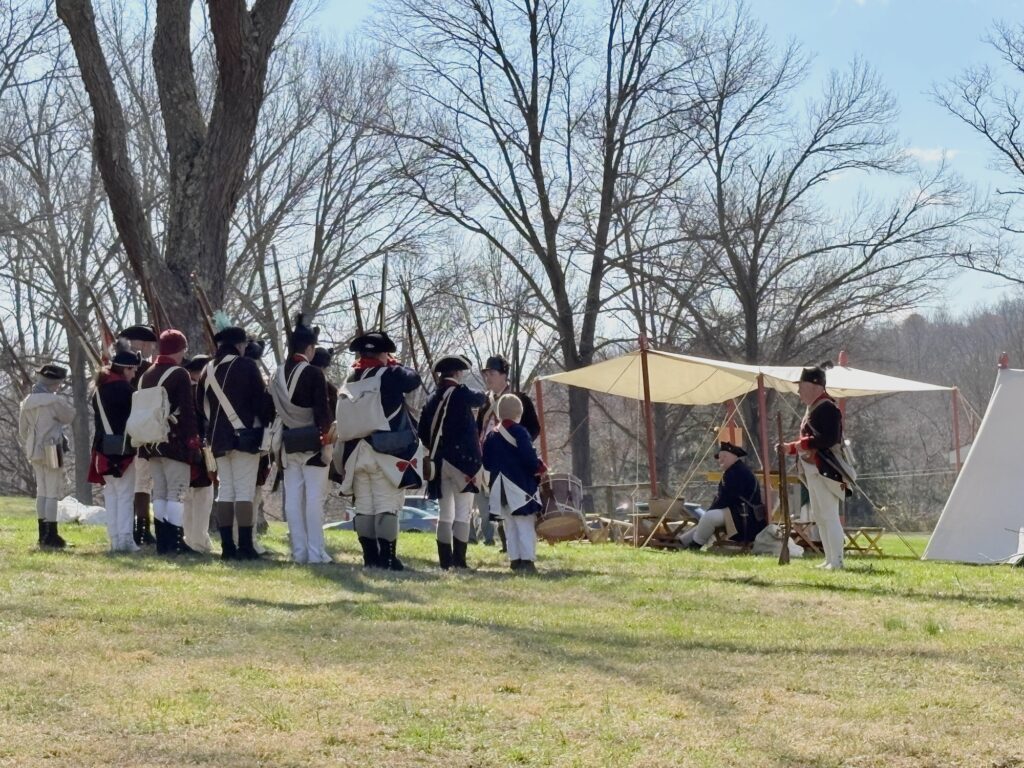
On sunny weekends, you might find the 8th Pennsylvania Regiment re-enactors rehearsing on the grounds. We watched older soldiers teaching young boys the mechanics of firing muskets. Women and girls in period-accurate cotton frocks mended clothes on picnic blankets nearby.
Before heading out to the fields, start with the 15-minute background film at the Visitors Center, which makes the complex, wide-ranging battle easy for all ages to visualize.
Whether you pause to read historical markers on the tranquil back roads or watch children play in the museum’s dress-up area, Brandywine offers an easy way to honor the path that eventually led to American independence.
The bravery at Valley Forge National Historical Park
Strolling the lush lawns of Valley Forge in spring won’t remind anyone of the grueling winter encampment of 1777–1778. Instead, it offers the time and space to reflect on the force of will of the troops who followed General George Washington. After defeats at Brooklyn, Brandywine and Germantown, Washington’s exhausted and hungry men retreated to this forested, high-ground terrain. They committed to protect the Union’s capital at Philadelphia.
It began as a state park established for the 150th anniversary of the Declaration of Independence. Then President Gerald Ford declared the majestic 1,000-acre landscape Valley Forge National Historical Park during the Bicentennial.
Top Landmarks at Valley Forge National Historical Park
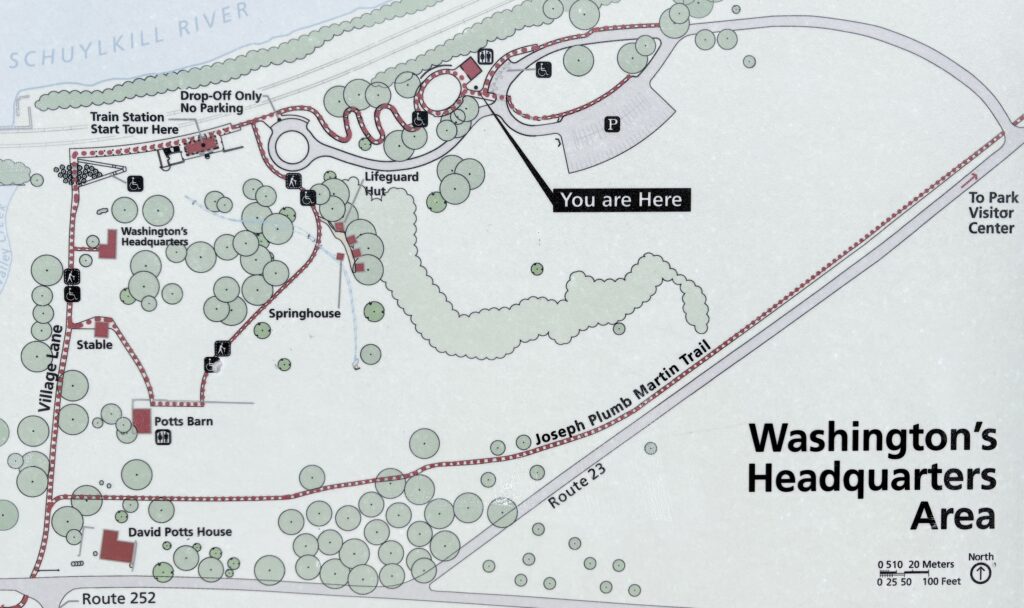
Because the park is so large, it is best to start your journey at the Visitor Center. From there, you have a few ways to take it all in:
Families can drive themselves using a recorded cell phone audio guide (484/396-1018) or join a 90-minute guided tour on an open-air trolley. For 2026, trolley tours run three times each day on weekends through June 7, moving to a daily schedule from June 8 to September 7. Reservations must be made by phone at 610/624-5010.
While driving is convenient, you truly have to get out of the car and stroll the grounds to feel the history.
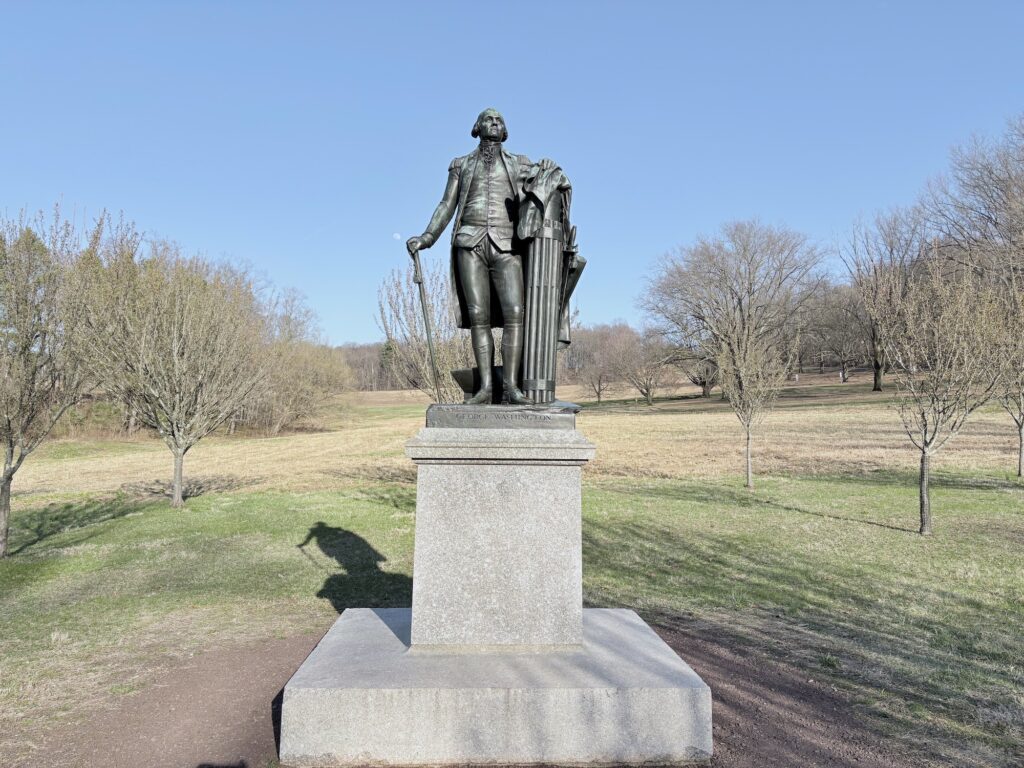
Washington’s Headquarters: National Park Rangers provide casual tours of the home where Washington stayed — and where Martha Washington came to visit him.
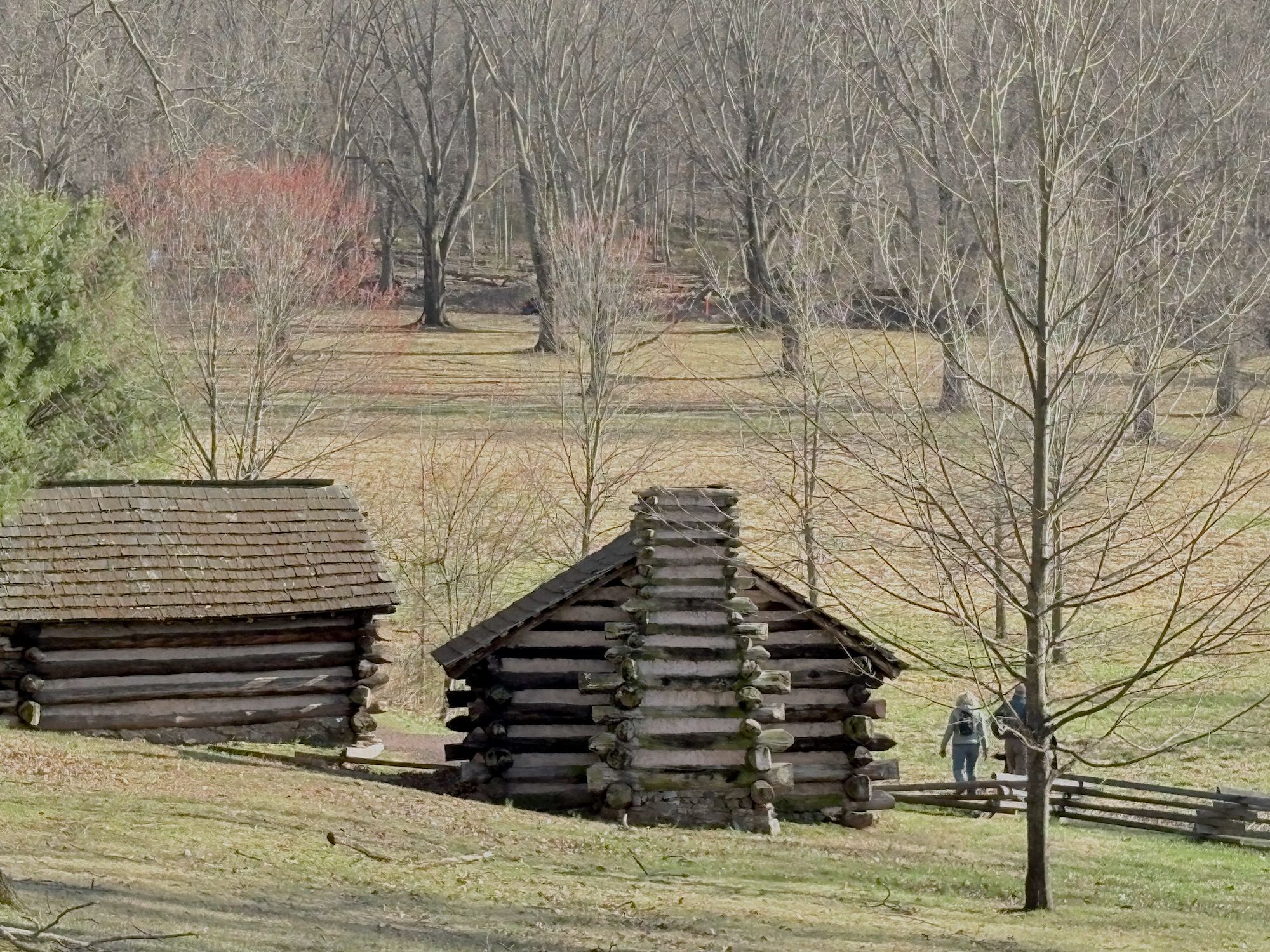
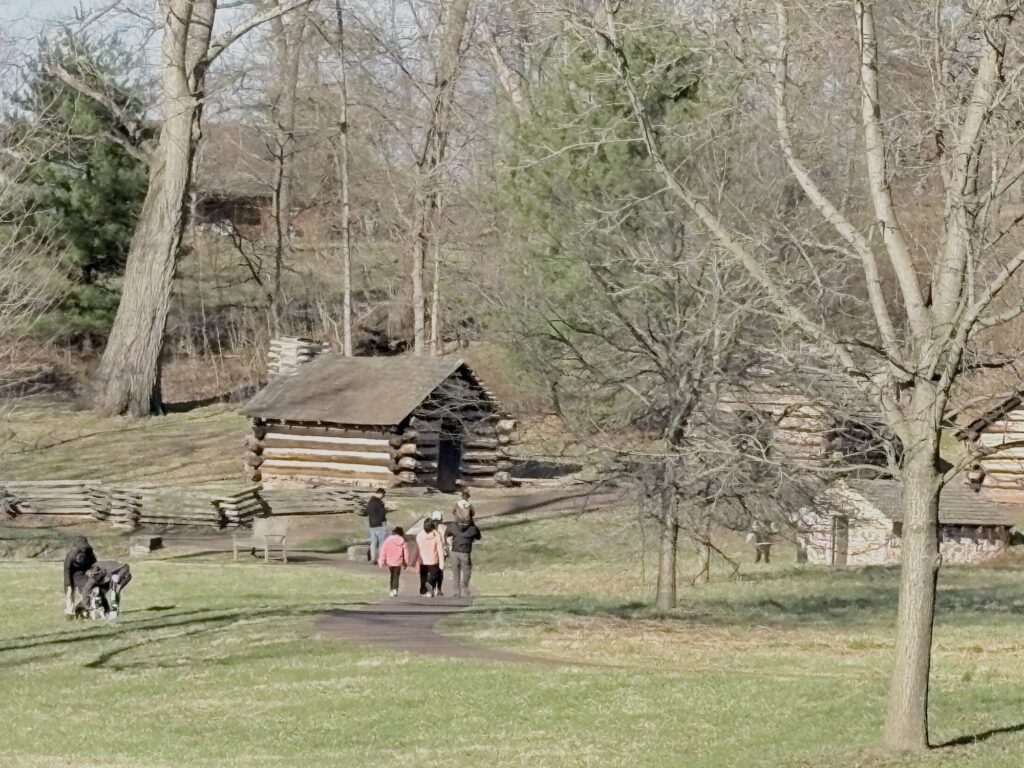
The Troops’ Log Cabins: Nearby are the reconstructed log cabins used by his elite security guards. Small wooden cot beds make them “nicer” quarters, yet they still serve as a stark reminder of the cold reality of that winter.
Upcoming Commemorations: Major events during the winter of 2026–2027 will celebrate the 250th anniversary of the troops’ arrival and the park’s 50th anniversary.
Valley Forge is more than just a collection of monuments; it is a testament to the steadfast devotion to freedom that kept the Revolution alive when all seemed lost.
Trip Planning Notes for your regional Revolutionary sites tour
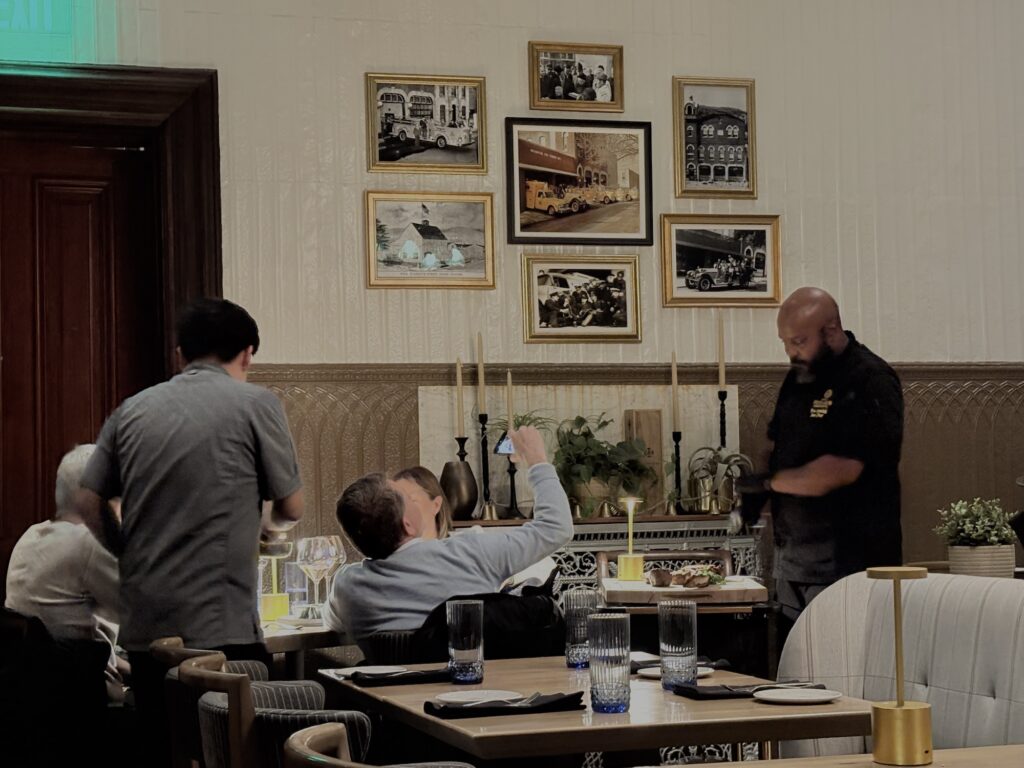
Umemorable chain motels and a few B&Bs dot the Brandywine Valley and Valley Forge regions. My family enjoyed the special Hotel West & Main in Conshohocken. It’s a member of Hilton’s Tapestry Collection, guaranteeing a unique, locally inspired experience. They do a great job! Comfortable guestrooms arein a tower next to the town’s former 1874 firehouse. In keeping with the theme, the floor where fire engines used to park features a lobby bar and “1874 Social,” which serves as a buzzy community hub. There’s a very good steak restaurant for more formal dining, Hook & Ladder.
The cute town of Conshohocken also provides access to the Conshohocken Trail, part of the pretty, wooded hike and bike Schuylkill River Trail (SRT.) It connects Philadelphia to Valley Forge – an amazing ride through Pennsylvania history for ambitious and fit families.
Crazy about American history? There’s more to see.
There are other noteworthy landmarks steeped in Pennsylvania colonial history and contemporary folklore.
Emlen Estate: This fieldstone manor built in 1745 served as Washington’s headquarters in late 1777. According to online sources, today someone is selling this luxury residence for approximately $3.3 million. Doesn’t look a bit colonial on the outside!
General Wayne Inn: This was a very popular pitstop in the 1770s on the route between Philadelphia and Lancaster. Historians believe several of the Founding Fathers (possibly including General Washington) may have stayed or dined there.
AI tells me that it continued as a popular inn and tavern for generations. The inn underwent many renovtions, despite (or maybe because of…) rumors about it being haunted. The inn was placed on the National Register in 1976. Sometime in the 1990s, the General Wayne’s gregarious chef was shot in his office. The suspicious circumstances triggered an investigation in which another chef committed suicide and a partner went to jail. Needless to say, the place closed and remained vacant for years.
In 2005, a non-profit bought it and it now serves as the Chabad of the Main Line. (I did not make this up and I don’t think AI did either.)
