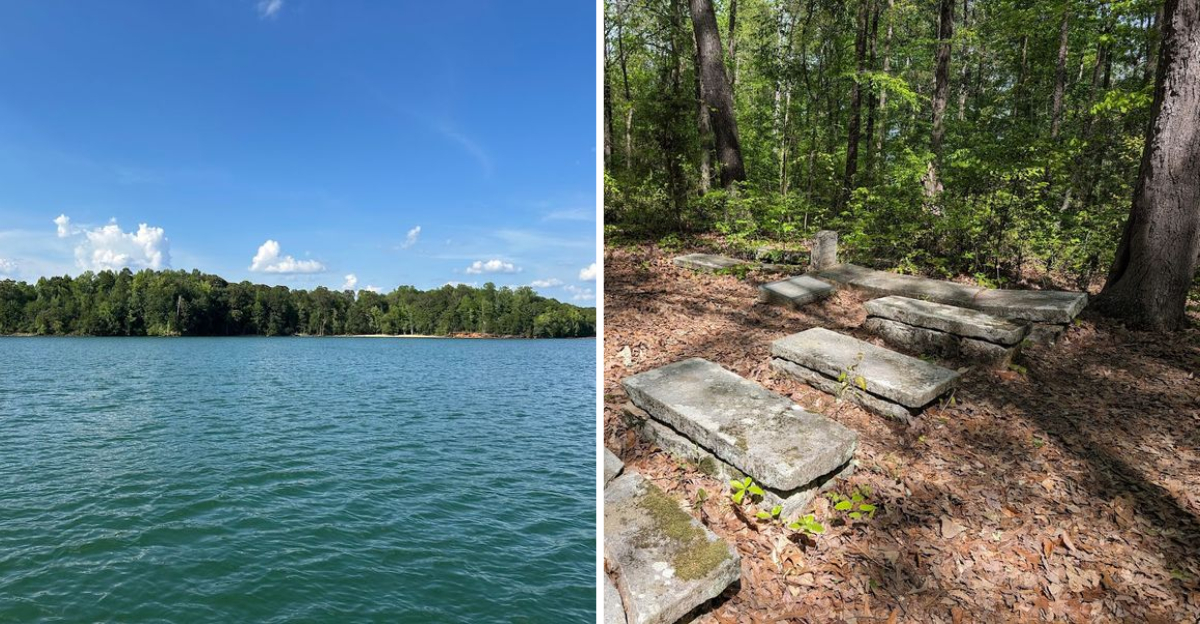
You would never know it looking at the water now. Calm.
Blue. The kind of peaceful lake that makes you want to rent a kayak and forget about the world.
But beneath the surface, something lingers. An entire community drowned when the valley was flooded decades ago, and the people who lived there had to watch their homes disappear under rising water. Sixty graves were never moved.
The bodies stayed behind when the reservoir filled, and locals say the souls never really left. Some nights, people swear they hear church bells ringing from beneath the water.
Others have seen strange lights hovering over the lake with no explanation. South Carolina has plenty of beautiful spots, but this one carries a weight you can feel.
The Flooding of Harrisburg Plantation and How an Island Was Born
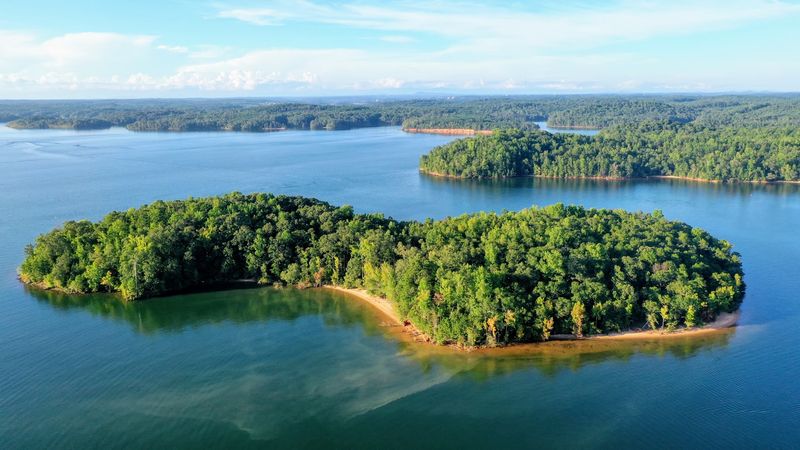
Long before Lake Hartwell existed, the land beneath it had a name: Harrisburg Plantation. It was established in the late 1700s by John Harris Jr., a soldier who had fought in the Revolutionary War, and for generations the Harris family worked, lived, and buried their loved ones on that stretch of South Carolina soil.
The Hartwell Dam was authorized in 1950 and completed by the early 1960s, flooding the Tugaloo River valley and creating one of the largest lakes in the Southeast. Everything the plantation had been, the fields, the structures, the roads, all of it went under.
Almost everything. The cemetery sat on a high knoll, elevated enough that the rising water could not reach it.
That hilltop became what visitors now know as Cemetery Island. It is a striking thing to think about, a man-made lake swallowing an entire world, and one small hill refusing to disappear.
The island now sits quietly in the water, covered in trees, with nearly sixty graves resting at its peak. The fact that it exists at all is the result of both geography and the fierce determination of a family that would not let go of its departed ones.
John Harris Jr. and the Family That Would Not Be Moved
John Harris Jr. is the reason this island exists in the way it does. He was a Revolutionary War soldier who carved out Harrisburg Plantation in the late 1700s, and when he passed, he was buried on the high ground of his own land alongside his wife, Mary Pickens Harris.
When the Army Corps of Engineers began planning the Hartwell Dam project, the Harris family descendants were faced with a choice most of us will never have to make: allow the remains of their ancestors to be relocated, or fight to keep them exactly where they had always been.
They chose to fight. Legal disputes followed, and in the end, the family won the right to leave their loved ones in place.
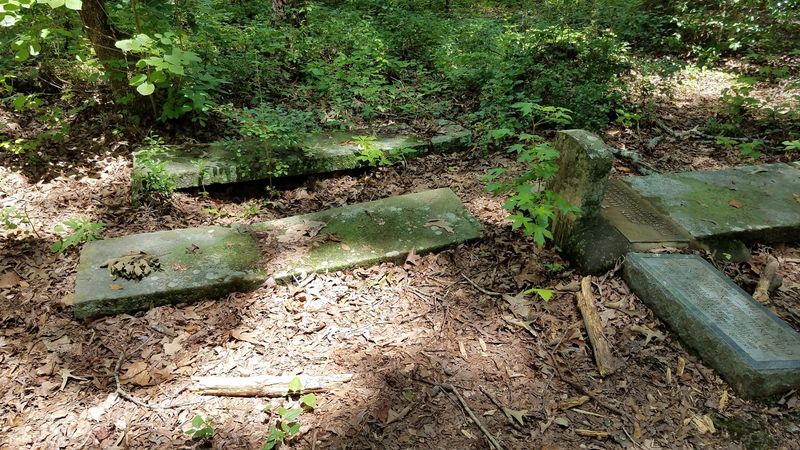
That decision is why the cemetery became an island rather than a memory. Some of the grave markers on the hill date back to the 1700s, and a few are above-ground stone structures that have held up against time and weather remarkably well.
Visiting the cemetery today, you can feel the weight of that choice. These were real people, and someone loved them enough to go to court over where they would rest forever.
Sixty Graves, Countless Stories: What the Cemetery Actually Holds
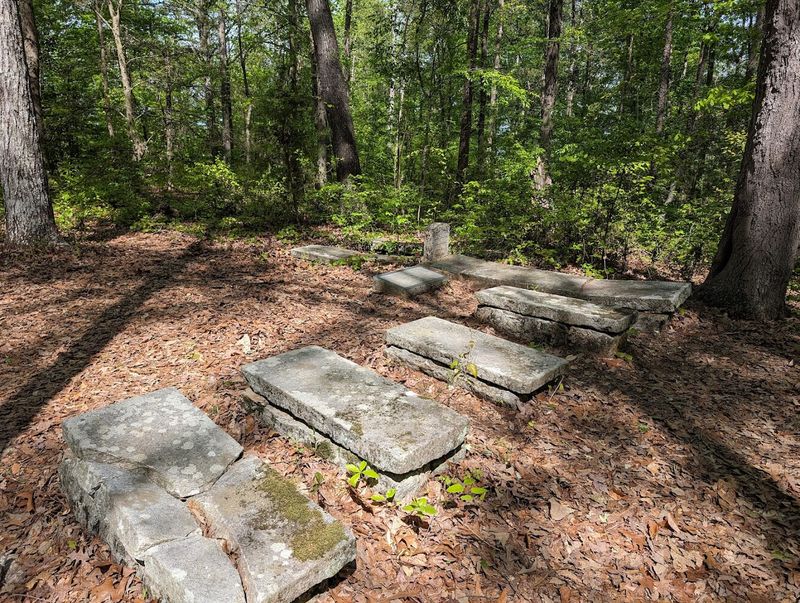
There are approximately 59 to 60 graves on Cemetery Island, and not all of them have names. Some markers are worn smooth by more than two centuries of rain and humidity.
Others are surprisingly legible, carrying names, dates, and in some cases military titles that hint at lives spent in service during America’s earliest wars.
The Harris family is well represented, but they are not alone. Other families connected to the plantation are buried here too, including individuals whose identities have been partially or entirely lost to time.
One visitor noted that their fifth great-grandfather, who lived from 1753 to 1843, is among those buried on the island, which speaks to how many living descendants are still connected to this quiet hilltop.
Some of the graves are above-ground, built in a style common to the era, with flat stone slabs laid over raised brick bases. A recent visit in 2026 revealed that Hurricane Helene had knocked down trees across the site, damaging several markers and stone covers.
The cemetery could genuinely use some organized care. But even in its current state, it holds a kind of dignity that feels impossible to ignore once you are standing among those stones.
Getting There: A Boat, a Kayak, and a Hidden Trail
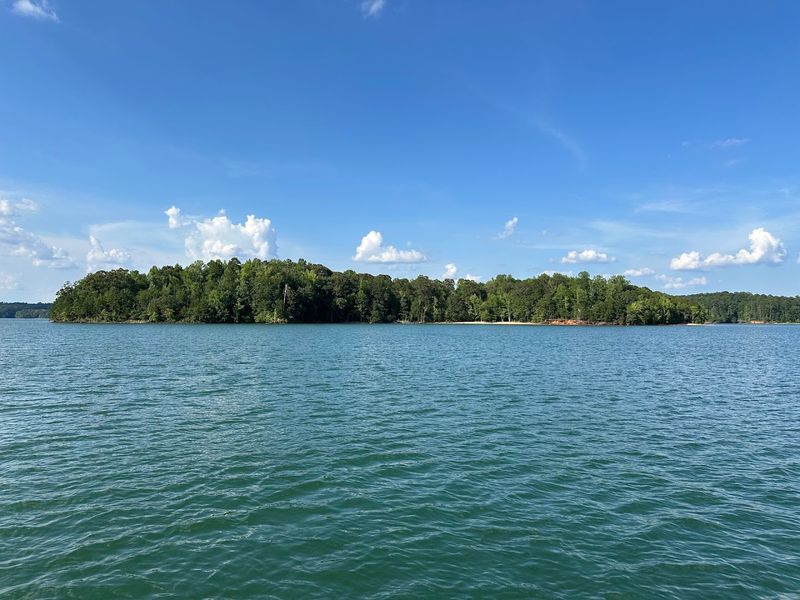
There is no road to Cemetery Island. No bridge, no dock, no parking lot, and definitely no welcome sign.
The only way to reach it is by water, which is part of what makes the trip feel like a genuine adventure rather than a tourist stop.
Most visitors arrive by motorboat or kayak. Paddling from Oconee Point Campground is a popular option, and the distance is manageable for most people with basic paddling experience.
The island has three beach areas where shallow-draft boats can pull up, and kayaks can land easily along the shoreline.
Once you are on the island, finding the cemetery takes a little effort. There are no formal trail markers, and the path up the hill is not signposted.
The general advice is to aim for the highest point of the island and follow whatever trail appears through the trees. It is a short walk, but the undergrowth can be dense, and poison ivy is present throughout the island, so covered legs and careful steps are strongly recommended.
Bring water, wear sturdy shoes, and give yourself more time than you think you need. Getting a little lost on the way up is practically part of the experience.
Ghost Island: The Legends That Float Around This Place
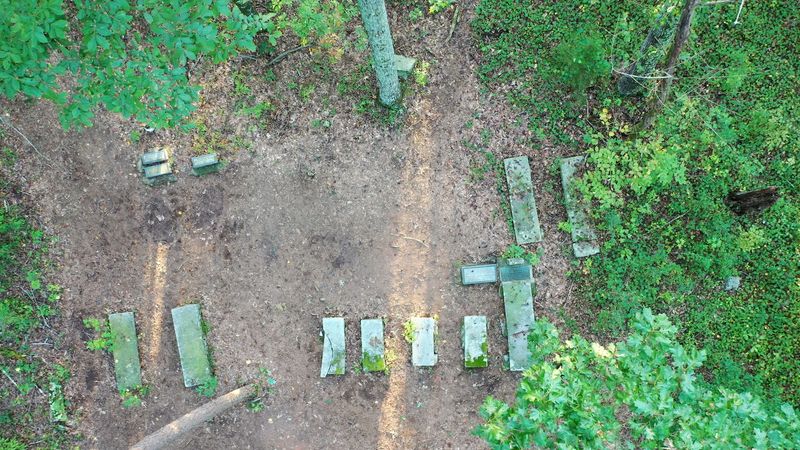
The nickname Ghost Island did not come from nowhere. Local legends have attached themselves to this place the way Spanish moss clings to old oaks, slowly and completely.
One of the most repeated stories involves a woman named Serril Broin, said to be the granddaughter of a woman accused of witchcraft during the Salem witch trials, who is believed by some to haunt the island.
Campers who have spent nights on the island have reported unexplained sounds, including knocking noises and distant singing coming from the direction of the trees near the graves. Whether you believe in that kind of thing or not, it is hard to dismiss how perfectly this island sets the stage for those stories.
A flooded valley beneath you, sixty graves above you on a hill, no lights for miles, and water on every side. That is a genuinely atmospheric situation.
The ghost stories are probably more fun than factual, but they have become part of the island’s identity in a way that feels organic rather than manufactured. People talk about this place with a kind of hushed curiosity, and honestly, that tone seems exactly right for somewhere with this much history underneath it.
Camping on Cemetery Island: Spending the Night Above the Flooded Valley
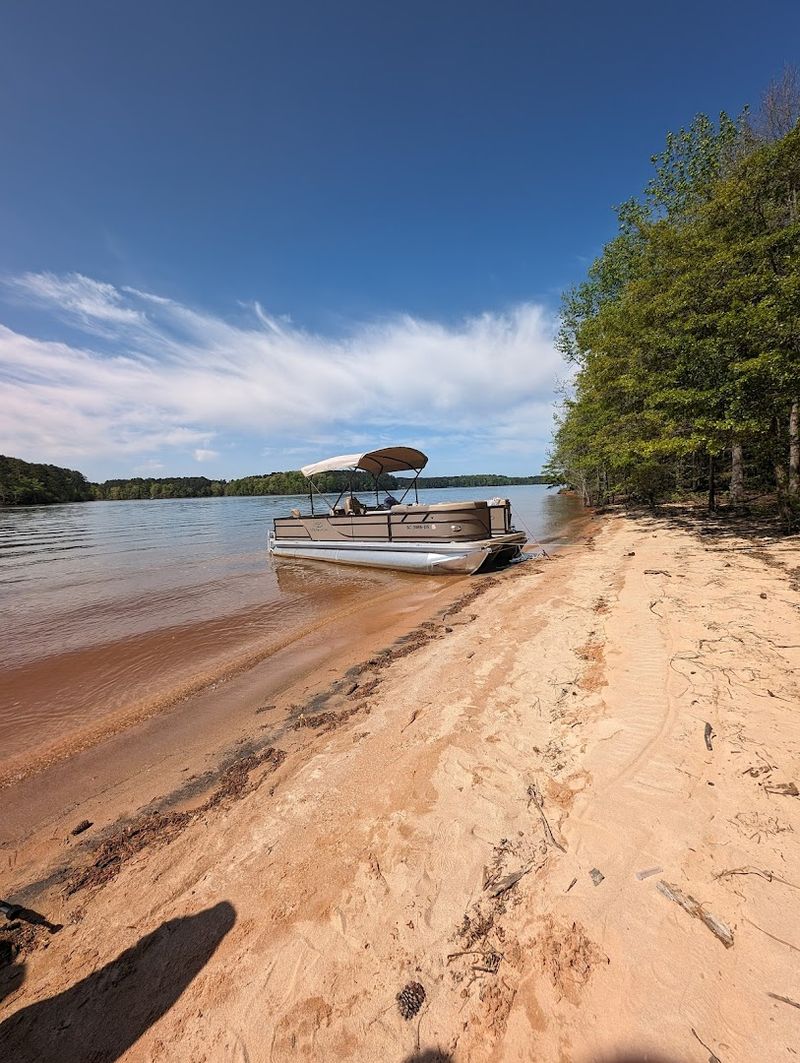
People actually camp here, and from everything visitors have shared, it is a genuinely memorable experience. The island has sandy beach areas that can accommodate tents and small groups, and the remoteness of the location means you are unlikely to have much company beyond the birds and the geese that nest along the shoreline.
Canadian geese have been spotted nesting all around the island during certain seasons, which adds a surprisingly lively layer to what might otherwise feel like a very quiet place. Mornings on the island, with the lake flat and still and the trees catching the early light, sound like the kind of thing that sticks with you for a long time.
That said, this is not a developed campsite. There are no bathrooms, no trash cans, no fire rings, and no rangers checking in.
Anyone camping here should follow leave-no-trace principles and be fully self-sufficient. The island is a shared space, and the graves at the top deserve the same respect you would give any resting place.
Camping here is less about comfort and more about the rare feeling of spending a night somewhere that most people will never find.
Why This Place Deserves More Attention and a Lot More Care
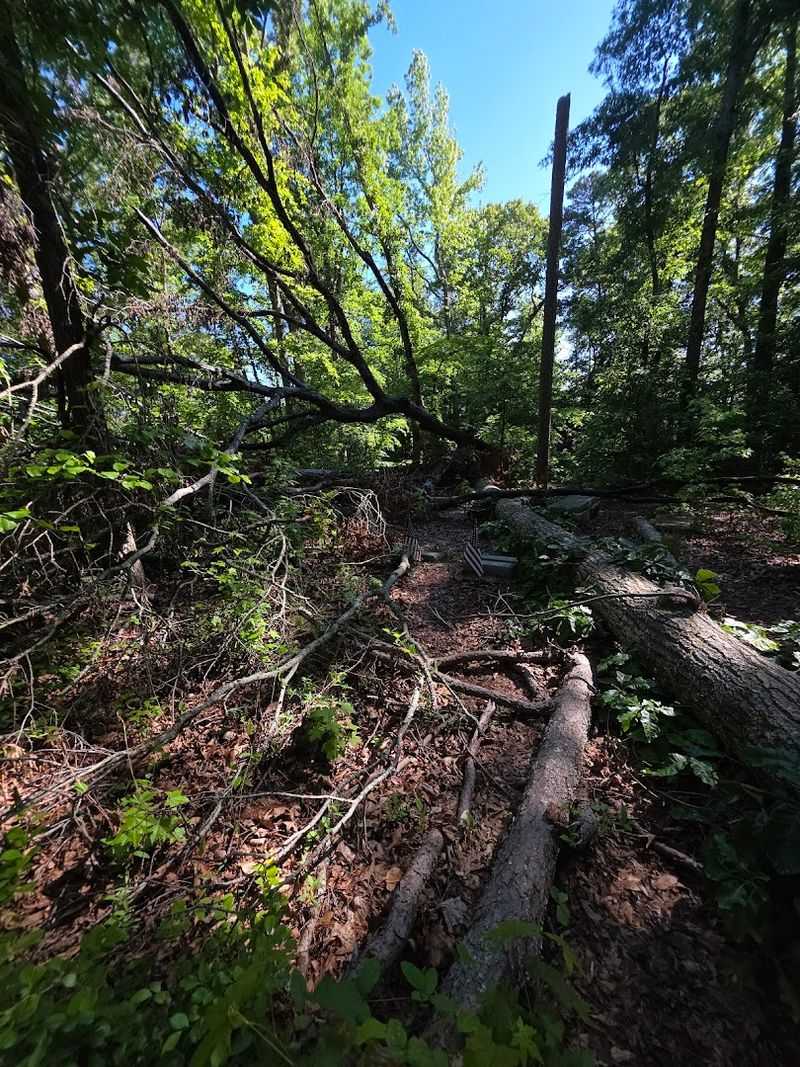
A visit to Cemetery Island in May 2026 revealed something sobering. The site was covered in downed trees, likely the result of Hurricane Helene, and several grave markers and stone covers had been damaged or destroyed.
The cemetery that survived a dam and a flood and more than two centuries of weather is now quietly struggling under the weight of storm debris.
There is no formal organization currently maintaining the site, and no nonprofit has stepped in to take on the work of clearing fallen trees or stabilizing damaged markers. For a place with this much documented history, that gap is noticeable.
The Harris family fought legal battles to keep these graves in place, and it would be a shame to let neglect finish what the floodwaters could not.
If you visit, treat it with real care. Do not move markers, do not leave trash, and consider whether there is a way to support preservation efforts in the future.
The island itself is beautiful and worth every effort it takes to reach it. But the cemetery at the top is the reason this place matters, and it deserves the attention of people who understand what it means to protect history that cannot be rebuilt once it is gone.
