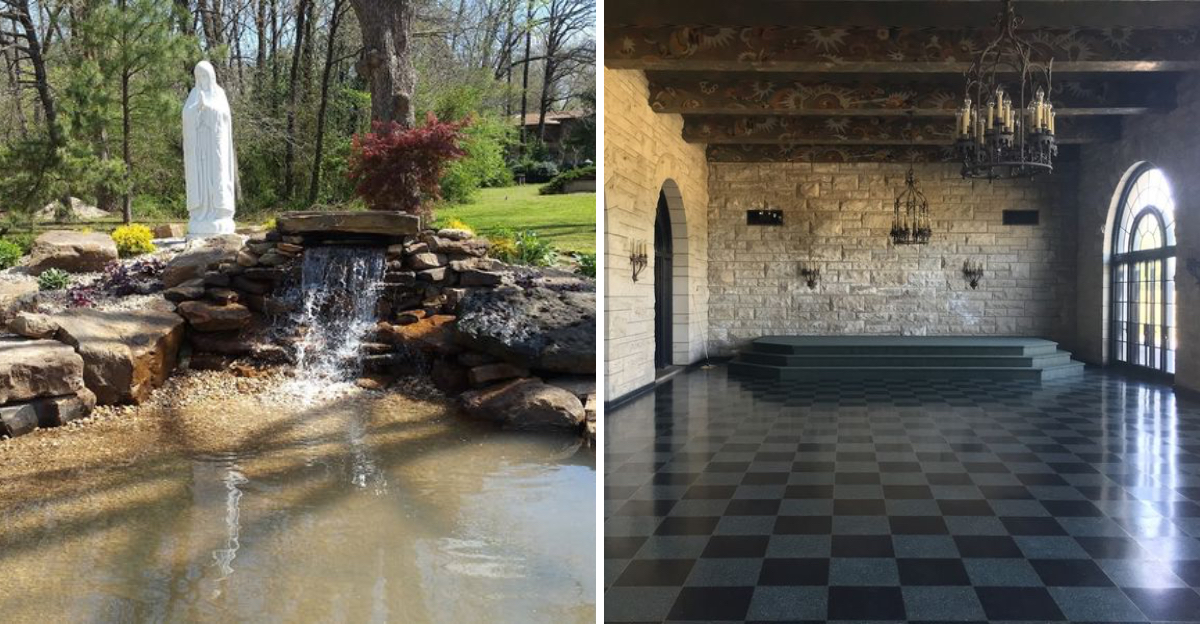
Did you hear that? Exactly. No honking, no notifications, no neighbor’s leaf blower declaring war on Sunday morning. Just the soft squeak of an old wooden floor and maybe a dove judging you from a windowsill.
Oklahoma is full of places that weren’t built for hustle. They were built for hush.
Tucked into wheat fields, hidden behind cemetery gates, or sitting quietly on a country road you almost missed, these sacred spaces have one job: making time take a nap. Walk inside and suddenly it’s 1923. Or 1907. Or somewhere in between where nobody’s checking their watch.
The pews have stories carved into them. The windows throw colored light like confetti.
And the whole place smells like old wood, older prayers, and nobody being in a rush. You don’t need to kneel. You don’t need to believe. You just need to stand still for a minute and let Oklahoma do its quiet magic.
1. The Holy City of the Wichitas, Lawton, Oklahoma
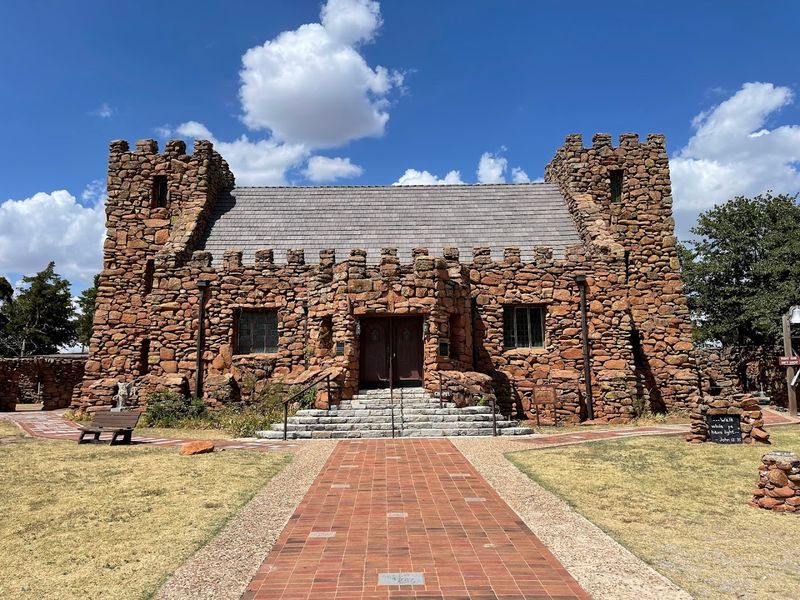
Somewhere in the shadow of the Wichita Mountains, built by the hands of WPA workers during the 1930s, sits one of the most quietly dramatic sacred spaces I have ever walked through.
The Holy City of the Wichitas in Lawton, Oklahoma, was constructed entirely from local granite, and every stone feels like it was placed with intention.
The chapel design was modeled after Christ Church in Alexandria, Virginia, giving it a distinctly colonial-era gravity that feels almost surreal against the Oklahoma plains backdrop.
Step inside and the first thing that grabs you is the hand-painted interior wall murals, vivid and detailed, telling stories across every surface.
The surrounding grounds stretch out into a full outdoor passion play site, used annually since 1926, making this one of the longest-running outdoor religious dramas in the United States.
The stone paths wind between rough-hewn buildings, and the whole complex sits at 262 Holy City Rd, Lawton, OK 73507, easily reachable but still feeling wonderfully removed from modern life.
Spring is the most popular time to visit, especially around Easter when the passion play draws large crowds, but an off-season visit in autumn lets you wander the grounds almost entirely alone.
The granite walls seem to absorb the quiet, and standing inside the chapel on a weekday afternoon, with only the wind and the mountains for company, feels like pressing pause on the entire world.
This is not a polished tourist attraction, and that rawness is exactly what makes it so memorable and worth every mile of the drive out.
2. Our Lady of Clear Creek Abbey, Hulbert, Oklahoma
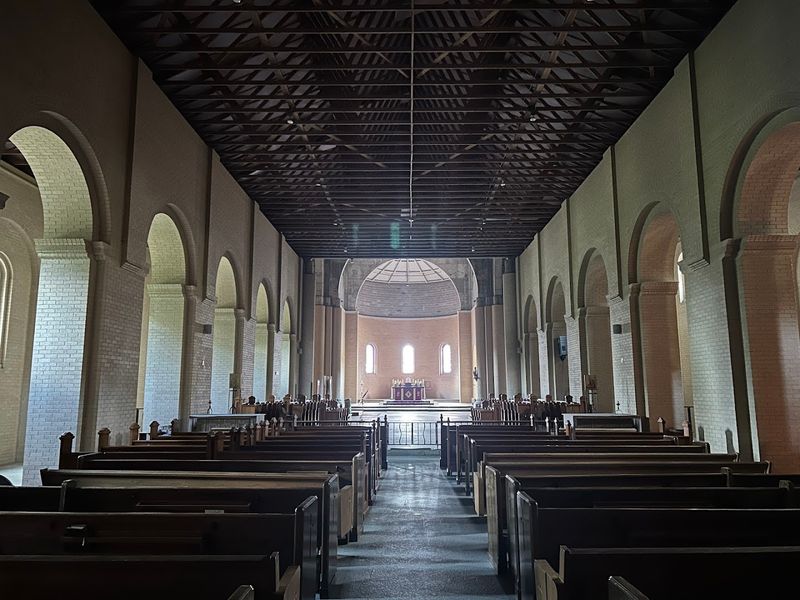
Hidden so deep in the Ozark hills near Hulbert, Oklahoma, that the GPS signal starts to feel uncertain, Our Lady of Clear Creek Abbey is the kind of place that genuinely earns the word hidden.
This is a fully active Benedictine monastery, home to monks who follow the Rule of Saint Benedict and chant the Divine Office in Latin multiple times each day.
The architecture is stunning in a way that feels almost impossible for rural northeastern Oklahoma, built in the French-Romanesque style with heavy stone walls, arched doorways, and a tower that rises above the treeline.
Founded in 1999 by monks from a French abbey, the community has been quietly constructing these buildings by hand over the decades, and the craftsmanship is extraordinary up close.
Visitors are welcome to attend the chanted prayer services, and sitting in that stone chapel while Latin fills the air is an experience that is very difficult to describe and very easy to remember.
The abbey is located at 5804 W Monastery Rd, Hulbert, OK 74441, and the road in winds through forest and farmland that feels genuinely untouched.
There is a small shop on the grounds where the monks sell their handmade products, and browsing it after morning prayer feels like a perfectly natural way to spend a quiet morning.
The best time to visit is during the week, when the grounds are calm and the schedule of prayer gives the whole day a gentle, unhurried rhythm that is hard to find anywhere else.
3. Saint Joseph Old Cathedral, Oklahoma City, Oklahoma
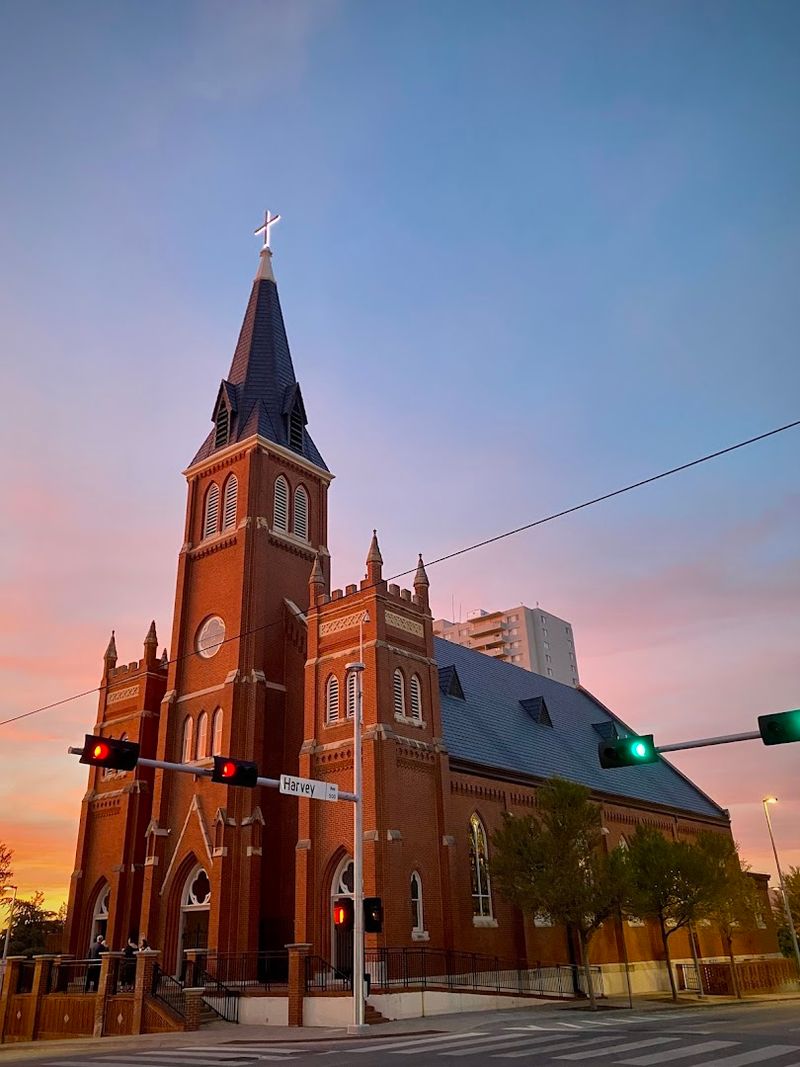
Red brick does not usually make me stop walking and stare, but Saint Joseph Old Cathedral in downtown Oklahoma City is a genuine exception to that rule.
Built in 1902, this resilient structure at 307 NW 4th St, Oklahoma City, OK 73102 has watched the city grow up around it, and it carries that long history in every carved detail of its facade.
What makes this chapel especially powerful is what it survived. The 1995 Oklahoma City bombing devastated the surrounding neighborhood, and the cathedral stood through it, its stained glass windows shattered but its walls intact.
The replacement windows were crafted with deep care, and the interior today holds a combination of original old-world artistry and carefully restored elements that together create a layered, emotional atmosphere.
Walking through the front doors feels like crossing a threshold into a much older version of the city, one built on ceremony and permanence rather than glass towers and parking lots.
The cathedral sits just a short walk from the Oklahoma City National Memorial, and visiting both in the same afternoon creates a profound experience of loss, endurance, and quiet beauty.
The interior light shifts dramatically depending on the time of day, with morning sun pushing color through the stained glass in ways that feel almost theatrical.
Weekday mornings are the best time to visit if you want the space mostly to yourself, with the sanctuary quiet enough that you can hear your own footsteps on the stone floor.
This chapel does not hide behind trees or down country roads. Its power comes from standing its ground, right in the middle of everything.
4. National Shrine of the Infant Jesus of Prague, Prague, Oklahoma
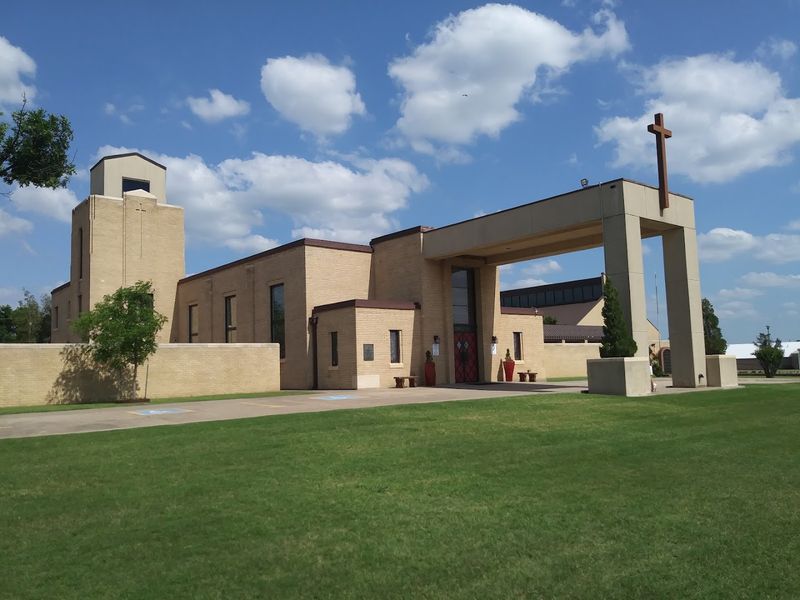
The town of Prague, Oklahoma, sits quietly along US-62, and most people drive through without knowing they are passing one of the most historically significant Catholic shrines in the entire country.
The National Shrine of the Infant Jesus of Prague at 304 Jim Thorpe Blvd, Prague, OK 74864 was established to honor the Czech heritage of early Oklahoma settlers, and it carries that cultural identity in every corner.
The shrine draws its name and its devotion from the famous statue of the Infant Jesus of Prague, a centuries-old image originally venerated in the Czech Republic that became central to the faith of Czech immigrant communities who settled this part of Oklahoma in the late 1800s.
Inside, the sanctuary is decorated with Czech-inspired religious art and iconography that gives the space a distinctly European feeling, which is both unexpected and completely absorbing in the best possible way.
The grounds outside are equally well tended, with a peaceful garden space that invites slow walking and quiet reflection without any sense of rush.
Prague itself is a small town with genuine Czech roots, and the annual Kolache Festival each May draws visitors who come for the food and often stay because the shrine turns out to be the highlight of the whole trip.
The chapel interior is compact but richly detailed, and the devotional atmosphere feels sincere and layered with generations of prayer rather than curated for tourism.
Arriving on a quiet Tuesday morning, I had the whole sanctuary to myself, and the stillness inside felt thick and warm, like something that had been building there for well over a century.
5. Thunderbird Chapel, Norman, Oklahoma
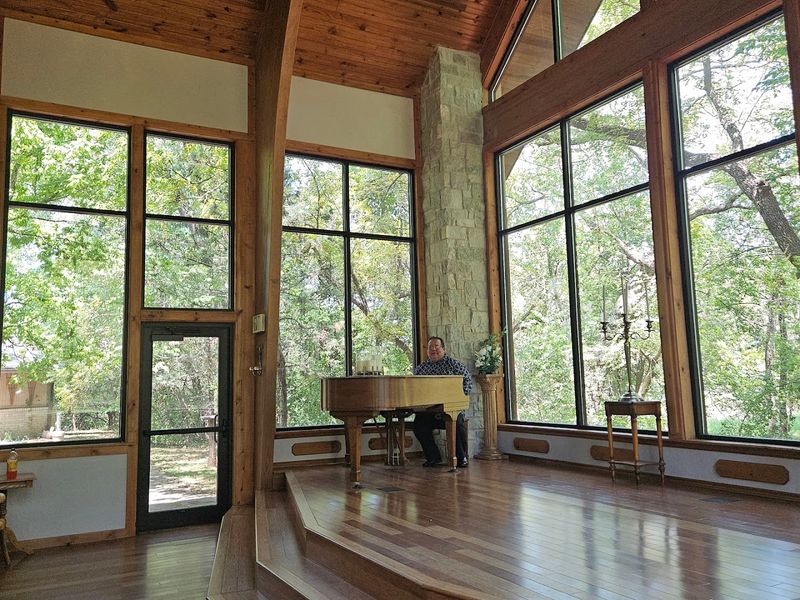
Tucked so completely inside a dense private walnut grove near Norman, Oklahoma, that you could drive past the turn-off three times before spotting the sign, Thunderbird Chapel is the kind of place that rewards patience.
Located at 11395 E State Hwy 9, Norman, OK 73026, this sun-lit wooden chapel sits on private grounds and has the feel of a space that was built to be found only by those who were truly looking for it.
The walnut grove surrounding the chapel creates a natural canopy that shifts with every season, making the same building feel entirely different depending on whether you visit in the green fullness of summer or the stripped-back clarity of winter.
The wooden architecture is simple and warm, with the kind of handcrafted quality that draws your eye to joinery and grain rather than grand ornamentation.
Light inside the chapel moves in slow, shifting patches as the wind stirs the branches overhead, and sitting quietly inside on a still weekday morning is genuinely one of the more peaceful experiences I have had in Oklahoma.
The chapel is frequently used for weddings and private ceremonies, which means scheduling a visit in advance is a smart move to avoid arriving during a private event.
Autumn is a particularly good time to visit this one, when the walnut leaves turn and fall around the chapel walls and the whole grove takes on a warm, amber quality.
There is no grand history attached to this chapel, no famous architect or dramatic backstory, and somehow that simplicity is exactly what makes it feel so genuinely timeless and worth the detour off the highway.
6. St. Brigid Catholic Church, Tahlequah, Oklahoma
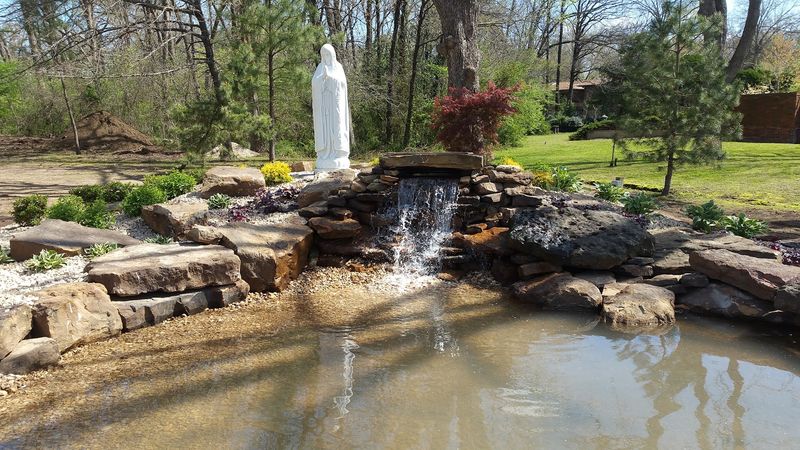
There is something particularly moving about a tiny parish church that has been quietly serving its community for generations, and St. Brigid Catholic Church in Tahlequah, Oklahoma, carries that quality in every stone and garden path.
Located at 807 Crafton St, Tahlequah, OK 74464, this beautifully preserved community sanctuary sits in the heart of Cherokee Nation territory, which gives the surrounding landscape and history an added layer of depth and significance.
The outdoor stone Marian grotto is the feature that most visitors remember long after they leave. Carved from natural stone and set within a carefully tended garden, it creates a meditation space that feels ancient even though the town around it is very much alive and contemporary.
The meditation gardens surrounding the grotto are planted and maintained with obvious care, and walking through them slowly before entering the church sets a mood that the interior then deepens rather than breaks.
Tahlequah itself is a fascinating town, serving as the capital of the Cherokee Nation, and combining a visit to St. Brigid with time spent exploring the broader cultural heritage of the area makes for a genuinely rich day trip.
The church interior is compact and filled with the kind of modest, sincere religious art that feels personal rather than performative, with a warmth that larger cathedrals sometimes struggle to achieve.
Morning light falls gently through the windows and onto the grotto stones in a way that feels carefully designed, even though nature rather than any architect arranged it that way.
This small chapel reminds me that sacred spaces do not need to be grand to be genuinely powerful and worth traveling to find.
7. Hopewell Baptist Teepee Church, Edmond, Oklahoma
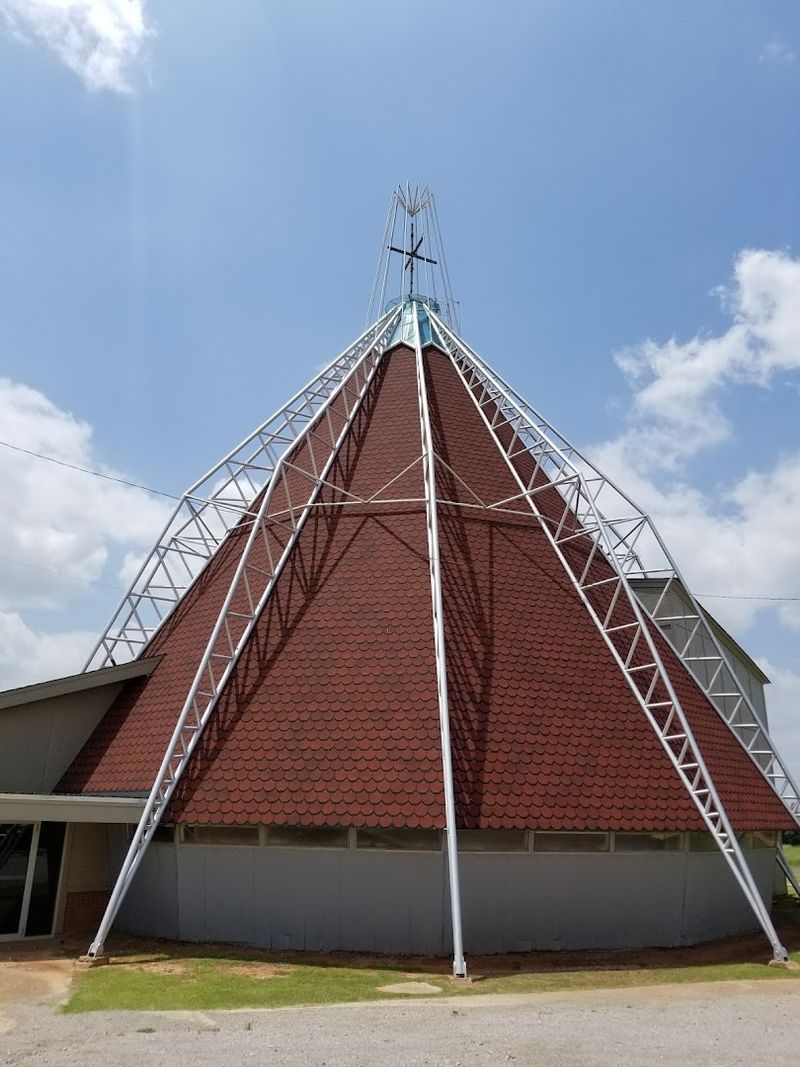
Bruce Goff was not an architect who played it safe, and the Hopewell Baptist Teepee Church in Edmond, Oklahoma, is one of the most vivid proofs of that fact still standing in the state.
Located at 5801 NW 178th St, Edmond, OK 73012, this extraordinary 12-sided sanctuary was designed by Goff, one of America’s most inventive organic architects, and built using local stone alongside surplus oil-field drilling pipes as structural elements.
The result is a building that looks like nothing else in Oklahoma or anywhere else, a circular, tent-like form that rises from the flat landscape with a confidence that feels both deeply rooted and completely original.
Goff was a student and friend of Frank Lloyd Wright, but his design language was entirely his own, and this chapel demonstrates that independence in every angle and material choice.
The interior is equally striking, with the 12-sided geometry creating a spatial experience that feels enveloping rather than directional, pulling your attention toward the center rather than forward toward an altar.
Because this is an active Baptist congregation, visiting during a service or an open community event is the best way to experience the interior, and the congregation has historically been welcoming to architectural pilgrims who make the trip.
The surrounding landscape is flat and open, which makes the chapel’s unusual silhouette even more dramatic as you approach it along the road.
Standing outside and slowly walking the perimeter of the 12-sided structure, trying to find an angle where it looks ordinary, is a genuinely entertaining exercise that ends without success every single time.
8. The Private Chapel at Marland Mansion, Ponca City, Oklahoma
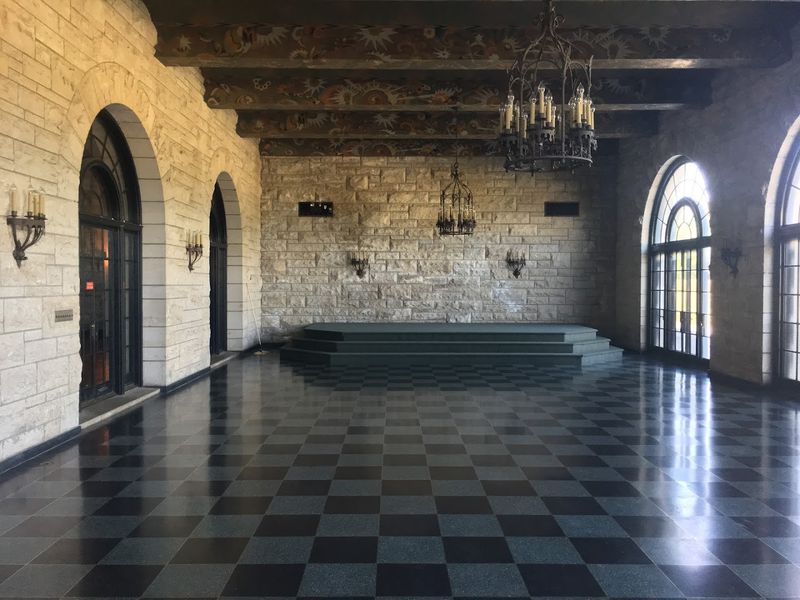
Oil money built some extraordinary things in early twentieth-century Oklahoma, and the private chapel tucked inside the Marland Mansion in Ponca City is among the most opulent and least-known of those achievements.
The mansion at 901 Monument Rd, Ponca City, OK 74604 was built by E.W. Marland, once one of the wealthiest men in America, who modeled his 55-room estate on the Davanzati Palace in Florence, Italy.
The private chapel within the mansion is a space of extraordinary detail, with European-style stone carvings that required skilled craftsmen to execute, and a scale that feels both intimate and genuinely grand at the same time.
Marland’s story is one of the most dramatic in Oklahoma history, a man who rose to extraordinary heights during the oil boom and then lost nearly everything, and the chapel carries that weight in its atmosphere.
Guided tours of the mansion are the primary way to access the interior spaces, including the chapel, and the guides at Marland Mansion are particularly good at weaving personal history into architectural detail in a way that makes the building come alive.
The grounds outside are equally impressive, with formal gardens and a reflecting pool that give the estate a scale and grandeur unusual for this part of the country.
Ponca City itself is a worthwhile destination on its own terms, with several other historic sites connected to the early oil industry that add context to the Marland story.
Visiting on a weekday morning, before tour groups arrive, gives you the best chance to stand quietly in the chapel and let the carved stone details tell their story at your own pace.
9. Vaught Chapel at East Central University, Ada, Oklahoma
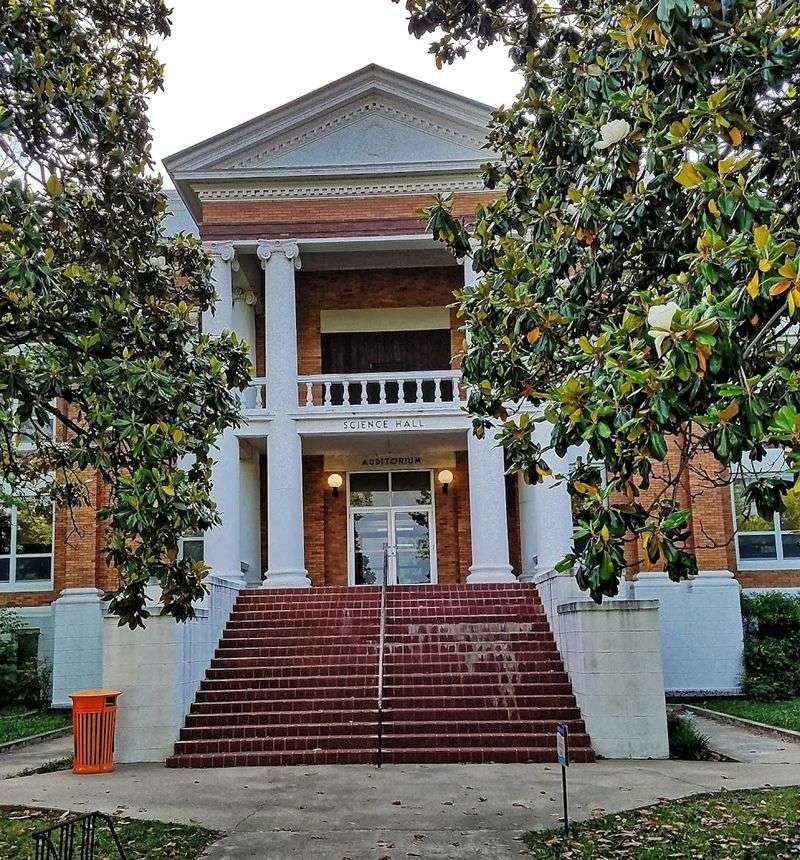
College campuses sometimes hide their best architecture in plain sight, and Vaught Chapel at East Central University in Ada, Oklahoma, is a perfect example of a building that deserves far more attention than it typically receives.
Located at 1100 E 14th St, Ada, OK 74820, this mid-century modern chapel was designed with soaring stone pillars that draw the eye upward from the moment you approach it across the campus grounds.
The abstract stained glass is the interior feature that most people talk about after visiting, and rightly so. The panels wash the inside of the chapel in shifting colors that change completely depending on cloud cover and time of day.
Mid-century modern sacred architecture occupies a fascinating space between the ornate traditions of older church design and the clean minimalism of postwar modernism, and Vaught Chapel navigates that tension with real elegance.
East Central University is a relatively small regional university, which means the chapel rarely draws the crowds that similarly designed spaces at larger institutions might attract, giving visitors a more personal and unhurried experience.
The campus itself is pleasant to walk, and spending time in the surrounding grounds before entering the chapel creates a natural transition from the everyday into the contemplative atmosphere inside.
Ada is located in south-central Oklahoma, an area with its own quiet character and several other points of historical and natural interest that make it worth building a longer trip around.
The stained glass at Vaught Chapel hits its most dramatic moment in the late morning, when direct sunlight pushes through the abstract panels and fills the stone interior with color in a way that feels genuinely unexpected and hard to forget.
10. St. Crispin’s Conference Center and Camp Chapel, Wewoka, Oklahoma
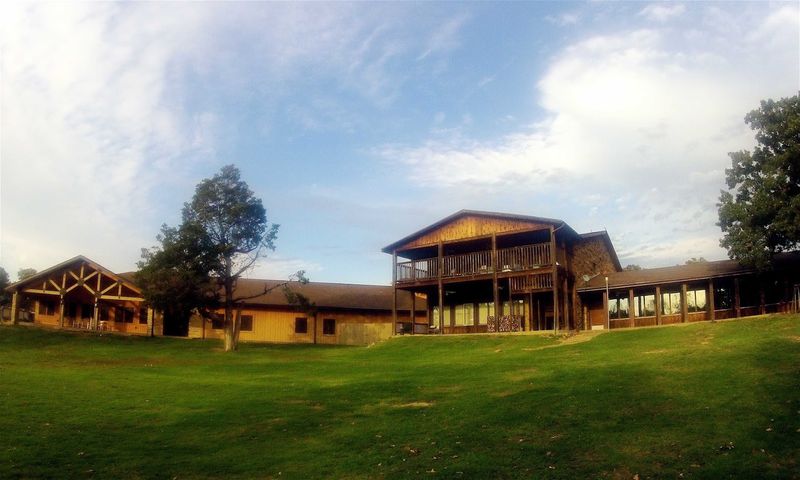
Deep inside a tranquil oak forest near Wewoka, Oklahoma, there is a cedar-and-glass chapel that looks out over a quiet, completely secluded lake, and the combination of those two things is almost unfairly beautiful.
St. Crispin’s Conference Center and Camp at 3630 Co Rd 1190, Wewoka, OK 74884 has been serving as a retreat and conference space for decades, and the chapel at its heart is the spiritual and architectural centerpiece of the whole property.
The cedar construction gives the building a warm, woody smell that hits you the moment you open the door, and the large glass panels looking out toward the lake make the forest feel like part of the interior rather than something separate from it.
This is an Episcopal camp and conference center, and the chapel reflects that tradition with a liturgical layout that is dignified without being cold, and simple without being bare.
The oak forest surrounding the property changes dramatically with the seasons, and I would particularly recommend a fall visit when the canopy turns and the lake reflects the colors back at double intensity.
Because St. Crispin’s primarily serves retreat and conference groups, individual visitors should check availability before making the trip, as the grounds may be in use for private events on certain weekends.
The trails around the lake are open and easy to walk, and spending an hour on the water’s edge before stepping into the chapel creates a natural, unhurried transition into the quieter headspace the building invites.
Few places in Oklahoma manage to feel this genuinely removed from the noise of daily life, and this chapel earns every bit of that peaceful reputation.
