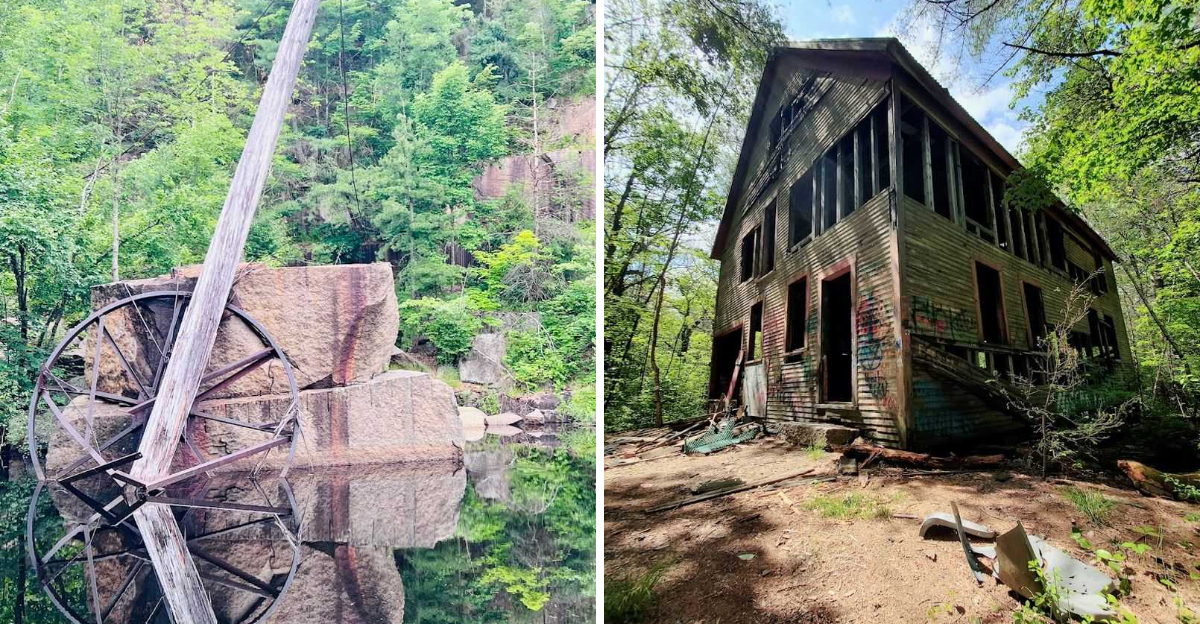
The water looks calm and clear from the surface, almost inviting. You would never guess what lies beneath.
This massive flooded quarry in New Hampshire is hiding a secret. Sunken industrial machinery, abandoned decades ago and left to rest at the bottom.
The water is deep and cold, and the machinery is still down there, rusting slowly in the dark. I stood at the edge and tried to see through the surface.
The visibility is good, but the depth makes it impossible to see the bottom. Local divers have explored the quarry, and they have found old trucks and excavators and pieces of equipment that were too heavy to move when the quarry closed.
They sit there now, silent and forgotten. The quarry is a popular swimming spot in the summer, and most people have no idea what is below them while they float.
That is the thing about this place. It looks peaceful on the surface.
But underneath, there is a whole world of history just waiting.
The Flooded Green Quarry and Its Ghostly Underwater World
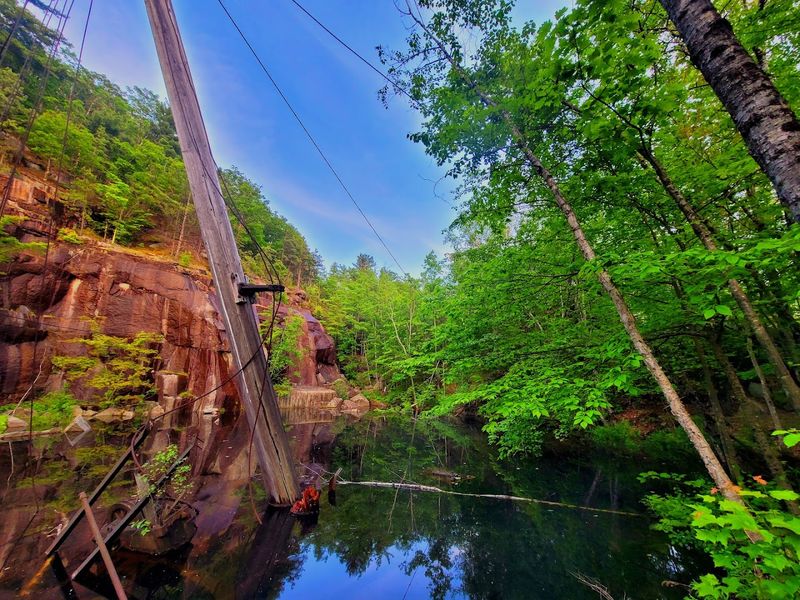
Picture this: a massive pit carved out of solid granite, now filled with water so still it mirrors the sky. Lurking beneath that calm surface are the skeletal remains of industrial machines that once roared with life.
The Green Quarry at Redstone Quarry is genuinely one of the most surreal sights in all of New Hampshire, and it costs nothing but a good pair of walking shoes to reach it.
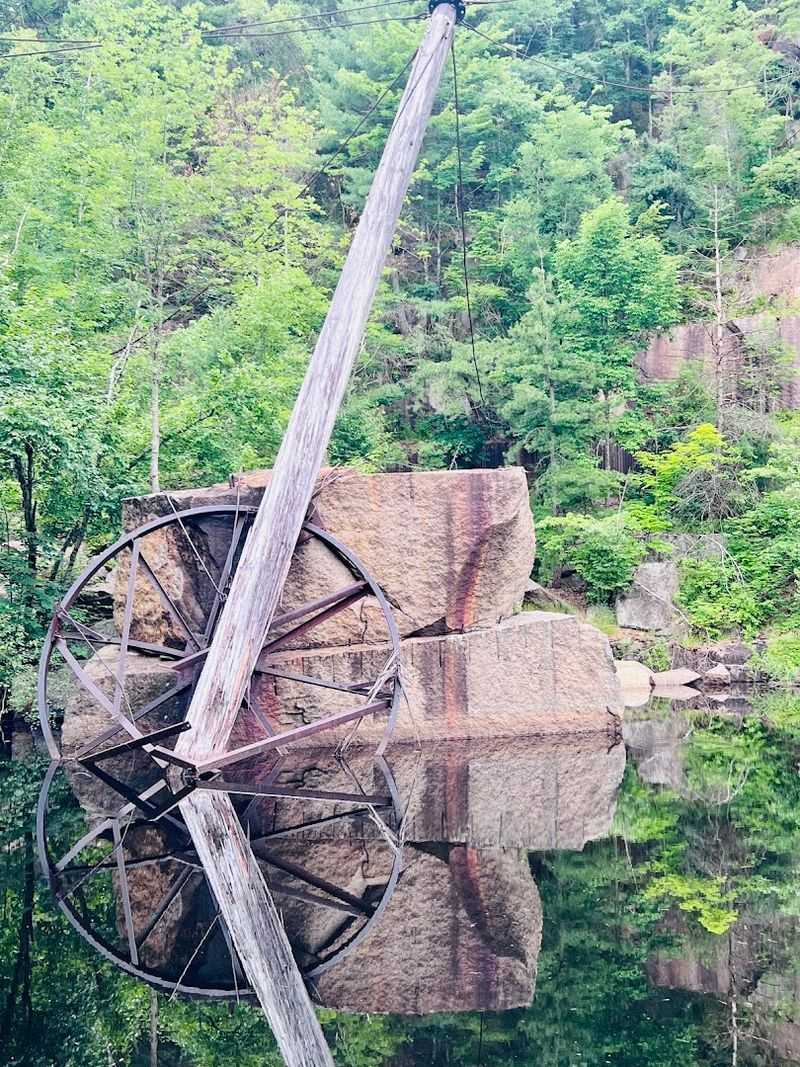
Giant derricks, their wooden masts still poking above the waterline like bony fingers, mark the spot where workers once heaved enormous granite blocks out of the earth. Below the surface, heavy equipment rests exactly where it sank, slowly being claimed by the depths.
The water has a hauntingly beautiful clarity that makes the submerged shapes visible, which only adds to the eerie atmosphere.
Swimming is strongly discouraged here, and for very good reason. The submerged machinery creates serious hazards beneath the surface.
Admiring from the rocky edge is the move, and trust me, the view alone is worth every step of the hike. New Hampshire rarely serves up drama quite like this.
Wooden Derrick Masts Rising Above the Water
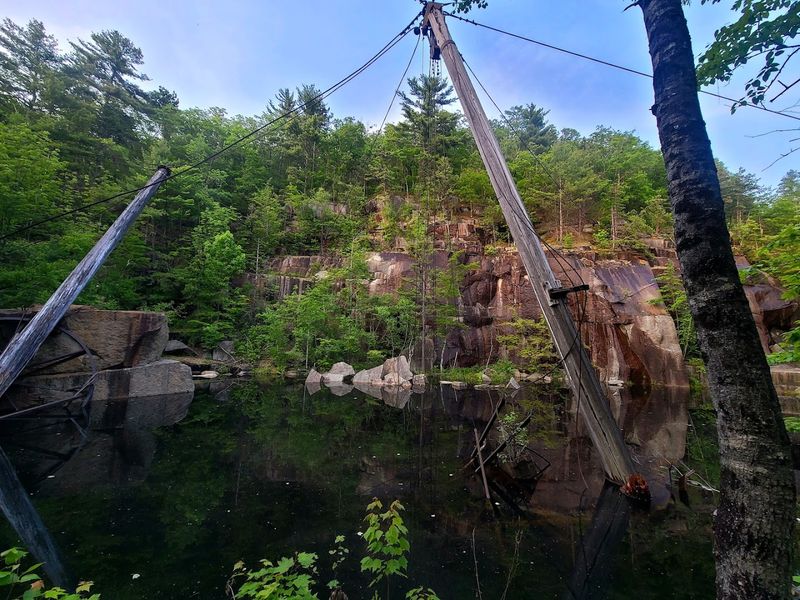
There is something almost cinematic about spotting those tall wooden derrick masts jutting out of the water at the Green Quarry.
They look like the masts of a sunken ship, and in a way, that is exactly what they are: the last visible evidence of a massive industrial operation that once defined this corner of Carroll County.
Derricks were the workhorses of granite quarrying, used to lift and swing enormous stone blocks that no human crew could budge alone. At Redstone Quarry, these structures were so robust that even after decades submerged in water, their wooden frames have survived in remarkable condition.
Standing at the quarry’s edge and gazing at those masts is a genuinely moving experience.
More derrick booms and masts lie scattered on the ground surrounding the quarry, giving the whole area a kind of open-air museum quality. The scale of the equipment makes it easy to imagine the noise, the dust, and the sheer muscle of the operation that once ran here.
New Hampshire’s industrial past does not get more tangible than this.
Rusting Coal-Fired Boilers Hiding in the Woods
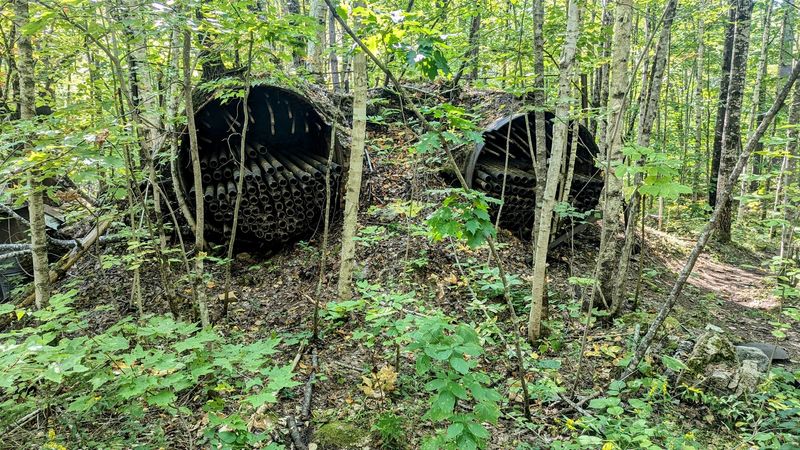
Wandering the trail at Redstone Quarry feels like walking through a forgotten chapter of American industrial history, especially when you round a bend and suddenly come face to face with a massive rusting boiler sitting quietly among the trees.
These coal-fired giants once generated the steam power that kept the entire quarry operation humming, and seeing them up close is a genuine thrill.
The boilers are enormous, far larger than you might expect, and their rusted surfaces carry a satisfying texture of age and hard use. Mosses and lichens have crept across the metal over the decades, softening the industrial edges and blending the machines into the landscape in a way that feels almost intentional.
Nature is doing its best to reclaim what was hers.
What makes this spot so compelling is the contrast between the wild forest setting and the heavy industrial artifacts scattered throughout it. Carroll County is full of scenic trails, but very few deliver this kind of unexpected historical punch.
Standing next to one of these boilers, you get a visceral sense of just how much labor and engineering went into pulling granite from the earth at this remarkable site.
Giant Air Compressors That Once Powered the Pneumatic Tools
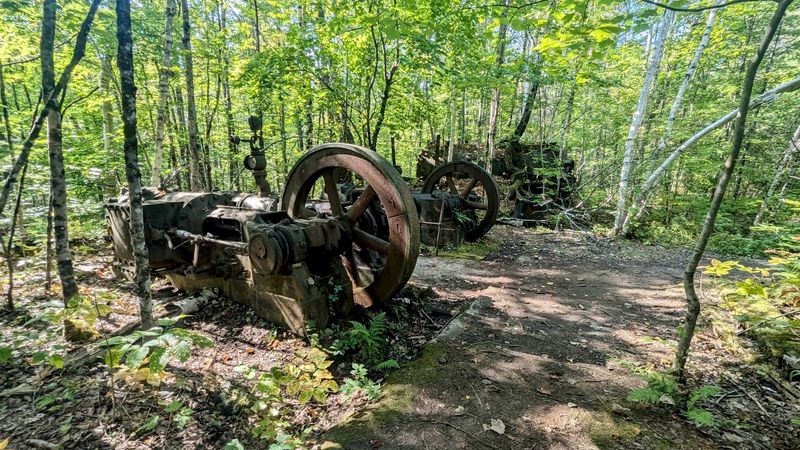
Before electric tools became standard, pneumatic power was the cutting edge of quarry technology, and Redstone Quarry was fully equipped with the giant air compressors needed to drive those tools.
Spotting these machines on the trail is one of the highlights of any visit, partly because of their impressive size and partly because they look so completely out of place in a quiet woodland setting.
Pneumatic drills and hammers were used to cut, shape, and split granite blocks with far more speed and precision than hand tools allowed. The compressors that fed those tools were serious pieces of engineering, built to run continuously under heavy industrial loads.
Finding them here, slowly rusting into the New Hampshire soil, is a bittersweet reminder of how quickly technology moves on.
The machines still carry a sense of raw mechanical power even in their dormant state. Thick metal casings, heavy valves, and complex pipe fittings all speak to the engineering ambition of the quarry’s peak years.
Redstone Quarry rewards curious hikers who take the time to stop, look closely, and really think about what they are seeing rather than rushing past to the next trail marker.
The Massive Granite Lathes Used for Polishing Columns
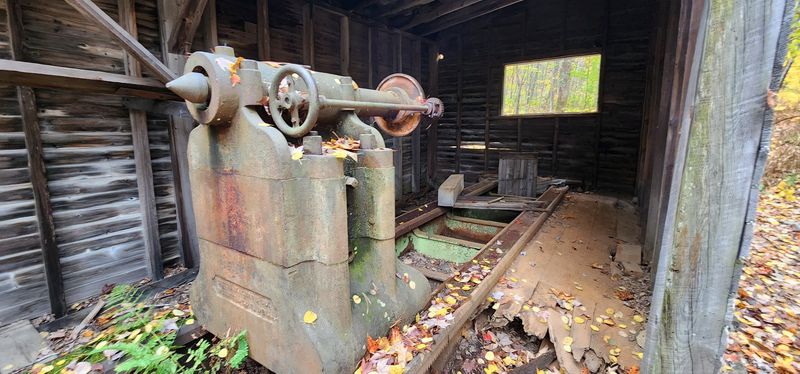
Granite lathes are not something most people expect to encounter on a casual hike, which is exactly what makes finding them at Redstone Quarry so memorable.
These enormous machines were used to turn and polish granite columns. They were shaping raw stone into the smooth, elegant architectural pieces that graced buildings across the country during the quarry’s most productive years.
The lathes at this site are genuinely massive, a testament to the ambition of the operation that ran here. Watching a stone lathe work would have been an extraordinary spectacle, the grinding of granite against cutting tools, the slow rotation of a column that weighed more than a car.
Now they sit still and silent, their function frozen in the past.
The lathe building itself is a landmark on the trail, and the directions to reach the Green Quarry actually use it as a navigation point. Going around the corner of the lathe building and following the path uphill takes you directly to the flooded pit.
It is a wonderfully practical connection between the working machinery of the quarry’s past and the flooded mystery of its present, all tied together in one unforgettable walk through North Conway’s industrial heritage.
Sections of Railroad Track Still Embedded in the Ground
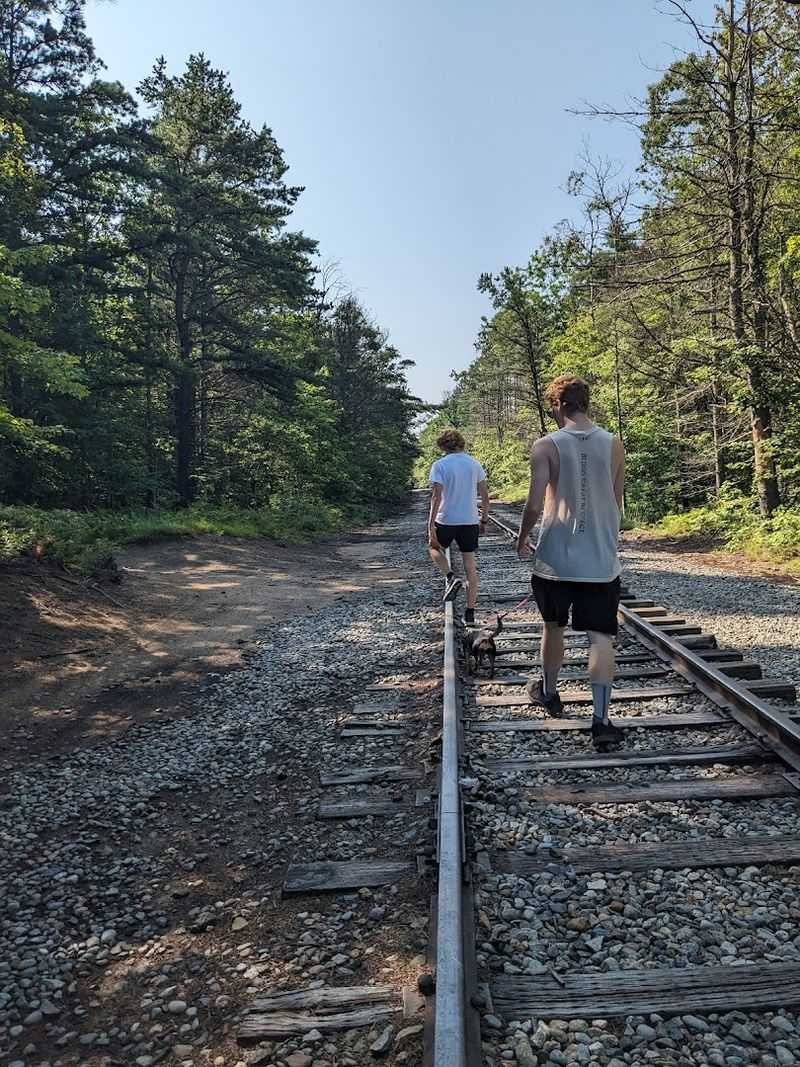
Rail lines were absolutely essential to quarry operations in the late nineteenth century, and Redstone Quarry was no exception. Sections of the original railroad track used to transport granite blocks away from the site are still visible, partially embedded in the ground and slowly being swallowed by soil and vegetation.
Spotting them gives the trail a treasure-hunt quality that keeps every step interesting.
Granite is extraordinarily heavy, and moving large blocks any distance by hand or horse was simply not practical at industrial scale. Rail transport solved that problem elegantly, allowing the quarry to ship finished stone to markets far beyond Carroll County.
The tracks here are a physical record of that logistical ingenuity, still lying in the landscape long after the last train departed.
Hikers who pay attention to the ground as well as the trees will spot these embedded rails at multiple points along the trail. They are easy to miss if you are moving quickly, but slowing down to examine them is absolutely worth it.
Few things connect you to the past as directly as standing on the exact same rails that once carried New Hampshire granite to the wider world. Redstone Quarry delivers that connection in spades.
The Pink and Green Granite That Made This Quarry Famous
Most people think of granite as a uniform grey material, which makes Redstone Quarry’s geological story genuinely surprising. This site produced both pink and red granite and a distinctive green granite from two separate quarry pits located remarkably close to each other.
That unusual combination of colors in such close proximity made Redstone Quarry stand out in an industry where product consistency was everything.
New Hampshire earned its nickname as the Granite State through centuries of stone extraction, and the variety found here represents some of the most visually striking material the state ever produced.
The pink and red tones came from the concentration of feldspar in the rock, while the green coloration reflected a different mineral composition just a short distance away.
Geologically speaking, it is a fascinating quirk of the local bedrock.
Chunks and offcuts of both granite types are still scattered around the site, giving visitors a chance to see the color contrast up close without any museum glass between them and the stone. Running a hand across a piece of original Redstone granite feels like touching something genuinely significant.
North Conway sits in a landscape shaped by this stone, and visiting the quarry makes that relationship feel immediate and real.
The Engaged Column and Abandoned Stone Artifacts on the Trail
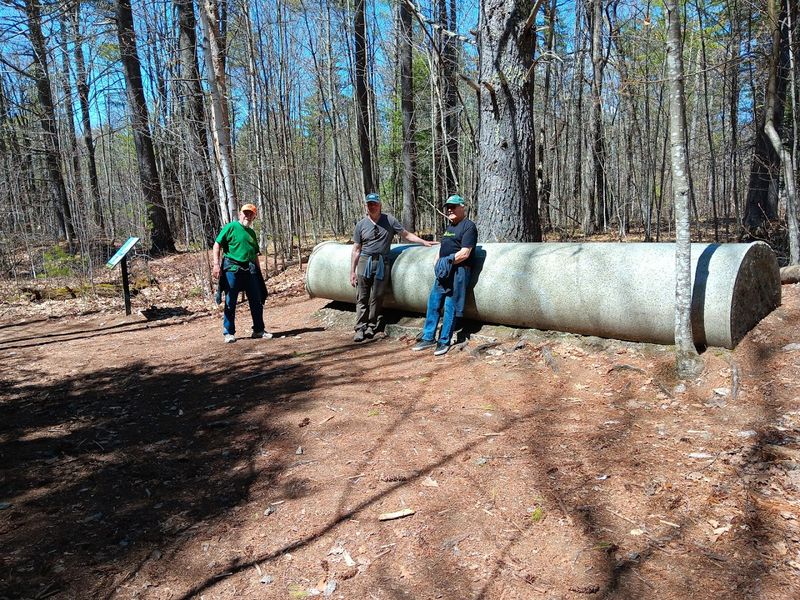
One of the first dramatic discoveries on the Redstone Quarry trail is a large, smooth granite column lying on the ground as if it simply decided to take a permanent rest there. Known as an engaged column, this piece was shaped and polished at the quarry but never made it to its intended destination.
Finding it in the middle of the woods, perfectly formed and completely out of context, is one of those moments that stops you in your tracks.
The column serves as both a landmark and an introduction to the kind of craftsmanship that defined this operation. Workers here were not just blasting rock out of the ground.
They were shaping architectural elements of real sophistication, pieces meant for grand buildings and public monuments. The fact that this one stayed behind tells its own quiet story about the quarry’s final years.
Informational signposts near the column provide context about the quarry’s history, making this a natural starting point for understanding everything else you will see further along the trail. Redstone Quarry rewards those who read the signs and take their time.
North Conway has no shortage of outdoor attractions, but this one offers a depth of historical storytelling that genuinely sets it apart.
Old Wooden Structures and the Ghost Town Atmosphere
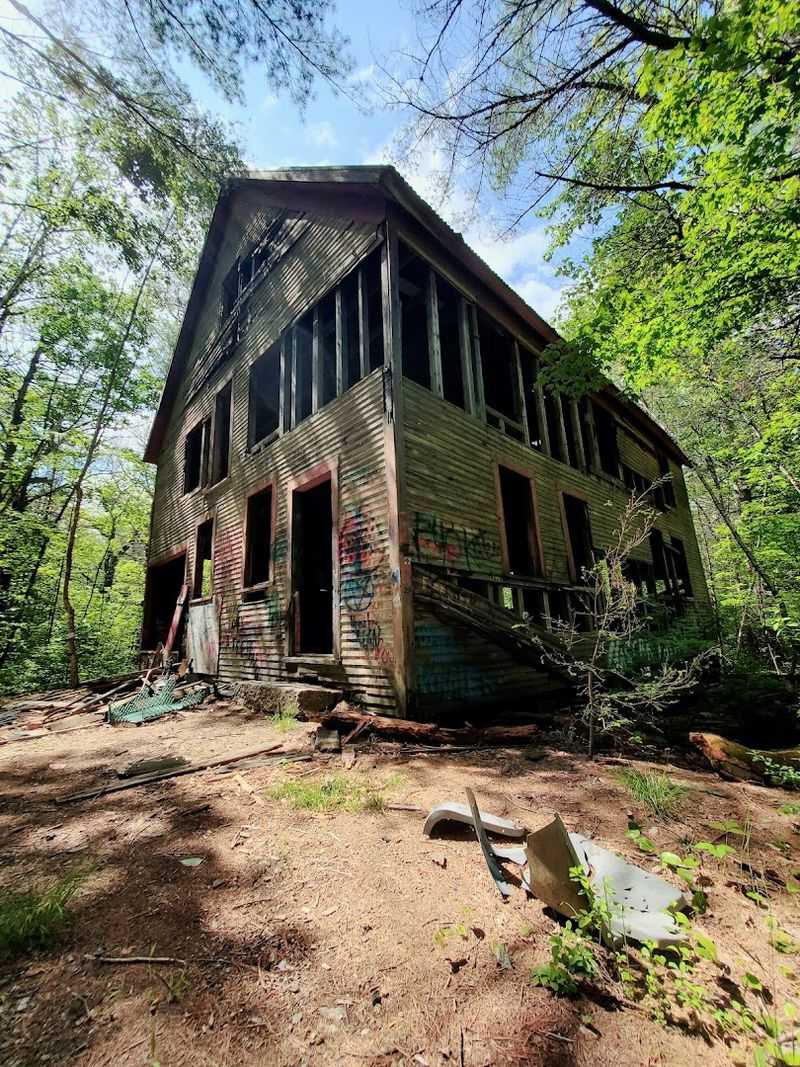
Walking deeper into the Redstone Quarry site, the ruins of old wooden structures begin to appear among the trees, their walls leaning and their roofs long since collapsed. These were the working buildings of a functioning industrial community.
Their decay has given the entire area a ghost-town atmosphere that feels completely unlike any other hiking destination in New Hampshire.
At its peak, the quarry supported a real community in the unincorporated settlement of Redstone, with workers, equipment operators, and support staff all living and working in the area.
The buildings that remain are the physical echo of that vanished world, and even in their deteriorated state they carry a haunting sense of former purpose.
One of the larger structures has unfortunately suffered from vandalism over the years, but enough remains to fire the imagination.
The combination of ruined buildings, scattered machinery, and overgrown pathways creates an atmosphere that serious explorers and casual hikers alike find genuinely compelling.
Bringing a camera is an absolute must, because the light filtering through the trees and catching the textures of old wood and rusted metal produces photographs that look almost too dramatic to be real.
Redstone Quarry is not just a trail. It is a full sensory experience.
The Nature Conservancy’s Green Hills Preserve and How to Get There
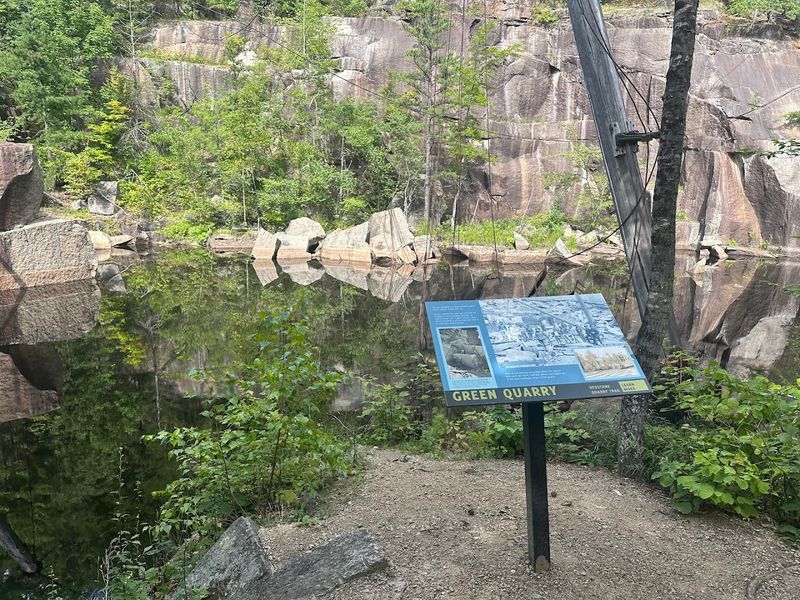
Redstone Quarry is now protected as part of The Nature Conservancy’s Green Hills Preserve, which means the site is not just accessible but actively cared for and maintained as a natural and historical resource. The preserve includes a network of trails used by hikers, trail runners, and mountain bikers, making it a genuinely versatile outdoor destination in the heart of North Conway.
Getting oriented at the trailhead is important because the trail network includes mountain biking routes that can make navigation confusing for first-time visitors. The advice from experienced hikers is to look at the map posted in the parking lot before setting off, then head straight across into the woods when you enter the trail system.
Cross the wider trail and continue on the bike trail away from the car park to start finding the quarry artifacts.
The address to plug into your GPS is North Conway, NH 03860, and the trailhead is located at the edge of town with easy access from the main road. Dogs are welcome on the trails, the terrain is manageable for most fitness levels, and the combination of natural beauty and industrial history makes this one of the most rewarding short hikes in the entire state.
New Hampshire adventure starts right here.
