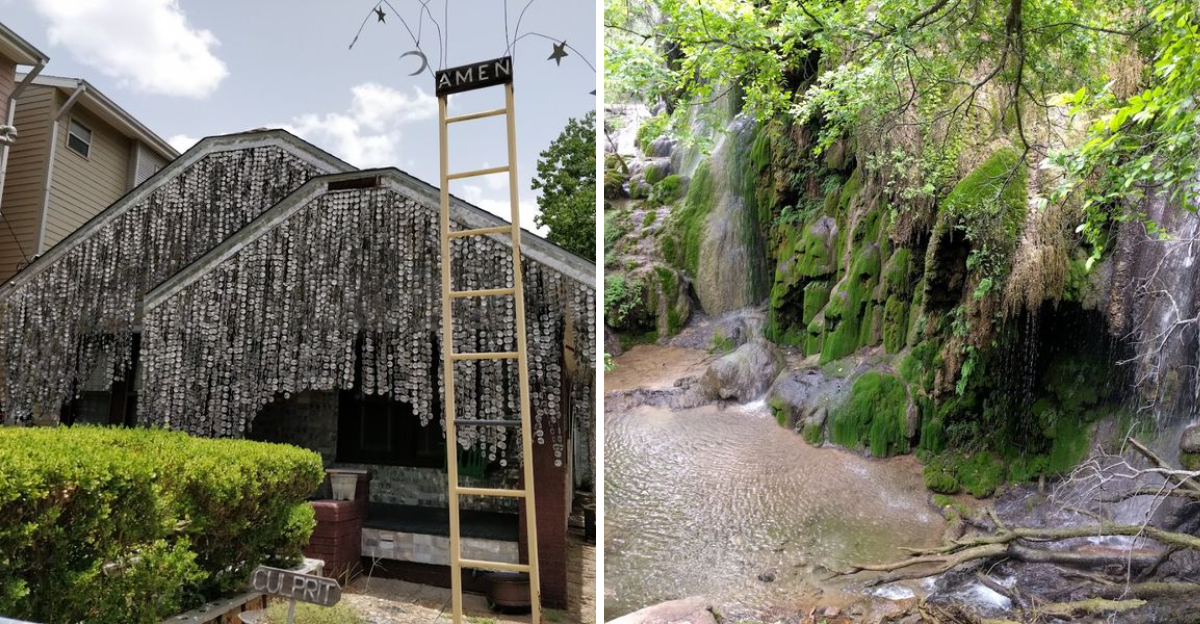
Every state has its famous landmarks, the ones that end up on postcards and bucket lists. But the real magic often hides in the spots that tourists just drive right past.
A swimming hole fed by an underground spring, a dance hall where the floor has creaked under decades of boots, a diner that serves pie so good it should be illegal. These are the places locals keep close to their chest, not because they are unfriendly, but because the crowds would ruin the vibe.
They are not flashy or promoted, just consistently good, quietly reliable, and always welcoming. This list is for anyone who wants to see Texas the way Texans do.
No souvenir shops, no ticket booths, just honest places that deliver every single time. Pack a sense of adventure and a willingness to wander off the main road.
1. Hueco Tanks State Park and Historic Site, El Paso
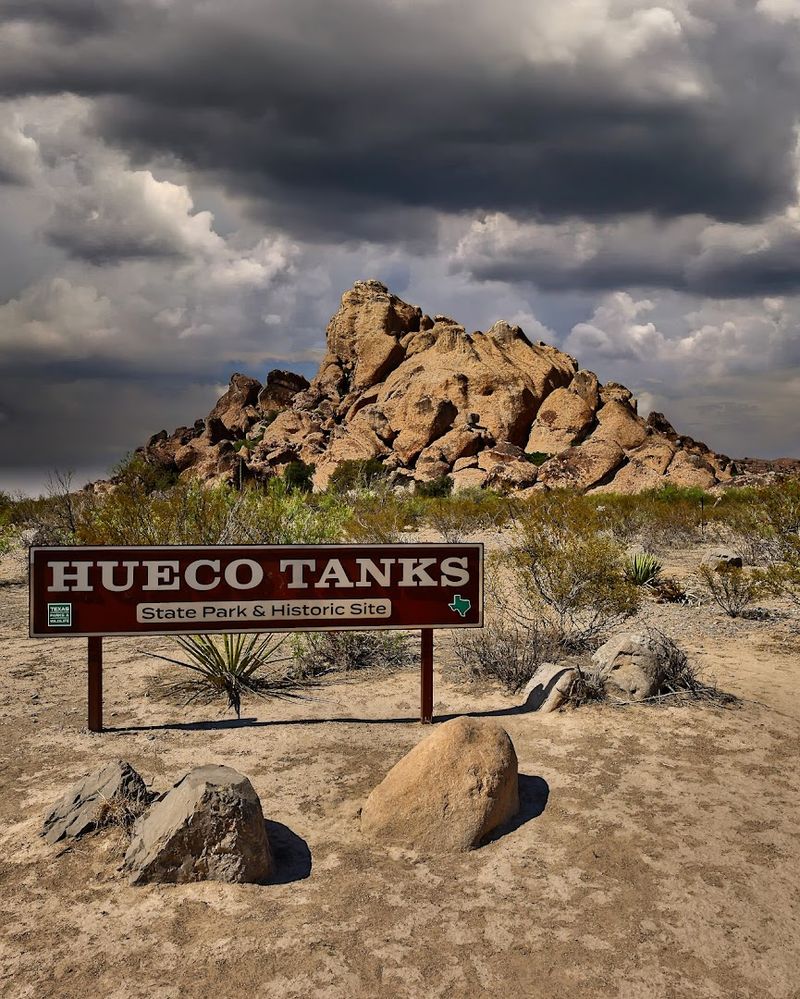
There’s something almost electric about being surrounded by massive granite boulders that have held human stories for thousands of years.
Hueco Tanks sits in the Chihuahuan Desert east of El Paso, and the moment you step onto its rocky terrain, you get the sense that this place has been important for a very long time.
The name “hueco” means hollow in Spanish, referring to the natural rock basins that collect rainwater and made this site a vital water source for ancient peoples.
The park holds one of the finest collections of pictographs in North America, with over 3,000 images painted by Jornada Mogollon, Kiowa, and other groups across thousands of years. Rock climbers from around the world quietly know about this spot, but most tourists have no idea it exists.
The bouldering here is genuinely world-class, with problems ranging from beginner-friendly to brutally technical.
Because the pictographs are fragile, access to certain areas is limited to guided tours, which actually makes the experience feel more personal and intentional. Rangers are passionate and knowledgeable, and their stories add layers to what you’re seeing on the rock faces.
Early morning visits reward you with cool air and golden light that makes the desert landscape glow in a way that photos can never fully capture. It’s the kind of place that stays with you long after you’ve driven away.
Address: 6900 Hueco Tanks Rd #1, El Paso, TX 79938
2. Caddo Lake State Park, Karnack
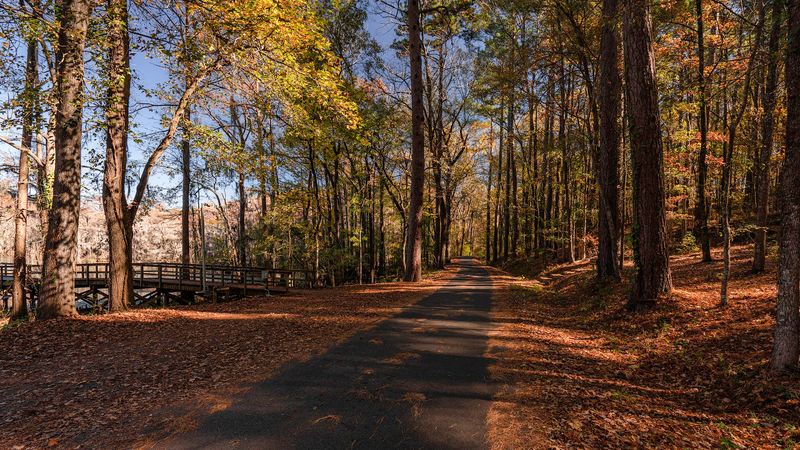
Caddo Lake doesn’t feel like Texas at all, and that’s exactly what makes it so captivating. Ancient bald cypress trees rise straight out of the water, their roots tangled and gnarled, their branches draped in long curtains of Spanish moss that sway in the slightest breeze.
The lake stretches across the Texas-Louisiana border and is the only naturally formed lake in Texas, created by a massive logjam on the Red River long before any dam was built.
Paddling through the narrow bayous here is genuinely one of the most atmospheric experiences in the entire state. The waterways twist and branch in every direction, and it’s surprisingly easy to feel like you’ve wandered into a completely different world.
Local fishermen know these channels by heart, and you’ll often spot them gliding silently through the mist in flat-bottomed boats before sunrise.
Wildlife is everywhere if you slow down enough to notice. Great blue herons stand perfectly still in the shallows, alligators sun themselves on muddy banks, and the calls of birds you can’t quite identify echo across the water.
Camping near the lake means falling asleep to sounds that feel ancient and unhurried. The state park offers boat rentals and canoe launches, so you don’t need to bring your own gear to experience the magic.
This is one of those rare places where the atmosphere does all the talking, and all you have to do is show up.
Address: 245 Park Rd 2, Karnack, TX 75661
3. Gorman Falls, Colorado Bend State Park, Bend
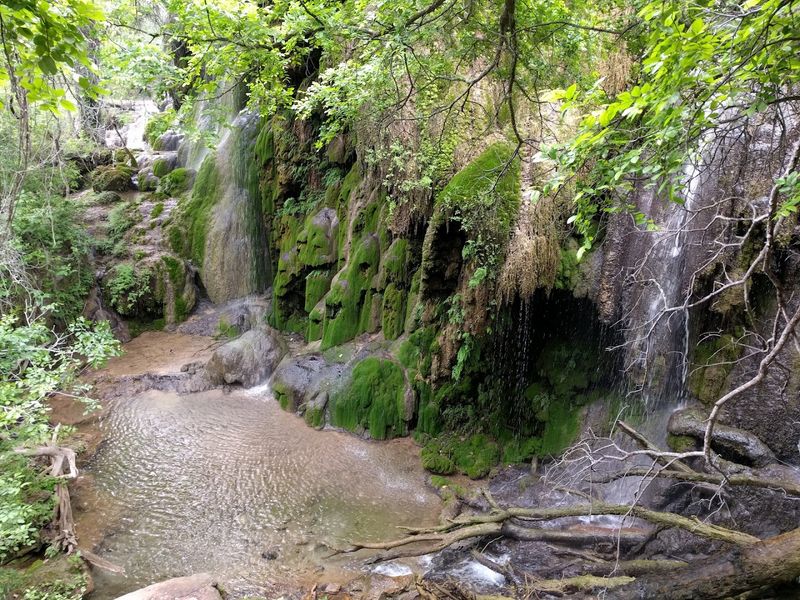
Most people picture dry, dusty terrain when they think about central Texas, which makes the first glimpse of Gorman Falls feel almost unreal.
A ribbon of water tumbles nearly 70 feet down a wall of moss-covered travertine rock, surrounded by ferns, willows, and maidenhair ferns so dense and green they look almost tropical.
The contrast with the surrounding Hill Country scrubland is genuinely startling in the best possible way.
Getting there requires a roughly three-mile round-trip hike through cedar and oak woodland, and the trail is not paved or particularly groomed. That’s part of what keeps the crowds away.
By the time you arrive at the falls, you’ve earned it, and the reward feels proportional to the effort. The sound of the water builds slowly as you approach, giving you just enough anticipation before the full view opens up.
Swimming is not permitted at the falls to protect the delicate ecosystem, but standing near the base and feeling the cool mist on your face is its own kind of refreshment. The travertine formations are actively growing, shaped by mineral deposits left behind by the water over centuries.
Rangers sometimes note that the falls look slightly different every few years as the rock slowly changes shape. Colorado Bend State Park also offers some of the best stargazing in Texas thanks to its low light pollution, so spending a night here turns the whole trip into something truly special.
Address: 1201 Colorado Park Rd, Bend, TX 76824
4. Caprock Canyons State Park, Quitaque
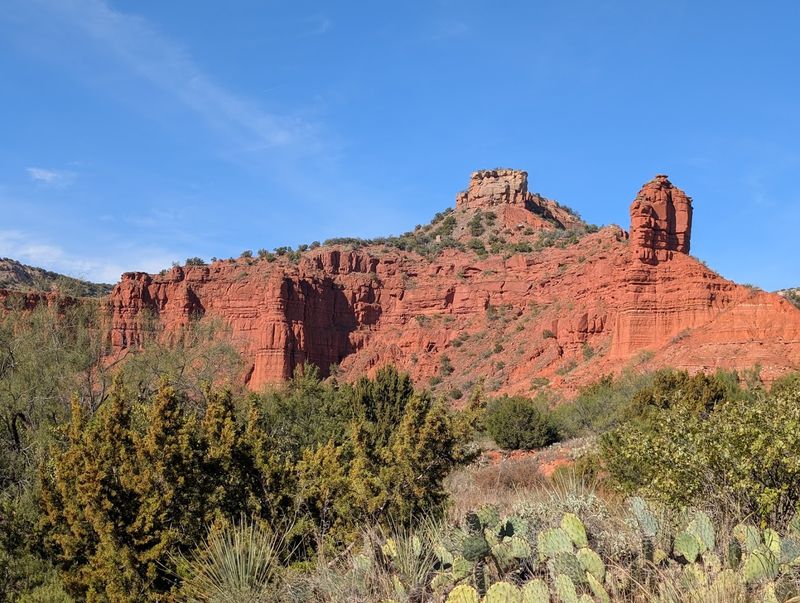
The drive out to Caprock Canyons feels like the landscape is slowly peeling back to reveal something it’s been hiding.
The flat plains of the Texas Panhandle suddenly drop away into a labyrinth of red and orange canyon walls, carved over millions of years by wind and water into formations that genuinely take your breath away.
This park protects the official Texas State Bison Herd, descendants of a small group saved from near-extinction by a ranching family in the late 1800s.
Seeing those bison move across the canyon floor is one of those moments that resets your sense of scale. They are enormous, unhurried, and completely indifferent to your presence, which only makes them more impressive.
The park has over 90 miles of trails ranging from easy walks along the canyon rim to strenuous backcountry routes that take you deep into the geology.
Birding is exceptional here, particularly during migration season when the canyons funnel birds along their routes.
The Clarity Tunnel, a converted railroad tunnel on the Caprock Canyons Trailway, is home to one of the largest colonies of Mexican free-tailed bats in the region, and watching them emerge at dusk is a spectacle that never gets old.
Camping under the canyon walls at night, with the stars overhead and total silence all around, is the kind of experience that makes you understand why locals guard this place so fiercely. Few tourists ever make the drive out here, and the park is better for it.
Address: 850 Caprock Canyon Park Road, Quitaque, TX 79255
5. Texas State Cemetery, Austin
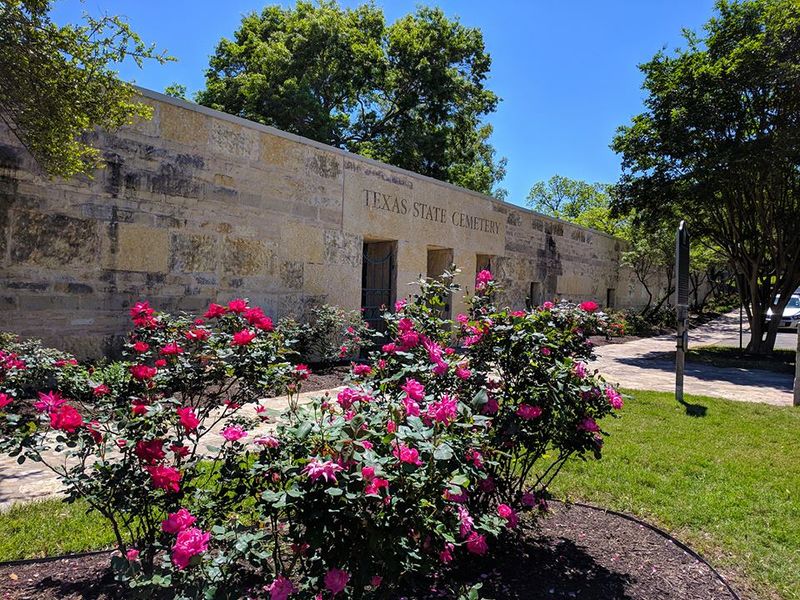
Cemeteries don’t usually make travel lists, but the Texas State Cemetery earns its place without any hesitation.
Hidden just east of downtown Austin, this 18-acre burial ground holds the remains of some of the most consequential figures in Texas history, from Republic of Texas heroes to civil rights pioneers and military veterans who served across generations.
The grounds are immaculately kept, quiet, and genuinely moving to walk through.
Stephen F. Austin, the man often called the Father of Texas, is buried here beneath a striking monument that anchors the southern end of the grounds.
Barbara Jordan, the groundbreaking congresswoman and civil rights leader, rests here too, her grave simple and dignified in a way that perfectly reflects her character. The diversity of people honored in this one place tells the complicated, layered story of Texas better than any museum exhibit could.
What strikes most visitors is how peaceful it feels despite being so close to a busy city. Live oaks provide shade along the walking paths, and the sound of traffic fades quickly once you’re inside the gates.
There are no admission fees and no guided tour required, though informational markers throughout the grounds give you plenty of context. Locals come here to walk, reflect, and occasionally picnic on the grass near the perimeter.
It’s not a somber place, exactly. It feels more like a living library, one that rewards slow, curious visitors far more than rushed ones.
Address: 909 Navasota St, Austin, TX 78702
6. Cathedral of Junk, Austin
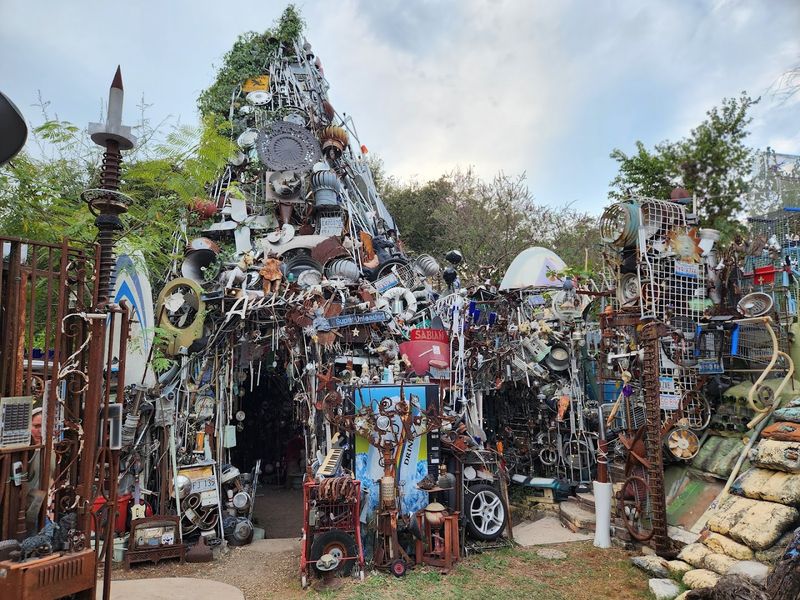
Somewhere in a south Austin neighborhood, hidden behind a modest house on a quiet residential street, there is a cathedral built entirely out of junk, and it is one of the most genuinely surprising things in this city.
The Cathedral of Junk has been growing since 1988, when a man named Vince Hannemann started bolting, wiring, and stacking discarded objects into what has become a multi-room, multi-tower structure that now weighs an estimated 60 tons.
It’s chaotic, layered, and oddly beautiful.
Old bicycles, car bumpers, toilet seats, toys, computer parts, hubcaps, and thousands of other objects are woven together into archways, corridors, and platforms that you can actually climb through and explore.
The scale of it only becomes clear once you’re inside, surrounded by walls of carefully arranged chaos that somehow hold together with impressive structural logic.
Every visit turns up something new because the collection keeps evolving.
Hannemann welcomes visitors by appointment, and the experience of meeting him and hearing him talk about the project adds real dimension to what you’re seeing.
He’s not an eccentric recluse but a thoughtful person who has spent decades turning other people’s discarded things into something that sparks genuine wonder.
Austin’s art scene gets a lot of attention for its galleries and music venues, but this backyard sculpture is arguably one of the most authentic creative statements in the entire city. It’s the kind of place that reminds you that art doesn’t need a building or a budget to be powerful.
Address: 4422 Lareina Dr, Austin, TX 78745
7. Beer Can House, Houston
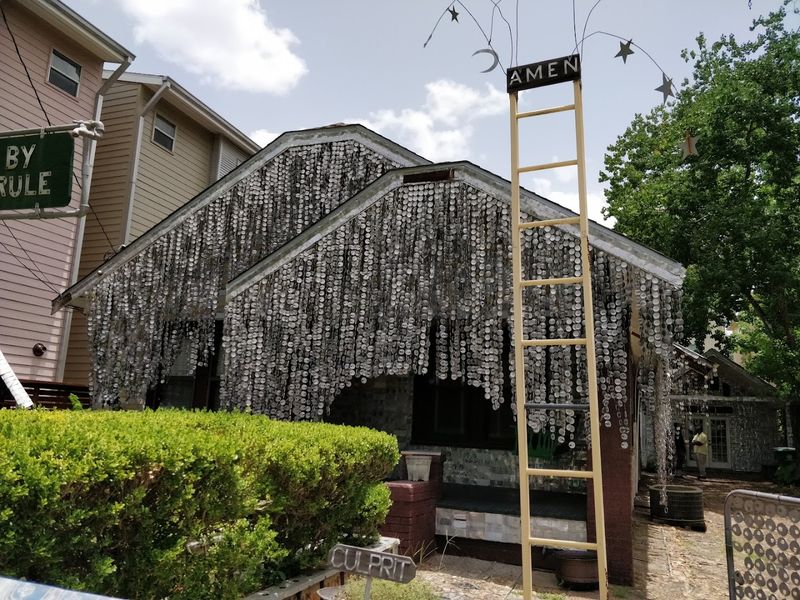
On a perfectly ordinary street in the Houston Heights neighborhood, one house stops every single person who walks past it dead in their tracks.
The Beer Can House is covered, and I mean completely covered, in approximately 50,000 beer cans that have been flattened, strung into garlands, and pressed into every surface of the structure including the fence, the roof trim, and the lawn decorations.
It is absurd, committed, and genuinely delightful.
John Milkovisch, a retired upholstery worker for the Southern Pacific Railroad, started the project in 1968 as a way to avoid mowing grass. He began inlaying marbles and metal into the concrete yard, then moved on to the cans, eventually covering the entire exterior over the course of about 18 years.
His original motivation was practical, but the result became a landmark that the Orange Show Center for Visionary Art now preserves and operates as a museum.
Tours are available, and the interior of the house has been partially restored to reflect how the Milkovisch family actually lived there. The garlands of cans click and shimmer in the breeze, and on a sunny afternoon the whole structure catches the light in a way that makes it look almost festive.
Houston’s art car scene and its broader tradition of folk and outsider art have deep roots in this city, and the Beer Can House is one of the oldest and most beloved expressions of that spirit. It’s proof that the most memorable things are often made by ordinary people with an extraordinary amount of patience.
Address: 222 Malone St, Houston, TX 77007
8. Black Cowboy History Museum, Rosenberg
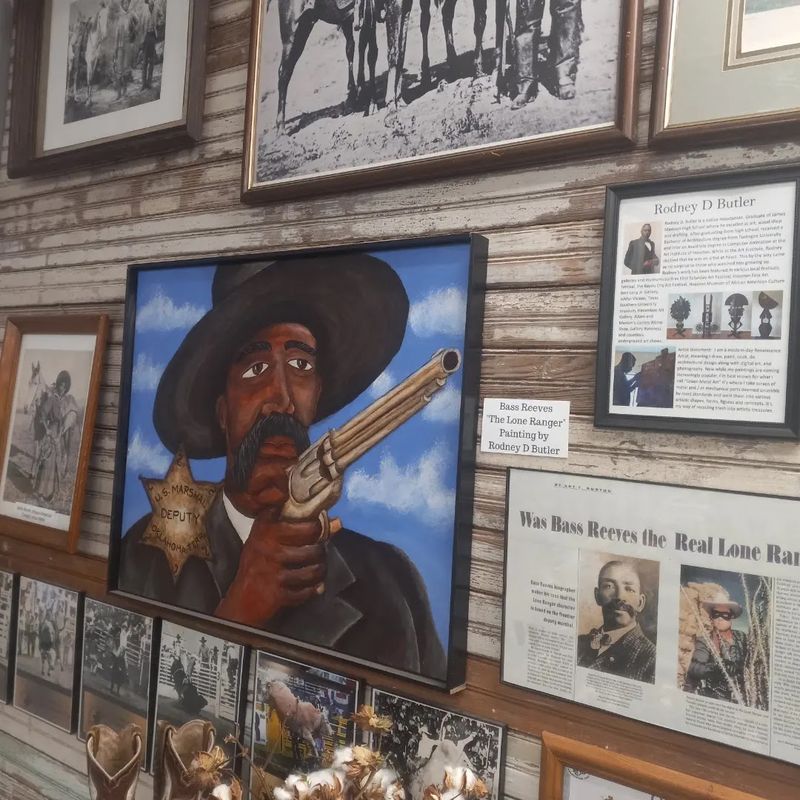
The story of the American West has been told many times, but rarely with the full cast of characters who actually shaped it. The Black Cowboy History Museum in Rosenberg exists to correct that imbalance, and it does so with a collection that is both historically rigorous and genuinely moving.
Roughly one in four cowboys in the post-Civil War cattle drive era was Black, a fact that mainstream Western mythology almost entirely erased for over a century.
The museum celebrates figures like Bill Pickett, who invented the rodeo technique of bulldogging and performed across the country to massive crowds in the early 1900s.
Personal artifacts, photographs, saddles, and documents fill the exhibits, and each one connects to a larger story about resilience, skill, and contribution.
The founders of this museum built it because no one else had, and that commitment shows in every corner of the space.
Rosenberg itself is a small city southwest of Houston that most travelers pass through without stopping, which makes the museum feel like a discovery rather than a destination. Visiting here adds a dimension to Texas history that you simply cannot get anywhere else in the state with this level of focus and care.
The staff are knowledgeable and passionate, and conversations with them often lead you to stories and names you’ll spend weeks reading about afterward. This is the kind of place that changes how you understand not just Texas, but the entire mythology of the American frontier.
Address: 1104 3rd St, Rosenberg, TX 77471
9. Stonehenge II, Ingram
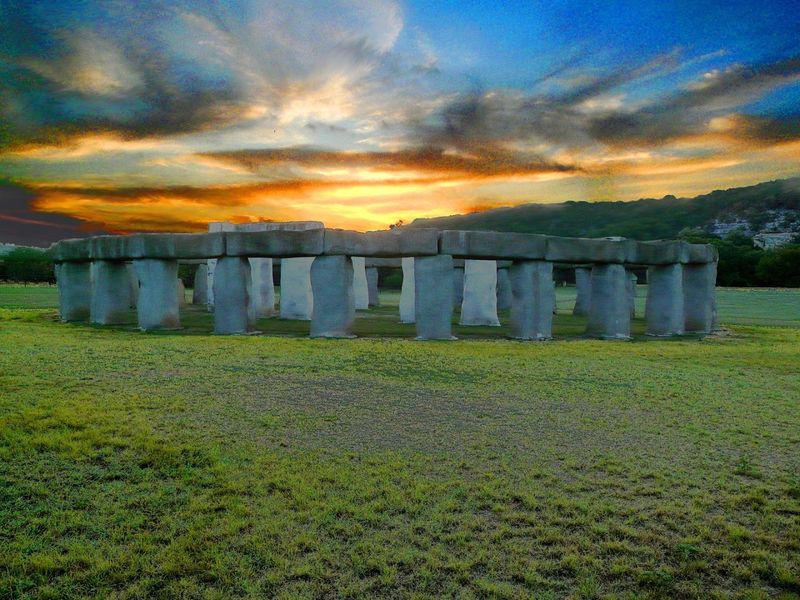
Out in the rolling hills of the Texas Hill Country, just outside the small town of Ingram, there is a 90-percent scale replica of Stonehenge built from steel and plaster standing in an open field next to two Easter Island-style moai heads. Nobody commissioned it as a tourist attraction.
It started as a private joke between a landowner and a sculptor friend, and it grew into something that now draws curious visitors from across the state and beyond.
Doug Hill built the original structure on his property in 1989 after a friend, Al Shepperd, created the first stone and challenged him to do something with it. The project expanded over two years, and the moai were added to keep Stonehenge company.
When the original property was sold, the entire installation was relocated to its current home at the Hill Country Arts Foundation, where it has been ever since.
There’s something wonderfully absurd about encountering ancient monument replicas in the middle of the Texas Hill Country, and that absurdity is entirely the point.
The site invites you to laugh a little, take some photos, and appreciate the fact that two people decided to build something completely unnecessary and magnificent just because they could.
The surrounding landscape of cedar hills and open sky actually frames the stones beautifully, especially at dusk when the light turns golden and the whole scene takes on a genuinely cinematic quality. It’s free to visit, easy to reach, and impossible to forget once you’ve seen it.
Address: 120 Point Theatre Rd S, Ingram, TX 78025
