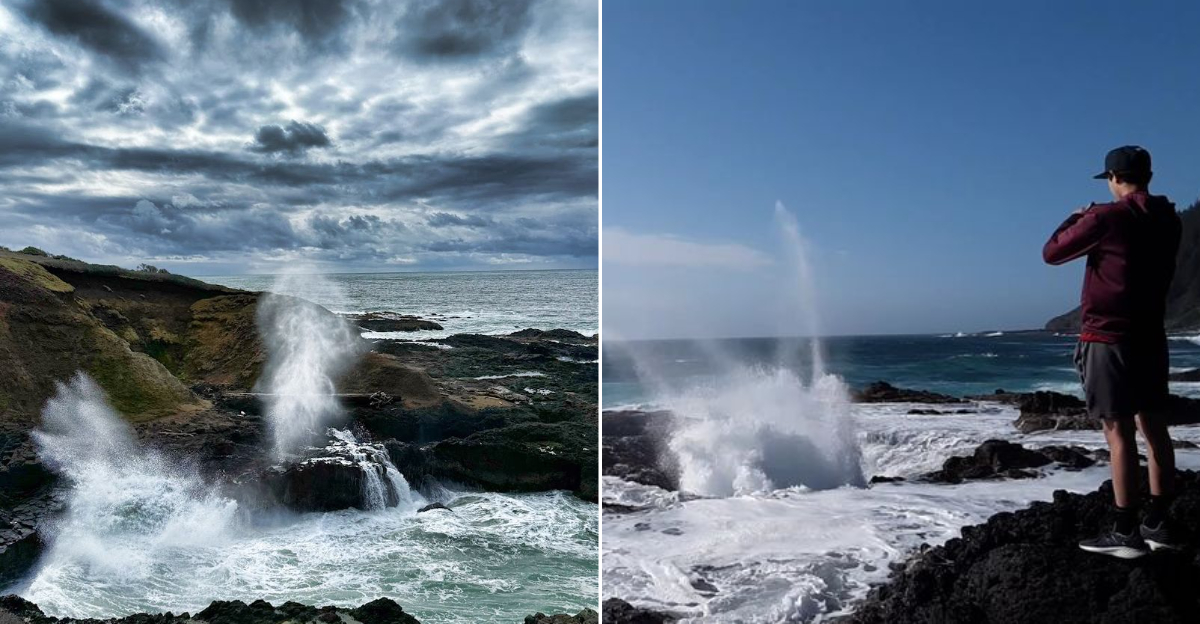
The ocean swells, crashes over a rocky ledge, and then disappears. A twenty foot basalt hole drinks the sea like a giant drain, swallowing wave after wave in a wild, relentless churn.
It looks like the edge of the world, a place where the Pacific simply vanishes. This collapsed sea cave was carved by centuries of salt and spray, and at high tide, it erupts, blasting water into the air before sucking it back down.
The best part? A paved path leads to a railed viewing platform that welcomes wheelchairs and strollers, so almost anyone can safely watch the spectacle.
The nearby cliffs and salt spray make you feel small in the best way. So which Oregon chasm offers a front row seat to the ocean getting swallowed whole, without a single stair to climb?
Arrive an hour before high tide, bring a jacket, and keep a respectful distance from the roaring rim.
Why The Ocean Looks Like It Is Disappearing
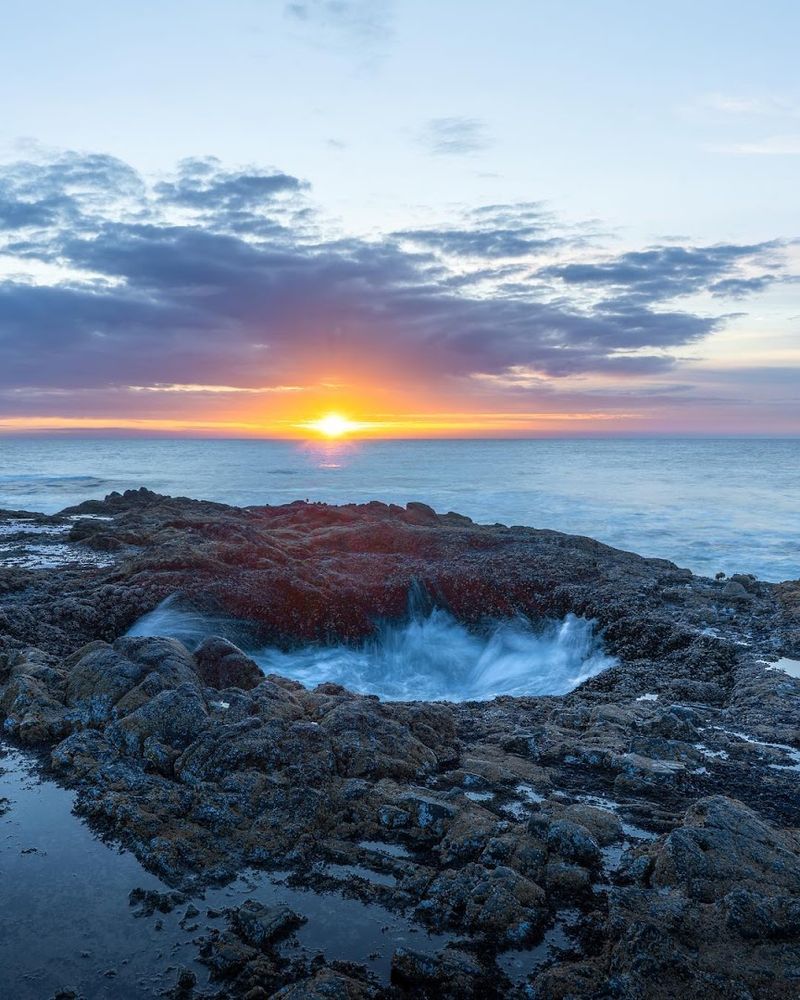
The wildest part is how your eyes keep telling you the ocean is vanishing into the earth, even when you know that is not literally what is happening. Thor’s Well sits in the basalt along the Oregon coast and pulls water through a collapsed sea cave in a way that looks completely unreal.
You watch waves roll in, spill over the rock, and then rush downward through this opening like the shoreline has its own drain.
That strange illusion is exactly why people get so fixated on it, because it feels dramatic in a very simple, physical way. The hole is not bottomless at all, but the movement of the water makes it seem deeper and hungrier than it really is.
Every surge changes the shape of the moment, so the scene never settles into something static or easy to ignore.
I like that Thor’s Well does not need hype, because the place already feels a little unbelievable when you are standing there hearing the water breathe in and out. It is loud, windy, and weirdly mesmerizing all at once.
If you have ever wanted to see a natural feature that genuinely makes you stop mid sentence, this one absolutely delivers that feeling.
Where To Find It Without Any Guesswork

If you like knowing exactly where you are going before the road starts curving along the coast, this part helps a lot. Thor’s Well is in the Cape Perpetua Scenic Area near Cook’s Chasm, a few miles south of Yachats, and the easiest address to plug in is Cape Perpetua Visitor Center, 2400 Highway 101 South, Yachats, Oregon 97498.
From there, you are in the right area to connect with the coastal stops that include Thor’s Well, Spouting Horn, and the surrounding viewpoints.
What I appreciate is that this stretch of Oregon does not make the experience feel separated from everything else around it. You are not hunting for some mystery turnout with bad directions and hoping your map behaves.
Once you are near Cape Perpetua, the landmarks start making sense, and the coast itself kind of guides you the rest of the way.
The setting is beautiful before you even step out of the car, because forested slopes give way to open ocean in that classic central coast way. It feels scenic without being fussy about it.
If you are already exploring Yachats, adding Thor’s Well into the day feels natural rather than complicated.
The Best Moment To See It In Action
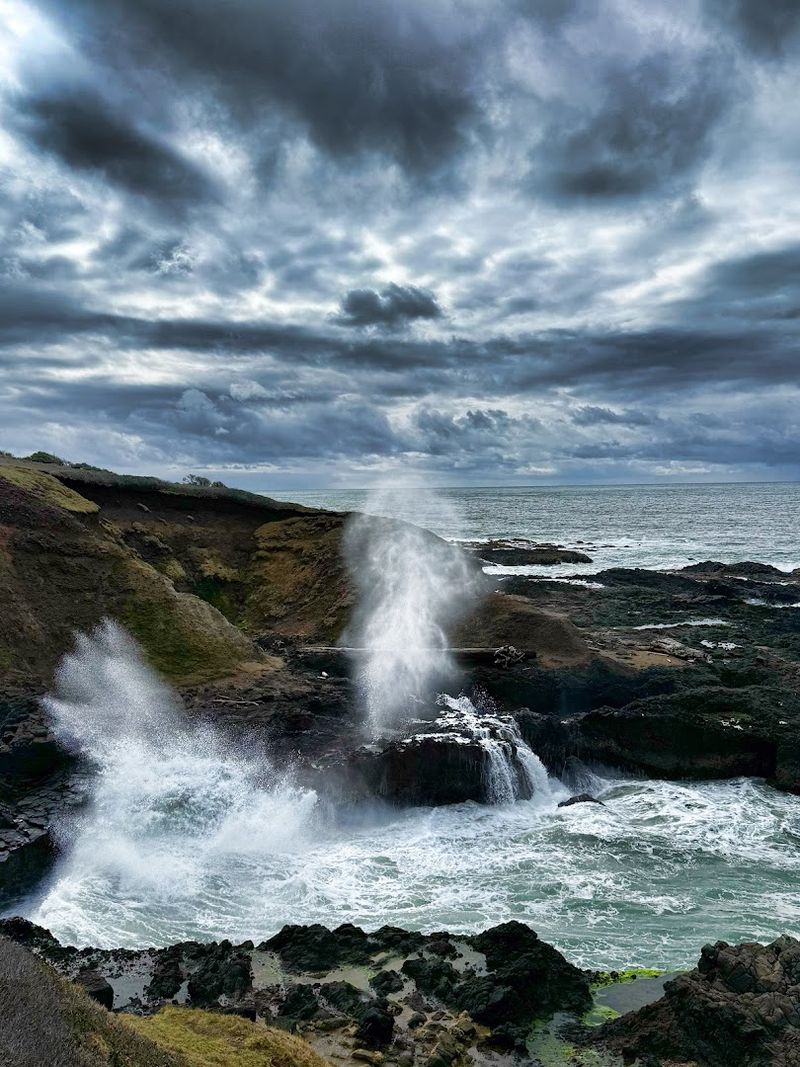
Here is the thing that really changes the experience, and it is worth planning around if you can. Thor’s Well is most dramatic around high tide, especially in the stretch before the water reaches its peak, when the ocean surges through the rock and throws up spray with every pulse.
If you arrive when the tide is lower, you can still see the formation, but the famous swallowing effect is usually much less intense.
I would tell a friend to check tide conditions before leaving, because timing matters more here than people expect. The whole scene depends on the ocean having enough energy and height to push water into the opening over and over again.
When that happens, the well looks animated, like the coast itself is inhaling and exhaling right in front of you.
That said, the best viewing does not mean you need to rush around or hover on the rocks trying to get closer than everyone else. The drama is visible without forcing it, and honestly, some distance helps you take in the whole picture.
You get the rolling waves, the dark stone, and that surreal downward pull of water all happening at once.
Yes, The Accessibility Here Actually Matters
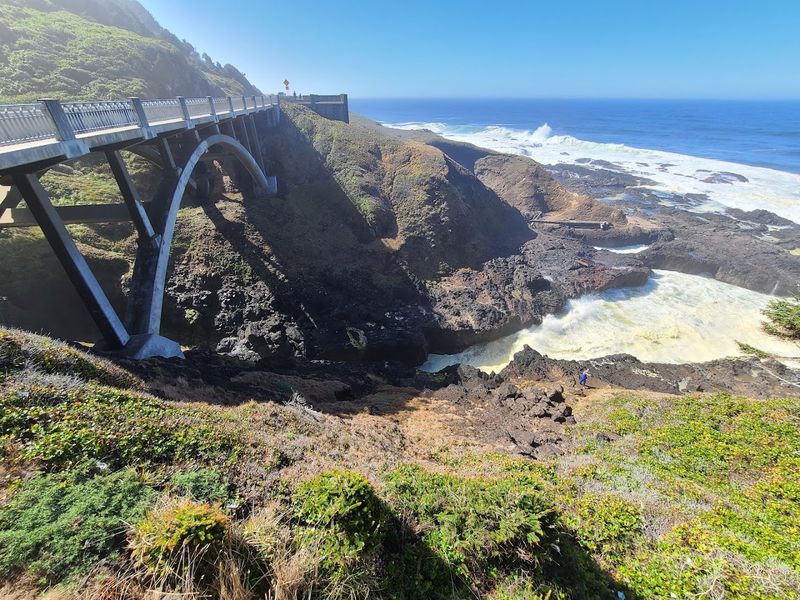
One reason I keep bringing this place up to people is that the accessibility is not some vague little footnote buried at the end. Cape Perpetua has wheelchair accessible features that make the coast feel more open to more visitors, including an accessible deck at the visitor center with broad ocean views and paved connections to major sights nearby.
That changes the whole tone of the outing, because the experience does not start with a big barrier before the good part even begins.
The Captain Cook Trail is especially important here, since it is an easy paved loop that connects visitors with Thor’s Well, Cook’s Chasm, and Spouting Horn. Some areas in the larger scenic zone can still be uneven or a bit sloped, so a little assistance may help in places, but there is real effort here toward access.
That feels meaningful on a coastline where dramatic scenery is often paired with terrain that can be limiting.
I also like that the practical stuff has not been ignored, because accessible parking and accessible restrooms are part of the setup around Cape Perpetua. That sounds basic until you have dealt with destinations that forget those details.
Here, the planning helps more people spend energy on the view instead of logistics.
The Walk Feels Manageable And Scenic
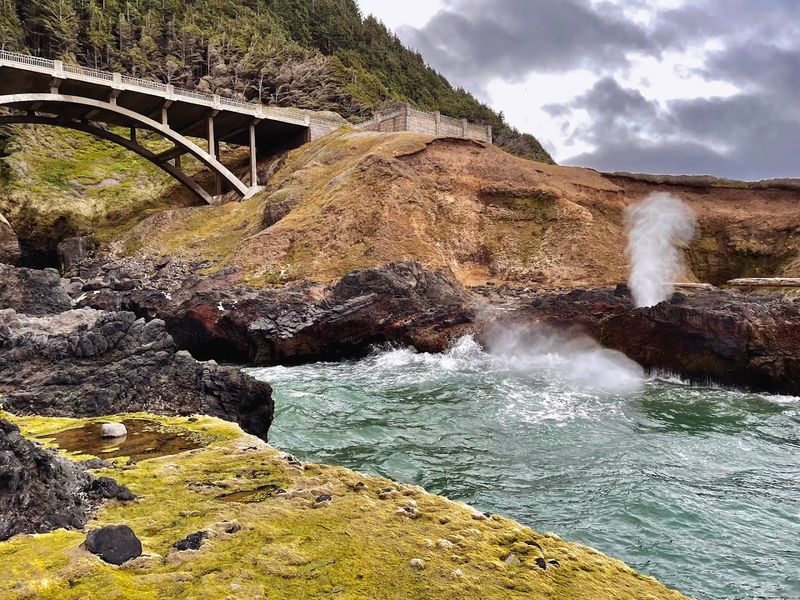
What surprised me most was that getting near the action did not feel like committing to some exhausting coastal trek. The Captain Cook Trail is a short paved loop, and that makes a huge difference if you want ocean drama without turning the outing into an endurance test.
You still get that satisfying sense of moving through the landscape, but the route feels approachable instead of intimidating.
As you go, the scenery keeps changing just enough to hold your attention, because the shoreline opens up in pieces rather than all at once. You notice the sound of the surf first, then the darker rock formations, then those bursts of white water pushing through the cracks and channels.
It has that nice rhythm where the walk itself becomes part of the experience instead of just a means to an end.
I think that matters for a place like this, because Thor’s Well is not only about arriving and snapping a look before leaving. The surrounding coast gives context to what you are seeing.
By the time you reach the viewpoint area, the geology, the tide movement, and the whole restless feel of the Pacific already have you paying closer attention than you might have otherwise.
The Sound Is Half The Experience
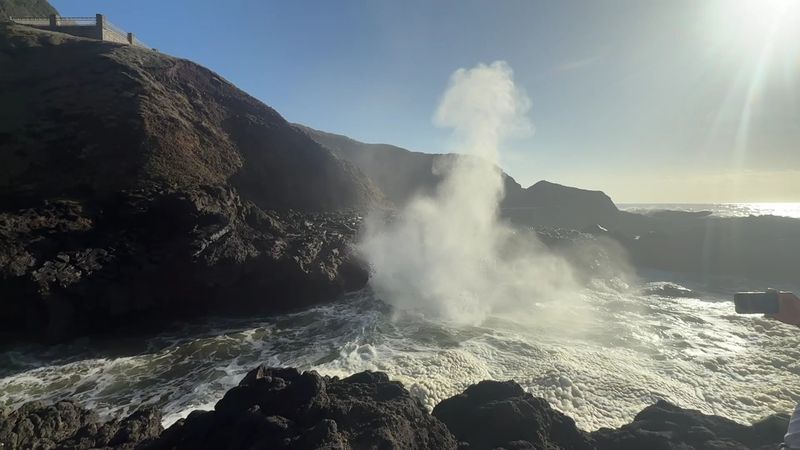
Photos get a lot of attention here, which makes sense, but the sound is what sticks with me after I leave. Thor’s Well has this deep rushing noise that rises under the crash of the surf, and it gives the whole place a pulse you cannot really capture on a screen.
Standing there, you hear water slam the rocks, slide back through the openings, and then come surging through again before the last sound fully fades.
That constant motion changes how you experience the coastline, because it is not just scenic in a quiet, pretty way. It feels active, almost conversational, like the Pacific is arguing with the land and neither side plans to back down.
The wind, spray, and low rumble make you instinctively pause, even if you arrived planning to stay only a few minutes.
I think that is why the place feels bigger than it looks on a map. You are not only observing a rock formation in Oregon, you are stepping into an atmosphere that feels charged from every direction.
If you can, give yourself a little time to stand still and listen, because the audio part of the experience is what turns Thor’s Well from interesting into unforgettable.
Why It Feels So Different From A Normal Viewpoint
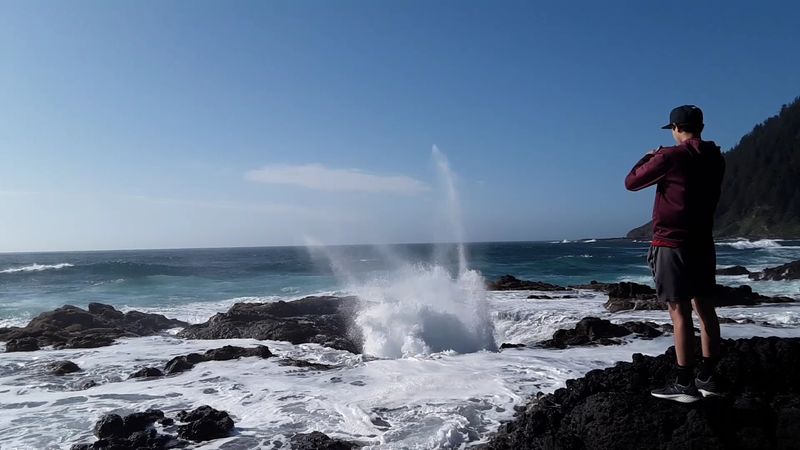
A lot of coastal viewpoints are beautiful in a calm, step out and admire it kind of way, but this one feels much more involved than that. Thor’s Well pulls your attention downward, sideways, and outward all at once, because the horizon is huge while the real drama is happening in the rock right below.
That split focus gives the place a strange tension that keeps your eyes moving and your brain trying to catch up.
You are not just looking at scenery arranged neatly in front of you. You are watching a process happen in real time, with waves arriving, water spilling through channels, and the well suddenly gulping down a surge that seemed impossible a second earlier.
It feels alive in a way that many overlook stops do not, and that immediacy is what makes people linger longer than they planned.
I also think the setting near Yachats helps, because the central Oregon coast has this mix of softness and rawness that really suits the experience. Forest sits close to ocean, black rock sits under pale foam, and the weather can shift the mood in an instant.
By the time you leave, Thor’s Well feels less like a viewpoint and more like a memorable encounter.
A Good Stop If You Want The Coast To Feel Big
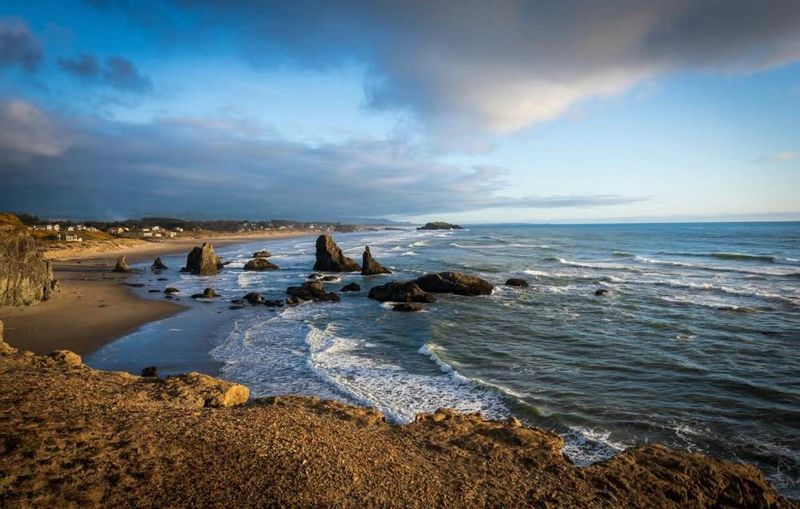
Some places on the coast feel cozy and tucked in, and I love that too, but Thor’s Well gives you something broader and more elemental. The Pacific feels huge here, the rock feels ancient, and the constant movement of the water makes everything seem slightly amplified.
If you are craving that sense of standing somewhere that puts your daily thoughts in a much smaller box, this spot really does the trick.
What I mean is not that it feels remote in a lonely way. It feels expansive in the best sense, like the coastline has room for weather, motion, sound, and people all at the same time without losing its mood.
You can take in the sweep of Oregon around you and still get pulled into the details of one opening in the rock swallowing wave after wave.
That contrast is what makes the stop work so well. You get the giant ocean outlook, but you also get a very specific natural feature doing something so odd that it immediately becomes the center of attention.
It is the rare kind of place that feels both cinematic and tactile, like something you witness with your whole body rather than just your eyes.
