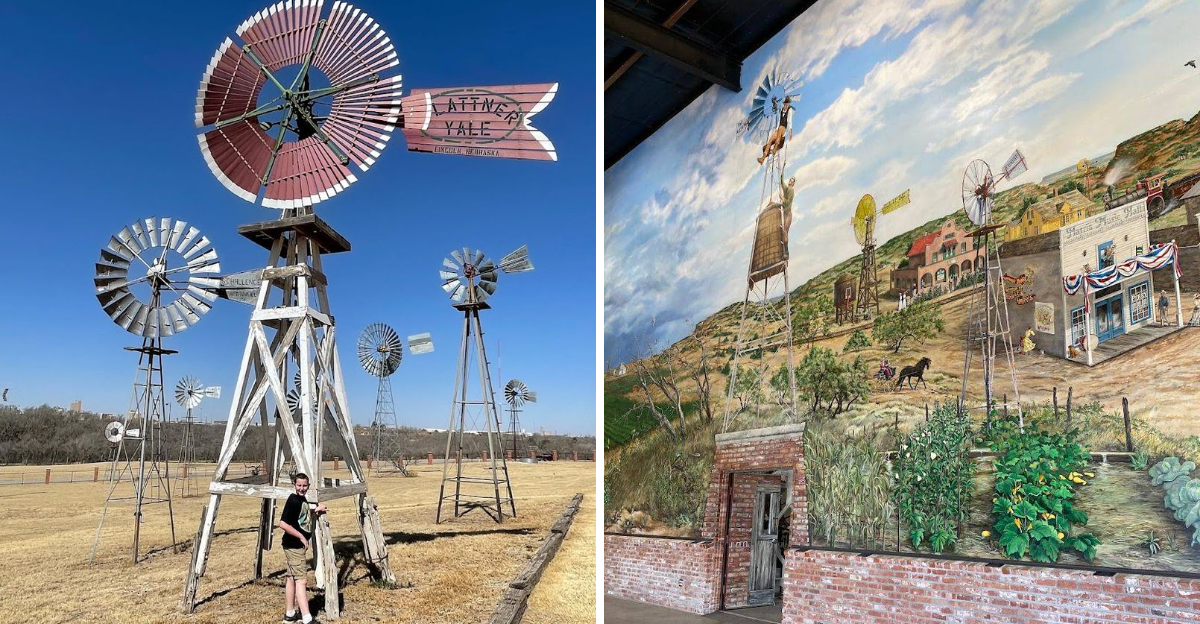
A hundred windmills in one place is not something a person sees every day. But in this Texas town, that is exactly what is on display.
The collection is massive, with windmills of every size, shape, and era scattered across indoor and outdoor exhibits. Some still turn in the breeze, creaking and spinning like they have been doing for decades.
The museum tells the story of how windmills shaped the West, bringing water to dry land and making life possible in the middle of nowhere. Texas has plenty of museums dedicated to history, but one that celebrates windmills is a different kind of niche.
Bring a camera, some sunscreen, and a curiosity for how something so simple changed the landscape. The windmill collection is unlike anything else in America.
The World’s Largest Public Windmill Collection
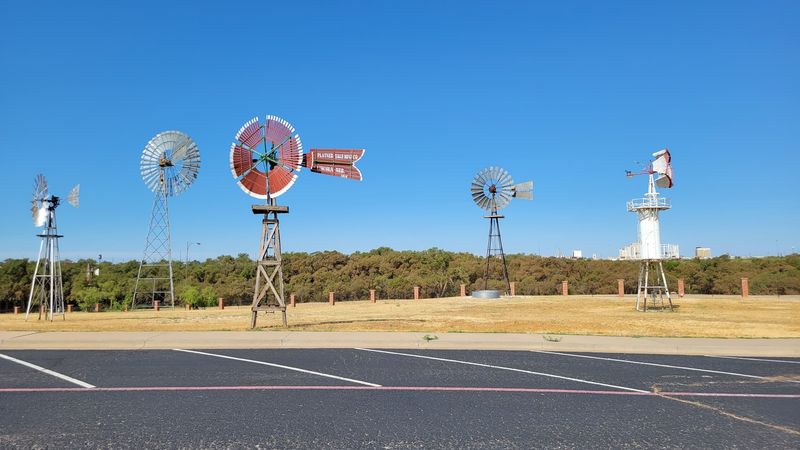
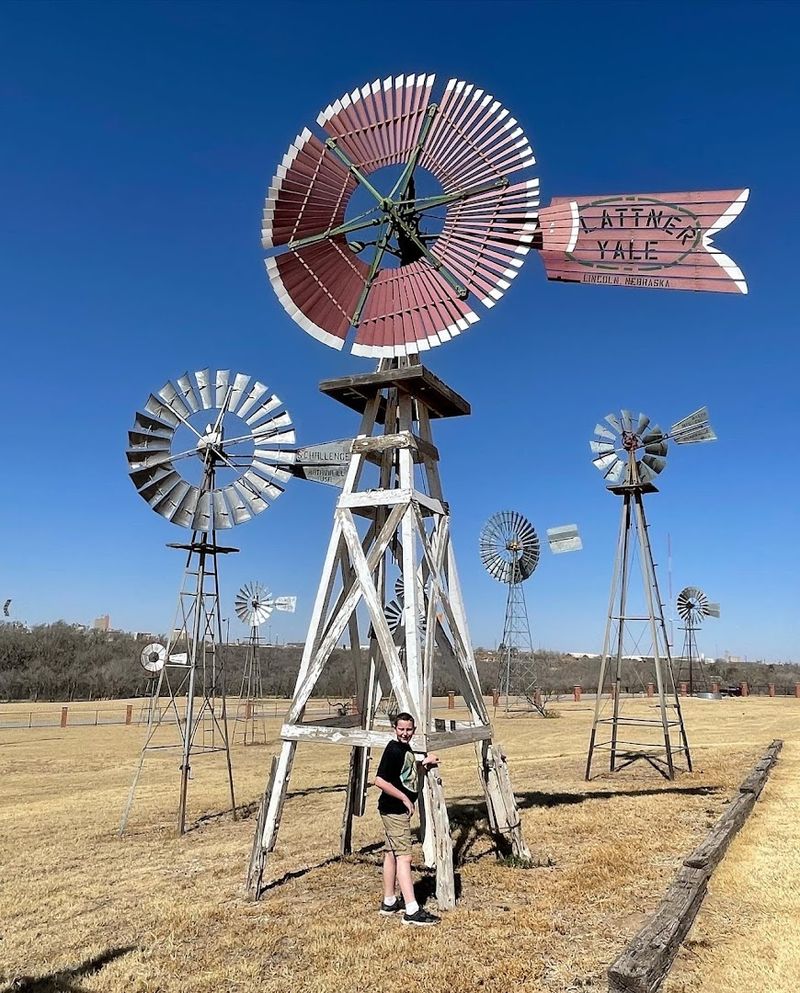
Nobody warns you about the sheer scale of it. You step outside the main building at the American Windmill Museum and suddenly there are windmills everywhere, spinning, creaking, catching the West Texas breeze in ways that feel almost alive.
The collection spans 28 acres inside Mackenzie Park, and the open sky above makes every single structure look even more dramatic than it already is.
More than 150 windmills are part of the museum’s holdings, with over 60 historically significant models erected and actively standing on the grounds. Some of them are pumping real water right now, doing exactly the job they were built to do generations ago.
That functionality is part of what makes the collection feel less like a museum and more like a working piece of American history.
The variety is staggering. There are slim, elegant farmstead models alongside massive multi-blade water pumpers, early electric wind chargers from the 1920s, and rare European-style mills that look like they belong in a painting.
The museum became the largest public collection of restored windmills in the world by 2001, a title it still holds today. Honestly, no photograph does it justice.
You have to stand in the middle of those spinning blades, feel the wind on your face, and just take a moment to absorb what human ingenuity built out here on the open plains of Texas. It is one of those rare experiences that earns every mile of the drive to get there.
The Origins of the Museum and Billie Wolfe’s Vision
Every great collection starts with one stubborn, passionate person who refuses to let history disappear. For the American Windmill Museum, that person was Billie Wolfe, a Texas Tech faculty member who began noticing in the mid-1960s that windmills across the American countryside were vanishing.
Farms were modernizing, old equipment was being scrapped, and entire chapters of rural life were being erased without ceremony.
Wolfe made it his mission to stop that from happening. His work gained serious momentum in 1992 when he acquired the Hundley Collection, a remarkable group of early American windmills from Nebraska that included 48 windmills, 171 weights, 56 pumps, and scale models.
That acquisition was a turning point, giving the project a critical mass that transformed a personal passion into something much larger.
In 1993, Wolfe and Coy Harris, CEO of Wind Engineering Corporation, formally established the American Windmill Museum as a non-profit organization. Four years later, the City of Lubbock came through in a big way, providing 28 acres of land in Mackenzie Park as a permanent home for the growing collection.
There is something deeply moving about a community rallying around the idea that these machines deserve to be remembered and celebrated. What started as one man noticing something slipping away turned into an internationally recognized institution.
That kind of legacy does not happen by accident. It happens because someone cares enough to act, and other people care enough to follow.
The Indoor Galleries and Their Surprising Depth
Most people expect a windmill museum to be mostly outdoors, and sure, the outdoor display is jaw-dropping. But the indoor galleries at the American Windmill Museum genuinely caught me off guard.
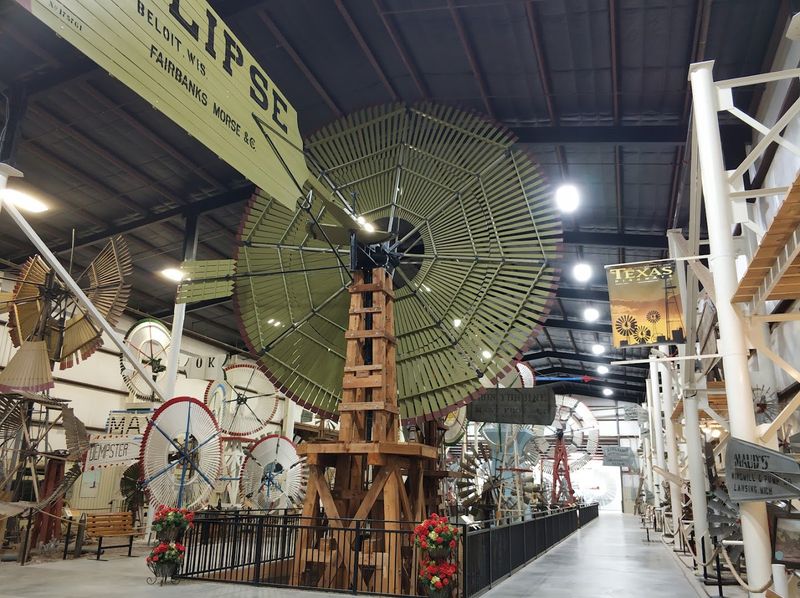
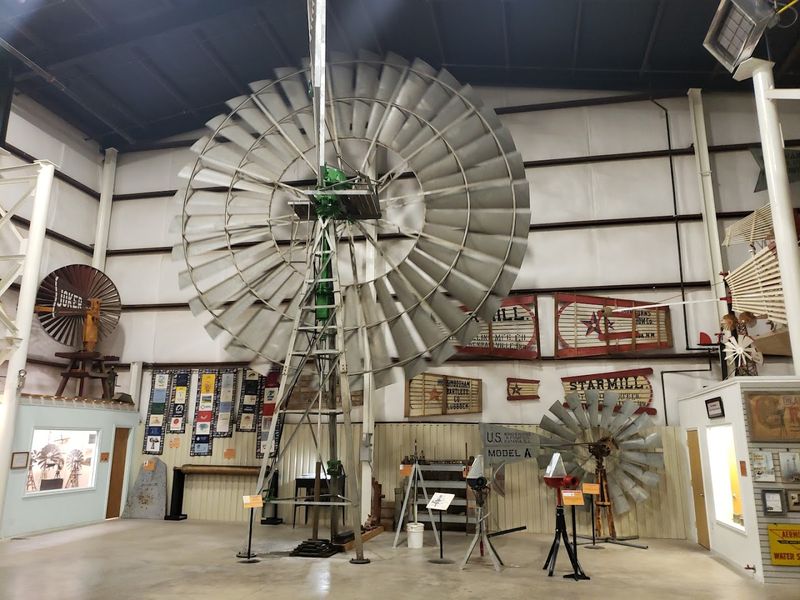
There is over 60,000 square feet of indoor exhibit space here, and it is packed with rare machines, hands-on displays, and stories that connect the dots between wind power and American life.
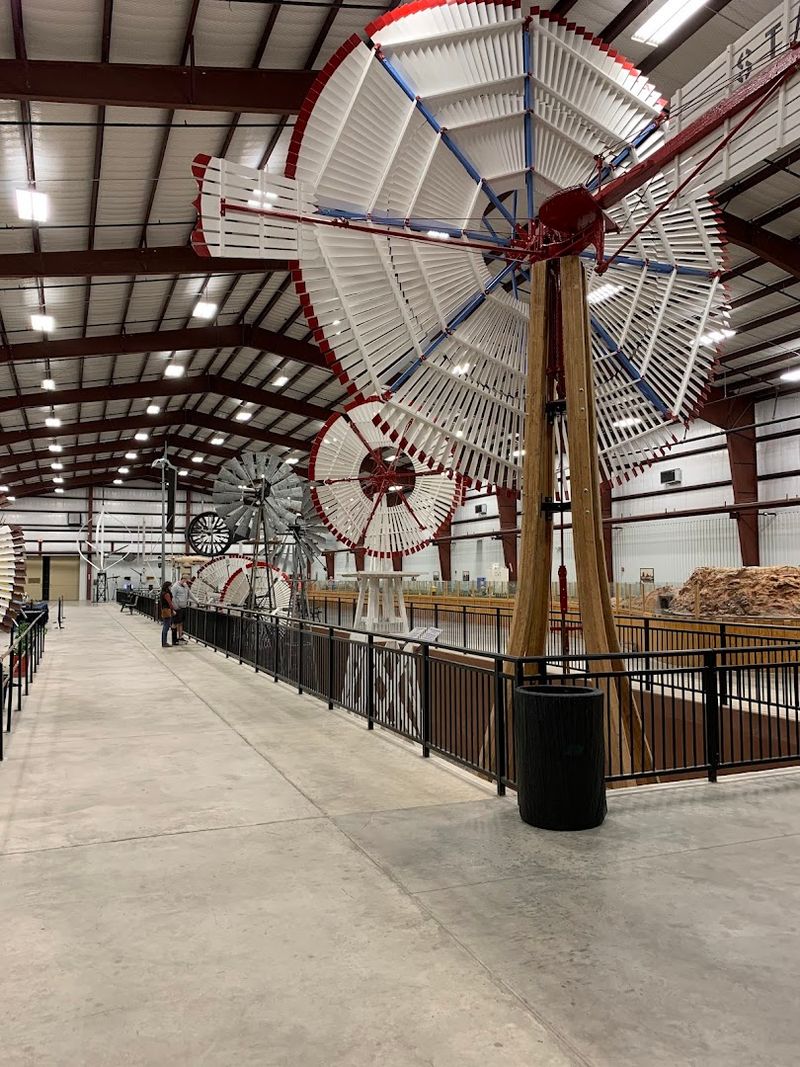
The centerpiece indoor space is a 30,000-square-foot gallery specifically built to house windmills too large or too fragile for outdoor display, including models up to 25 feet in diameter. The scale of those machines inside a building is almost disorienting in the best possible way.
A second building, opened in 2016, adds another 33,000 square feet of interactive exhibits that make the whole experience more engaging for visitors of all ages.
The indoor spaces also feature a millstone collection with documented grinding stones, and a permanent collection of 80 to 85 intricate miniature houses created by artist Alta Reeds. Each tiny house is its own little world, full of detail that rewards a slow, careful look.
The museum also holds a replica of the Flowerdew Hundred Post Mill, which was the first windmill ever built in America back in 1621 in Virginia. Seeing that replica in person puts a kind of quiet weight on everything else in the building.
Wind power did not start in the modern era. It has been part of American life since before the country even existed.
The Legacy of the Wind Mural
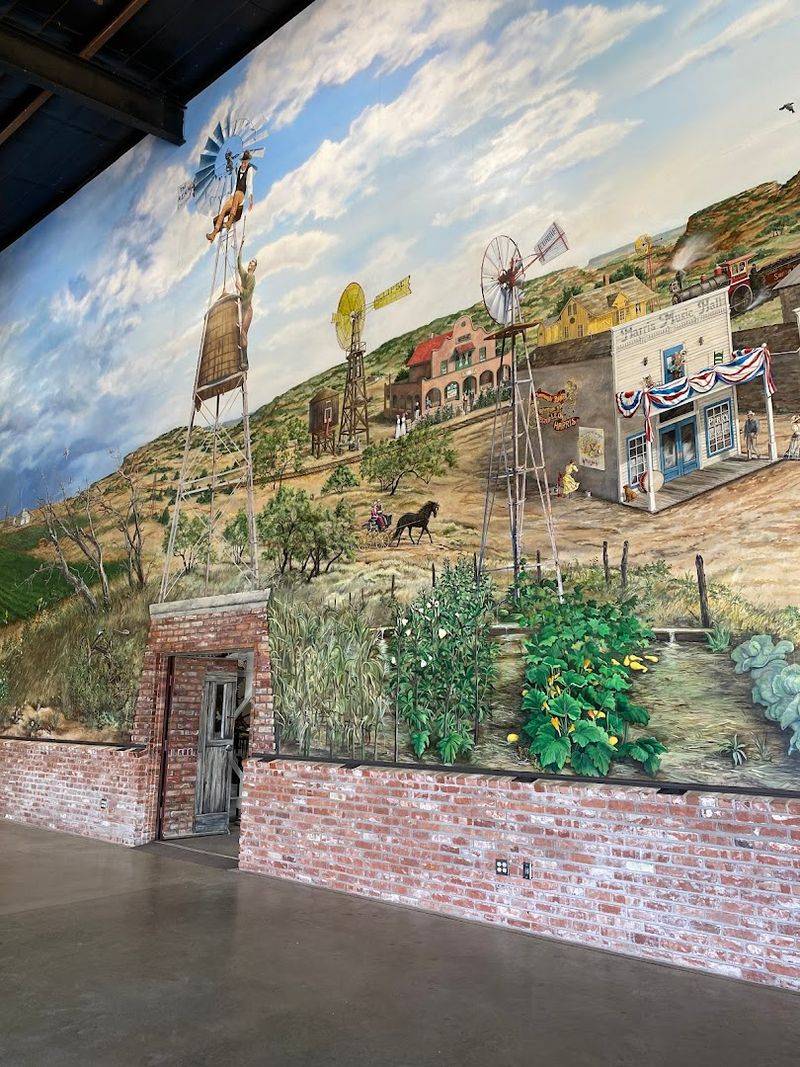
Art and engineering do not always share the same wall, but inside the American Windmill Museum they absolutely do. The Legacy of the Wind mural is one of those things that stops you in your tracks the moment you round the corner and see it.
Created by artist LaGina Fairbetter, the mural stretches across 6,000 square feet and traces the full arc of windmill history from the 1700s all the way to the present day.
The scale alone is impressive, but what makes it genuinely memorable is how it tells a story.
You can follow the visual narrative from early European grain mills to American prairie water pumpers to modern wind turbines, all connected in a sweeping, colorful timeline that gives context to everything else you see in the museum.
It is not just decoration. It is a history lesson you can walk along.
Fairbetter’s work brings warmth and humanity to what could easily feel like a purely mechanical exhibit. The figures in the mural, the farmers, the engineers, the families who depended on these machines, remind you that windmills were never just technology.
They were survival. They determined whether crops grew, whether livestock had water, whether families made it through another dry Texas summer.
Seeing that history rendered in vivid paint on a wall that stretches farther than most houses makes the whole visit feel more grounded and more meaningful. It is one of those quiet museum moments that lingers long after you leave.
The Vestas Wind Turbine and Modern Wind Power
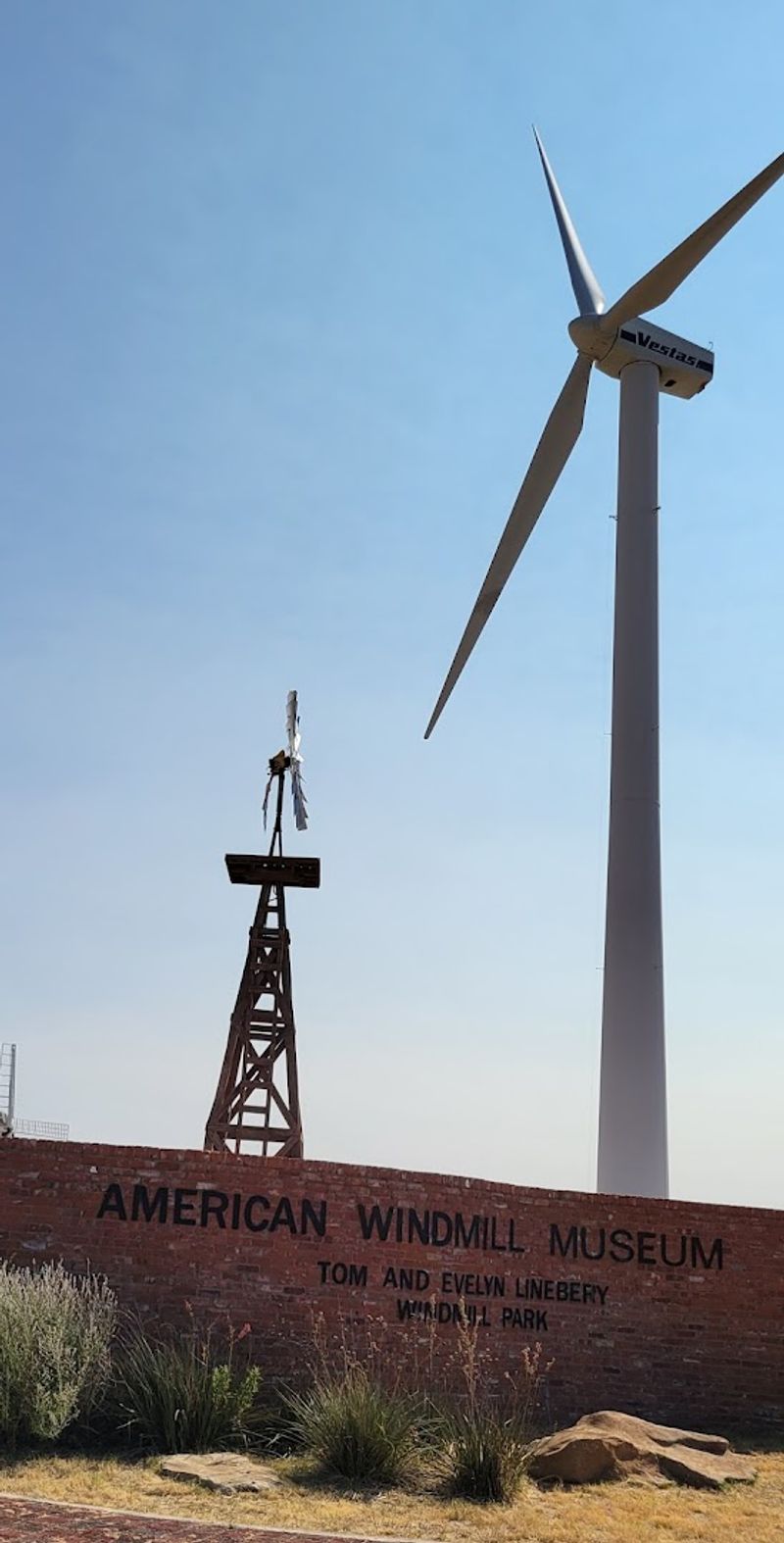
Right in the middle of a museum full of antique machinery, there is a very modern giant that demands your attention. The 660KW Vestas Wind Turbine installed at the American Windmill Museum in 2005 stands on a 165-foot tower and carries a wheel with a 154-foot diameter.
From a distance, it looks almost sculptural against the flat Lubbock skyline.
What makes this turbine more than just a showpiece is what it actually does. It generates enough electricity to power the entire museum complex and approximately 60 homes simultaneously.
That is a real, functioning contribution to the local energy grid, which makes the point better than any exhibit placard ever could. The museum is not just preserving the past.
It is actively demonstrating the future.
Placing this turbine alongside windmills from the 1800s and early 1900s creates a visual conversation that is hard to replicate anywhere else.
You can stand in one spot and see the full sweep of wind energy technology across two centuries, from a hand-built wooden post mill to a precision-engineered modern turbine.
That juxtaposition is genuinely thought-provoking. Wind has always been free.
What changed is how cleverly and efficiently we learned to use it. The Vestas turbine at this museum is not just an engineering marvel.
It is a symbol of how far human creativity has come, and a quiet reminder that the wind blowing across the Texas plains has always been one of this region’s greatest natural resources.
The Model Train Layout and Railroad History
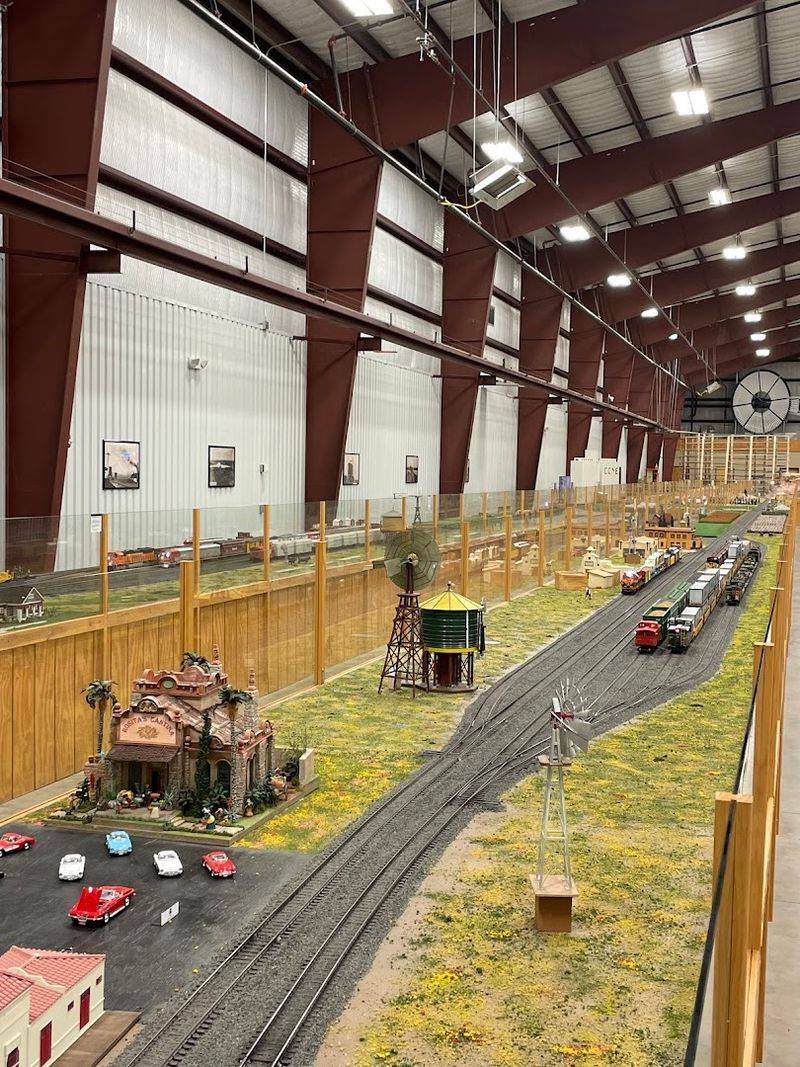
Somewhere between the spinning blades and the indoor galleries, the American Windmill Museum pulls off a surprise that genuinely delights visitors of every age.
The model train layout hidden inside the museum covers 6,600 square feet and is one of the most detailed miniature landscapes I have ever seen in a public exhibit.
It is the kind of thing where you lean in to look at one tiny building and end up spending twenty minutes exploring the whole scene.
The layout illustrates the historical relationship between railroads and windmills during the 1800s, a connection that shaped the American West more than most people realize. Railroads needed water to run their steam engines across vast, dry stretches of land.
Windmills provided that water by pumping it from underground aquifers into trackside tanks. Without windmills, the transcontinental railroad expansion would have looked very different.
The miniature world in this layout includes 3D printed windmills, custom-built houses, and a lovingly recreated vintage 1940s downtown Lubbock setting. The attention to detail is almost ridiculous in the best possible way.
There are tiny storefronts, miniature street scenes, and trains that actually run through it all. Kids absolutely love it, but honestly the adults hovering around the edges are just as captivated.
It adds a layer of storytelling to the museum experience that feels genuinely playful and educational at the same time. History does not have to feel heavy to be meaningful, and this layout proves that with every loop of the train.
The Replica Flowerdew Hundred Post Mill
There is one exhibit at the American Windmill Museum that puts the entire collection into a much deeper historical context. The replica of the Flowerdew Hundred Post Mill represents the first windmill ever constructed in America, built in 1621 in Virginia, just a year after the Pilgrims landed at Plymouth Rock.
That date alone is enough to stop you mid-step.
The original Flowerdew Hundred Post Mill was a colonial-era grain mill, built by English settlers who brought windmill technology across the Atlantic with them.
The post mill design, where the entire structure rotates around a central post to face the wind, is one of the oldest functional windmill configurations in history.
Seeing a faithful replica of it standing inside a Texas museum connects two very distant chapters of American history in a surprisingly direct way.
What I found most compelling about this exhibit is how it reframes the rest of the collection.
Every windmill in this museum, from the 1800s farmstead pumpers to the 1920s electric wind chargers, is part of a tradition that stretches back to those first colonial settlers trying to grind grain and survive on an unfamiliar continent.
Wind power in America is not a new idea. It is a 400-year-old idea that has simply kept evolving.
The Flowerdew replica does not just tell a history lesson. It anchors the entire museum’s story to a moment in time that most visitors never expected to find in Lubbock, Texas.
Planning Your Visit to the American Windmill Museum
Getting to the American Windmill Museum is easy enough once you are in Lubbock, and the address, 1701 Canyon Lake Dr, Lubbock, TX 79403, puts it right inside Mackenzie Park, one of the city’s most pleasant green spaces.
The park itself adds to the experience, giving the whole visit a relaxed, unhurried feel that suits the museum’s subject matter perfectly.
Plan for at least two to three hours if you want to do the place justice. The outdoor grounds alone can take a full hour depending on how often you stop to watch the windmills spin or read the interpretive signs.
The indoor galleries, the model train layout, the mural, and the miniature house collection all deserve real time and attention rather than a quick walk-through.
The museum is genuinely family-friendly, with interactive elements that keep younger visitors engaged and enough depth in the exhibits to satisfy anyone with a serious interest in history, engineering, or American agriculture.
The collaboration with Texas Tech University’s Wind Science and Engineering department also gives the place an academic credibility that sets it apart from smaller regional museums.
Whether you are a history enthusiast, a renewable energy advocate, a train lover, or just someone looking for an experience that feels completely unlike anything else, this museum delivers.
It is one of those rare American road trip discoveries that earns a top spot on any Texas travel list without needing any hype to back it up.
