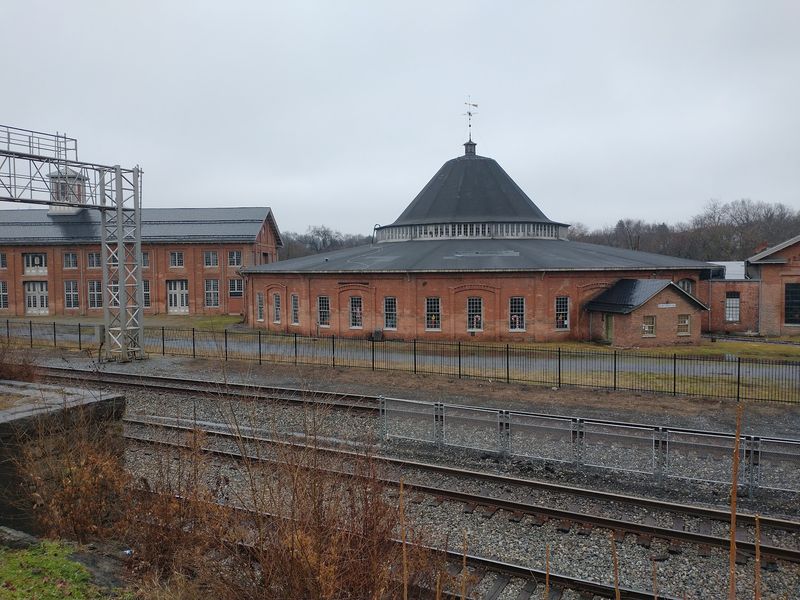
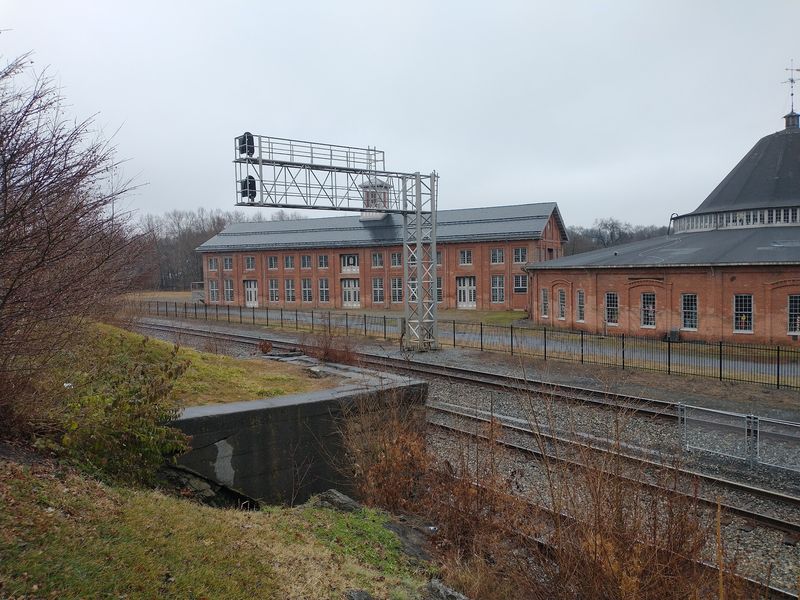
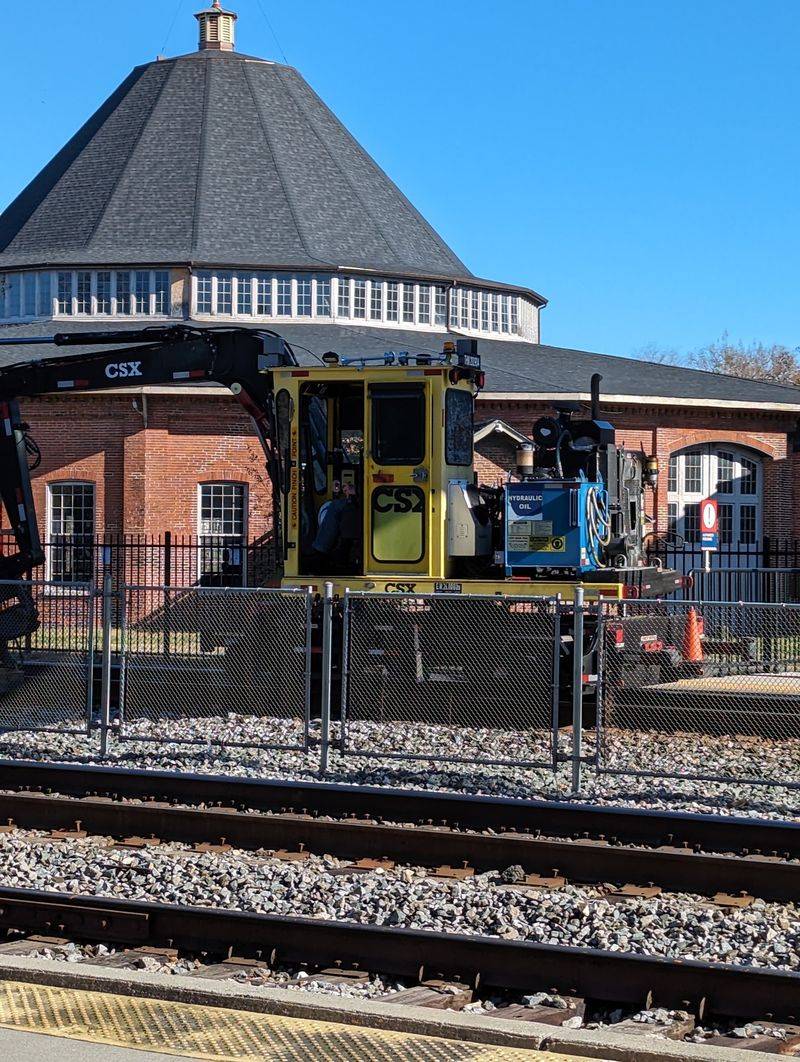
A circular railroad roundhouse framed in cast iron after the 1860s still stands, and historians call it the oldest of its kind left in America. Trains still rumble right past it every single day.
The same rail yard reportedly saw the spark of a national labor strike in 1877. Workers walked off the job here, and the protest spread across the country within days.
That is a lot of history for one patch of ground.
I like how this place refuses to be a dusty relic. Its old brick walls now host tours, events, and even weddings in West Virginia’s eastern panhandle.
I can’t imagine standing under that iron roof without wondering how many locomotives rolled through. So where is it, and what is left to see?
A Rail Yard Landmark That Never Packed Up And Left
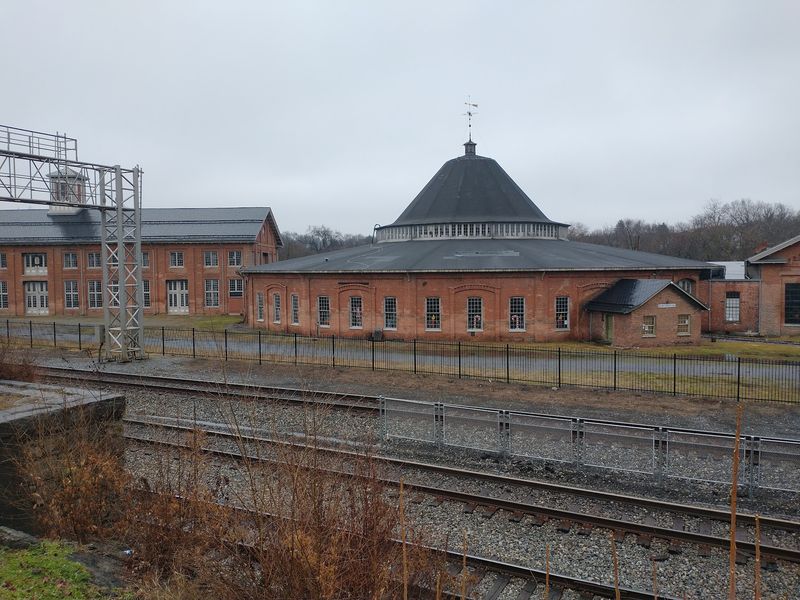
Railroad fans, meet the Baltimore and Ohio and Related Industries Historic District in Martinsburg, West Virginia. Most folks simply call its star attraction the Martinsburg Roundhouse.
The district wraps around the old B&O shops that once kept locomotives running through the eastern panhandle. It sits right beside working tracks, so the past and present share the same view.
The complex reportedly covers about 13 acres. That leaves plenty of room for brick shops, iron framing, and a surprising number of stories.
The roundhouse and shops are recognized as a National Historic Landmark. That title is not handed out casually, and it places the site among the nation’s most significant historic properties.
What makes the setting special is that it never became a museum frozen behind glass. Passenger and freight trains still move through town, giving the old buildings a constant soundtrack.
You’ll find a mix of restored spaces and structures still waiting for their next chapter. Preservation here is an ongoing project, not a finished product.
For anyone who grew up hearing train whistles across a West Virginia hollow, it feels familiar. It’s a place built by working people, and it still looks the part.
Burned, Rebuilt, And Back On The Rails By 1866
Before the roundhouse you see today, an earlier set of B&O shops stood on this ground. They went up in the 1840s and 1850s as the railroad pushed west.
Then trouble arrived. Confederate troops under Stonewall Jackson reportedly destroyed those first shops in 1861 and 1862.
Martinsburg mattered because the B&O mattered. Whoever controlled the line controlled a major artery between East and West, so the shops became a target.
Once the fighting ended, the railroad got busy. Rebuilding started in 1866, and the new shops rose with sturdier materials and smarter designs.
That comeback kicked off a fresh industrial boom for the town. Jobs returned, trains returned, and Martinsburg became a vital rail hub once more.
I believe that resilience is the real backbone of the place. The brick and iron are impressive, but the story of people rebuilding is what sticks.
It also explains why the buildings feel so solid. The railroad was not interested in building anything that could fall easily twice.
Walking the grounds today means walking across layers of that history. Few places in West Virginia carry such a clear before-and-after story in their foundations.
The Round Building That Earned Its Bragging Rights
Here’s a fun claim to drop at the next family dinner. The West Roundhouse is considered the oldest remaining domed roundhouse in the United States.
Some sources go further and suggest it may be the oldest anywhere. Either way, that is a big title for a building beside a small-town track.
The structure is fully circular, which is rarer than you might guess. Many roundhouses were actually half circles or fan shapes, so a complete ring stands out.
It reportedly spans more than 20,000 square feet. That is a lot of floor space for the 1860s, and it was built to swallow locomotives whole.
The building is also called the only surviving cast-iron framed structure of its kind. Other roundhouses came and went, but this one kept its original bones.
Brick walls and rows of windows give it a steady, handsome look. It doesn’t shout, yet it absolutely gets noticed.
Engineering groups have taken note of it for years. For history lovers, seeing a true first-of-its-kind survivor up close is hard to beat.
Good luck snapping just one photo. The shape practically begs for a slow walk all the way around.
Look Up And Thank Albert Fink For That Iron Ceiling
Albert Fink was a German immigrant engineer, and his fingerprints are all over this building. His design shaped the roundhouse’s remarkable interior.
The soaring roof rests on an intricate cast-iron framework. Beams radiate outward like spokes, holding up the dome without a forest of clutter below.
Fink was known for clever bridge trusses too. That background shows here, because the framing feels as much like a bridge as a ceiling.
The design was practical first. Open space and good light made it easier for crews to repair heavy locomotives all day.
Still, practical doesn’t mean plain. The iron pattern overhead has a geometric beauty that modern buildings rarely bother with.
I like how the structure shows its work. Nothing hides behind drywall, so you can trace how every piece supports the next.
For engineers, it’s a textbook. For everyone else, it’s simply a great reason to tilt your head back and stare.
Bring a camera with a wide lens if you have one. The ceiling is the kind of view that phones struggle to squeeze into one frame.
Sixteen Bays Circling One Busy Turntable
A roundhouse only makes sense once you understand the turntable. At the center sat a rotating platform that spun locomotives toward their assigned stalls.
Here, that turntable reportedly measured about 50 feet across. It fed 16 individual bays arranged around the circle.
Think of it as a lazy Susan for steam engines. A crew could roll a locomotive on, rotate it, and send it into a bay for repairs.
Each bay gave mechanics a dedicated workspace. Under the iron dome, several engines could get attention at the same time.
That layout saved time, and time was money on a busy railroad. It’s no surprise the B&O invested in such an efficient design.
Standing in the round space today helps the whole system click. The geometry suddenly makes perfect sense once you see where every track once pointed.
Kids tend to understand it fast too. A giant spinning platform for trains is the sort of idea that needs zero explaining.
Grandparents who remember the steam era may have stories to add. This is a great spot to swap them while the shape of the room does the teaching.
Where An 1877 Walkout Shook The Whole Country
July 1877 put Martinsburg on the national map in a big way. Railroad workers here protested pay cuts, and the Great Railroad Strike began right in this yard.
The movement spread quickly along rail lines to other cities. It became one of the largest labor uprisings the country had seen at that point.
For working families, the issue was simple. Wages were dropping, and the men who kept trains running decided they had taken enough.
Historians often point to the strike as a turning point in American labor history. Conversations about fair pay and working conditions grew louder afterward.
Interestingly, the Martinsburg shops reportedly escaped the heavy destruction that hit rail facilities elsewhere. That is part of why so much of the complex survives.
West Virginians know a thing or two about hard work and standing up together. The story fits right in with the coal camps and mill towns across the state.
I can’t imagine the tension in that yard during those summer days. Standing here, it’s easier to picture the crowds and the stopped engines.
It’s a proud chapter, and it belongs to ordinary workers. That makes it worth remembering.
More Shops Than Just The Famous Circle
The roundhouse grabs headlines, but it never worked alone. The complex includes a Bridge and Machine Shop and a Frog and Switch Shop.
That second name sounds like a children’s book. In railroad terms, a frog is the piece where two rails cross at a switch.
Crews in that shop built and repaired the hardware that guided trains from one track to another. Without it, every line would be a one-way trip.
The Bridge and Machine Shop handled heavier jobs. Iron bridge parts and machinery work kept the B&O’s growing network in shape.
Sadly, the East Roundhouse is gone. It burned in 1990, just a couple of years after the railroad stopped using the site.
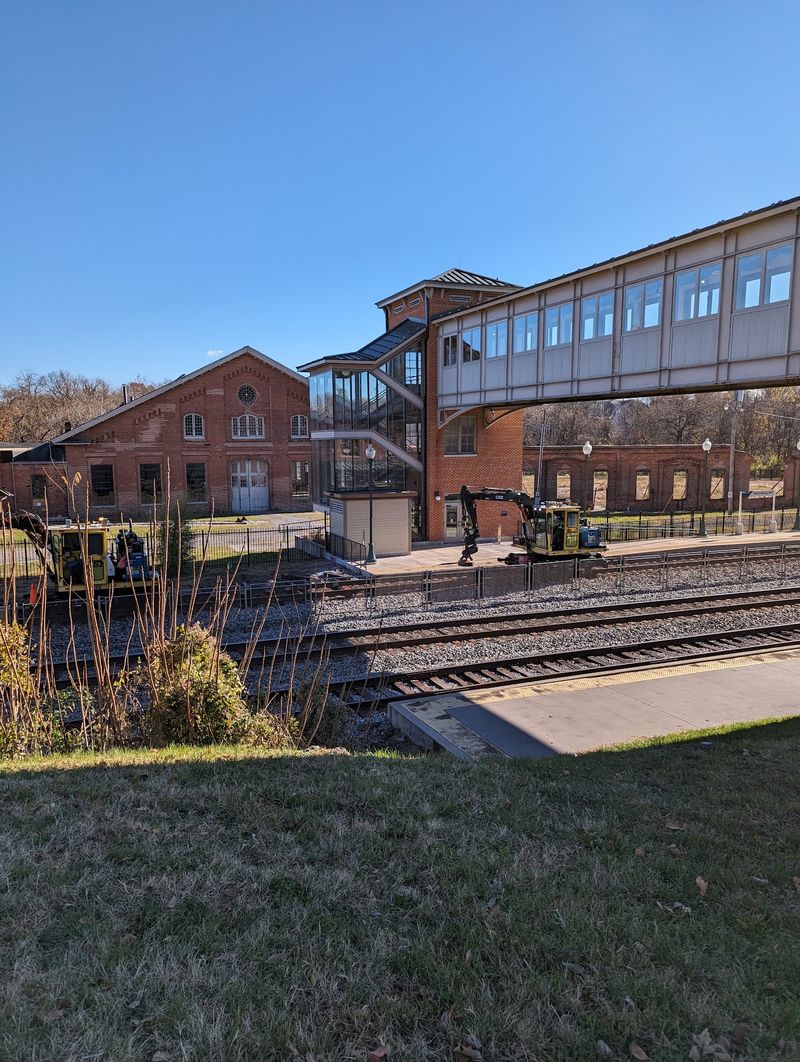
The surviving buildings still show the scale of a busy 19th-century rail operation. Long brick walls and tall windows hint at how much happened inside.
Exploring them gives the complex a fuller picture. You start to see it as a working village rather than a single famous building.
It’s a reminder that big railroads ran on many skilled hands. Machinists, blacksmiths, and carpenters all had a place here.
A Little Red Caboose Keeps Watch
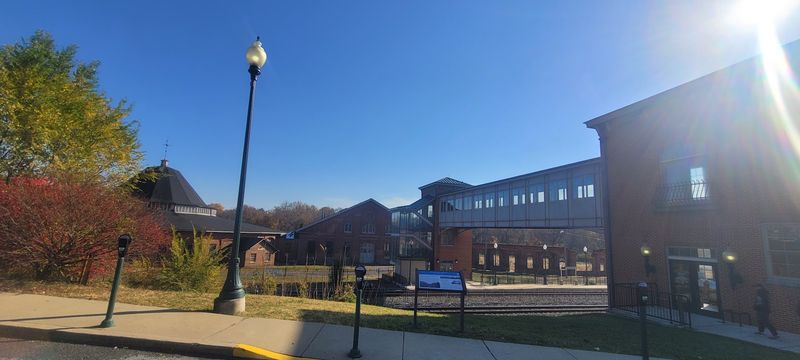
Every rail yard needs a mascot, and this one may have found it. A historic B&O caboose from around 1930 sits on display at the complex.
Cabooses once rode at the tail end of freight trains. Crews used them as an office, lookout, and rolling home on long runs.
Modern trains don’t use them much anymore. Technology took over many of their jobs, so spotting one feels like finding an old friend.
The display adds a nice, touchable sense of scale. Kids can see a real railcar instead of just hearing about one.
It also pairs perfectly with the grand architecture nearby. The roundhouse shows where trains were fixed, and the caboose shows who rode them.
Photographers tend to love the contrast. Weathered brick and iron behind a classic railcar makes an easy, charming shot.
For older visitors, it might bring back memories of waving at the last car. That little wave was a small-town ritual for generations.
Ask anyone who grew up near the tracks in West Virginia. Chances are they remember counting cars until the caboose rolled by.
From Quiet Shutdown To Community Rescue
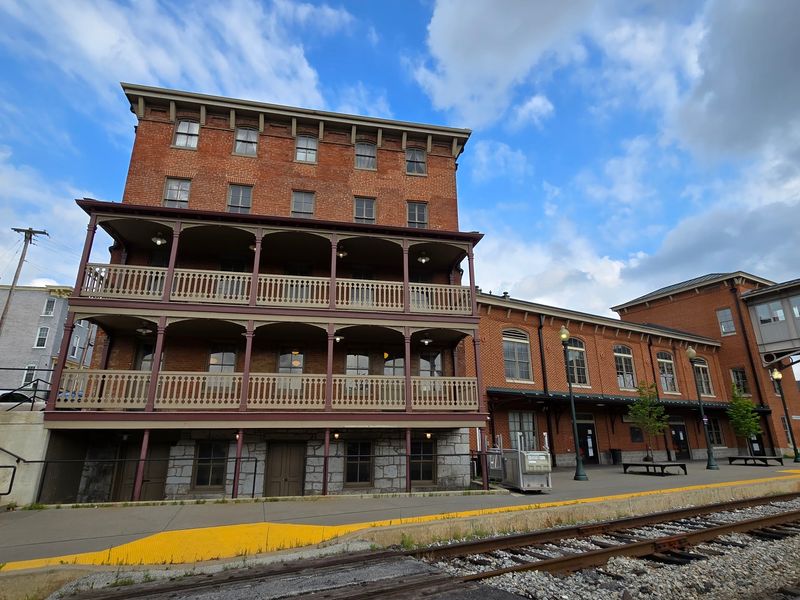
March 14, 1988 marked the end of an era. That’s when railroad operations at the Martinsburg shops officially ceased.
After more than a century of service, the buildings went quiet. For a while, neglect set in and the future looked uncertain.
Then local folks stepped up. The Berkeley County Commission purchased the property in 1999.
Ownership later passed to the Berkeley County Roundhouse Authority. It’s a non-profit public corporation created to preserve and revitalize the site.
That kind of grassroots effort is very West Virginia. When something matters to a community, people tend to roll up their sleeves.
Restoration has been a long process. Old iron and brick don’t fix themselves, and every project takes patience and funding.
The results so far show what care can do. Spaces that once sat empty now welcome visitors and events again.
I believe that’s the most heartwarming part of the story. The railroad left, but the town refused to let its landmark slip away.
Each visit helps keep that effort going. Interest from the public is part of what keeps preservation moving forward.
Say I Do Under Cast Iron And Brick
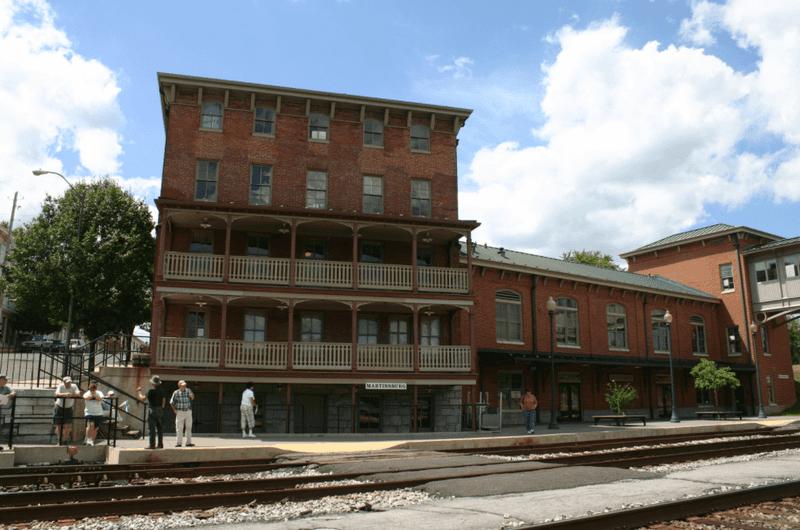
Not many wedding venues come with a railroad pedigree. The Martinsburg Roundhouse now serves as a spot for public events and private rentals, including weddings.
The appeal is easy to understand. Exposed brick, soaring iron, and big open space give any gathering a dramatic backdrop.
Industrial venues have become popular across the country. This one has the bonus of being the real deal, not a modern copy.
Public events also bring the community inside. They give people a reason to come back again and again.
Using the buildings this way helps fund their care. Every booked event supports a little more of the preservation work.
It’s a smart way to keep history alive. Instead of roping everything off, the site invites people to celebrate within it.
Couples with family ties to the railroad might find it especially meaningful. Imagine telling grandkids you married where great-grandpa fixed engines.
Even if you’re not planning a party, keep an eye on the event calendar. A festival or gathering offers a fun way to see the space full of life.
Planners should contact the venue directly for details. Availability and offerings can change by season.
Trains Still Roll Right Past The Old Shops
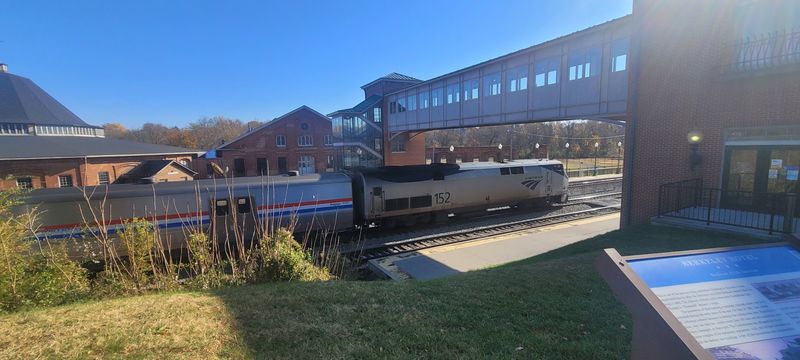
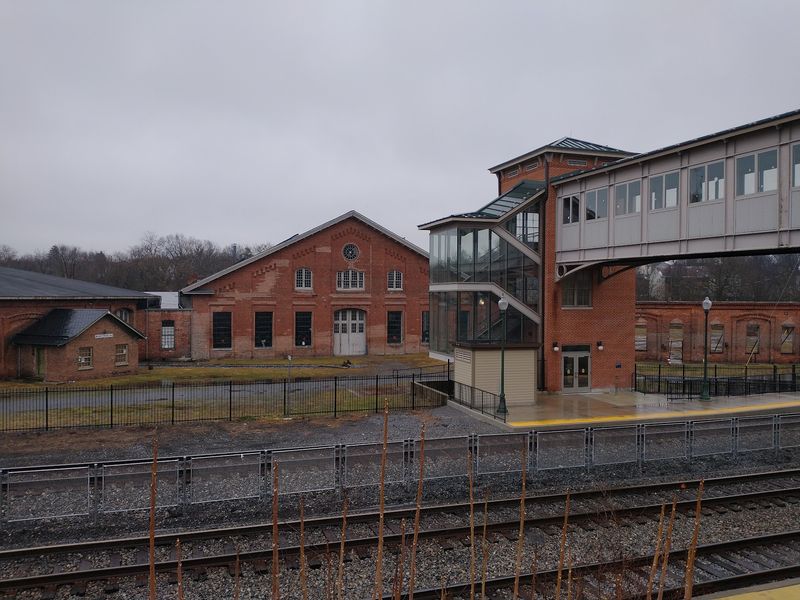
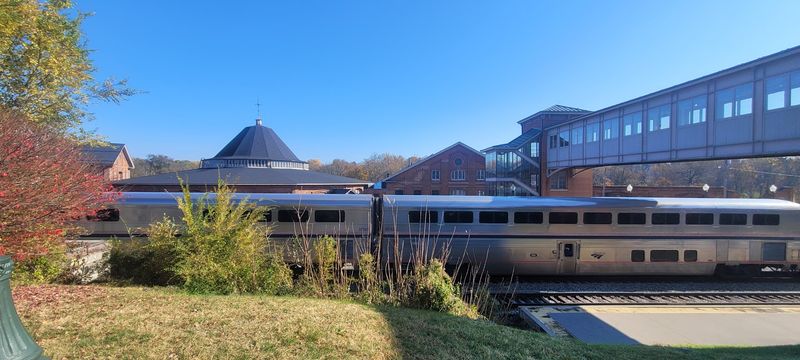
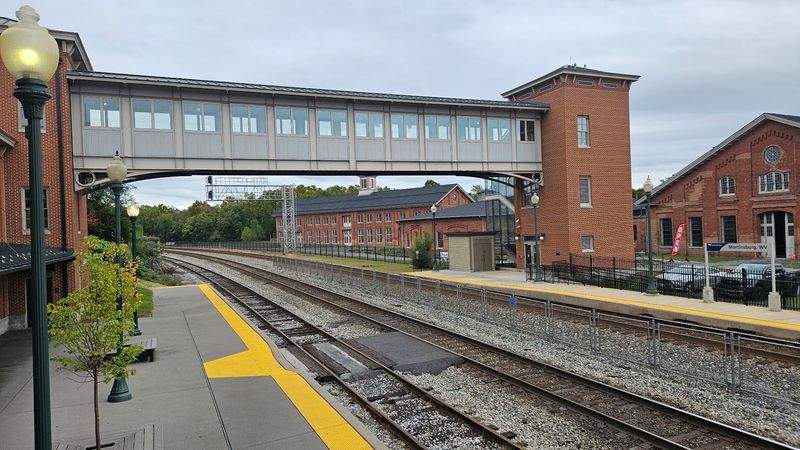
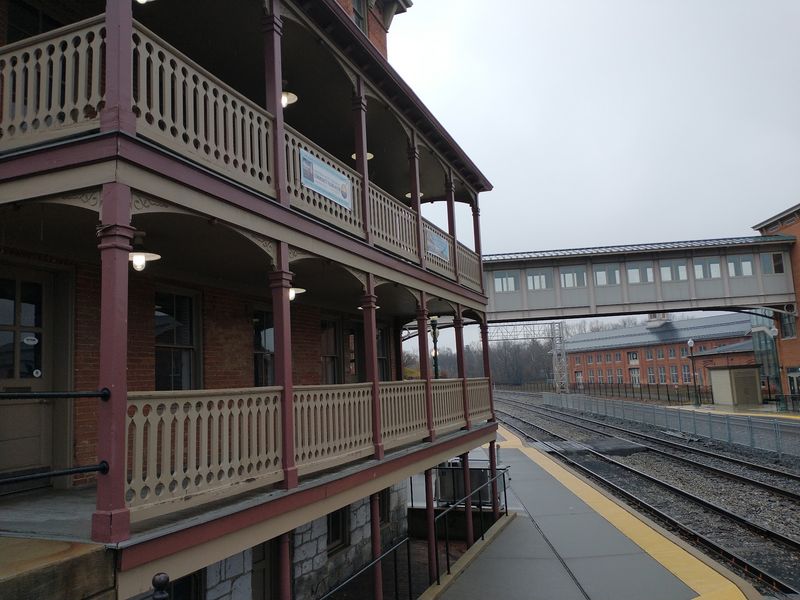
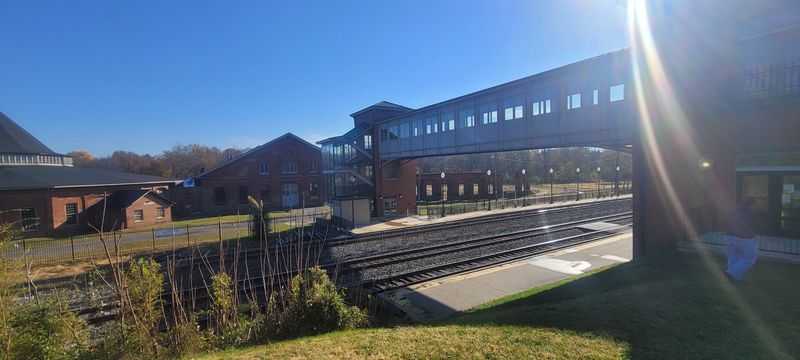
History rarely comes with a live demonstration, but this one does. A pedestrian bridge connects the complex to Martinsburg’s active train station.
That station still serves Amtrak and MARC passenger trains. Freight trains rumble through as well, keeping the tracks busy.
The station itself traces its railroad roots back to the 1800s. Old and new rail travel share the same corridor here.
Watching a modern train glide past the 19th-century roundhouse is a treat. It connects the dots between where railroading started and where it is now.
The nearby historic Berkeley Hotel building connects to the station. It reportedly houses the Berkeley County Interpretive Center and a children’s museum.
That makes the area a nice cluster for a day out. Families can bounce between hands-on learning and real trains without much walking.
Train spotters will feel right at home. Bring patience, a good spot, and maybe a schedule if you want to catch a passenger run.
Arriving by rail is even possible for some travelers. Few landmarks in West Virginia let you step off a train and into railroad history.
Plan Around The Season, Then Find A Meter
Timing matters here, so mark your calendar. Seasonal tours have been offered from April through October.
Tour hours have reportedly run Wednesday through Saturday from 10 a.m. to 4 p.m. Sundays have been noon to 5 p.m.
Schedules can shift with events and restoration work. Checking with the Roundhouse before you go is a smart move.
The historic district centers on 229 E Martin St, Martinsburg, WV 25401. The roundhouse property itself is often listed at 100 East Liberty Street.
Metered parking is available nearby. Handicap parking and an accessible entrance with restrooms have also been noted at the station area.
Comfortable shoes are a good idea. The grounds cover several acres, and you’ll want to wander around every building.
Spring and fall offer pleasant weather for strolling. Summer works too, especially if you plan your outdoor time for the cooler parts of the day.
Martinsburg sits along Interstate 81 in the eastern panhandle. That makes it an easy add-on for road trips through the region.
Pair your visit with the station and interpretive center. Together they make a full, unhurried railroad day.
Worth A Whistle Stop For Any History Lover
So, should this landmark land on your list? If you love trains, engineering, or hometown history, the answer leans strongly toward yes.
Few places pack so much into one setting. A record-setting roundhouse, an 1877 labor milestone, and working tracks all share the same ground.
The Baltimore and Ohio and Related Industries Historic District isn’t flashy. It earns attention through real stories and real iron.
It also suits a wide range of visitors. Kids enjoy the trains, grandparents enjoy the memories, and everyone enjoys that ceiling.
Preservation is still a work in progress. That honesty is part of the charm, since you can see a community actively saving its past.
I like that the site keeps evolving. Events, tours, and rentals give it a pulse instead of a plaque-only existence.
For West Virginia families, it’s a point of pride worth sharing. Many folks across the state have railroad roots somewhere in the family tree.
Bring a curious mind and a little time. Then listen for the next train, because this old yard still has plenty to say.
