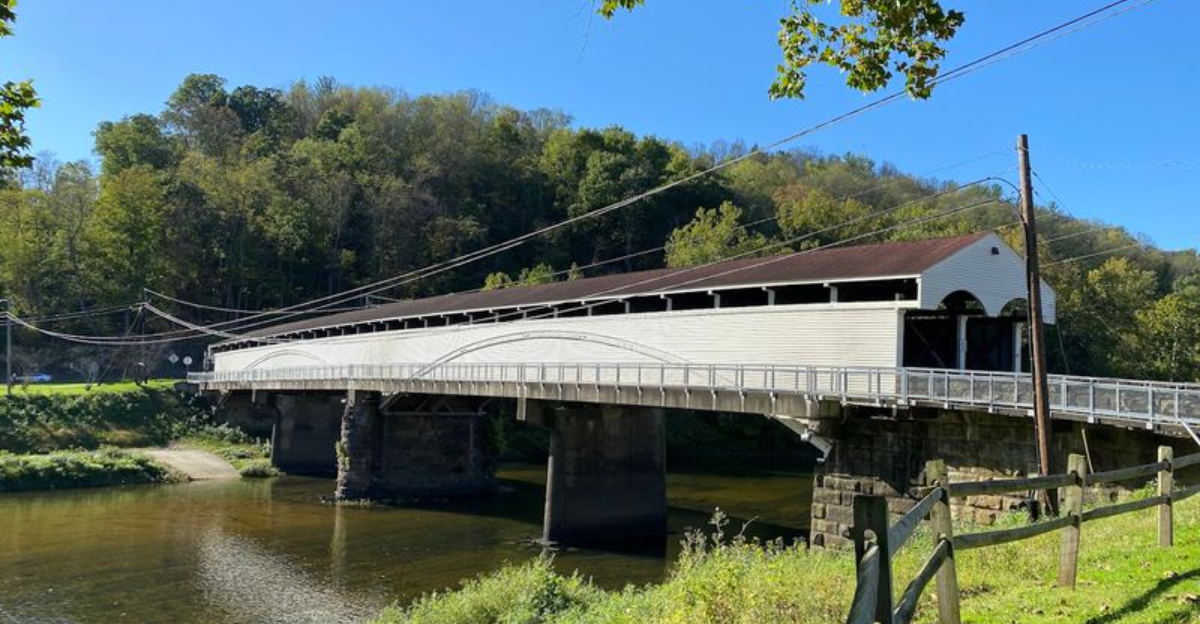
West Virginia hides a historic covered bridge that most travelers simply zoom past without a second glance.
This one spans the Tygart Valley River in Philippi, and it has been standing since 1852, which means it survived the Civil War, countless floods, and modern cars that definitely weren’t part of the original blueprints.
It is the oldest and longest covered bridge still in use on the United States highway system.
Not bad for a wooden structure that looks like it belongs on a postcard.
No admission fee, no gift shop pushing overpriced snow globes.
Just a beautifully preserved piece of history you can actually drive through.
Pull over. Walk it. Thank yourself later.
A Bridge That Defies Everything You Think You Know
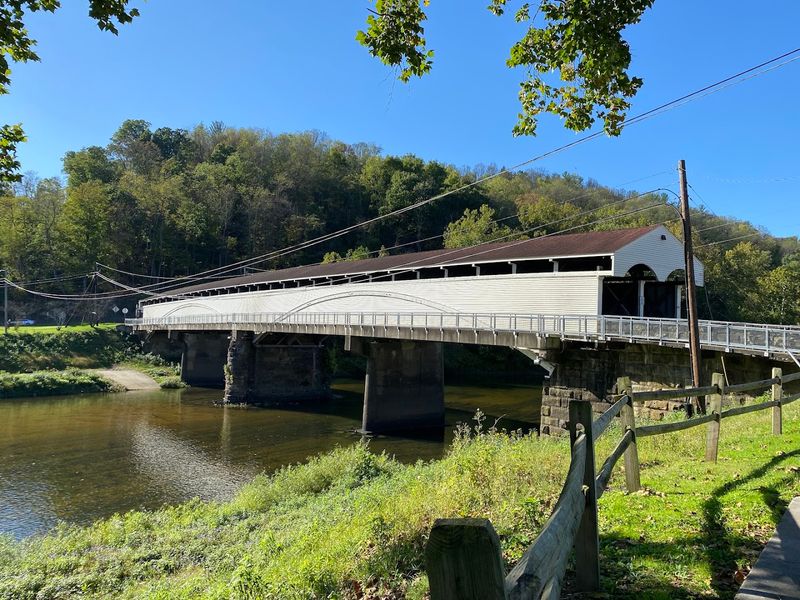
Most covered bridges exist as quiet museum pieces, roped off and admired from a distance. This one carries actual traffic, and that alone makes it unlike almost anything else in the country.
Rolling through its wooden walls while modern cars do the same thing feels genuinely surreal.
Built in 1852, the Philippi Covered Bridge spans the Tygart Valley River and holds the title of West Virginia’s oldest and longest covered bridge. At nearly 286 feet long, it commands serious respect.
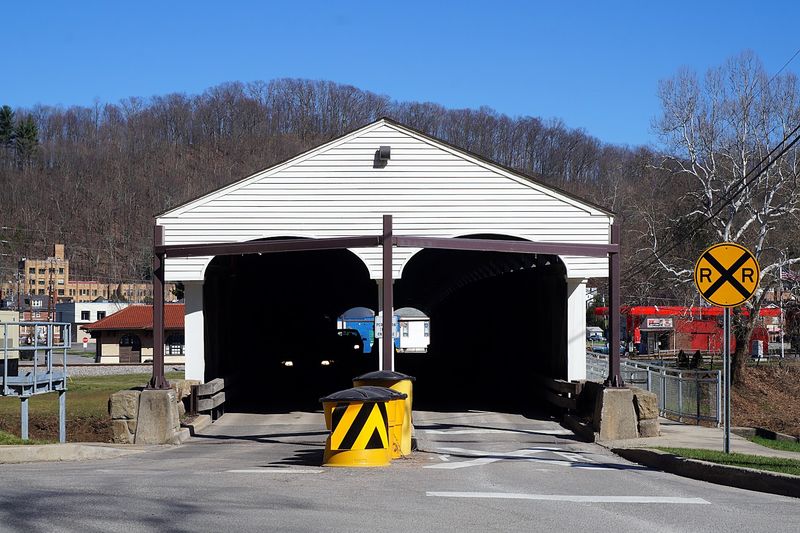
The structure is also one of only a handful of surviving double-barreled, meaning two-lane, covered bridges left in the entire United States.
What makes this even more extraordinary is its placement on the U.S. Numbered Highway System.
It is the only covered bridge in the country that carries a U.S. route. Driving through it feels like slipping through a crack in time while still technically following your GPS directions.
Few places anywhere manage that kind of magic.
The Man Who Built It With Vision and Grit
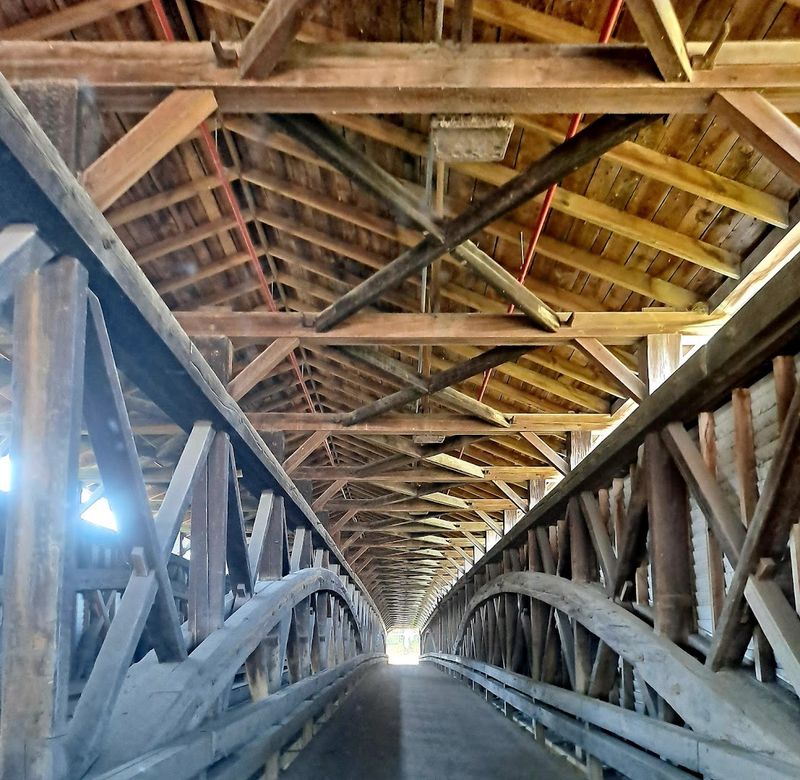
Behind every legendary structure is someone who refused to take the easy road. Lemuel Chenoweth was that person for Philippi.
Commissioned by the General Assembly of Virginia, he designed and constructed this bridge in 1852 with a level of craftsmanship that has literally survived wars, floods, and fire.
Chenoweth worked alongside his brother Eli and stonemason Emmett J. O’Brien, who built the original massive sandstone piers supporting the entire structure.
The design used what is known as the Long Burr Arch Truss, a system that distributes weight efficiently and gives the bridge its impressive durability. Originally, only wood and iron bolts held the whole thing together.
That combination of natural materials and brilliant engineering is part of what makes the bridge so fascinating to stand inside and study. The original span was 312 feet long and 26 feet wide.
Chenoweth built more than a crossing. He built something that people would still be talking about nearly two centuries later, and that says everything.
Where the Civil War Left Its Mark
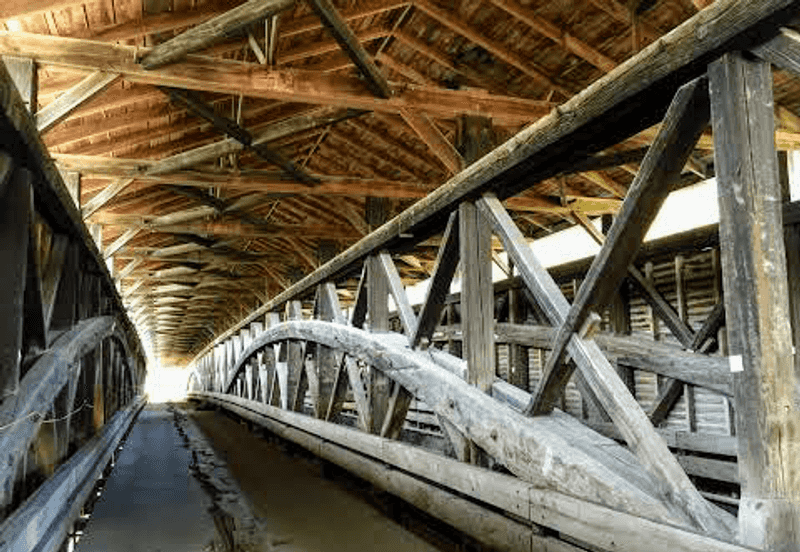
Standing inside the bridge, it’s easy to forget that soldiers once did the same thing, except with far more urgency. The Battle of Philippi on June 3, 1861 is considered by many historians to be the first land battle of the Civil War involving organized troops.
Union forces captured the bridge during that engagement and used it as barracks for a period afterward.
Both Union and Confederate troops moved through this structure during the war. Confederate raiders came close to burning it down in April and May of 1863, but the bridge survived those attempts.
That near-miss history adds a layer of weight to every step you take across its wooden planks.
Nearby, the Blue and Gray Park offers historical context with markers and monuments that help piece together the story of what happened here. Walking through the park after crossing the bridge turns the whole visit into something that feels more like a history lesson than a sightseeing stop.
The kind you actually want to finish.
Surviving Fire, Flood, and Everything In Between
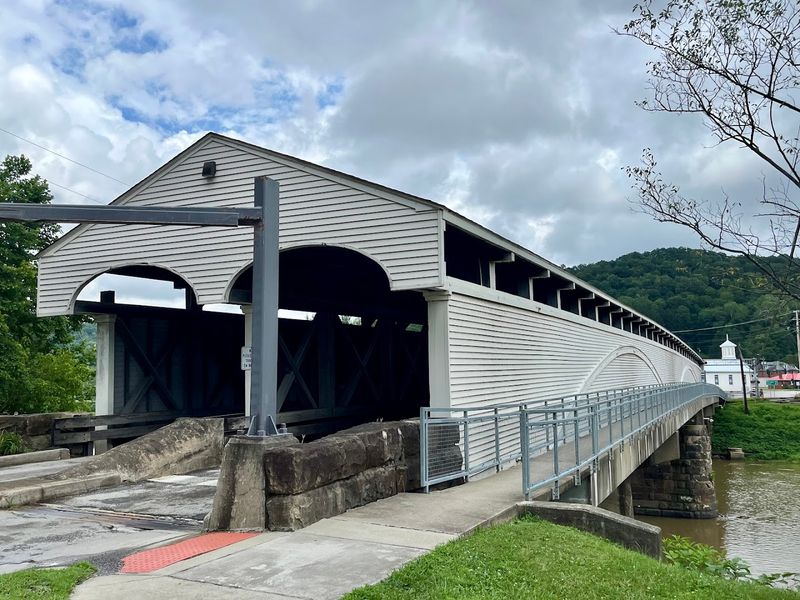
Some buildings carry scars quietly. This bridge wears its history right in the timber, and that honesty is part of its charm.
In November 1985, a devastating flood severely damaged the structure. Then, in February 1989, a tanker truck spilled gasoline that was ignited by a passing car’s backfire, and the bridge was virtually destroyed by the resulting fire.
A $1.4 million reconstruction followed, directed by bridge historian Emory Kemp. The goal was to restore the bridge to its 1861 appearance, replacing damaged yellow poplar supports while keeping the structure historically accurate.
A fire sprinkler system was installed during the restoration as well.
Here is the detail that really sticks with you: some of the original burnt wooden trusses and supports were intentionally left in place. They remain as a permanent reminder of the fire, visible if you know where to look.
The bridge reopened to traffic on September 16, 1991. Resilience is not just a word here.
It is built into the wood itself.
The Double-Barrel Design That Stops People in Their Tracks
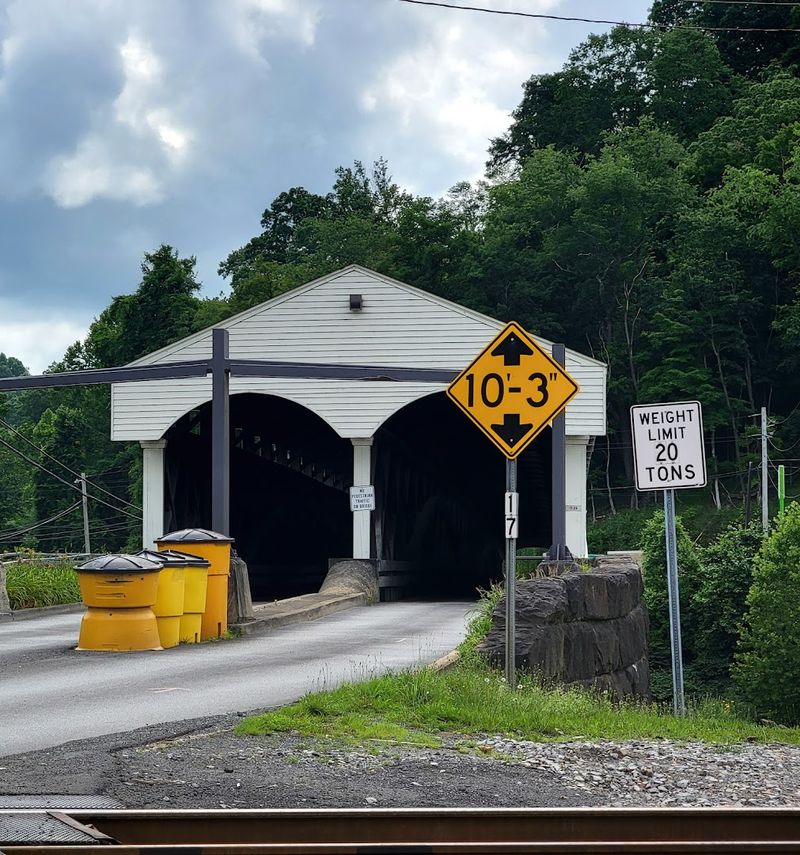
Two lanes inside a covered bridge sounds impossible until you see it. The double-barreled design of the Philippi bridge is one of its most talked-about features, and for good reason.
Pulling into one lane while another car comes through the opposite side, all inside a 19th-century wooden structure, is genuinely one of the stranger and more wonderful driving experiences available in the eastern United States.
This design was intentional from the start. The bridge was built wide enough to handle two-way traffic because it served as a critical crossing point for the region.
That foresight in 1852 is part of why the bridge still functions today as a real, working piece of infrastructure.
Only a handful of double-barreled covered bridges survive anywhere in the country. Most were lost to time, weather, or neglect.
The fact that this one still carries daily traffic makes it something of a unicorn in the world of historic preservation. Seeing it for the first time genuinely makes you stop and reconsider everything you assumed about old bridges.
The Pedestrian Walkway and Its River Views
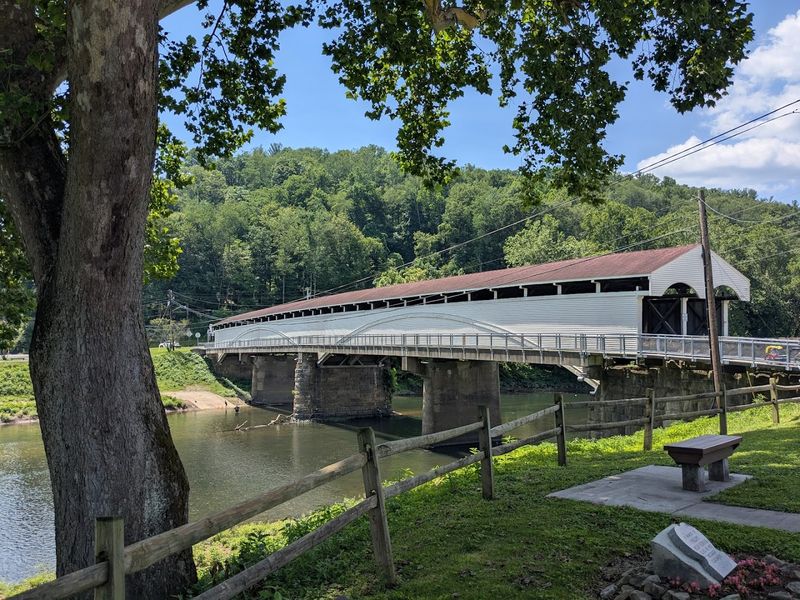
Getting out of the car and walking the bridge is a completely different experience from driving through it. The exterior pedestrian walkway runs alongside the structure and offers open views of the Tygart Valley River below.
On a clear day, the water reflects the surrounding hills in a way that feels almost too pretty to be real.
The walkway was added in 1934 during renovations designed to accommodate increasing motorized traffic. Two concrete piers were also added at that time, along with a new steel-reinforced concrete deck.
Those changes helped preserve the bridge’s function while protecting the historic wooden structure above.
Walking the length of the bridge gives you a chance to appreciate just how long 286 feet actually feels when you’re moving on foot rather than rolling through in a car. The river sounds carry up easily.
The wooden walls of the bridge frame the views in both directions like a painting you can walk into. Bring a camera.
Bring a snack. Take your time out there.
The Almost Heaven Swing and the Perfect Photo Stop
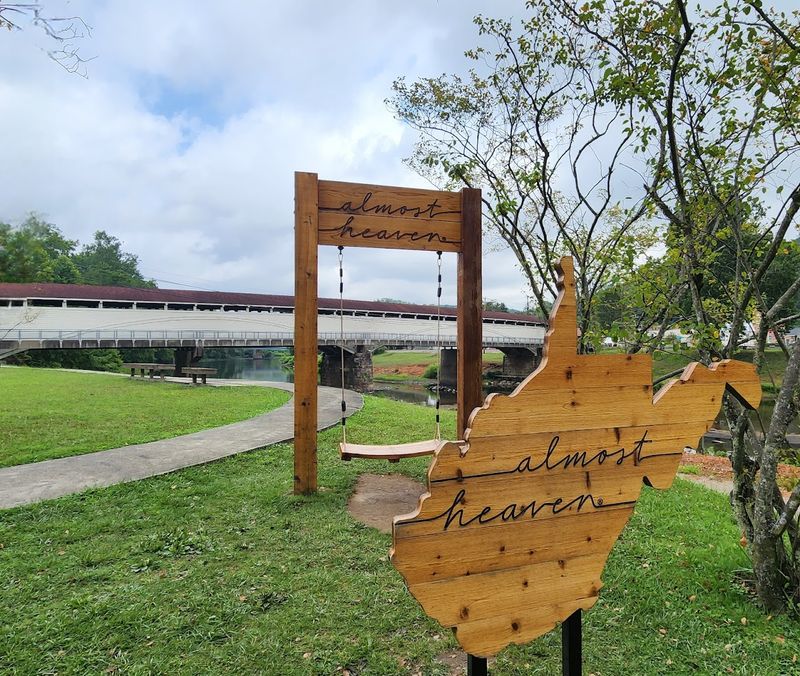
West Virginia has a statewide tourism initiative featuring swings placed at scenic locations around the state, and Philippi has one right near the bridge. The Almost Heaven Swing sits at the Blue and Gray Park, and it has become one of the most photographed spots in the area.
Settle into it and the bridge fills the background almost perfectly.
Finding the swing is easy. Park at the Blue and Gray Park lot, follow the path toward the river, and it appears right where the view opens up.
The swing faces the bridge and the river simultaneously, which makes for a framing that feels effortless. No hiking, no searching, no guesswork.
Even if you are not someone who stops for photo opportunities on road trips, this one is worth pausing for. The combination of the swing, the river, and the historic bridge creates a scene that is genuinely hard to replicate anywhere else in the state.
It is the kind of spot that makes you want to sit for a few extra minutes just because it feels good to be there.
On the National Register of Historic Places Since 1972
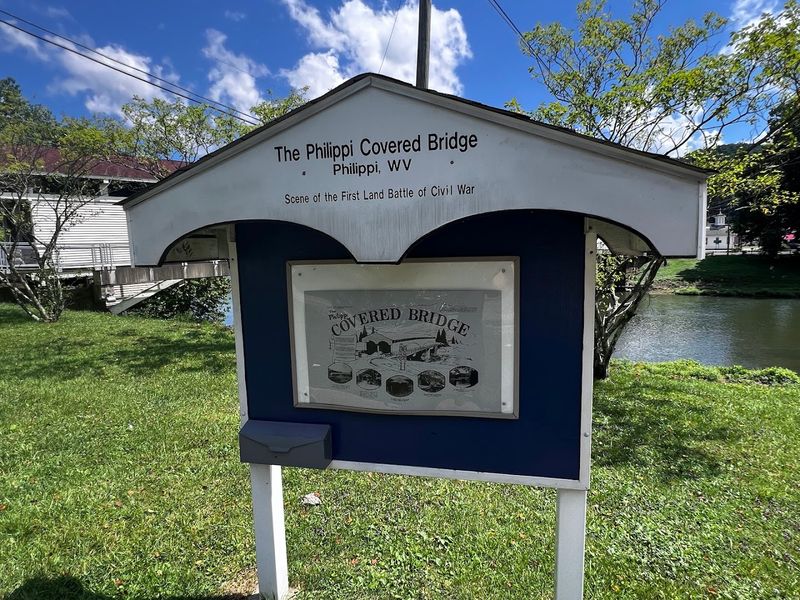
Recognition matters when it comes to preservation, and the Philippi Covered Bridge earned its place on the National Register of Historic Places back in 1972. That designation acknowledges both the architectural significance of the structure and its deep connection to American history.
Not every landmark gets that kind of official acknowledgment, and this one absolutely deserves it.
The listing has helped ensure that restoration efforts over the years have been guided by historical accuracy rather than convenience. The 1991 reconstruction specifically aimed to return the bridge to its 1861 appearance, honoring the original craftsmanship of Chenoweth and his team.
That commitment to authenticity is visible in every timber.
Visiting a site on the National Register feels different from a regular tourist stop. There is a sense that what you are standing in front of has been vetted by people who care deeply about history and context.
For a traveler who appreciates that kind of depth, Philippi offers something genuinely rare. It is not a replica or a recreation.
Every plank and pier has a real story behind it.
Why This Is a Road Trip Stop You Will Actually Remember
Most road trip stops blur together after a while. A gas station here, a scenic overlook there, maybe a roadside attraction that looked better in the thumbnail.
Philippi is different because it layers history, architecture, natural beauty, and genuine surprise into a single location that takes maybe an hour to fully enjoy.
The bridge is open 24 hours, which means early risers and late-night travelers can both experience it on their own terms. Morning light on the wooden exterior is something worth setting an alarm for.
The Tygart Valley River catches it beautifully, and the town is quiet enough that the whole place feels like it belongs to you for a little while.
Pulling back onto US Route 250 after spending time here, something settles in your chest that is hard to name exactly. Maybe it is the weight of history, maybe it is the surprise of finding something this remarkable just sitting on a regular highway.
Either way, it sticks.
Address: 26416 US-250, Philippi, WV 26416.
