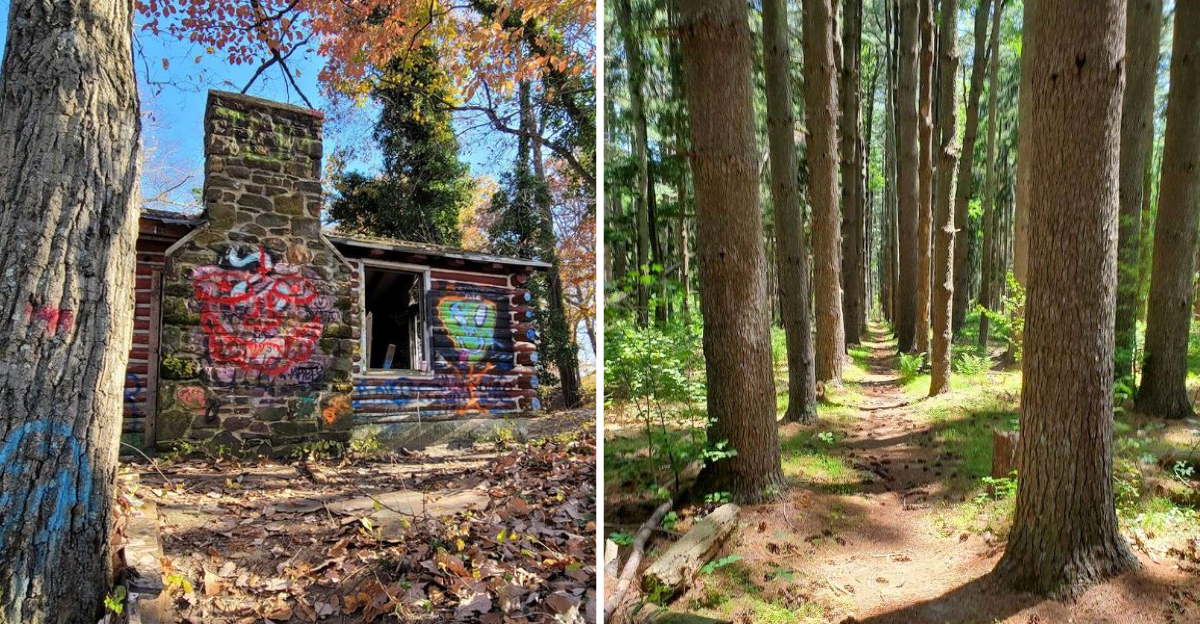
3.3 miles of winding creek, one New Jersey trail, and a creepy old house that refuses to become a parking lot.
The remains aren’t exactly haunted (probably), but they are wonderfully spooky in that “what happened here?” kind of way.
The creek babbles along like it’s gossiping about the ruins the whole time.
Pack bug spray, wear decent shoes, and prepare to invent wild backstories about the family who once called this moldy mansion home.
The Blue Trail: Your 3.3-Mile Sandy Adventure
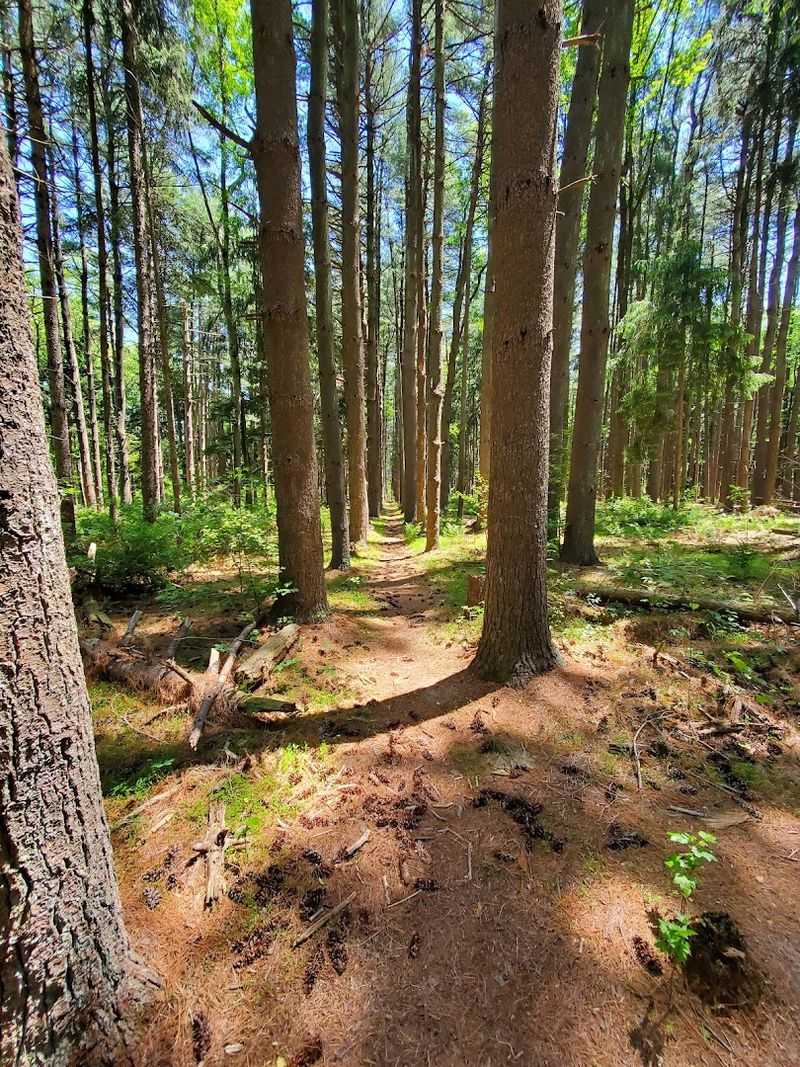
Few trails in South Jersey have the kind of personality that the Blue Trail carries so effortlessly.
Stretching 3.3 miles through Rancocas State Park, this path is officially easy but endlessly interesting, threading through hardwood forests and hugging the curves of Rancocas Creek the whole way through.
The surface is mostly sandy, which gives each step a soft, quiet crunch underfoot. Minor hills pop up here and there, just enough to keep things lively without making you regret skipping the gym.
Trail markers are clearly painted in blue, so getting lost is nearly impossible. The path is wide enough to walk comfortably, though some sections get a little overgrown depending on the season.
Wearing long pants is a smart move, especially in summer when the trailside bushes get enthusiastic. Sturdy sneakers or light hiking boots handle the sandy terrain perfectly.
Pack water, a snack, and bug spray, because the park has no facilities along this trail. It is a straightforward, satisfying loop that earns its reputation as one of the best easy hikes in Burlington County.
Rancocas Creek: The Winding Star Of The Show
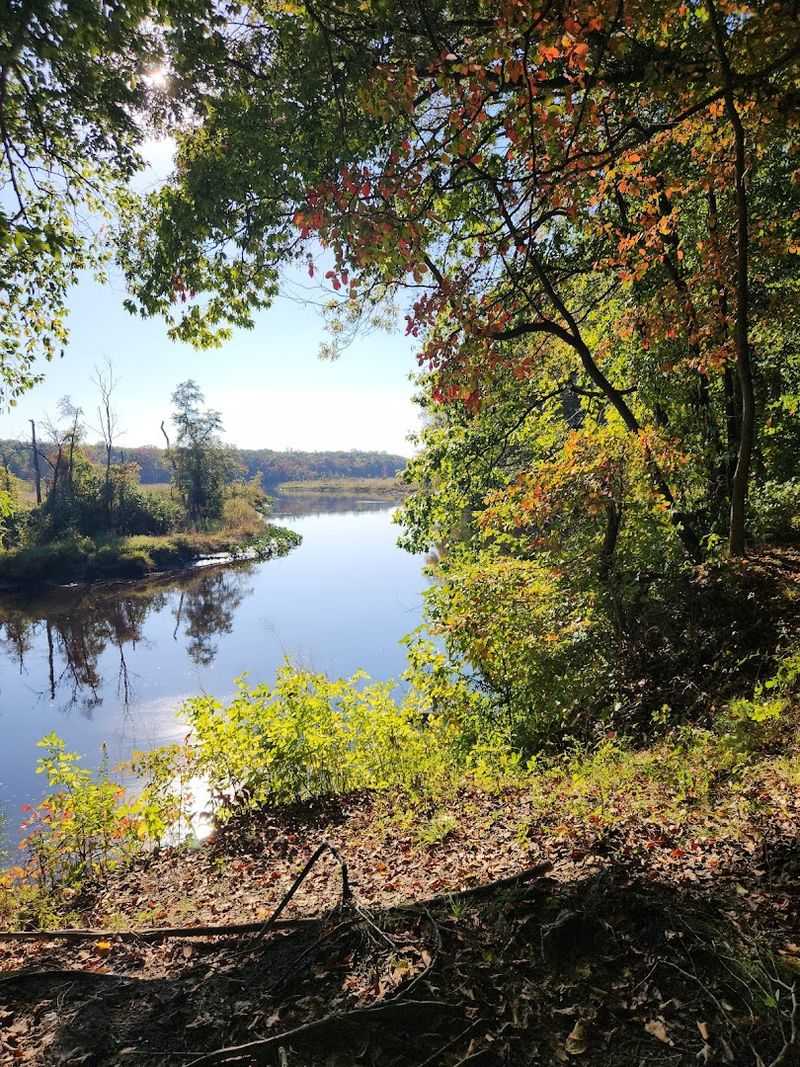
There is something almost hypnotic about walking beside Rancocas Creek for miles, watching the water curl and bend like it has somewhere important to be. The creek is the backbone of this entire trail experience, and it earns every bit of attention it gets.
Sunlight hits the water in shifting patterns, especially in the morning when the air is still cool and the surface looks like scattered glass.
The creek splits into its North and South branches inside the park, which adds a layer of geographic drama you just do not expect from a flat South Jersey landscape.
In a few spots along the Blue Trail, the bank drops gently to the water, giving you a clear view across the creek to the tree line on the other side. Birdwatchers absolutely love these open moments.
Herons, woodpeckers, and all kinds of songbirds use the creek corridor as their personal highway. The water itself moves quietly, creating a steady background sound that makes the whole hike feel calming and surprisingly meditative.
The Old House Ruins: History Hiding In The Woods
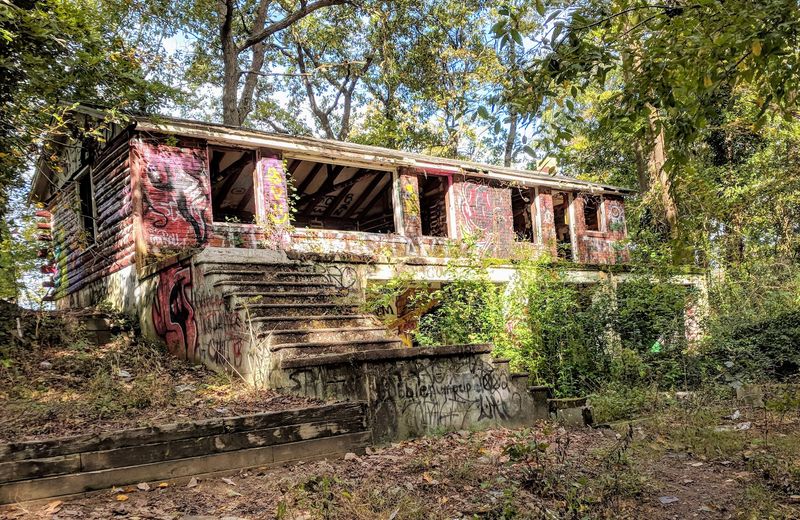
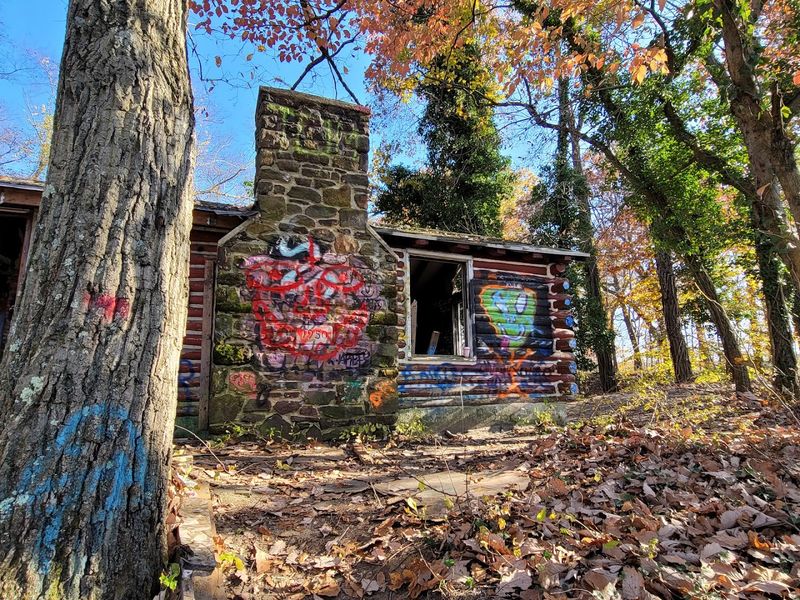
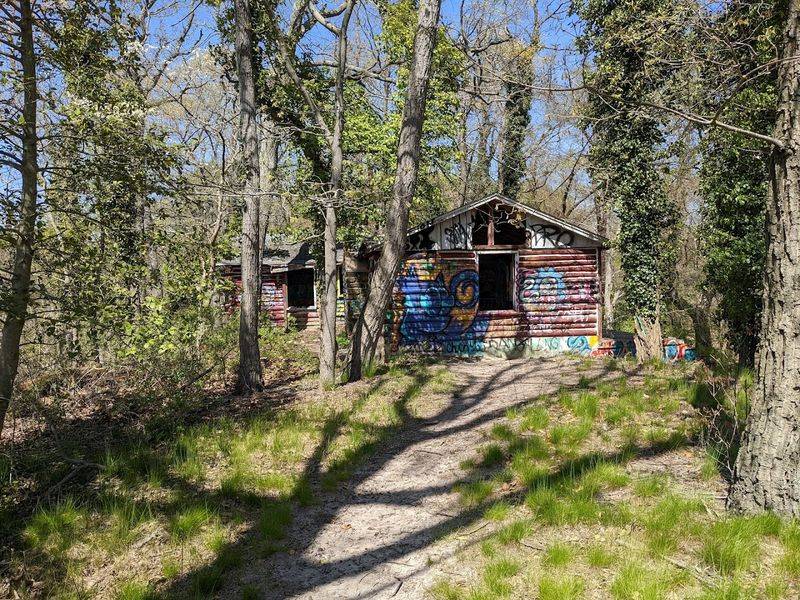
Around the 2.0-mile mark on the Blue Trail, something shifts. The trees thin just slightly, and then you see it: the haunting remnants of what was once a lived-in home sitting quietly at the edge of the woods.
Historically, this structure was known as Mr. Wilkie’s house, or sometimes called the graffiti cabin. It was reportedly built around 1950 and served as a residence for a park caretaker who lived alone along the waterfront with a dock on the creek.
As of late 2023, the main cabin structure was torn down, but the eerie presence of the site lingers through remaining foundations, stairs that lead to nowhere, and scattered remnants of earlier structures.
Standing in that spot and imagining someone actually living there, surrounded by forest and creek, is genuinely moving.
The area around the ruins also reflects the region’s much older history, including Lenape settlements from the 1600s and European farms established in the 1690s.
History stacks up quietly out here, layer after layer, waiting for curious hikers to find it.
Hardwood Forests And Pine Tree Canopy
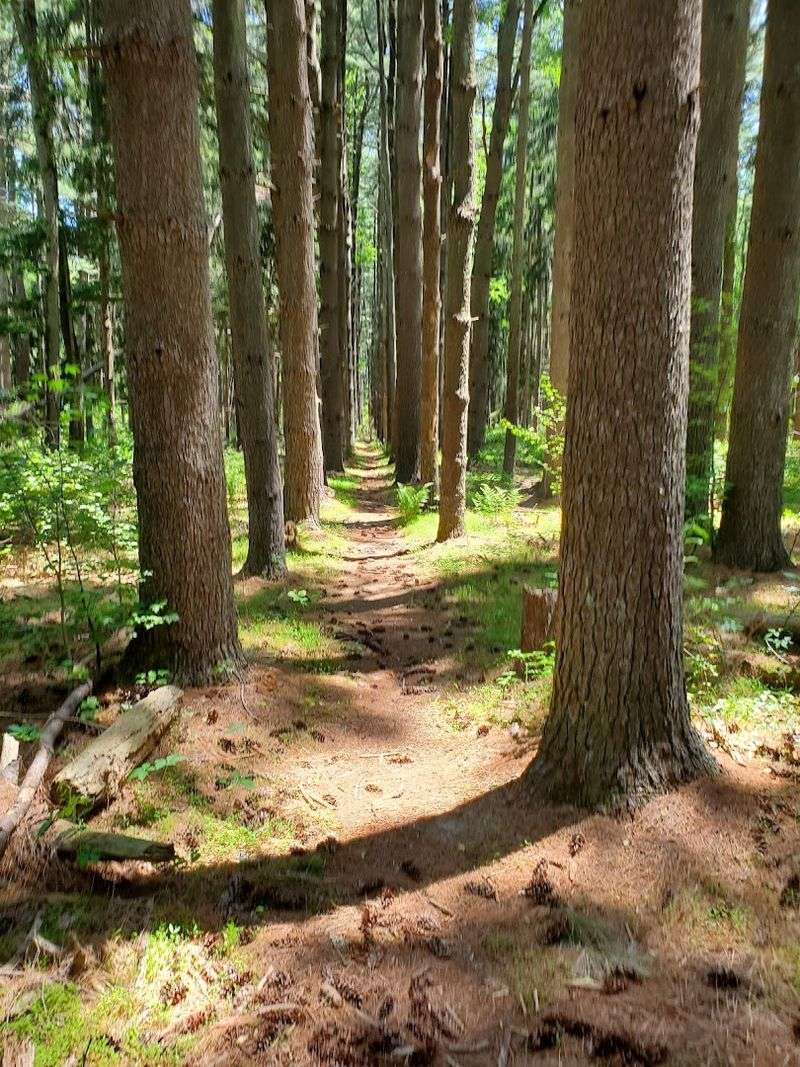
Walking under the tree canopy in Rancocas State Park is one of those experiences that genuinely quiets your brain.
The mix of hardwood trees and scattered pines creates a layered ceiling overhead that shifts color and texture depending on the season.
In spring and summer, the forest goes full green, dense and lush, with patches of sky only visible through the gaps. Fall brings a completely different show, when the oaks and maples start cycling through gold, amber, and deep rust before the leaves drop entirely.
Winter strips the trees bare and opens long sight lines deep into the woods, which has its own stark kind of beauty.
The pine trees deserve a special mention. Their scent alone changes the mood of a walk, sharp and clean and slightly sweet, especially right after rain when the forest floor smells almost alive.
The park spans about 1,200 acres, so the forest feels genuinely immersive rather than decorative. It is the kind of place where you forget for a while that a highway exists somewhere nearby.
Wildlife Along The Creek Corridor
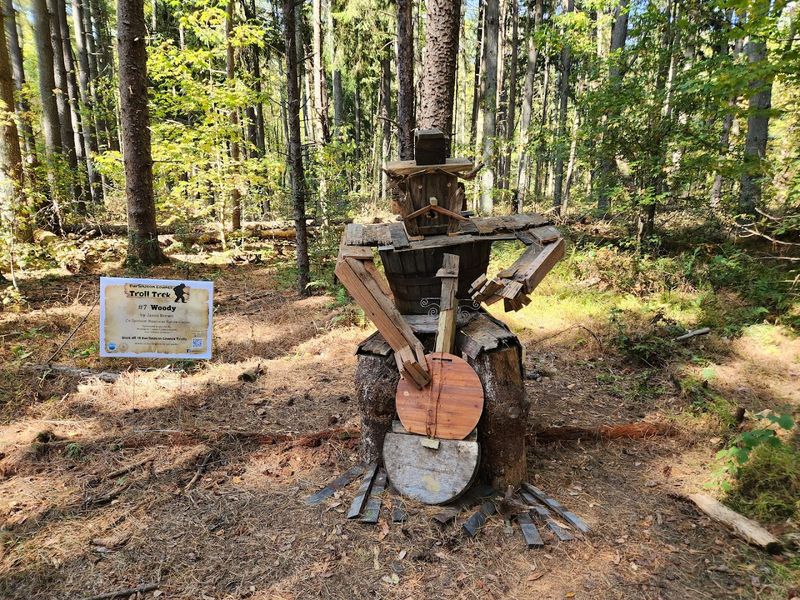
Bring binoculars if you have them, because the wildlife situation along this trail is genuinely impressive.
The creek corridor acts like a magnet for birds, pulling in species that you would not normally expect to spot in a small South Jersey park.
Great blue herons are practically regulars here, standing motionless at the creek’s edge with the kind of patience that puts most humans to shame. Woodpeckers drum away at the older trees, and if you move quietly enough, you can sometimes hear them long before you see them.
Butterflies float through the meadow edges in warmer months, adding color to what is already a visually rich environment.
Deer occasionally appear on the wider sections of trail, usually at dawn or dusk when the park is quietest. The park also sits in a region with a documented history of diverse bird species, making it a consistent destination for local birding enthusiasts.
Dogs are welcome on the Blue Trail if you park at the north trailhead, which makes the whole outing feel even more like a proper outdoor adventure with your whole crew.
Lenape History And The Park’s Deep Roots
Rancocas State Park sits on land with a remarkably layered past, and the Blue Trail quietly passes through all of it without making a big announcement.
The Lenape people had a significant presence along the Rancocas Creek as far back as the 1600s, using the waterway for travel, food, and community life.
European colonists arrived in the 1690s and established farms and plantations throughout the region, fundamentally changing the landscape.
The sand mining operations of the early 1900s then altered the terrain again, removing much of the physical evidence left behind by both the indigenous communities and the early settlers.
Walking the trail with that history in mind adds a completely different dimension to the experience. The ruins, the creek bends, the ancient trees, all of it starts to feel like a layered story rather than just a pretty walk.
The Rancocas Nature Center, located on the other side of the creek, offers additional context about the area’s natural and cultural heritage. It is worth a separate visit if you want to understand what the land has been through over the past four centuries.
Trailhead Access And Parking Tips
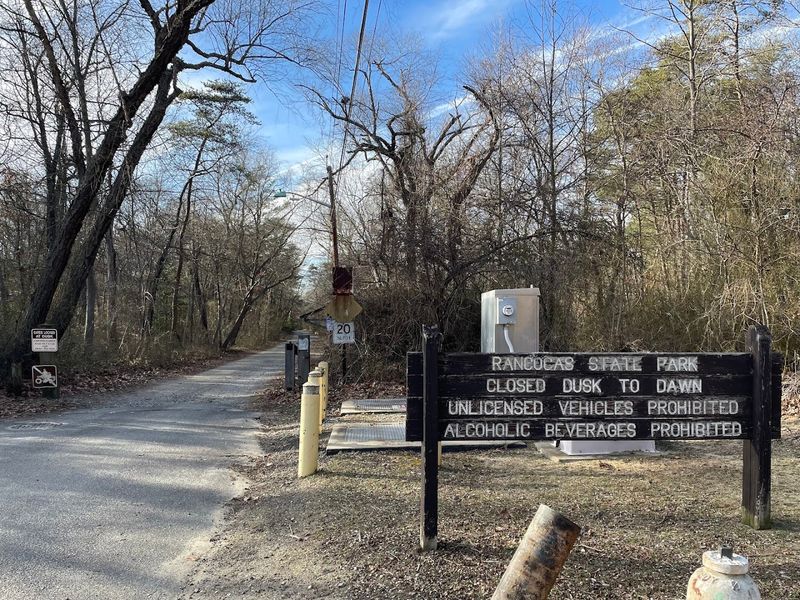
Finding the right entry point for Rancocas State Park is genuinely half the battle, and it is worth sorting out before you leave home. The park has multiple access points from surrounding towns including Hainesport, Mt.
Laurel, and Westampton, so the trailhead you choose shapes the whole experience.
For the Blue Trail specifically, parking at the north trailhead is the most popular starting point. One heads-up: the parking area does not have a flashy sign announcing itself, so slow down and look carefully while driving along Rancocas Road.
It is a gravel lot that blends into the surroundings, easy to miss if you are moving too fast.
The park opens at 7 AM daily and closes at 7 PM, giving you a solid window for a morning or late afternoon hike. There are no restrooms or trash cans along the trail, so plan accordingly.
Dogs are welcome on the Blue Trail from this trailhead, but the Rancocas Nature Center on the opposite side of the creek does not allow pets on its trails.
Best Times To Visit And Seasonal Highlights
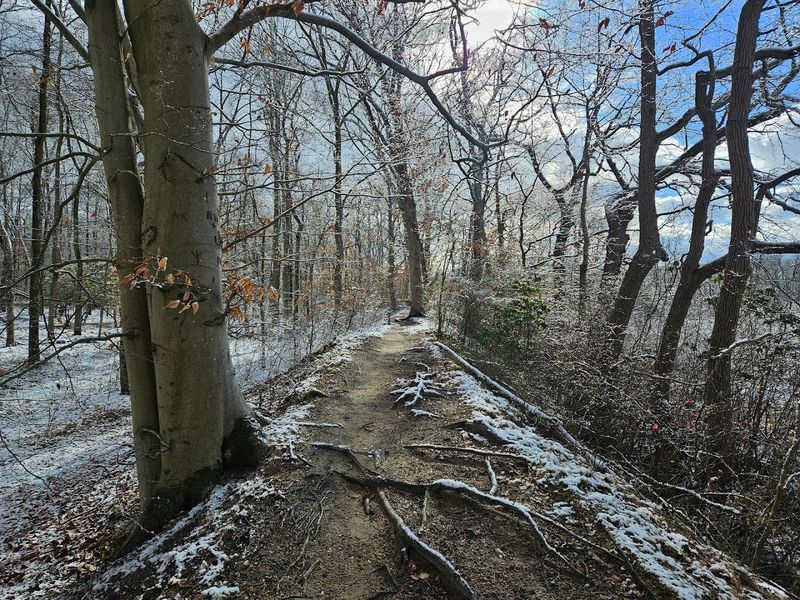
Timing a visit to Rancocas State Park can make a serious difference in what you experience out there. Each season brings its own version of the trail, and honestly, none of them are bad, just different.
Spring is spectacular for wildflowers and bird activity, with the creek running high and lively after winter.
Fall might be the single best season visually, when the hardwood forest ignites in color and the air gets cool enough to make walking feel genuinely refreshing rather than sweaty.
Summer is lush and green but comes with one major caveat: mosquitoes near the water can be intense, especially after rain or in the early evening. Bug spray is non-negotiable from May through September, and long sleeves help near the wetland sections.
Winter strips the trees down and opens up long views through the forest that you simply cannot get any other time of year. The sandy trails drain quickly after rain, so the path stays walkable even after wet weather.
Early morning visits in any season tend to reward you with the best wildlife sightings and the most peaceful atmosphere on the trail.
Packing Smart: What To Bring On The Blue Trail
Showing up prepared for the Blue Trail turns a good hike into a genuinely great one. The trail itself is beginner-friendly, but the lack of facilities means you carry everything you need from start to finish.
Water is the most important thing to pack, especially in warmer months when the sandy terrain and open sun exposure can dehydrate you faster than expected. A light snack or two keeps energy levels steady over the full 3.3 miles.
Bug spray is practically essential from late spring through early fall, particularly near the creek and wetland sections where mosquitoes tend to gather.
Footwear matters more than people expect on a sandy trail. Sneakers with decent grip handle the terrain well, though light hiking boots offer better ankle support on the hillier sections.
Wearing pants instead of shorts protects against thorny trailside bushes, which are plentiful off the main path. A small daypack keeps everything organized and leaves your hands free for balance on rooted sections.
Bringing a trail map or downloading the route offline before you go saves a lot of guesswork once you are deep in the forest.
Address: 794 Rancocas Mt Holly Rd, Westampton Township, NJ
