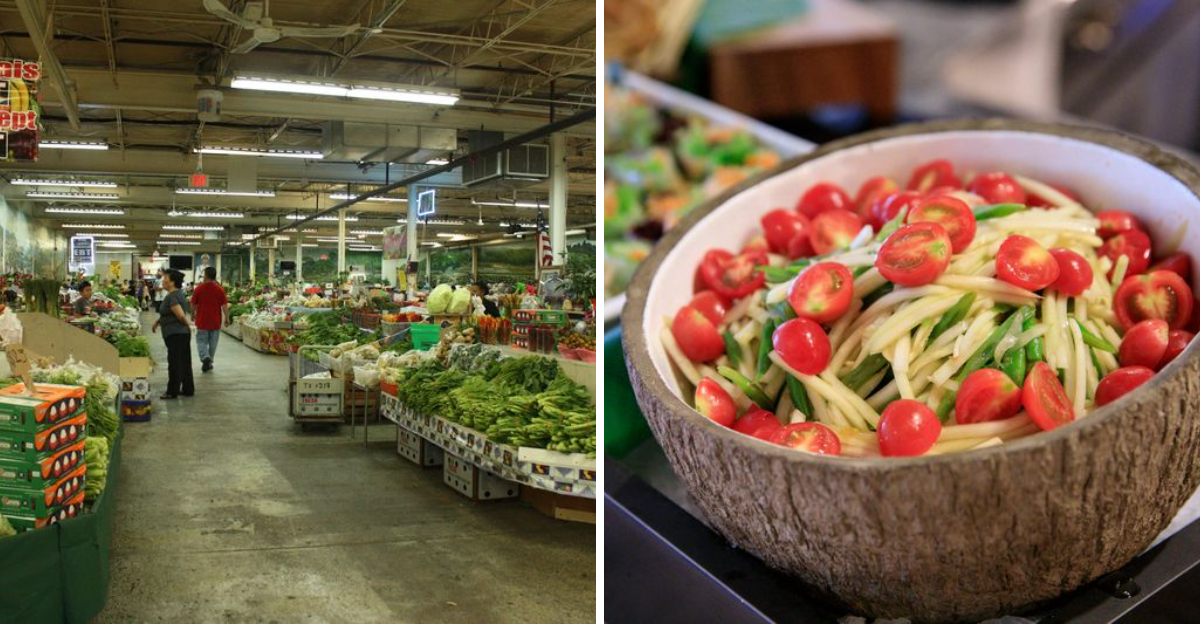
A massive “hidden city” feel runs through this pocket of Minnesota, where culture, food, and everyday life stack together in the most unexpected way. From the outside, it doesn’t look like anything special.
But step in, and it quickly turns into a maze of flavors, languages, and energy.
Tucked inside it all, you’ll find papaya salad that people swear is some of the best in America. Bright, crunchy, spicy, and perfectly balanced, it hits with that fresh, sharp kick that keeps you going back for another bite.
I didn’t expect something this lively to be so easy to miss from the street. But that’s part of the charm – everything good here feels slightly hidden, like you had to be paying attention to find it.
The Papaya Salad That Earns Its Reputation
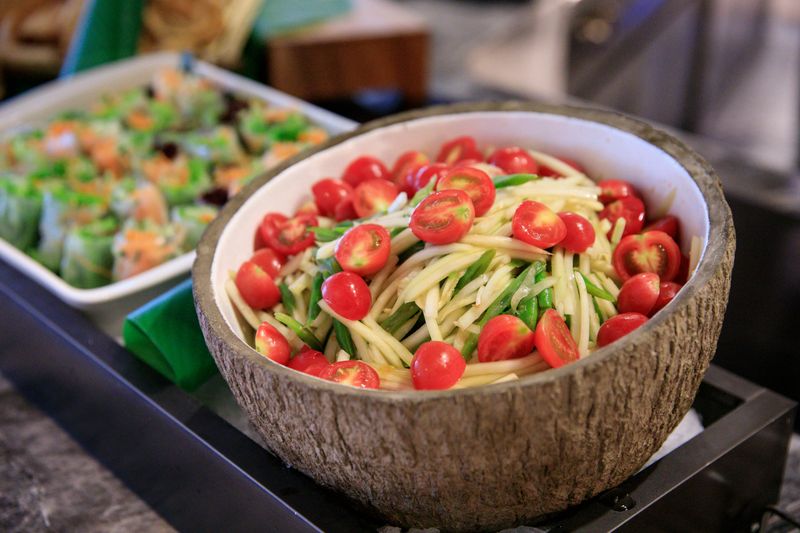
Papaya salad at Hmong Village is not something you just eat. It is something you remember.
The shredded green papaya is pounded fresh in a mortar, mixed with chili, lime, fish sauce, and tomatoes, and served with a punch of flavor that lingers long after the last bite.
Several stalls inside the market serve their own version of this dish. Each one has its own balance of heat, sour, and salt.
Some versions lean spicy, others lean tangy, and a few find a middle ground that feels just right.
Visitors who have traveled across the country trying papaya salad often say the versions here rival anything they have tasted elsewhere. The freshness of the ingredients makes a real difference.
Vendors source their produce carefully, and it shows in every forkful. If you only eat one thing at Hmong Village, make it the papaya salad.
Go early, find a stall that looks busy, and trust the crowd.
A Warehouse That Feels Like a Hidden City
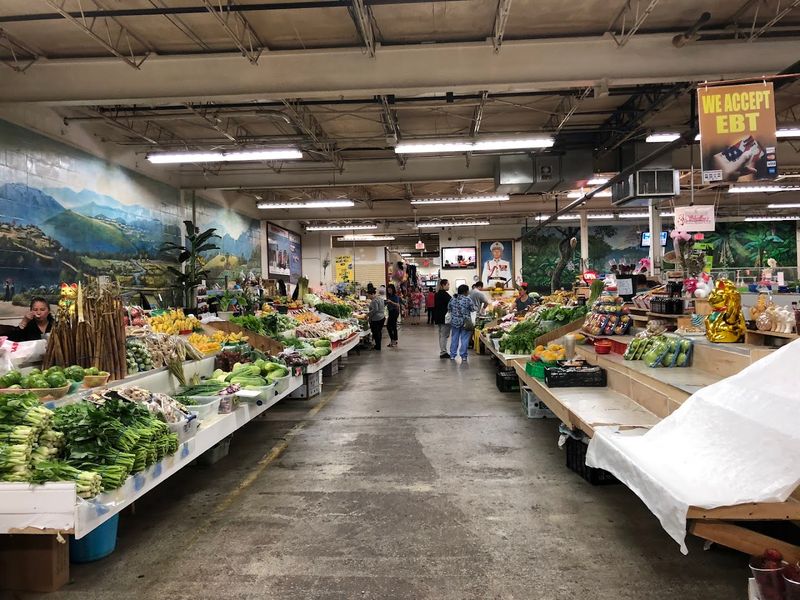
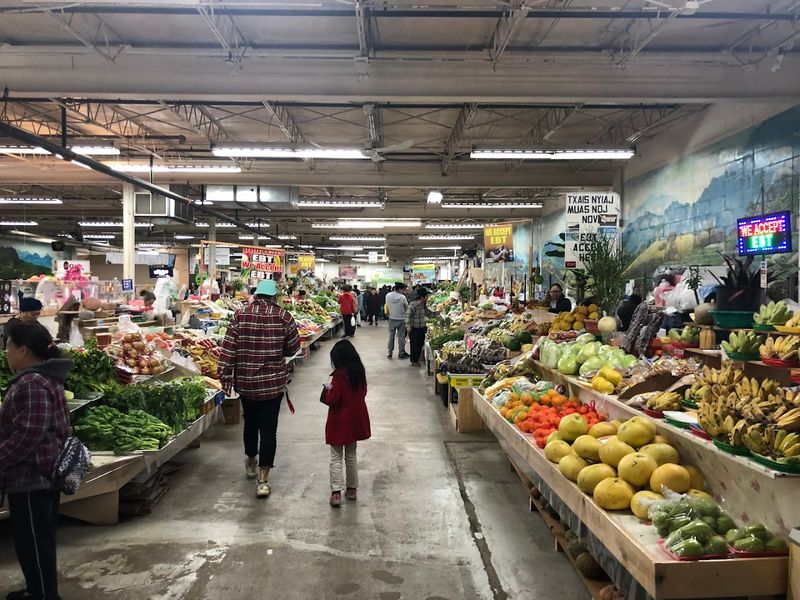
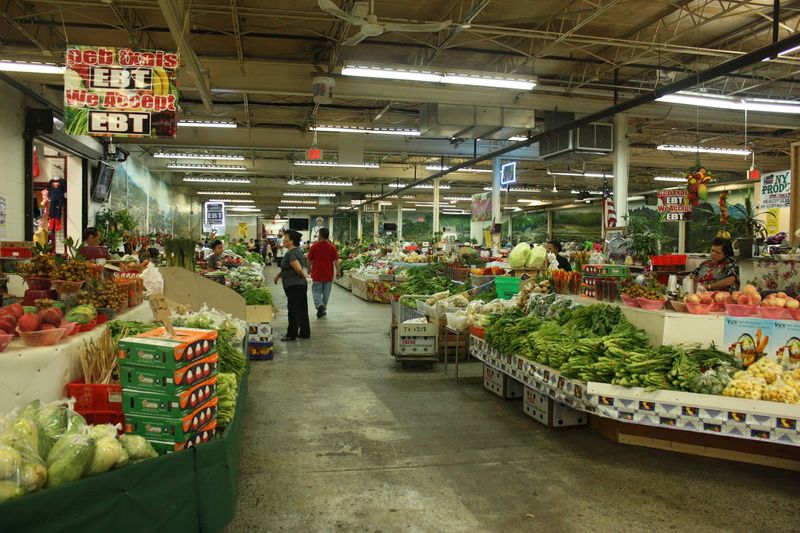
Walking into Hmong Village for the first time is genuinely disorienting in the best way. The building is massive.
Stalls line every wall and fill the center, creating a maze of sights and sounds that takes a while to fully process.
The layout is organized loosely by category. Food stalls cluster near the entrance and corners.
Clothing vendors fill long rows. Produce, herbs, and dry goods spill out from wooden shelves and folding tables.
It feels organic and lived-in, not staged.
The “hidden city” nickname fits perfectly. Most people driving past on Johnson Parkway would never guess what is happening inside.
There is a DMV, a medical clinic, and dozens of small businesses all operating under one roof. This is not a weekend pop-up market.
It is a full-scale community that runs Monday through Saturday from 9 AM to 5 PM and on Sundays until 1 PM. Coming here feels like discovering a neighborhood that was never on the map.
The Food Court and Its Many Noodle Soups
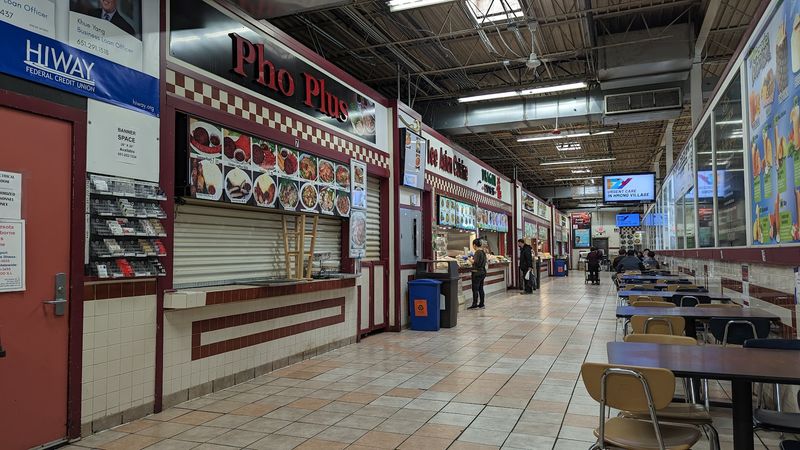
The food court at Hmong Village has a personality all its own. Tables fill up fast on weekends, and the hum of conversation mixes with the clatter of bowls and the sizzle from open kitchen stalls.
It feels electric in a casual, unhurried way.
Noodle soups are the stars here. Pho, boat noodles, and rice noodle dishes show up on nearly every menu board.
Each stall has its own broth recipe, its own spice level, and its own loyal regulars. Trying more than one is encouraged.
Boat noodles deserve a special mention. They are rich, deeply savory, and served in small portions meant to be ordered in rounds.
The broth is darker and more intense than standard pho. Arrive hungry, grab a table near a stall that catches your eye, and settle in for a proper meal.
Fresh Produce and Herbs You Won’t Find Elsewhere
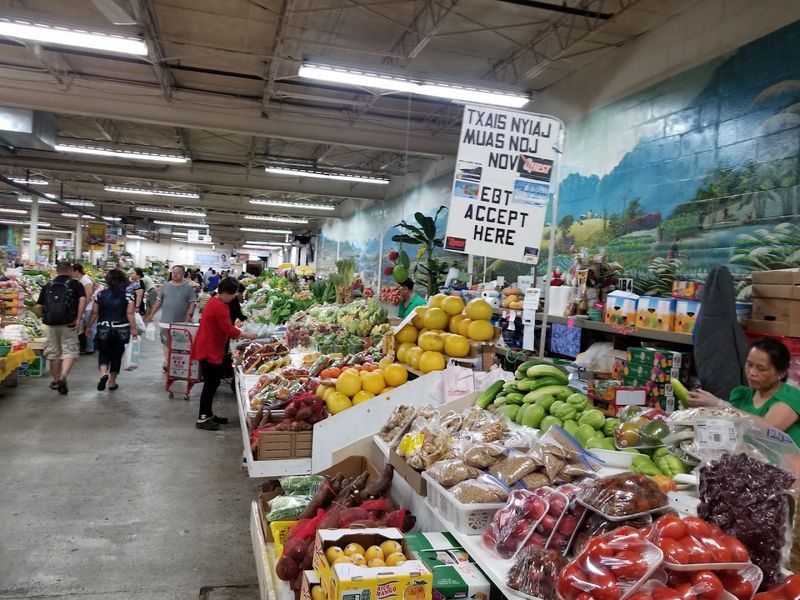
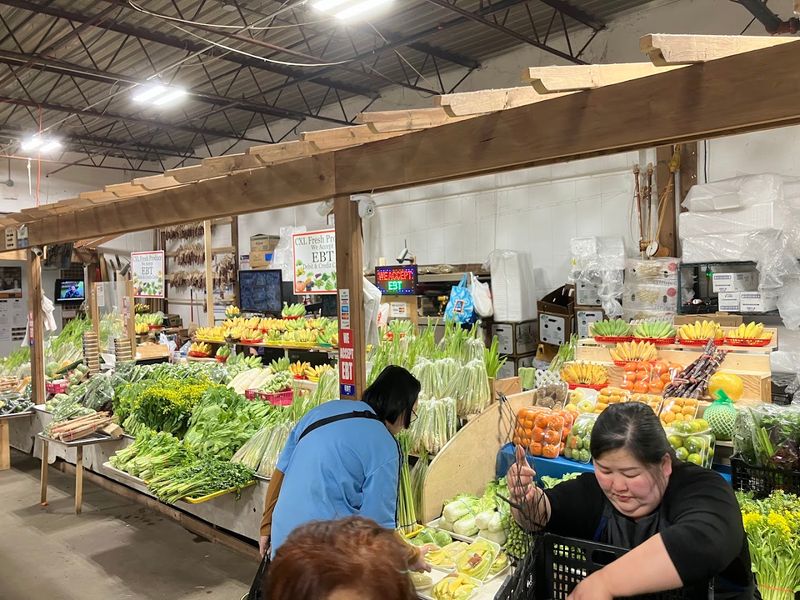
The produce section at Hmong Village is its own kind of adventure. Vegetables and herbs that are nearly impossible to find at standard grocery stores show up here in abundance.
Long beans, bitter melon, lemongrass, galangal, and banana blossoms are just a few of the regulars.
Vendors arrange their goods with obvious pride. Bundles of fresh herbs are tied neatly.
Tropical fruits sit in careful rows. The colors alone make it worth a slow walk through the stalls, even if you are not buying anything.
Many shoppers come specifically for the ingredients they cannot source anywhere else in the Twin Cities. Home cooks who grew up making traditional Hmong, Lao, or Thai dishes find what they need here without compromise.
The quality is consistently fresh, and the variety changes with the seasons. Regulars know to come early on weekdays when the selection is at its peak and the vendors have had time to restock from their suppliers.
Traditional Hmong Clothing and Cultural Goods
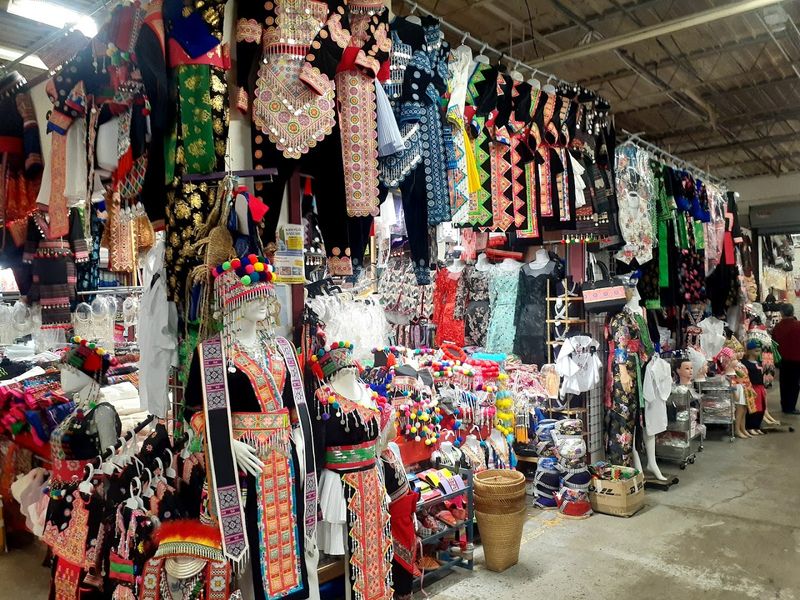
One of the first things that catches the eye inside Hmong Village is the clothing. Rows of traditional Hmong garments hang in vivid colors, covered in detailed embroidery and hand-stitched patterns that represent cultural stories and regional styles.
These are not mass-produced costumes. Many of the pieces sold here are made by hand, often by the vendors themselves or by family members back in their home communities.
The craftsmanship is real and the pride behind it is obvious.
Shoppers can find everything from full ceremonial outfits to everyday wear inspired by traditional designs. Jewelry, accessories, and decorative items sit alongside the clothing, making it easy to spend a long time just browsing.
Haggling is part of the culture here, and vendors generally welcome the exchange. Store 88 is one that regulars mention for its helpful and knowledgeable staff who are happy to explain the meaning and history behind what they sell.
It adds real depth to the shopping experience.
The Sausage Stalls and Grilled Meat Worth Lining Up For
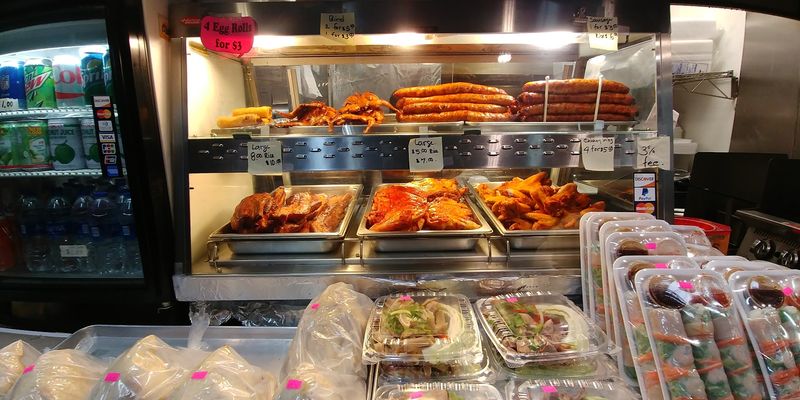
The smell of grilled sausage at Hmong Village has a way of pulling you in before you even realize you are moving toward it. Hmong sausage, Lao sausage, and Thai-style links all show up at various stalls, each seasoned differently and cooked over open heat.
The texture is firm and juicy. The seasoning is herby and lightly spiced, nothing overwhelming, but full of character.
Served with sticky rice, it becomes a complete meal that feels both simple and deeply satisfying.
Purple sticky rice, which surprises first-timers with its color and chewy texture, pairs perfectly with the sausage. The combination is a staple for regulars who come back week after week for the same order.
If you are new to sticky rice, ask the vendor before ordering since the purple variety is often the default. Portions are generous, and the sausage goes fast on busy mornings.
Arriving before 11 AM gives you the best shot at a full selection.
Sweet Treats and Fruit Smoothies
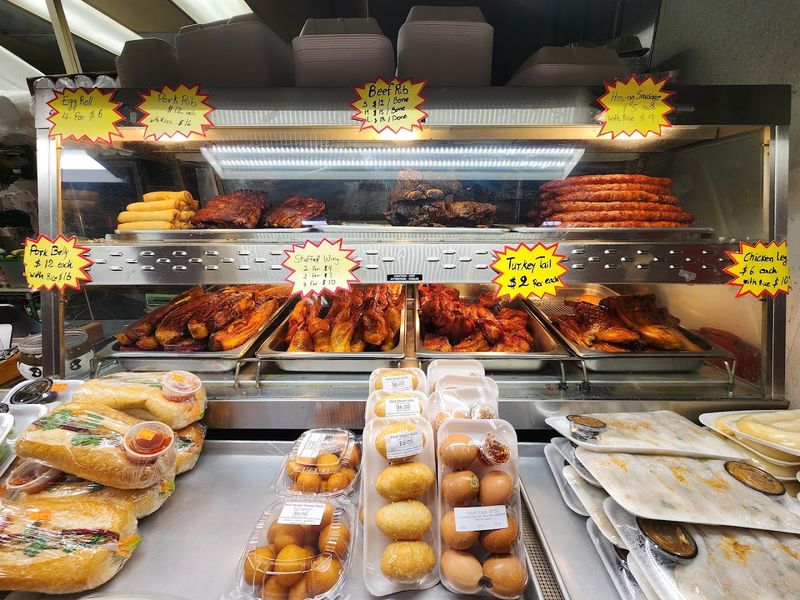
Hmong Village has a sweet side that deserves its own spotlight. Fruit smoothies are available from multiple vendors, and the selection is genuinely impressive.
Tropical fruits that most smoothie shops have never heard of show up in the blenders here.
Sugarcane juice is another crowd favorite. It is fresh-pressed, lightly sweet, and incredibly refreshing after walking through the busy market.
The drink is simple but feels like a small luxury when it is made right in front of you.
Sweet pork is a dish that regulars mention with real affection. It is slow-cooked, tender, and balanced between savory and sweet in a way that makes it hard to stop eating.
Tricolor dessert drinks, made with layers of sweetened beans, jelly, and coconut milk over shaved ice, round out the sweet options beautifully. The dessert stalls tend to be busiest on weekend afternoons.
Coming on a weekday gives you a quieter experience and a shorter wait for your order.
Eastern Medicine and Wellness Goods
Not many shopping malls have a section dedicated to traditional herbal medicine. Hmong Village does, and it is one of the most fascinating corners of the entire market.
Dried roots, medicinal herbs, and natural remedies line the shelves of several stalls.
The knowledge behind these products runs deep. Many vendors come from families with long traditions of using plant-based medicine for everyday health needs.
Tiger balm, herbal teas, and tonics sit alongside items that have been used in Hmong and Southeast Asian communities for generations.
There is also a full medical clinic operating inside the building, which speaks to how seriously the community takes wellness. The clinic serves local residents and adds a practical layer to what Hmong Village offers beyond food and shopping.
For visitors who are curious about traditional healing practices, the herb stalls are worth a slow browse. Vendors are generally patient and willing to explain what things are used for when asked respectfully.
It is a rare chance to learn something genuinely new.
A Community Hub With Services Beyond Shopping
Hmong Village is not just a market. It is a full-service community center that happens to also have incredible food and shopping.
The presence of a DMV inside the building is one of the most unexpected and genuinely useful features of the space.
The DMV here reportedly has shorter wait times and friendlier staff than many traditional government offices. Local families use it regularly for permit tests, license renewals, and other services.
Having it integrated into the market makes practical errands feel a lot less painful.
The medical clinic adds another layer of community support. It means residents can handle health needs, run errands, pick up groceries, grab lunch, and shop for clothing all in one trip.
For the Hmong community in St. Paul, this place functions like a town square. For visitors, it offers a rare window into how a thriving immigrant community has built something self-sustaining and proud.
The energy inside reflects that. People are not just passing through.
They belong here.
Tips for Getting the Most Out of Your Visit
Getting the most out of Hmong Village takes a little planning. Coming early is the single best piece of advice.
Stalls are fully stocked, food is fresh, and the crowds have not yet peaked. Weekday mornings offer the most relaxed experience overall.
Parking is easy and free, which is a genuine relief for a place this popular. The lot is large enough that even on busy days you can usually find a spot without circling.
Cash is helpful to have on hand, though some vendors accept cards, sometimes with a small fee.
Haggling is welcome in the shopping stalls but not typically expected at food stands. Being respectful and curious goes a long way here.
Vendors appreciate genuine interest in their products and culture. Bring a bag for produce and an appetite for food. Bring patience for the maze of stalls that will absolutely tempt you into buying things you did not plan on.
Hmong Village rewards those who wander.
Address: 1001 Johnson Pkwy, St. Paul, MN 55106
