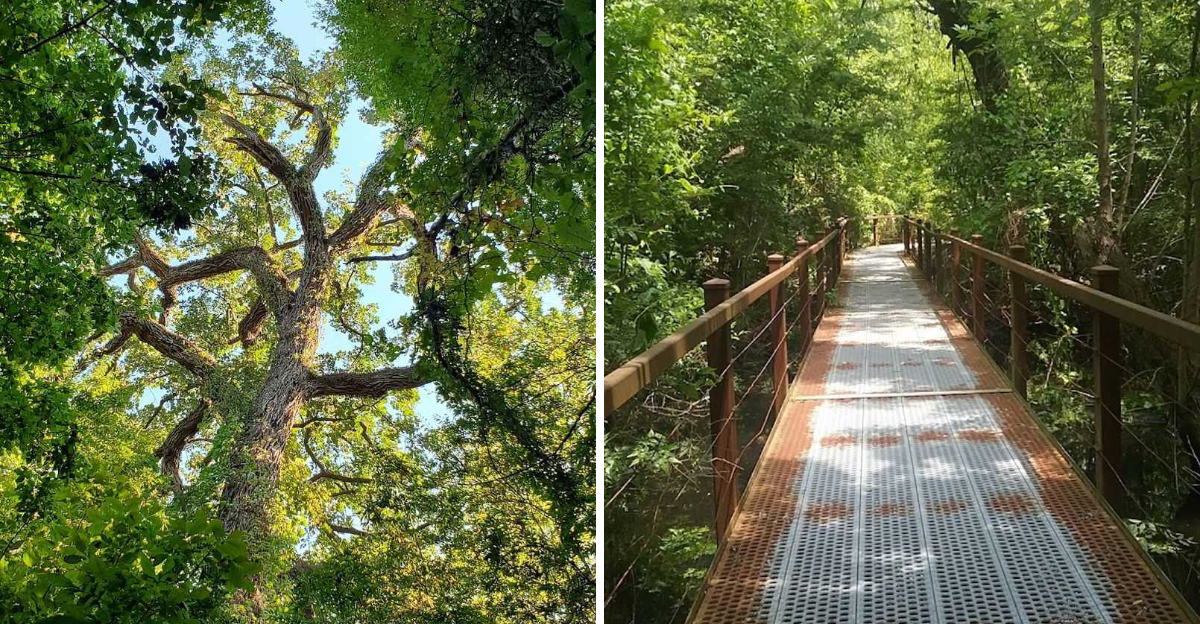
Imagine wandering through a landscape so lush and dramatic that it feels more like a movie set than a park right here in Missouri.
This incredible forest is one of the rare spots left where you can witness nature exactly as it was centuries ago, with massive, towering canopies that create a cathedral of green over every trail.
It is the ultimate road trip for anyone who needs to swap the city noise for the sound of wind through old-growth branches and the call of local birds. Every path you take leads to another “wow” moment, making it a favorite for hikers, photographers, or anyone who just appreciates a really spectacular view.
It’s a friendly, quiet place that reminds you just how big and beautiful the world can be when we leave it to grow wild.
Whether you’re a lifelong nature lover or just looking for a unique afternoon adventure, this hidden slice of history is a must-see that stays with you long after you leave.
A Forest That Survived When Everything Around It Was Cleared
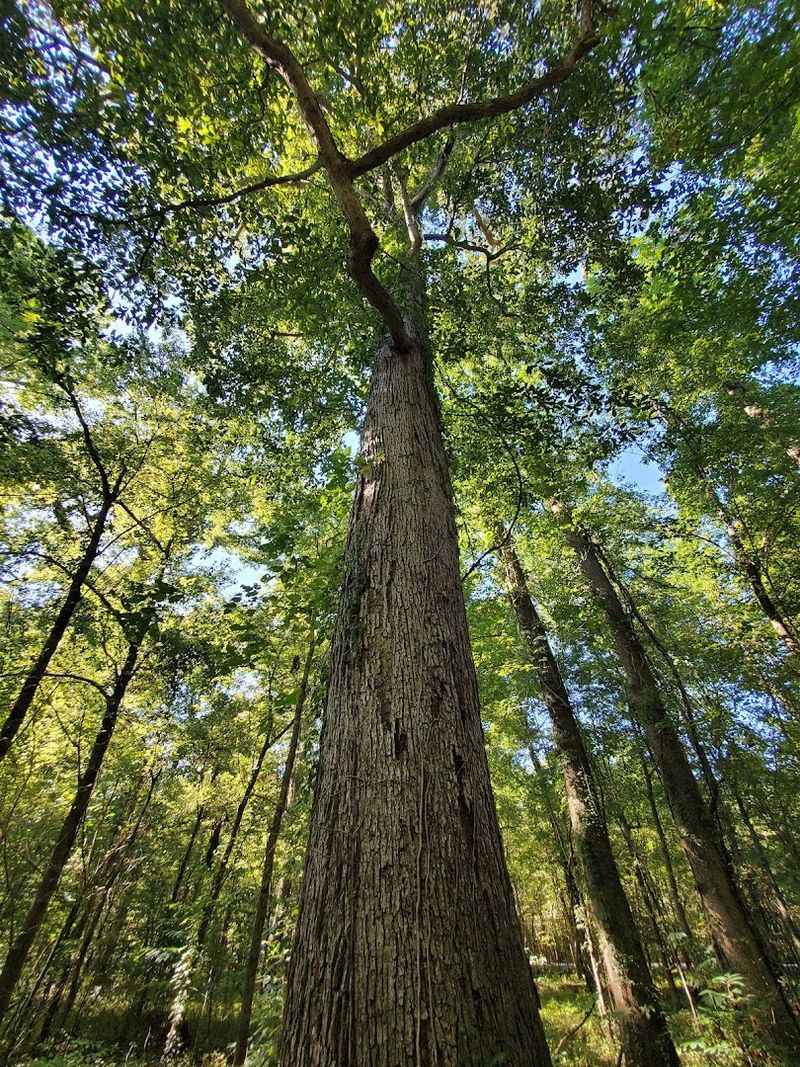
Most of the great lowland forests of the Mississippi River basin are gone, replaced by flat agricultural fields stretching to every horizon. Big Oak Tree State Park in Missouri is one of the rare survivors, a roughly 1,000-acre pocket of original bottomland forest that was never cleared.
Walking into this forest feels like stepping into a world that most of the surrounding landscape has completely forgotten. The trees here are not second-growth timber.
They are the original inhabitants, massive and ancient, their trunks wider than most people can wrap their arms around.
The park protects what ecologists consider a critically important remnant ecosystem. Before European settlement, forests like this one covered enormous stretches of the Missouri Bootheel region.
Today, fragments like this are extraordinarily rare, which is exactly why this place carries so much ecological and historical weight.
Preserving this land was a meaningful act. Missouri made a deliberate choice to protect this grove, and every tree standing here is the result of that commitment holding firm across generations.
Champion Trees That Hold Official Records
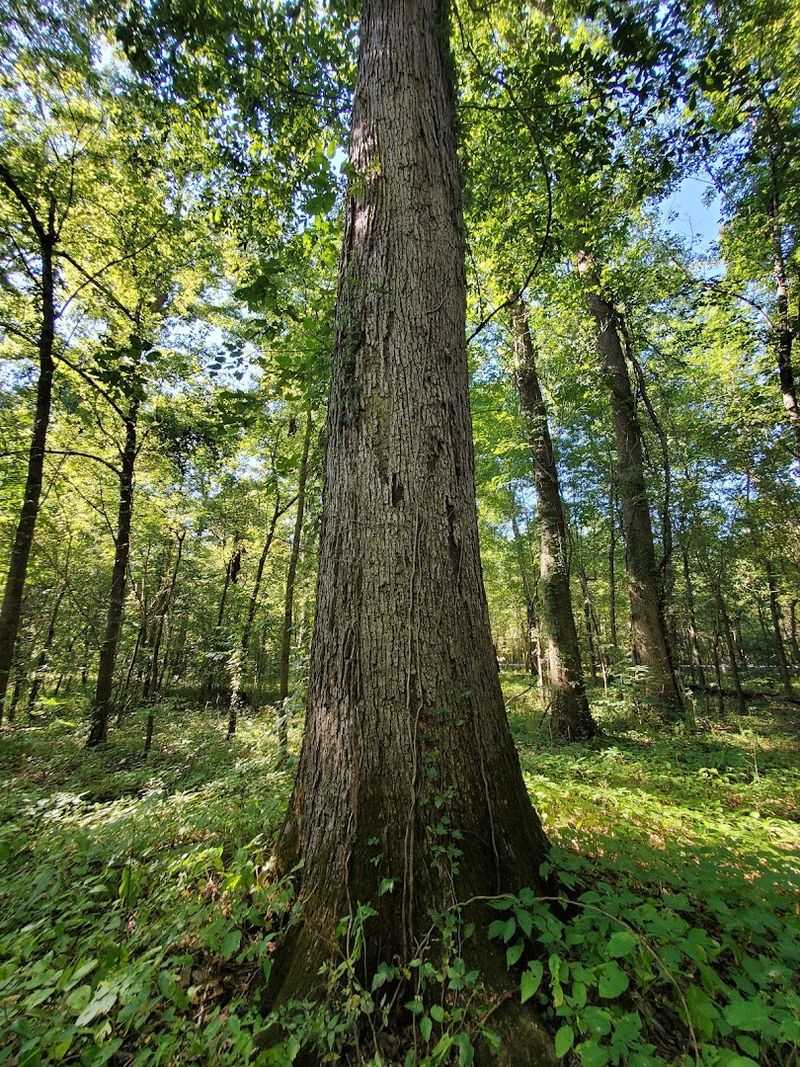
Few parks in the entire country can claim what Big Oak Tree State Park in Missouri holds: multiple state and national champion trees growing within a single, small preserve. These are not just big trees.
These are record-holders, officially measured and recognized for their extraordinary size.
The Swamp Chestnut Oak is perhaps the most jaw-dropping of them all. Standing beneath it, looking straight up at the canopy, you realize that no photograph will ever fully capture what your eyes are seeing in that moment.
The park also holds a champion Pumpkin Ash, a species that is now critically endangered across its entire range due to the emerald ash borer. Seeing a living specimen of that tree, especially one of this size, carries a quiet sense of urgency.
Other notable species include Overcup Oak, Persimmon, and various other lowland hardwoods that have reached sizes rarely seen outside of protected areas. Each tree here is a living record of what undisturbed forest can achieve when given enough time and space to simply grow.
The Boardwalk Trail Puts You Right Inside the Canopy
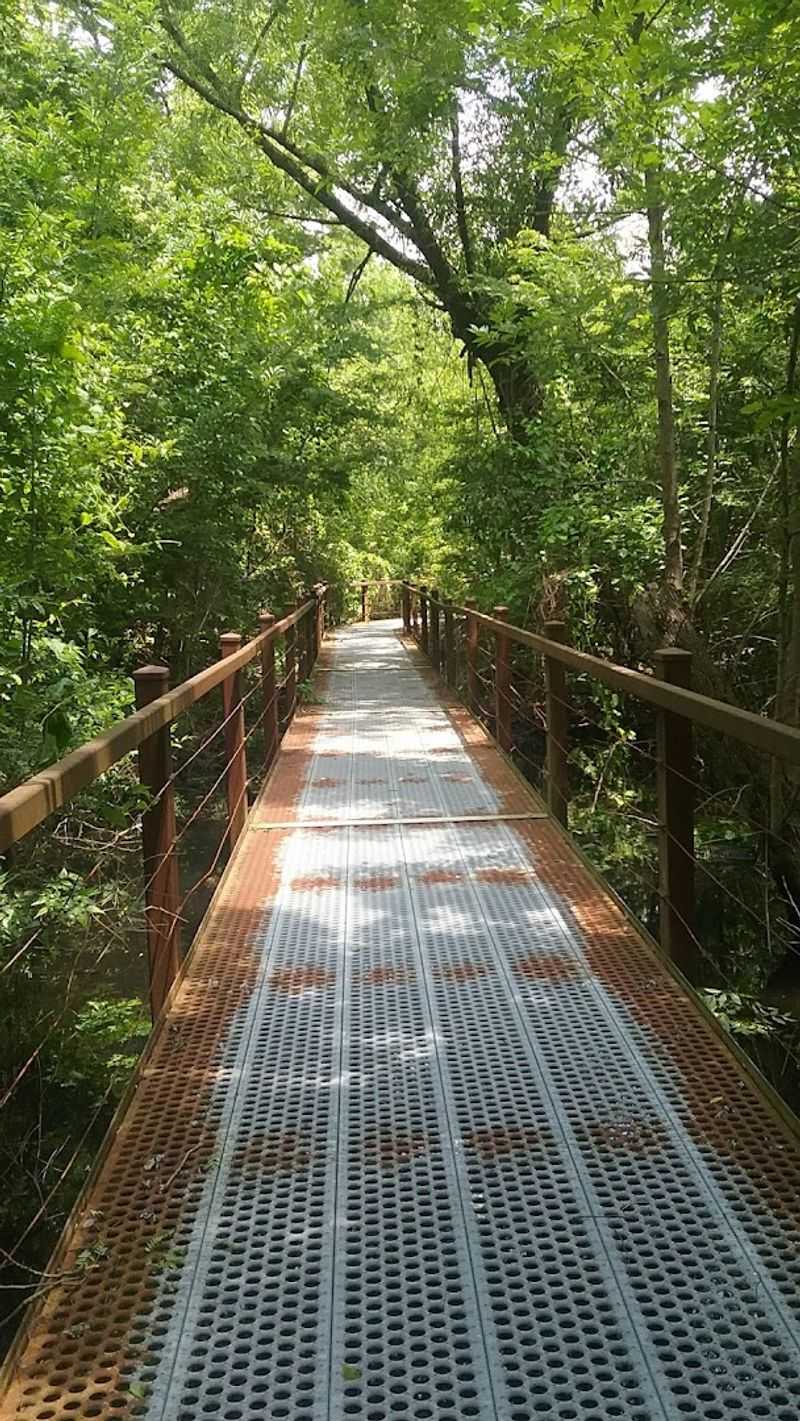
One of the most memorable features of this park is the boardwalk trail, a long metal walkway that carries you directly through the heart of the wetland forest. It is genuinely one of the more impressive trail structures I have walked in any state park anywhere.
The boardwalk is fully elevated, which means you are walking above the swamp floor rather than through it. On days when water fills the wetland below, the effect is spectacular.
The reflections of cypress trunks in the still water below the walkway create a scene that feels almost surreal.
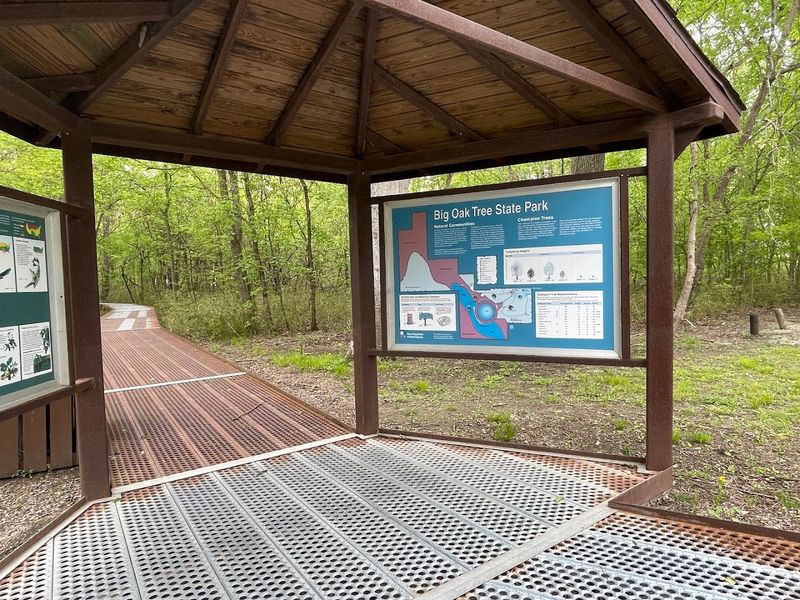
Even when the wetland is dry, the trail is fascinating. Informational signs along the route explain the plant species, the ecology of bottomland forests, and the history of this particular patch of Missouri wilderness.
It is educational without feeling like a lecture.
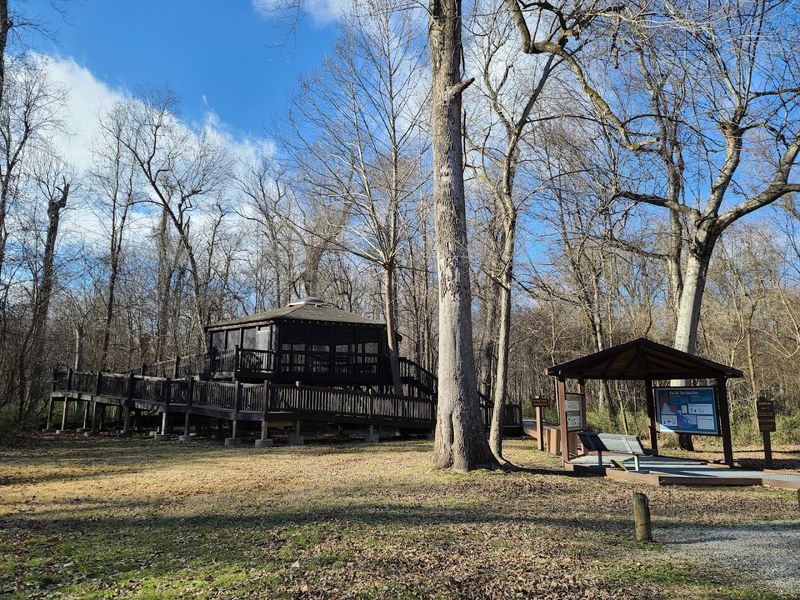
The boardwalk is also fully accessible, with a flat surface, rest benches placed at regular intervals, and a screened gazebo near the trailhead that offers a shaded spot to sit and simply listen to the forest around you.
Cypress Trees and Their Strange, Beautiful Knees
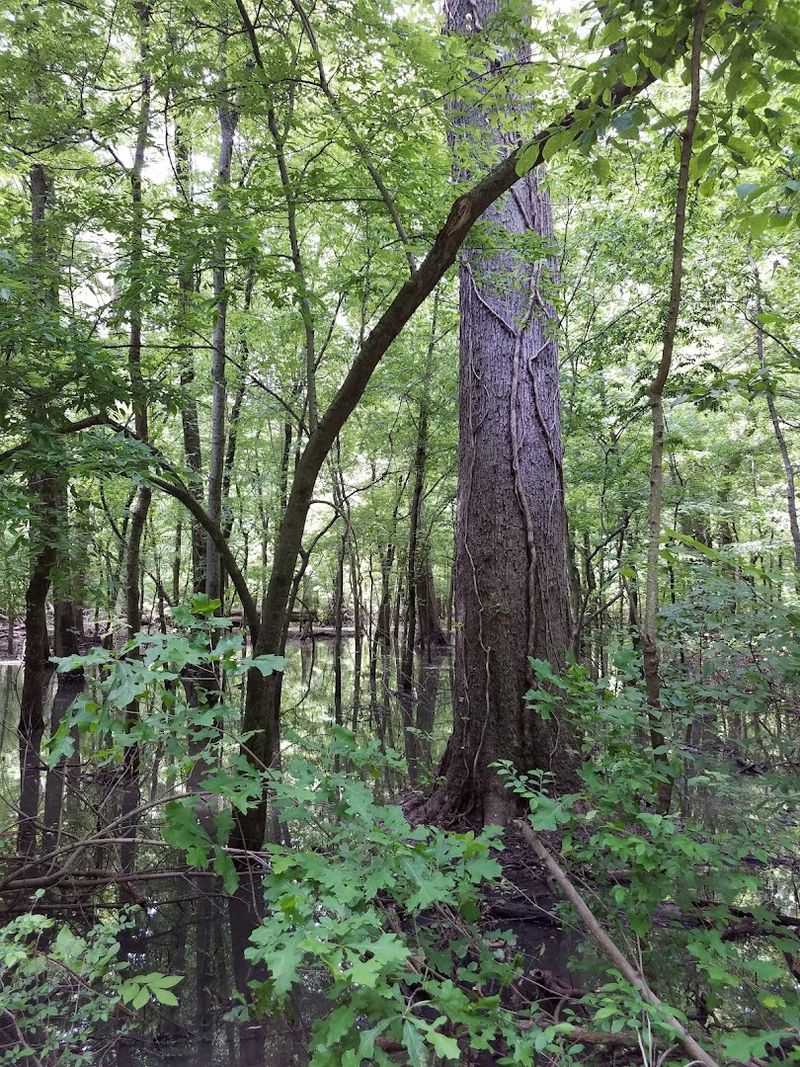
Bald cypress trees are among the most visually striking trees in North America, and Big Oak Tree State Park gives you a close encounter with some genuinely impressive specimens. These trees thrive in the wet, low-lying soils of the Missouri Bootheel, and they have adapted in remarkable ways.
The cypress knees are what stop most people in their tracks. These are woody projections that rise up from the root system, poking out of the soil or water in rounded, knobby shapes.
Scientists still debate their exact function, but standing among them feels like walking through something out of a storybook.
The Cypress Trail in the park takes you past some of the most notable examples. The trunks themselves are wide and deeply furrowed, with a reddish-brown bark that catches the light beautifully in the late afternoon.
In autumn, bald cypress needles turn a warm copper-orange before dropping, giving the trail a completely different color palette than a summer visit. Coming back in different seasons is genuinely worthwhile, because this trail rewards repeat visits with new details every time.
Birdwatching in a True Lowland Sanctuary
Big Oak Tree State Park is one of the best birdwatching destinations in Missouri, and that is not an overstatement. The combination of mature forest, wetland habitat, and relative isolation from heavy human activity makes it a magnet for both resident and migratory bird species.
Barred Owls call from deep in the forest with a sound that carries surprisingly far through the trees. Red-shouldered Hawks are a regular presence, and their sharp calls echo above the canopy on quiet mornings.
The lowland forest also attracts species that are harder to find in more developed areas.
Warblers pass through during migration in impressive numbers. Prothonotary Warblers, which nest in tree cavities near water, are particularly associated with bottomland forests like this one and are worth watching for during spring visits.
Bringing binoculars is a straightforward decision here. The screened gazebo near the boardwalk entrance doubles as a sheltered birdwatching station, offering a comfortable spot to scan the canopy without disturbing the birds.
Early morning visits consistently produce the most activity, before the day heats up and the forest quiets down.
The History of a Landscape Transformed by Agriculture
Understanding what Big Oak Tree State Park represents requires knowing what used to surround it. The Missouri Bootheel was once dominated by massive wetland forests, one of the most ecologically rich environments in the entire interior of North America.
Beginning in the late 1800s and accelerating through the early 1900s, enormous drainage projects transformed this landscape. Canals were dug, rivers were channeled, and the wetlands were systematically drained to create farmland.
The conversion was rapid and nearly total.
What had taken thousands of years to develop was cleared within a few generations. The bottomland forests, the wetlands, the wildlife corridors, nearly all of it gave way to soybean fields and cotton rows.
Big Oak Tree State Park survived essentially by chance, protected before the clearing reached it.
The interpretive materials in the park explain this history clearly and without sugarcoating the scale of what was lost. Walking through the grove with that context in mind changes how you experience every tree around you.
Each one feels less like scenery and more like a survivor of something genuinely significant in Missouri history.
What to Expect From the Trails and How to Prepare
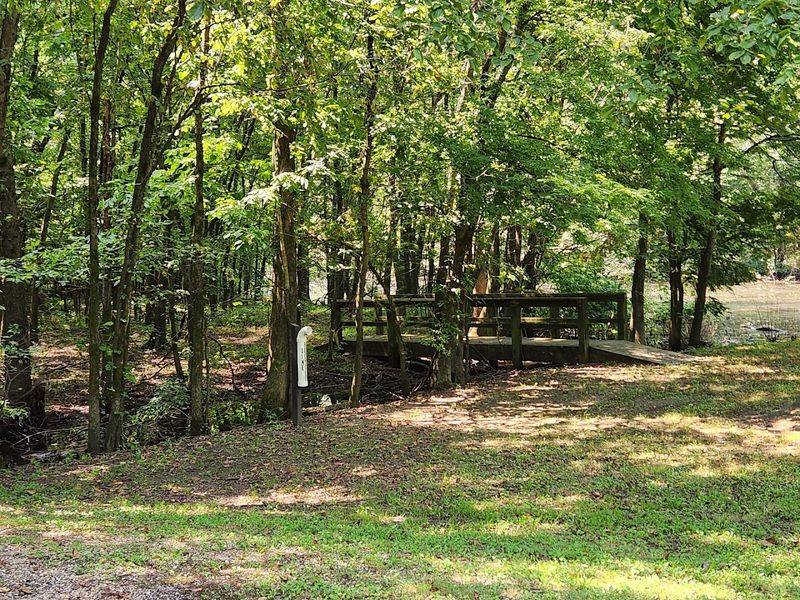
Big Oak Tree State Park is not a large park by any measure, but it packs a lot into its compact footprint. The main boardwalk trail runs roughly a mile in length, while the Cypress Trail adds additional distance along a more natural surface path.
The boardwalk is accessible and easy to walk regardless of conditions underfoot, since the metal surface keeps you above the swamp floor. The natural trails, however, can get genuinely muddy after rain or during wet seasons.
Waterproof boots or shoes with solid grip are a practical choice for those trails.
Bug spray is not optional during warmer months. Mosquitoes can be intense in the wetland environment, particularly in late spring and summer.
Going prepared makes the difference between an enjoyable walk and an uncomfortable one.
The park does not offer camping, so plan for a day trip. There is a picnic pavilion, a gazebo, charcoal grills, a playground for younger visitors, and clean restroom facilities near the trailhead.
Arriving in the morning gives you the best light for photography and the most active wildlife before the midday heat sets in across the Missouri lowlands.
The Pumpkin Ash and the Story of a Species in Trouble
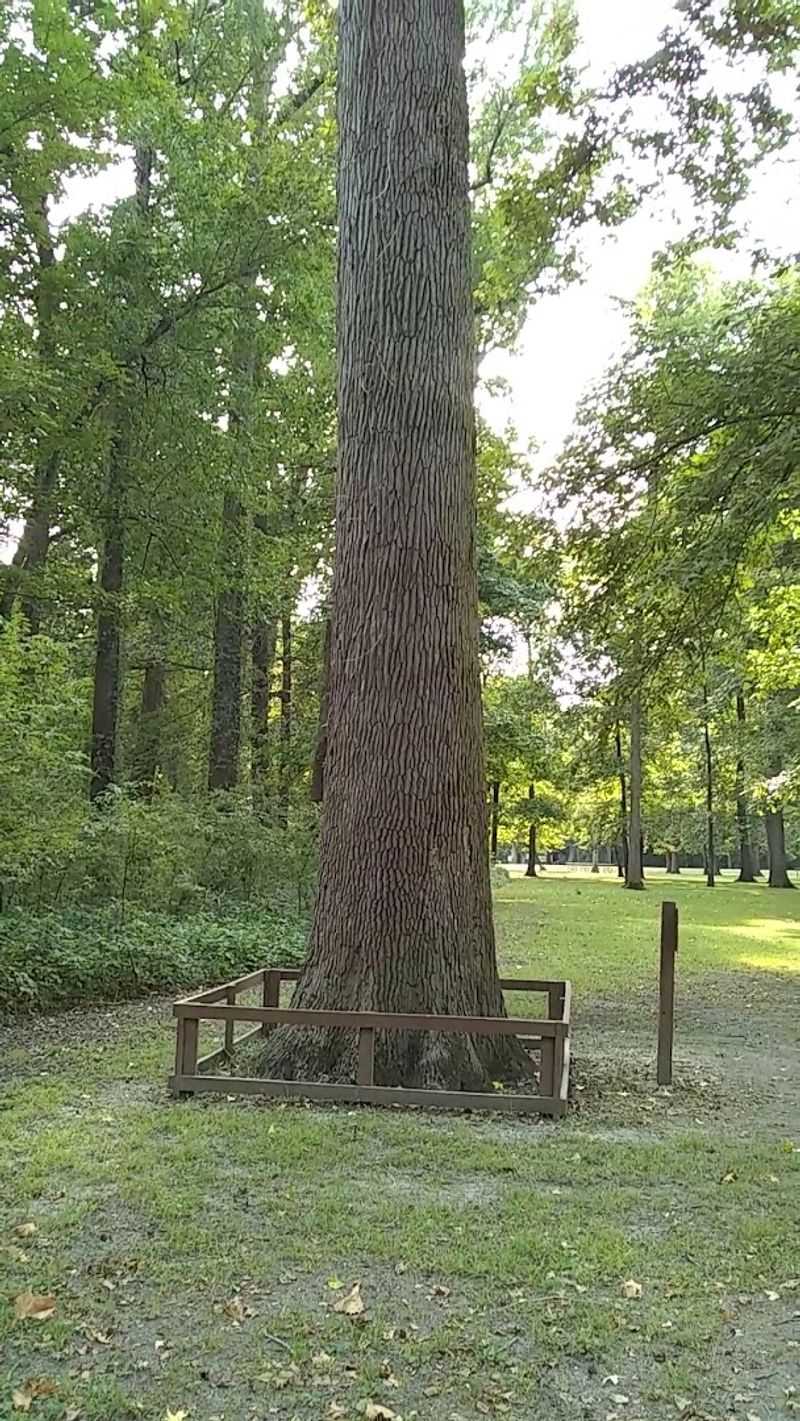
Among all the remarkable trees in Big Oak Tree State Park, the champion Pumpkin Ash carries a particular kind of weight. This tree is not just a record-holder.
It is a representative of a species that is being pushed toward the edge of survival by a tiny invasive insect.
The emerald ash borer, a beetle originally from Asia, has spread across North America and has caused catastrophic losses among all native ash species. Pumpkin Ash, which grows naturally in wetland environments, has been hit especially hard.
Mature specimens of this size are increasingly rare across the species entire range.
Standing next to the champion Pumpkin Ash at this park in Missouri is a reminder that conservation is not abstract. It is this specific tree, in this specific grove, that represents something irreplaceable.
The park and Missouri state park staff actively monitor the health of the ash trees within the preserve. The situation is serious, but the effort to document, protect, and study these trees is ongoing.
Seeing this tree in person adds a layer of meaning to the visit that no photograph or description can fully replicate.
Seasonal Changes Make Every Visit Feel Different
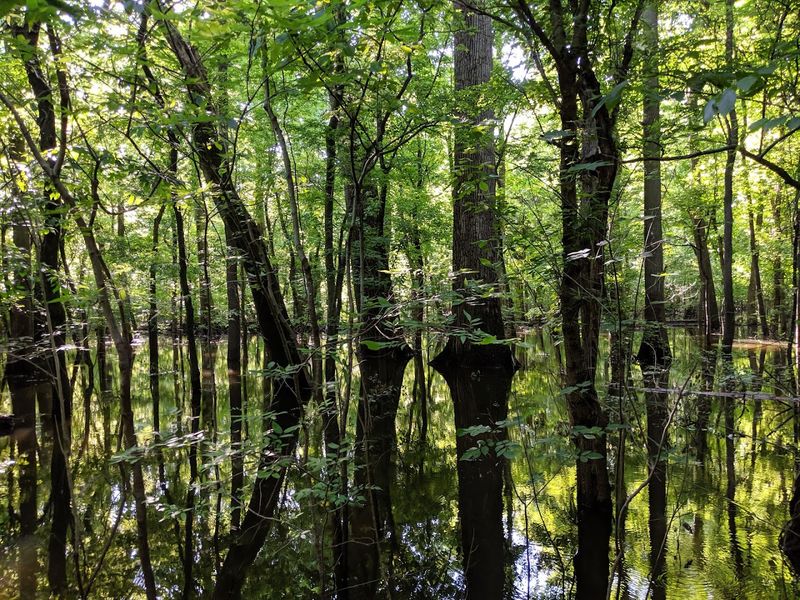
One of the things that keeps drawing people back to Big Oak Tree State Park is how dramatically the experience shifts across the seasons. This is not a place that looks the same in October as it does in April, and that variety is genuinely compelling.
Spring brings the forest to life with birdsong, fresh green growth, and water filling the wetland beneath the boardwalk. The reflections of ancient trunks in still water make for some of the most striking natural scenery in all of Missouri.
Summer is lush but comes with heat and heavy mosquito activity. Going early in the morning during summer visits makes a real difference.
The forest canopy provides shade, but the humidity of the Bootheel lowlands is something to prepare for.
Autumn strips the leaves back and reveals the full scale of the trees in a way that summer growth conceals. Late fall is particularly good for appreciating just how large these trunks actually are, since the canopy opens up and lets you see the architecture of the forest clearly.
Winter visits are quiet and surprisingly beautiful, with the bare branches of the oaks forming dramatic silhouettes against pale Missouri skies.
Why This Small Park Carries an Outsized Importance
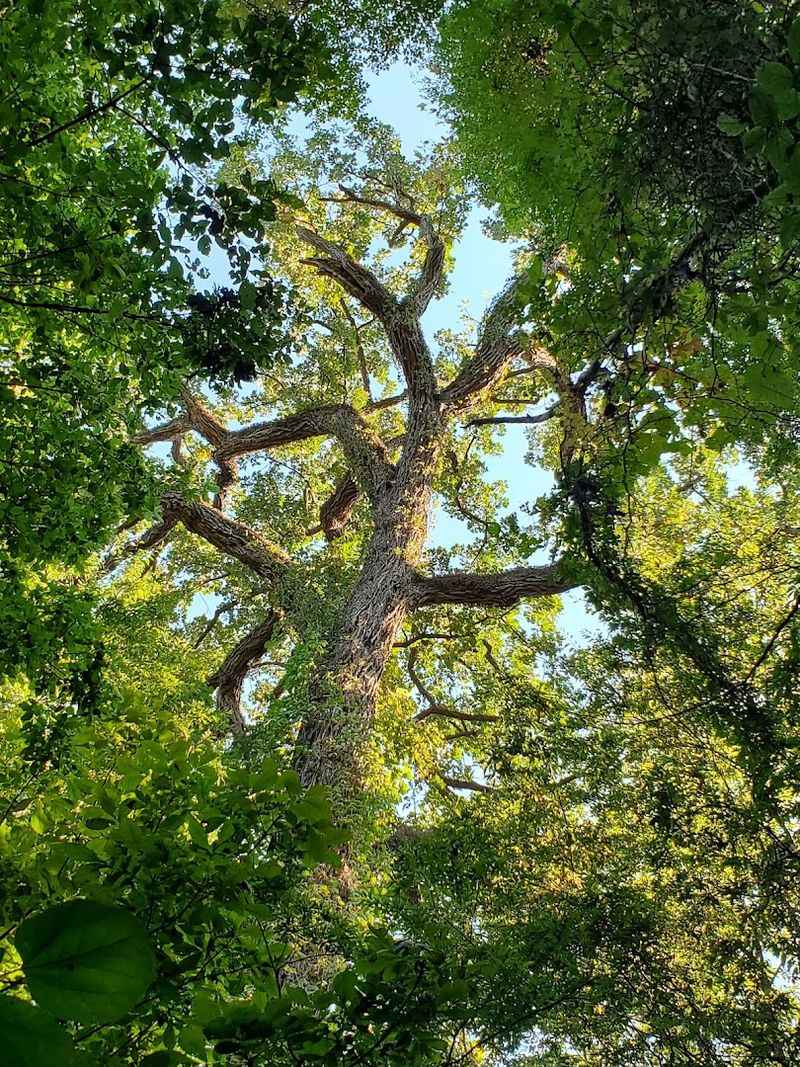
Big Oak Tree State Park covers roughly 1,000 acres, which is modest compared to many state parks. But the ecological significance of this place is completely out of proportion to its size.
This grove represents something that simply does not exist in most of the surrounding landscape.
The biodiversity packed into this small preserve is remarkable. Multiple state and national champion trees, rare wetland plant species, a rich bird community, and a functioning bottomland ecosystem all coexist within this compact footprint in southeastern Missouri.
Scientists and conservationists use sites like this one as reference points, studying what an intact bottomland forest looks like so that restoration efforts elsewhere have something to aim for. The park is not just a pleasant place to walk.
It is an active piece of ecological research and conservation history.
For anyone who cares about forests, history, or simply spending time in a place that feels genuinely unlike anywhere else, Big Oak Tree State Park delivers something rare and honest.
Missouri has protected something here worth protecting, and spending even a single afternoon walking beneath these trees makes that fact abundantly clear.
