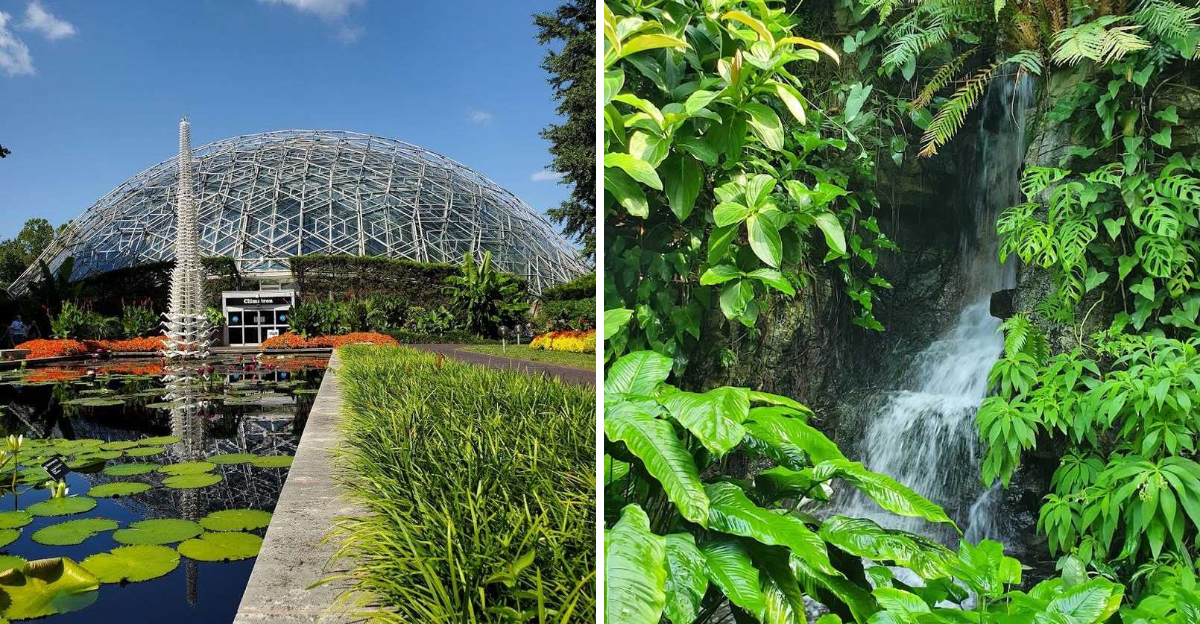
I stepped out of the Missouri humidity and into a completely different climate without ever leaving the city. It is a massive, futuristic dome that feels like a portal to the tropics, complete with towering palms and the kind of lush greenery you usually have to fly thousands of miles to see.
Walking through the mist and across the bridges, it is easy to forget there are skyscrapers just a few blocks away. The architecture is just as impressive as the plants, creating a bright, airy space that feels like a legitimate sanctuary.
It is the perfect escape when you need a dose of summer in the middle of a Missouri winter.
The Geodesic Dome That Started It All
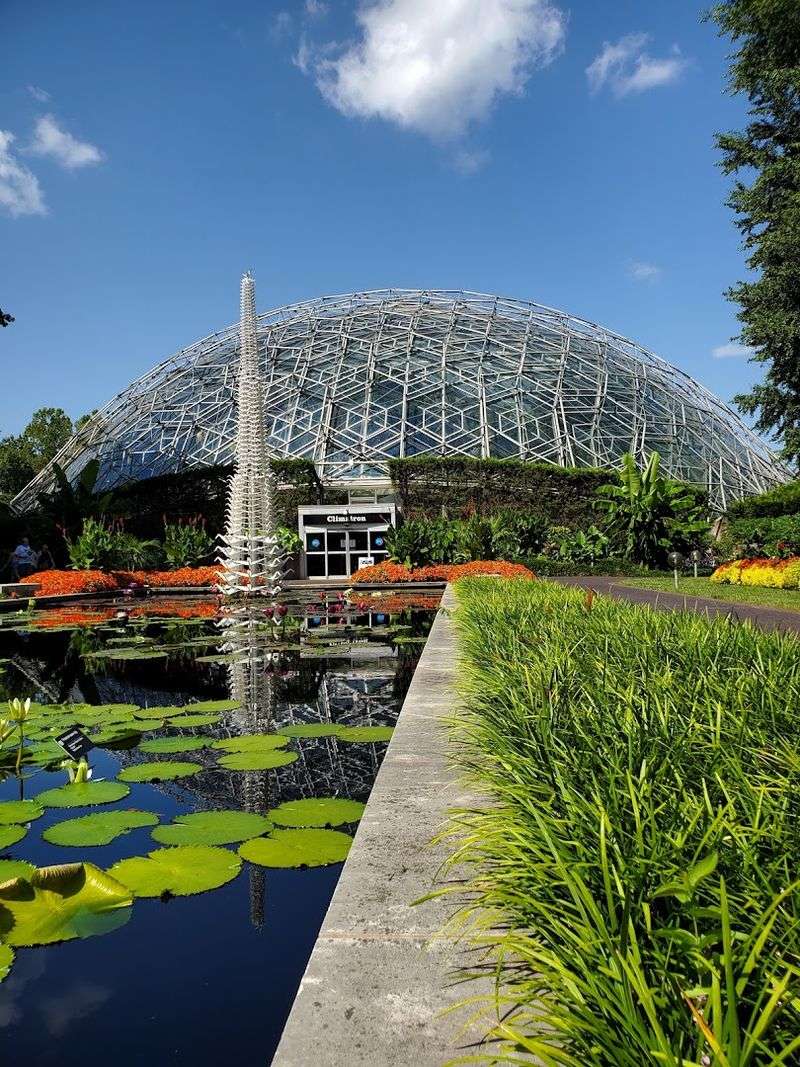
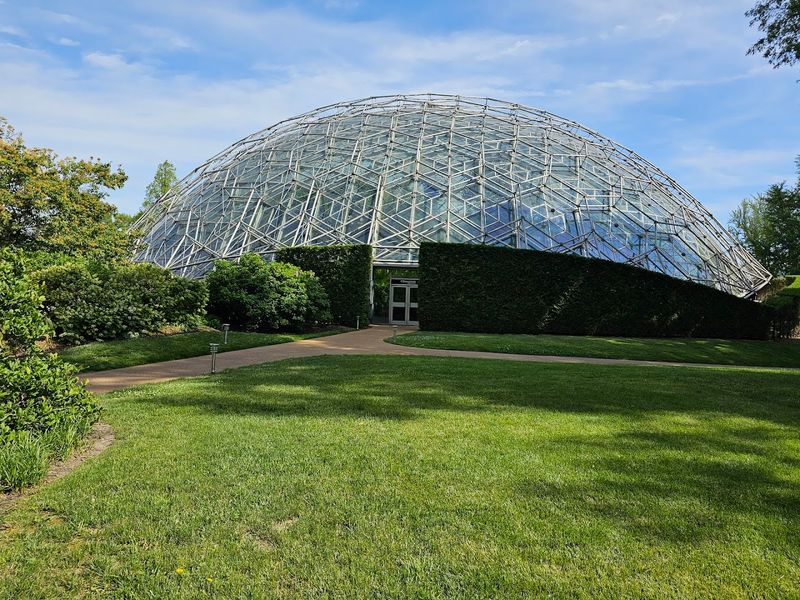
Before you even step inside, the Climatron makes a statement. The structure itself is a bold, futuristic-looking geodesic dome made of aluminum and glass, rising dramatically above the surrounding garden landscape.
Built in 1960, it became the world’s first fully air-conditioned geodesic dome greenhouse ever used in a botanical garden. That is not just a fun fact, it is a genuine piece of architectural history sitting right in St. Louis, Missouri.
The dome was designed by the firm Murphy and Mackey, inspired by the geodesic principles popularized by Buckminster Fuller. Its triangular glass panels allow natural light to flood the interior from every angle, creating the perfect growing conditions for tropical plants.
Walking up to it for the first time feels almost cinematic. The dome seems to glow when sunlight hits the glass, and the silhouettes of palm trees visible through the panels hint at the lush world waiting inside.
Missouri has plenty of impressive landmarks, but this one holds a special place in the story of modern botanical garden design. The Climatron changed how the world thinks about conservatory architecture, and it continues to inspire awe decades after its opening.
Stepping Into a Rainforest in the Middle of Missouri
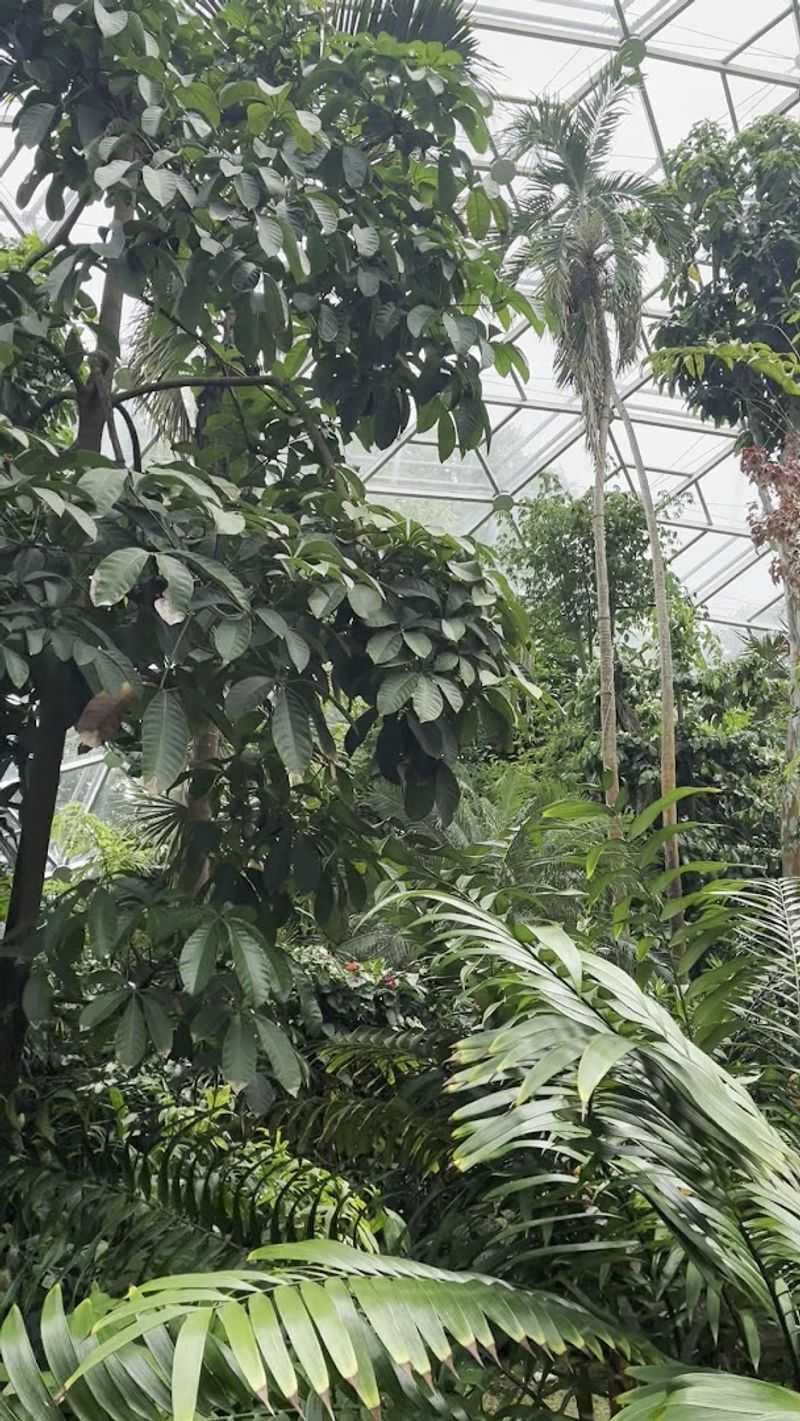
The moment the door closes behind you, Missouri disappears. The air is thick and warm, carrying that unmistakable earthy scent that belongs only to a real tropical environment.
Towering palm trees stretch toward the glass ceiling. Broad-leafed plants crowd the pathways on both sides, and layers of green fill every direction you look.
It genuinely feels like stepping into a living, breathing rainforest.
The Climatron maintains a carefully controlled tropical climate year-round, which means this experience never changes with the seasons outside. Whether St. Louis is buried in snow or baking in summer heat, inside the dome it is always warm, lush, and alive.
Winding paths guide you through the space in a natural, unhurried way. There is no single route that feels wrong, and every turn reveals something new worth stopping to appreciate.
The scale of the interior surprises most people on their first visit. At roughly half an acre under one roof, the Climatron holds an extraordinary range of tropical species that thrive together in a carefully maintained ecosystem.
This is not a passive display behind glass. You are fully inside the environment, surrounded by it, breathing it in, and that makes all the difference.
Waterfalls That Bring the Whole Scene to Life
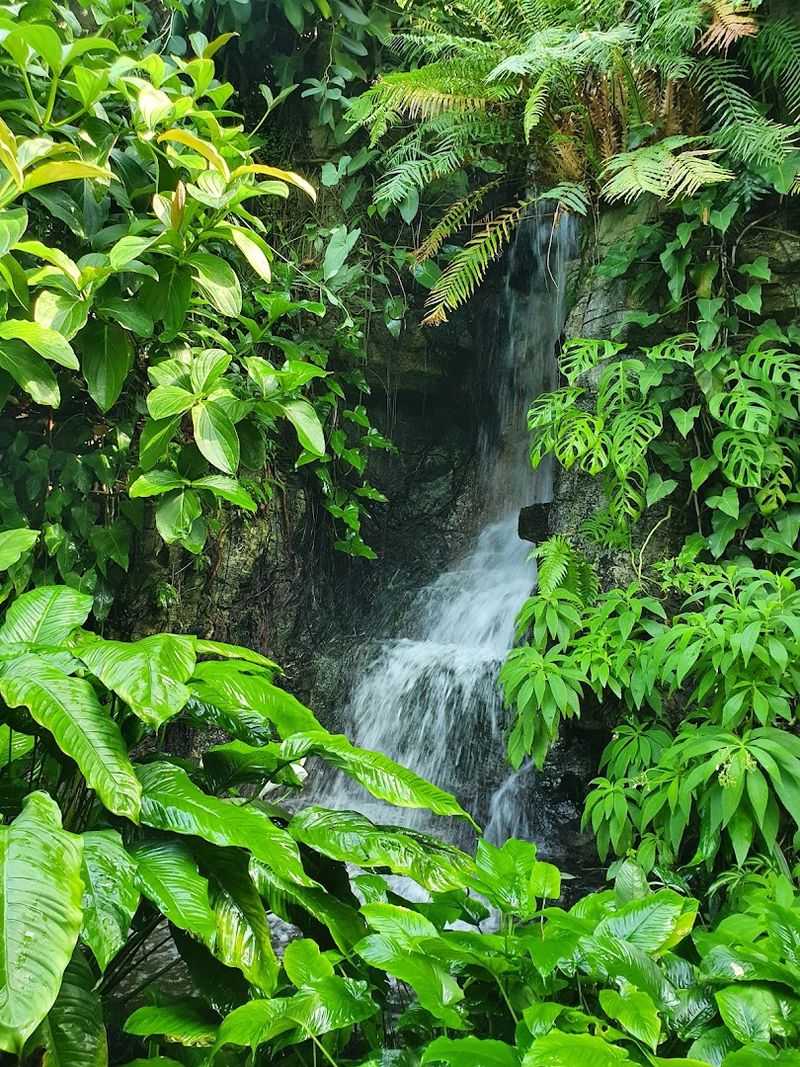
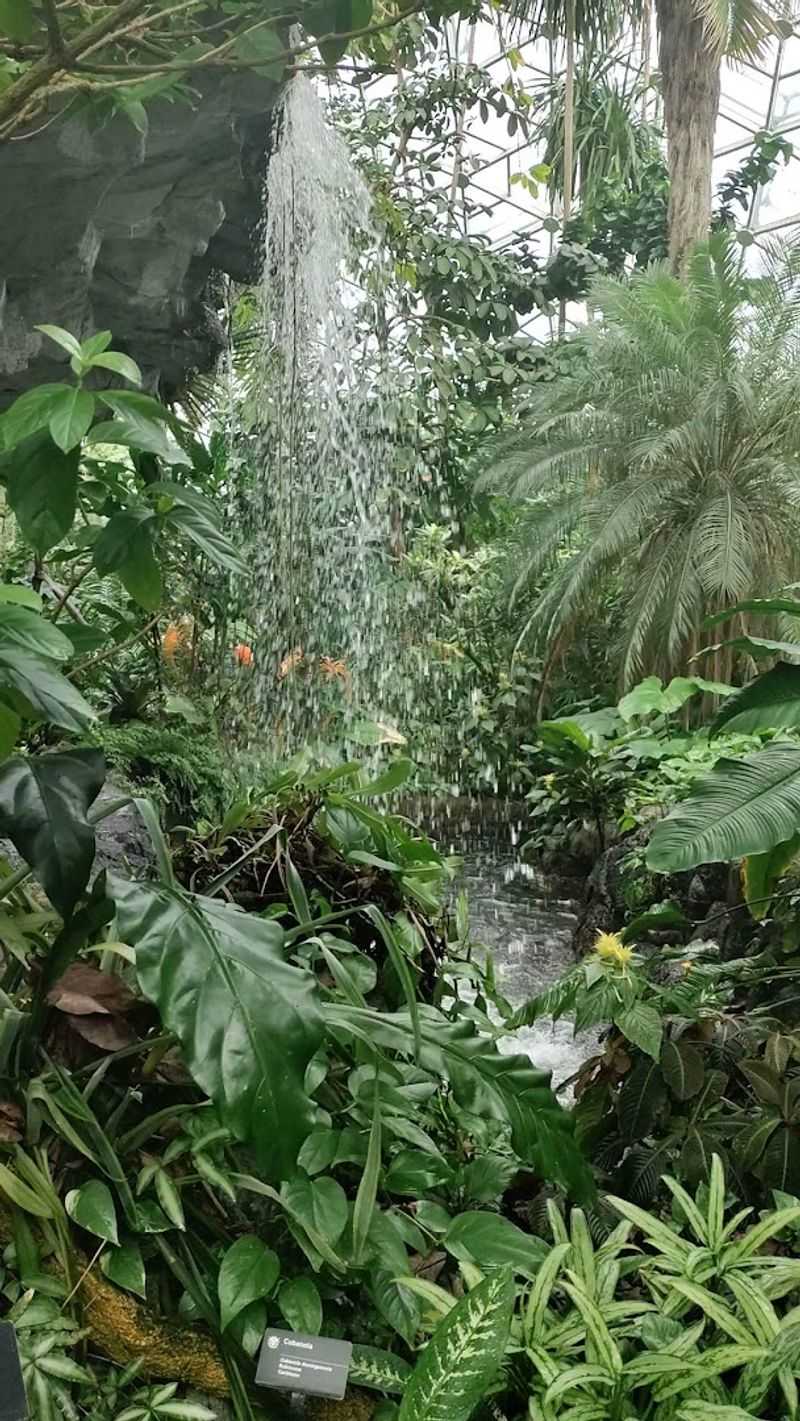
Water is the heartbeat of the Climatron. Several waterfalls flow throughout the interior, and their sound sets the mood the second you walk in.
That steady rush of water over rocks makes the whole space feel animated and real.
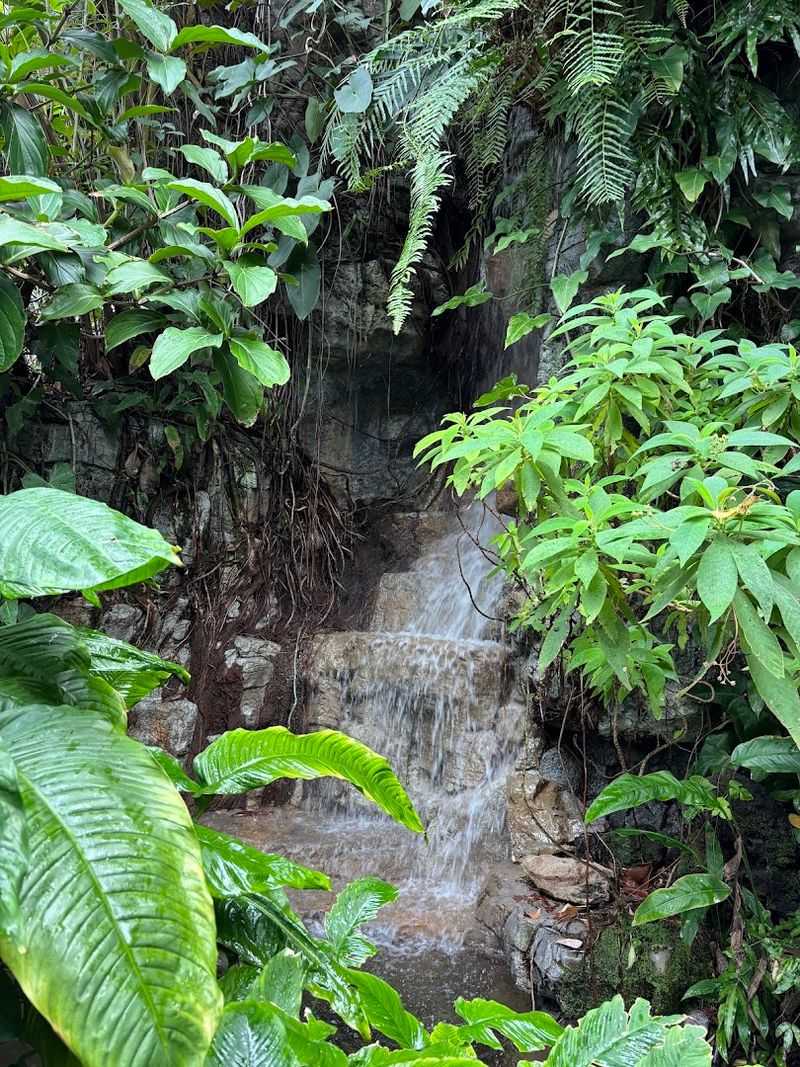
The largest waterfall is genuinely impressive for an indoor feature. It cascades down a rocky formation and feeds into a small stream that winds through the base of the landscape.
Standing near it, you feel a light mist on your skin, which is a surprisingly refreshing detail.
Some of the pathways actually pass behind or alongside the waterfalls, giving you a close-up perspective that most outdoor nature experiences rarely offer. It is one of those moments where you stop walking and just stand there for a while.
The water features are not purely decorative either. They play an important role in maintaining the humidity levels that tropical plants need to thrive in Missouri’s climate-controlled dome.
Rock formations around the falls are covered in moss and small ferns, adding texture and depth to the scene. Every element feels intentional, like the design team wanted you to forget you were indoors.
The waterfalls alone make the Climatron worth the visit, full stop.
Rare and Exotic Plants Around Every Corner
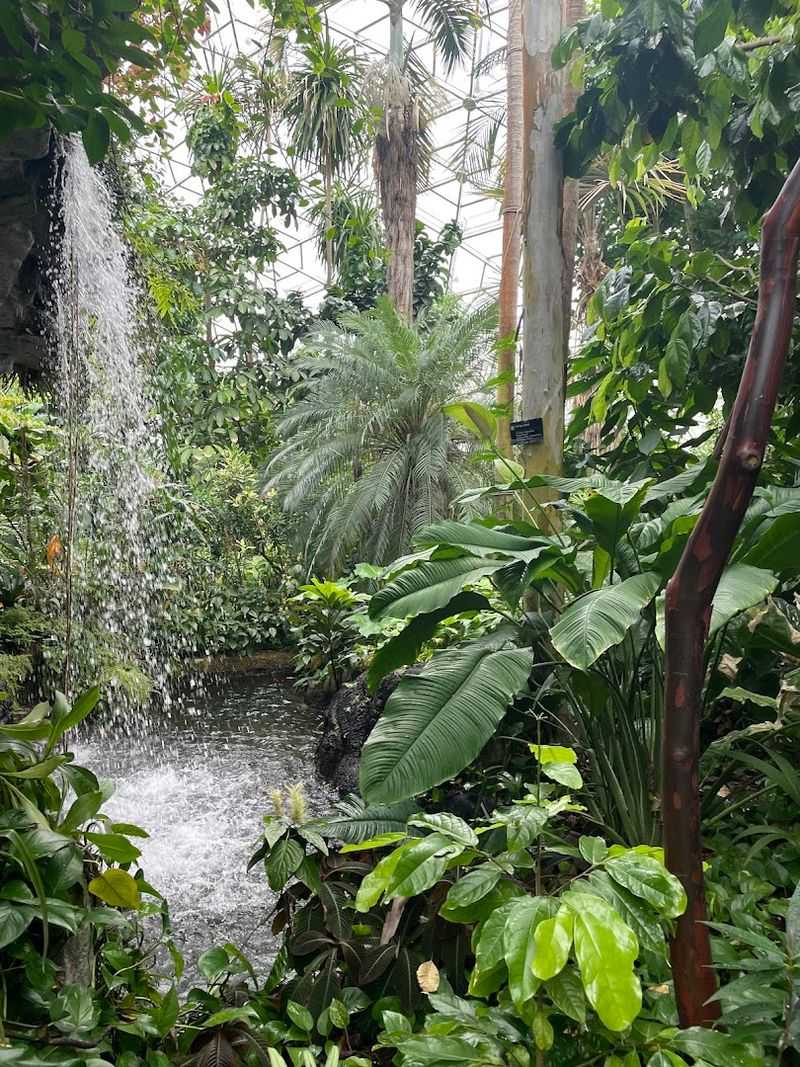
Plant lovers, prepare yourself, because the Climatron’s collection is genuinely extraordinary. The dome houses hundreds of tropical species from regions across the globe, many of which you would be hard-pressed to find anywhere else in Missouri.
Bromeliads in vivid shades of red, orange, and yellow catch your eye at nearly every turn. Orchids bloom in delicate clusters along carefully arranged displays.
Massive tropical ferns unfurl their fronds in the humid air like something from a prehistoric landscape.
Some of the plants reach sizes that feel almost unreal indoors. A Bismarck palm or a towering traveler’s tree growing freely under a glass dome creates a perspective shift that is hard to describe but impossible to forget.
The collection also includes edible tropical plants, which adds an interesting layer to the experience. Cacao trees, banana plants, and coffee shrubs grow alongside purely ornamental species, making the display both beautiful and educational.
Labels and informational signs are placed throughout the space, so even non-botanists can follow along and learn something new at every stop.
Walking through this collection feels like flipping through a field guide, except everything is alive, growing, and right in front of your face in the heart of St. Louis.
The Architectural Marvel Behind the Glass
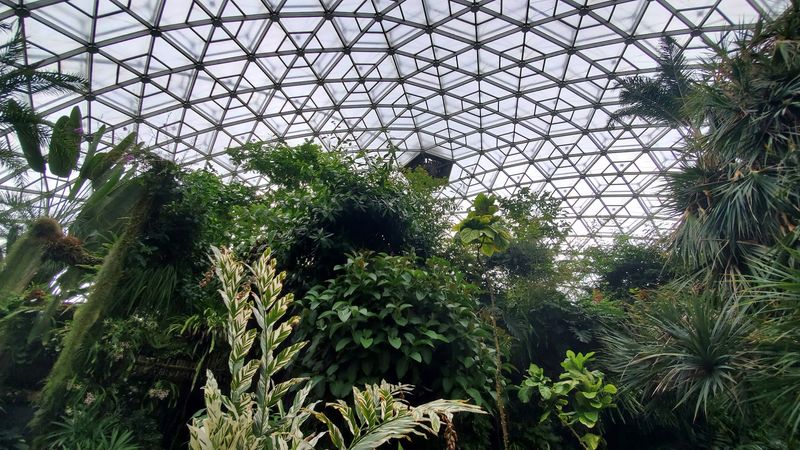
Most people are so dazzled by the plants that they forget to look up. Do yourself a favor and tilt your head back once in a while, because the dome’s structure overhead is a work of art in its own right.
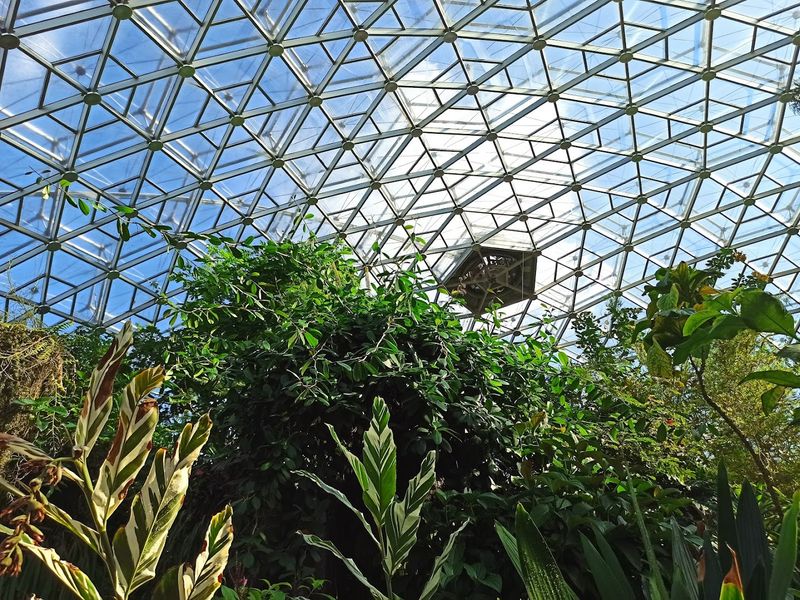
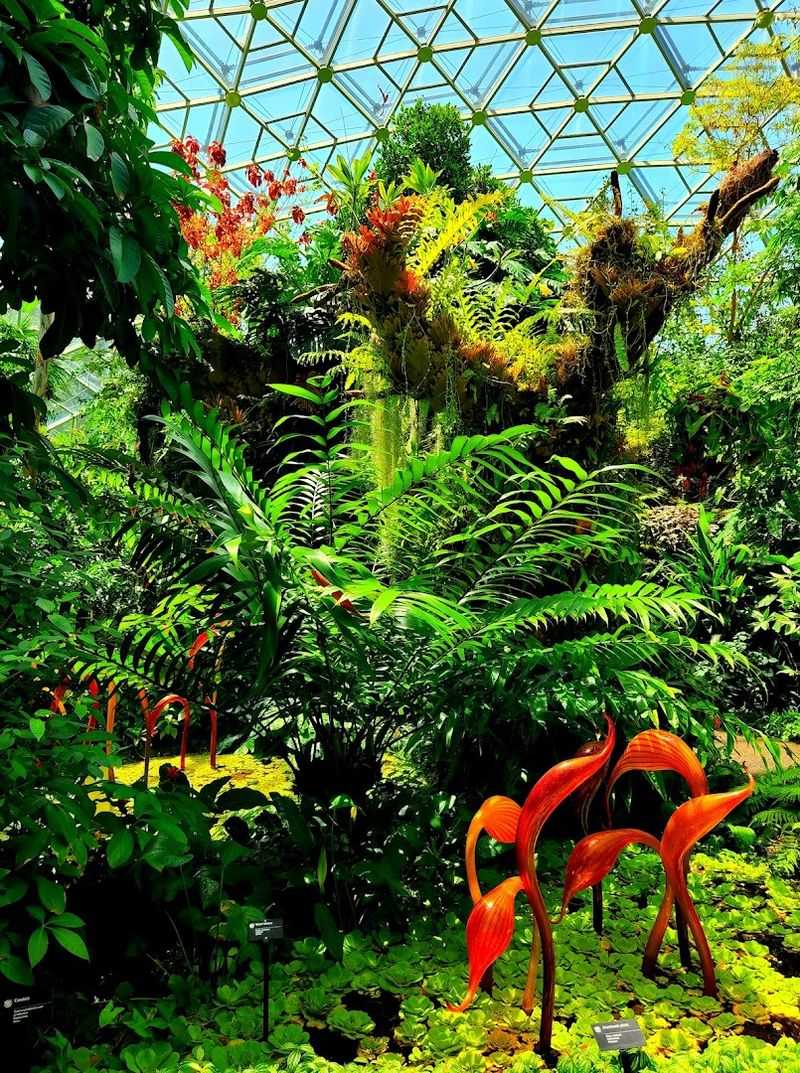
The geometric pattern of aluminum struts and glass panels forms a mesmerizing grid that stretches across the entire ceiling. Natural light filters through at different angles depending on the time of day, casting shifting patterns of light and shadow across the foliage below.
The dome spans approximately 175 feet in diameter and rises about 70 feet at its peak. Those numbers sound impressive on paper, but standing inside and looking up makes them feel even more significant.
What makes the design so clever is its structural efficiency. The geodesic form distributes weight evenly across the entire surface, which is why the interior can remain completely free of support columns.
Nothing obstructs your view of the plants or the sky above.
This open interior design was revolutionary in 1960 and still feels forward-thinking today. Missouri has always had an eye for bold civic architecture, and the Climatron fits right into that tradition.
The building itself is as much a reason to visit as anything growing inside it.
Art Woven Into the Heart of the Jungle
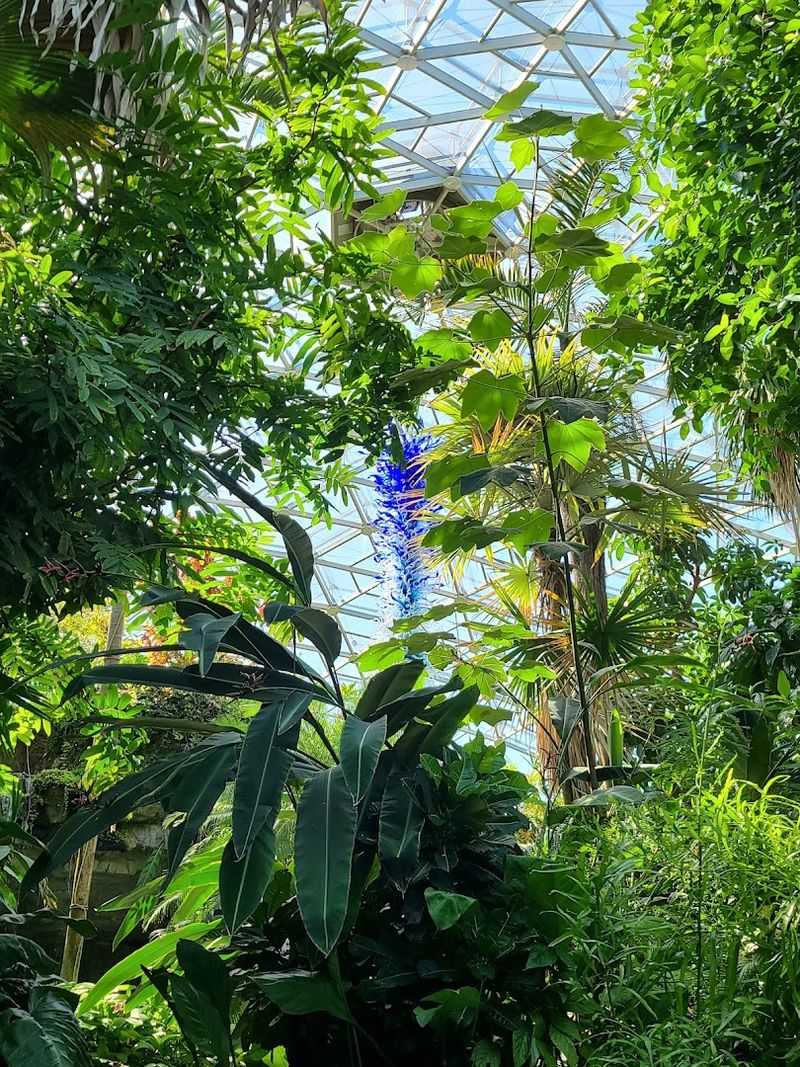
Art and nature do not always mix seamlessly, but inside the Climatron, they find a genuine balance. Glass art installations are placed throughout the conservatory, and they feel at home among the tropical plants rather than competing with them.
The Missouri Botanical Garden has featured works by renowned glass artist Dale Chihuly, whose colorful sculptural pieces nestle into the greenery with surprising grace.
Organic shapes in vivid blues, reds, and ambers catch the light filtering through the dome and create a visual contrast that makes both the art and the plants look better.
Spotting these pieces while walking the paths turns the visit into something closer to a gallery experience layered on top of a nature walk. You round a corner expecting another palm tree and find instead a burst of blown glass rising from a bed of ferns.
The combination reflects the Missouri Botanical Garden’s broader philosophy of treating art and horticulture as complementary disciplines rather than separate ones. It works beautifully in this space.
Even if you are not someone who usually seeks out art installations, the pieces inside the Climatron earn a second look. They add a layer of color and creativity to an already visually rich environment in the heart of St. Louis, Missouri.
The Best Time of Year to Plan Your Visit
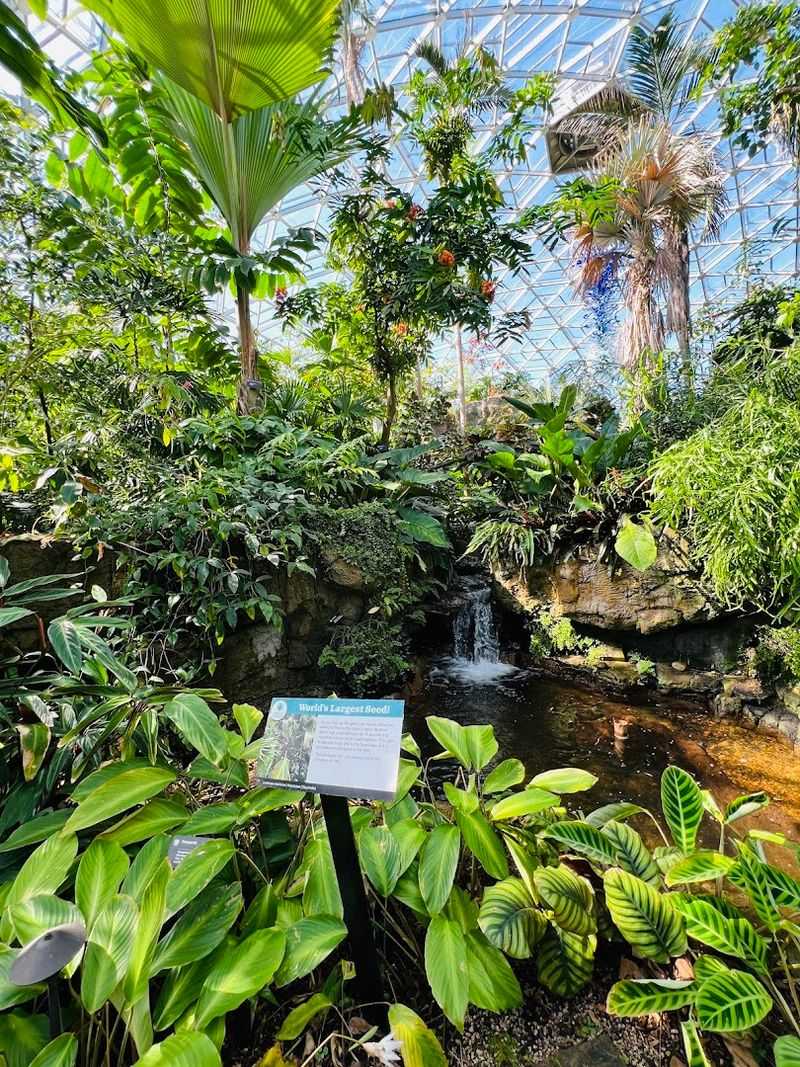
Here is a practical truth about the Climatron: it is worth visiting any time of year, but certain seasons make the experience feel even more rewarding. Winter is arguably the most dramatic time to go.
Stepping from a cold St. Louis winter day into the warm, humid tropics of the Climatron creates a contrast that is hard to beat. The outdoor gardens may be bare and quiet, but inside the dome, everything is lush, green, and thriving as if winter does not exist.
Spring and fall bring comfortable outdoor temperatures, which makes combining the Climatron visit with a longer stroll through the surrounding Missouri Botanical Garden grounds much more pleasant. The outdoor seasonal displays complement the indoor tropical experience nicely.
Summer visits are popular, and the dome can get crowded during peak weekend hours. Going early in the morning on a weekday gives you a quieter, more personal experience with the plants and the waterfalls.
Thursday evenings are worth noting, as the Climatron stays open until 8 PM on that day, offering a different atmosphere as the light changes outside the glass panels.
No matter when you go, the Climatron at 4344 Shaw Blvd, St. Louis, MO 63110 delivers a consistent and memorable experience across every season.
How the Tropical Climate Is Actually Maintained
Running a tropical rainforest in the middle of Missouri is not as simple as turning up a thermostat. The Climatron uses a sophisticated climate control system to maintain the warm temperatures and high humidity that its plant collection requires year-round.
The dome’s glass panels are specifically designed to maximize solar heat gain during winter while still allowing adequate ventilation during summer. This passive solar design reduces the energy load needed to keep the interior at tropical temperatures even when St. Louis is at its coldest.
Humidity is maintained through the water features, irrigation systems, and misting setups placed throughout the conservatory. Those waterfalls do more than look beautiful; they actively contribute to the moisture levels that hundreds of plant species depend on.
The soil composition and drainage systems are also carefully engineered to support plants from many different tropical regions simultaneously. Growing a cacao tree next to an orchid from a different continent requires thoughtful horticultural planning.
The Missouri Botanical Garden’s horticulture team monitors the environment constantly, adjusting conditions as needed to keep every species healthy and thriving.
All of this invisible infrastructure is what makes the magic possible. The Climatron is, at its core, a very precise scientific operation dressed up to look effortless.
Walking the Paths and Finding Your Own Pace
One of the most underrated pleasures of the Climatron is simply walking its paths without any agenda. The layout is designed to feel organic rather than linear, so there is no single correct route through the space.
Some paths lead close to the water features, where the sound of the falls is loudest. Others wind deeper into the denser plantings, where the canopy overhead thickens and the light dims slightly, giving those sections a genuinely immersive forest feel.
Rock formations and raised planting beds create changes in elevation that keep the landscape visually interesting. You are never walking a flat, predictable corridor; the terrain shifts enough to feel like genuine exploration.
The scale of the space rewards slow walkers. Rushing through the Climatron means missing the details, and the details are often the best part.
A tiny orchid tucked between two large leaves. A stream flowing quietly under a wooden bridge.
A cluster of pitcher plants arranged near a mossy boulder.
Comfortable shoes are genuinely recommended here. The paths are smooth, but you will want to spend enough time walking that your feet will notice by the end.
Missouri is full of beautiful outdoor trails, but the Climatron offers something those trails cannot: a rainforest walk with no weather forecast required.
Photography Opportunities That Are Hard to Replicate Anywhere Else
Bring a camera, and bring a fully charged battery. The Climatron is one of the most photogenic indoor spaces in all of Missouri, and that is not an overstatement.
The combination of natural light streaming through the dome’s geometric panels, dense tropical greenery, and flowing water creates a layered visual environment that rewards both wide-angle shots and close-up detail work. Every corner offers a different composition.
The waterfalls are especially popular subjects. A slow shutter speed turns the falling water into silky ribbons of white against dark rock and green moss.
A faster shutter freezes individual droplets mid-air. Both approaches produce compelling results.
Plant macro photography thrives here too. The humidity keeps foliage surfaces glossy and vivid, and the controlled lighting means colors reproduce beautifully without harsh shadows or blown-out highlights.
The glass dome itself makes for a striking architectural shot when framed through palm fronds or tropical canopy. That geometric pattern overhead contrasts beautifully with the organic chaos of the plants below.
Early morning visits offer the softest light and the fewest other people in your frame. If you are serious about photography, arriving right at opening time at the Missouri Botanical Garden gives you the best conditions the Climatron has to offer.
The Holiday Season Transforms the Experience Entirely
If you think the Climatron is impressive during a regular visit, the holiday season adds an entirely different layer of magic to the experience. The Missouri Botanical Garden’s annual Garden Glow event transforms the grounds after dark, and the Climatron sits at the center of it all.
The exterior of the dome becomes a glowing centerpiece, wrapped and surrounded by elaborate light installations that make the already dramatic structure look like something from a different world.
Seeing those lights reflected in the glass panels while knowing a tropical rainforest is alive inside is a genuinely surreal combination.
The event draws large crowds, so arriving early in the evening is the smarter move. The atmosphere is festive without feeling chaotic, and the contrast between the cold Missouri winter night outside and the warm, plant-filled interior of the Climatron creates a memorable sensory shift.
Even the pathways leading to and from the dome are lined with light sculptures and illuminated installations that make the walk between exhibits feel like part of the show.
Garden Glow has become one of the most popular seasonal events in St. Louis, and the Climatron’s role in the display is a big reason why. It is the kind of experience that earns its own return visit.
Why the Climatron Deserves a Spot on Every St. Louis Itinerary
St. Louis has no shortage of things worth seeing, but the Climatron occupies a category of its own. It is not just a greenhouse or a conservatory.
It is a place that genuinely changes how you feel the moment you walk inside.
The combination of architectural history, horticultural excellence, living waterfalls, and rotating art installations makes it one of the most layered indoor experiences available anywhere in Missouri.
Each visit can feel different depending on the season, the time of day, or what is currently blooming inside the dome.
It is also an experience that works for almost everyone. Plant enthusiasts, architecture fans, photographers, families, and people who simply want somewhere beautiful and calm to spend an hour will all find something that resonates here.
The Missouri Botanical Garden as a whole is one of the oldest and most respected botanical institutions in the country, and the Climatron represents its most iconic single structure. Skipping it would be like visiting a museum and walking past the main exhibit.
Missouri has given the world plenty of reasons to visit, and the Climatron is one of the most compelling. Plan the time, make the trip, and step inside a tropical world that has been quietly waiting for you in St. Louis all along.
