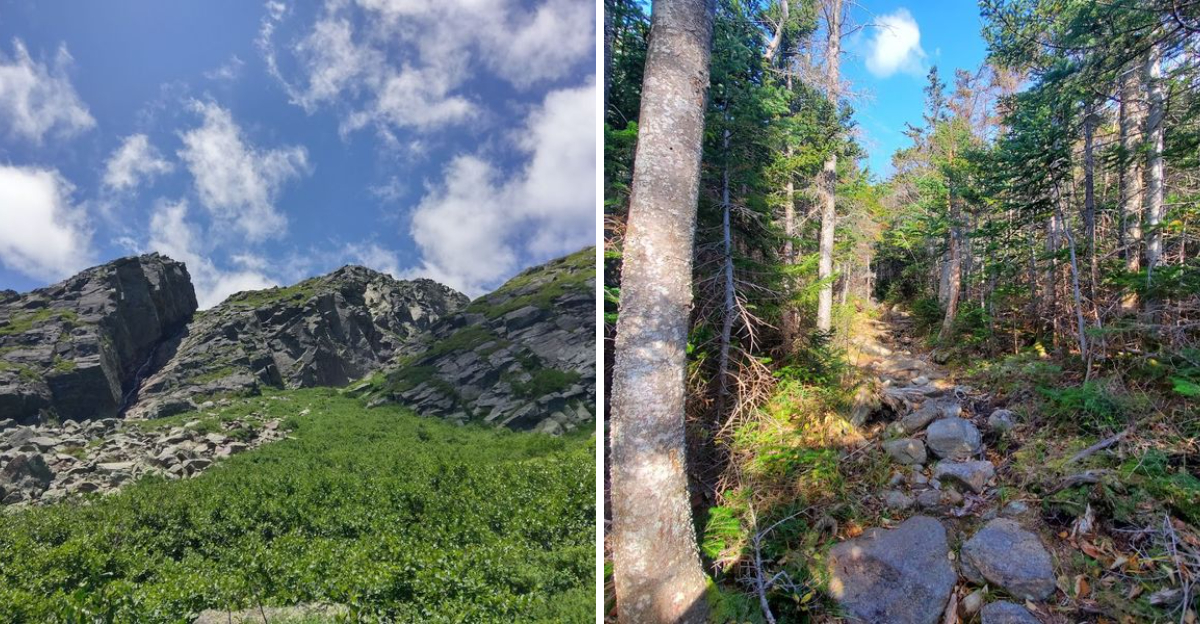
This is not a place for beginners. There is no gift shop at the entrance.
No paved paths with handrails to keep you safe. No signs telling you where to step.
This rugged canyon in New Hampshire has a wild reputation for danger, and it earns it honestly. The trail is steep and rocky, with loose scree that shifts under your feet.
The drop offs are sheer, and one wrong step could send you tumbling. I went on a clear day with a friend who had hiked it before.
We moved slowly, testing each foothold before committing. The views from the top are absolutely stunning, and the sense of accomplishment is huge.
But the canyon demands respect. It does not care if you are tired or scared or unprepared.
That is the thing about wild places in New Hampshire. They do not cater to you.
They challenge you. And if you are not ready for that challenge, they will remind you very quickly that nature does not negotiate.
The Headwall That Makes Grown Hikers Reconsider Their Life Choices
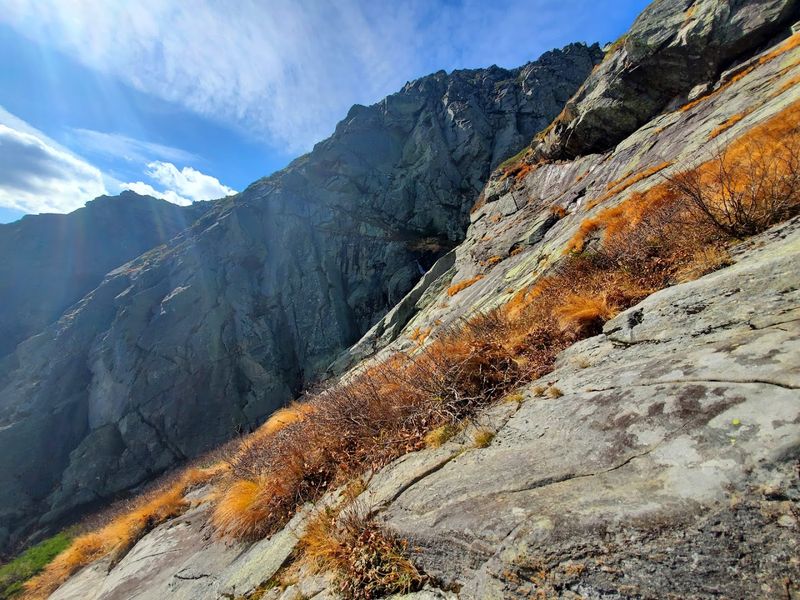
Nothing quite prepares you for that first full view of the headwall. Standing at the base of Huntington Ravine, looking up at a near-vertical wall of granite, the brain does a quick calculation and immediately questions every decision that led to this moment.
The headwall is the defining feature of this trail, a long, relentless stretch of exposed rock climbing that demands both physical strength and mental focus. Slanted slabs, narrow chimneys, and rough-textured ledges make up the route, and every handhold matters.
There are no ropes bolted in for comfort, no safety nets strung below.
Multiple sections are considered no-fall zones, meaning a slip is not just inconvenient, it is potentially fatal. Hikers must commit fully to upward movement because turning back becomes nearly impossible once you are deep into the climb.
The rocks are refreshingly rough, which actually helps grip, but wet conditions turn them treacherous fast.
New Hampshire does not build theme parks out of its mountains. The headwall of Huntington Ravine is raw, honest, and breathtaking in every sense of the word.
Earning the summit through this route feels genuinely different from any other approach on Mount Washington.
The Fan, A Talus Slope That Tests Every Ankle You Own
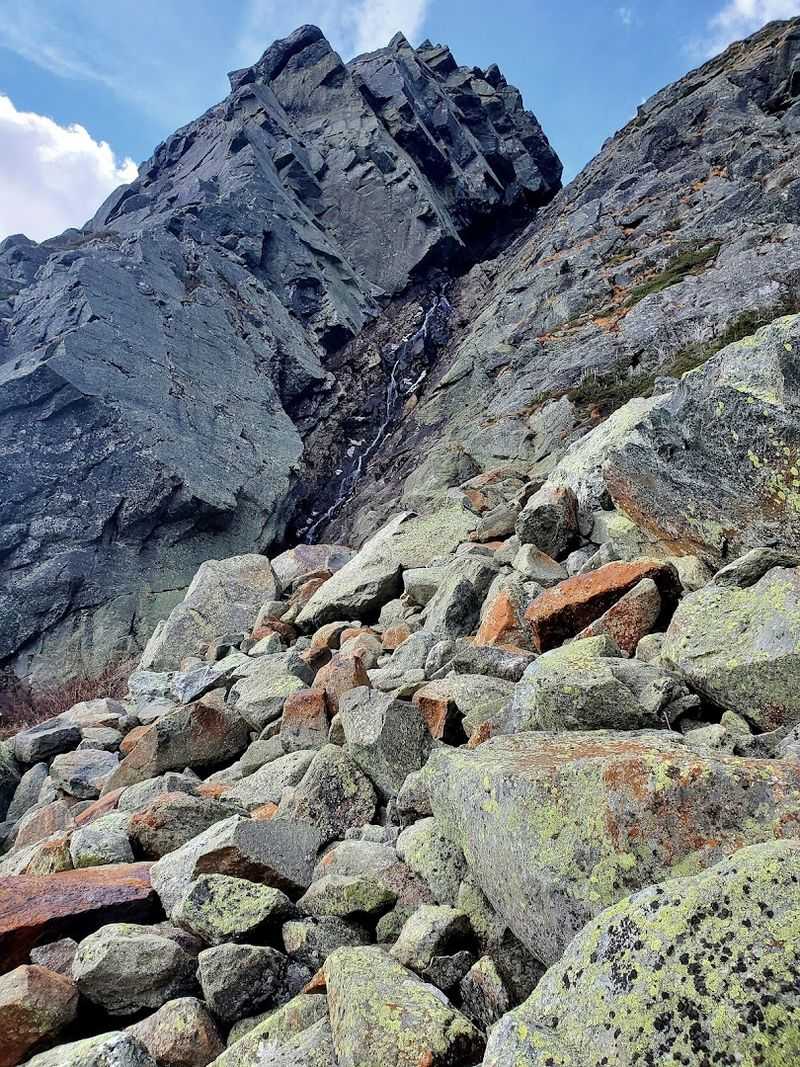
Before the headwall even comes into view, the trail sends a clear opening message through a massive boulder field called The Fan. This wide, sweeping talus slope spreads across the floor of the ravine like a giant’s scattered game pieces, and crossing it is its own adventure entirely.
Loose rocks, uneven surfaces, and boulders of every size demand constant attention. My ankles earned their paycheck on this section.
Each step requires a quick judgment call about stability, and the consequences of a poor choice are immediate and painful.
The Fan is not just a physical obstacle. It sets the psychological tone for everything that follows.
By the time you clear it, you understand what kind of mountain you are dealing with. Huntington Ravine does not ease you in gently.
Trekking poles help enormously on this stretch, and sturdy boots with solid ankle support are non-negotiable. The talus can shift unexpectedly, and some boulders that look solid move underfoot.
New Hampshire hikers who know this trail well always recommend crossing The Fan slowly and deliberately, choosing each foothold with care before committing your full weight.
Mount Washington Weather, The Wildcard That Changes Everything
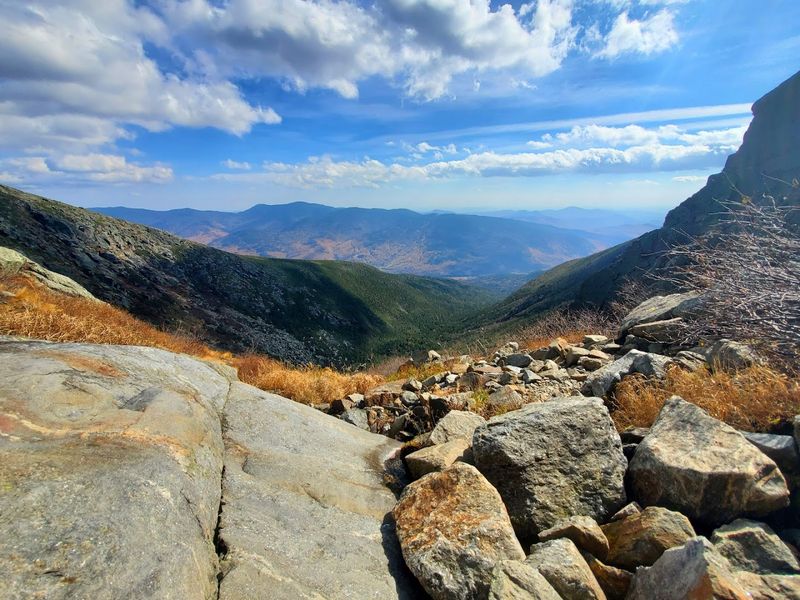
Mount Washington holds a legendary weather reputation, and Huntington Ravine sits right in its shadow, literally and figuratively. The mountain records hurricane-force winds on well over one hundred days every year, and conditions can shift from sunny to genuinely life-threatening within the span of a single hour.
Planning a trip to the ravine means obsessing over the forecast in ways that feel slightly unhinged to non-hikers. Wet rock on the headwall is a completely different beast from dry rock.
Fog can reduce visibility to nearly nothing, making navigation on the upper sections extremely disorienting.
I learned early that the mountain does not care about your plans or your timeline. Turning back because of incoming weather is not weakness, it is wisdom.
New Hampshire’s White Mountains have claimed lives from people who ignored the signs.
The AMC weather observatory on the summit broadcasts detailed forecasts specifically for Mount Washington, and checking it before any attempt on Huntington Ravine is as essential as lacing your boots. Smart hikers treat that forecast like gospel.
The mountain rewards patience and punishes overconfidence with remarkable consistency.
Winter Conditions Turn the Ravine Into an Ice Climbing Destination
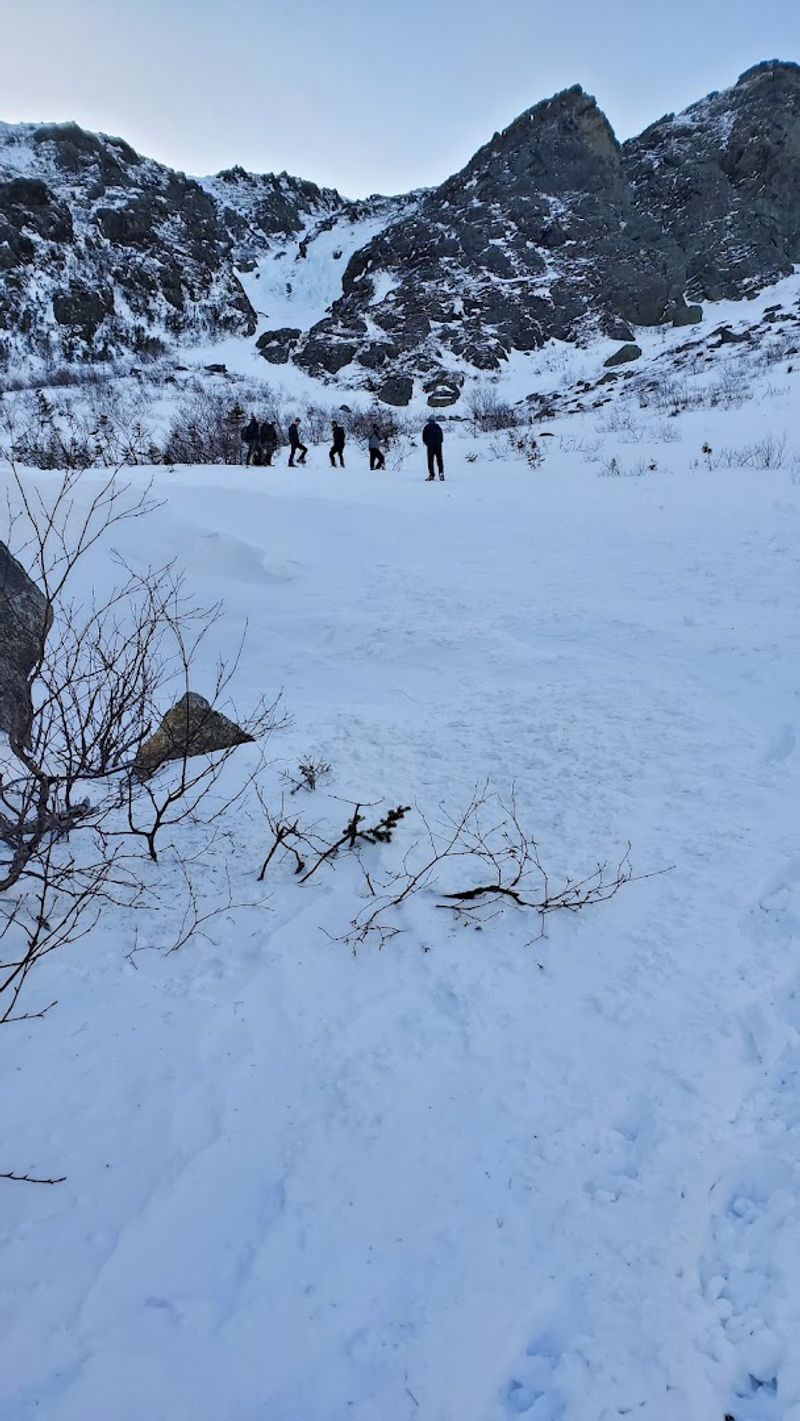
When temperatures drop and snow blankets the Presidential Range, Huntington Ravine transforms into one of the most respected ice climbing venues in the entire northeastern United States.
The same headwall that intimidates summer hikers becomes a playground of frozen waterfalls and ice curtains for those with the right gear and training.
Crampons, ice axes, and ropes become mandatory equipment rather than optional extras. The Harvard Cabin, a rustic backcountry structure at the base of the ravine, serves as a winter base camp for climbers tackling the ice routes.
It is basic and no-frills, perfectly matching the spirit of the place.
Avalanche risk is real and serious during winter months. The steep terrain that makes the ravine so dramatic in summer creates perfect conditions for slides in winter, and several routes require careful assessment before committing to a climb.
Specialized knowledge of snow stability is not optional here.
New Hampshire’s ice climbing community treats Huntington Ravine with deep respect. The routes range from approachable to genuinely expert-level, and the ravine draws serious climbers from across the country every season.
No gift shop greets them at the bottom, just cold air and vertical ice.
The Harvard Cabin, A No-Frills Base Camp With Maximum Character
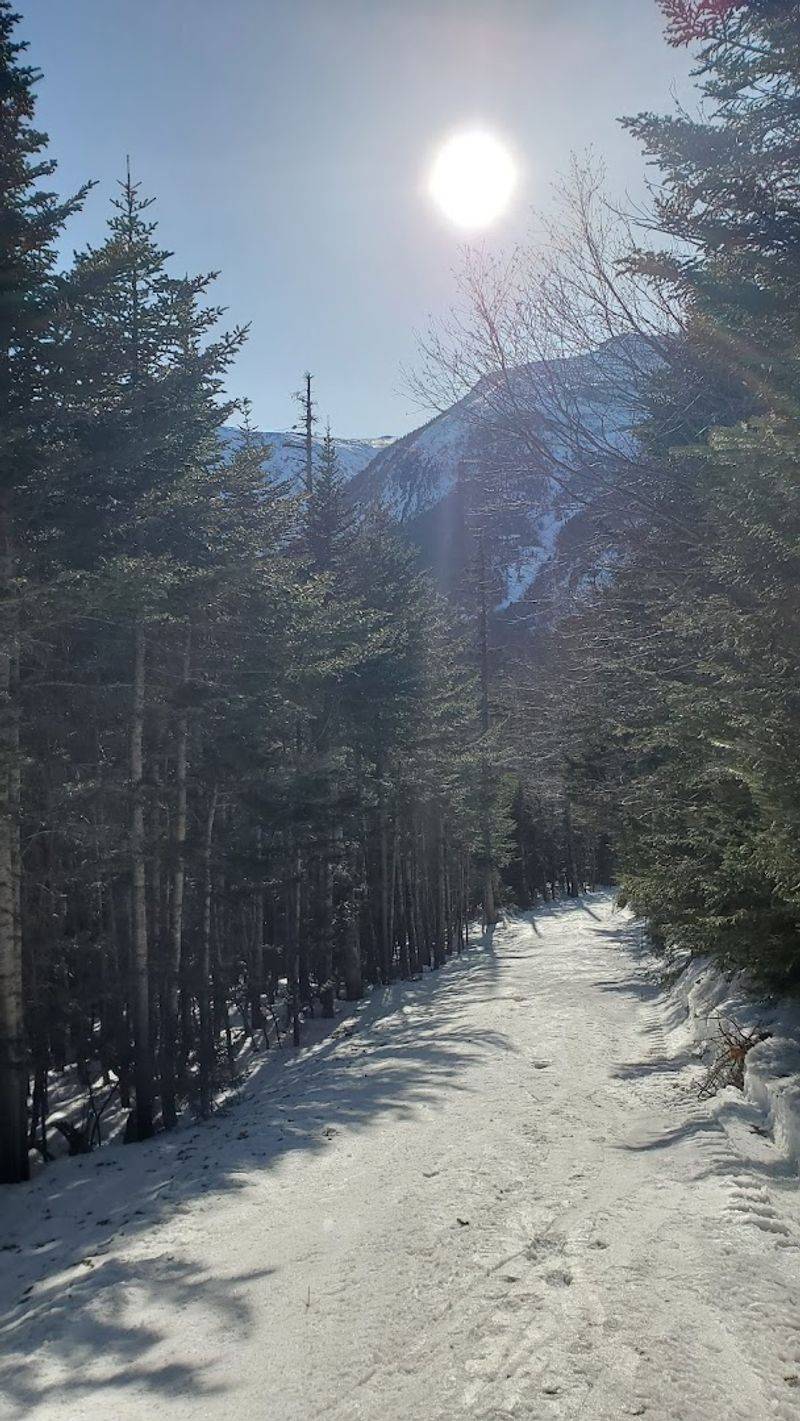
Tucked at the base of Huntington Ravine, the Harvard Cabin is the anti-resort. No room service, no fluffy robes, no complimentary breakfast spread waiting on a cart.
What it does offer is warmth, shelter, and a genuine sense of being deep in the mountains of New Hampshire.
The cabin operates primarily during winter months, serving as a staging point for ice climbers and winter mountaineers. It is maintained by the Harvard Mountaineering Club and provides basic bunks and a wood stove.
The atmosphere inside has that particular quality found only in places earned through effort rather than paid for with a credit card.
Getting to the Harvard Cabin in winter requires a hike through snow-covered terrain, which immediately filters out anyone not serious about the adventure ahead. The cabin sits close enough to the base of the ravine that you can hear the wind working on the headwall above.
Reservations are required, and space is limited, which keeps the experience intimate. Sharing that small, heated space with other climbers after a day on the ice creates a kind of camaraderie that resort lobbies simply cannot manufacture.
It is the kind of place that feels genuinely earned.
Pinkham Notch Visitor Center, the Civilized Starting Point Before Things Get Wild
Every epic mountain adventure needs a sensible starting point, and Pinkham Notch Visitor Center plays that role beautifully. Operated by the Appalachian Mountain Club, this facility sits along Route 16 at the base of Mount Washington and serves as the primary gateway for hikers heading toward Huntington Ravine.
The visitor center offers trail information, weather updates, and basic gear supplies. Staff there are knowledgeable and direct about conditions on the mountain, which is exactly what you want before committing to one of the most demanding trails in New Hampshire.
A small store carries essentials, and the building itself provides a warm, organized environment for pre-hike planning.
The Tuckerman Ravine Trail departs from Pinkham Notch, and the connector to Huntington Ravine branches off from it, so almost everyone passes through this hub before heading up. Parking fills quickly on popular weekends, so arriving early is a practical necessity rather than just good advice.
After a long day on the mountain, returning to Pinkham Notch feels like re-entering civilization. The contrast between the raw, unguarded terrain of Huntington Ravine and the organized calm of the visitor center is genuinely striking.
New Hampshire keeps that contrast intentional and honest.
The No-Descent Rule, Why Going Up Is the Only Smart Direction
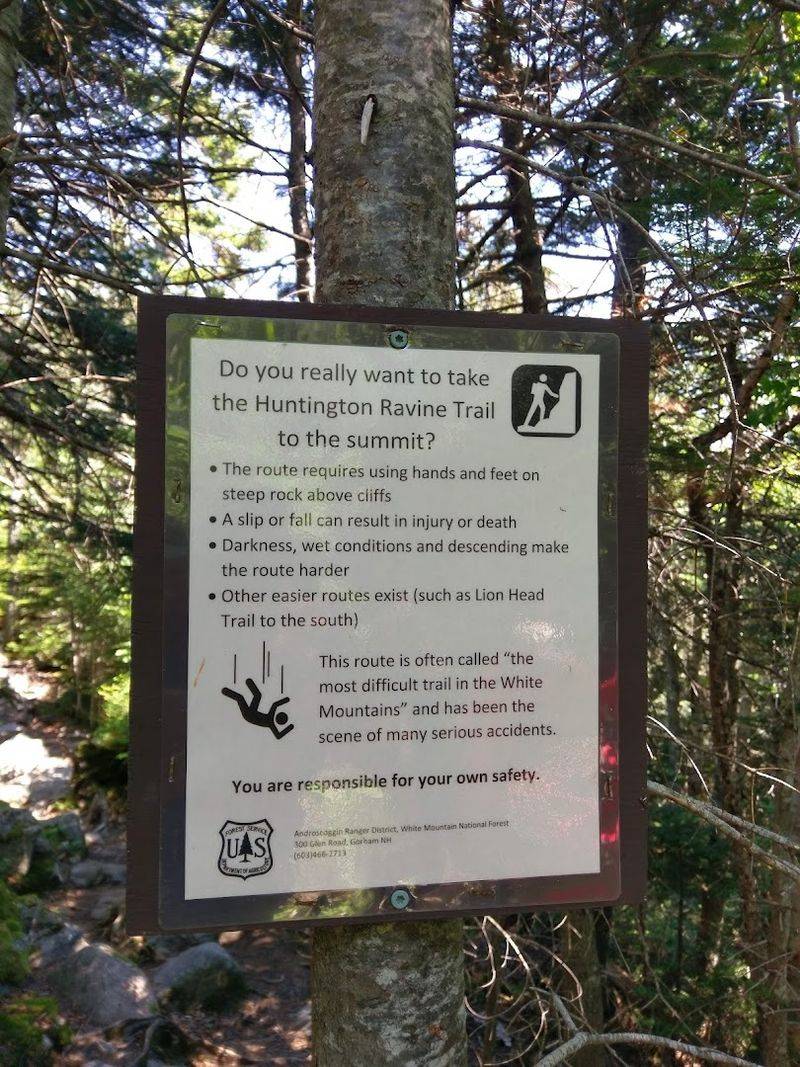
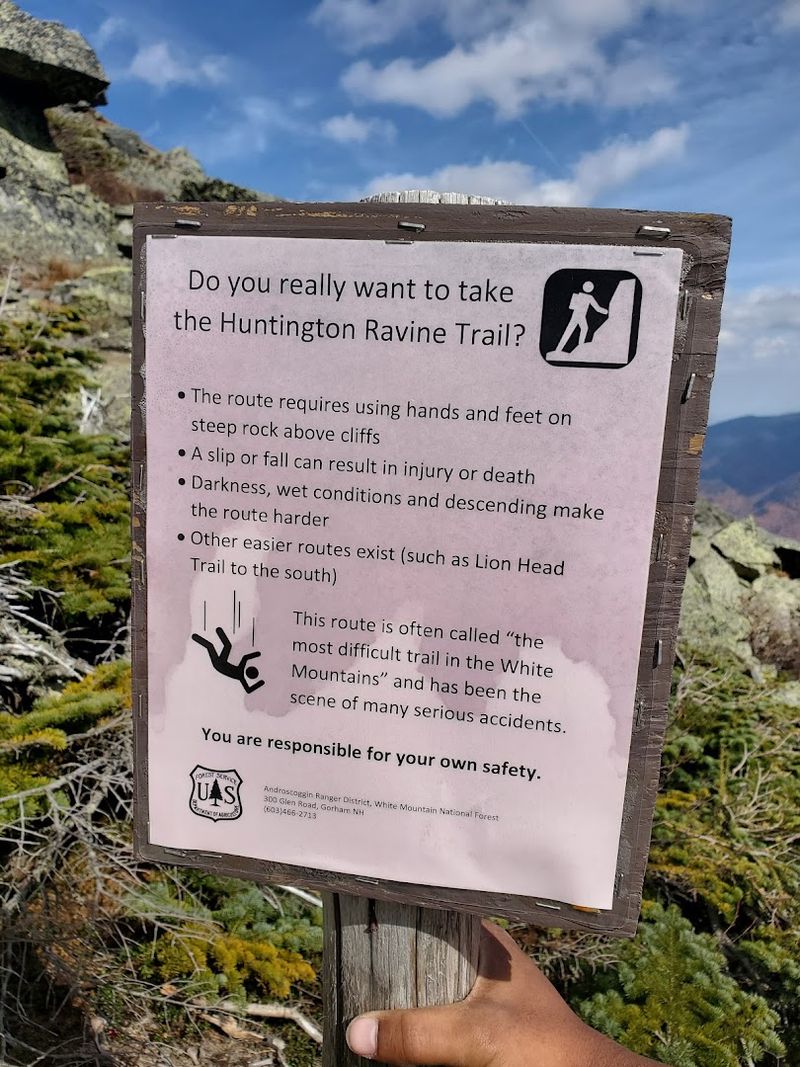
At the top of the headwall, a sign greets arriving hikers with a message that is refreshingly blunt. It strongly advises against attempting to descend via the Huntington Ravine Trail.
This is not a legal disclaimer or a liability hedge, it is a practical warning based on the geometry of the terrain below.
Descending a near-vertical, exposed rock face is dramatically harder than ascending it. Footholds that feel secure on the way up become awkward and unreliable when approached from above.
The consequences of a misstep on the headwall are severe enough that the recommendation carries the weight of genuine urgency.
Most experienced hikers who complete Huntington Ravine choose a different descent route, often heading down via the Lion Head Trail or the Tuckerman Ravine area. These alternatives are longer but far more forgiving on the knees and the nerves.
Once you commit to the ravine from below, turning back mid-headwall is nearly impossible without significant risk. The trail essentially demands full forward commitment, which is part of what makes it so mentally demanding.
New Hampshire’s mountains do not offer many escape hatches, and Huntington Ravine offers fewer than most. Plan your exit before you start climbing.
The Terrifying 25, How Huntington Ravine Earned Its Spot on New Hampshire’s Most Dangerous List
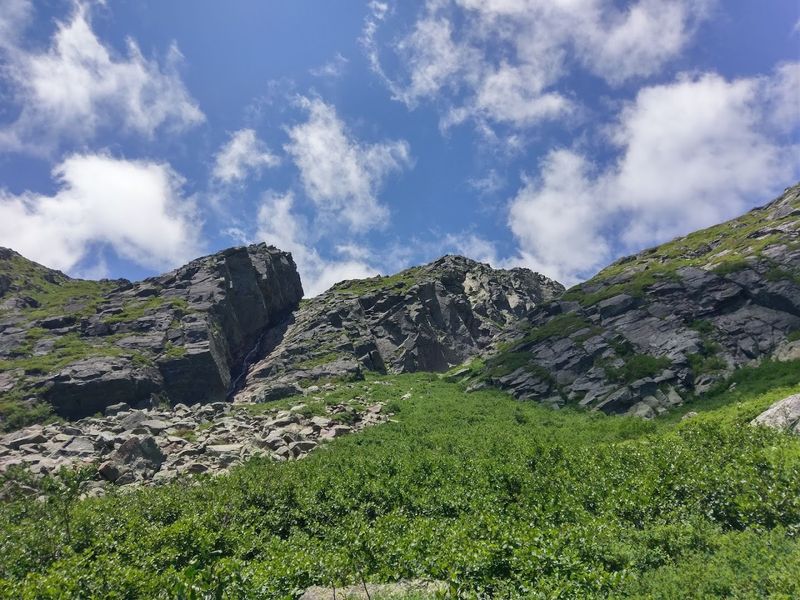
New Hampshire maintains an unofficial but widely respected list known as the Terrifying 25, a collection of trails that push beyond standard difficulty into genuinely hazardous territory.
Huntington Ravine holds a prominent place on that list, and the trail earns that recognition through sheer terrain rather than reputation alone.
The combination of extreme exposure, no-fall zones, rapidly changing weather, and the psychological commitment required once the climb begins puts it in a category that most trails simply do not reach. Hikers with solid experience on standard New England trails are often surprised by how different Huntington Ravine feels in practice.
The mountain records a significant number of search and rescue operations annually, and the ravine contributes meaningfully to that total. Overconfidence, poor preparation, and underestimating the weather are recurring factors in incidents on this terrain.
Being on a terrifying list is not a marketing gimmick here. The trail does not perform danger for dramatic effect.
The difficulty is structural, baked into the geology and the altitude and the exposure. Experienced hikers who respect those factors consistently describe the experience as one of the most rewarding in the entire White Mountains region.
The reward and the risk are genuinely inseparable.
What To Pack Before You Even Think About Setting Foot on That Trail
Preparation for Huntington Ravine is not the casual checklist you run through before a Sunday afternoon stroll. The gear you bring can directly affect whether you summit safely or become part of a rescue operation.
Starting with footwear, stiff-soled hiking boots with serious ankle support are non-negotiable on the boulder field and headwall.
Trekking poles earn their weight during the approach and on the descent via alternate routes. A helmet is genuinely recommended, not because rocks are always falling, but because the headwall involves your head getting very close to granite at uncomfortable angles.
Gloves protect hands during the extensive scrambling sections.
Layered clothing is essential because the temperature at the summit of Mount Washington can be dramatically colder than at Pinkham Notch. A rain layer should always be packed regardless of the morning forecast.
New Hampshire weather writes its own schedule.
Navigation tools matter here because the trail markers are not always obvious, particularly on the upper sections where multiple paths converge. A detailed map and a charged GPS device provide real backup when visibility drops.
Food and water in generous quantities round out the kit. The ravine is long, and the body burns through reserves faster than expected on steep terrain.
Finding Huntington Ravine and Why the Journey There Sets the Tone Perfectly
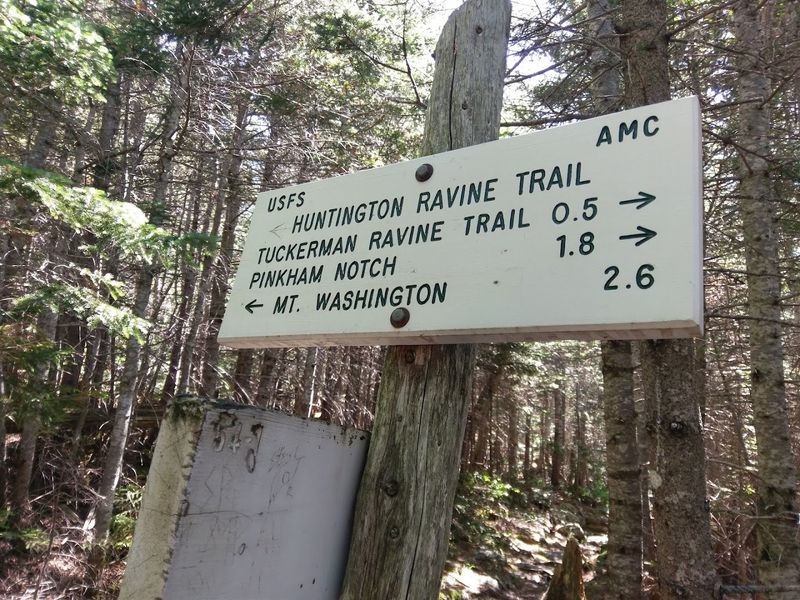
Getting to Huntington Ravine requires no special off-road vehicle or backcountry permit, but the journey absolutely sets the tone for what follows. The trail begins at the Pinkham Notch Visitor Center along Route 16 in New Hampshire, a straightforward starting point that contrasts beautifully with the wildness waiting ahead.
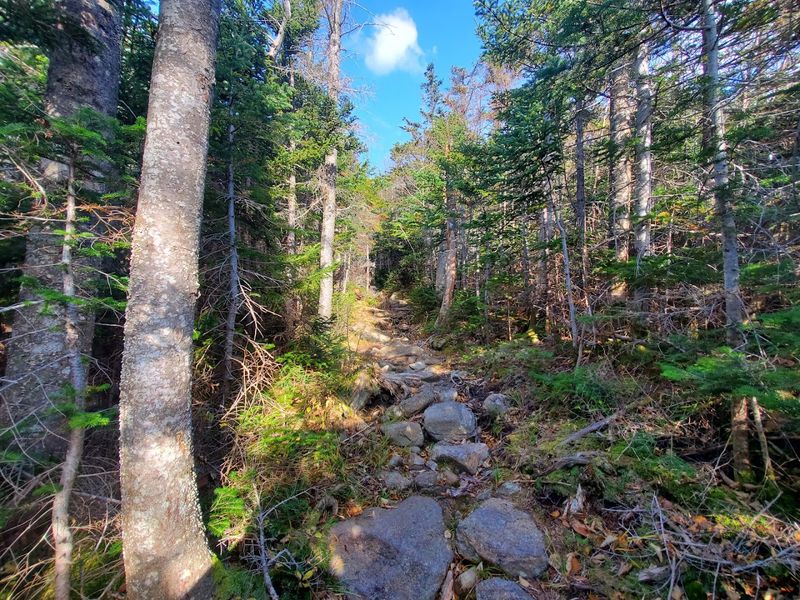
From the visitor center, hikers follow the Tuckerman Ravine Trail before branching onto the Huntington Ravine Trail. The early section moves through dense forest, offering a deceptively gentle introduction.
The trees thin out as elevation increases, and the terrain begins revealing its true character well before the ravine comes fully into view.
The official address for the area is Sargent’s Purchase, NH 03846, and most navigation apps will direct you accurately to the Pinkham Notch trailhead parking area. Arriving early is strongly recommended, especially on weekends during peak hiking season when parking fills completely.
The drive into Pinkham Notch through the White Mountains is genuinely beautiful, with the Presidential Range framing the horizon in every direction. New Hampshire delivers scenery on the approach that already feels like a reward before the hard work begins.
The mountain does not waste a single mile on boring views. Every turn of the road earns its place in the experience.
