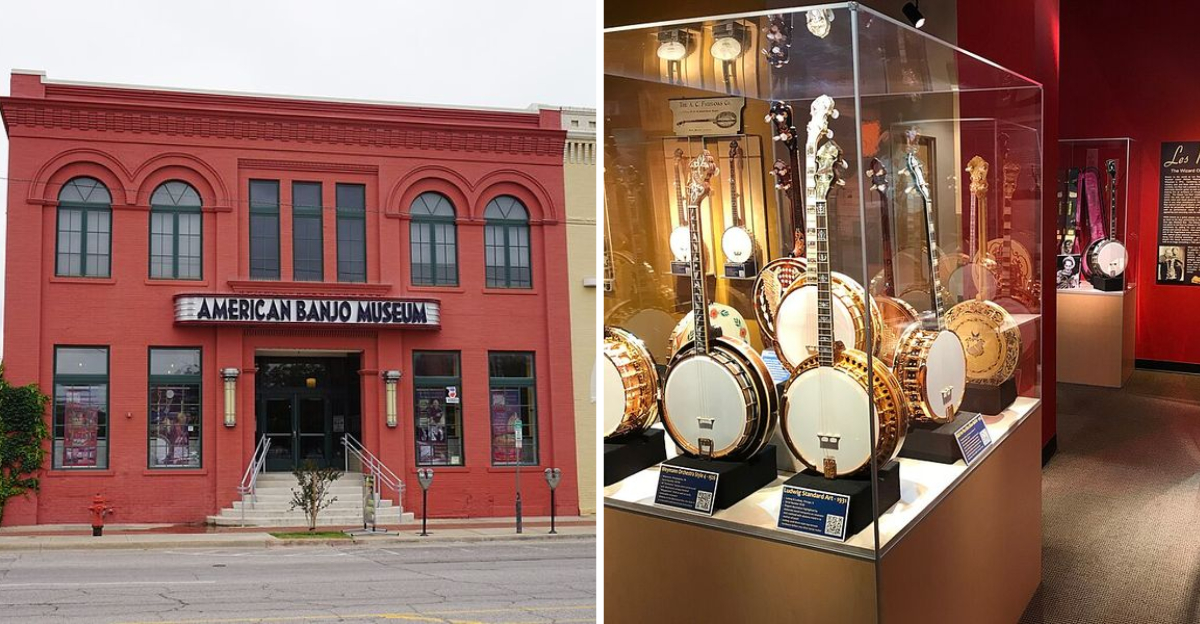
A museum in Oklahoma that surprised me completely. I walked in expecting a quirky little niche stop and left genuinely moved by how much history one instrument can carry.
This place holds the world’s largest public collection of banjos, with over four hundred instruments spanning nearly four centuries. The stories woven through those strings stretch from the African continent to Appalachian mountain hollows to jazz clubs in nineteen twenties New Orleans. Every exhibit feels like a chapter in a much bigger American story, one that most of us were never taught in school.
If you have even a passing curiosity about music, culture, or American history, this place will absolutely get under your skin.
The African Roots of the Banjo
Most people assume the banjo is purely an American invention, born somewhere in the rural South. That assumption gets corrected the moment you step into the first gallery at the American Banjo Museum.
The story actually begins in West Africa, where enslaved people brought their musical traditions to the shores of North America as early as the mid-1600s.
The museum presents this history with care and intention. Replicas of early primitive instruments, crafted from gourds and animal hides, show exactly how the banjo’s ancestors looked and functioned long before factory production ever touched them.
These weren’t just instruments. They were lifelines, cultural memory carried across an ocean under the most brutal of circumstances.
Reading through those early exhibit panels, I felt the weight of that history in a way that no textbook had ever managed to deliver. The museum doesn’t shy away from the complexity of this origin story.
It names the people, the conditions, and the resilience that gave birth to an instrument that would eventually define entire genres of American music. That honesty makes the whole experience feel real and deeply worthwhile.
The Minstrel Era Instruments on Display
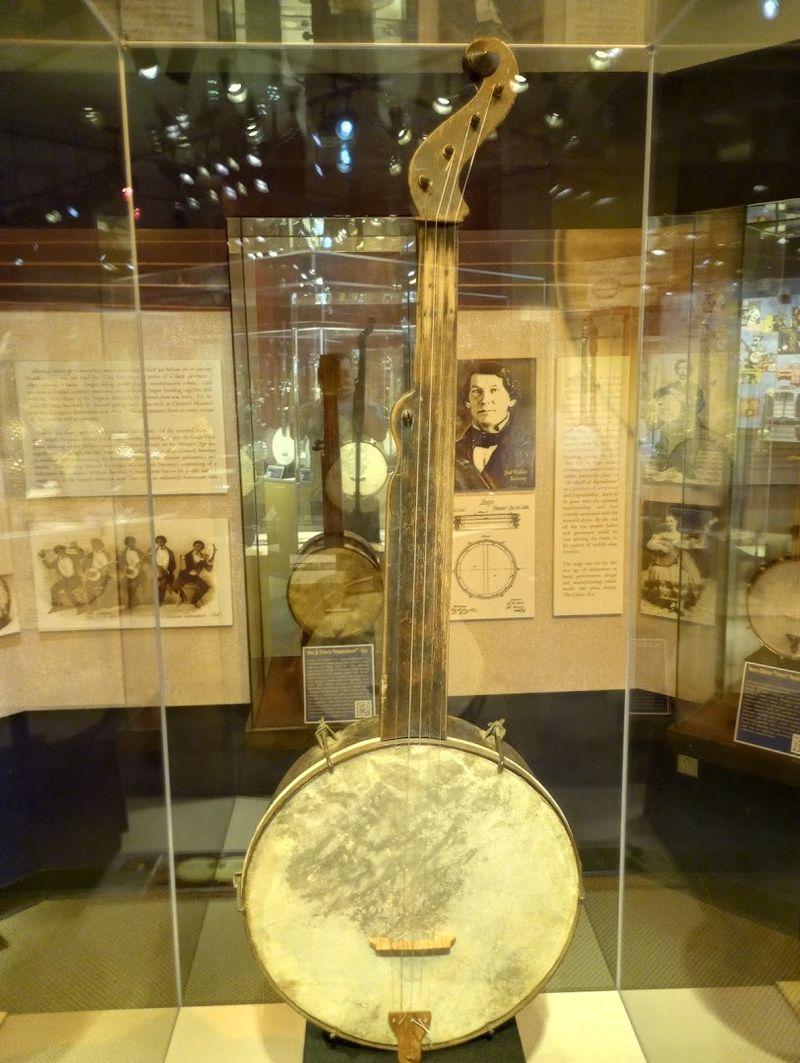
Few chapters in American musical history are as complicated as the Minstrel Era, and the American Banjo Museum doesn’t gloss over that complexity. The mid-19th century saw the banjo become a central prop in minstrel shows, performances that caricatured Black Americans while simultaneously spreading the instrument’s sound to wider audiences across the country.
Actual instruments from this period sit behind glass in the downstairs gallery, and they are genuinely fascinating objects. The craftsmanship is surprisingly refined for the era, with carved wooden rims and tacked parchment heads that have survived well over a century.
Each one comes with a description that places it firmly in its historical moment, not just as a musical tool but as a cultural artifact loaded with meaning.
What makes this section stand out is how the museum balances the artistry of the instruments against the troubling context of their use. There’s no sanitizing here, and that’s exactly right.
Understanding where the banjo traveled during this period is essential to understanding why it took on such different identities in the decades that followed. It’s a tough but necessary part of the full story, and the museum handles it with real thoughtfulness.
The Jazz Age Collection and Its Glittering Banjos
If the early galleries carry a sense of quiet reverence, the Jazz Age section turns up the energy considerably. By the 1920s and 1930s, the banjo had transformed into something altogether flashier, a centerpiece of dance halls and jazz orchestras that defined an era of American exuberance.
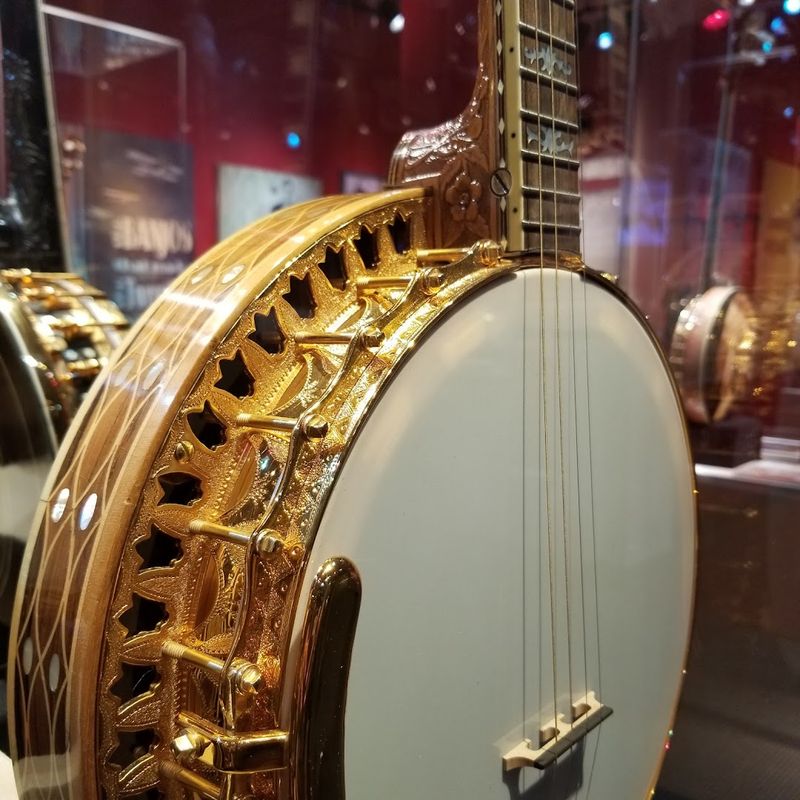
The instruments from this period are genuinely jaw-dropping to look at. Elaborately engraved resonators, gold-plated hardware, and inlaid mother-of-pearl fretboards make these banjos look more like jewelry than musical instruments.
Makers like Gibson and Vega were producing pieces that players and collectors still chase today, and several stunning examples sit right here in Oklahoma City.
This section also highlights the four-string tenor and plectrum banjos that dominated big band lineups before the guitar gradually took over. Listening stations and short video clips help fill in the sonic picture, giving context to what these gleaming instruments actually sounded like in a crowded ballroom.
I spent longer here than I expected, partly because the instruments are so visually arresting and partly because the music history being told is genuinely exciting. The Jazz Age gave the banjo its most glamorous chapter, and this gallery does it full justice.
Bluegrass and Folk Revival Upstairs
After World War II, the banjo found a new home in the mountains and on the folk festival stages of America. The upstairs gallery at the American Banjo Museum is where that chapter comes alive, with a focus on the five-string banjo and the bluegrass revolution that Bill Monroe and his contemporaries sparked in the late 1940s.
The exhibit traces how figures like Earl Scruggs developed an entirely new three-finger picking style that gave the banjo a velocity and expressiveness nobody had heard before. That technique spread like wildfire through the folk revival of the 1960s, pulling the instrument into coffeehouses, college campuses, and eventually television living rooms across the country.
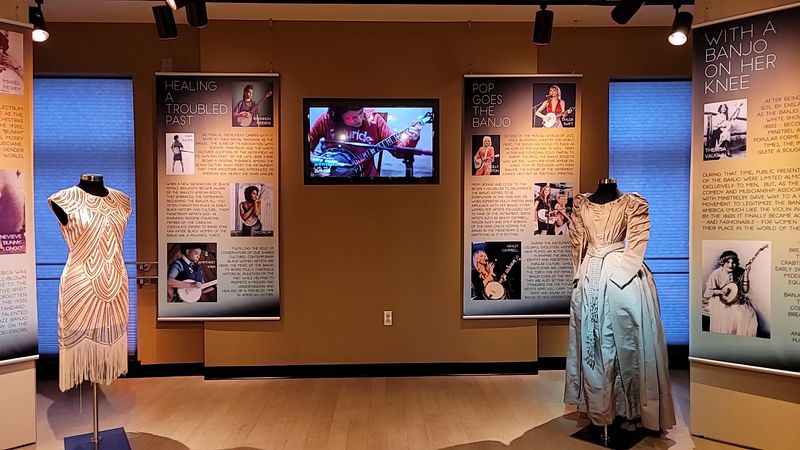
The upstairs space feels noticeably different from the ground floor. It’s brighter, with more video content playing on screens and a slightly more modern presentation style.
Famous pickers are celebrated here with photos, instruments, and biographical details that make the whole movement feel personal rather than encyclopedic. I appreciated how the museum connected musical innovation to broader social currents, showing that the folk revival wasn’t just about sound but about identity, protest, and community.
The banjo, it turns out, has always been about more than music.
Over 300 Banjos Spanning Two Gallery Floors
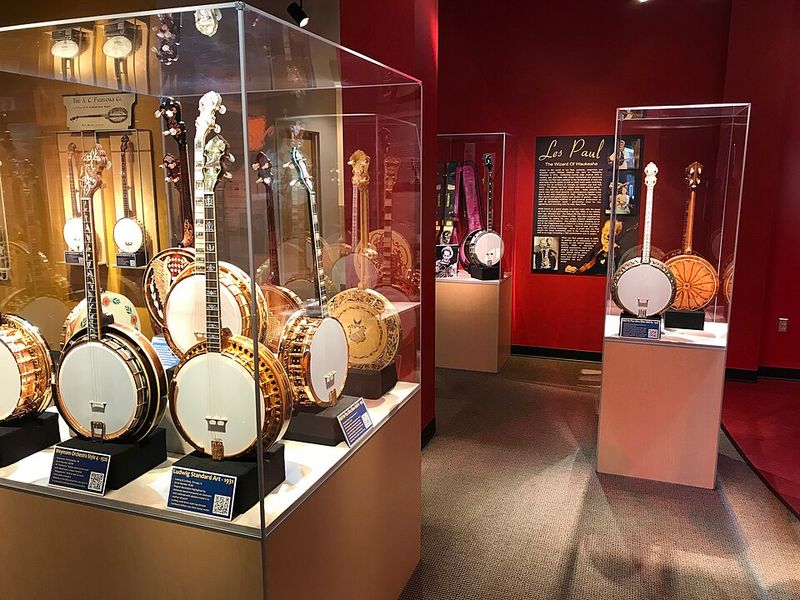
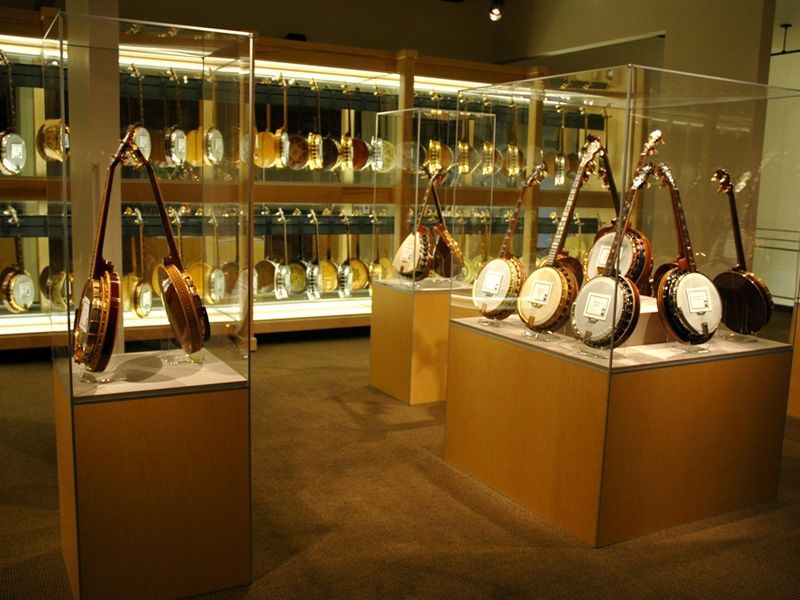
The sheer volume of instruments here is something you really have to see to believe. More than 300 banjos are on display across the two gallery floors, making this the largest collection of banjos on public display anywhere in the world.
That’s not a small claim, and the museum absolutely backs it up.
What keeps it from feeling overwhelming is how thoughtfully everything is organized. Each instrument is labeled with its era, maker, and relevant historical context.
Many also feature QR codes that link to additional information, recordings, or video demonstrations, so curious visitors can go as deep as they want without the exhibit itself becoming too text-heavy.
The variety on display is remarkable. Open-back folk banjos sit near ornate jazz-era resonator models.
Experimental designs from the early 1900s share wall space with sleek modern instruments built by contemporary luthiers. No two pieces feel exactly alike, and that diversity keeps you moving through the galleries with genuine curiosity rather than fatigue.
The museum’s layout makes navigation easy, even for visitors with mobility considerations, with clear pathways on both levels. Whether you spend an hour or three hours here, you will not run out of things to look at and genuinely think about.
Interactive Play Room and Hands-On Experience
Not every museum lets you touch the exhibits. The American Banjo Museum takes a refreshingly different approach by setting aside a dedicated room where visitors can actually pick up and play a selection of banjos.
It’s one of those small decisions that makes a huge difference in how connected you feel to the whole experience.
The room is set up with several instruments in different styles, along with a training video that walks absolute beginners through the basics. You don’t need any musical background to enjoy it.
I watched kids and adults alike fumble through their first few plucks with big grins on their faces, which honestly told me everything about why this space works so well.
There’s something uniquely satisfying about holding one of these instruments after spending time learning its history. The weight of it, the resonance when you strum even clumsily, it all clicks into place in a way that looking at a display case never quite achieves.
The museum also maintains a banjo player directory that anyone can join for free, a small but charming touch that gives the community dimension of the banjo world a tangible presence right here in OKC. Lessons are available too, for those who want to take things further.
Monthly Events, Gift Shop, and Planning Your Visit
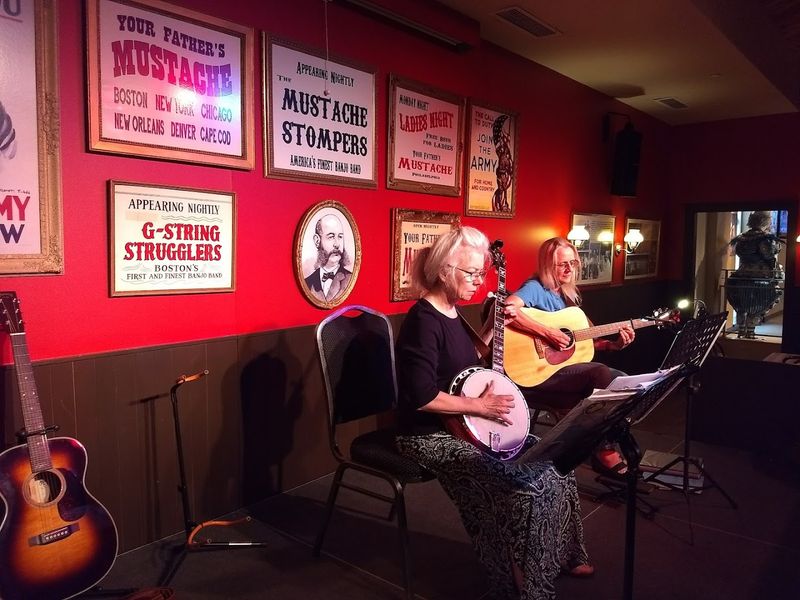
The American Banjo Museum has built a genuine community around itself, not just a static collection. On the first Wednesday of each month, the museum hosts a brown bag lunch event where visitors can bring their own food and enjoy a free live show.
It’s a wonderfully low-key tradition that draws both regulars and first-timers into the same room.
The gift shop near the entrance is worth a browse before you leave. It carries banjo-related books, recordings, merchandise, and the kind of quirky souvenirs that actually reflect what you experienced rather than generic tourist fare.
The staff throughout the building are consistently described by visitors as friendly and genuinely knowledgeable, the kind of people who clearly care about what they’re doing.
The museum is open Tuesday through Saturday from 11 AM to 6 PM, and Sunday from noon to 5 PM. It’s closed on Mondays.
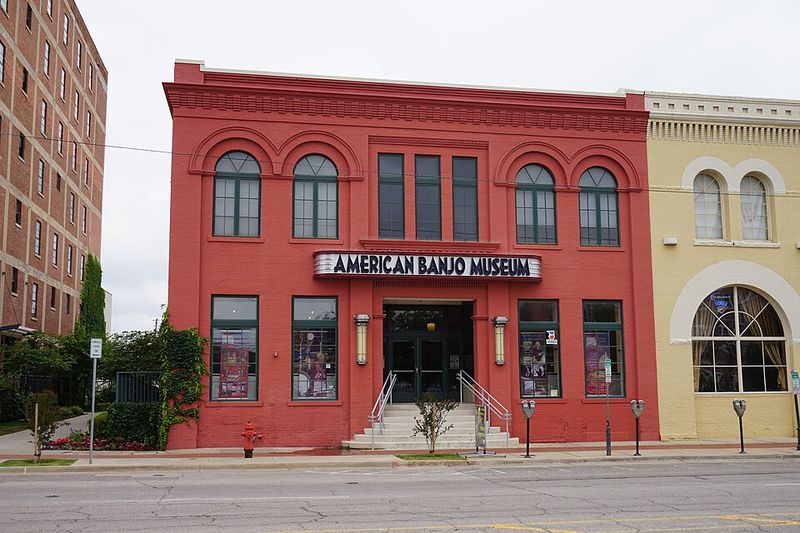
The building sits in a handsome historic structure in the Bricktown-adjacent area of downtown OKC, easy to reach and well worth building a half-day around. Senior and military discounts are available, and the overall cost is minimal for the depth of experience you get.
This is the kind of place that stays with you long after you’ve left Oklahoma City behind.
Address: 9 E Sheridan Ave, Oklahoma City, OK 73104
