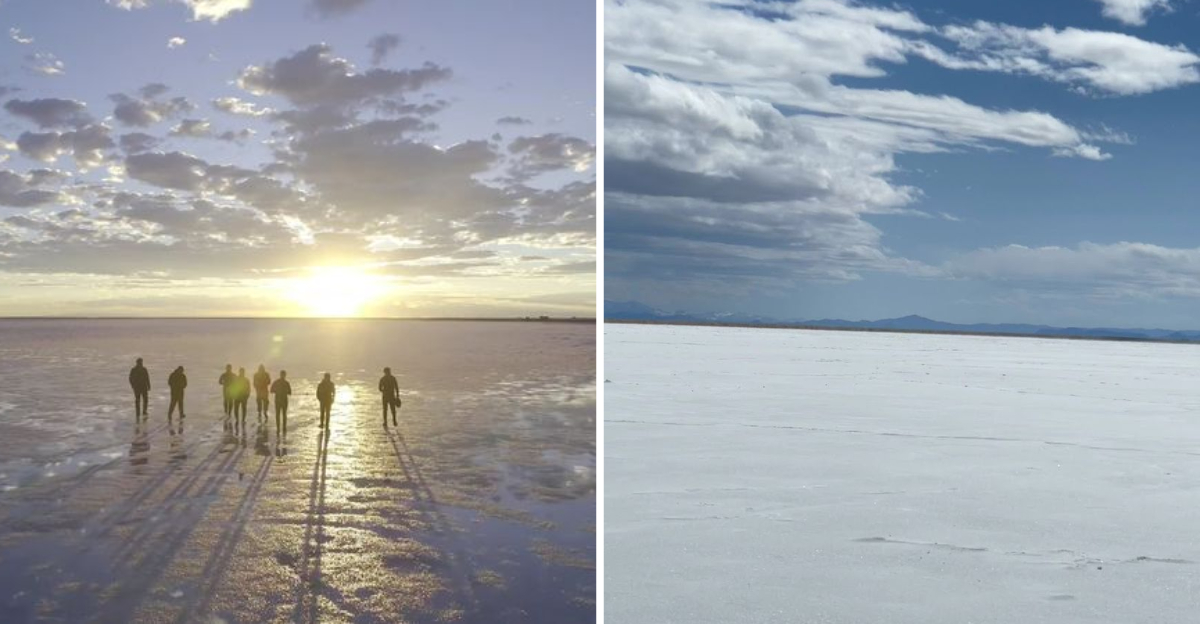
Utah has a lot of landscapes that mess with your head. Slot canyons.
Red rock arches. But nothing prepares you for the salt flats.
Pure white. Completely flat.
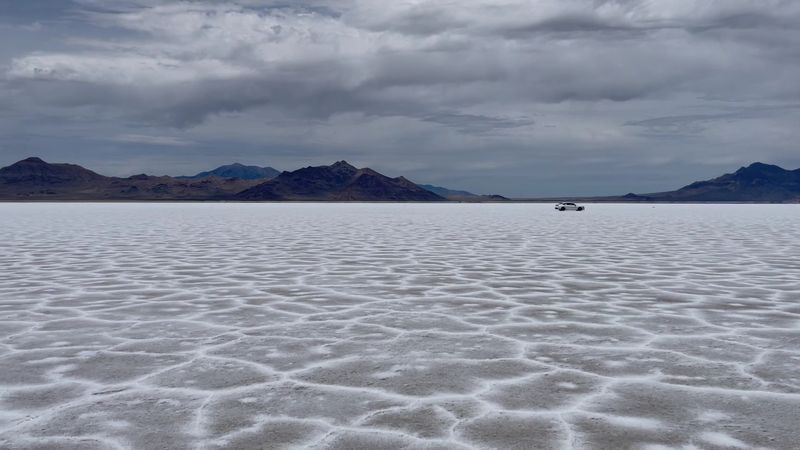
Stretching to the horizon in every direction. You think you see mountains in the distance, but you cannot tell if they are five miles away or fifty. The ground is hard enough to drive on, cracked into polygons that look like giant puzzle pieces.
I walked out a quarter mile and turned around. The car looked tiny.
The mountains looked close. Nothing made sense.
Utah is full of places that feel like other planets. The salt flats might be the strangest.
Bring sunglasses. The glare is blinding.
The Science Behind the Flatness That Messes With Your Mind
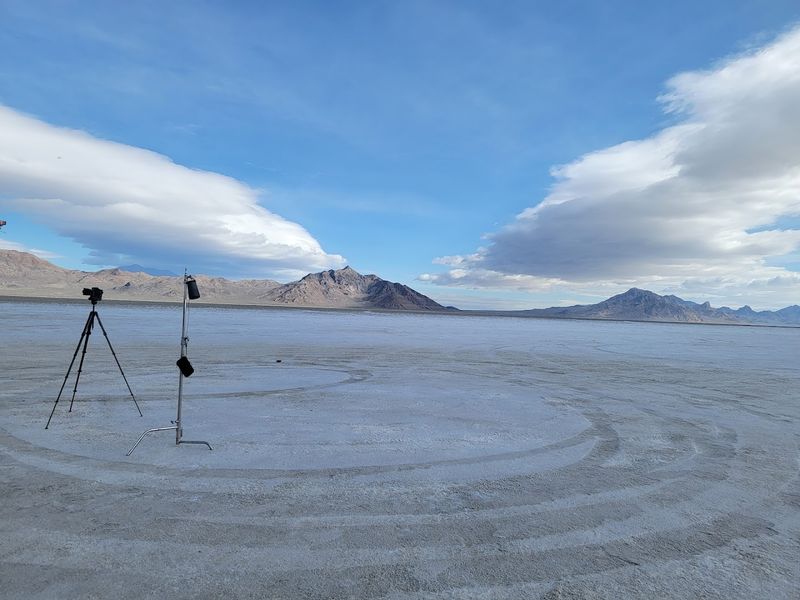
Most places have something to anchor your sense of scale, a tree, a building, a curb. Out here, none of that exists.
The Bonneville Salt Flats are recognized as one of the flattest places on Earth, with the entire surface varying by only about 0.2 meters across most of its expanse. That is not a typo.
The whole thing is essentially a giant, natural tabletop made of salt.
What makes this so disorienting is how the human eye normally reads depth. We rely on shadows, textures, and reference points to judge how far away something is.
Take all of that away and replace it with a perfectly white, reflective surface, and your brain just starts guessing. A person standing half a mile out might look like they are two feet tall or two miles away, and you genuinely cannot tell which.
On hot days, heat waves rise from the salt and create shimmering mirages that look like lakes sitting on the horizon. Some visitors report being able to perceive the actual curvature of the Earth from out here, which sounds dramatic until you realize the geometry actually supports it.
The salt crust itself is composed mostly of sodium chloride, packed hard enough to drive on when dry. It looks like snow but crunches differently underfoot, and the brightness on a sunny day is the kind that makes you reach for sunglasses before you even get out of the car.
How This Otherworldly Landscape Actually Formed
Roughly 15,000 years ago, a massive body of water called Lake Bonneville covered much of what is now northwestern Utah. At its peak, it was about the size of Lake Michigan.
Then the climate shifted, the water slowly evaporated over thousands of years, and what was left behind was this extraordinary mineral crust baked flat by the desert sun.
The salt layer is not uniform in depth. In some places it is just a thin crust, while in others it runs several feet deep.
Minerals dissolved in the ancient lake water were deposited as the water disappeared, leaving behind a mix dominated by sodium chloride with traces of other compounds. The result is a surface that looks almost artificial, like someone tiled an enormous floor and then forgot to add walls or a ceiling.
Seasonal flooding still happens here. When winter rains or snowmelt from surrounding mountains flow across the flats, a shallow sheet of water can spread across the surface, turning the whole area into a giant mirror that reflects the sky above it.
The effect is genuinely stunning. Photos taken during these flooded periods look like they were shot in Iceland or another planet entirely.
The flats dry back out as temperatures rise, and the salt crust reforms, though human activity and changing weather patterns have gradually reduced the thickness of the crust over recent decades.
Speed Records and Racing History That Put This Place on the Map
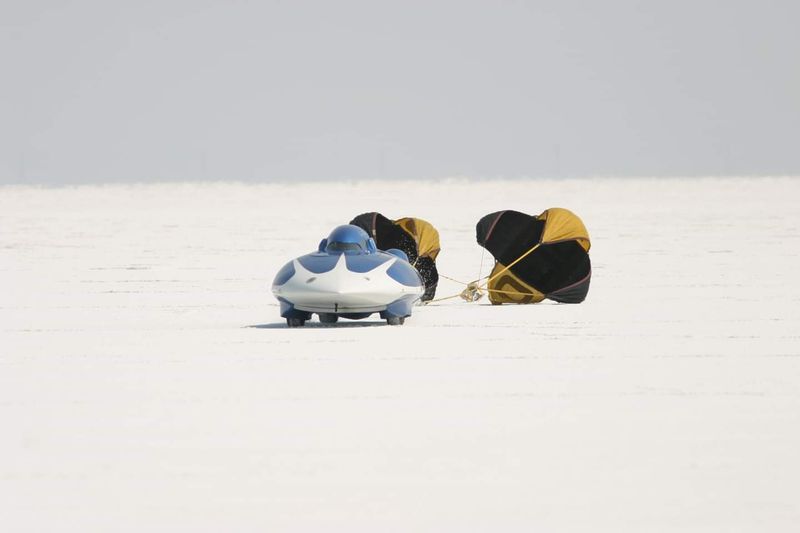
Long before Instagram existed, speed junkies were already making pilgrimages to the Bonneville Salt Flats. The combination of extreme flatness and firm, dry salt makes it one of the best natural surfaces on Earth for setting land speed records.
Racing here dates back to the early 1900s, and the flats have hosted some of the most iconic moments in motorsport history.
Every August, Speed Week draws competitors from around the world who bring custom-built vehicles to chase records across different classes. The Bonneville Speedway, which sits within the broader SRMA, is where these events take place.
The course stretches out across the salt with almost no obstacles in sight, allowing vehicles to build speed over long, uninterrupted runs. It is a completely different kind of racing than anything on a traditional track.
Even if you visit on a regular day with no events happening, the spirit of that history lingers. There are faint tire tracks pressed into the salt from past runs, and the sheer amount of open space makes it easy to understand why this place became the gold standard for speed testing.
Casual visitors sometimes drive their own vehicles out onto the flats, though rules about wet salt must always be respected. Driving on wet salt is prohibited and can cause serious damage to the fragile underlying soil beneath the crust.
What to Expect When You Actually Arrive at the Flats
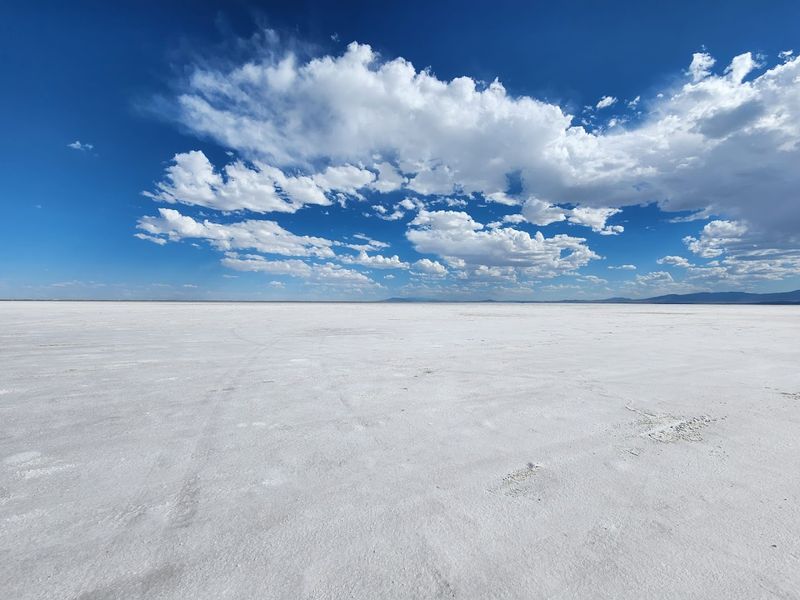
Pulling off Interstate 80 near Wendover and driving toward the flats for the first time is its own kind of experience. The approach gives you a preview of the white expanse in the distance, but nothing quite prepares you for that first moment of stepping onto the salt itself.
The ground feels surprisingly solid, almost like packed clay covered in a thin layer of coarse crystals.
The main access area off the interstate puts you at the edge of the flats, and from there you can walk out as far as you feel comfortable going. There are no trails because the surface is the trail.
Some people venture just a few hundred feet out for photos, while others keep walking until the parking area shrinks to a tiny dark smudge behind them. The park is open 24 hours every day, so timing is entirely up to you.
A few practical things worth knowing before you go: bring plenty of water because the sun reflects off the white surface and the heat can catch you off guard faster than expected. Good sunglasses are non-negotiable.
Sunscreen should be applied generously before you leave the car. The nearest gas station is about seven minutes away, so fill up before heading out.
There are no shops or permanent facilities directly at the flats, though portable facilities are sometimes available during event periods.
Sunrise and Sunset at the Salt Flats Are Genuinely Unforgettable
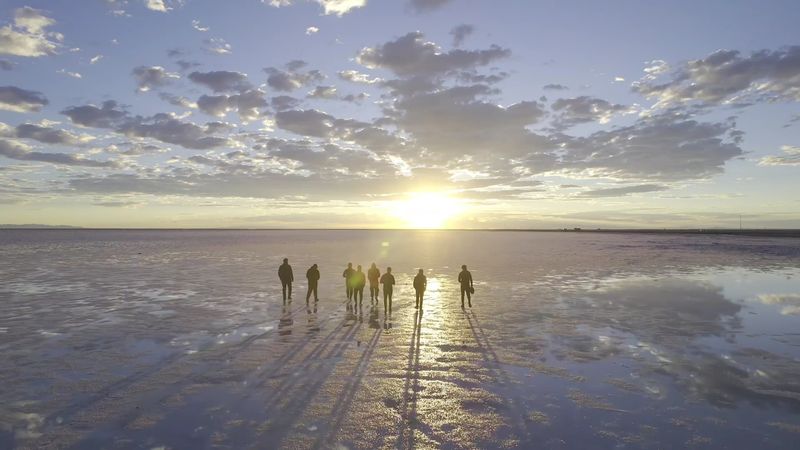
Catching the light here at either end of the day is one of those experiences that sticks with you long after you have driven away. At sunrise, the sky shifts through shades of pink, orange, and pale gold, and the flat white surface below picks up every color like a canvas that has been primed and left waiting.
The silence out there in the early morning is almost physical.
Sunset is equally spectacular and tends to attract more visitors since it requires no predawn alarm. The fading light moves across the salt in ways that are hard to describe without sounding like you are exaggerating.
Colors deepen as the sun drops, and if there is any standing water from recent rain, the entire sky appears to be reflected at your feet. It genuinely looks like a scene from a science fiction film.
Going about 90 minutes before sunset gives you time to walk out far enough to feel fully immersed before the light starts shifting. Bring a jacket if you are staying into the evening because temperatures drop quickly once the sun goes down.
Some visitors bring a simple picnic dinner and sit out on the salt watching the sky change, which sounds simple but ends up being one of those memories that gets brought up years later. Getting back to the road before full dark is a smart safety habit, especially if you have walked a significant distance from the parking area.
The Fragile Nature of the Flats and Why That Matters
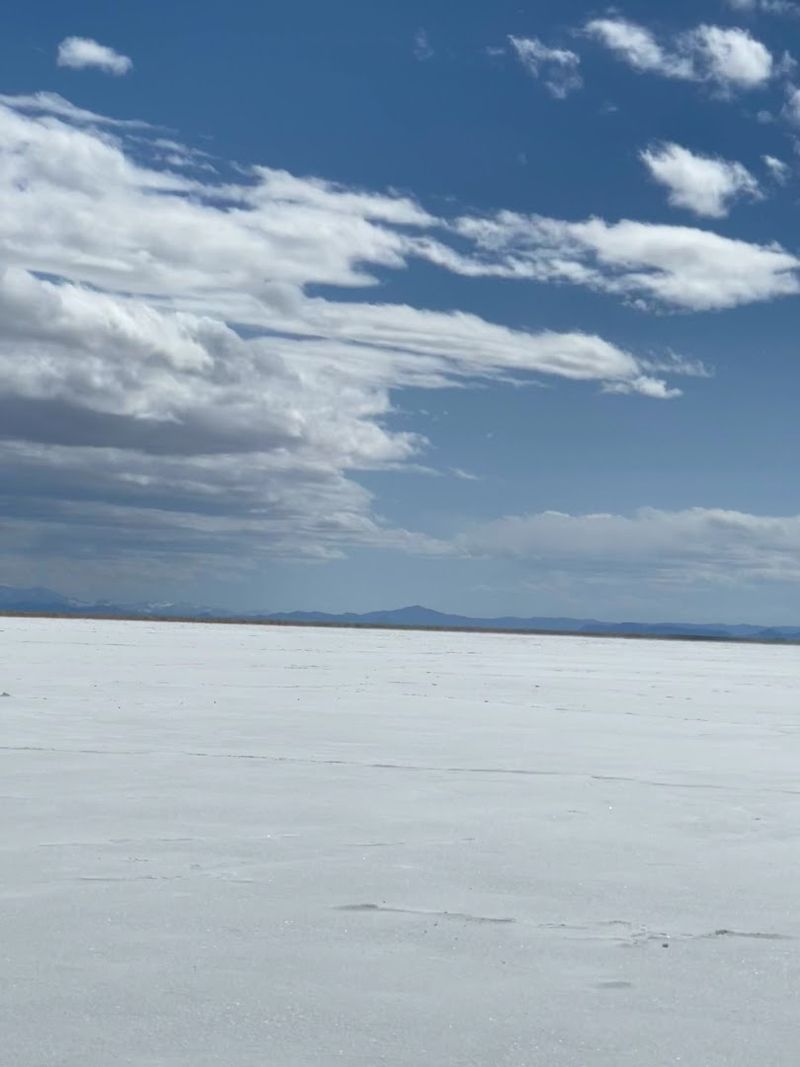
For something that looks so permanent and immovable, the Bonneville Salt Flats are surprisingly delicate. The salt crust that covers the surface is a living system in a sense, replenished annually by mineral-rich water that flows in from surrounding areas and then evaporates.
Human activity, weather changes, and groundwater pumping in the region have all affected the thickness of that crust over time.
Driving on wet salt is one of the most damaging things a visitor can do. When the crust is saturated, tires cut through it easily and churn up the soft mineral layer underneath.
Those ruts do not heal quickly. The Bureau of Land Management, which oversees the Bonneville Salt Flats SRMA, posts signs and conditions updates to help visitors know when driving on the flats is appropriate and when it is off-limits.
Respecting those guidelines is not just a legal thing, it is a genuine act of care for a place that millions of people visit and love. The flats have already seen measurable shrinkage over the past century, and ongoing efforts to restore and protect the salt layer depend partly on visitors making responsible choices.
Taking nothing but photos and leaving no trace is the standard expectation. Even walking in large groups repeatedly across the same path can leave visible marks, so spreading out and treading lightly goes a long way toward keeping the place intact for whoever comes next.
Making the Most of Your Visit to Wendover and the SRMA

Wendover sits right on the Utah-Nevada border, and it serves as the closest town to the salt flats. The drive from Salt Lake City takes about an hour and a half along Interstate 80, making it a very manageable day trip.
The landscape along the way is its own kind of interesting, with the Bonneville Basin opening up as you head west and the flats eventually appearing as a white smear on the horizon long before you reach the exit.
The main access point for the Bonneville Salt Flats SRMA is well-signed off the interstate. If you are heading westbound, the north side viewpoint offers the best access to the actual salt surface and is the recommended stop for anyone wanting to walk out onto the flats.
The eastbound rest area exists but does not provide the same quality of access or views.
Plan for at least two hours if you want to walk out a meaningful distance, take photos, and soak in the atmosphere without rushing. A full morning or afternoon gives you even more flexibility.
The area is open every day around the clock, so there is no wrong time to show up as long as conditions are safe. Checking the BLM website before you go for current conditions is a genuinely useful habit, especially after wet weather.
The address for the park is Bonneville Salt Flats State Park, Wendover, UT 84083, and it is one of those stops that earns its place on any Utah road trip without question.
