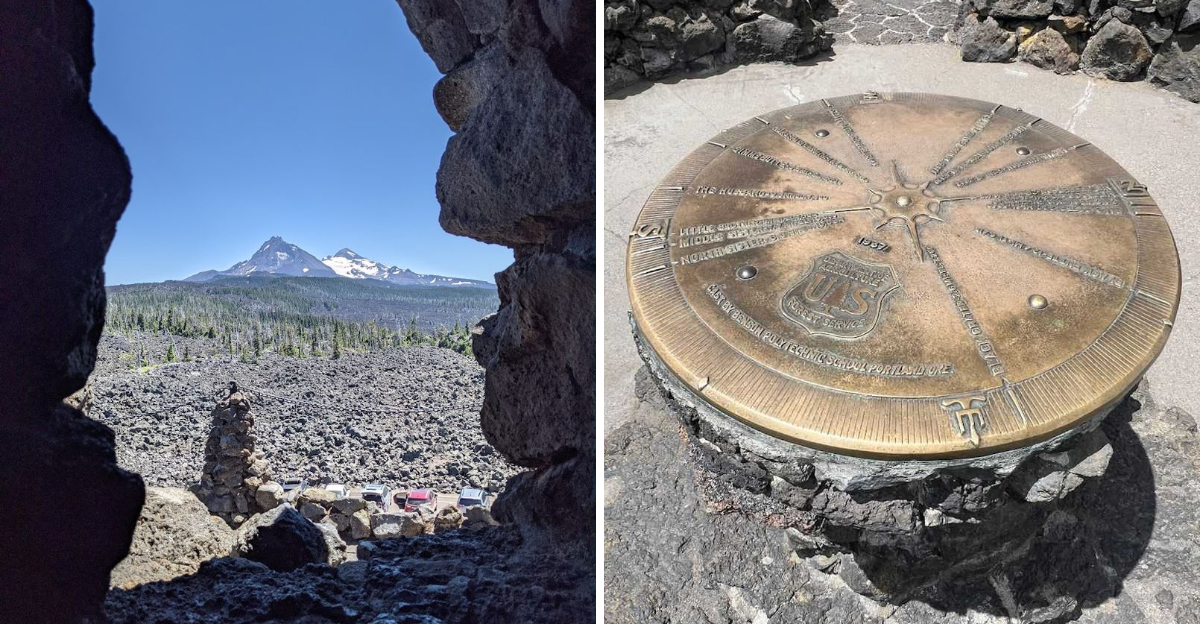
A stone castle built from lava rock sits right at the top of a windy pass. The walls are rough and dark and feel like they belong to another planet entirely.
Walk inside and find a window that frames the mountains like a painting someone left for you. I stood there for a long time just moving back and forth to see different peaks.
A brass compass sits in the middle of the floor pointing to every distant Cascade mountain named below. Oregon really built a tiny castle out of cooled lava and said yes this is normal here.
The views stretch in every direction and the wind keeps things cool even on hot days. Kids run around touching the rocks while adults try to read all the mountain names carefully.
No roof means the sky is the ceiling and the stars come out beautifully at night. This Oregon place feels like a secret fort that someone made for everyone to enjoy forever.
The Stone Castle Structure That Stops You Cold
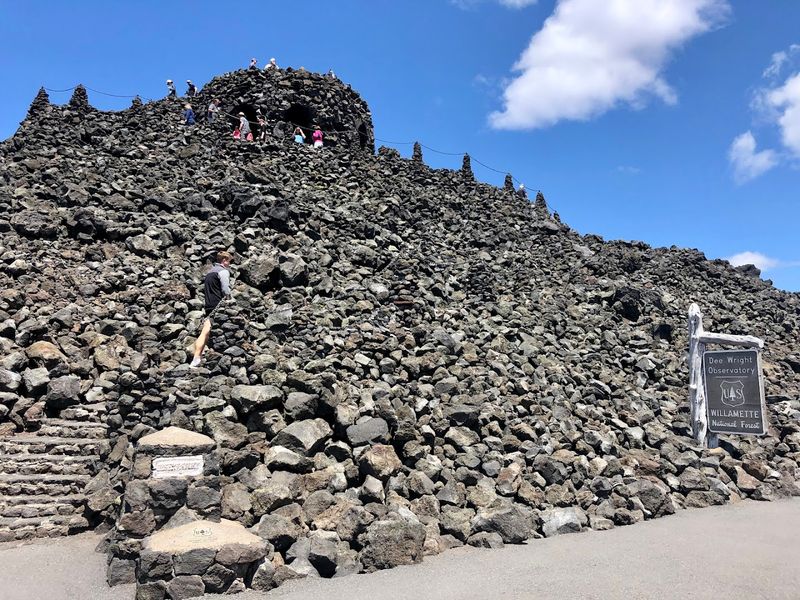
Standing in front of the Dee Wright Observatory for the first time, you genuinely forget what you came to see. The building itself demands full attention.
It looks medieval. It looks like it belongs on a cliff in Scotland, not on an Oregon lava field.
Built entirely from volcanic basalt, every stone was hand-placed by Civilian Conservation Corps workers in the early 1930s. The craftsmanship is remarkable.
Thick walls, arched openings, and rough-cut rock create a structure that feels ancient and permanent.
One visitor compared it to Castle Grayskull from He-Man, and honestly, that description is not far off. The building has real character.
It does not look like a government project. It looks like something a wizard designed.
Walking up to it, you notice how naturally it rises from the lava field. The material underfoot and the material overhead are nearly identical.
That seamless connection between building and landscape is what makes it unforgettable. No other roadside stop in Oregon looks quite like this one.
Mountain-Framing Windows Cut Right Into the Walls
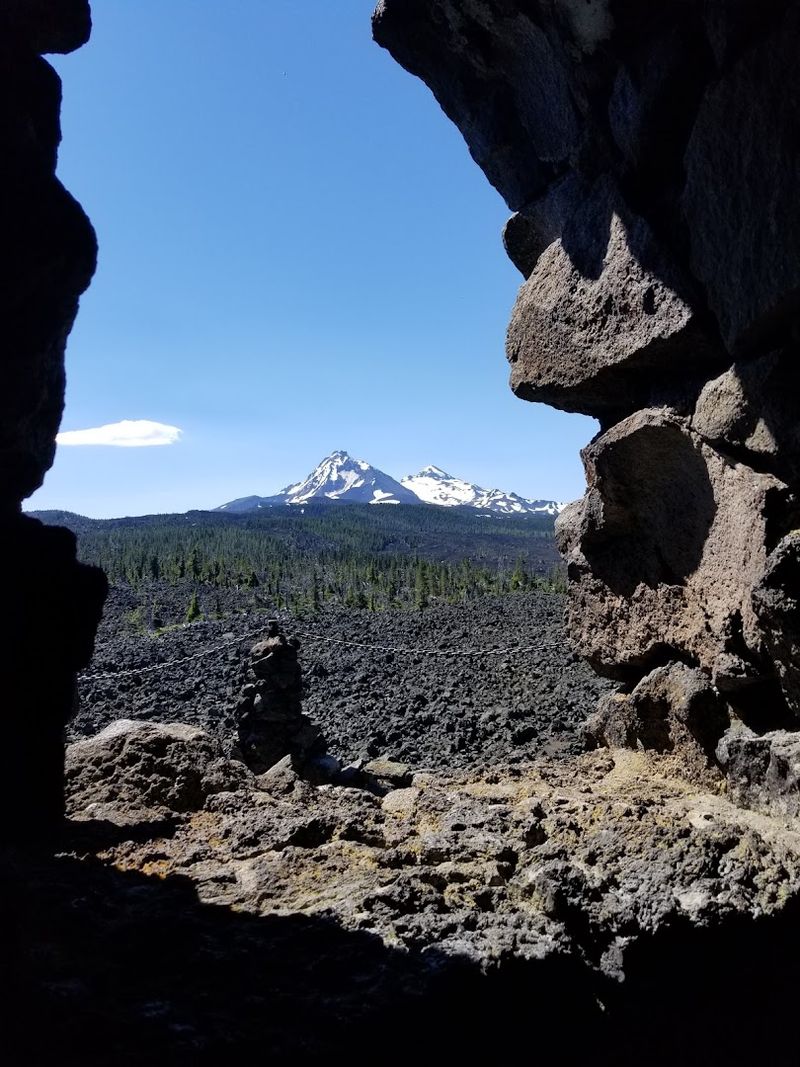
Here is where the building gets genuinely clever. The thick stone walls of the observatory are not solid.
Narrow rectangular openings, almost like rifle slots in a fortress wall, are cut at precise angles through the rock.
Each opening points directly at a specific mountain or volcanic peak in the surrounding Cascades. Look through one slot, and you see Mount Washington dead center.
Move to the next, and Mount Jefferson fills the frame perfectly. It is thoughtful design that still impresses nearly a century later.
I pressed my face close to one of the openings and felt the cold wind rushing through. The mountain beyond looked almost painted, sharp and still against a pale blue sky.
That framed view made the peak feel closer somehow, more real.
Labels identify each peak, though some have faded and could use refreshing. Still, the concept itself is brilliant.
The builders turned stone walls into a panoramic guide. No smartphone app needed.
Just rock, sky, and a perfectly aimed hole in the wall.
The Brass Compass Rose on Top of It All
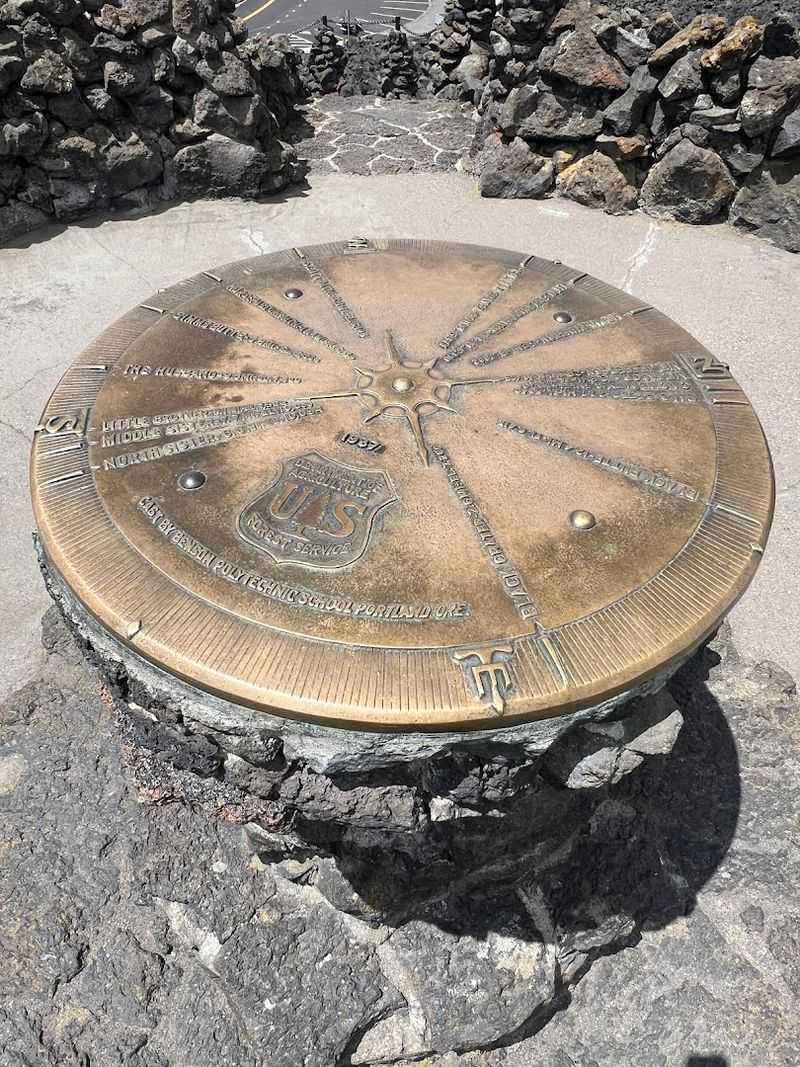
Climbing to the top of the observatory rewards you with something genuinely special. A brass compass rose is mounted flat on the upper platform, etched with the names and directions of every major peak visible from that spot.
Mount Hood, Mount Jefferson, Three-Fingered Jack, Mount Washington, the Three Sisters, Broken Top, and Mount Bachelor all appear on the compass. On a clear day, you can look up from the brass plate and find each summit exactly where the compass says it should be.
It is almost magical when it works out perfectly.
The brass has aged beautifully. It carries the texture of decades of wind and weather.
Running your fingers across the engraved names feels like reading a map carved in history.
Visitors gather up there quietly, rotating slowly, matching peaks to labels. Nobody is loud.
The wind does most of the talking. That rooftop moment, brass underfoot and volcanoes all around, is the kind of thing you replay in your memory for years after the trip ends.
A Lava Field That Stretches for Miles in Every Direction
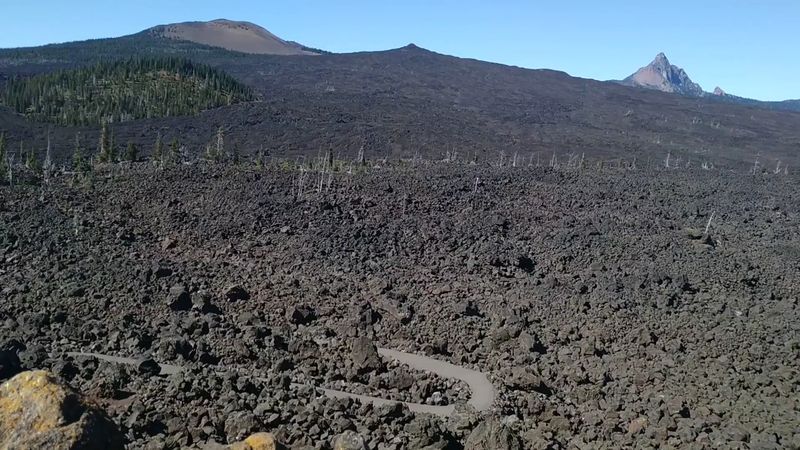
The lava does not ease you in gently. It hits you all at once.
Stepping out of the car, the landscape shifts from forest to something that looks almost extraterrestrial. Black rock covers everything, rolling and jagged, stretching toward the horizon in every direction.
This flow originated from Belknap Crater thousands of years ago. The lava moved slowly, burying forests and reshaping the land completely.
You can still see small islands of trees and shrubs, patches that the lava somehow missed on its way down the slope.
Walking through it, you realize how slowly nature reclaims volcanic rock in this dry, high-elevation climate. Sparse plants cling to cracks in the basalt, but most of the surface remains bare and raw.
It feels like standing on a frozen ocean made of stone.
The road cuts right through the middle of all of it, which makes the drive alone worth the trip. Pulling over and just staring at the lava field for a few minutes costs nothing and delivers something you genuinely cannot unsee.
The Paved Interpretive Trail Through the Lava
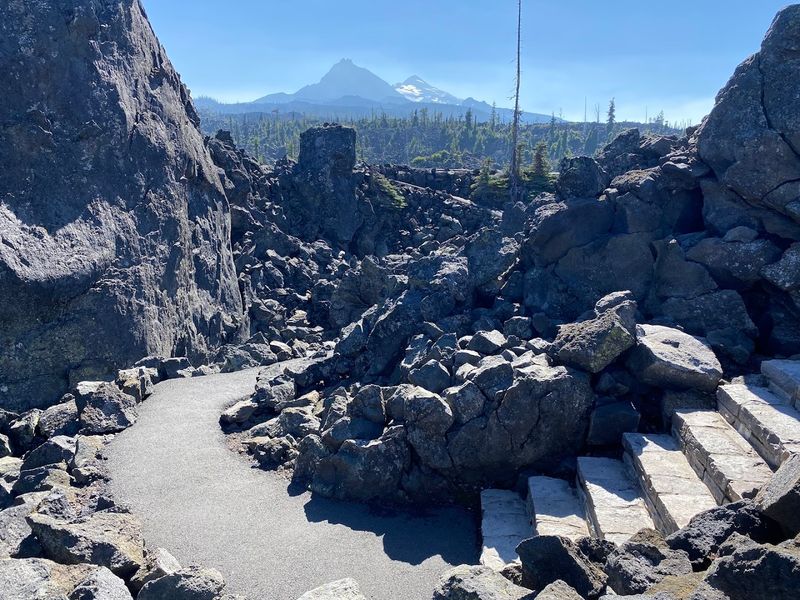
Not everyone wants to scramble over loose volcanic rock. The paved interpretive trail at Dee Wright Observatory makes the lava field accessible to most visitors, looping through the landscape with informative signs posted along the route.
The trail is under two miles total. It moves through the lava at a comfortable pace, and the signs explain the geology, the eruption history, and the slow process of ecological recovery happening all around you.
It turns a walk into a genuinely educational experience without feeling like a classroom.
I found myself stopping at almost every sign. Some facts surprised me.
The lava flow is much younger than it looks. The scale of the eruption that created it was staggering.
The signs translate complex geology into plain, interesting language.
The paved surface means you do not need hiking boots. Comfortable sneakers work fine.
The trail loops back to the parking area, so there is no backtracking. Pack a light snack and some water.
Panoramic Cascade Views That Actually Deliver
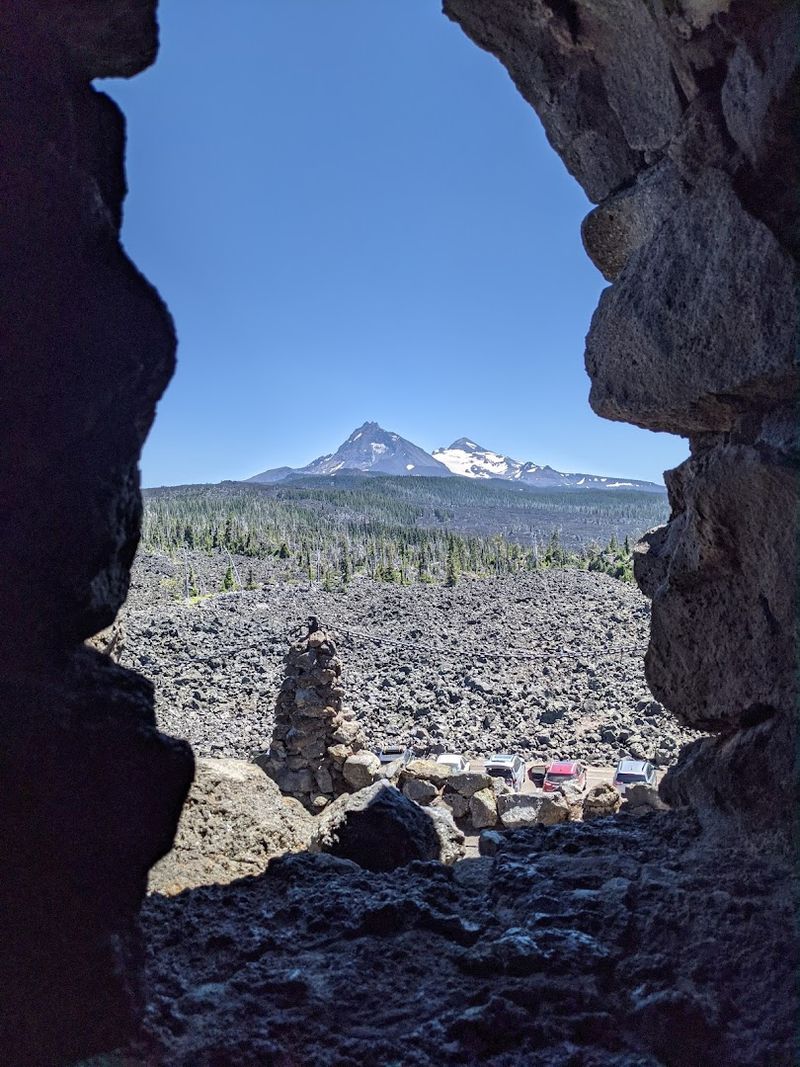
The Cascades do not disappoint on a clear day. Standing on the observatory roof or even just in the parking area, you can count multiple volcanic peaks without moving your feet.
That kind of unobstructed mountain panorama is rare, even in Oregon.
Mount Washington stands closest and sharpest. The Three Sisters loom large to the south.
Mount Jefferson appears to the north, snowcapped and commanding. Broken Top and Mount Bachelor fill out the southern horizon.
It is a genuinely breathtaking lineup.
Wind is almost always present up here. Bring a warm layer, even in summer.
The elevation and exposed position mean temperatures drop fast. Several visitors have noted that even warm days feel cool and breezy once you reach the summit of the observatory.
Photography is outstanding here. The combination of black lava foreground, green forest patches, and snow-dusted peaks creates dramatic contrast in almost any lighting.
Sunrise and sunset visits produce especially striking images.
Stargazing and Astrophotography After Dark
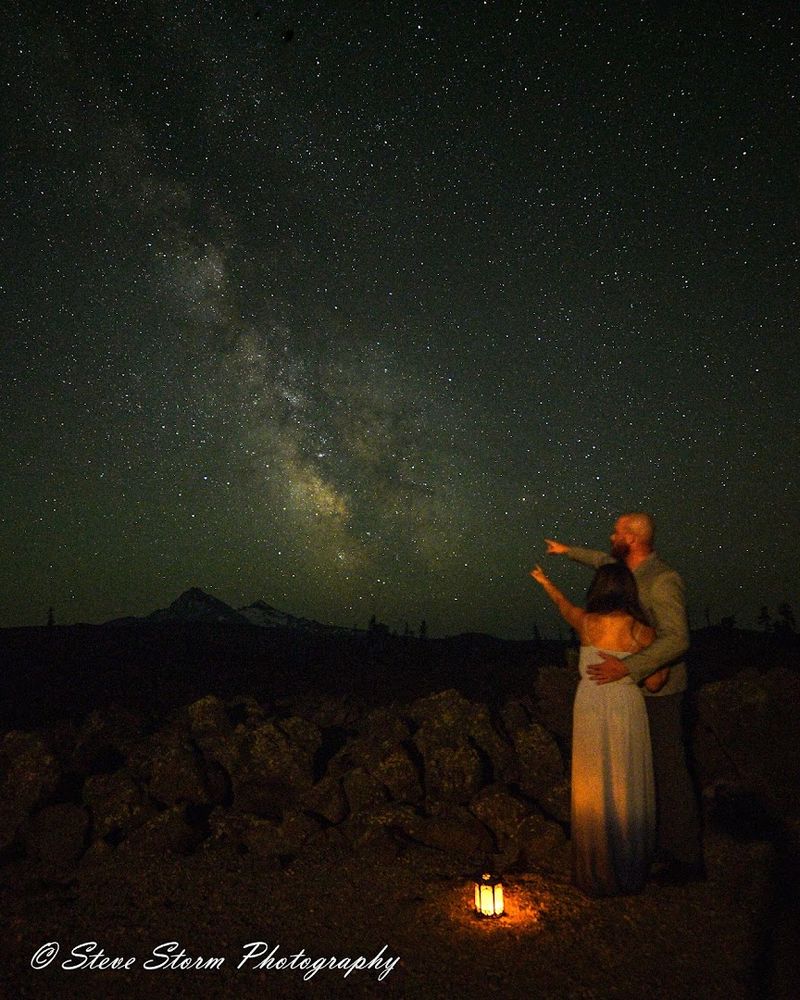
After the day visitors head home, the observatory transforms into something else entirely. The lack of light pollution at this elevation and remote location makes the night sky extraordinary.
Stars appear in numbers that feel almost unreal if you grew up near a city.
Some visitors bring telescopes and camera gear specifically for astrophotography sessions at the site. The open, flat lava field provides an unobstructed horizon in nearly every direction.
That 360-degree dark sky access is genuinely rare and valuable for serious stargazers.
The observatory is open 24 hours, which makes overnight visits possible. Car camping in the area has attracted visitors who want to spend full nights watching the sky.
The stone structure itself makes for a dramatic foreground in long-exposure shots.
One visitor specifically mentioned photographing a hunter’s moon from this spot and calling it awesome. On clear nights, every constellation and planet shows up crisply.
The silence adds to the experience.
The History of Dee Wright Himself
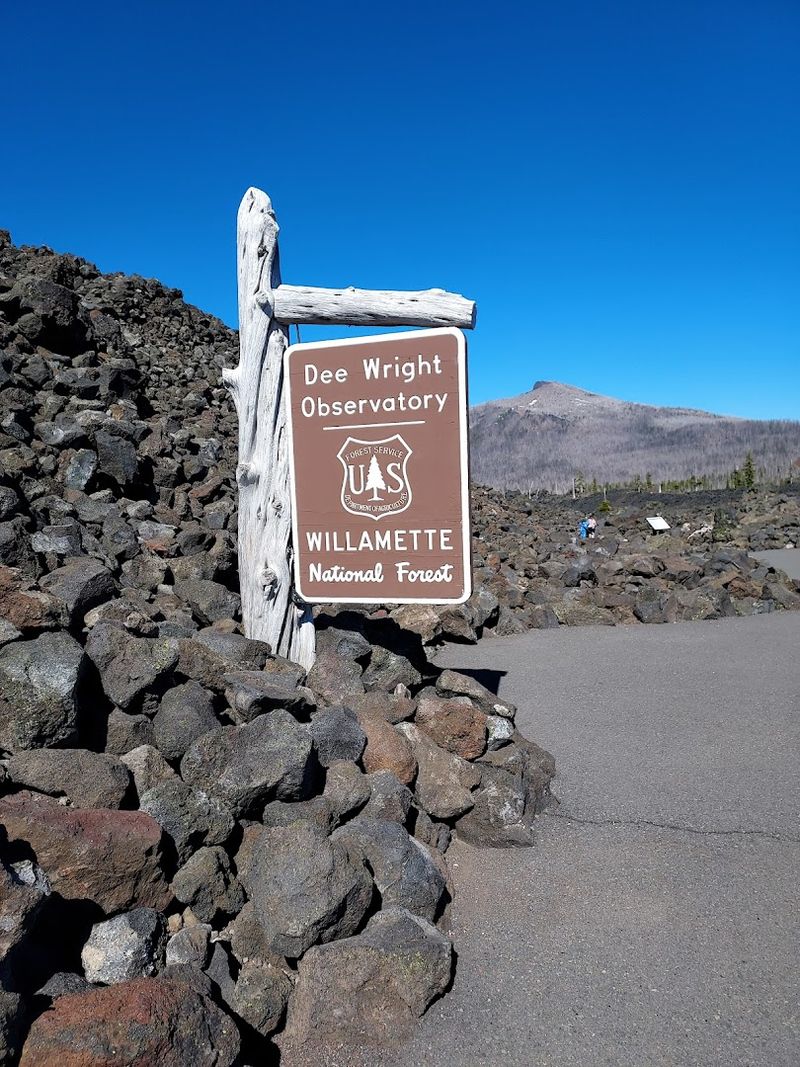
The observatory carries a name, and that name belongs to a real person. Dee Wright was a packer and guide who worked for the U.S.
Forest Service in central Oregon during the early twentieth century. He spent much of his life in these mountains, knowing the terrain better than almost anyone.
When the Civilian Conservation Corps built the observatory in 1935, it was dedicated in his memory. Wright had died the previous year, and the structure stands as a tribute to his decades of service in the Oregon backcountry.
That human connection gives the building a layer of meaning beyond its impressive architecture.
Informative signs posted near the site share his story in accessible language. Reading them adds real emotional weight to the visit.
You realize the building is not just a geological curiosity. It is a memorial built by hand from the very rock that defines the landscape he loved.
Knowing the backstory changes how you look at the structure. Each stone feels intentional.
Driving McKenzie Highway to Get There
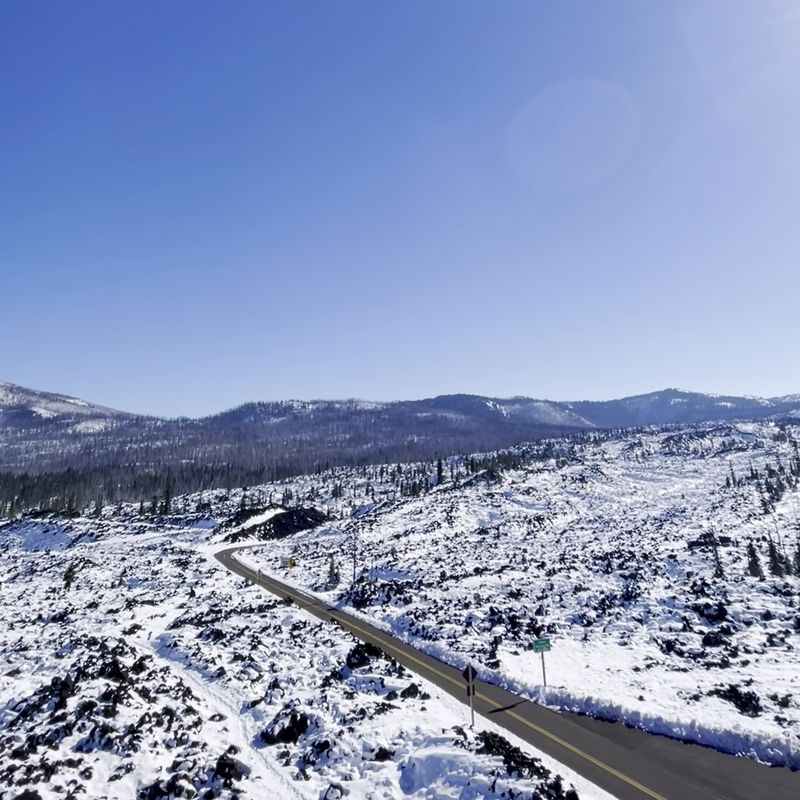
The drive to the observatory is part of the experience, not just a means of getting there. McKenzie Highway, specifically the old Highway 242 section, winds through forest and then suddenly opens onto miles of exposed lava rock.
The transition is startling and beautiful.
The road is narrow and curvy in sections. Confident, careful driving is needed, especially coming from the Sisters side.
The road closes seasonally in winter, so checking conditions before visiting is smart. Fresh paving on parts of the route has improved the approach considerably.
Cell service disappears well before you reach the observatory. That disconnection feels intentional somehow.
The drive demands your full attention, and the landscape rewards it generously at every turn.
Passing through the Deschutes National Forest before reaching the lava field gives the drive a story arc. You move from dense trees to open sky to black rock, each section feeling like a new chapter.
No music needed. The views through the windshield are entertainment enough.
Tips for Visiting Dee Wright Observatory
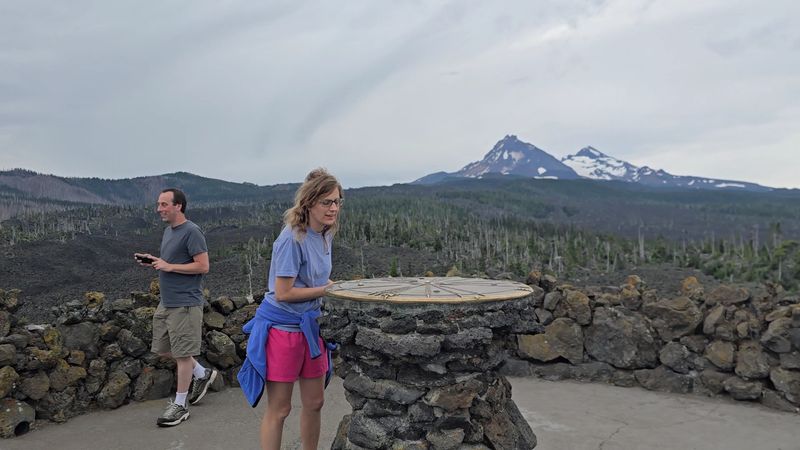
A few practical notes can make the difference between a great visit and a frustrating one. Dress in layers no matter the season.
The elevation and exposed position create wind and cold that surprise people who arrive in summer clothing. A warm jacket is not optional here.
Parking is straightforward and generally available without much competition. The site is open 24 hours, so timing is flexible.
Morning visits often bring the clearest mountain views before afternoon clouds build. Sunset timing also produces dramatic light across the lava field.
Bathroom facilities have been limited or under construction at various points, so using restroom facilities before leaving Sisters or Blue River is genuinely smart planning. Bringing water and snacks is always a good idea since there are no services on site.
Dogs are welcome, which makes this a great stop for travelers with pets. The paved trail is manageable for most fitness levels.
Sturdy footwear is recommended if you plan to explore beyond the paved path.
Address: Dee Wright Observatory, McKenzie Hwy, Blue River, OR 97413
