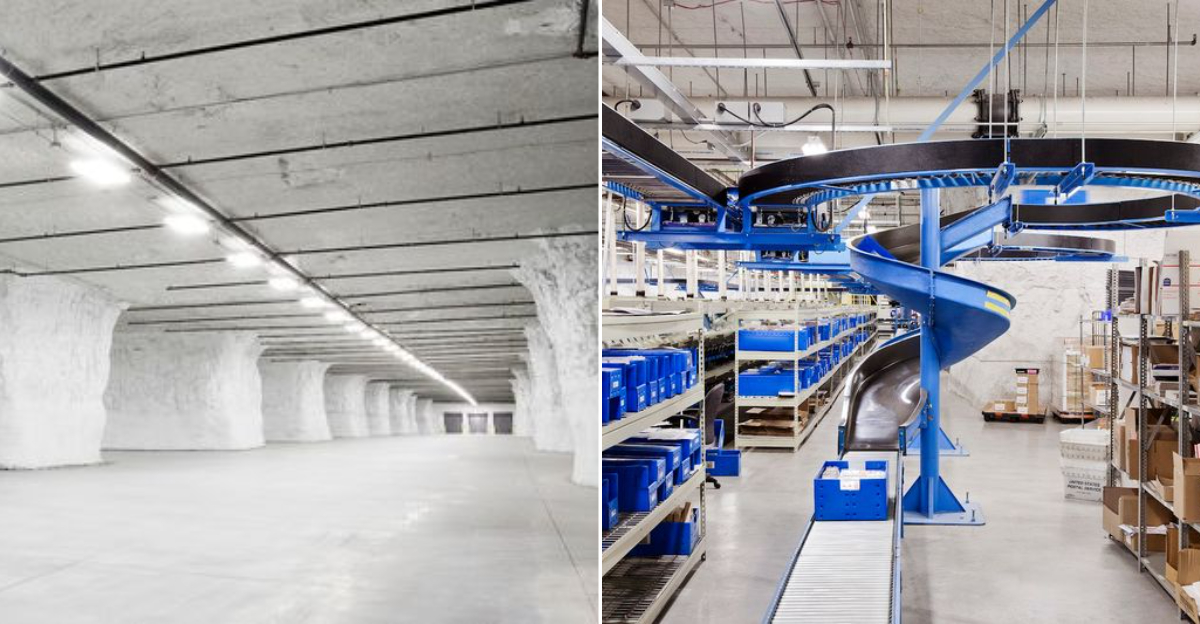
More than ten miles of roads hum beneath your feet while a city of warehouses hums in the dark. That is the surreal reality of SubTropolis, an underground mega-city carved from a limestone cave deep beneath Missouri.
You could stand in a man-made cavern so vast that it holds a grid of paved tunnels, its own railroad tracks, and a working business world that never sees sunlight. The temperature holds steady all year, a constant, cool sixty eight degrees, while trucks ferry goods between massive pillars of stone.
The maze of passages stretches for miles, illuminated by artificial light that creates an otherworldly glow. Developed from old mines, this sprawling complex has become a secret hub for commerce and industry.
Despite its immense scale, most people have no idea it lies hidden just a few feet below the surface. It is a parallel universe of productivity, humming away silently beneath the ordinary landscape, a Missouri marvel that feels like a secret worth discovering.
The First Time The Cave Starts Feeling Real
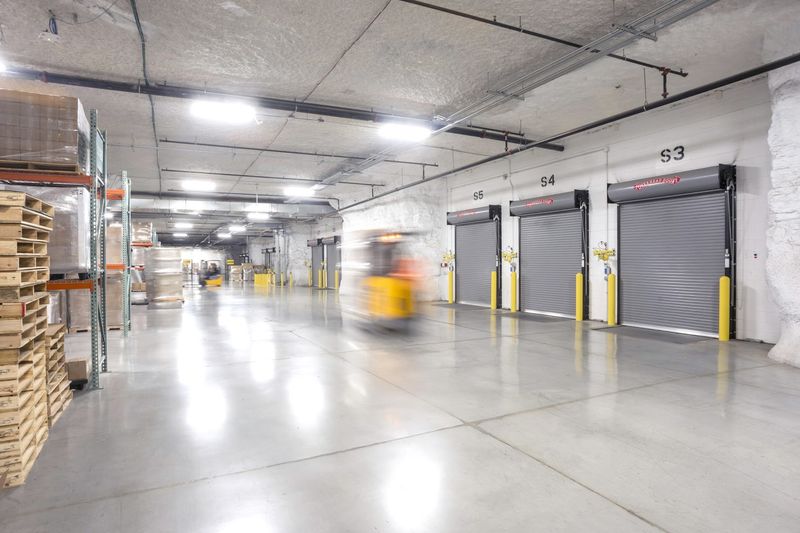
The first thing that gets you is how quickly the idea stops feeling like a gimmick and starts feeling completely real. You are not peeking into some tiny cavern with a few props scattered around, because this place opens up into broad passageways, working corridors, and a whole underground rhythm that feels strangely calm.
Down here, the limestone walls do not feel theatrical at all, and that makes the whole experience even wilder.
What stayed with me most was the scale, because your eyes keep adjusting and the tunnels just keep going. There are paved roads, huge pillars left from the mining method, and enough activity around you that it clicks pretty fast that SubTropolis is not pretending to be a city beneath Kansas City, Missouri.
It really works like one, even if most people above ground barely think about it.
I think that is why it grabs people so hard, because it messes with your sense of where normal life is supposed to happen. Warehouses, shipping, storage, and offices are carrying on beneath your feet, and somehow the quiet, cool air makes it all feel even more surreal.
You walk in expecting novelty, and instead you find a place with its own logic.
Where It Actually Is And Why That Matters
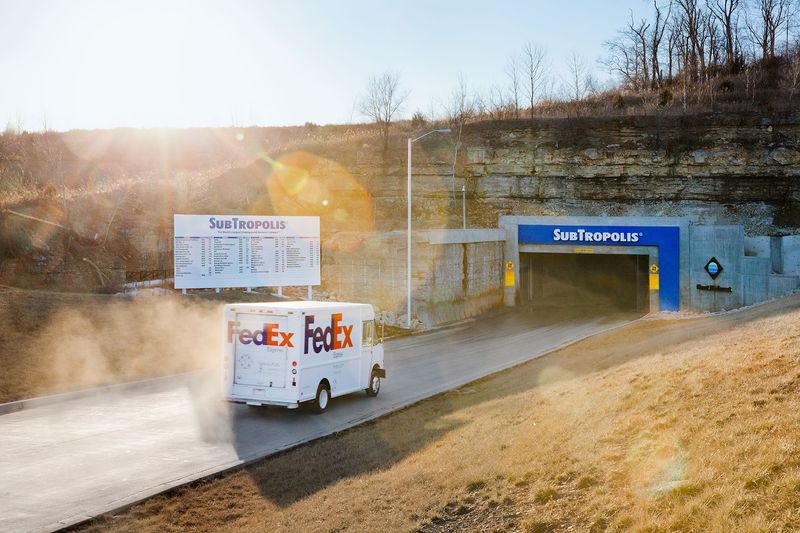
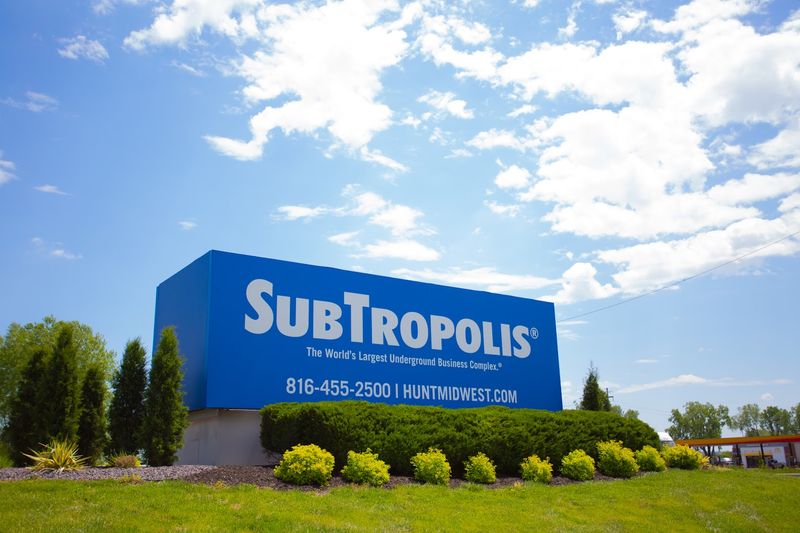
Here is the part that makes the whole thing even more fun to talk about later, because it is sitting in plain reach of the city. The full address is 8300 Northeast Underground Drive, Kansas City, MO, and saying it out loud still does not prepare you for the fact that the road leads into a vast business complex inside limestone.
That contrast between ordinary directions and extraordinary reality is half the magic.
It sits in the northeast part of Kansas City, Missouri, close enough to major transportation routes that the location makes practical sense, not just dramatic sense. Once you know that, the story shifts from weird travel curiosity to smart industrial planning, because moving goods in and out from here is part of what keeps the place useful.
The underground setting is remarkable, but the placement above ground is just as intentional.
I always like when a place has that double identity, where it sounds unusual but functions with total confidence. SubTropolis is exactly that, because the cave setting feels almost science fiction at first, while the surrounding logistics are grounded in everyday business reality.
You are not chasing a legend here, you are standing at the edge of something very real.
How A Limestone Mine Became A Working City
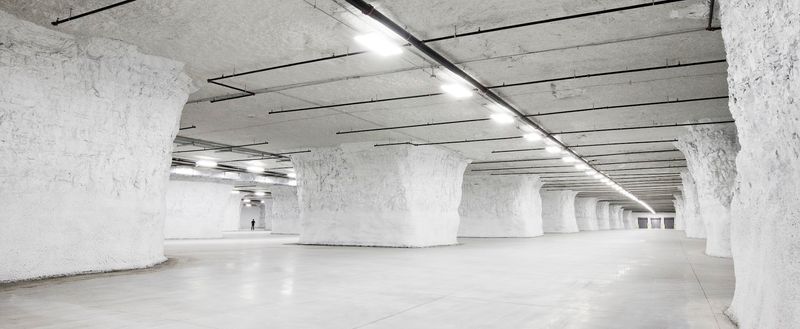
What makes SubTropolis more than a strange stop on a Missouri itinerary is the fact that it grew out of an actual limestone mine. The space was created through room and pillar mining, which left behind massive limestone supports and broad chambers that could later be adapted for something completely different.
So the bones of the place were industrial long before the business park came along.
That origin story matters, because it explains why the underground world feels so sturdy and organized instead of chaotic or improvised. You can see the logic of the mine in the repeating pillars and long routes, and then you notice how naturally warehouses and workspaces fit into that framework.
It is one of those places where geology and business ended up having an unexpectedly useful conversation.
I like that the place never hides what it used to be, because the limestone itself is part of the experience. You are moving through a former extraction site that now supports storage, shipping, records, and all kinds of daily operations beneath Kansas City, Missouri.
A lot of redeveloped places try hard to smooth over their past, but this one feels more interesting because the past is still visible everywhere.
Why The Temperature Changes Everything
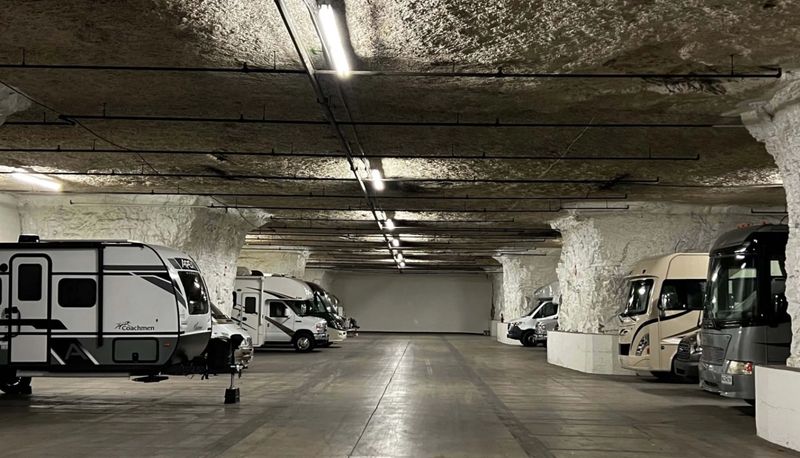
One of the smartest things about SubTropolis is not flashy at all, and honestly that is part of why it impressed me. The limestone environment stays naturally cool and steady through the year, which means businesses can rely on conditions that are much easier to manage than the weather swings happening above ground.
In practical terms, that makes the underground setting a serious advantage.
You feel that difference right away, because the air has this stable, settled quality that makes the place seem calm even when work is moving around you. For companies handling storage, distribution, records, or products that do better away from heat spikes, that consistency is a huge reason the complex works so well.
The cave is dramatic to look at, sure, but the temperature is part of the real story.
I think travelers sometimes forget that unusual places are often built on boring sounding decisions that turn out to be brilliant. Here, the cool limestone backdrop is not just aesthetically memorable, it supports efficiency in a way businesses can actually use every day.
That is why SubTropolis feels less like a novelty in Missouri and more like a place where geology quietly solved problems before anyone even finished asking them.
The Companies You Would Never Expect Down There
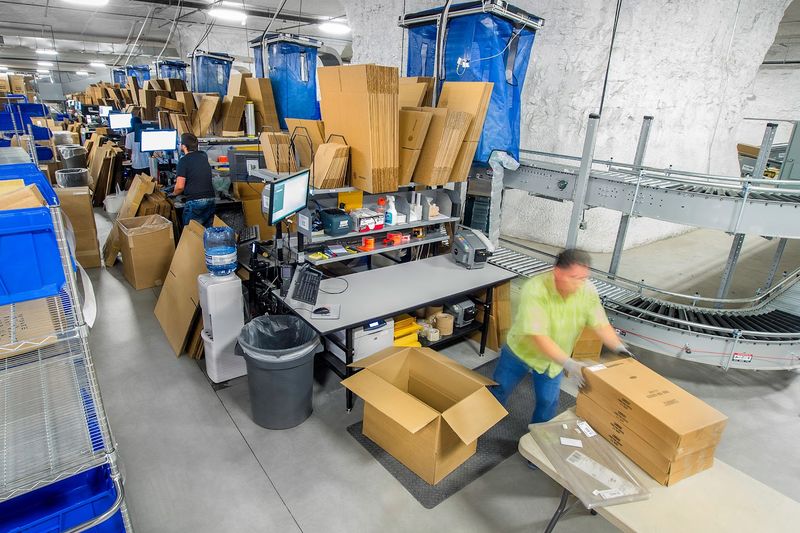
Maybe the most entertaining part of this whole place is realizing how many different kinds of work can happen underground without any drama. You hear about storage first, which makes sense, and then the tenant mix starts widening in your mind until you understand this is not one niche operation hiding in a cave.
It is a whole ecosystem of business using the same underground logic in different ways.
SubTropolis has been associated with distribution, vehicle related operations, food companies, archives, data focused uses, and postal activity, which is such a wild sentence to say casually. The point is not just that famous names have been linked to the complex, but that the setting is flexible enough for very different needs.
That variety makes the place feel less like an oddity and more like a functioning underground neighborhood with a workday pulse.
I love that detail because it keeps the story from becoming one note. If this were only about giant empty chambers, it would still be interesting, but the human activity gives the limestone a second life.
Beneath Kansas City, Missouri, you have this quiet, cool world where practical decisions are being made all day, and that everyday usefulness is exactly what makes it feel extraordinary.
The Archives Angle Is Genuinely Wild
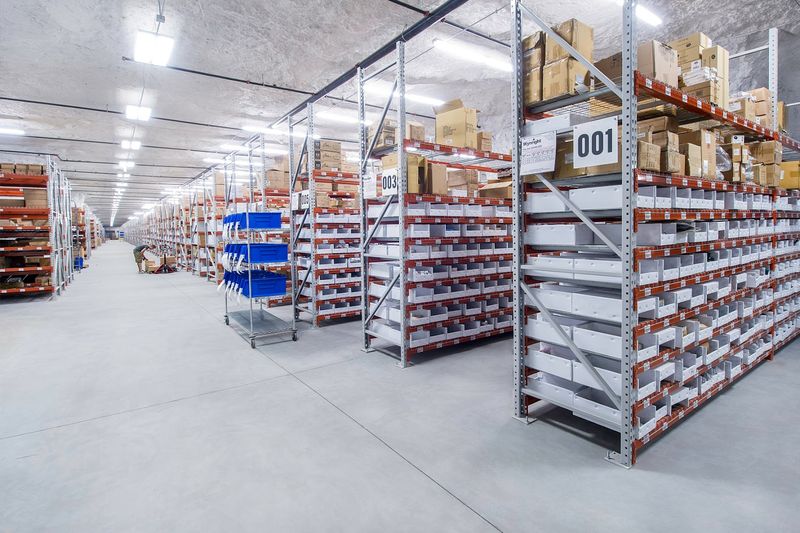
If you want the detail that makes people stop mid conversation, it is the fact that important records and archival materials have been stored in environments like this. Suddenly the cave is not only about trucks and warehouses anymore, because it becomes a place where preservation matters just as much as movement.
That shift gives SubTropolis a different kind of gravity.
The underground conditions are part of why archival uses make sense here, since steadier temperatures and protected space can support long term storage needs. When you think about documents, film, and records being kept in a limestone complex beneath Missouri, it sounds like the setup for a movie, but it is rooted in practical reasoning.
The cave is useful because it is stable, secure, and surprisingly adaptable.
I found that side of the story especially memorable because it adds a layer of cultural texture to the industrial narrative. A place that once yielded stone now helps shelter material people do not want exposed to careless swings in the environment, and that is such a satisfying transformation.
It reminds you that SubTropolis is not just large for the sake of being large, because the space serves careful, specific purposes people actually depend on.
The Scale Is Hard To Hold In Your Head
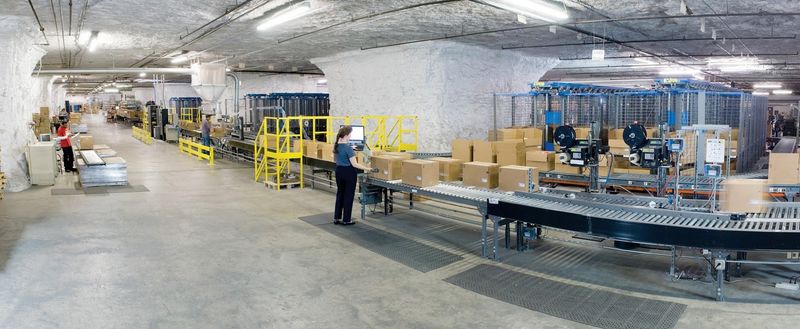
At some point you stop trying to visualize the full size of SubTropolis, because your brain starts losing the argument. Everything about it suggests extension, continuation, and more space around the next bend, which is probably why people lean on comparisons when they talk about the complex.
Standing there, though, it feels less like a statistic and more like a physical challenge to your imagination.
The broad corridors, repeating pillars, and long internal routes create this feeling that the underground world has its own horizon line. Even when you know you are inside a former limestone mine in Missouri, the sense of enclosure does not hit the way you might expect.
Instead, you notice openness, utility, and an almost uncanny normality, as if the cave quietly decided it could become a district and then just kept going.
I think that is why the place lingers in your mind after you leave, because it never quite resolves into a simple picture. It is industrial, geological, practical, and surreal all at once, and the scale ties all of those qualities together.
You are left with this odd feeling that there is an entire second layer of Kansas City, Missouri, carrying on below the familiar one everyone sees every day.
What Makes It So Different From A Normal Visit
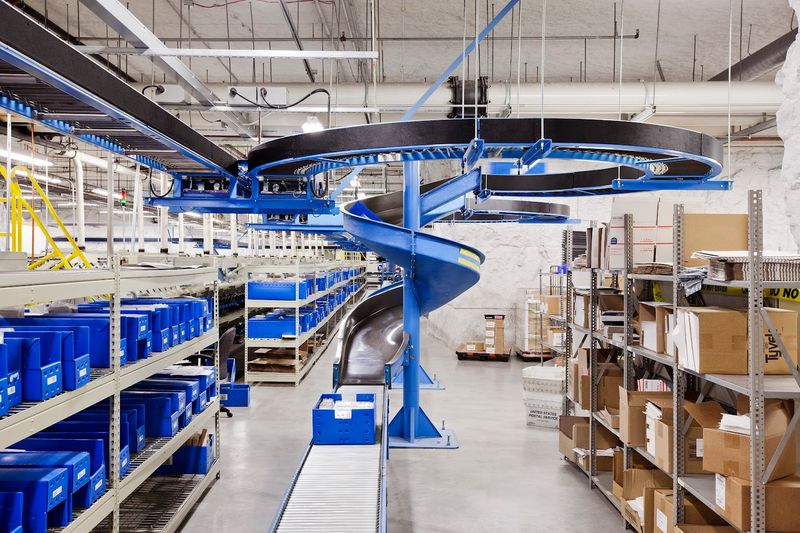
What makes this place land so differently from a standard attraction is that it never asks to be admired in the usual way. It is not dressed up to entertain you, and that actually makes it more compelling, because you are seeing a living infrastructure rather than a polished performance.
The fascination comes from witnessing something useful that also happens to be deeply strange.
I kept thinking about how rare it is to encounter a place where the atmosphere feels cinematic but the purpose stays completely practical. There is no need to invent drama when the roads, storage spaces, and limestone chambers already create their own tension between everyday work and improbable setting.
That balance gives SubTropolis a personality you do not easily find elsewhere in Missouri.
If you are the kind of traveler who likes places with a strong sense of reality, this one really gets under your skin in the best way. You leave not because the story ends neatly, but because you have finally accepted that ordinary business can happen in extraordinary spaces without losing its ordinary character.
Honestly, that might be the most memorable thing about the whole underground world beneath Kansas City.
The Part You Keep Talking About Later
Long after you leave, the part that stays with you is not one single fact, but the way the whole place rearranges your sense of what a city can hide. You go in expecting a curiosity, and you come out thinking about geology, logistics, architecture, and human adaptability in the same breath.
That is a lot for one place to pull off without showing off.
I think that is why SubTropolis keeps earning its reputation, because it is both bizarre and sensible at the exact same time. Beneath Kansas City, Missouri, there is a limestone world where roads, storage, archives, and daily work all coexist with very little fuss, and somehow that understatement makes it more remarkable.
The cave does not need to exaggerate itself, because the reality already sounds made up.
So if you ever find yourself craving a place that feels grounded and surreal in equal measure, this is the story I would bring up first. Missouri has plenty of spots people talk about for obvious reasons, but this one sticks because it changes how you picture the ground beneath your own feet.
Once you know it is there, ordinary pavement starts feeling a lot more mysterious.
