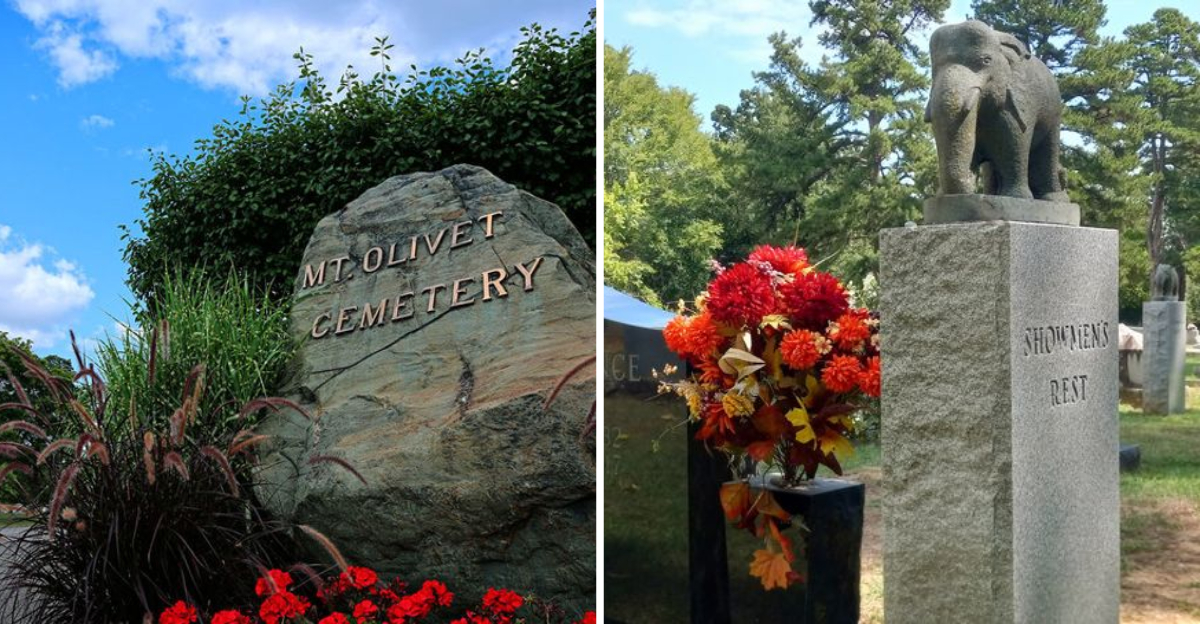
A cemetery in Oklahoma that feels alive with history, personality, and genuine human spirit. This town earned the nickname Circus City for good reason, and this cemetery tells that colorful story better than any museum ever could. Granite elephant statues stand guard over the graves of acrobats, ringmasters, and bareback riders, while nearby, rodeo legends rest beneath headstones etched with bulls and broncos.
It is the kind of place where every marker has a story worth reading, and you find yourself lingering far longer than planned. If you are a history lover, a road tripper, or just someone who appreciates the extraordinary, this is a destination unlike anything else in Oklahoma.
Hugo’s Identity as Circus City, USA
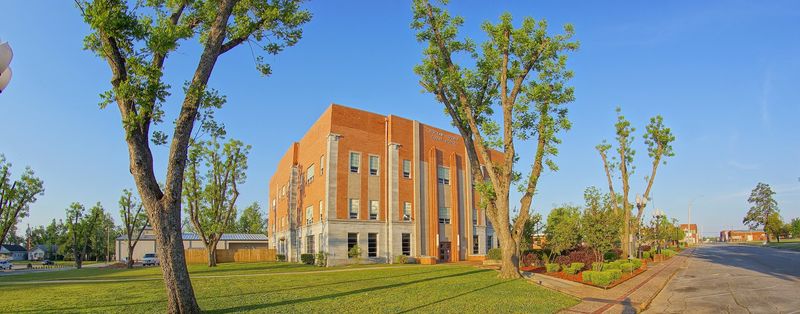
Hugo, Oklahoma does not look like a circus town at first glance. It is a quiet, small city tucked into the Choctaw County countryside, with tree-lined streets and an unhurried pace that feels distinctly Southern.
But look a little closer, and the circus heritage is everywhere.
Since 1937, when the Al G. Kelly Miller Brothers Circus first chose Hugo as its winter home, the town has been deeply tied to the traveling circus world.
Over 22 different circuses have wintered here across the decades, making Hugo a genuine hub for performers, animal trainers, and showmen from around the country. Carson and Barnes, Kelly Miller, and Culpepper and Merriweather circuses still call Hugo home during the off-season.
That long relationship between the town and the circus world shaped everything, including how the community chose to honor its most colorful residents after death. The nickname “Circus City, USA” is not just a tourism tagline.
It reflects a real cultural identity that Hugo has carried proudly for nearly a century, and Mt Olivet Cemetery is the most tangible expression of that identity you will find anywhere in the state.
Showmen’s Rest: Where the Big Top Lives On
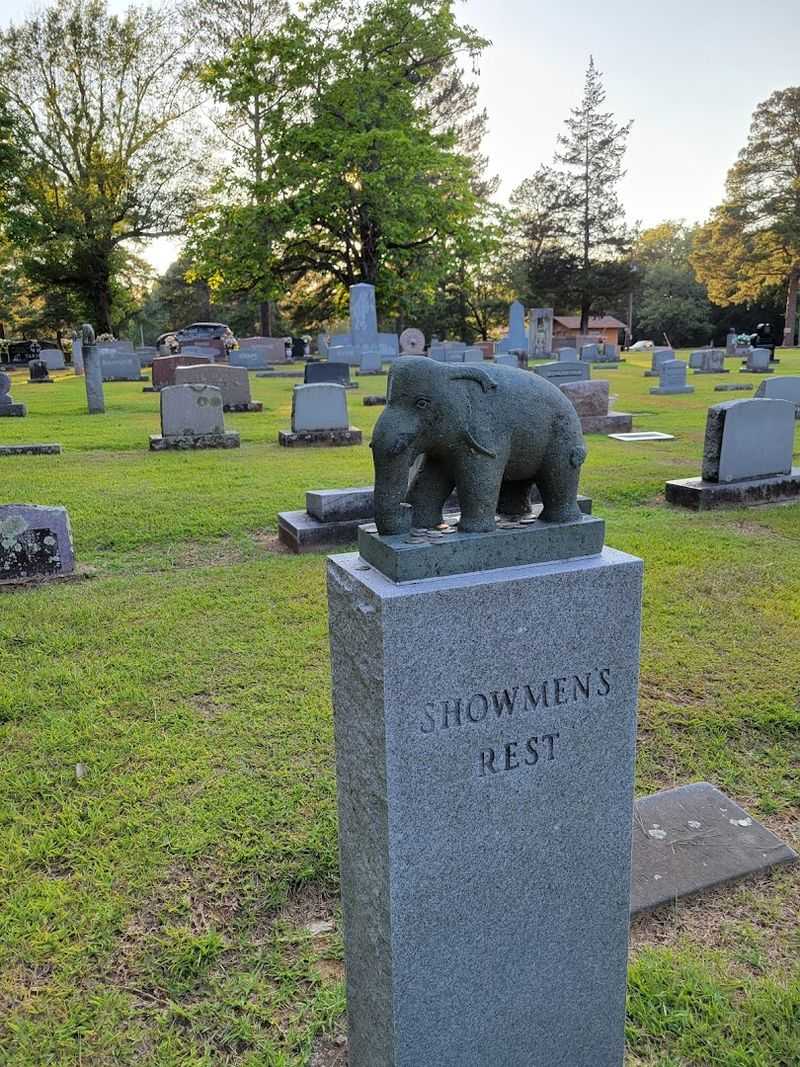
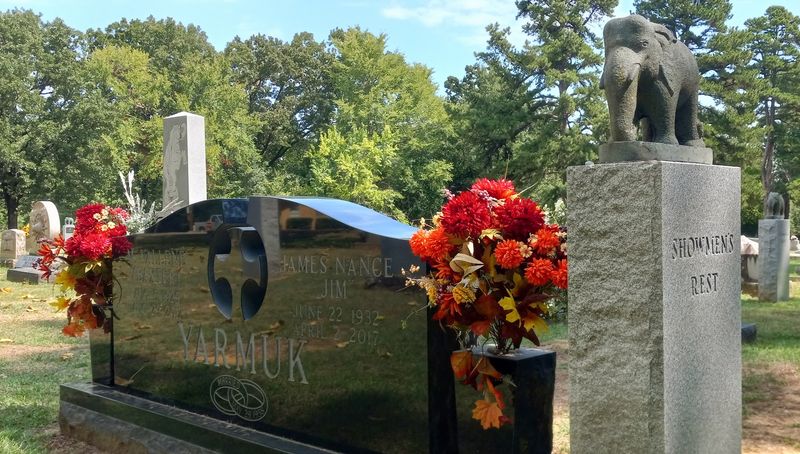
The first time you spot the elephant-topped granite posts marking the entrance to Showmen’s Rest, something shifts in the air. This section of Mt Olivet Cemetery was established around 1960 by D.R.
Miller, a central figure in the circus community, specifically to give circus professionals a meaningful final resting place.
A central monument featuring a performing elephant bears the inscription “A Tribute to All Showmen Under God’s Big Top,” which might be the most perfectly chosen epitaph for any group of people ever assembled in one place. The headstones here are unlike anything you will see in a typical cemetery.
They are large, ornate, and deeply personal, featuring etched portraits, carved images of performers in action, and tributes that capture entire lifetimes of adventure.
One of the most touching details about Showmen’s Rest is its open-door policy. Any circus performer, regardless of where they were born or which show they worked for, is welcome to be buried here.
That sense of community, that idea that the circus family sticks together even in death, gives this section a warmth that genuinely catches you off guard. It feels less like a graveyard and more like a reunion.
Notable Circus Figures Buried at Mt Olivet
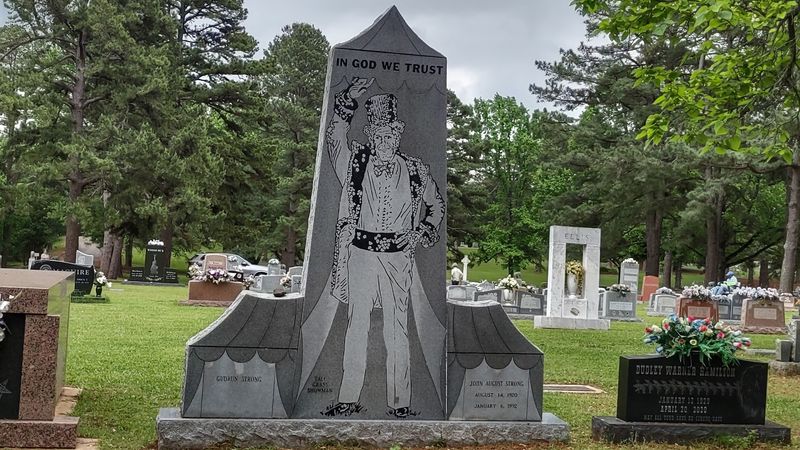
Reading through the names in Showmen’s Rest feels like flipping through the pages of a lost encyclopedia of American circus history. Each stone introduces you to someone whose life was built on spectacle, skill, and showmanship.
Ringmaster John Strong rests here, remembered on his marker as “The man with more friends than Santa Claus,” which tells you everything about the kind of personality he must have carried into every performance. Zefta Loyal, celebrated as the “Queen of Bareback Riders,” has a presence here too, her stone a tribute to a discipline that demanded extraordinary balance and nerve.
Elephant trainers Ted Svertesky and John Carroll are buried nearby, as is Obert Miller, the founder of the Kelly-Miller Circus, one of the most recognized names in American traveling circus history.
What makes these graves so compelling is how specific and personal each tribute feels. These are not generic markers.
They are celebrations of real careers, real talents, and real lives spent doing something most people only ever watched from a bleacher seat. Spending time reading each stone is genuinely one of the most engaging history lessons you can have in Oklahoma, and it costs nothing but a little time and curiosity.
Bull Rider’s Reprieve: Honoring Rodeo Greatness
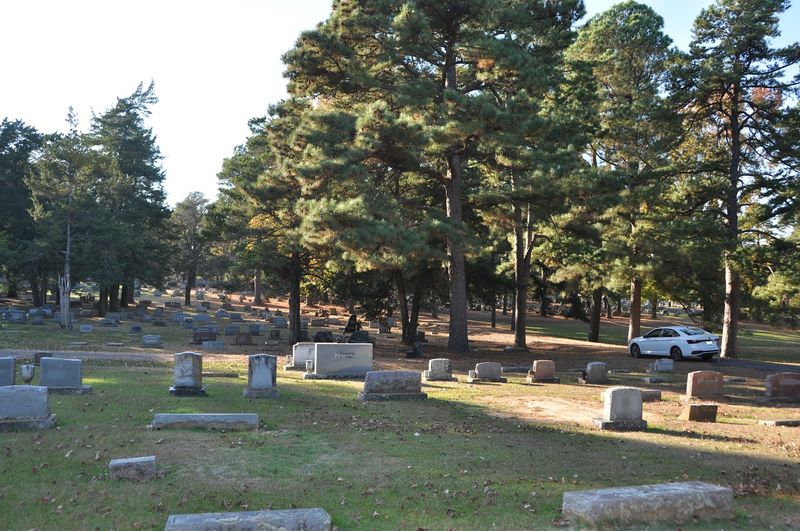
Right alongside the circus legends, Mt Olivet Cemetery holds another extraordinary section dedicated to a completely different breed of daredevil. Bull Rider’s Reprieve honors the men who made their names in the dirt and dust of the rodeo arena, putting their bodies on the line every single time they nodded their heads and the gate swung open.
The section carries a different energy than Showmen’s Rest. Where the circus graves feel theatrical and colorful, Bull Rider’s Reprieve has a rawer, more rugged quality that matches the sport it honors.
The headstones here speak to lives lived with intensity and courage, and many of them are visited regularly by fans who still feel a deep connection to these athletes.
Rodeo culture runs deep in Oklahoma, and having a dedicated section for its heroes within a cemetery that already honors circus performers creates something genuinely rare. This is a place where two distinct but equally bold American traditions share the same sacred ground.
You do not have to be a rodeo fan to feel the weight of what this section represents. The sheer commitment these men showed to their craft, knowing the very real physical risks involved, is humbling no matter your background.
Lane Frost and Freckles Brown: Two Legends Side by Side
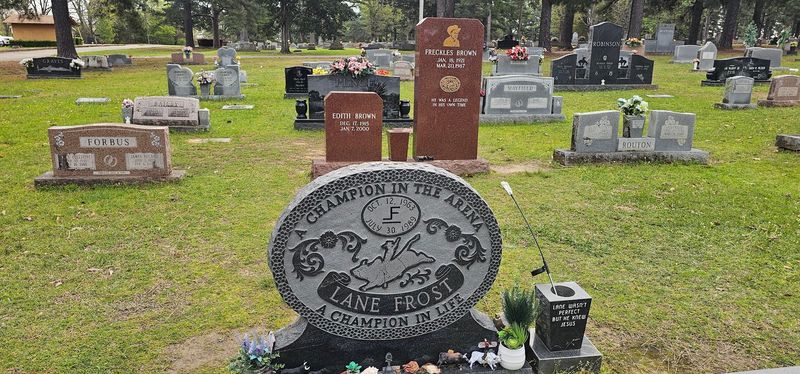
If there are two names that draw people to Mt Olivet Cemetery from across the country, they are Lane Frost and Freckles Brown. Their graves sit side by side in Bull Rider’s Reprieve, and that proximity is not accidental.
It reflects a bond that went beyond the rodeo arena.
Freckles Brown became a legend in 1967 when he successfully rode the notoriously unrideable bull Tornado, a feat that cemented his place in rodeo history. Lane Frost looked up to Brown as a hero throughout his career, and when Frost became the 1987 World Champion Bull Rider, the connection between the two men was well known among rodeo fans.
Frost died tragically at just 25 years old after being gored by a bull at Cheyenne Frontier Days, and his dying wish was to be buried next to his hero.
That wish was honored. The story was later told in the 1994 film “8 Seconds,” which introduced a whole new generation to Frost’s life and legacy.
Visitors still leave tokens, flowers, and personal mementos at both graves, turning this quiet corner of southeastern Oklahoma into a living tribute. It is one of the most emotionally resonant spots in the entire state.
Other Remarkable Residents of Mt Olivet
Beyond the circus performers and rodeo stars, Mt Olivet Cemetery holds a surprisingly diverse collection of notable individuals whose stories add even more texture to this already fascinating place. William H.
Darrough, the founder of Hugo itself, is buried here, connecting the cemetery directly to the town’s origins.
Ed Ansley, who brought the beloved comic strip character Buster Brown to life as a real-world personifier, also rests at Mt Olivet. Max Bryan “Turk” Robinson, recognized as one of the first men to portray the iconic Marlboro Man, has a grave here too, adding a layer of American pop culture history to the mix.
These names may not draw tour buses the way Lane Frost does, but they reward curious visitors who take the time to explore beyond the well-marked sections.
The cemetery also includes sections dedicated to veterans, a Baby Land area, and a veterans’ memorial space, giving the grounds a depth and range that makes it meaningful to many different kinds of visitors. With over 7,000 recorded burials, according to Find A Grave, the sheer scope of Mt Olivet is impressive.
Every corner holds something worth pausing over, and the well-organized layout makes it easy to navigate without feeling lost.
Visiting Mt Olivet Cemetery: What to Expect
Arriving at Mt Olivet Cemetery for the first time, the thing that strikes you immediately is how beautiful and well-maintained the grounds are. Tall, majestic pine trees shade much of the property, and the gently sloping landscape gives the whole place a calm, almost park-like quality that makes extended visits genuinely pleasant.
The cemetery is open 24 hours a day, every day of the week, so there is real flexibility in when you choose to visit. Morning light filtering through those pine trees is especially lovely if you enjoy photography.
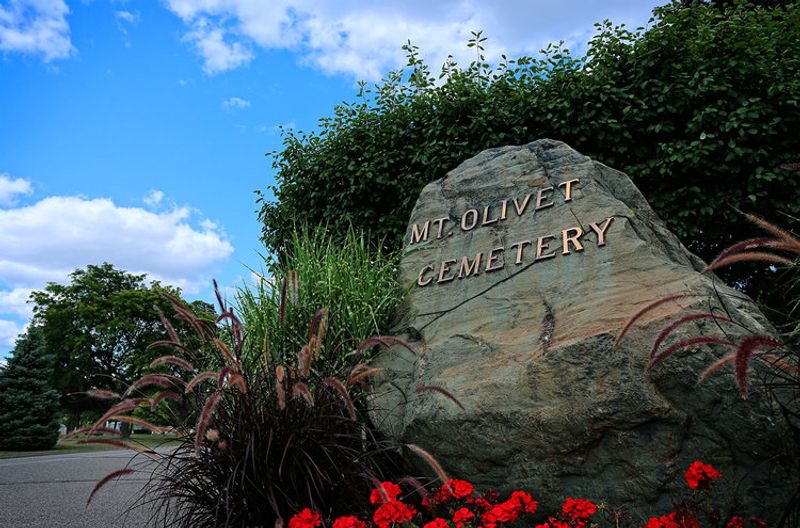
The main entrance sits on South 8th Street, and the grounds include clear signage that helps you find the key sections without much confusion. Tour buses have been known to stop here, which speaks to how seriously this place is taken as a travel destination.
The Endangered Ark Foundation, located near the cemetery, cares for one of the largest herds of Asian elephants in America, a fitting neighbor given Hugo’s circus heritage. Combining a cemetery visit with a stop at that facility gives you a fuller picture of what makes this corner of Oklahoma so uniquely compelling.
Bring water, wear comfortable shoes, and plan to spend at least an hour or two. You will not regret giving it that time.
Address: 1198 S 8th St, Hugo, OK 74743
