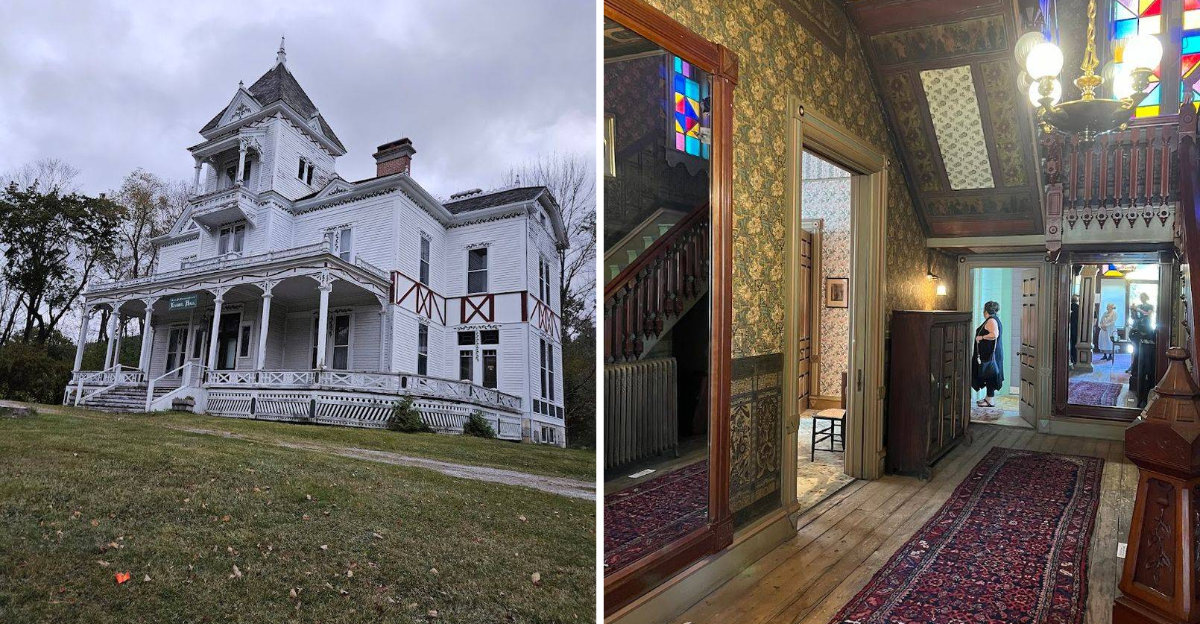
Some houses have history. This one in Vermont has a warning.
The story goes that a young boy, bored during a long visit, stuck his tongue out at a painting of a stern faced woman hanging in the parlor. Then he screamed.
The woman in the painting had stuck her tongue out right back at him. The boy ran from the room and refused to go near that part of the house ever again. Visitors since then have reported the painting following them with its eyes, a cold draft near the staircase, and the feeling of being watched from the second floor landing. The painting still hangs in the same spot today.
I stood in front of it for a long minute, waiting for something to happen. Nothing did.
But I did not turn my back on it either.
The Painting That Fought Back, The Legend That Named This Place
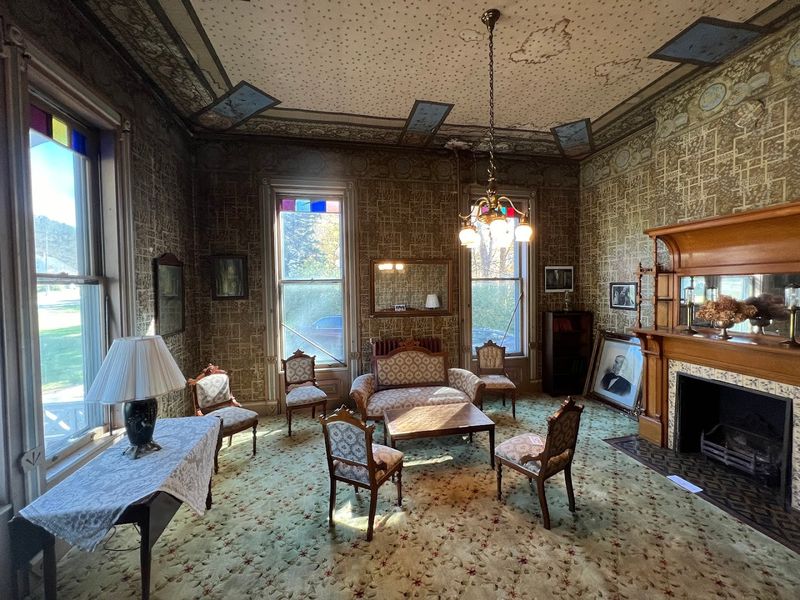
Some legends feel too strange to be true, and yet too specific to be invented. The story most people associate with Laurel Hall involves a child who, standing in one of the mansion’s rooms, stuck out her tongue at a painting on the wall.
Moments later, witnesses reported the painting came off the wall and struck her.
What makes this story genuinely unsettling is the detail that no children reportedly lived in the house at the time. So who was this child, and why was she there?
Those questions have never been answered cleanly.
The incident found its way into New England ghost story collections and has kept curious visitors coming back for decades. Whether you believe in paranormal activity or not, the specificity of the account is hard to brush off.
A child, a painting, multiple witnesses, and no clean explanation.
Laurel Hall earned its reputation not from vague rumors but from moments like this one, documented and retold across generations. The mansion does not need theatrical decoration to feel eerie.
Its own history does that work without any help.
John Porter Bowman, The Man Who Built a Mansion for the Resting Ones
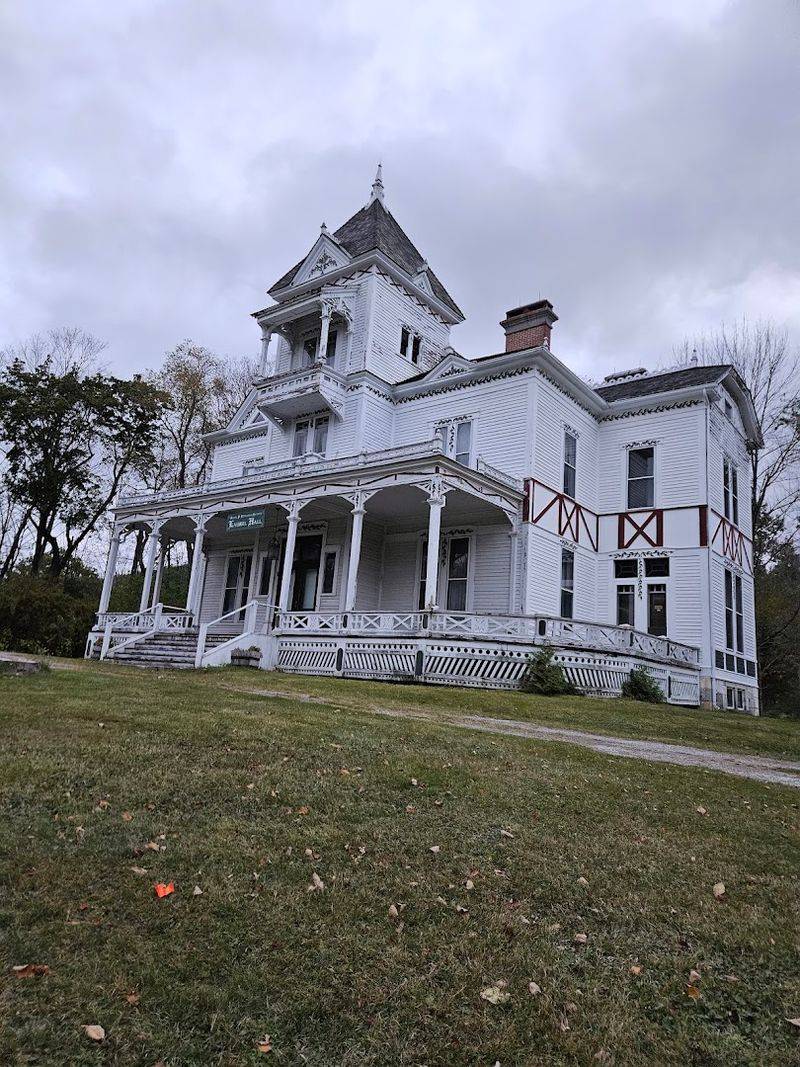
John Porter Bowman was not a man who grieved quietly. When his wife Jennie and their two daughters, Addie and Ella, died tragically young, he responded the way a wealthy 19th-century industrialist might: he built something enormous and permanent.
Between 1880 and 1882, Bowman commissioned both Laurel Hall and the Laurel Glen Mausoleum on the same property in Cuttingsville. The architect was G.B.
Croff of New York City, and he delivered something remarkable on both counts. The mansion is a high-style Queen Anne residence with Stick and Eastlake influences, considered one of the finest of its kind in all of Rutland County.
Bowman was among Vermont’s earliest millionaires, having made his fortune in the tanning industry. He poured that fortune into a memorial that was equal parts tribute and obsession.
The mausoleum alone became a local tourist attraction the year it was completed in 1881.
Spending time learning about Bowman’s story reframes everything you see on the property. The grandeur is not vanity.
It is grief made permanent, shaped into stone and wood and glass.
The Architecture, A Queen Anne Mansion That Refuses to Be Ignored
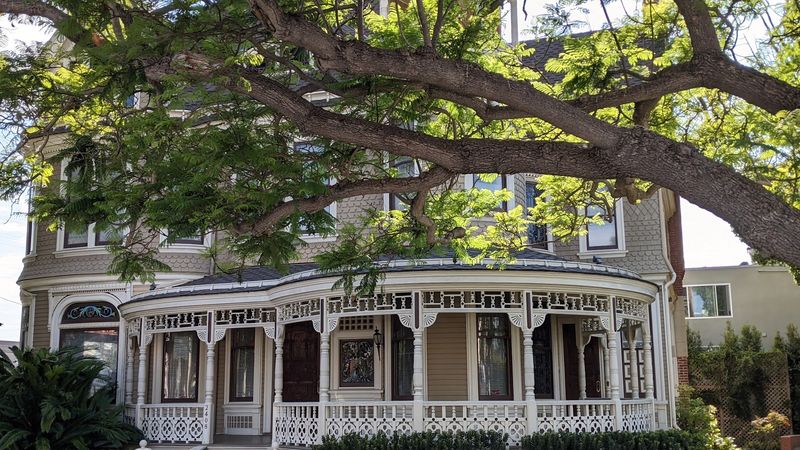
From the road, Laurel Hall announces itself without apology. The rooflines climb at sharp angles, the woodwork is intricate and layered, and the whole structure has the kind of presence that makes you slow your car down without really deciding to.
G.B. Croff designed the mansion in the Queen Anne style, incorporating Stick and Eastlake influences that were fashionable among wealthy clients in the early 1880s.
The result is a building that feels both ornate and purposeful, every detail earning its place.
In 1998, the property was listed on the National Register of Historic Places, a recognition that felt overdue to anyone who had ever seen it in person. The mausoleum on the grounds takes a different approach entirely, blending Classical and Egyptian Revival styles in a way that feels both solemn and theatrical.
What strikes me most about the architecture is how well it holds its character even after more than 140 years. The bones of the building are strong.
The style is confident. Laurel Hall was built to last, and so far, it has kept that promise despite the challenges of ongoing maintenance.
The Mausoleum Next Door: Where Grief Became Architecture
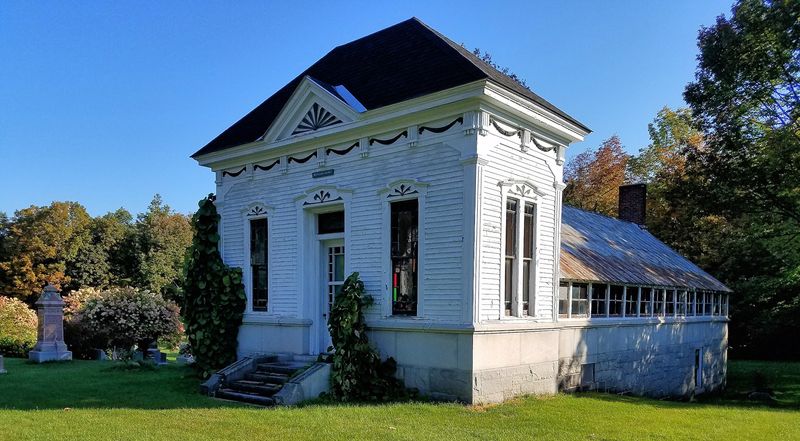
The Laurel Glen Mausoleum sits on the same grounds as the mansion, and visiting one without the other feels like reading only half a story. Designed by the same architect, G.B.
Croff, the mausoleum was completed in 1881 and immediately drew visitors from the surrounding region.
Its style is a blend of Classical and Egyptian Revival, which sounds like an unlikely combination until you see it. The result is something that feels both ancient and deeply personal.
Bowman had it built to house the remains of his wife and daughters, and the craftsmanship reflects just how seriously he took that responsibility.
Standing in front of it, even in daylight, there is a stillness that is hard to describe. It is not frightening exactly.
It is more like the feeling of being in a space where someone’s love became permanent and physical.
The mausoleum is now overseen by the Laurel Glen Cemetery Association of 1894, a non-profit organization that also manages Laurel Hall. Both structures are treated as the historic landmarks they genuinely are, and visiting them together gives you the fullest picture of what Bowman was trying to create here.
The Ghost of Mrs. Bowman: A Woman Who Never Really Left
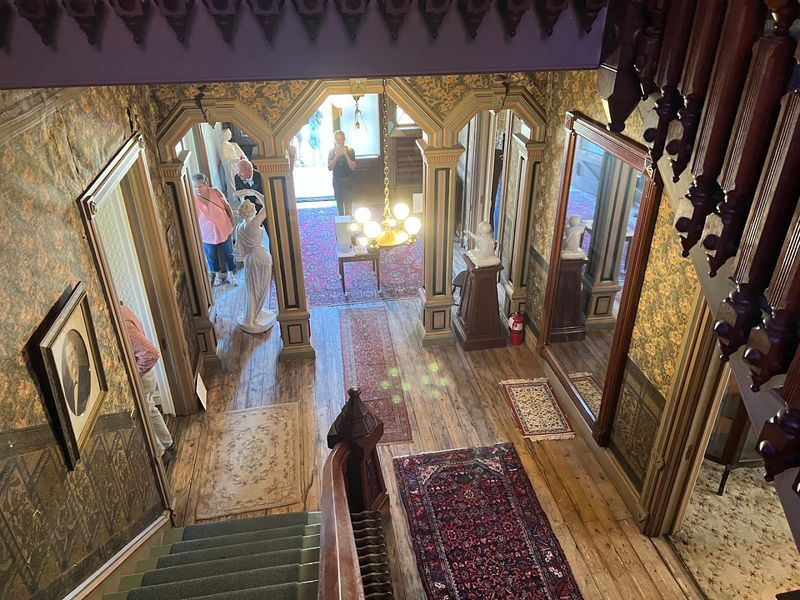
One of the most frequently reported phenomena at Laurel Hall is the apparition of a woman seen moving through various rooms of the mansion. Many who have encountered her believe she is Jennie Bowman, the wife whose passing set everything in motion.
The reports are consistent enough to be interesting. Visitors describe a figure in period clothing, calm rather than threatening, present in the way a memory is present.
Nobody has reported anything aggressive or alarming about her appearances.
There is also a specific spot at the top of one of the staircases where visitors have described an intense feeling of unease, something beyond simple nerves. The phrase that appears most often in accounts is a sense of “forbearance and dread,” which is oddly poetic for a paranormal description.
Whether these experiences have a rational explanation or not, they add a layer to Laurel Hall that most historic homes simply do not have. The mansion is already compelling as an architectural and historical site.
The reported hauntings just make it more layered. It is the kind of place that stays in your thoughts long after you have driven away, and that is not nothing.
The Legend of Bowman’s Will
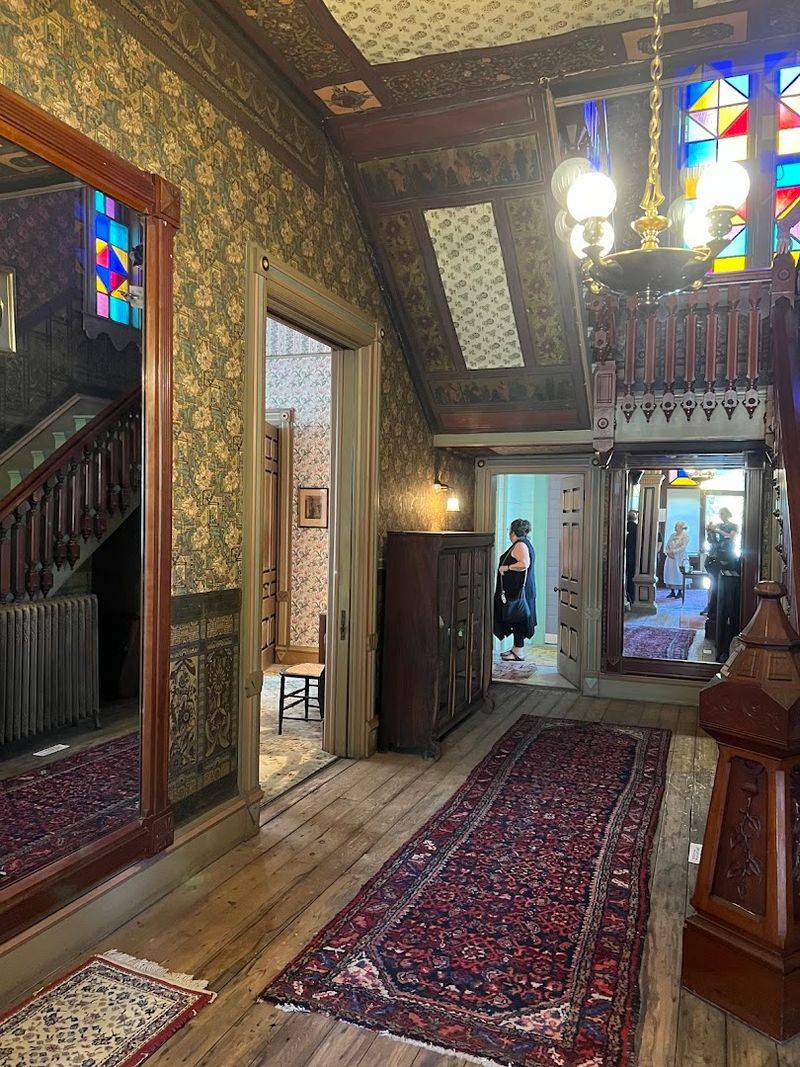
John Porter Bowman’s will contained a provision that has fueled one of the most persistent legends connected to the estate. He established a trust to maintain the property in perpetuity, ensuring that Laurel Hall would never fall into neglect or be sold off.
That provision gave rise to a story that spread through the region for generations: that servants were instructed to prepare dinner every evening in case Bowman and his family returned. The table set, the food ready, the house waiting.
There is no verified documentation proving this happened nightly, but the legend has roots in the genuine terms of Bowman’s will and the very real instructions he left for the estate’s upkeep. The line between fact and folklore here is genuinely blurry, which is part of what makes it so compelling.
The will also sparked tales of hidden money somewhere on the property, which drew treasure hunters over the years. None of them found anything, as far as anyone knows.
What Bowman actually left behind was a building, a mausoleum, and a legacy strange enough to land him in The New York Times in 1974 and Yankee Magazine in 1960. That is a different kind of treasure entirely.
Visiting Laurel Hall Today: What to Expect and Why It Is Worth the Trip
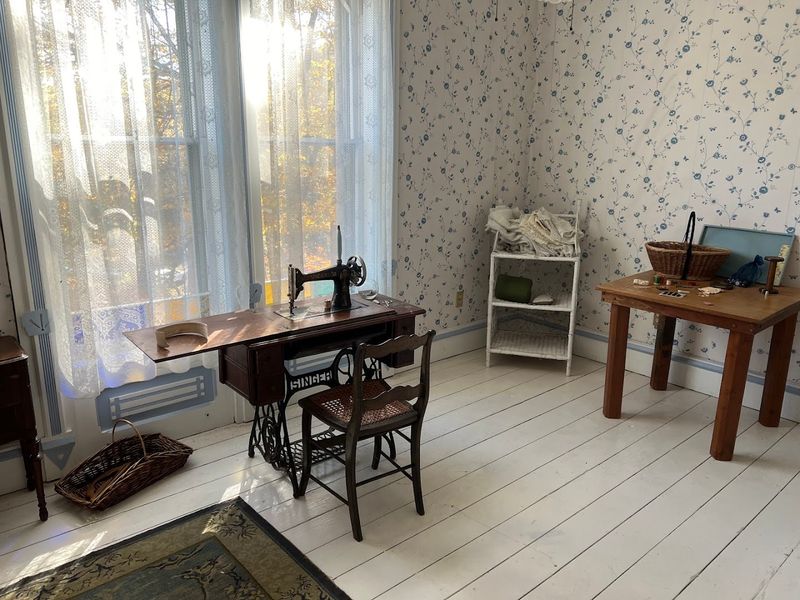
Laurel Hall is not a polished tourist attraction with a gift shop and a timed entry system. It is a historic property maintained by a small non-profit organization, the Laurel Glen Cemetery Association of 1894, and it operates through open house events rather than daily tours.
The mansion has drawn thousands of visitors annually over the years, and its profile has grown steadily thanks to its inclusion in New England ghost story collections and its listing on the National Register of Historic Places. Checking the official website at bowmanmansion.org before you go is genuinely useful, since open dates shift seasonally.
The property itself is located in a quiet stretch of Vermont countryside that rewards a slow drive. Route 103 through this part of Rutland County is scenic in every season, and pairing a visit to Laurel Hall with a broader exploration of the area makes for a full and satisfying day.
What stays with you after a visit is not just the ghost stories or the architecture. It is the feeling of a place that was built out of love and loss, and that has somehow held onto both of those things across more than a century.
That is rare anywhere, and worth the detour.
Address: 3759 Hwy 103, Cuttingsville, VT
