You feel it the moment you walk through the front door. Not a sound.
Not a sight. Something heavier.
The air is thick, almost hard to breathe. The floors creak under your feet like they are trying to tell you something. This Mississippi plantation has seen more than any building should have to.
Joy. Sorrow.
Cruelty. Loss.
The walls have absorbed it all, and they are not letting go. Visitors report sudden chills in rooms with no drafts. Whispers that seem to come from nowhere.
A child’s laugh that stops as soon as you turn your head. I toured the house on a sunny afternoon, thinking the daylight would make it feel less heavy.
It did not. Mississippi has many historic homes, but this one carries a weight you can feel in your chest.
The Mansion That Almost Defied Belief
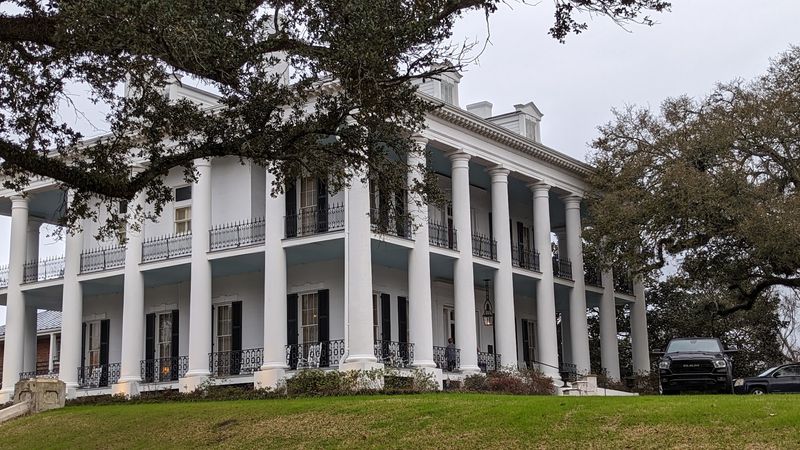
Before a single brick was laid at Windsor, someone dreamed up something almost absurdly grand. Smith Coffee Daniell II commissioned a four-story Greek Revival mansion between 1859 and 1861, and the result was the largest antebellum plantation house in Mississippi.
That is not a small title to hold.
The mansion had 25 rooms, every single one with its own fireplace. Interior bathrooms were included, which was genuinely rare for the era.
There was even a rooftop observatory that offered sweeping views of the surrounding landscape.
Skilled New England carpenters and northern masons handled much of the construction, but the bricks for the 45-foot columns were formed and fired right on the property by enslaved African Americans. The estimated cost of the finished mansion and its furnishings in 1861 was $175,000, a sum that translates to several million dollars today.
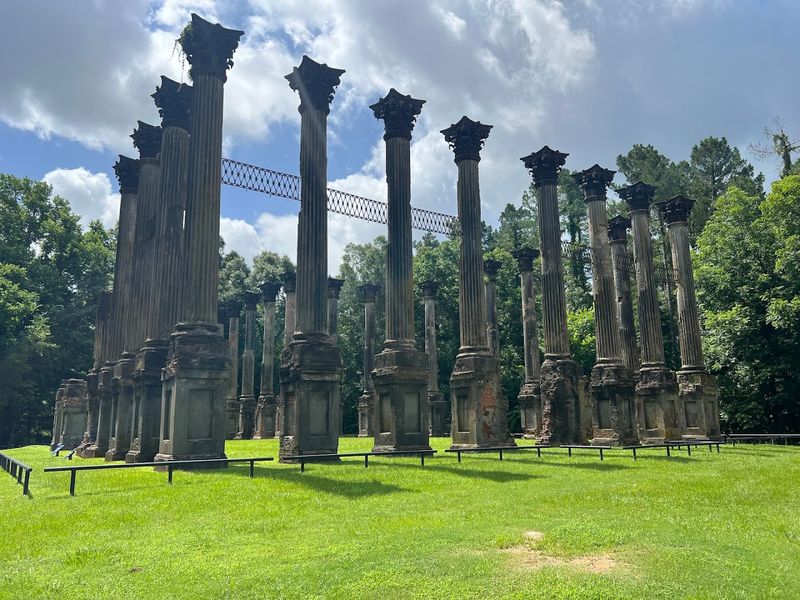
When you stand beside those columns now, that number starts to feel real. The sheer physical presence of what remains gives you a sense of the ambition behind the original design.
It was built to impress, and even in ruin, it still does exactly that.
Built on the Backs of the Enslaved
The story of Windsor cannot be told honestly without talking about the people who built it and worked it. Smith Coffee Daniell II enslaved 150 people on his Mississippi property and an additional 164 in Louisiana by 1860.
Those numbers represent real human lives, not footnotes.
The bricks that form the massive columns you see today were made on-site. Enslaved men and women formed and fired each one by hand, constructing the very structure that symbolized their own captivity.
That detail hits differently when you are standing right next to those columns.
Daniell himself never enjoyed the finished mansion for long. He passed of yellow fever on April 12, 1861, just weeks after construction was completed.
That date, as history would have it, was the same day the Civil War began at Fort Sumter. His widow, Catherine Daniell, was left to manage the plantation and family through everything that followed.
The weight of that history is layered into every surface of this place. Visiting Windsor means sitting with that complexity, and it is worth doing thoughtfully rather than rushing through for a quick photo.
When the Civil War Came to Windsor’s Doorstep
The Civil War did not spare Windsor from its reach, but it did spare the mansion itself, at least for a while. In 1863, during the Vicksburg Campaign, Union General Ulysses S.
Grant’s troops landed at nearby Bruinsburg and passed by the Windsor property. The mansion’s rooftop observatory, which Confederate forces had already been using to monitor Union ship movements on the Mississippi River, suddenly became a focal point of military strategy.
Windsor was converted into a Union hospital and observation post. That dual role is widely believed to be the reason Union troops did not burn it down, as happened to so many other plantation homes in the region.
Catherine Daniell and her family were permitted to remain on the third floor during the occupation.
There is also a remarkable story about Union soldiers infiltrating a dinner party at Windsor, which led to the arrest of Confederate officers on the premises. The mansion lived through extraordinary events during those years.
It served both sides in different ways, which gives the site a complicated, layered identity that goes far beyond a simple ghost story. History here is not clean or simple, and that is exactly what makes it worth understanding.
The Fire That Changed Everything
For nearly three decades after the Civil War, Windsor stood intact. Then, on February 17, 1890, it was gone.
A fire broke out on the third floor and spread quickly through the structure, leaving almost nothing behind. The cause was reported as a guest accidentally dropping a lighted item into construction debris left by carpenters who had recently been making repairs.
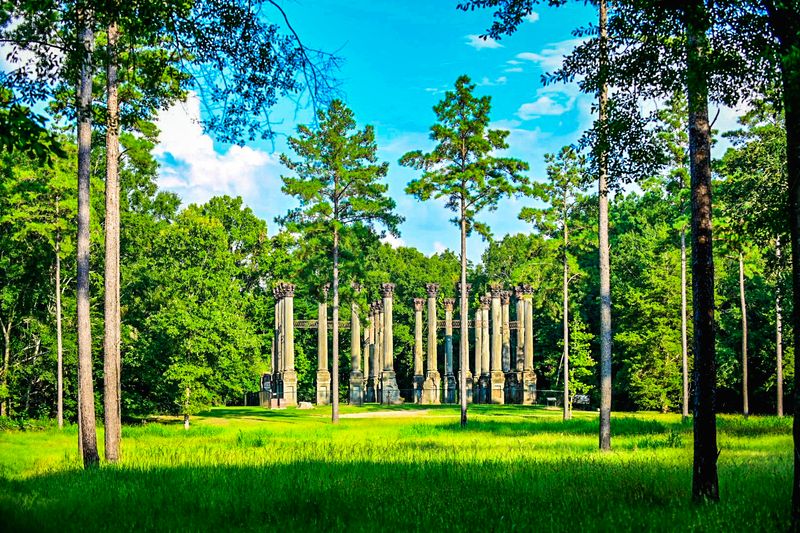
What survived the blaze were the 23 columns, some iron balustrades, and a few iron stairways. One of those original stairways was later relocated and is now inside the chapel at Alcorn State University, just a short distance south of the ruins.
It is worth stopping there to see it if you make the trip.
Originally, the mansion had 29 columns. Six were lost in the fire, leaving the 23 that still stand today.
The loss of the mansion itself is significant, but there is something almost poetic about what remained. Those columns refused to fall.
They have been standing in that field for over 130 years since the fire, holding their ground through Mississippi summers, storms, and time. They feel permanent now, like they belong to the land more than any house ever could have.
What the Columns Look Like Up Close
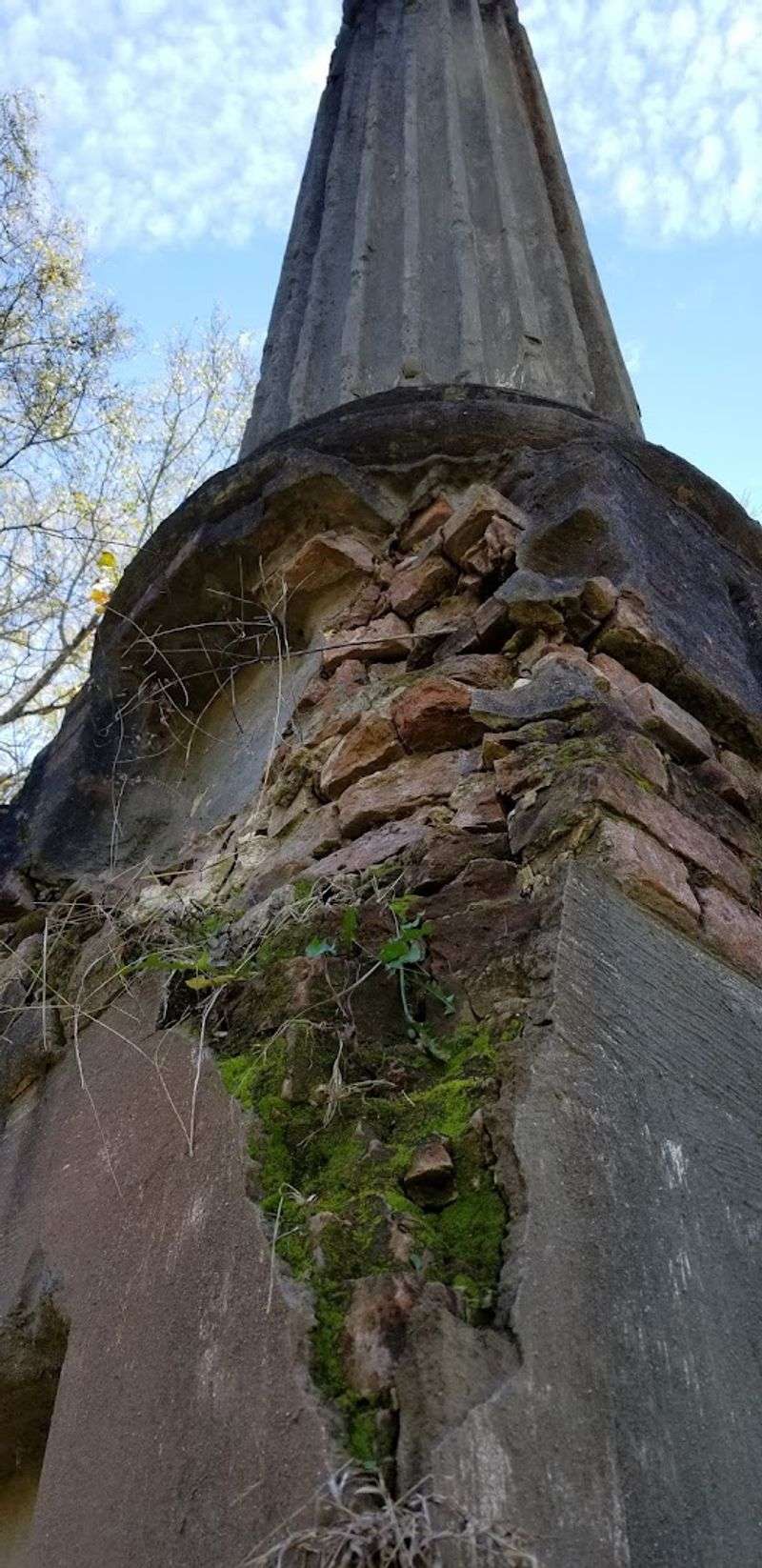
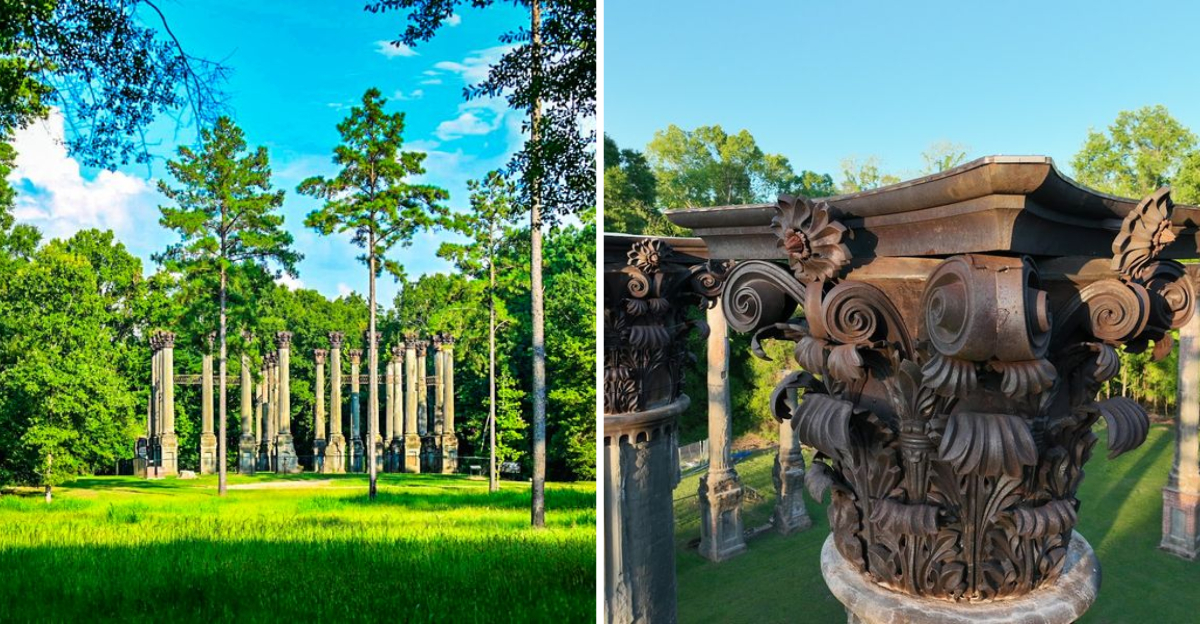
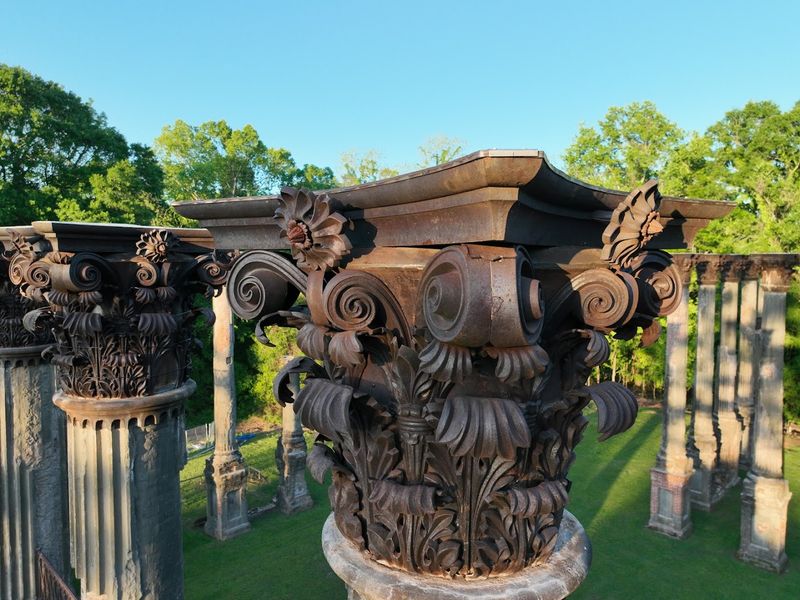
There is a moment when you get close to the columns at Windsor and realize just how massive they actually are. Each column rises 45 feet into the air, and the carved Corinthian capitals at the top are still remarkably detailed despite everything they have been through.
The ironwork along the surviving balustrades is delicate and intricate, which feels almost surreal given the raw scale of the columns themselves.
The site is managed by the Mississippi Department of Archives and History, and in 2023 they completed a stabilization project that also added an ADA-accessible walking trail around the column perimeter. That trail makes it easy to walk the full circuit and see the ruins from every angle, which you absolutely should do.
The back side of the columns offers a completely different visual experience than the front approach.
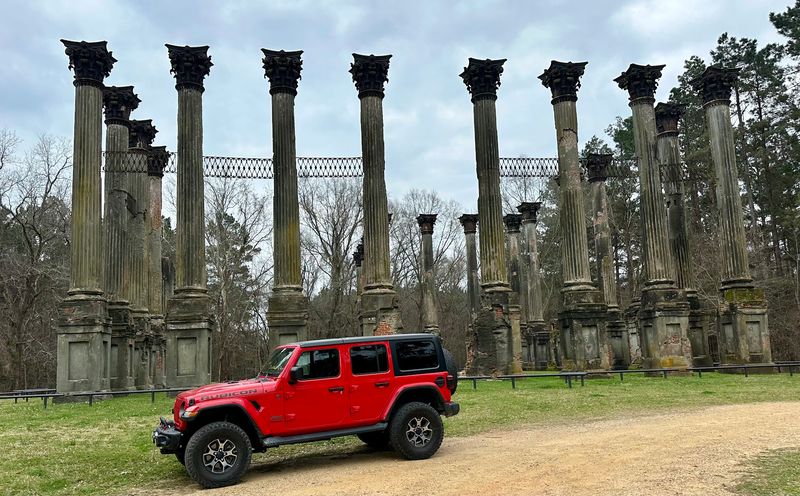
A fence surrounds the columns to keep visitors at a safe distance, since the structures are not stable enough to enter. That might sound limiting, but it actually encourages you to slow down and look carefully.
You notice the texture of the bricks, the way light moves across the carved stone, and the quiet drama of the whole scene. Bring a camera, because every angle is genuinely photogenic.
Film Sets, Legends, and Hidden Connections
Windsor Ruins has a cultural life that extends well beyond its history as a plantation site. The columns appeared in the 1957 film “Raintree County” and again in the 1996 film “Ghosts of Mississippi,” two very different productions that both recognized the haunting visual power of the place.
Seeing ruins with that kind of screen presence makes you look at them a little differently.
There is also a persistent local legend that Mark Twain once observed the Mississippi River from the mansion’s rooftop observatory. Whether that story is fully verifiable or not, it says something about the kind of place Windsor was.
It attracted attention, drew interesting people, and occupied a significant spot in the landscape of its era.
Windsor was listed on the National Register of Historic Places in 1971 and designated a Mississippi Landmark in 1985. The property remained in the Daniell family’s possession until 1974, when 2.1 acres containing the ruins were donated to the state for historic preservation.
That act of donation is part of why the site exists in its current form for the public to visit freely. The ruins feel like a shared inheritance now, belonging to everyone who makes the effort to find them.
Planning Your Visit to Windsor Ruins
Getting to Windsor Ruins requires a little commitment, and that is honestly part of the appeal. The site sits on Rodney Road southwest of Port Gibson, tucked into the rural landscape of Claiborne County.
If you are coming from Vicksburg, it is a very worthwhile detour. The drive through the Mississippi countryside leading up to the site is scenic and quiet, with winding roads that feel far removed from any highway rush.
The ruins are open daily from 8 AM to 7:30 PM, and admission is free. There is no gift shop, no attendant on site, and no formal tour structure.
You simply drive through the gate, park, and explore at your own pace. The gravel path around the columns is fairly level and easy to walk.
Plan on at least 15 to 20 minutes to do it properly, longer if you want to read the historical plaques placed around the site.
Bug spray is a genuinely good idea, especially in warmer months. Mosquitoes can be aggressive near the tree line.
Wear comfortable shoes, and if you enjoy photography, try visiting in the early morning or late afternoon when the light is most dramatic. The columns cast incredible shadows at those hours, and the whole place feels even more atmospheric than usual.
Address: Rodney Rd, Port Gibson, MS 39150
