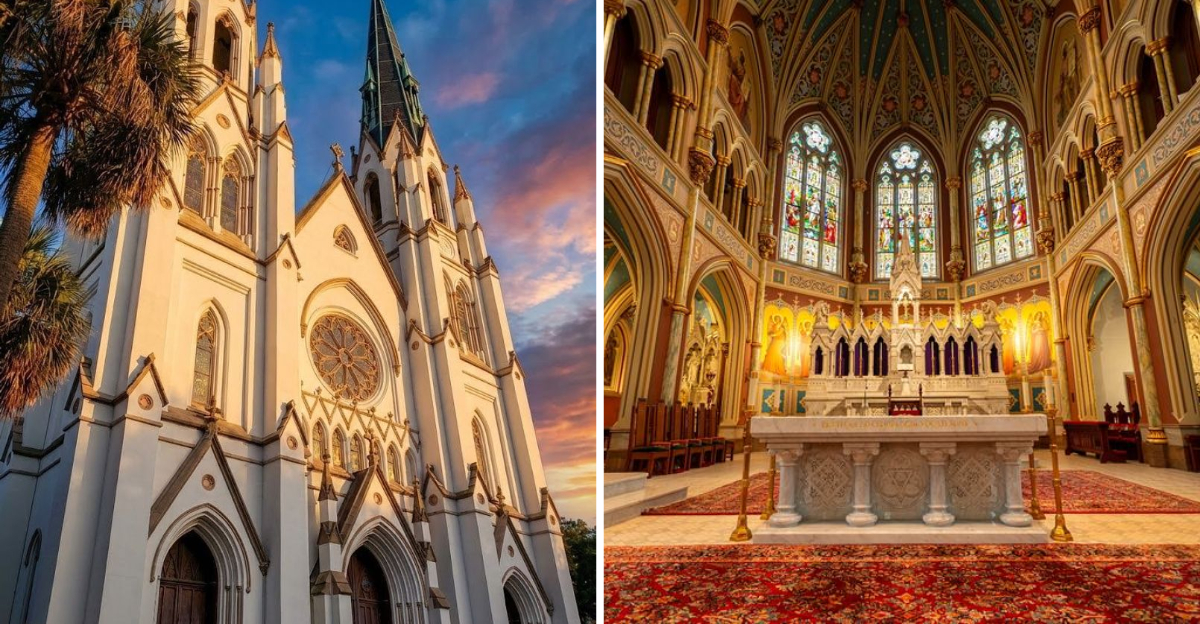
The door opens and you stop breathing for a second. Not because of the heat or the humidity.
Because of what you are seeing. Stained glass windows the size of walls.
Arches that reach up toward a ceiling you cannot quite see in the dim light. Wooden pews worn smooth by decades of use. You check your phone to make sure you are still in Georgia.
You are. But inside this building, you could be anywhere.
Rome. Paris.
Some small village in the French countryside where people have been praying in the same spot for centuries. The outside is unassuming, easy to miss if you are not paying attention. That is the point.
The people who built this wanted the inside to be the surprise. And what a surprise it is.
Twin Spires That Pierce the Savannah Sky
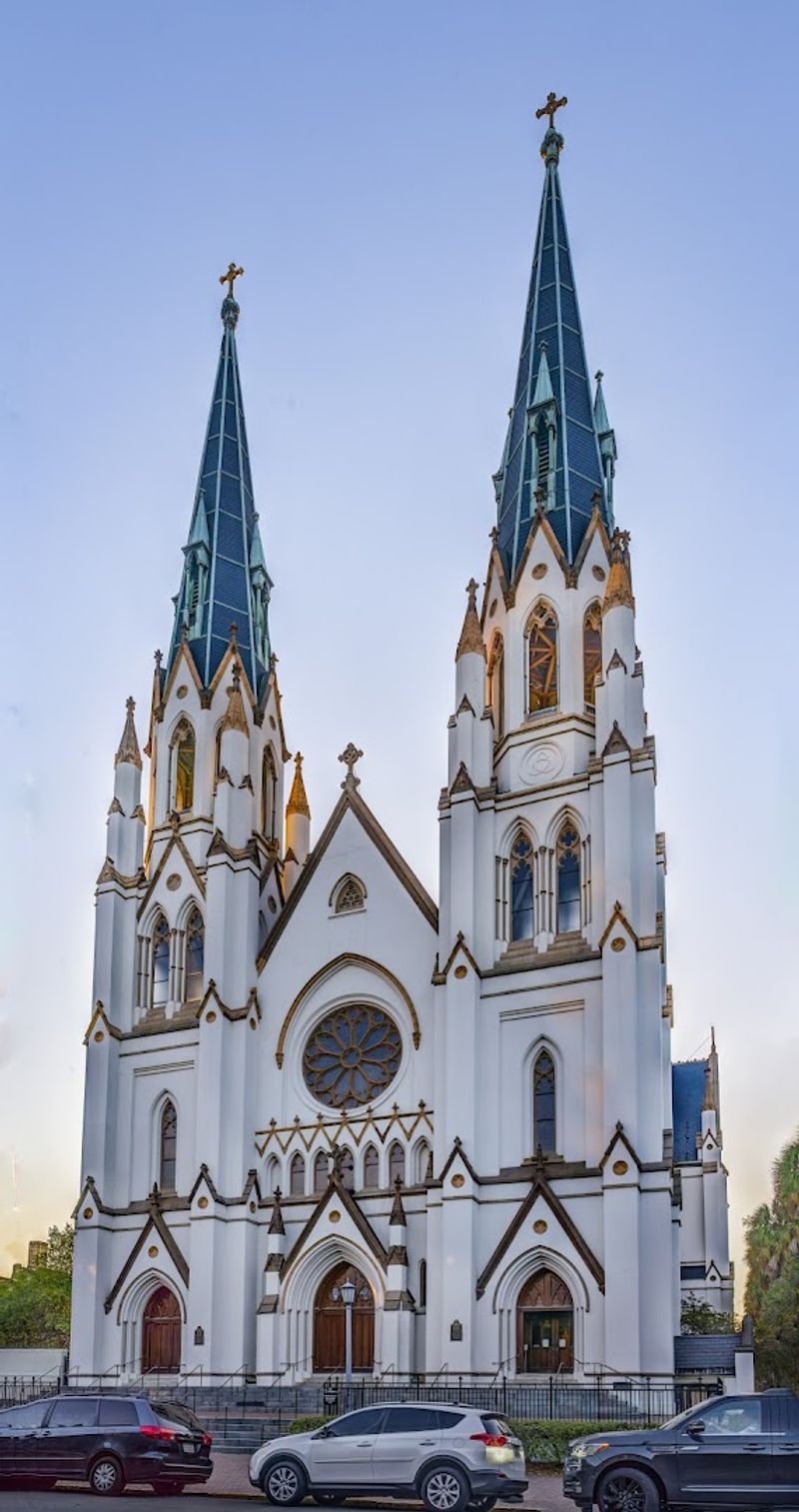
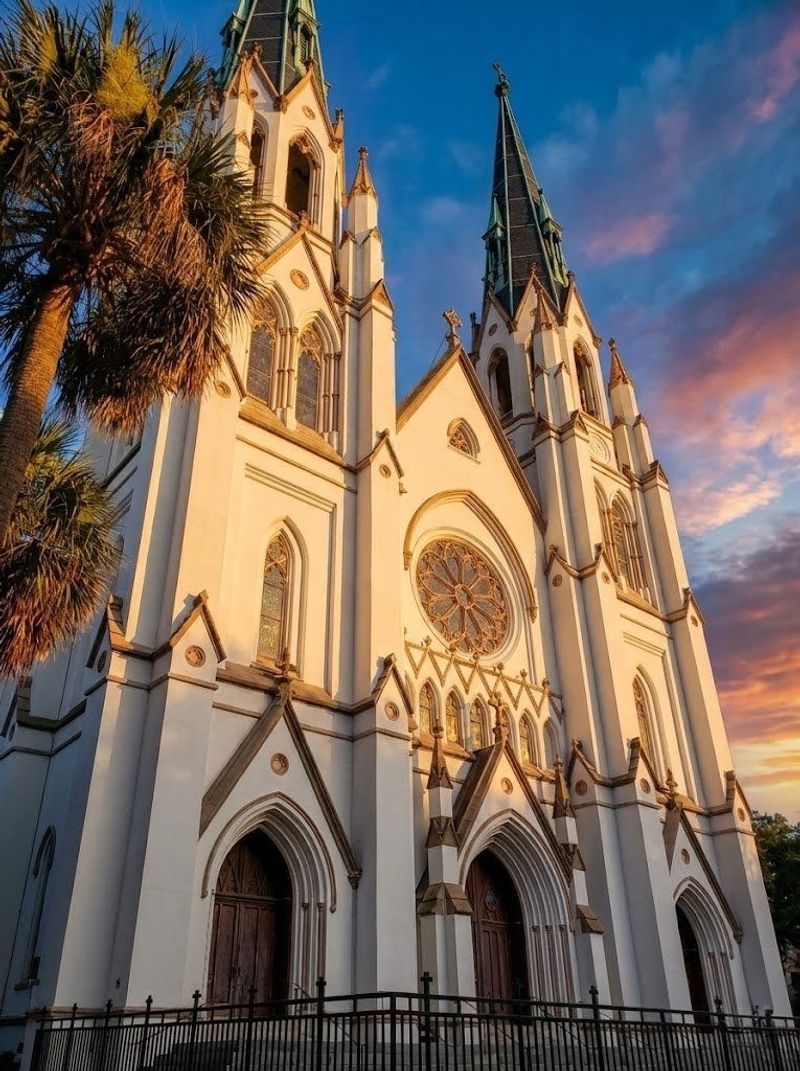
There is something almost disorienting about rounding a corner in downtown Savannah and suddenly finding yourself face to face with two spires soaring 214 feet into the air. The twin towers of the Cathedral Basilica of St. John the Baptist were added in 1896 and have dominated the Savannah skyline ever since.
They are the kind of thing you photograph and then look at later thinking, did I actually see that in Georgia?
The French Gothic design gives the exterior a dramatic verticality that feels more at home in Paris or Cologne than in a coastal Southern city. Every detail on the facade, from the pointed arches to the decorative stonework, was intentional and precise.
The builders wanted grandeur, and they absolutely delivered it.
It is worth walking around the full exterior before you go inside. The Latin cross layout of the building becomes clearer when you move around it, and the relationship between the towers and the nave is genuinely impressive from multiple angles.
The cathedral sits across from a small green park, which gives you a perfect spot to step back and take it all in without craning your neck. Few buildings in the American South carry this kind of architectural authority.
A History Rooted in Revolution and Resilience
The story behind this cathedral is genuinely fascinating, and it starts not in Georgia but in the chaos of 18th-century revolutions. French Catholic emigrants fleeing both the Haitian Revolution and the French Revolution eventually settled in Savannah, forming the original parish called “Congregation de Saint Jean-Baptiste.” That community laid the spiritual groundwork for what would become one of the most remarkable buildings in the entire American South.
The cornerstone for the current cathedral was placed in 1873, and it was dedicated on April 30, 1876. Fun fact: it was the first building in the entire state of Georgia to be constructed of brick.
That alone earns it a pretty significant place in the region’s architectural history.
Then came February 6, 1898, when a devastating fire tore through the interior and left only the walls and towers standing. Rather than giving up, the community rebuilt immediately.
The first Mass in the restored cathedral was held in December 1899, and re-dedication followed in October 1900. That kind of determination is woven into the very walls of the place.
In 2020, Pope Francis elevated it to the status of a minor basilica, cementing its importance far beyond Savannah’s city limits.
Eighty-One Stained Glass Windows That Glow Like Jewels
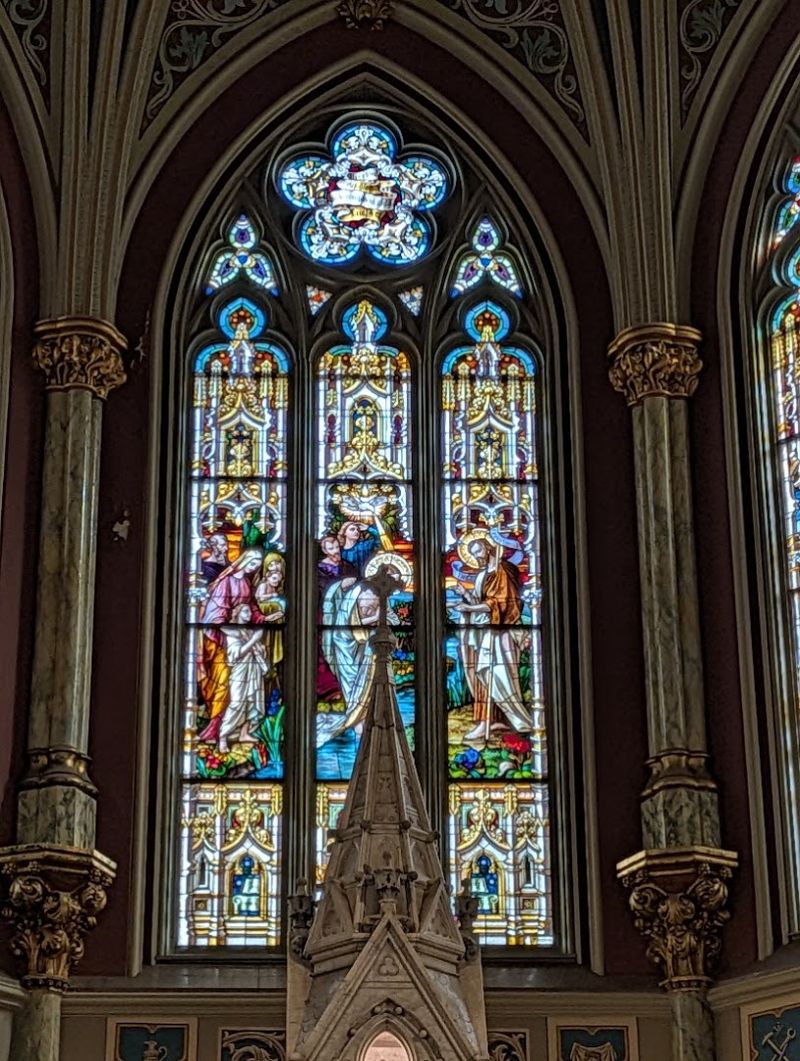
Light does something magical inside this cathedral. The 81 stained glass windows, installed around 1904 and 1905 by craftsmen from Innsbruck in Austria-Hungary, bathe the entire nave in shifting colors that change depending on the time of day and the angle of the sun.
Sitting in a pew and just watching that light move across the stone floor is one of the most unexpectedly meditative things you can do in Savannah.
Each window tells a story, and the level of detail in the glasswork is extraordinary. These were not mass-produced panels.
They were carefully designed and hand-crafted by artists who understood how color and light could transform a space. The craftsmanship holds up just as beautifully today as it did when they were first installed.
The rose window above the organ is a particular highlight. At its center sits St. Cecilia, the patroness of music, surrounded by intricate geometric and floral patterns that radiate outward in a burst of color.
Many visitors spend a long time just looking at this one window before they even notice everything else around them. If you visit on a sunny morning, the light through the eastern windows is especially vivid and worth timing your visit around.
A Carrara Marble Altar Carved in Italy
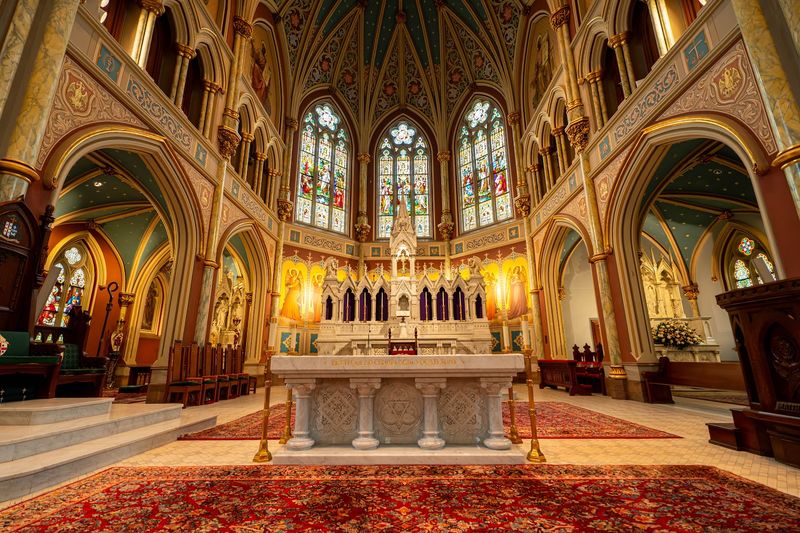
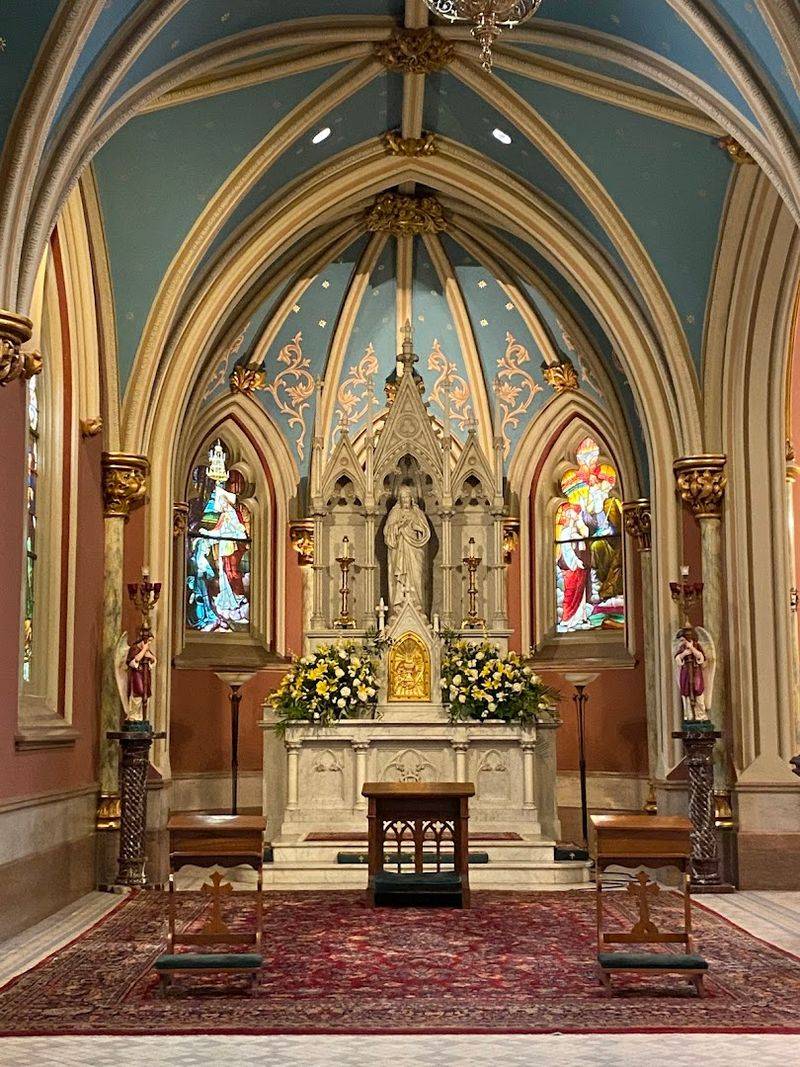
The main altar inside the Cathedral Basilica is not something you simply glance at and move on from. Carved in Italy from Carrara marble and weighing approximately 9,000 pounds, it anchors the entire sanctuary with a quiet, commanding presence.
Carrara marble is the same stone Michelangelo used for his most famous sculptures, which gives you a sense of the material’s reputation and quality.
Up close, the carving work is intricate enough to hold your attention for a surprisingly long time. Floral motifs, religious figures, and geometric patterns come together in a composition that feels both delicate and monumental at the same time.
The altar was clearly designed to be the focal point of the entire interior, and it fulfills that role without any effort at all.
Surrounding the altar, the sanctuary is further enriched by murals depicting the four evangelists, decorative column carvings, and layers of color that build an atmosphere unlike anything else in Georgia. The columns themselves are slender and elegant, drawing your eye upward to the ribbed vaulting overhead.
The whole interior has a surprising brightness to it, which catches many visitors off guard. You might expect a Gothic church to feel heavy and dark, but this one feels open, warm, and genuinely welcoming.
The Noack Tracker Organ and the Sound That Fills the Space
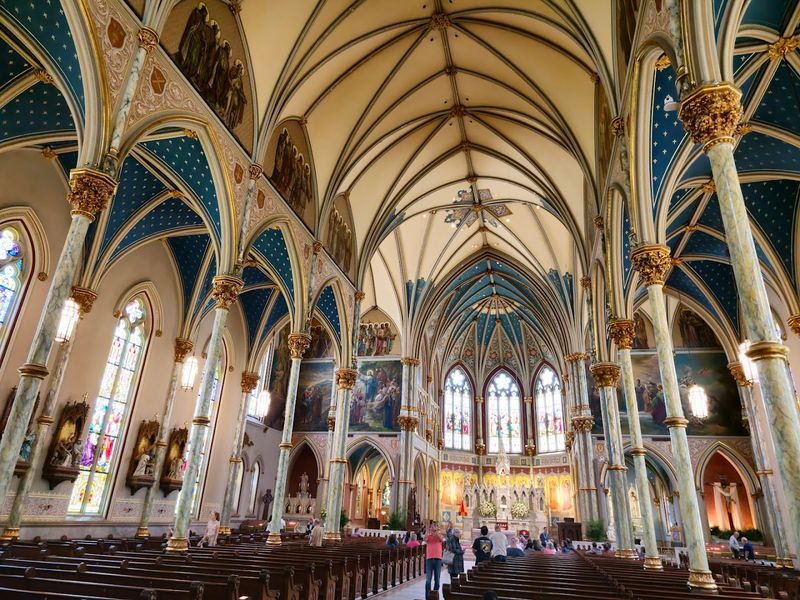
Sound behaves differently inside a space like this. The vaulted ceilings and stone walls create an acoustic environment that makes even a single note feel full and resonant, so when the organ plays, the effect is something you feel as much as hear.
The Noack tracker organ, installed in 1987, was built from solid white oak with black walnut trim and contains 34 ranks and 2,308 individual pipes.
Tracker organs are considered among the most responsive and nuanced instruments in the pipe organ world, because the mechanical connection between the keys and the pipes is direct rather than electronic. Organists who play them often describe the experience as more intimate and expressive than modern alternatives.
The craftsmanship that went into building this instrument matches the craftsmanship visible everywhere else in the cathedral.
If you happen to visit during the first hour of morning tours, there is a good chance you will catch the organist practicing. That is one of those unscripted travel moments that you cannot plan for but never forget.
The music rises into the vaulted ceiling and seems to wrap around everything. Even if you know nothing about organ music, hearing it played live in this space is a genuinely moving experience that adds another dimension to the visit entirely.
Self-Guided Tours and the Volunteers Who Bring It to Life
One of the things that makes a visit here genuinely enjoyable is how accessible it all is. The cathedral is open to everyone, religious or not, and self-guided tours are available during regular visiting hours throughout the week.
You can move at your own pace, linger on whatever catches your eye, and experience the space without feeling rushed or supervised.
Volunteer docents are often present and available to answer questions. They tend to be knowledgeable and genuinely enthusiastic about the cathedral’s history, which makes a real difference.
A good docent can point out details you would otherwise walk right past, like specific panels in the stained glass or the symbolism behind particular carvings near the altar.
The cathedral suggests a donation when you visit, which goes directly toward maintaining and restoring the building. An eighteen-million-dollar renovation project has already returned much of the cathedral to its historic appearance, and ongoing care keeps it in remarkable condition.
It is worth checking the website before you go, since the cathedral closes to tourists during active Mass services. The hours are generally 9 AM to 4:30 PM daily, but scheduling around services will make your visit smoother.
A little planning goes a long way here, and the reward for that small effort is enormous.
The Neighborhood Around the Cathedral Is Worth Your Time Too
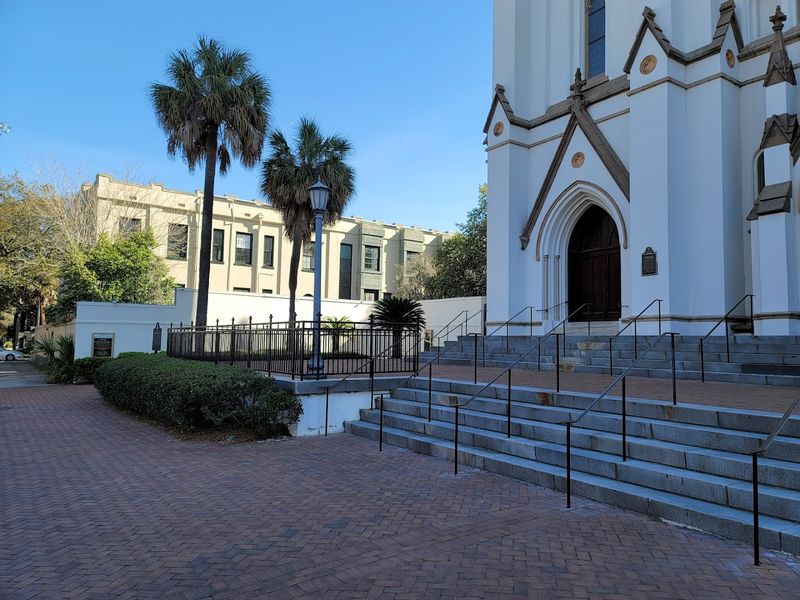
The cathedral does not exist in isolation. It sits on a tree-lined stretch of East Harris Street surrounded by some of Savannah’s most beautiful historic architecture, and the walk from nearby Forsyth Park to the cathedral doors is genuinely lovely.
The neighborhood has a peaceful, unhurried quality that makes it feel like a different pace of city entirely.
Across the street from the cathedral is a small park that offers a natural resting spot after your visit. It is a good place to sit and process everything you just saw, and the view of the twin spires from that angle is hard to beat.
The whole area invites slow exploration rather than a quick in-and-out visit.
The surrounding streets are lined with historic homes and quiet squares that reflect the broader character of Savannah’s landmark district. A cafe sits just across from the cathedral, which makes for an easy and pleasant stop before or after your visit.
The combination of the cathedral itself, the park, the architecture, and the general atmosphere of the neighborhood creates an experience that feels complete rather than singular. You are not just visiting a building here, you are spending time in one of the most thoughtfully preserved historic urban environments in the entire American South.
Address: 222 E Harris St, Savannah, GA 31401
