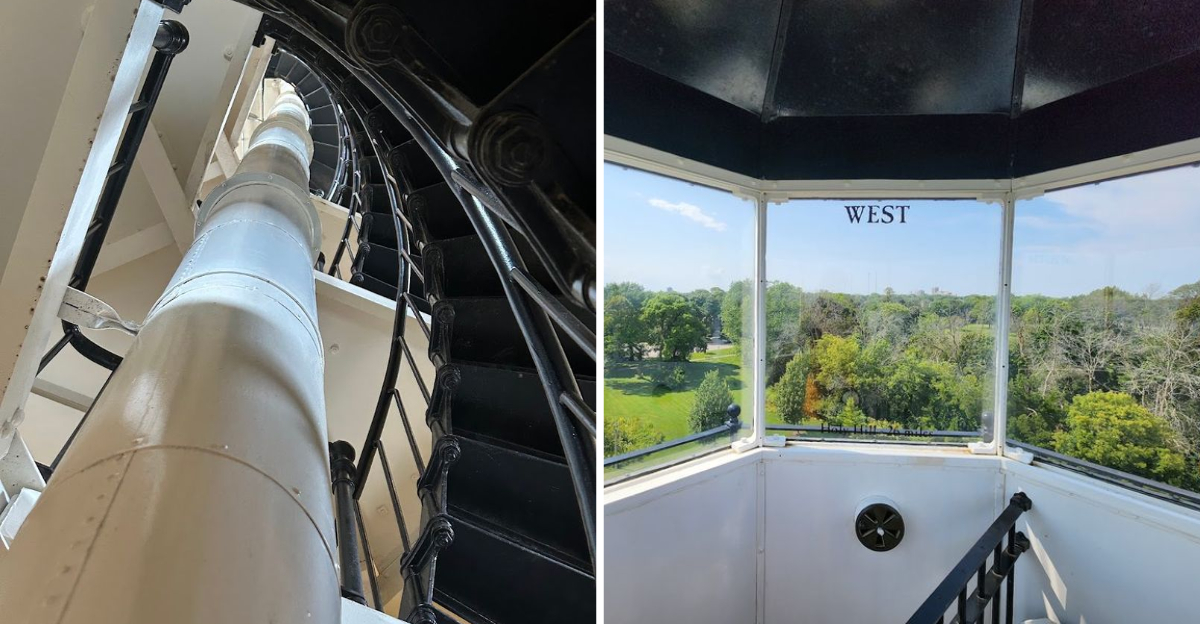
That moment when a lighthouse gets under your skin the moment you see it rising above a park in Wisconsin. The cast iron tower, the keeper’s quarters with their red trimmed windows, the wide open sky above the great lake, it all feels like a scene frozen somewhere between history and mystery. I had heard whispers about the ghost stories tied to this place before I even arrived, and honestly, those whispers made every step up those stairs feel just a little more electric.
The legend of a woman waiting at the top, watching the horizon for a ship that never came back, is the kind of story that clings to old stone and cold lake air. You might believe in hauntings or not. Either way, this lighthouse has a presence that is hard to shake.
Come for the views, stay for the history.
The Legend of the Waiting Woman and the Ghost of North Point
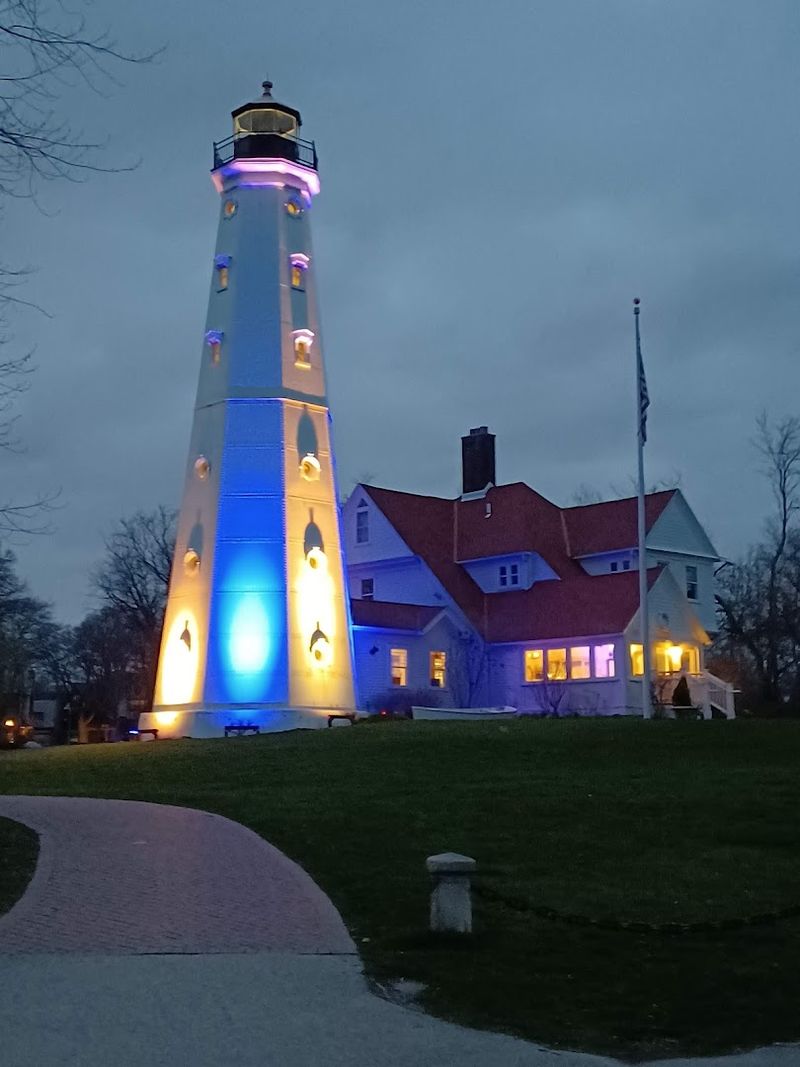
Not every lighthouse has a ghost story worth telling, but this Wisconsin lighthouse has one that locals have been passing down for generations. The legend centers on a woman said to haunt the upper reaches of the tower, forever scanning the dark waters of Lake Michigan for a ship that went down and never returned.
It is the kind of story that feels almost too cinematic to be real, yet something about this place makes you want to believe every word of it.
The lighthouse is widely considered one of Milwaukee’s most haunted locations. Visitors and staff have reported hearing the sounds of children screaming when no children were present.
Unexplained cold spots appear without warning inside the tower, and some people describe a general uneasy feeling that settles over them the moment they step inside.
Then there is the legend known as Rosie’s Footsteps. Rosie was a young local who loved climbing the lighthouse’s 71 steps and became a beloved figure around the grounds.
She passed away from tuberculosis, and people still claim to hear her footsteps echoing on the stairs long after closing time. The story does not involve a sunken ship, but it adds another layer of sorrow and wonder to an already atmospheric place.
Whether these legends are rooted in fact or shaped by imagination over many decades, they give North Point Lighthouse a personality that goes far beyond bricks and iron. History and mystery have a way of fusing here, and that combination is genuinely hard to resist.
Georgia Green Stebbins: The Real Woman Who Kept the Light Burning
Behind every great lighthouse, there is often a person whose story deserves far more attention than it gets. At North Point Lighthouse, that person is Georgia Green Stebbins, and her life here is one of quiet strength, sacrifice, and remarkable dedication.
She arrived in Milwaukee in 1873 after being diagnosed with tuberculosis, joining her father Daniel Green, who was the lighthouse keeper at the time.
As her father’s health declined, Georgia gradually took over his duties without any formal fanfare. She became the official keeper in July 1881 and went on to serve for 26 years, making her the longest-serving keeper in the history of North Point Lighthouse.
Her total connection to the lighthouse spanned 33 years, a number that is genuinely staggering when you think about what that kind of commitment looks like day after day.
Georgia did not just keep a light burning. She raised a family here.
Her son Albert was born at the lighthouse, and two of her grandsons were as well. The lighthouse was not just a post for her, it was home in the fullest sense of the word.
When you climb those stairs today and look out over Lake Michigan, it is worth pausing to think about Georgia doing the same thing, not for the view, but because it was her job, her responsibility, and her life. Her story gives the legend of the waiting woman a real and deeply human foundation that no ghost story could ever fully replace.
The Architecture: From Cream City Brick to Cast Iron Tower
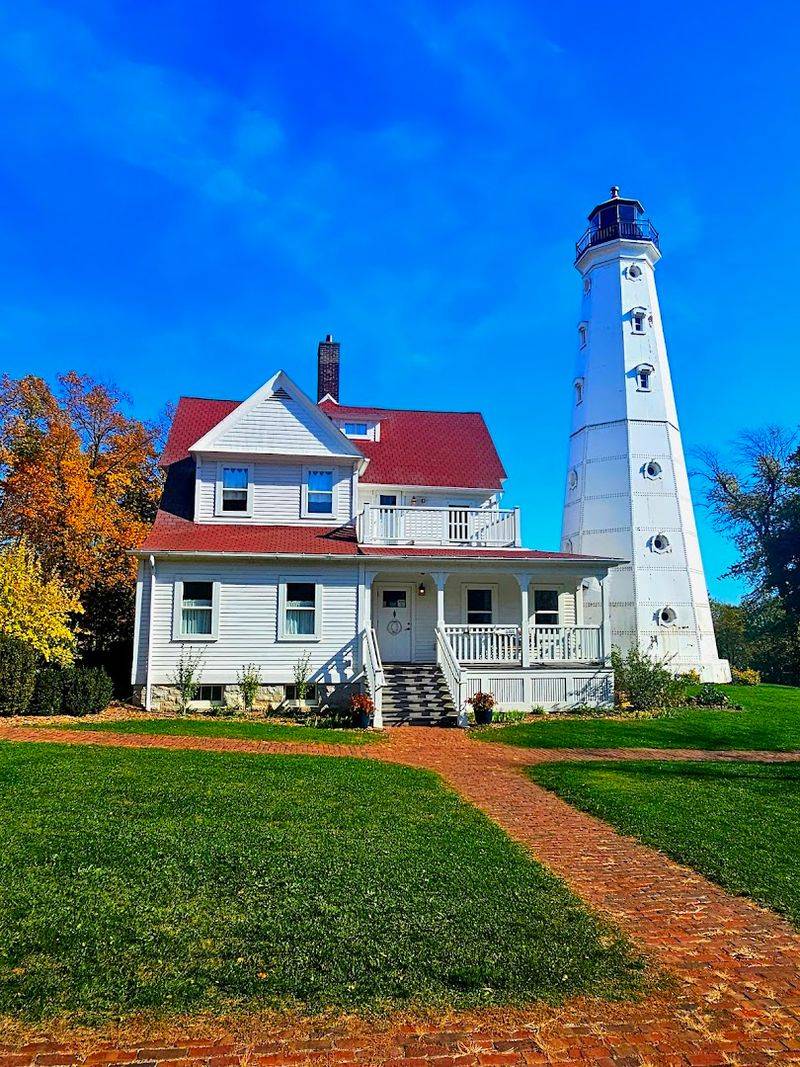
The first thing that catches your eye about North Point Lighthouse is the tower itself, a slender cast iron structure that somehow manages to look both industrial and elegant at the same time. It was not always this way.
The original lighthouse, built in 1855 from Cream City brick, stood 28 feet tall on a bluff above Lake Michigan. That elevated position pushed the beacon to 107 feet above the water, making it the highest lighthouse on the Great Lakes at the time.
Shore erosion eventually made that original structure unsafe. A new cast iron tower was constructed between 1887 and 1888, first lit on January 10, 1888.
The keeper’s quarters that still stand today were also completed around that same time, giving the property its current Victorian character and charm.
The story did not stop there. In 1912, the tower’s height was increased again, and the light began operating at its new elevation on December 15, 1912.
The focal plane reached an impressive 154 feet, ensuring sailors on Lake Michigan could spot it from a considerable distance. That kind of careful, ongoing investment in the structure speaks to how vital this lighthouse was to Great Lakes navigation.
Today, the architecture feels like a living timeline. The keeper’s quarters, with their period details and carefully maintained gardens, sit beside the tower in a way that makes the whole property feel like a place where time slowed down just enough to let history breathe.
It is genuinely one of Milwaukee’s most photogenic corners.
Climbing the 71 Steps: What to Expect at the Top
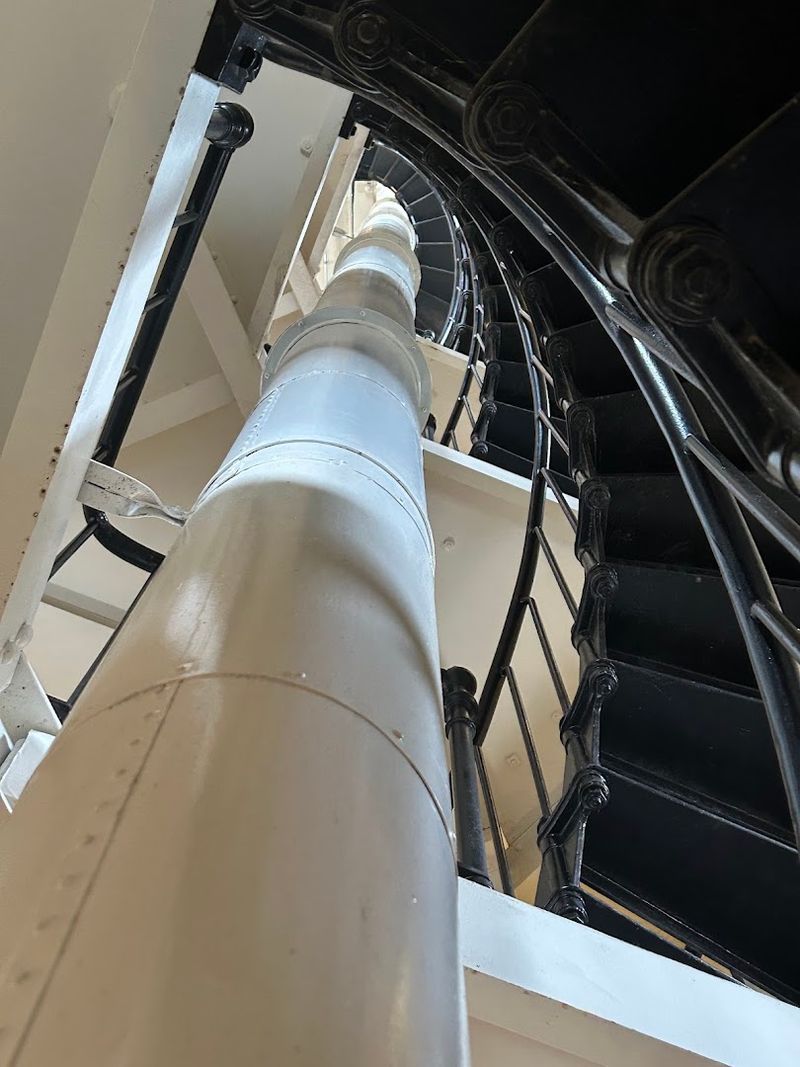
Fair warning before you lace up your shoes for this one: the climb to the top of North Point Lighthouse is not a casual stroll. There are 71 steps, and toward the very top, the staircase gives way to a ladder-style climb that requires a signed waiver.
That detail alone tends to separate the curious from the truly committed, and I will say, the committed ones are rewarded generously.
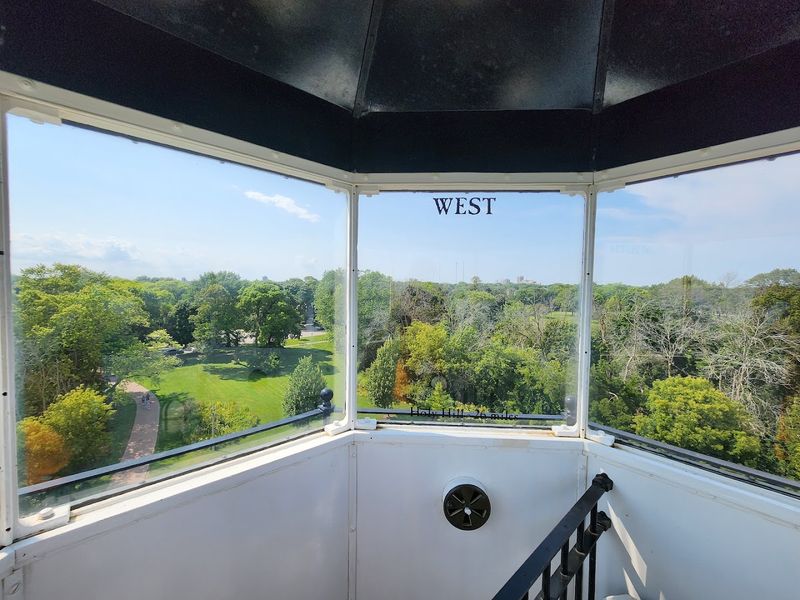
The views from the observation area are genuinely breathtaking. Lake Michigan stretches out in every direction, shifting color depending on the light and the weather.
On a clear day, the Milwaukee skyline frames one side while open water dominates the other. It is one of those rare spots where you understand immediately why people have been climbing up here for over a century.
One thing worth knowing: it gets hot up there, especially in summer. The enclosed metal structure traps heat efficiently, so bringing water and wearing light clothing is a smart move.
The climb itself is steep but manageable for most able-bodied visitors, and the staff are good about giving you a heads-up on what to expect before you start.
The experience is not just physical. Every step up carries the weight of everyone who climbed before you, from Georgia Green Stebbins doing her daily rounds to the volunteers who now keep this place alive.
Reaching the top feels less like a tourist activity and more like a small personal achievement with a spectacular view attached to it. That combination is hard to beat.
The Museum Inside: Shipwrecks, History, and Milwaukee’s Maritime Past
Before you even think about climbing, the museum on the first floor of the keeper’s quarters deserves your full attention. It is a compact but genuinely well-curated space that tells the story of Milwaukee’s deep connection to Lake Michigan and the Great Lakes shipping trade.
The exhibits cover lighthouses, shipwrecks, navigation history, and the lives of the people who kept these lights burning through brutal Midwestern winters.
The shipwreck material is particularly compelling. Lake Michigan has claimed hundreds of vessels over the centuries, and the museum does not shy away from the human cost of those losses.
Artifacts, photographs, and detailed placards bring those stories to life in a way that feels respectful rather than sensationalized. You come away with a real appreciation for how dangerous Great Lakes navigation was before modern technology.
The staff and volunteers here are a genuine highlight. Passionate about their subject and happy to share details that go well beyond what is written on the walls, they make the whole experience feel personal.
One visitor’s account of a volunteer named Dave sharing Milwaukee’s growth and its lighthouse network captures exactly the kind of human touch this museum offers.
The gift shop is worth a browse before you leave. Books about Great Lakes history, lighthouse-themed merchandise, and small keepsakes make for thoughtful souvenirs.
The museum is open on weekends from 1 to 4 PM, so planning your visit around those hours is essential. It is a small window of time, but more than enough to absorb everything this remarkable place has to offer.
Lake Park, the Grounds, and Making a Full Day of It
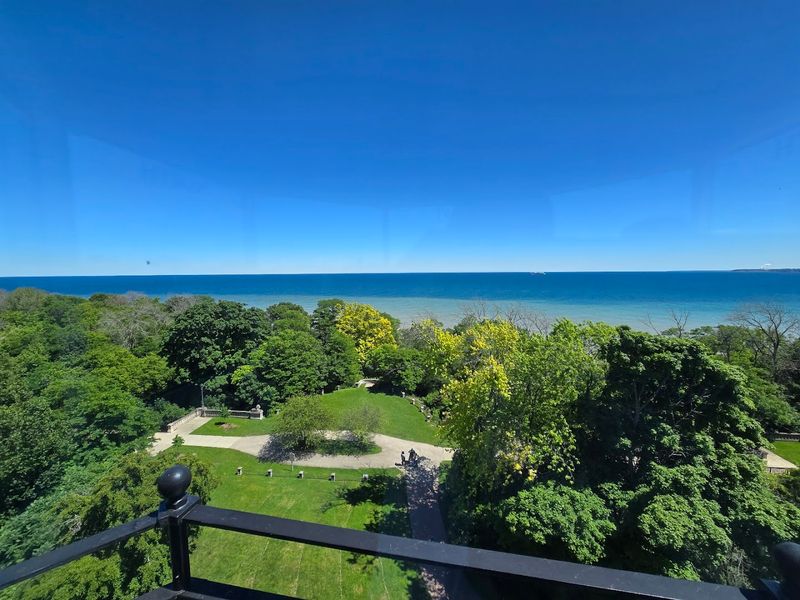
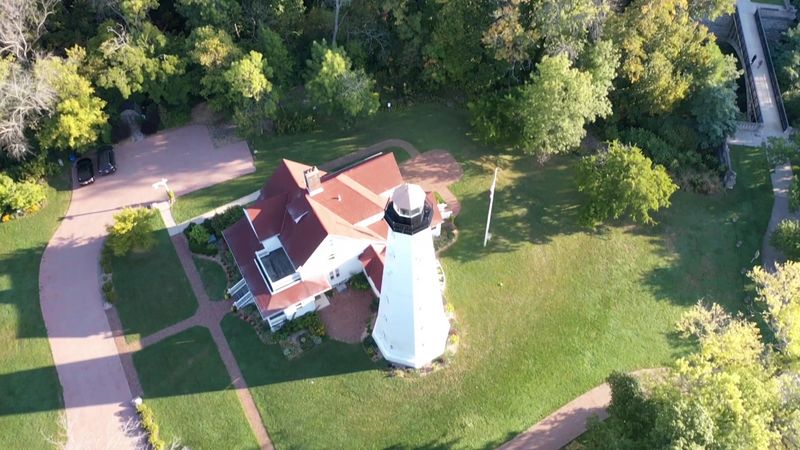
The lighthouse does not exist in isolation. It sits within Lake Park, a Frederick Law Olmsted-designed green space that wraps the property in exactly the kind of natural beauty you would hope for from a lakefront Milwaukee landmark.
The grounds around the lighthouse are immaculately maintained, with gardens, walking paths, and views of Lake Michigan that rival anything inside the tower itself.
Two stone lion statues guard the back entrance of the property, and they have become something of an unofficial photo landmark in their own right. The landscaping shifts with the seasons, offering something different depending on when you visit.
Spring brings blooms and soft light. Summer brings heat and the full green canopy overhead.
Autumn turns the whole park into something almost unreasonably beautiful.
Cyclists and walkers regularly pass through on the trails that wind behind the lighthouse. Biking from downtown Milwaukee to North Point is a popular route, and the lighthouse makes for a perfect natural stopping point.
The surrounding neighborhood, with its historic mansions and quiet residential streets, adds another layer of character to the whole outing.
Parking is free, and the area is easy to navigate whether you arrive by bike, car, or on foot. Spending a full afternoon here, starting with a walk through Lake Park, moving into the museum, and finishing with the climb to the top, gives you a complete Milwaukee experience that feels genuinely local rather than touristy.
Address: 2650 N Wahl Ave, Milwaukee, Wisconsin 53211.
