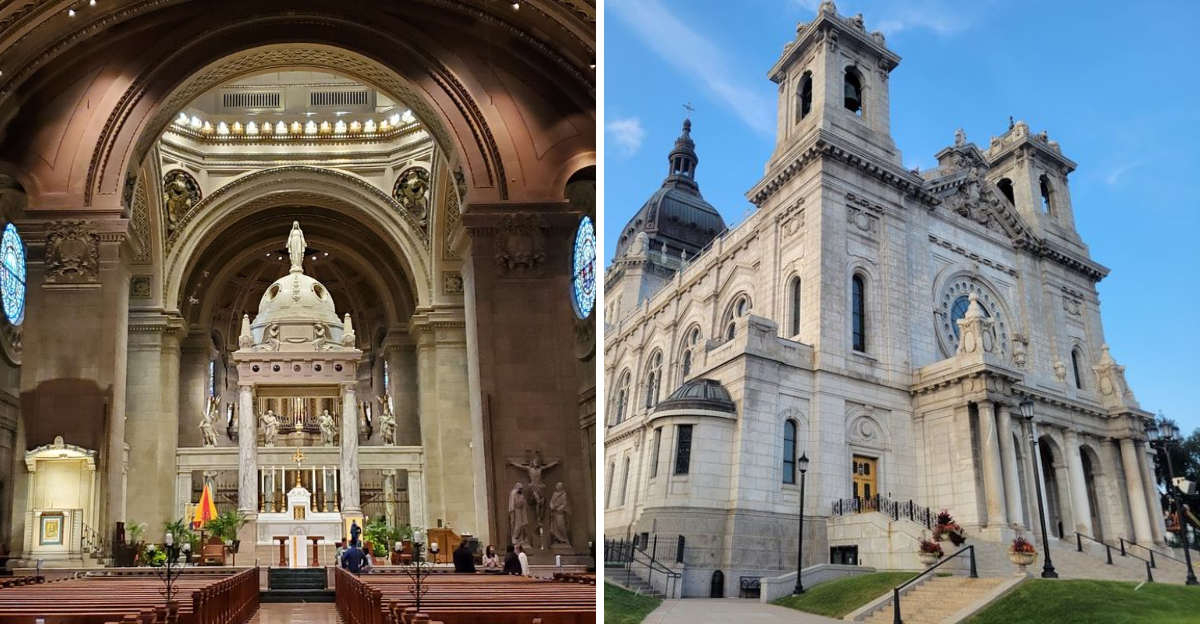
Long before most people had cars, this Minnesota church received a title that no other American church could claim. The first basilica established in the United States sits in the middle of a busy city, its twin domes rising above the surrounding buildings like a quiet reminder of something much older.
You walk up the wide stone steps and push through heavy wooden doors into a space that makes you stop talking without anyone asking. The ceilings soar high above with painted details that require looking up for a long time to appreciate.
Sunlight filters through stained glass windows, casting colored shapes on marble floors worn smooth by over a century of footsteps. The sanctuary feels massive but somehow still intimate, a place where you can sit in silence and feel small in the best possible way.
Minnesota has plenty of historic buildings, but this one carries a special weight as the very first of its kind in the nation. You do not need to be religious to appreciate the craftsmanship, the history, or the peaceful atmosphere.
The doors stay open to everyone and admission costs nothing.
Stained-Glass Windows That Tell a Story
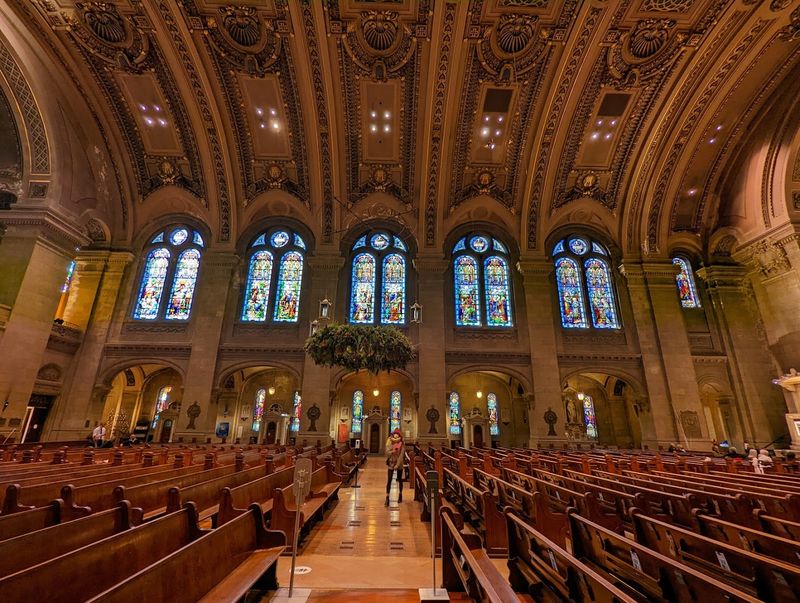
Sunlight behaves differently inside the Basilica of Saint Mary. It arrives filtered through dozens of stained-glass windows, broken into colors that move slowly across the stone floor as the day passes.
Watching that happen is unexpectedly meditative. You do not need any particular belief system to appreciate it.
Each window depicts a different religious figure or biblical scene. The craftsmanship is extraordinary up close.
The leading between each piece of colored glass is precise and intricate. Some windows are large enough to fill an entire wall section, and the detail in each one rewards a slow, careful look.
The windows were installed over many decades, contributed by different donors and craftspeople. That layered history gives the collection a richness that a single commissioned project could never achieve.
Standing in the nave during morning hours, when the eastern light pushes through the glass, the colors are at their most vivid. It is one of those quiet moments that visitors tend to remember long after leaving Minneapolis.
The Luminescence Light Show Is Something Else Entirely
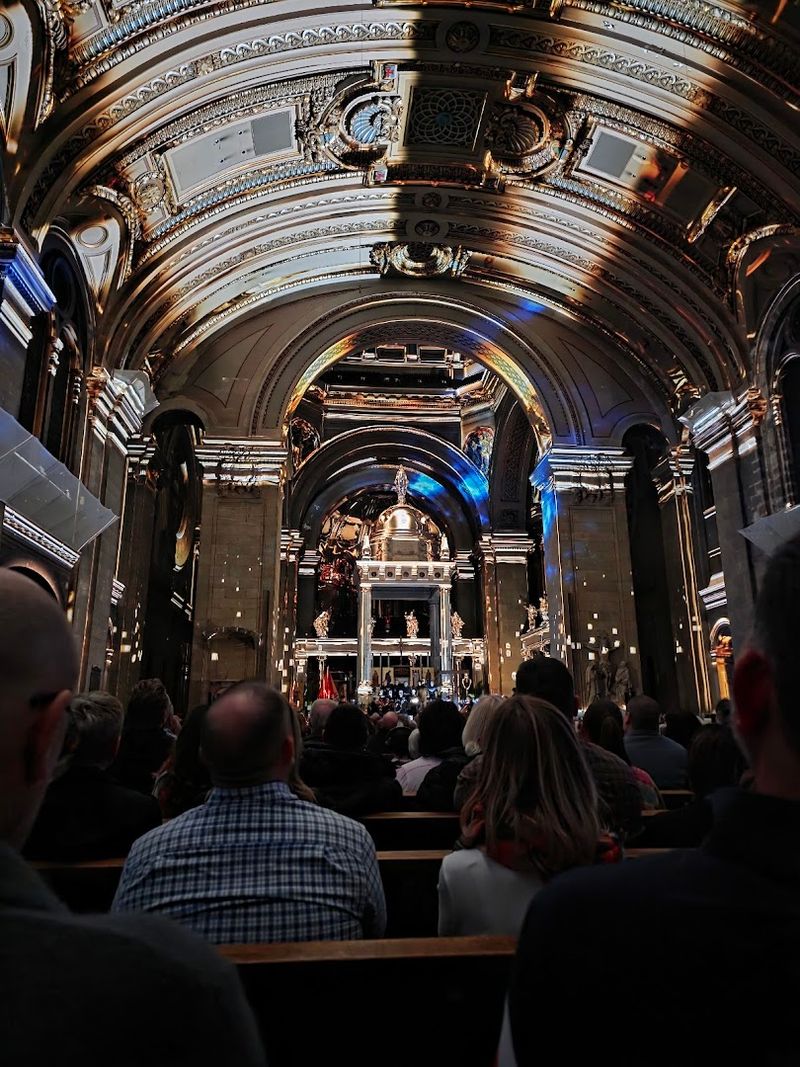
Few events in Minneapolis generate as much genuine excitement as Luminescence at the Basilica. The winter light show transforms the interior into something that feels almost surreal.
Projected lights wash over the stone columns and vaulted ceilings in waves of color. Pairing that with live choral and orchestral music creates an experience that is hard to describe without sounding dramatic.
Visitors have called it one of the top experiences of their lives. That kind of reaction is not typical for a seasonal event.
The show highlights the architectural details of the building in ways that daytime visiting simply cannot. Shadows and light work together to reveal textures and shapes you would otherwise miss completely.
The event also serves as a fundraiser supporting the basilica’s ongoing restoration efforts. Parking is available across the street, and tickets can be scanned digitally at the entrance.
It runs through the winter months, so checking the basilica’s website for current dates is always a good idea. Going on a weekday tends to be a quieter experience.
The Architecture Will Leave You Speechless
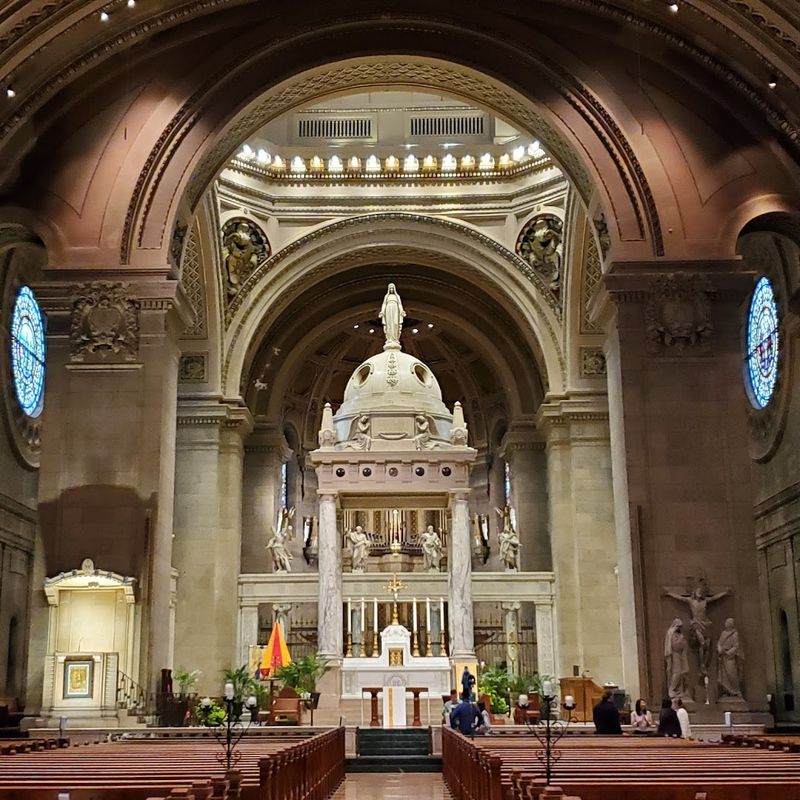
Walking through the front doors feels like entering a completely different world. The ceiling soars so high above you that your first instinct is just to look up and stay there.
Every surface seems to have been crafted with careful, deliberate intention. Nothing feels accidental inside this space.
The style is Beaux-Arts classical, inspired by the great churches of Europe. Massive columns line the nave.
Marble floors reflect the soft glow of candles and stained-glass light. The proportions of everything inside feel both monumental and deeply human at the same time.
Masqueray drew inspiration from the Pantheon in Rome when designing the dome. That influence is visible the moment you step inside.
The rotunda overhead creates a sense of openness that most buildings simply cannot replicate. Visitors often slow their pace instinctively.
There is an unspoken invitation here to simply stop, breathe, and absorb the beauty around you. It is genuinely hard to rush through this place.
Shrines, Chapels, and Sacred Spaces Within
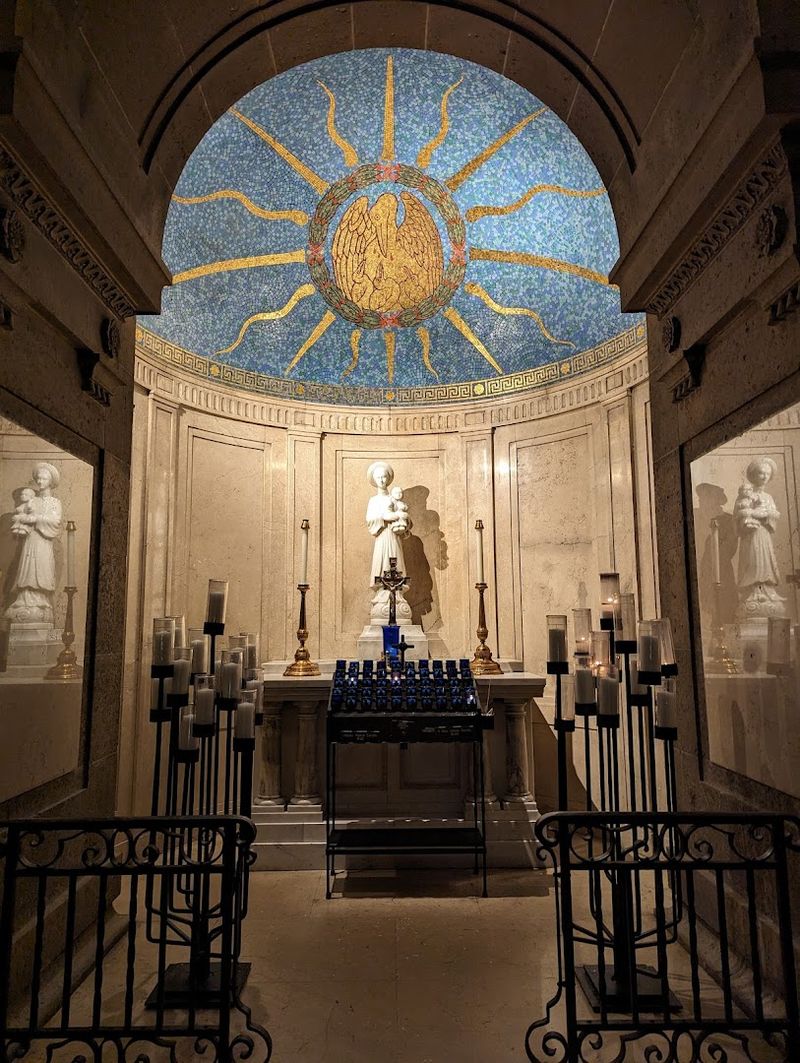
Beyond the main nave, the basilica holds a collection of smaller chapels and shrines tucked along its walls. Each one feels like a separate, quieter world.
The lighting shifts. The scale changes.
You suddenly feel like you have stepped into a private space even though you are still inside a very public building.
Devotional statues and sacred artwork fill these side spaces. Many depict the Virgin Mary in different forms and traditions.
Visitors have noted that seeing so many representations of Mary gathered in one place carries real emotional weight. The attention to detail in each piece is striking, even for those who approach them purely as art objects.
One particularly notable feature is the holy door, which holds special significance in Catholic tradition. It is opened during jubilee years and marks the basilica as a pilgrimage destination.
Knowing that people travel specifically to pass through that door adds another layer of meaning to the building. Even a casual visitor can feel the accumulated significance of this place simply by walking slowly through it.
A Small Museum Hidden in the Basement
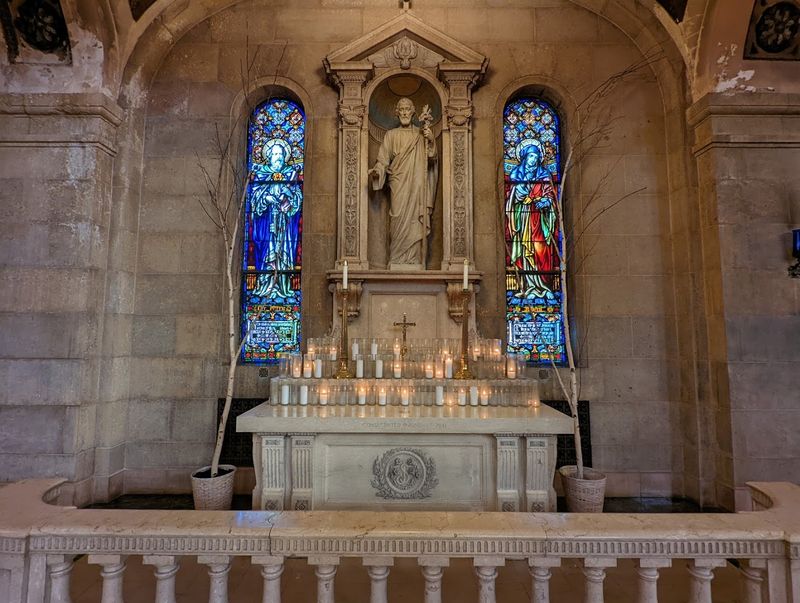
Most visitors never make it downstairs, and that is honestly their loss. The basement of the Basilica of Saint Mary holds a small but genuinely interesting museum.
Wooden religious sculptures are displayed alongside artifacts gathered from different parts of the world. It has the feel of a well-curated personal collection rather than a formal institution.
The pieces range in age and origin. Some are clearly very old.
Others appear more recent but no less carefully crafted. Together they create a sense of the global community that has contributed to and supported this particular church over more than a century.
Spending time down there adds real context to the building above. You start to understand that the basilica is not just a local landmark.
It is connected to a much wider network of faith, culture, and artistic tradition. The museum is open during regular visiting hours, and admission to the basilica itself is free.
That combination of accessibility and depth makes the whole visit feel genuinely rewarding rather than just visually impressive.
America’s First Basilica, A Title Unlike Any Other
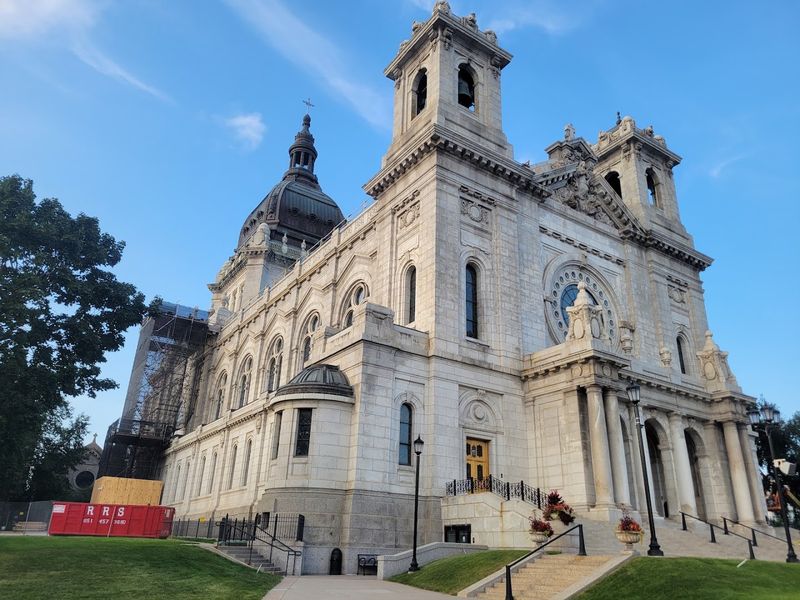
Not every church gets to claim a national first. The Basilica of Saint Mary in Minneapolis holds that rare distinction as the first church in the United States to receive the title of basilica.
Pope Pius X granted this honor in 1926. That single moment changed how the entire country viewed this Minneapolis landmark.
A basilica is not just a large church. It is a designation given by the Vatican to churches of special historical and spiritual significance.
Only a select number of churches worldwide receive this title. Being the first in the entire United States is a remarkable achievement.
The basilica was designed by architect Emmanuel Louis Masqueray. He was also the architect behind the Cathedral of Saint Paul.
Construction began in 1907 and was completed over several years. Walking up to its massive stone exterior, you immediately sense that something important happened here.
The building carries its history with quiet confidence. It does not need to announce itself loudly.
The Choir and the Sound of the Space
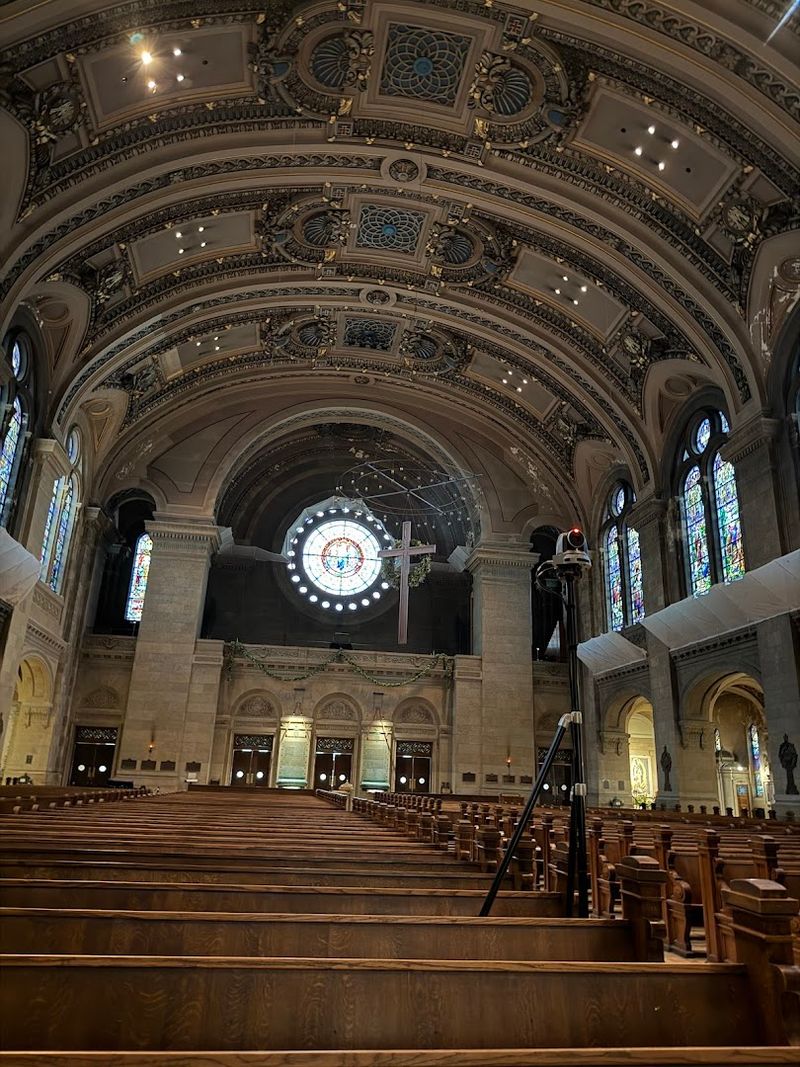
Sound inside the Basilica of Saint Mary does something unexpected. It gathers, rises, and fills every corner of the space before settling back down.
Hearing a choir perform here is not just a musical experience. It is almost a physical one.
The acoustics of the building were clearly considered during its design.
Attending a Mass and hearing the choir sing is one of those moments that visitors mention repeatedly in their memories of the place. Voices blend and echo in ways that feel effortless.
The pipe organ adds a depth and resonance that you feel as much as you hear. Even arriving mid-service and standing near the back gives you the full effect.
The bells of the basilica are another auditory landmark. They can be heard from considerable distances across the surrounding neighborhood.
One visitor recalled hearing them from the other side of town during a midday visit. That kind of reach is rare, It is a reminder that this building has been shaping the soundscape of Minneapolis for well over a century.
Restoration Efforts Keeping History Alive
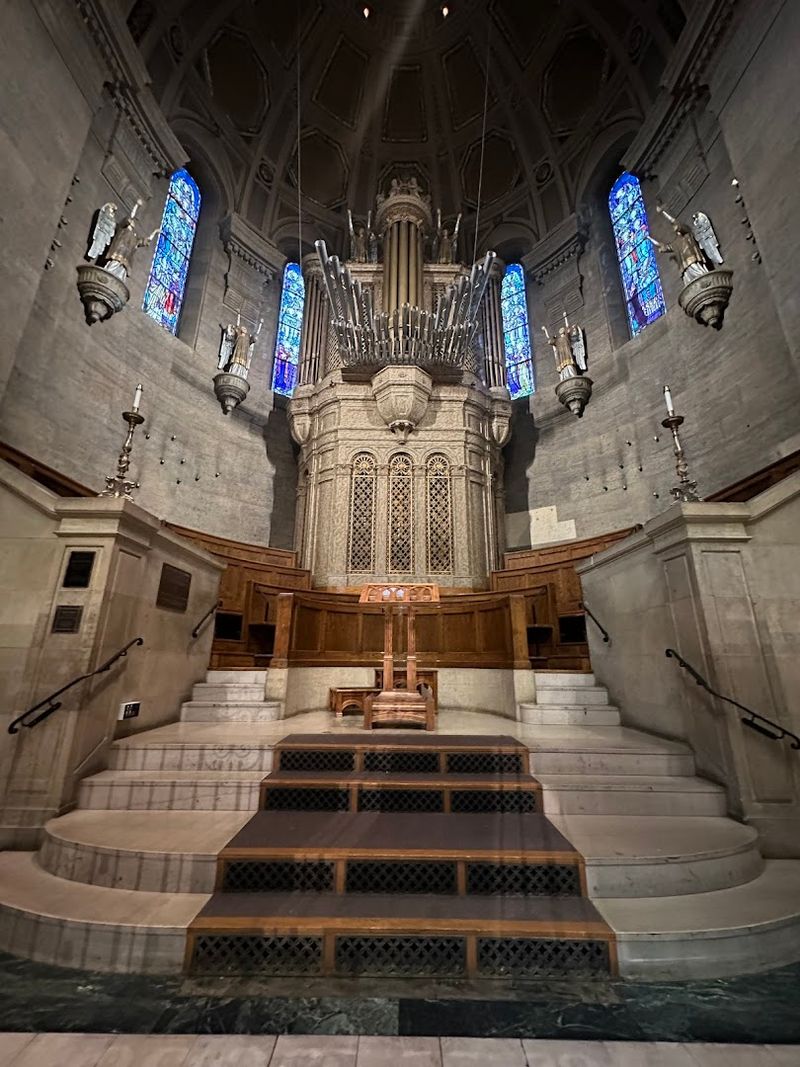
Great buildings require great care. The Basilica of Saint Mary has been undergoing significant restoration work in recent years.
The walls and painted surfaces need careful attention after more than a century of use. Watching the scaffolding go up inside a space this beautiful is a little jarring at first.
Then you realize what it means: someone is fighting to preserve this place.
The restoration is funded largely through events like Luminescence and ongoing community donations. The basilica has been transparent about its fundraising goals.
That honesty has earned it considerable goodwill from both parishioners and visitors who have no formal connection to the church.
Even during active restoration phases, the basilica remains open and welcoming. The work does not diminish the experience of visiting.
If anything, it adds a layer of context. You are not just seeing a finished monument.
You are seeing a building that a community actively chooses to maintain and protect. That commitment to preservation says something important about how Minneapolis values its own history and identity.
Planning Your Visit to the Basilica of Saint Mary
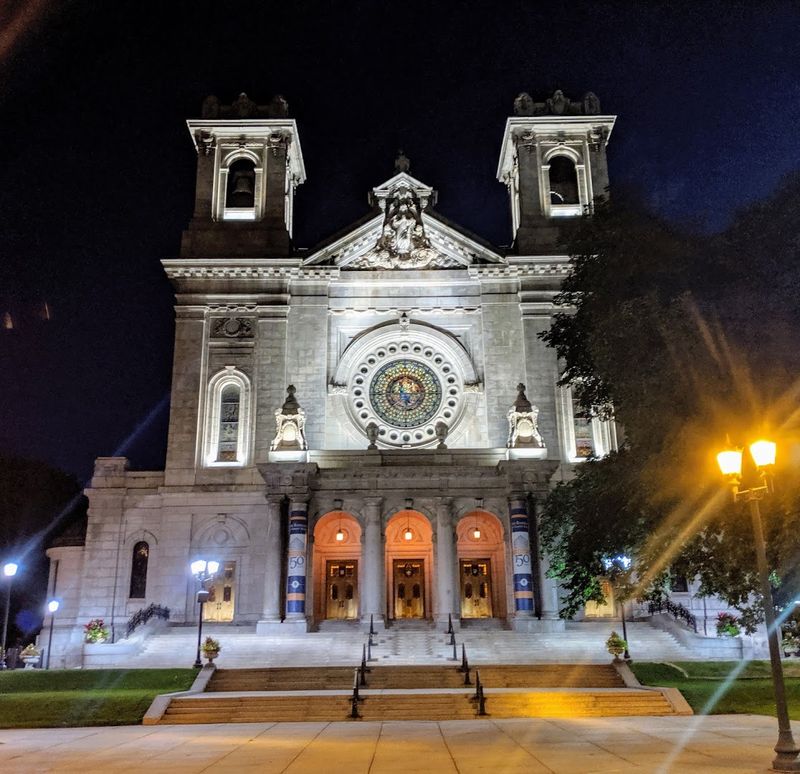
Getting to the basilica is straightforward. It sits at 88 N 17th St in Minneapolis, close to downtown and easily reachable by public transit or car.
Parking is available across the street, and paying is handled through a simple barcode scan system. Weekday visits tend to be quieter than weekends.
The basilica is open most days from 9 AM, with slightly extended hours on Saturdays and Sundays. Admission is free, which makes it one of the most accessible cultural landmarks in the city.
A suggested donation is always appreciated given the ongoing restoration needs. Bringing a camera is strongly encouraged.
Every angle inside offers something worth photographing.
Guided tours are occasionally available, particularly during special events like Doors Open Minneapolis. Staff and volunteers are friendly and knowledgeable.
They are happy to share the history of the building without making you feel pressured to engage.
Address: Basilica of Saint Mary, 88 N 17th St, Minneapolis, MN 55403
