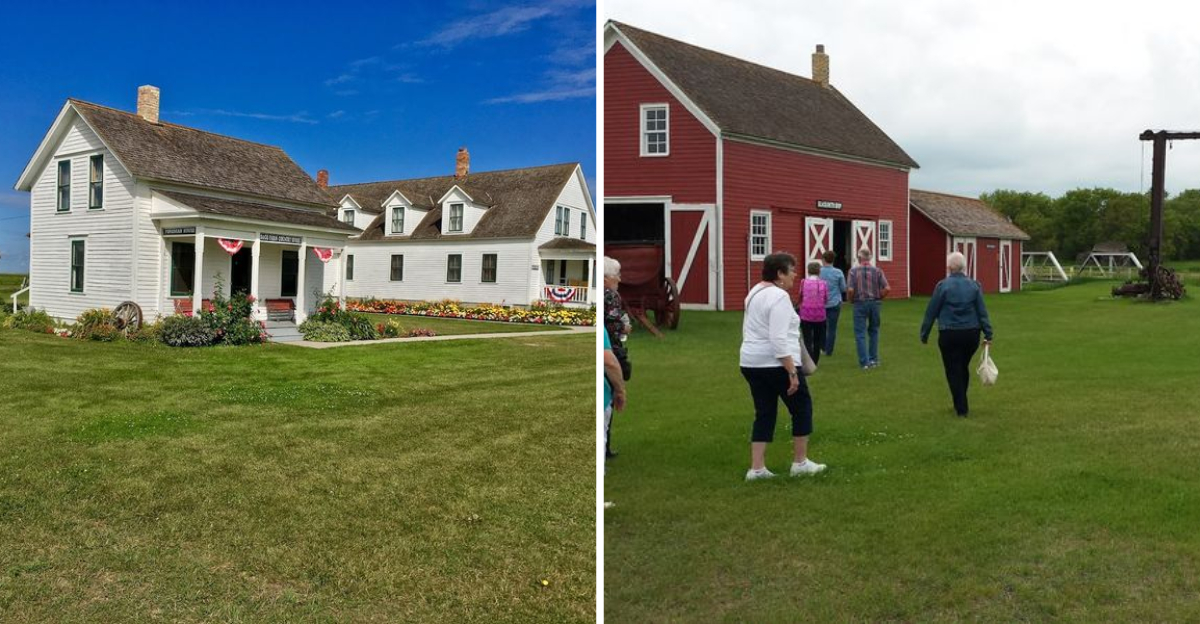
The prairie stretches out wide and flat in every direction, and the old buildings stand quiet against that enormous North Dakota sky like they have been waiting for someone to notice them. This was not just a farm.
It was practically a small town, complete with workers, bunkhouses, and a communal kitchen that fed over a hundred hungry field hands during harvest season. The main house started as a bunkhouse on a nearby farm before being moved here in nineteen fifteen. The front half became home to the family, while the rest of the building housed permanent employees.
Seasonal workers followed the harvest and slept in dormer rooms tucked into the half story upstairs through bitter winters. The tools are still hanging on the walls. The accounting ledgers are still on display.
Some of those workers went home, but others never really left the bunkhouse.
What a Bonanza Farm Actually Was
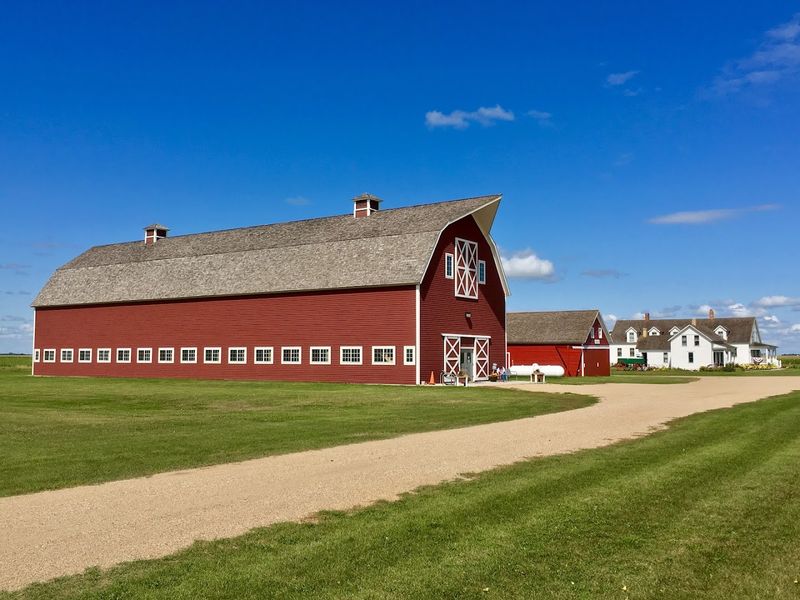
Most people picture a small family homestead when they think of a North Dakota farm. The Bagg Bonanza Farm was something else entirely, and the difference is genuinely staggering.
Bonanza farms were massive commercial agricultural operations that emerged in the Red River Valley during the late 1800s and early 1900s. They ran more like factories than family plots, using large crews, modern machinery, and strict management systems to grow grain on an industrial scale.
The Bagg farm covered somewhere between 7,000 and 9,000 acres at its peak, which is almost impossible to picture unless you are standing in the middle of it.
Frederick and Sophia Bagg took over operations around 1915 and ran the farm until roughly 1935. During that period, they applied business principles to agriculture in ways that were ahead of their time.
Accounting ledgers, organized labor schedules, and efficient supply chains were all part of how this place functioned. Visitors today can still see some of those original ledgers on display, which makes the whole operation feel surprisingly real and close.
Understanding the bonanza model is the key to understanding everything else about this place.
The Bunkhouse That Became a Home
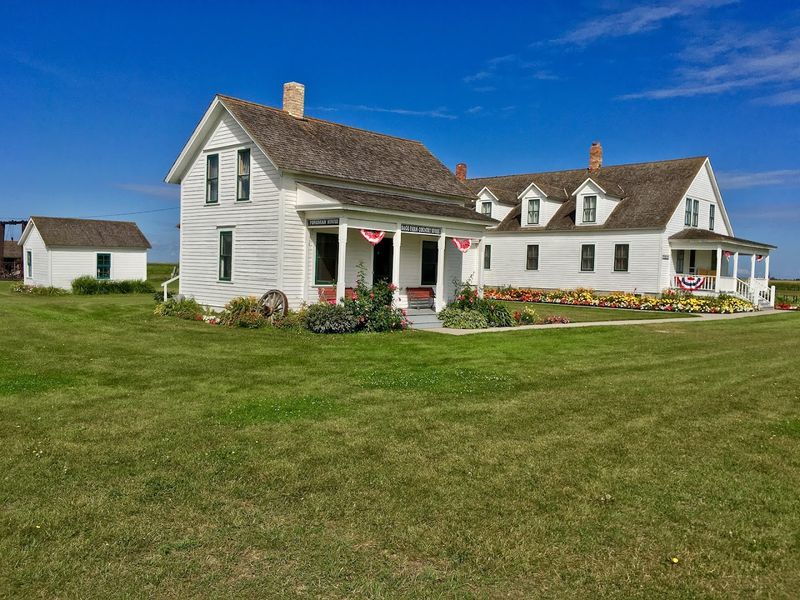
The main house at Bagg Bonanza Farm has a backstory that most visitors do not expect. It did not start life here at all.
Originally, the building served as a bunkhouse on the nearby Downing Farm, where Frederick and Sophia Bagg had worked before striking out on their own. In 1915, they had the structure moved to their own property and reworked it to serve a dual purpose.
The front half of the first floor became home to the Bagg family, while the rest of the building housed their permanent farm employees. A second bunkhouse was also relocated from the Downing farm that same year, giving the operation enough sleeping space to function through busy seasons.
The main house grew into a 20-room structure, and the permanent workers lived in dormer rooms tucked into the half-story upstairs. It was close quarters by any standard, but it was a roof over their heads year-round.
There is something quietly moving about standing in those rooms and thinking about the men who slept there through bitter North Dakota winters, far from wherever they called home.
The building still stands today, and it carries that layered history in every creaking floorboard.
Feeding a Small Army Every Single Day
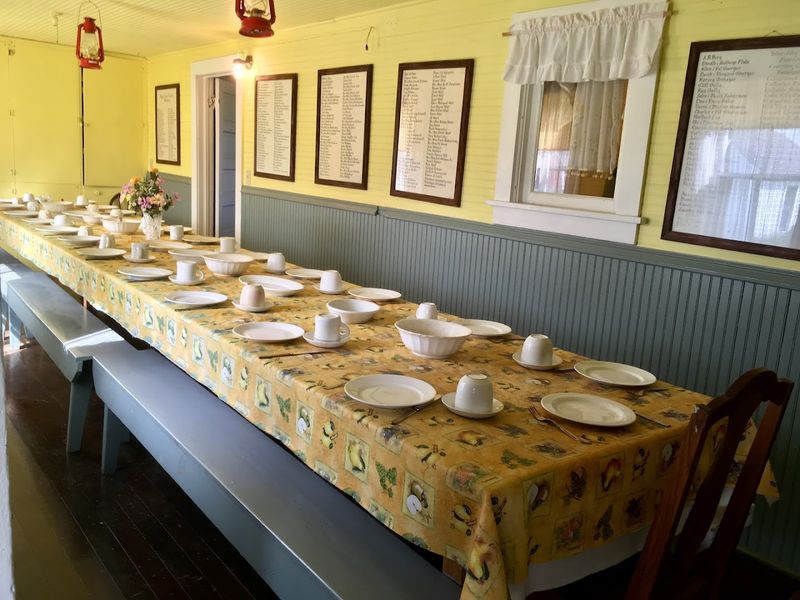
Running a farm with up to 120 hired hands during harvest season meant one thing was non-negotiable: everyone had to be fed, and fed well.
At the rear of the main house, a large kitchen and communal dining room handled the daily task of cooking for the entire crew. Women were employed specifically for cooking and cleaning duties, and the volume of food they prepared on a daily basis during peak season would be remarkable by any measure.
Imagine cooking three meals a day for over a hundred hungry field workers using a wood-burning stove and whatever was available from the farm and local suppliers.
That tradition of hearty, generous food has carried forward in a wonderful way. Today, visitors to the farm can enjoy homemade lunches and pie served in the barn cafe.
Reviews from guests consistently rave about the rhubarb custard pie, and more than one person has called it the best pie they have ever tasted. It is one of those small details that connects the present to the past in a genuinely satisfying way.
Good food kept those workers going then, and good food keeps visitors coming back now.
The Seasonal Workers Who Kept the Fields Running
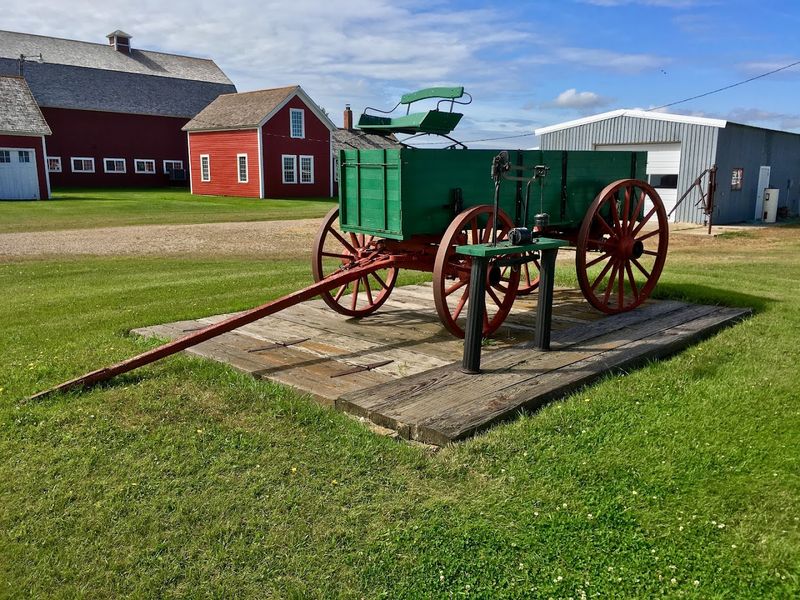
At peak harvest time, the Bagg Bonanza Farm employed somewhere between 100 and 120 men as field hands. That number alone tells you how different this operation was from anything most people think of as a farm.
These were largely migrant and transient workers who followed the harvest season across the region. They came for the work, stayed for the duration of seeding or harvest, and then moved on.
Life in the bunkhouse was functional rather than comfortable, but it gave them shelter and meals while the job lasted. The farm’s scale required that kind of mobile labor force, and the Baggs organized it with the same efficiency they applied to everything else.
What makes this history feel personal is knowing that some of those workers became permanent employees and stayed on year-round. They were the ones who lived in the dormer rooms upstairs, who woke up every morning to the same North Dakota sky, and who tied their lives to this particular stretch of prairie.
Their presence is woven into the fabric of the farm, even if their names are not always attached to the objects they left behind.
History here is not abstract. It is right there in the tools hanging on the walls.
A National Historic Landmark Worth the Drive
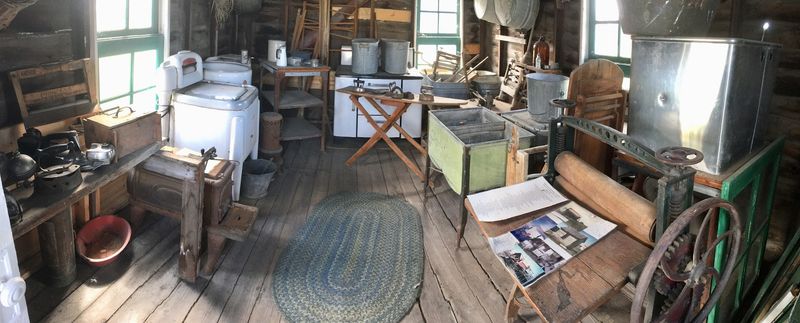
The Bagg Bonanza Farm received National Historic Landmark designation in 2005, which puts it in serious company. Not every place earns that distinction, and the recognition reflects just how rare and well-preserved this site actually is.
Visitors have described it as the only truly historic bonanza farm remaining in the United States, and that claim carries real weight when you walk the grounds. The buildings, tools, canceled checks, accounting ledgers, and kitchen items are all still there, giving the place a lived-in quality that a purely reconstructed museum could never replicate.
You are not looking at a replica. You are looking at the real thing.
Getting there takes a bit of intention since the farm sits at 8025 169th Ave SE, Mooreton, ND 58061, out on the open prairie where GPS is your best friend. Weekend visits are recommended if you want a guided tour, though the grounds are worth exploring even without one.
The tour guides bring genuine knowledge and enthusiasm to every visit, and that energy makes a real difference in how much you take away from the experience.
Plan for at least a couple of hours. There is more to absorb here than a quick pass-through allows.
The Volunteers Who Kept This Place Alive
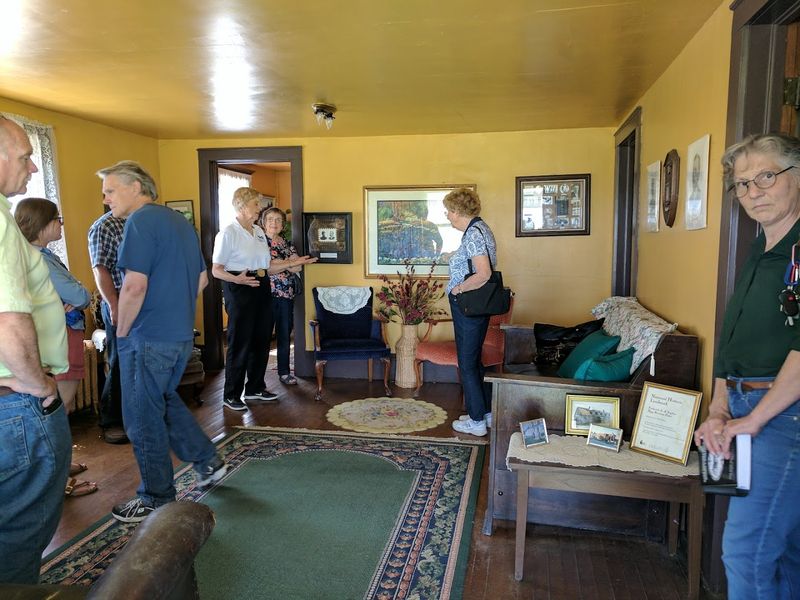
One of the most remarkable things about the Bagg Bonanza Farm is not the history itself but the people who chose to protect it. The farm is run by volunteers, many of them women, who have dedicated enormous amounts of time and effort to preserving and restoring the site.
Tour guides here do not just recite facts. They share stories with a warmth that comes from genuinely caring about the place and the people who once lived there.
Multiple visitors have mentioned a guide named Virginia by name, noting her deep knowledge and her obvious love for the farm’s history. That kind of personal investment is rare, and it transforms a museum visit into something much closer to a conversation.
The volunteers have restored buildings, cataloged artifacts, organized community events, and kept the farm financially viable without the backing of a large institution. That is no small feat for a remote prairie site.
The Labor Day event, the Fourth of July celebration, and seasonal tours all happen because of their ongoing commitment. It is hard not to feel a certain respect for what they have pulled off here, year after year, largely on their own terms.
The farm survives because people decided it was worth saving.
Visiting Today and What to Expect
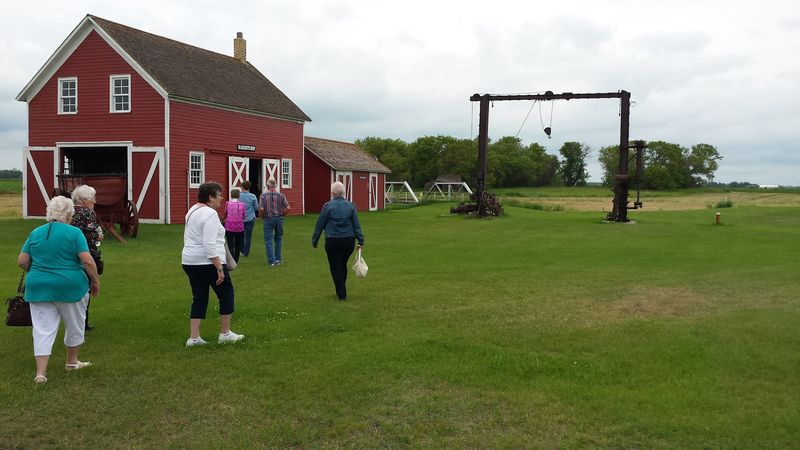
Showing up at the Bagg Bonanza Farm without a little planning can mean missing the tour, so it pays to check the schedule before you go. Weekend visits give you the best chance of catching a guided walkthrough, which is absolutely the way to experience everything this place has to offer.
The grounds include multiple historic buildings, original farm equipment, and all those artifacts that make the history feel tactile and immediate. After the tour, the barn cafe is the natural next stop.
Homemade pie has become something of a signature here, and the rhubarb custard version in particular has developed a loyal following among visitors who were not even expecting dessert to be part of the trip.
The barn itself has also become a popular event venue. Weddings, family reunions, and community gatherings have all taken place here, with the upper level offering a beautiful rustic space that is genuinely hard to find anywhere else in the region.
The farm sits at 8025 169th Ave SE, Mooreton, ND 58061, and can be reached by phone at 701-274-8989 for tour scheduling and event inquiries.
Come curious, leave full of pie and North Dakota history. That is about as good as a day trip gets.
