What happens when a roaring amusement park goes quiet and nature simply takes over?
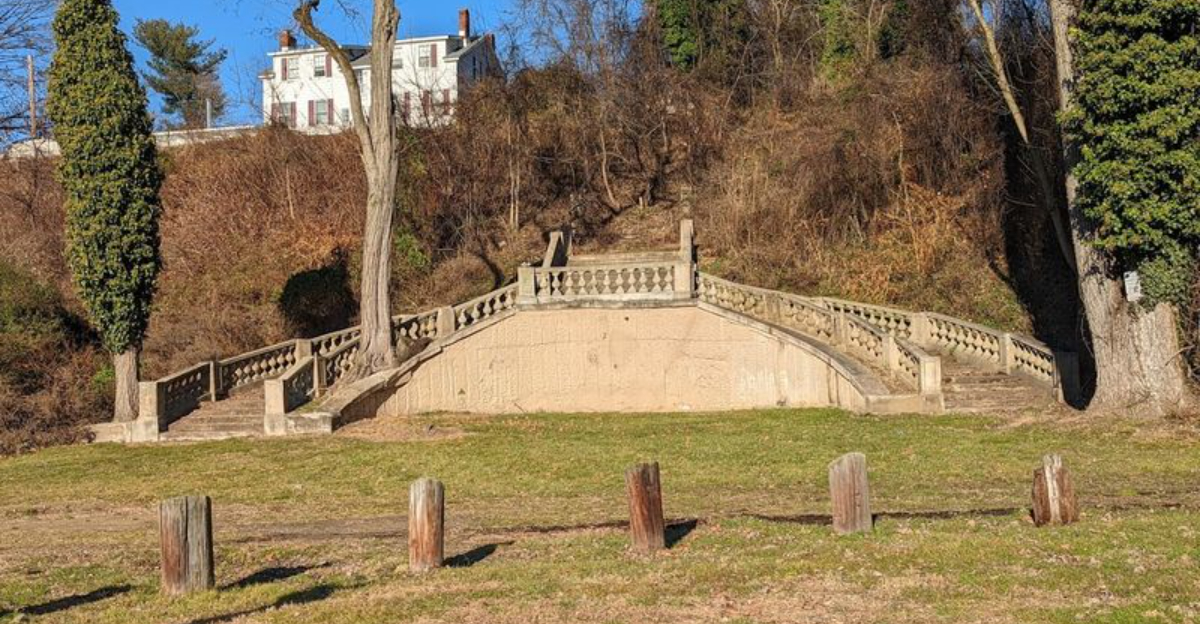
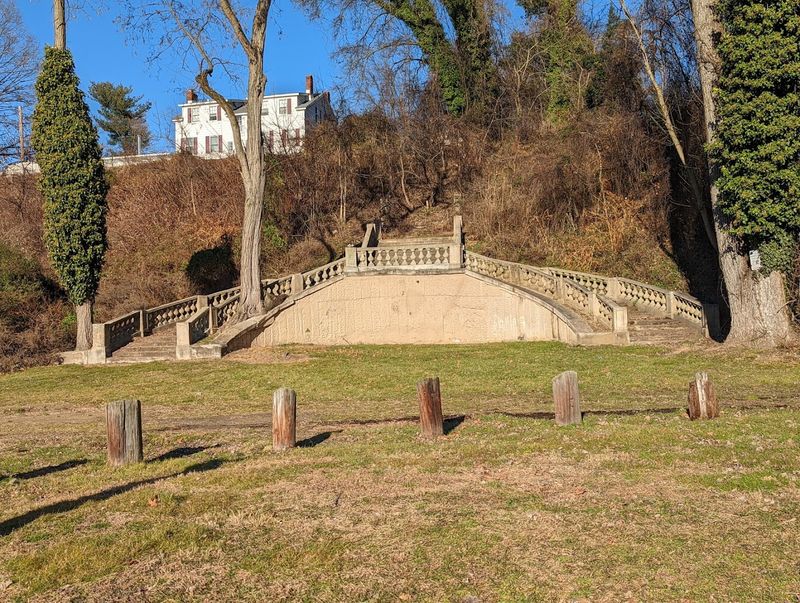
In a peaceful marshland park, a grand concrete staircase still stands, rising from the underbrush with nowhere to go.
It is a wide set of steps that once led thousands of visitors from the thrill rides of a bustling park down to a lively lakeside promenade.
That park was once known as a regional destination, packed with roller coasters, a carousel, and even a water flume.
But the crowds faded, the rides vanished, and the forest slowly swallowed the rest.
Today, the staircase remains as the last grand relic of that forgotten era, a silent monument to a century of wild fun.
New Jersey sure knows how to hide a story in plain sight.
The Crumbling Stairs That Lead Nowhere
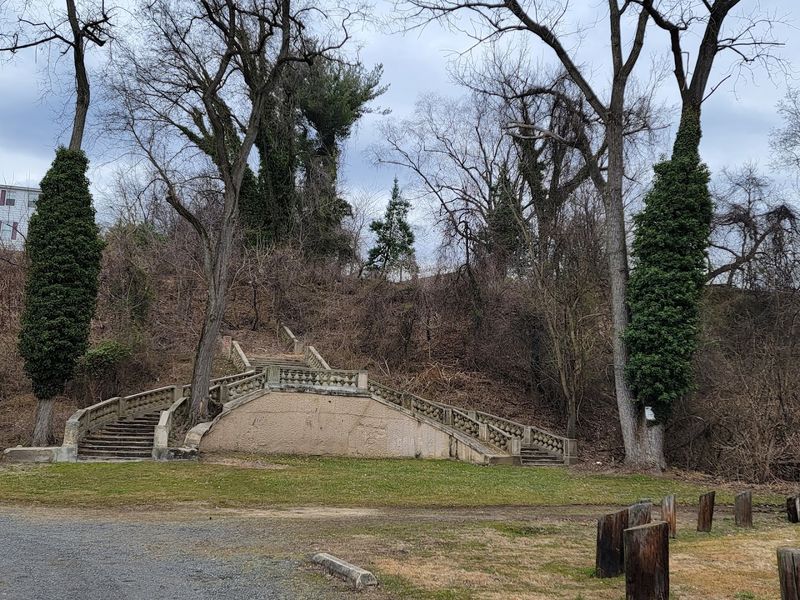
Standing at the base of these weathered concrete steps, you get the oddest feeling that you have just walked into a mystery novel. The stairs rise confidently, then simply stop, swallowed by trees and underbrush as if the rest of the world forgot to show up.
They sit near the parking lot on Sewell Avenue, and that contrast between the mundane parking lot and the grand staircase is genuinely surreal.
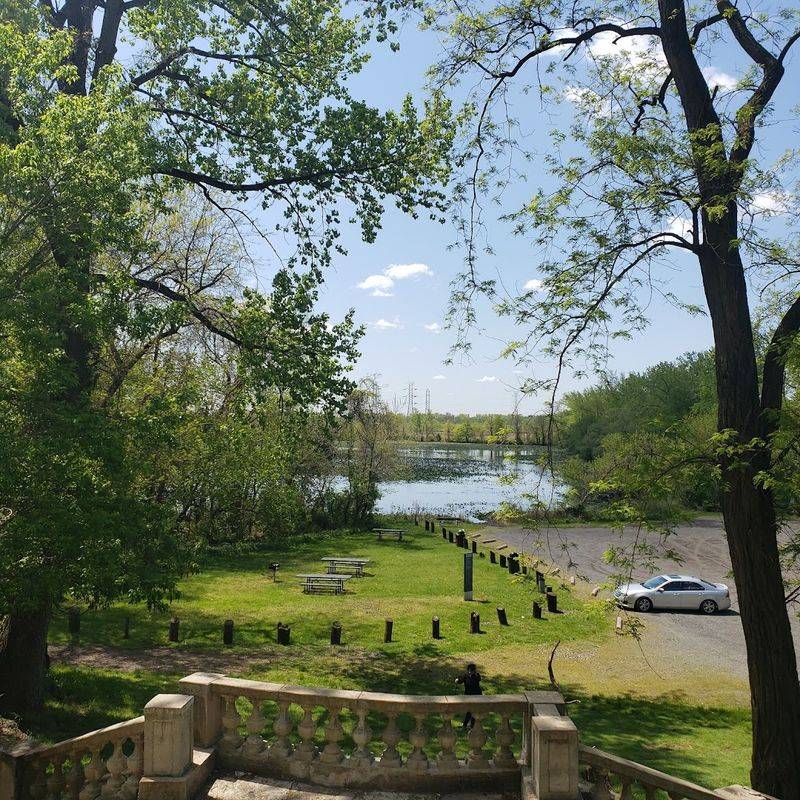
These steps once carried excited visitors downward from the bluff-top amusement rides toward the promenade wrapping around Spring Lake. Imagine the noise, the laughter, the smell of popcorn drifting through summer air.
Now there is only birdsong and rustling leaves, which is beautiful in its own right.
Mercer County has made efforts to preserve what remains, and you can spot patches of newer concrete mixed in with the original crumbling sections. The stairs feel like a handshake between past and present.
Come early in the morning when the light filters through the trees and the whole scene feels almost magical.
The Full Forgotten Story
Back in 1907, a trolley company had a clever idea: build a spectacular amusement park at the end of their line so people would actually ride the trolley.
That park became White City Amusement Park, and for a couple of decades, it was the place to be in central New Jersey.
Every building was painted bright white, inspired by the famous “White City” concept from the 1893 World’s Columbian Exposition in Chicago.
People called it the “Coney Island of New Jersey,” and that nickname was not just flattery. The park sat in the area now known as Spring Lake, stretching from Sewell to Buchanan Street, right at the end of Harrison Avenue where it meets McClellan Street.
A roller coaster, carousel, scenic railway, Katzenjammer Castle, Mystic Maze, a movie theater, a dancehall, and a water flume ride with gondolas were all part of the fun.
Spring Lake, then called White City Lake, hosted boating and fishing in summer and ice-skating in winter.
It was genuinely impressive.
The Heart of the Old Park
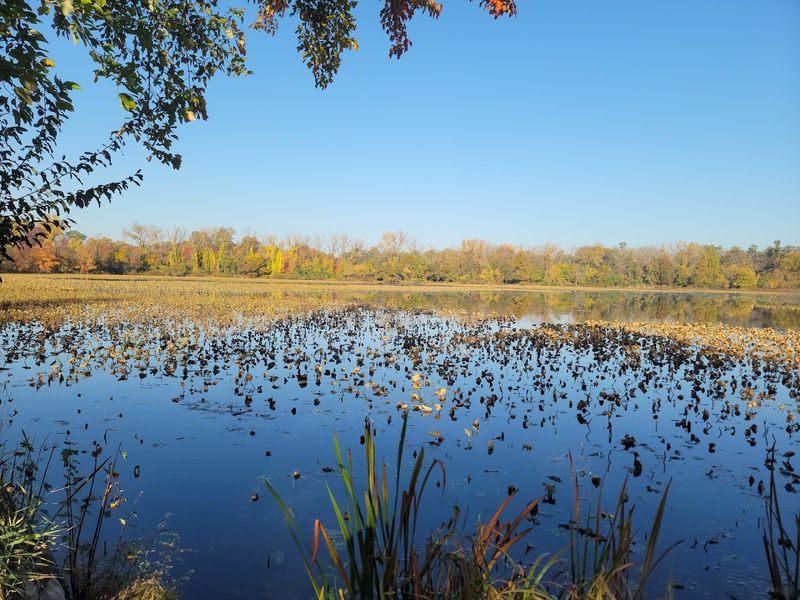
Spring Lake is one of those places that quietly steals your attention. The water sits calm and glassy on still mornings, ringed by trees whose roots grip the muddy banks like old friends refusing to let go.
Hard to believe this same lake once had gondolas gliding across it, packed with park-goers shrieking down a water flume ride.
Back when White City was running, the lake was the centerpiece of the whole experience. Visitors could rent boats, cast a fishing line, or lace up skates in winter when the surface froze solid.
That kind of all-season fun was a big deal in the early 1900s.
Today, the lake still draws people in for fishing, kayaking, and quiet reflection. Walking the trail around it takes about a mile, and the scenery shifts just enough to keep things interesting every few steps.
Bring a snack, find a spot along the bank, and let the stillness do its thing. The lake has a way of slowing everything down.
How the Automobile Killed an Amusement Park
The rise and fall of White City is actually a pretty fascinating piece of American transportation history. The park was built by a trolley company specifically to give people a reason to ride the rails out to the edge of Hamilton Township.
As long as the trolley was the main way to get around, White City thrived and buzzed with energy.
Then came the automobile. Suddenly, families had wheels of their own and could go anywhere they pleased.
The trolley lost its grip on daily life, and without that steady stream of riders, White City’s days were numbered.
By the late 1920s or early 1930s, the park had been abandoned. Nature moved in fast, reclaiming the bluffs and swallowing most of the structures whole.
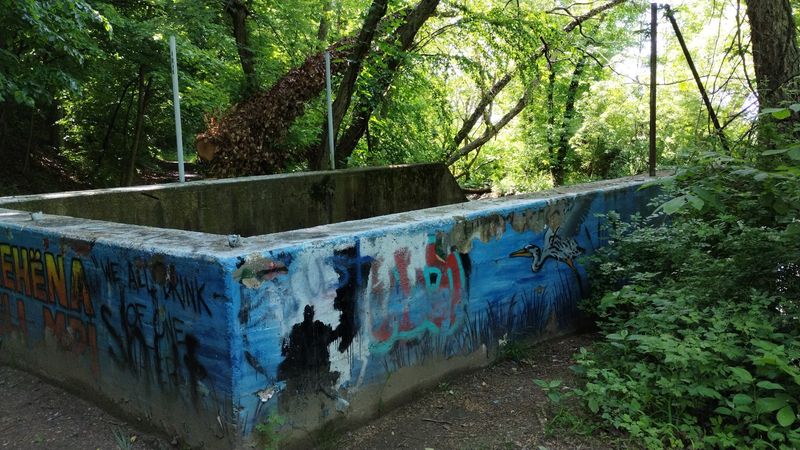
What is remarkable is that anything survived at all. The concrete stairs, the water flume chutes, and scattered foundation chunks outlasted everything else, quietly waiting for curious hikers to find them decades later.
History has a funny way of hiding in plain sight.
From Amusement Grounds to Wildlife Refuge
The transformation from abandoned amusement park to peaceful wildlife refuge is one of the more quietly inspiring stories in New Jersey park history. By 1957, the Broad Street Civic Association had acquired the land with financial support from the Roebling family.
That same year, it was transferred to Mercer County for just one dollar, officially becoming John A. Roebling Memorial Park.
The park was designated as a wildlife refuge for passive recreation, which basically means no motorboats, no loud concerts, no carnival rides. Just trails, wetlands, wildlife, and the occasional crumbling concrete mystery.
That shift in purpose gave the land a completely new kind of life.
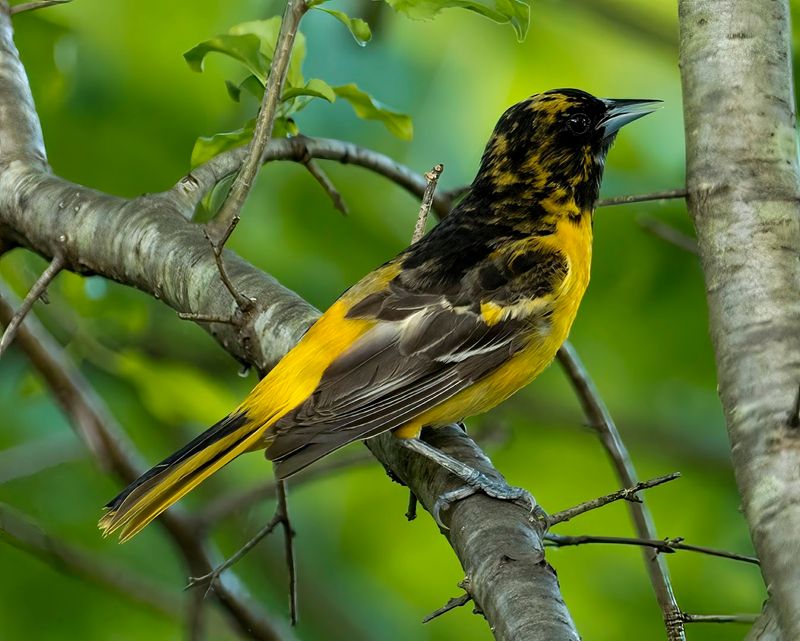
Today, the park covers a freshwater marsh area along the river and is genuinely rich with biodiversity. Herons wade at the water’s edge.
Turtles sun themselves on logs. Kayakers slip silently through narrow channels.
The whole place feels like a deep exhale after a long week. The Roebling family’s investment in this land turned out to be one of the best things that ever happened to Hamilton Township.
Hiking the Trails
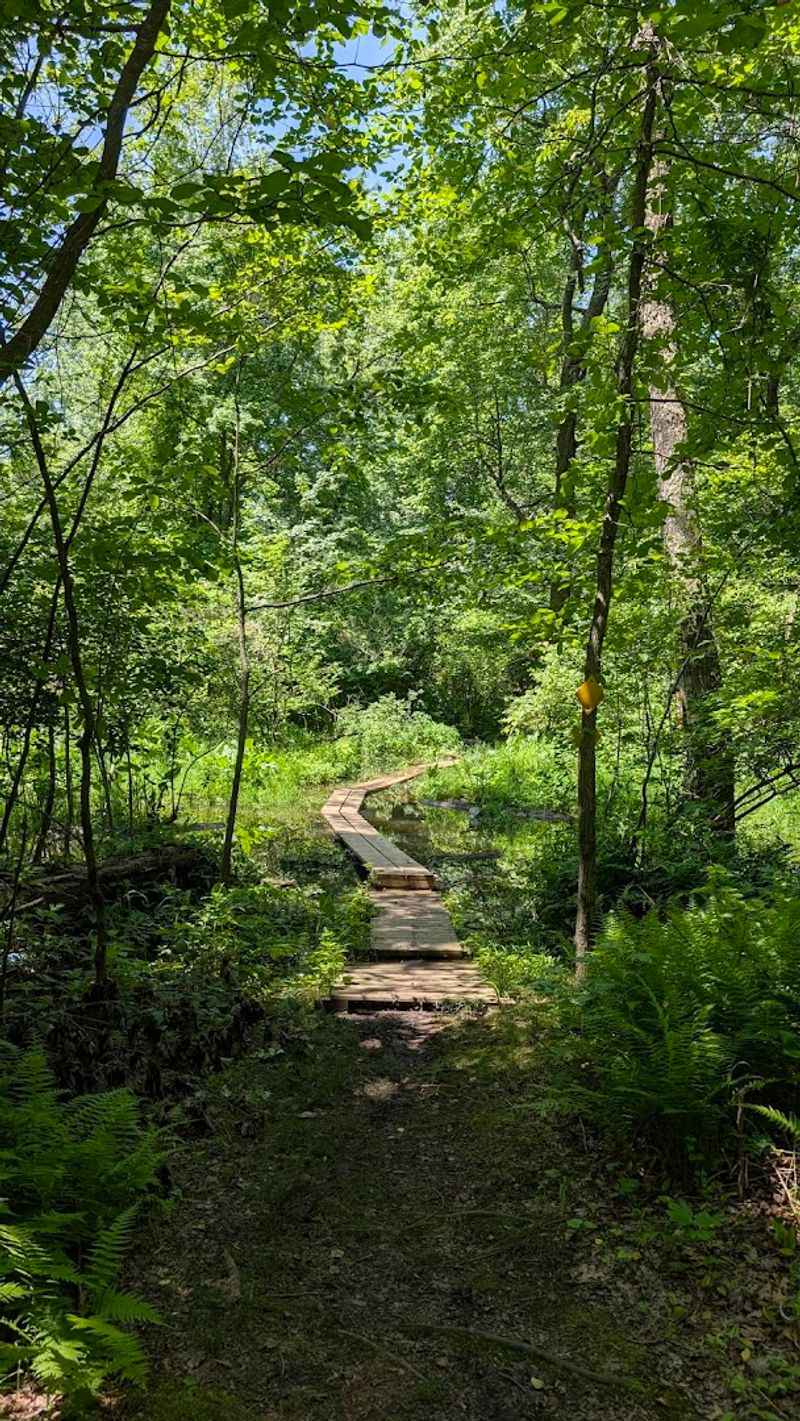
Flat trails, interesting discoveries around every bend, and just enough wildness to feel like a real adventure without wrecking your knees. That pretty much sums up hiking at Roebling Park.
The trails are well-marked and accessible, making them a solid choice for families with younger kids or anyone who wants a peaceful walk without serious elevation gain.
The network of paths winds through wetlands, along the lake, past old concrete remnants, and through stretches of dense woodland that feel genuinely remote even though you are well within Hamilton Township.
Keep an eye on the ground because the park is known for its snake population, which sounds alarming but is really just part of the ecosystem doing its thing.
Spending a full morning here is easy to do without even realizing how much time has passed. Bring water and a light snack because the trails cover more ground than they seem to on a map.
The park opens at 6 AM daily, so early risers get the best light and the quietest experience.
What Lives Here Now

Roebling Park is genuinely one of the better spots in central New Jersey for wildlife watching, and it does not ask much of you in return. Just slow down, stay quiet, and let the park reveal itself.
The freshwater marsh along the river creates a layered habitat that supports an impressive variety of birds, reptiles, and small mammals.
Great blue herons are a common sight, standing completely still at the water’s edge with that prehistoric patience they carry so well. Red-tailed hawks circle overhead on thermal currents.
Wood ducks pop up in the more sheltered coves around Spring Lake. Snapping turtles lurk in the shallower areas, and the occasional river otter has been spotted along the waterway.
Bird photography enthusiasts tend to love this park because the light over the marsh at sunrise and sunset is genuinely spectacular. A basic pair of binoculars makes the whole experience significantly richer.
The park’s passive recreation designation means the wildlife here is relatively undisturbed, which shows in how comfortable the animals seem around visitors.
Concrete Chutes in the Woods
Beyond the famous staircase, Roebling Park hides another layer of amusement park archaeology that most casual visitors walk right past.
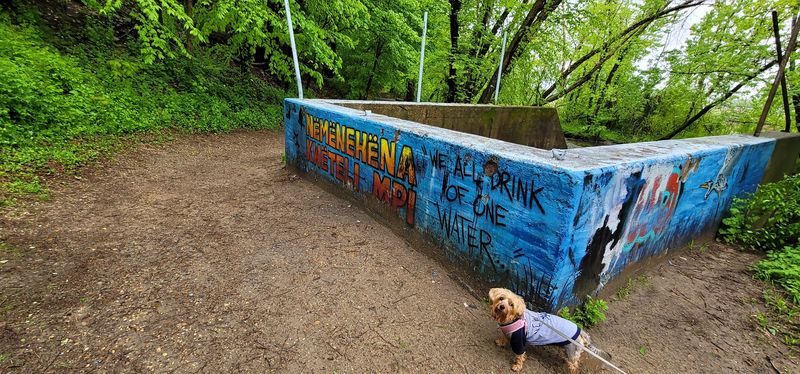
Scattered through the wooded bluff area, concrete chutes from the old water flume ride still poke out of the earth, weathered and mossy but unmistakably intentional in their shape.
They are easy to miss if you are not looking, which somehow makes finding them even more satisfying.
The water flume was one of White City’s signature attractions. Gondolas loaded with passengers would descend into the lake in a rush of splashing water and screaming delight.
What remains now is just the bones of that ride, half-buried and reclaimed by roots and soil.
Hunting for these remnants gives the hike a fun treasure-hunt quality that kids tend to love and adults secretly enjoy just as much. Large chunks of old concrete and scattered foundation pieces are also visible in various spots along the bluff.
The whole area feels like an outdoor museum with no admission fee and no velvet ropes keeping you at a distance.
Tips for Getting the Most Out of Roebling Park
Roebling Park rewards visitors who show up with a little curiosity and no particular rush. The park is open daily from 6 AM to 9 PM, which gives you a solid window whether you prefer a sunrise hike or a late afternoon wander before dinner.
Parking is available near the Sewell Avenue entrance, which also puts you close to the famous crumbling staircase.
Wear shoes you do not mind getting a little muddy because the wetland trails can get soft, especially after rain. Bring water, sunscreen, and a small snack because the trails cover more ground than they appear to on a basic map.
Bug spray is a smart addition in warmer months.
The park is genuinely family-friendly, with flat paths that work well for kids and older adults alike. Dogs are welcome on leash, and the scenery changes enough throughout the year to make repeat visits worthwhile.
Spring brings wildflowers and migrating birds. Fall turns the whole place into a canvas of gold and red.
Every season here has its own personality worth exploring.
Address: Hamilton Township, NJ 08610
