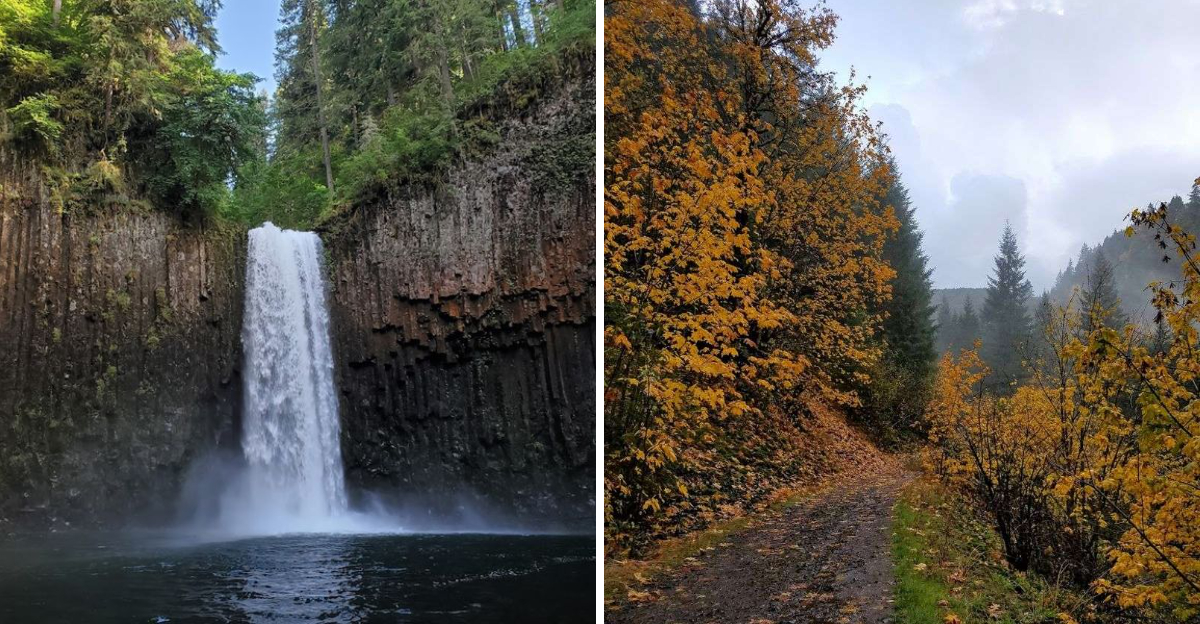
A short hike of less than a mile leads to a waterfall that feels like your own private discovery. I scrambled down a rocky slope and suddenly the sound of crashing water filled the forest around me.
Oregon has a hidden cascade that barely anyone knows exists because the trailhead is easy to miss completely. The falls drop into a perfect blue pool surrounded by mossy cliffs that look like something from another world.
I stood there with my mouth open while mist cooled my face and the roar of water drowned out every thought. Oregon really rewards the adventurous with a payoff that feels so much bigger than the effort required to find it.
The path is rough in spots but short enough that even hesitant hikers can manage with careful steps. I watched a couple take photos and their quiet whispers told me they felt the same sense of wonder.
The pool at the bottom invites a quick dip if you are brave enough to handle the cold. You leave feeling like you found a treasure that most people will never even know is there.
Getting to the Trailhead: The Road Less Paved
The drive to Abiqua Falls Trailhead is an adventure on its own. Crooked Finger Road NE winds through thick Oregon forest.
The pavement disappears quickly. What replaces it is a rough, rocky track that demands your full attention.
High clearance vehicles handle it best. AWD or 4WD is strongly recommended.
Low-clearance cars risk scraping bottom on the deep ruts, especially near the sharper turns.
If you feel uncomfortable driving further, pull into one of the roadside pullouts. Several are spaced along the route.
Walking the remaining distance adds time but protects your vehicle.
The trailhead itself sits at the end of the road near a white gate with a small parking area. Google Maps sometimes marks the trailhead slightly early, so drive until you hit that gate.
The final stretch has one notably rough rut. Clear it, and the rest is manageable.
Arriving prepared makes the whole experience smoother from the very first mile.
What to Expect on the Trail Itself
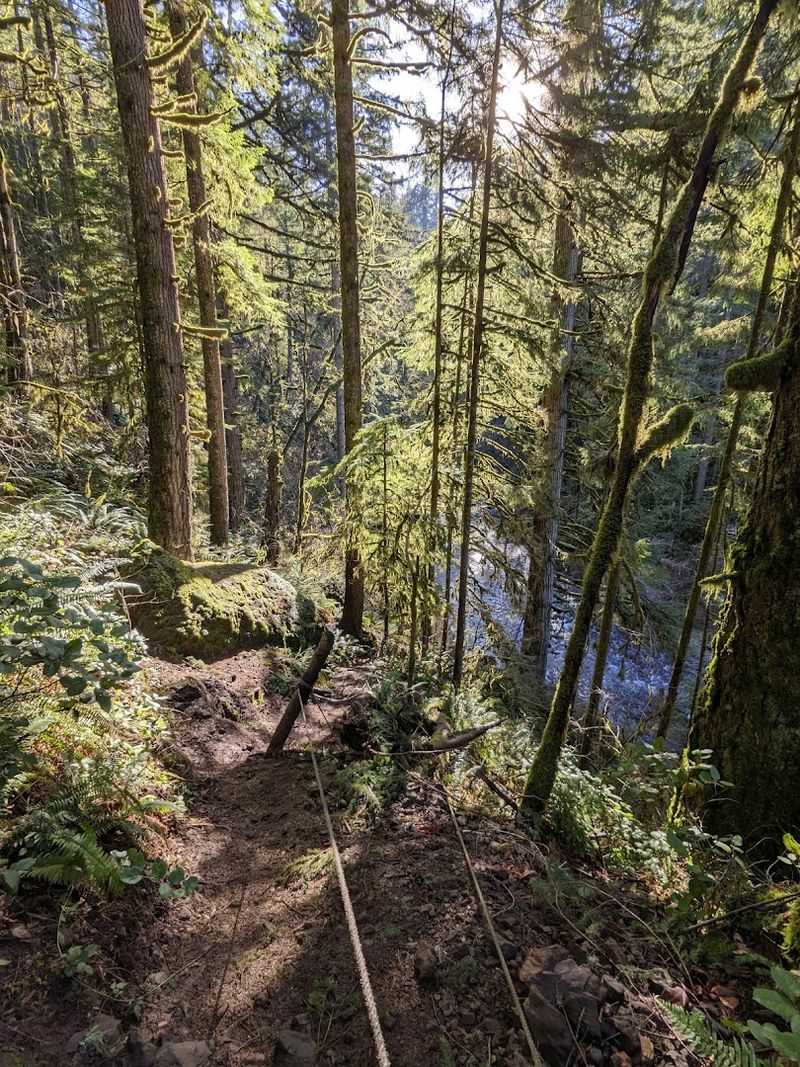
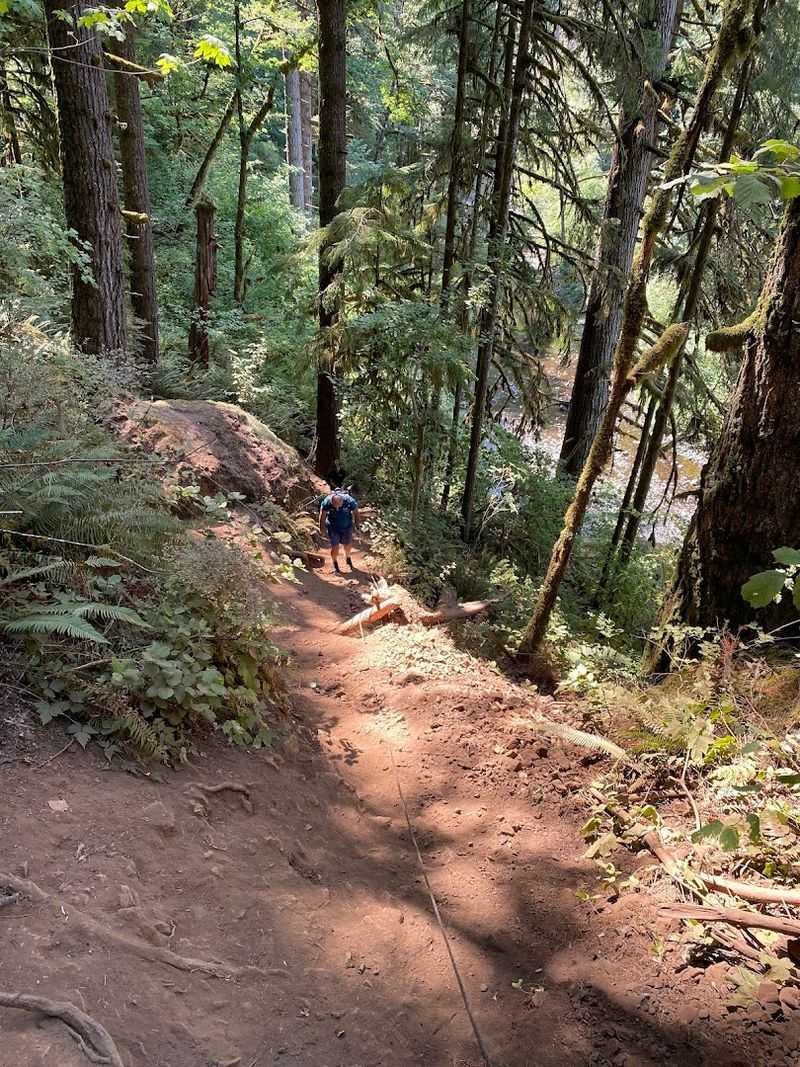
Standing at the trailhead, the forest immediately pulls you in. The trail drops steeply from the start.
Tree roots cross the path like natural staircases. The ground stays damp and shaded almost the entire way down.
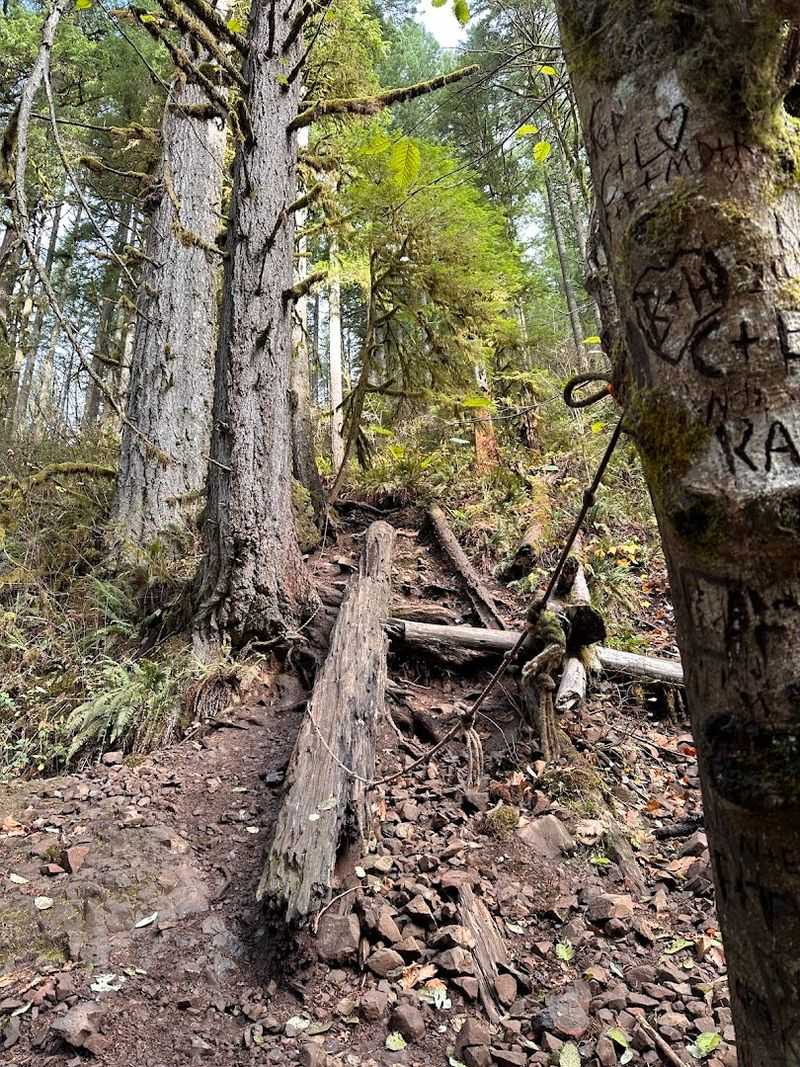
Ropes are installed at the steepest sections. They are genuinely helpful, not just decorative.
Gripping them on the descent gives you real confidence on the slick, rocky surface.
The trail stays left at the fork. That is the key detail most first-timers miss.
Taking the wrong fork leads to a higher, more exposed route that is harder to navigate safely.
Once you reach the river level, the terrain flattens out noticeably. A short walk along the water’s edge leads you directly to the falls.
The total distance is only 0.7 miles. Yet that short stretch packs in more elevation change than most trails twice its length.
Trekking poles or gloves for the rope sections make a real difference here.
The First Glimpse of Abiqua Falls
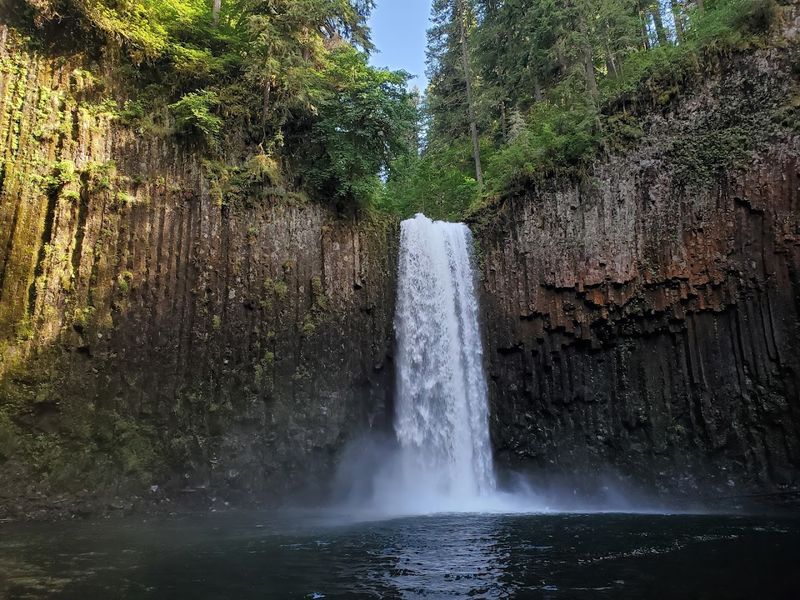
Nothing prepares you for that first view. The canyon walls rise sharply on both sides.
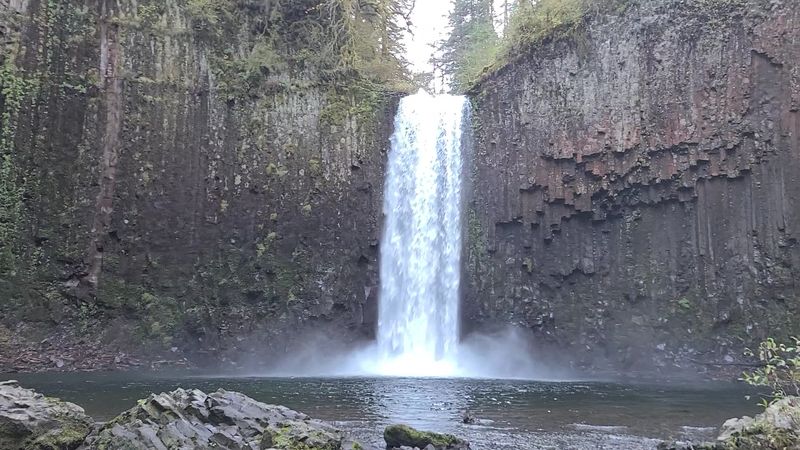
Dark basalt columns frame the waterfall like a natural cathedral. The roar reaches you before the falls even come into sight.
Abiqua Falls drops nearly 92 feet. The water hits the pool below with serious force.
Mist drifts outward and coats everything nearby in a cool, refreshing layer of moisture.
The surrounding rock walls are jagged and dramatic. Deep shadows contrast with patches of vibrant green moss.
Ferns push through cracks in the stone, adding bursts of color to an otherwise dark and ancient-looking space.
Standing at the base, you genuinely feel small. The scale of this place is hard to capture.
It is one of those rare moments where your phone camera simply cannot do the scene justice. You just have to be there to feel it fully.
Best Time of Year to Visit
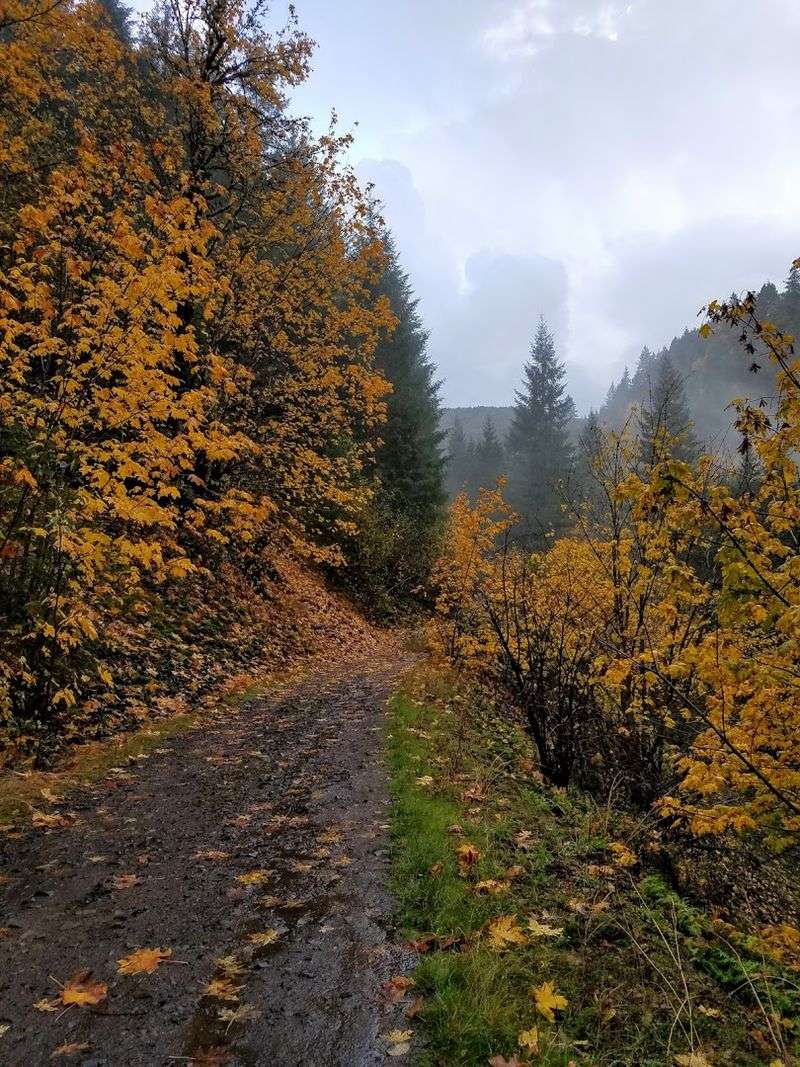
Abiqua Falls looks different with every season. Spring brings the heaviest water flow.
The falls roar loudly and the surrounding greenery is at its most vivid. Early June visits often reward hikers with powerful, churning water.
Summer visits are quieter in terms of water volume. The pool becomes more accessible.
Wading in on a hot September day feels incredible after the steep descent. The water stays cold even in late summer.
Fall coats the trail in golden and amber tones. The light filters differently through the canopy.
It creates a softer, more atmospheric mood around the falls.
Winter is possible but genuinely risky. The trail becomes extremely slippery when wet.
Snow can make the access road impassable entirely. If you plan a winter trip, check conditions carefully beforehand.
The trail is open 24 hours year-round, but nature sets its own access rules. Visiting between late spring and early fall gives most hikers the safest and most rewarding experience overall.
Gear and Footwear: What Actually Helps
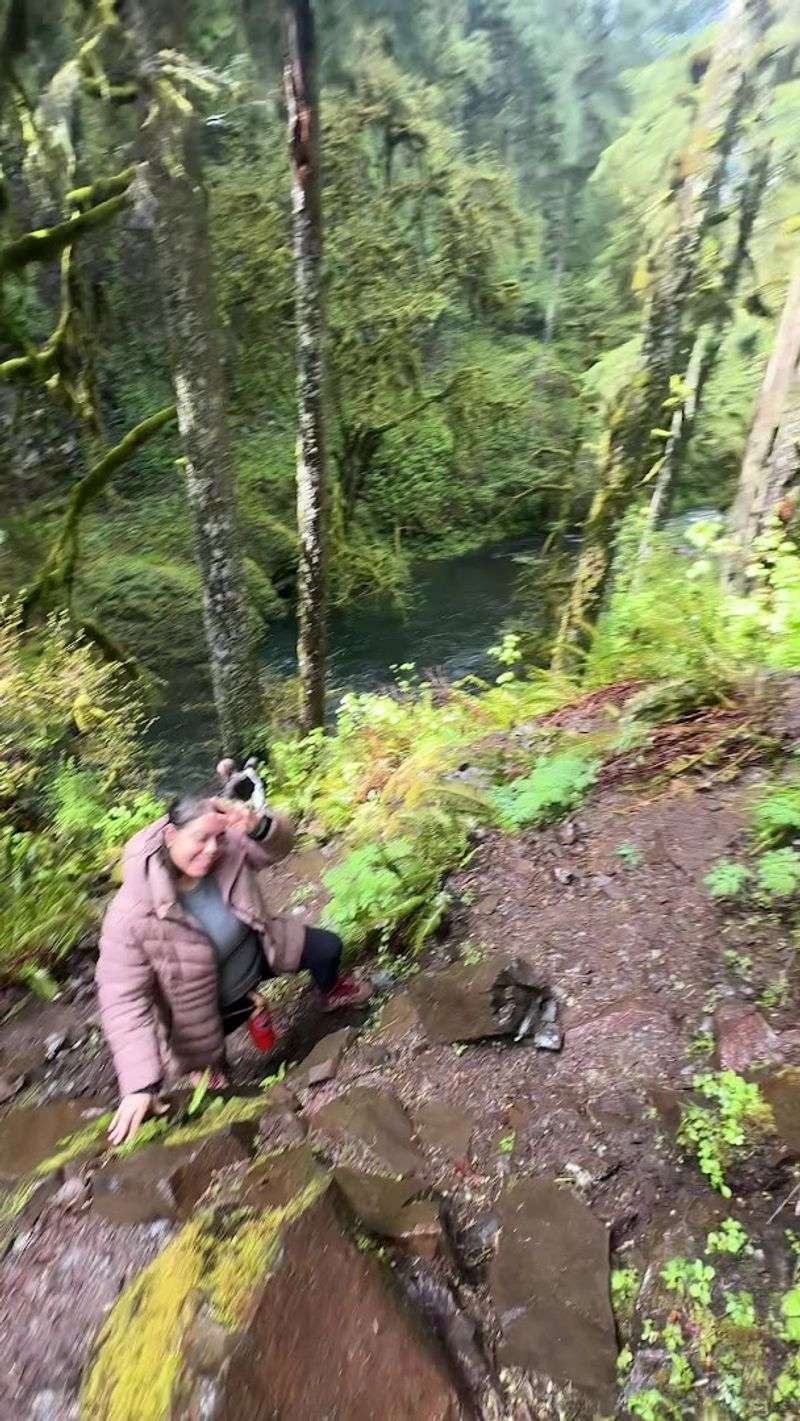
Footwear matters more on this trail than almost anywhere else. The steep descent over wet roots and loose rock demands solid grip.
Hiking boots with ankle support are the clear choice here. Tennis shoes work in dry conditions, but only just.
Gloves are a smart addition. The rope sections require real grip.
Bare hands on rough rope can cause friction burns if you slip even slightly. A simple pair of work gloves solves this completely.
Trekking poles help on the climb back out. The ascent is harder than it looks from the bottom.
Your legs will feel the burn. Poles take pressure off your knees on that steep uphill push.
Layers are worth bringing even in summer. The canyon near the falls stays noticeably cooler than the surrounding forest.
The mist from the waterfall adds extra chill. A light packable jacket stuffed into a small daypack keeps you comfortable without adding real weight.
Pack light but pack smart on this one.
The Second Waterfall Few People Find
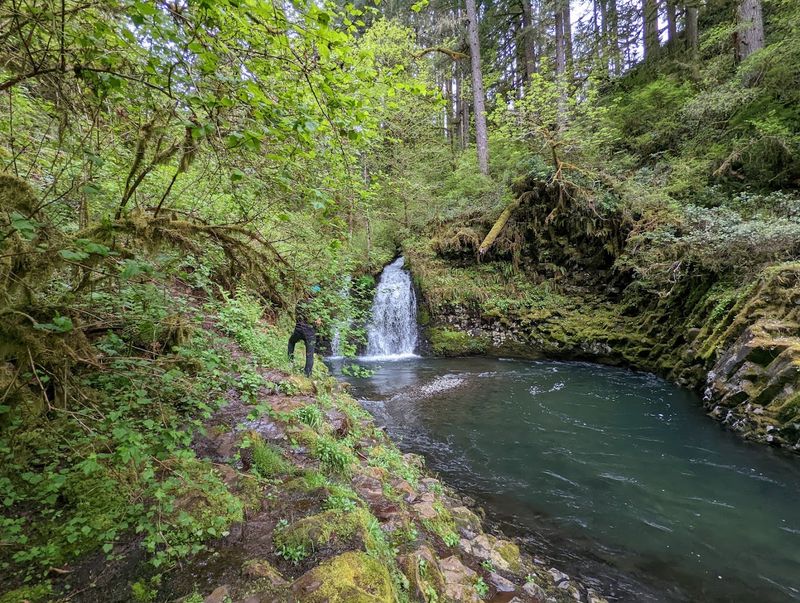
Most visitors stop at the main falls and call it a day. That is completely understandable.
The main falls are stunning enough to feel like the obvious destination. But there is a second waterfall above, and it rewards those curious enough to look.
The path to the upper falls branches off roughly a quarter mile before the main trailhead. It involves more ropes and steeper terrain.
Some sections have drops of ten feet or more. Solo hikers should assess carefully before committing.
The upper falls are smaller but still beautiful. The setting feels even more secluded.
Fewer footprints, less noise, and a rawer sense of wilderness surround you up there.
This upper route is not marked clearly. It takes observation and a willingness to explore off the beaten path.
If you are comfortable with the terrain and have solid footwear, the extra effort opens up a whole new layer of this place. Not everyone needs to do it, but knowing it exists makes the whole hike feel richer.
Parking Tips and Trailhead Navigation
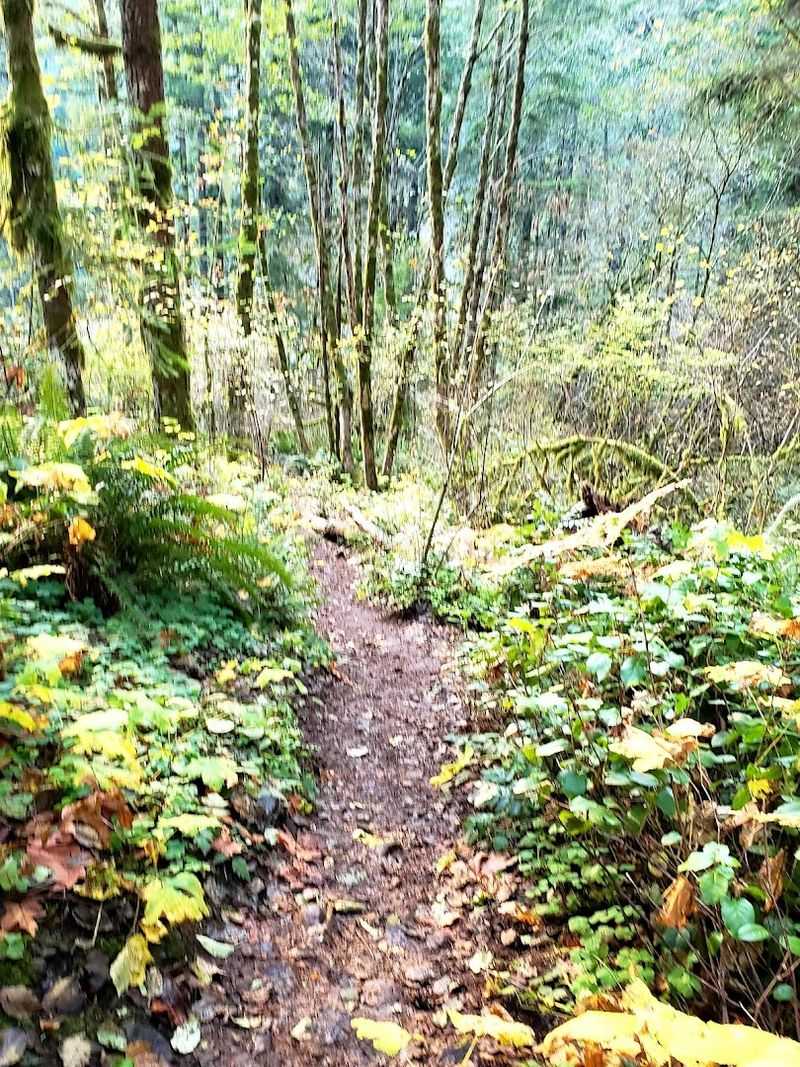
Finding the actual trailhead takes a little patience. The white gate at the end of the road marks the correct parking area.
Google Maps sometimes drops a pin slightly before the real trailhead. Drive further than it suggests if your vehicle allows.
Parking is limited near the gate. A handful of cars fit comfortably.
If that area is full, pull-off spots line the road on the way in. Parking further back and walking the road adds distance but is totally doable.
The trail entrance sits just to the right of the road, just before the parking area. It is not labeled with a sign.
Look for a well-worn path heading into the trees. Once you spot it, it becomes obvious.
Stay left at the first fork. That is the most repeated piece of advice from everyone who has hiked here.
The left path is the established, safer route down to the river. Taking the right path leads to a more exposed, risky descent that most hikers regret choosing.
Keep that left turn in mind from the start.
Swimming and Wading at the Base of the Falls
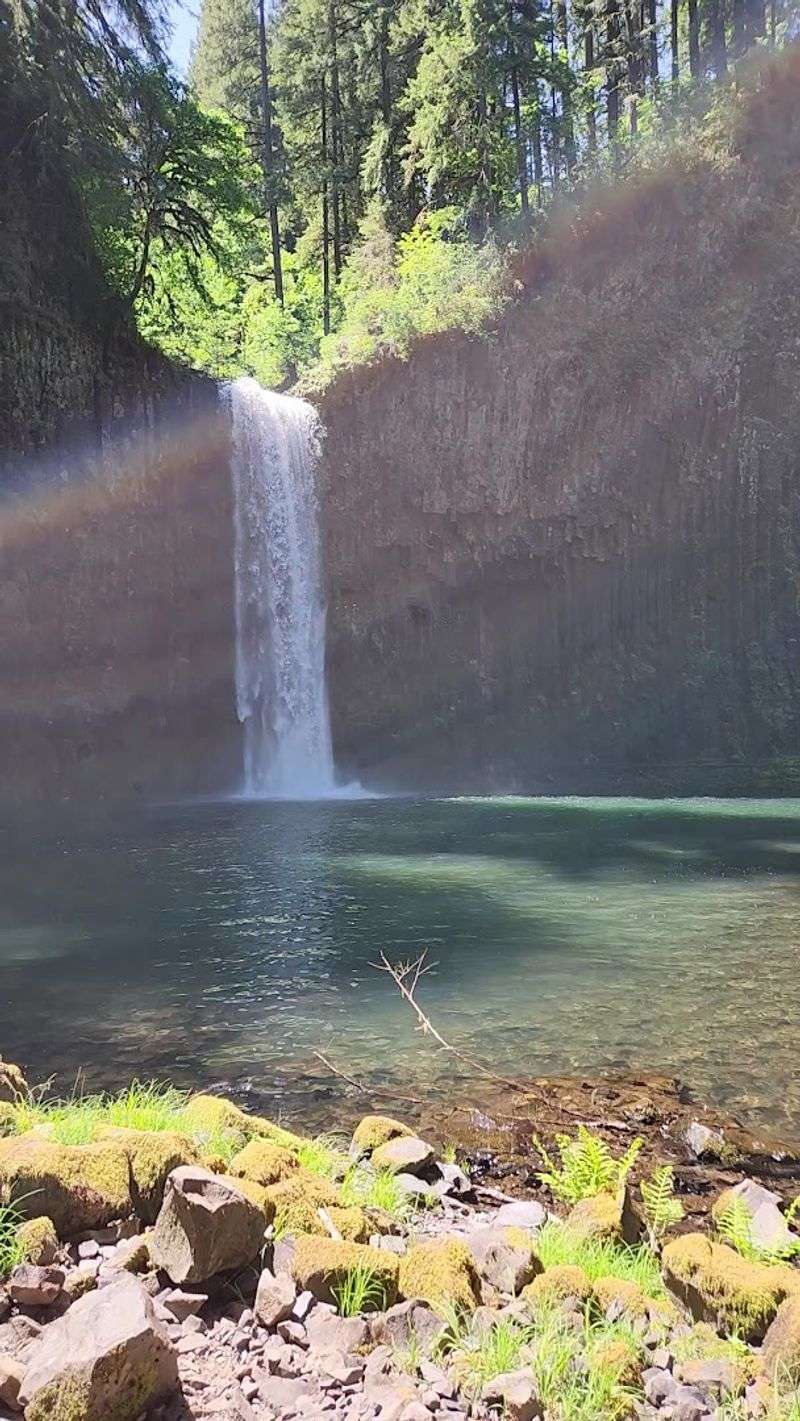
The pool at the base of Abiqua Falls is one of the most inviting natural swimming spots in western Oregon. The water is clear and cold.
Even in late summer, the temperature stays refreshingly low. After the steep hike down, it feels absolutely perfect.
Wading in near the falls edge puts you directly in the mist. The spray is constant and powerful close to the base.
Standing there with your feet in the current is one of those simple moments that sticks with you long after the hike.
The pool is accessible by walking along the river’s edge after reaching the canyon floor. Turning left at the river leads you directly to the falls.
Rocks near the water can be slippery, so stepping carefully is important.
The area is open 24 hours, but visiting during daylight makes navigating the rocky riverbank much safer. Morning visits tend to be quieter.
The light hits the canyon walls beautifully in the early hours, adding a golden warmth to the otherwise cool and shadowed space.
How Crowded Does It Actually Get?
Abiqua Falls has a reputation as a hidden gem, but that reputation has spread. Weekends bring more visitors than you might expect for such a remote location.
Arriving early on a Saturday morning helps you beat the rush significantly.
Weekday visits are noticeably quieter. Mid-week hikers often have the trail almost entirely to themselves.
The limited parking naturally caps how many people can be there at once. That built-in crowd control helps preserve the atmosphere.
The narrow access road also acts as a filter. Not every vehicle makes it to the trailhead.
Some visitors park further back and turn around before reaching the falls. Those willing to put in the effort tend to be more engaged and respectful of the space.
The trail itself is short, so turnover is quick. Groups come and go faster than on longer hikes.
Even on busier days, the falls area rarely feels truly overcrowded. The canyon is large enough to absorb a modest number of visitors without losing its wild, untouched feeling.
Why This Trail Deserves More Recognition
There are hundreds of waterfalls in Oregon. Most are accessible, well-signed, and easy to reach.
Abiqua Falls is none of those things, and that is exactly what makes it special. The effort required filters out casual visitors and rewards the curious ones.
The geology here is genuinely rare. The basalt columns surrounding the falls formed from ancient volcanic activity.
The canyon they create is dramatic in a way that feels almost theatrical. Few places in the Pacific Northwest offer this kind of raw, enclosed grandeur on such a short trail.
People return in different seasons and find something new each time.
Hidden places like this remind us why exploring off-grid matters. No gift shop, no ranger station, no manicured path.
Just a rough road, a steep trail, a rope, and one of the most jaw-dropping waterfalls in the entire state waiting at the end.
Address: Abiqua Falls Trailhead, Crooked Finger Rd NE, Scotts Mills, OR 97375
