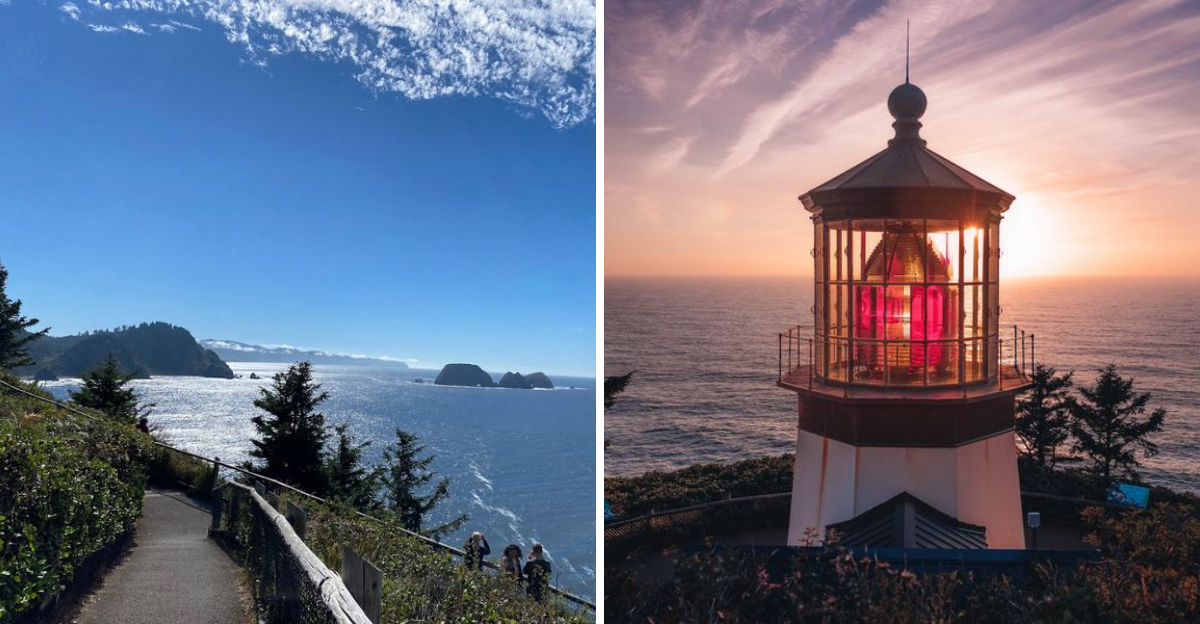
A lighthouse that has been spinning its light for one hundred fifty years still knows how to impress visitors. I walked up to the base and tilted my head back to take in the whole tower stretching toward the sky.
Oregon preserved this historic gem so people can still climb to the top for a small fee. The original lens rotates slowly inside like a giant crystal flower that has never stopped working.
I climbed the stairs and felt the history with every creaky wooden step beneath my feet. The view from the top opens up to miles of coastline and crashing waves that look tiny from up there.
Oregon really knows how to keep history alive and accessible instead of locking it behind glass cases. A friendly volunteer shared stories about the keepers who lived here long before electricity made their job easier.
The wind whips around the top so hold onto your hat and your camera carefully. You leave with salty hair and a newfound respect for the people who kept ships safe for generations.
A Lighthouse That Has Stood For Over 150 Years
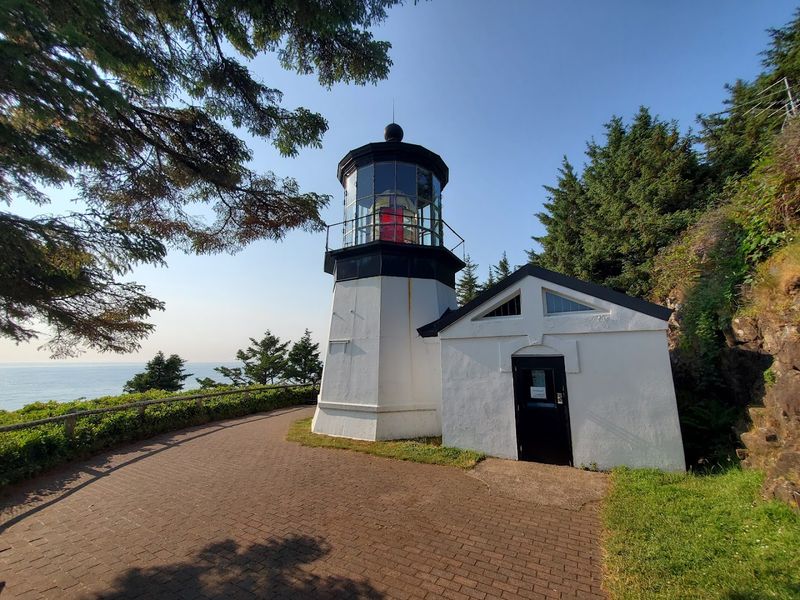
Cape Meares Lighthouse was first lit in 1890, making it one of the oldest working lighthouses on the Oregon Coast. It sits perched on a rocky headland, more than 200 feet above the crashing Pacific below.
The structure itself is compact, shorter than most lighthouses you might picture, but its position high on the cliff gives it enormous reach over the water.
The tower is painted white and looks almost modest from the outside. But step closer and you start to notice the details, the thick walls, the iron fittings, and the careful craftsmanship that has kept this building standing through storms, earthquakes, and over a century of coastal weather.
Visitors often say it feels smaller than expected. That surprise fades fast once you learn about its history.
It guided ships safely past the rocky headland for decades. The lighthouse was decommissioned in 1963 but has been lovingly preserved ever since.
Walking up to it feels like greeting an old friend who has seen a lot.
The Original Fresnel Lens Still Spinning Inside
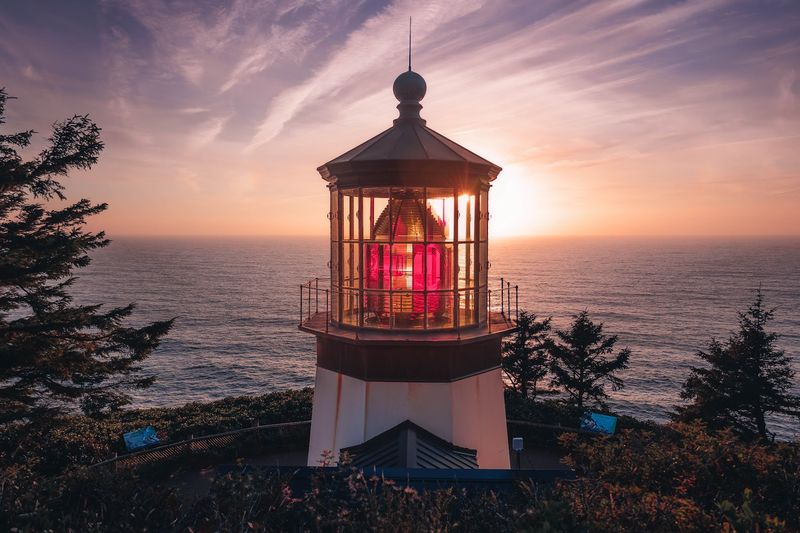
Most lighthouses that have been decommissioned lost their lenses long ago. Cape Meares kept its original.
The Fresnel lens inside is a first-order lens, the largest classification used in lighthouses, and it dates back to the lighthouse’s opening in 1890. Seeing it in person is genuinely jaw-dropping.
The lens is made up of hundreds of carefully shaped glass prisms arranged in a beehive pattern. It was designed to capture and focus light so powerfully that ships could see it from miles offshore.
On a clear day, it could reportedly be seen from over 20 miles at sea.
What makes this even more remarkable is that the lens still rotates. The original clockwork mechanism, once powered by a weighted cable system, has been preserved and maintained.
Watching those glass prisms catch and bend the light is hypnotic. You find yourself just standing there, staring.
It is one of those rare moments where old technology feels more magical than anything modern. This lens alone is worth the drive to Tillamook.
Climbing Inside the Tower for a Small Fee
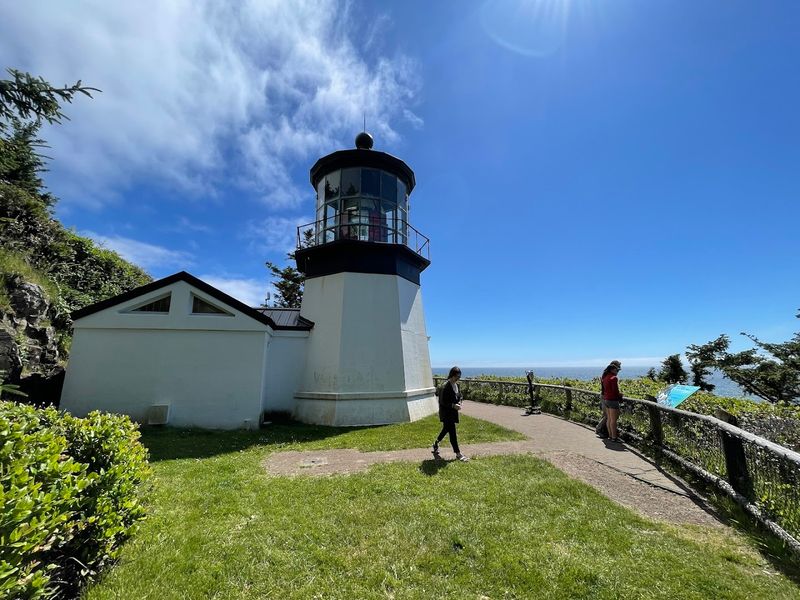
Paying to climb a lighthouse might sound like a small thing, but at Cape Meares it genuinely feels worth every cent. The fee is modest, and it goes toward supporting the preservation of the lighthouse and its grounds.
Volunteers are usually on hand inside to answer questions and share stories about the building’s past.
The interior is snug. The staircase is narrow and winds upward in tight spirals.
You can feel the thickness of the walls around you as you climb. It is not a long climb, but it is memorable.
Each step brings you closer to that famous lens.
One thing to note: due to ongoing repairs after earthquake damage, the upper exterior platform has been closed for some time. You can still enter and view the lens up close from inside, which is honestly the highlight anyway.
The volunteers make the experience feel personal and real. They are clearly passionate about this place.
Their enthusiasm is contagious, and you leave knowing far more than when you arrived.
The Trail Down to the Lighthouse
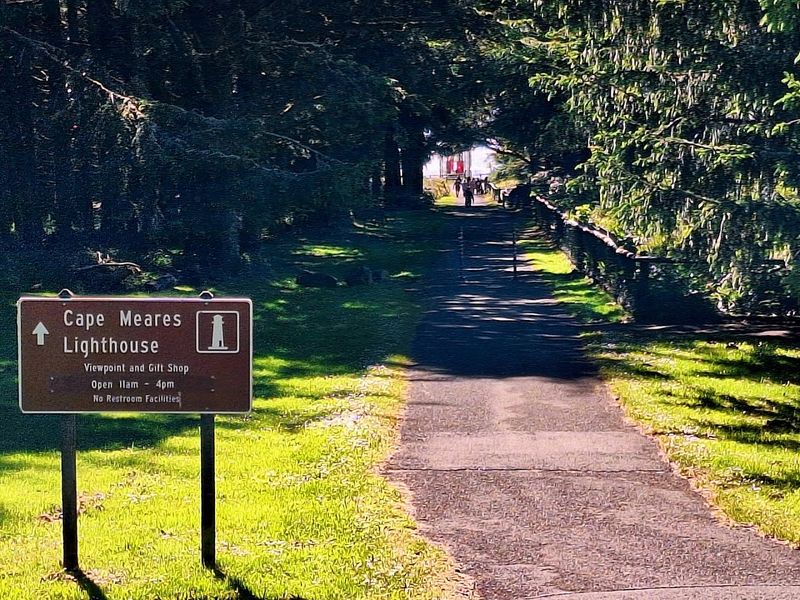
The walk from the parking lot down to the lighthouse is one of those paths that puts you in a good mood right away. It is short, well-maintained, and lined with tall evergreen trees that filter the light in a way that feels almost cinematic.
The trail has a gentle downhill slope going in, which means you will feel it a little on the way back up.
Most of the path is paved, making it accessible for a wide range of visitors. Dogs are welcome on leash, and you will often see families, solo hikers, and couples all sharing the trail comfortably.
The path is wide enough that passing others never feels awkward.
There are actually two trail options forming a rough loop from the parking area. Taking the ocean-side path on the way to the lighthouse gives you stunning coastal views through the trees.
Save the forest side for the return trip and you get two very different experiences in one short outing. The whole loop covers less than a mile, making it ideal even for younger kids or those who prefer an easy stroll.
Sweeping Ocean Views From the Headland
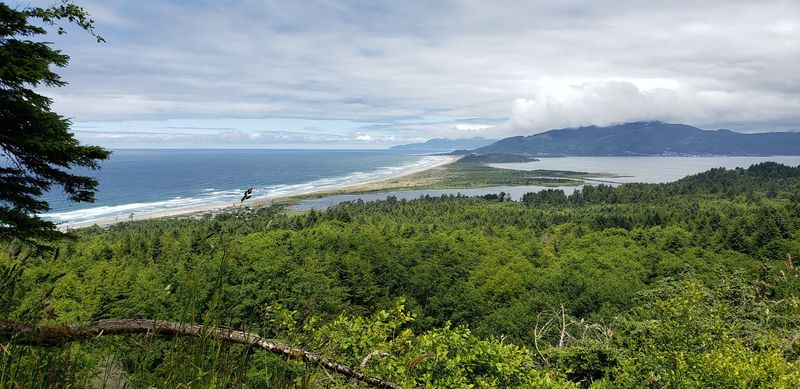
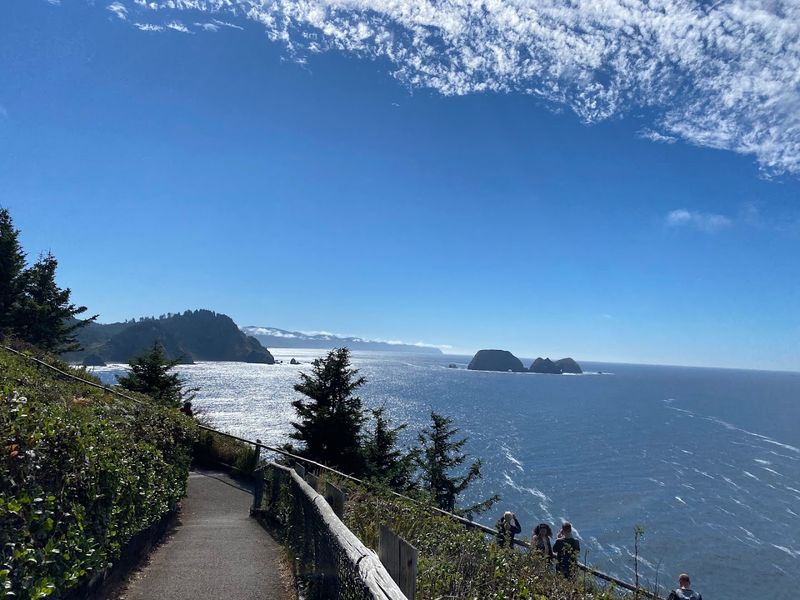
Standing on the headland near Cape Meares Lighthouse, the Pacific Ocean stretches out in every direction you look. The view is the kind that makes you go quiet for a moment.
Jagged sea stacks rise from the water below, waves crash against dark basalt cliffs, and on a clear day you can see the coastline curving away for miles in both directions.
Even on an overcast day, and the Oregon Coast has plenty of those, the scenery carries a moody, atmospheric quality that feels deeply satisfying. The light changes constantly out here.
One minute it is silver and still, the next the sun breaks through and the water turns a brilliant green-blue.
This headland is also a known whale migration viewing point during certain seasons. Binoculars are a smart thing to bring along.
Seabirds are almost always visible, riding the updrafts or diving toward the water below. There are multiple viewpoint spots along the trail, so you never feel rushed to move on.
Each one offers a slightly different angle of the same spectacular scene.
The Mysterious Octopus Tree Nearby
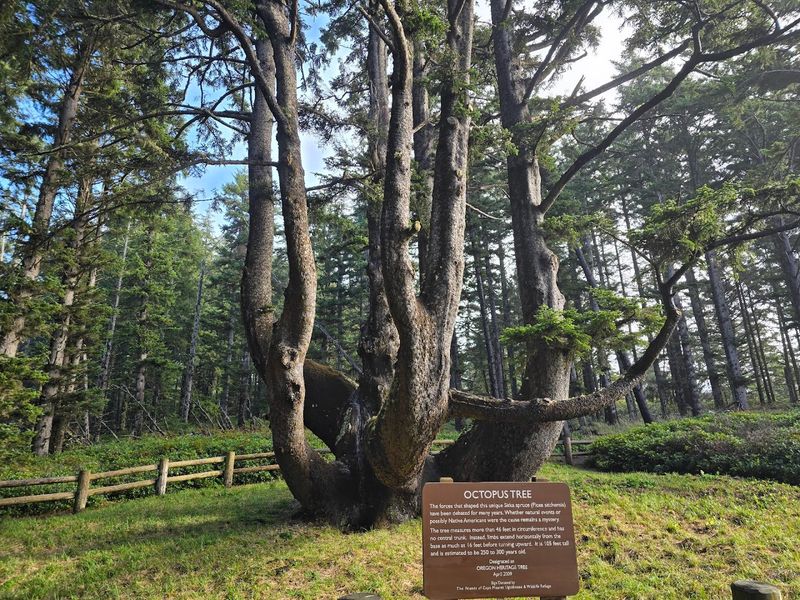
A short walk from the lighthouse viewpoint sits one of the strangest and most captivating trees on the entire Oregon Coast. The Octopus Tree is a massive Sitka spruce whose base branches spread outward in thick, sweeping arcs that really do look like tentacles reaching across the forest floor.
It has to be seen to be believed.
The tree is estimated to be several hundred years old. Its unusual shape is thought to have developed because it was trained into that form long ago, though the exact origin of its growth pattern remains a topic of curiosity.
It is genuinely enormous up close, far bigger than photos suggest.
Reaching the Octopus Tree requires only a short detour from the main lighthouse trail. A small sign points the way, and the path is easy to follow.
Standing beneath those massive horizontal branches feels like stepping into a natural cathedral. Kids absolutely love it.
Adults tend to go a little quiet, circling the tree and looking up with that expression that says they were not quite prepared for what they found here.
Wildlife and Birdwatching Opportunities
Cape Meares is not just about the lighthouse. The surrounding headland and cliffs are alive with wildlife, and if you slow down and pay attention, you will notice it quickly.
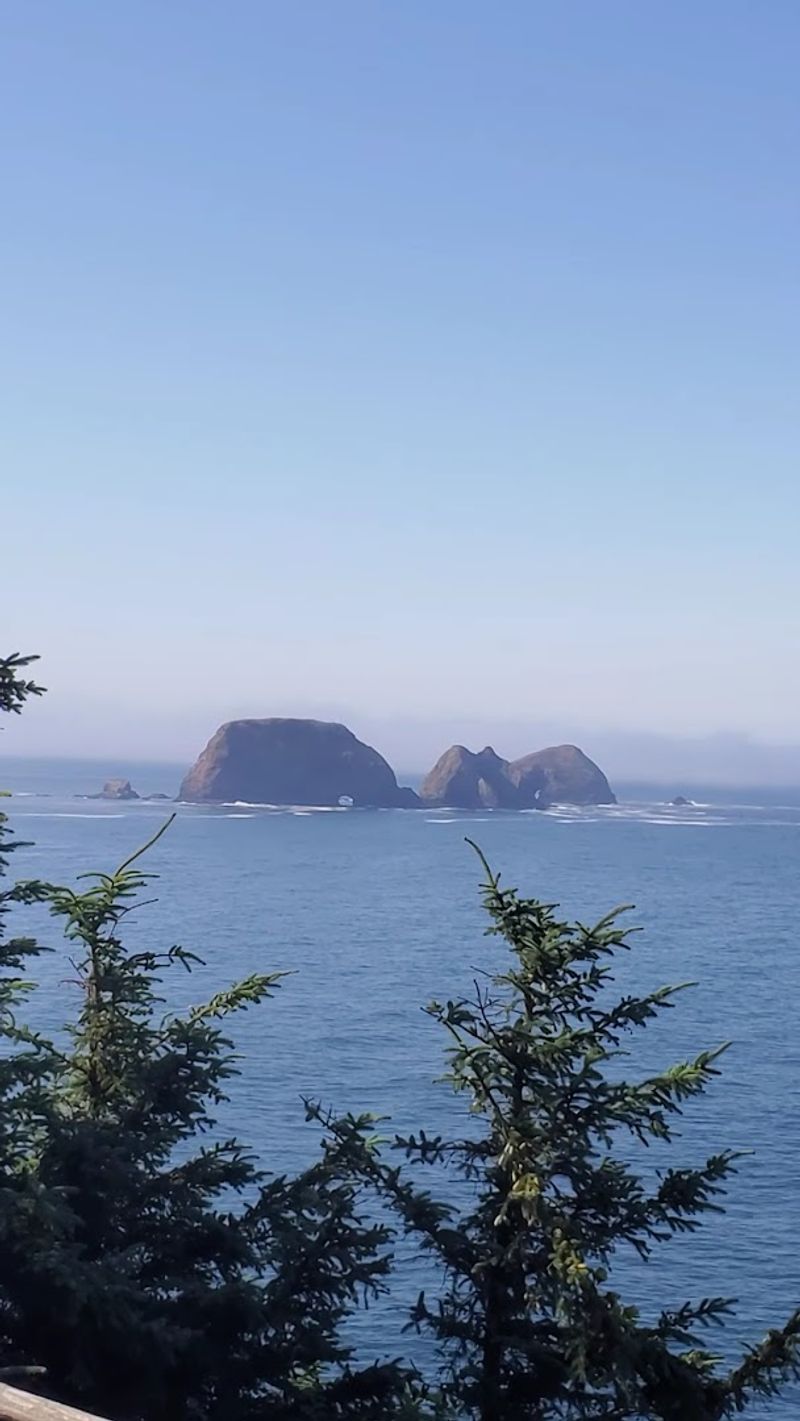
The offshore rocks and sea stacks host one of the largest seabird nesting colonies on the Oregon Coast. Common murres, tufted puffins, and pelagic cormorants are among the species that gather here in impressive numbers.
Bringing a pair of binoculars makes a real difference. From the viewpoints along the trail, you can scan the rocky outcrops and spot birds nesting, diving, and fishing in the water far below.
It is surprisingly entertaining even for people who do not consider themselves birdwatchers.
Gray whales pass by during their migration periods, typically in spring and fall. Spotting one from the headland is a genuine thrill.
Sea lions occasionally appear on the rocks below as well. The whole ecosystem here feels vibrant and active.
The Gift Shop and Visitor Experience
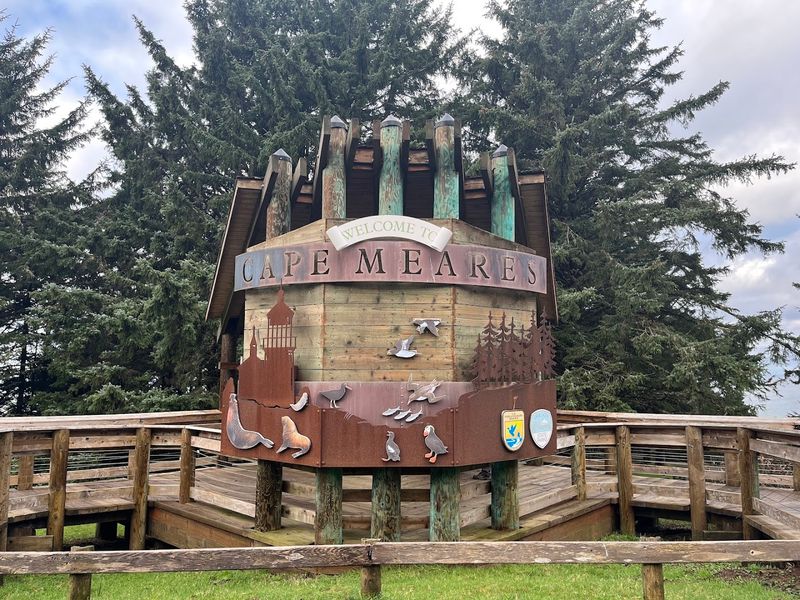
Tucked into the base of the lighthouse is a small gift shop that feels perfectly suited to the setting. It is not large or flashy.
The selection leans toward coastal souvenirs, lighthouse-themed keepsakes, postcards, and a few locally inspired items. It is exactly the kind of shop where you pick up something small and end up treasuring it far longer than you expected.
The gift shop is run by volunteers during operating hours, which run Tuesday through Sunday from 11 AM to 4 PM. Hours can vary by season, so checking ahead before visiting is always a good idea.
During winter months, the shop may be closed even if the trail and viewpoints remain accessible.
The volunteers stationed at the lighthouse are genuinely knowledgeable and enthusiastic. They answer questions with real warmth and clearly care about sharing the history of this place.
Even if you do not buy anything, stopping to chat with them adds something meaningful to the visit.
Picnic Areas and Parking at Cape Meares
Arriving at Cape Meares feels easy and unhurried. The parking lot is large and well-maintained, with overflow parking available when the main lot fills up on busy days.
A new road leading up to the park has made access noticeably smoother in recent years. Getting here from Tillamook takes only about 20 minutes by car.
Once parked, you will find a well-placed picnic area with plenty of tables scattered among the trees. Some spots face the ocean, giving you a view while you eat.
The area is sheltered enough from the wind on one side to make sitting outside genuinely comfortable, even on cooler days. Restrooms are available and are kept in decent condition.
The whole setup makes Cape Meares ideal for a family outing or a relaxed solo afternoon. You could easily spend two to three hours here without rushing.
Walk the trail, visit the lighthouse, find the Octopus Tree, sit at a picnic table with a snack, and watch the ocean.
Getting to Cape Meares from Tillamook
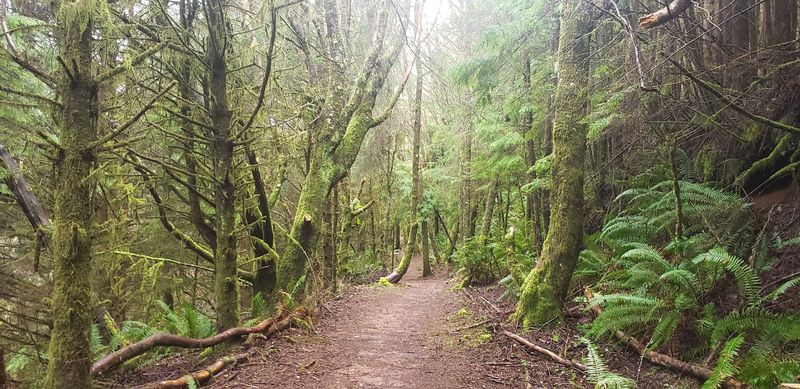
The drive to Cape Meares from Tillamook is part of the experience. The road winds through dense coastal forest, hugging the edge of Tillamook Bay before climbing up toward the headland.
It is the kind of drive where you find yourself slowing down just to look around. One route takes you through forest along the Wilson River, and the scenery is genuinely lovely the entire way.
The final stretch up to the park has a noticeable grade, so take it at a steady pace. The road is paved and well-maintained, but the incline is real.
Once you reach the top, the parking lot opens up with immediate views that make the climb feel well worth it.
Cape Meares is best combined with other stops along the Three Capes Scenic Route, a coastal loop that passes through some of the most striking scenery in Oregon.
Address: Cape Meares Lighthouse, 3500 Cape Meares Loop, Tillamook, OR 97141.
